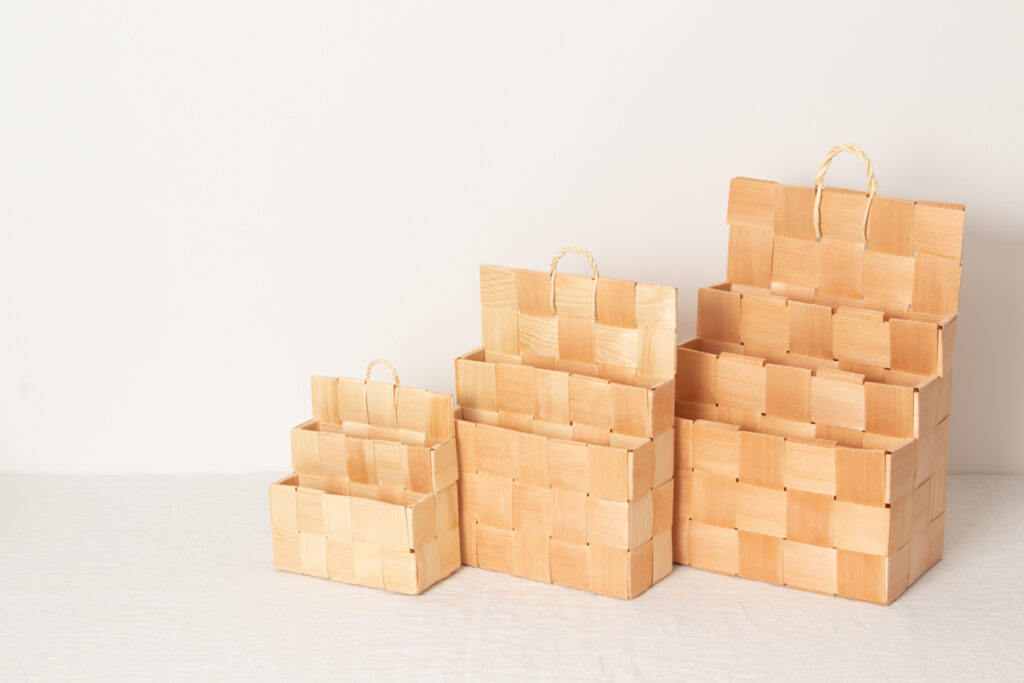
Magazine rack / Pine / EST 330707 エストニア/パイン マガジンラック S・M・L 3サイズ
Magazine rack / Pine / EST 330707 エストニア/パイン マガジンラック S・M・L 3サイズ
This basket is made from pine, a type of wood. Pine is a coniferous tree commonly found in Europe and North America, known for being easy to work with. It has long been used for furniture, as well as for structural elements such as posts, beams, and flooring.
For this basket, pine sourced in Estonia is used. According to the maker, pine that has grown for around 100 to 120 years is particularly well suited for basket making.
On this page, we introduce a magazine rack made from pine.
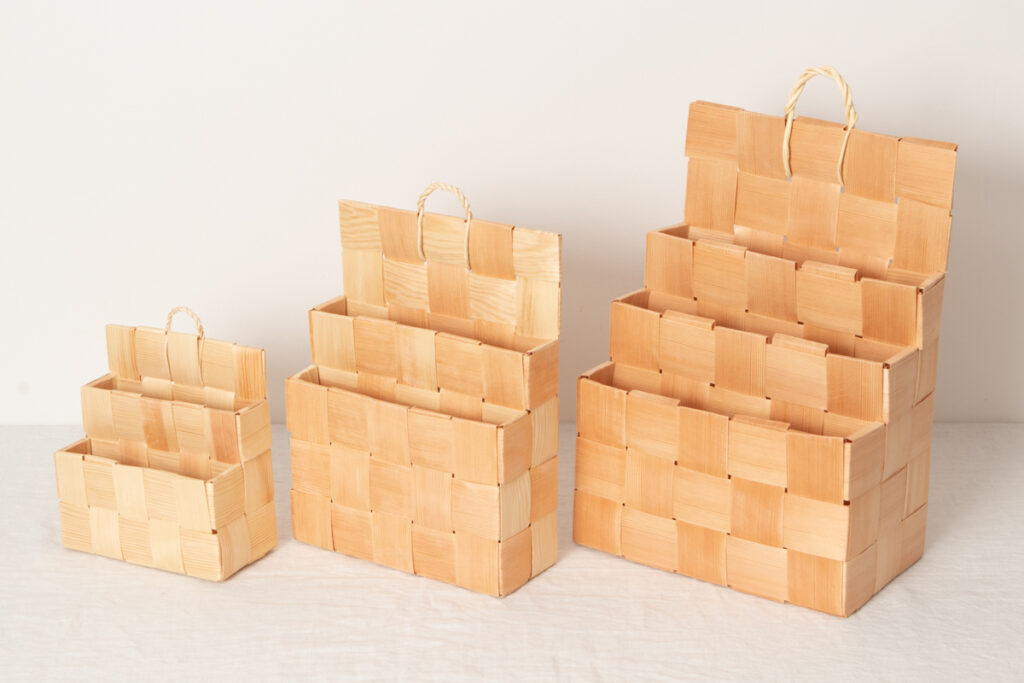
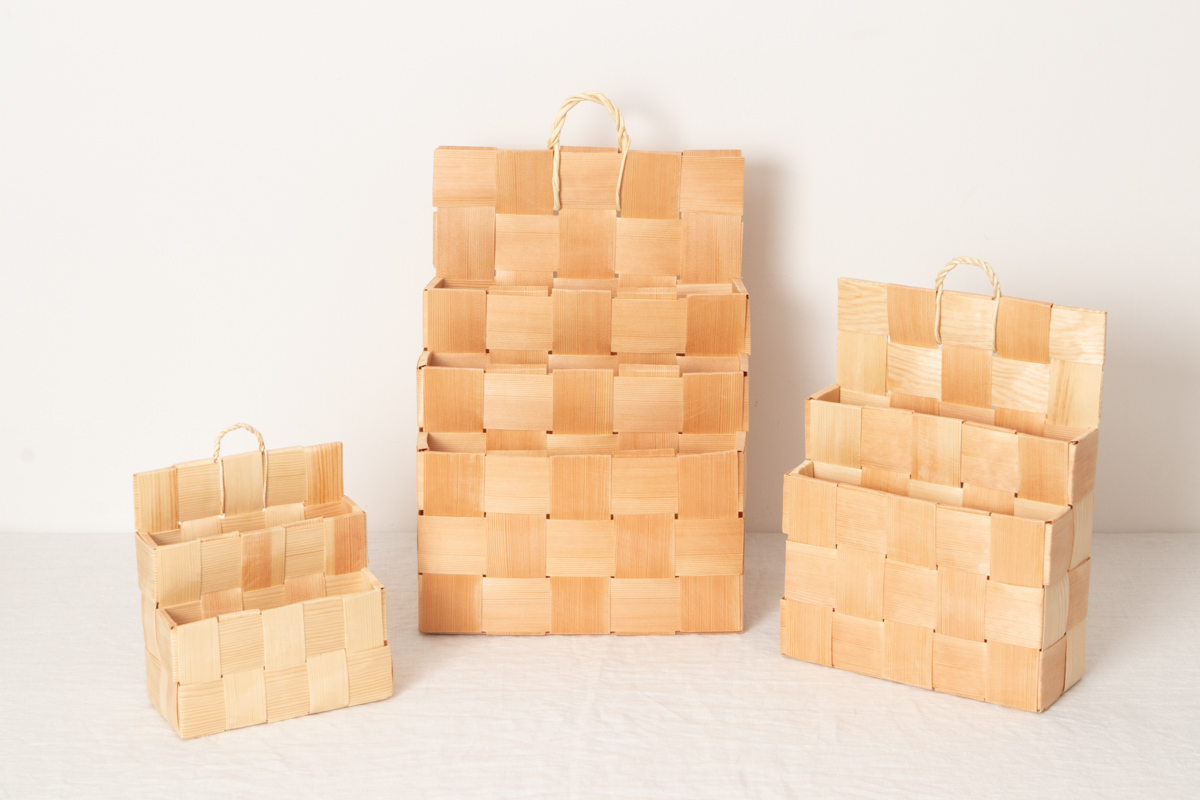
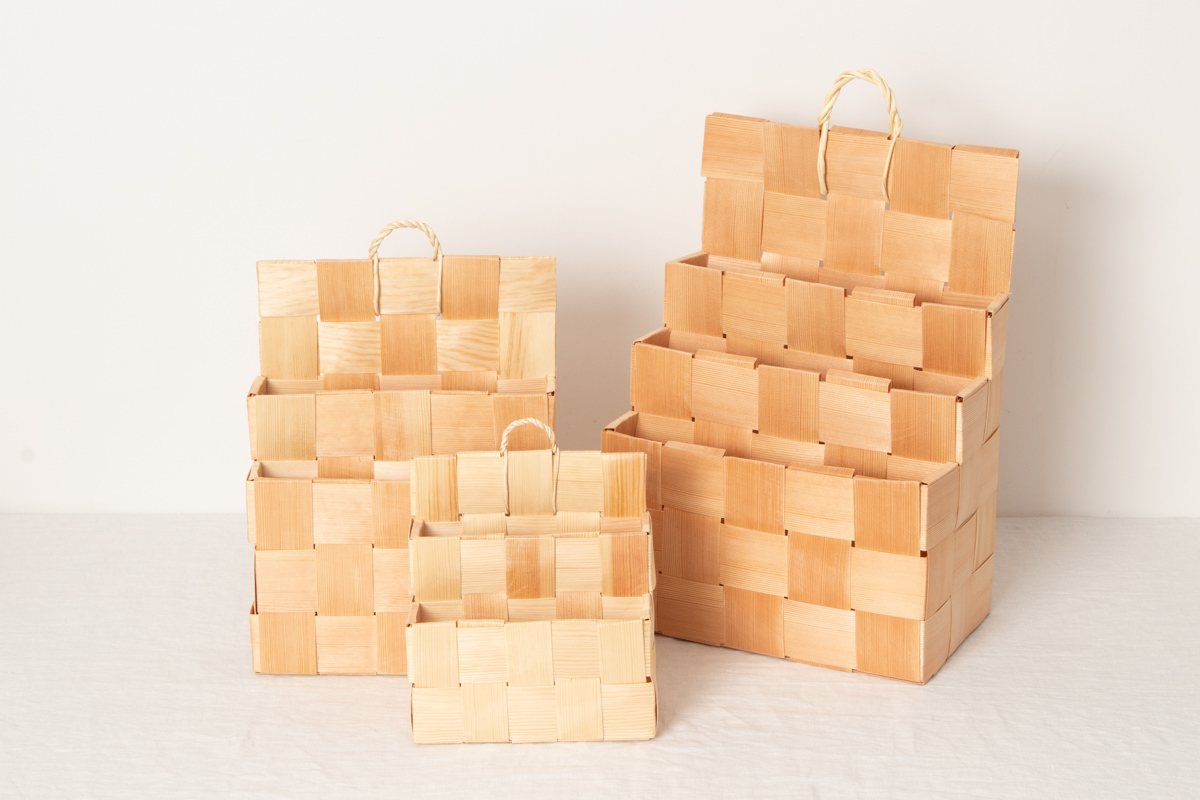
The magazine rack comes in three sizes: S, M, and L.
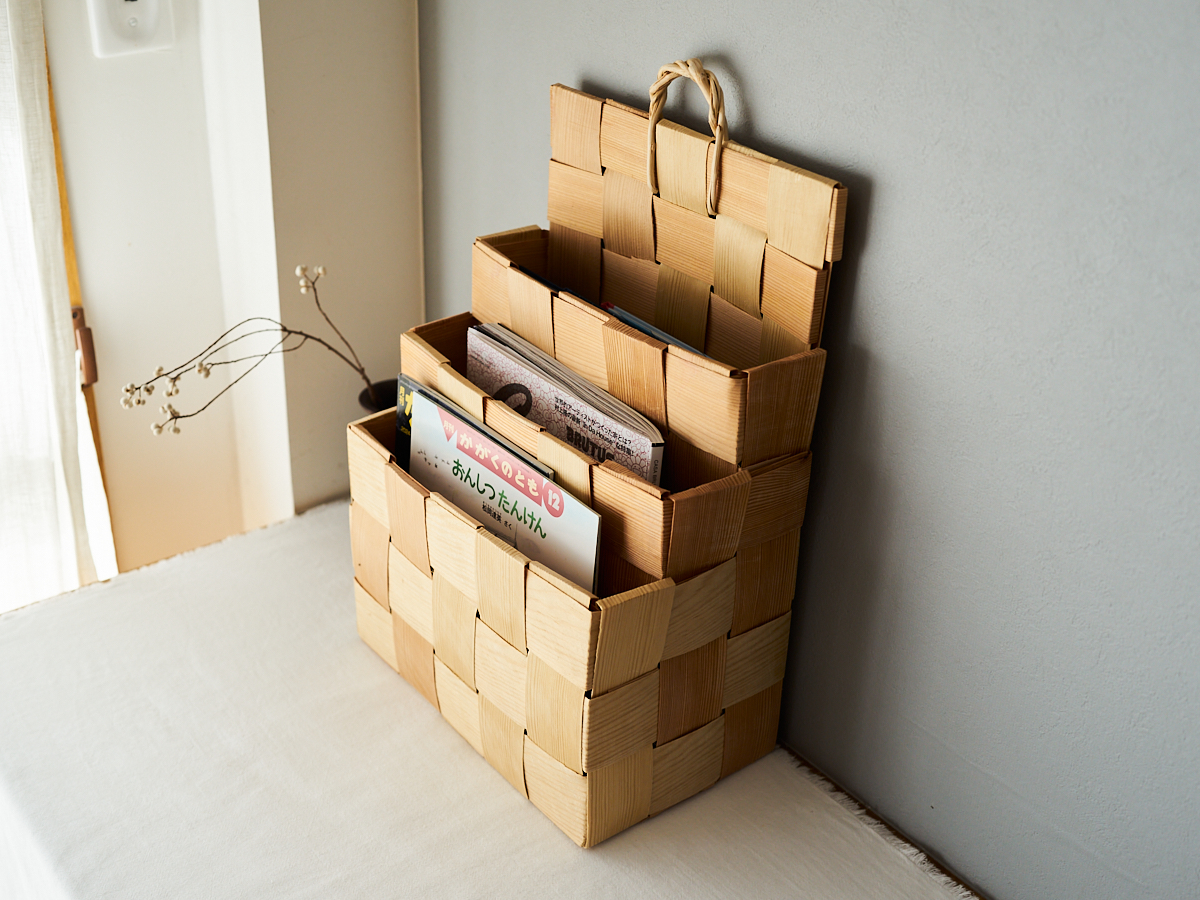
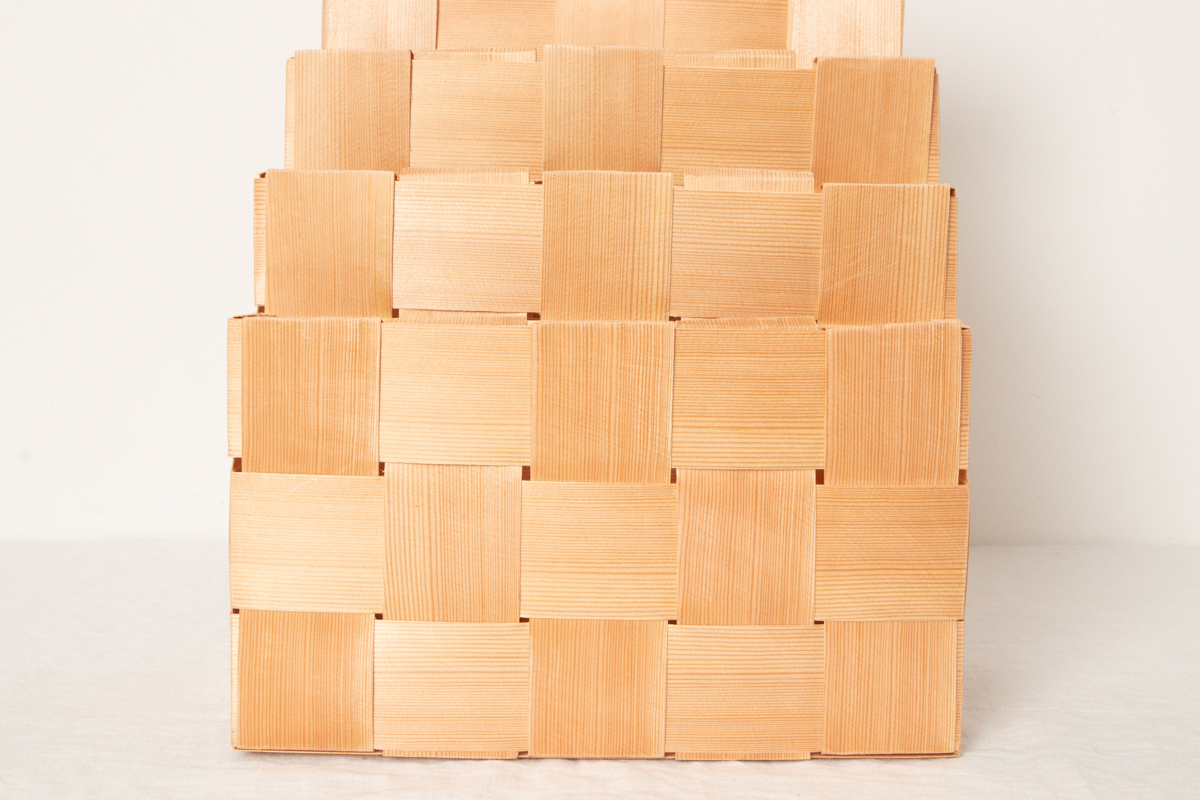
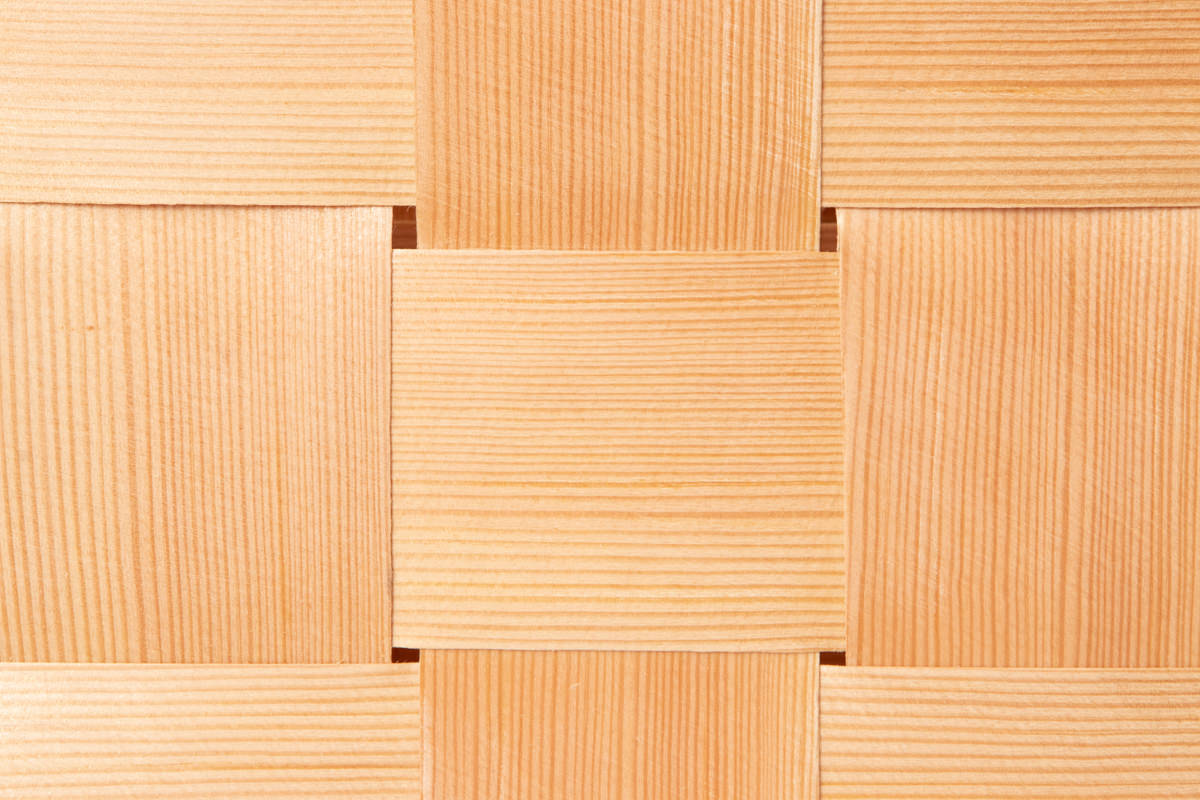
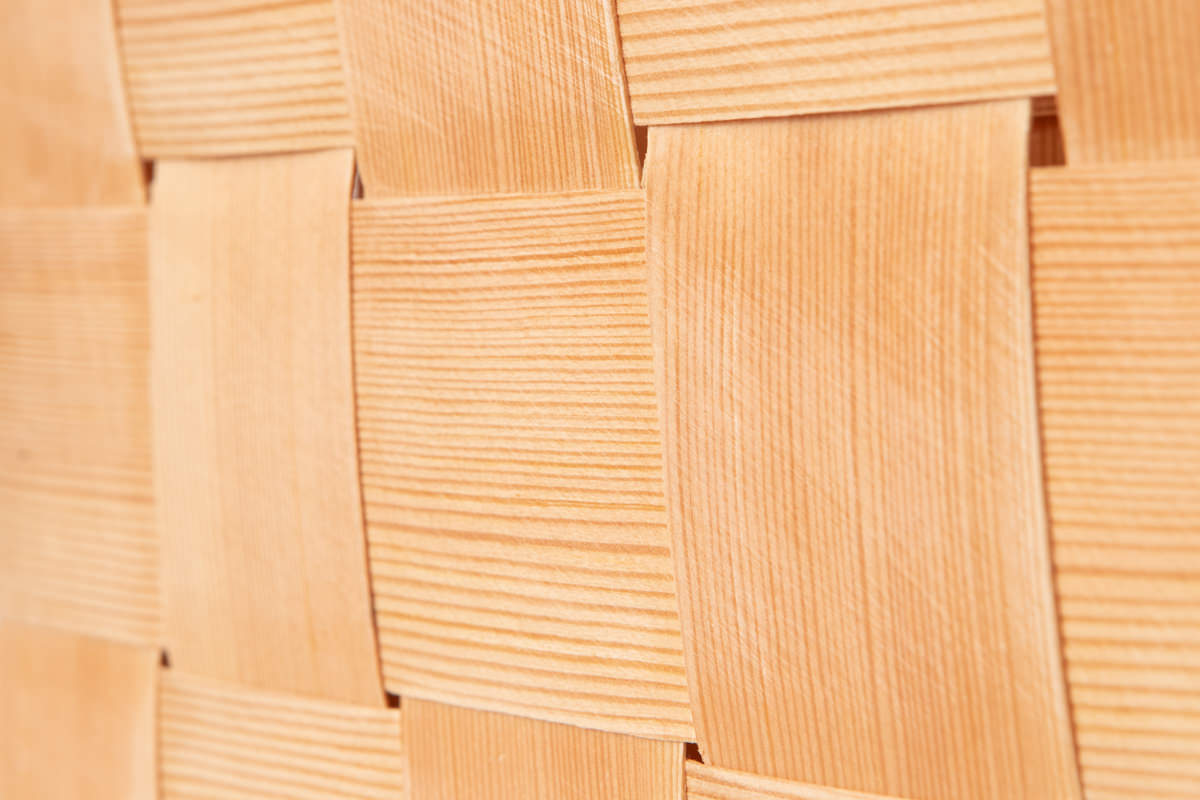
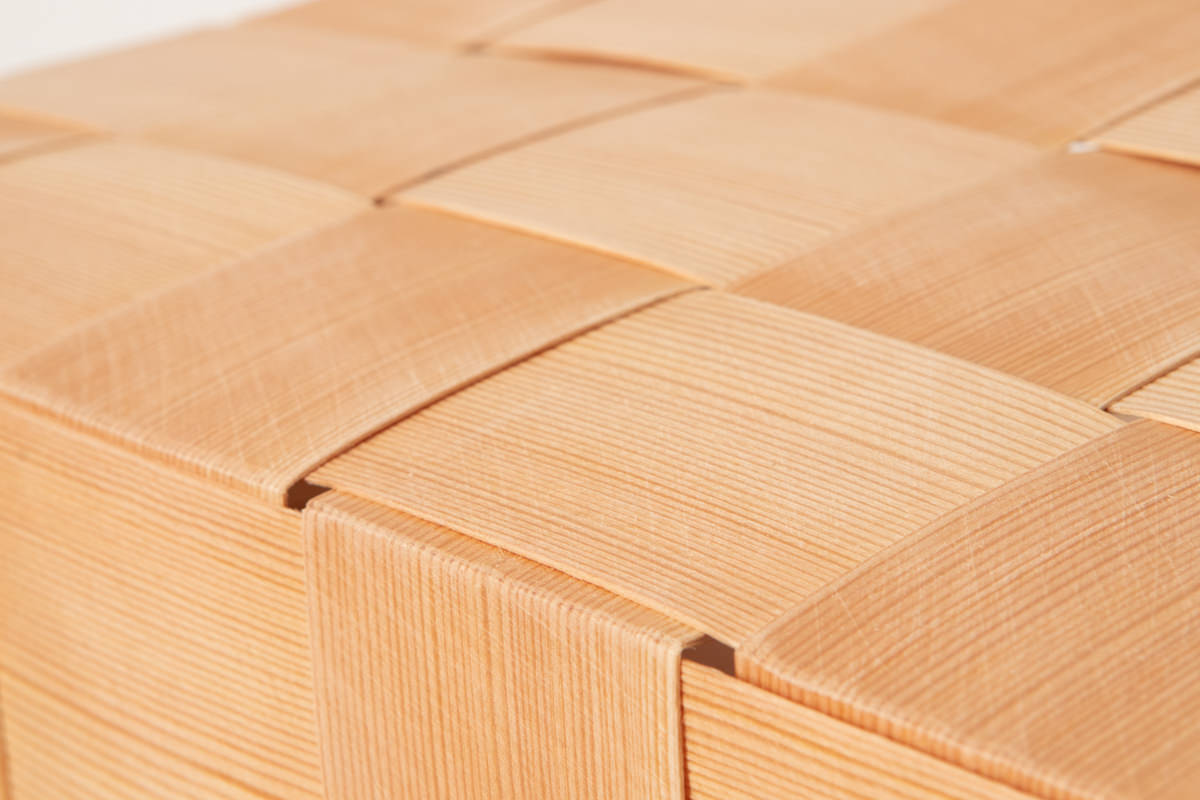
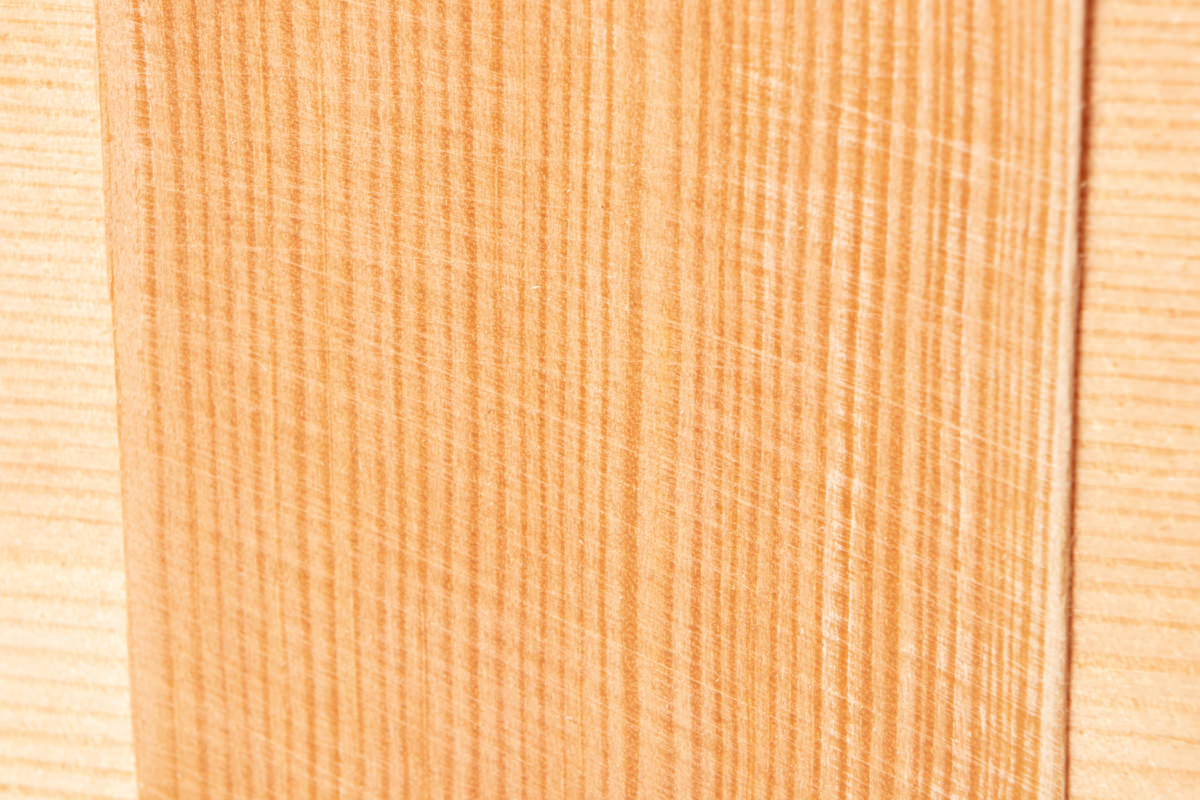
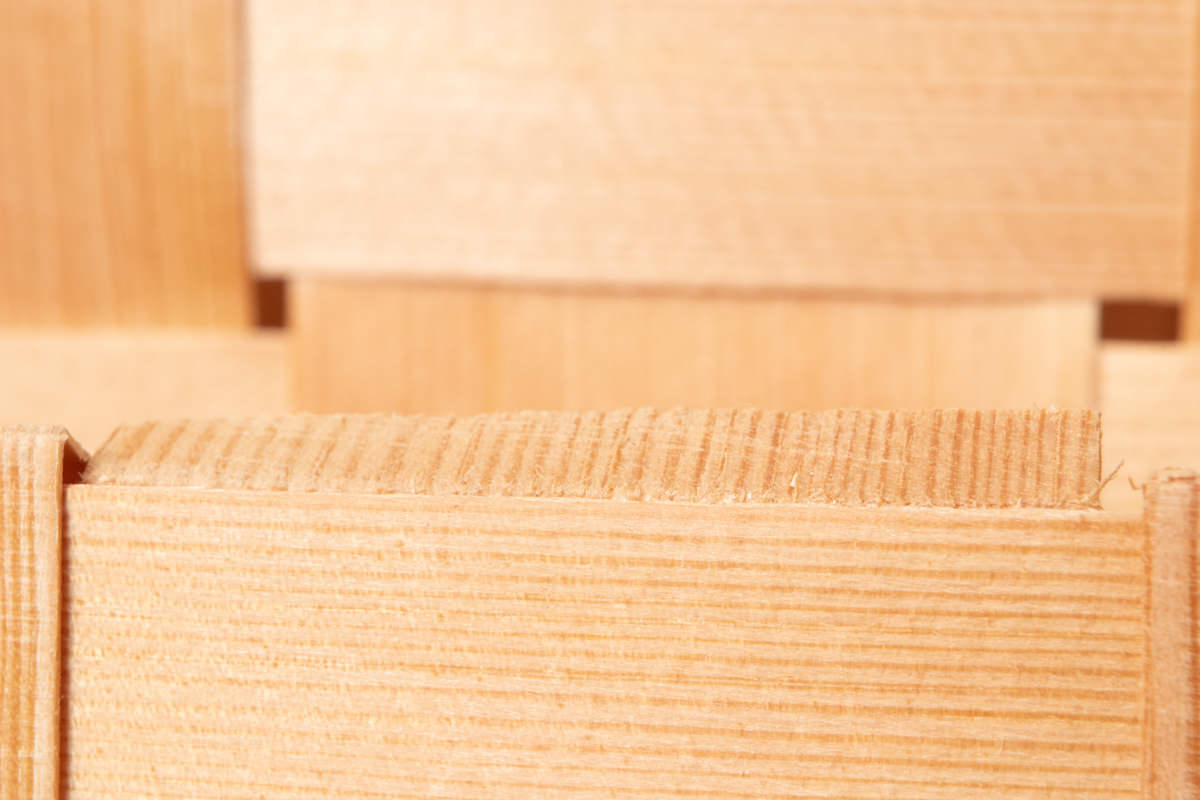
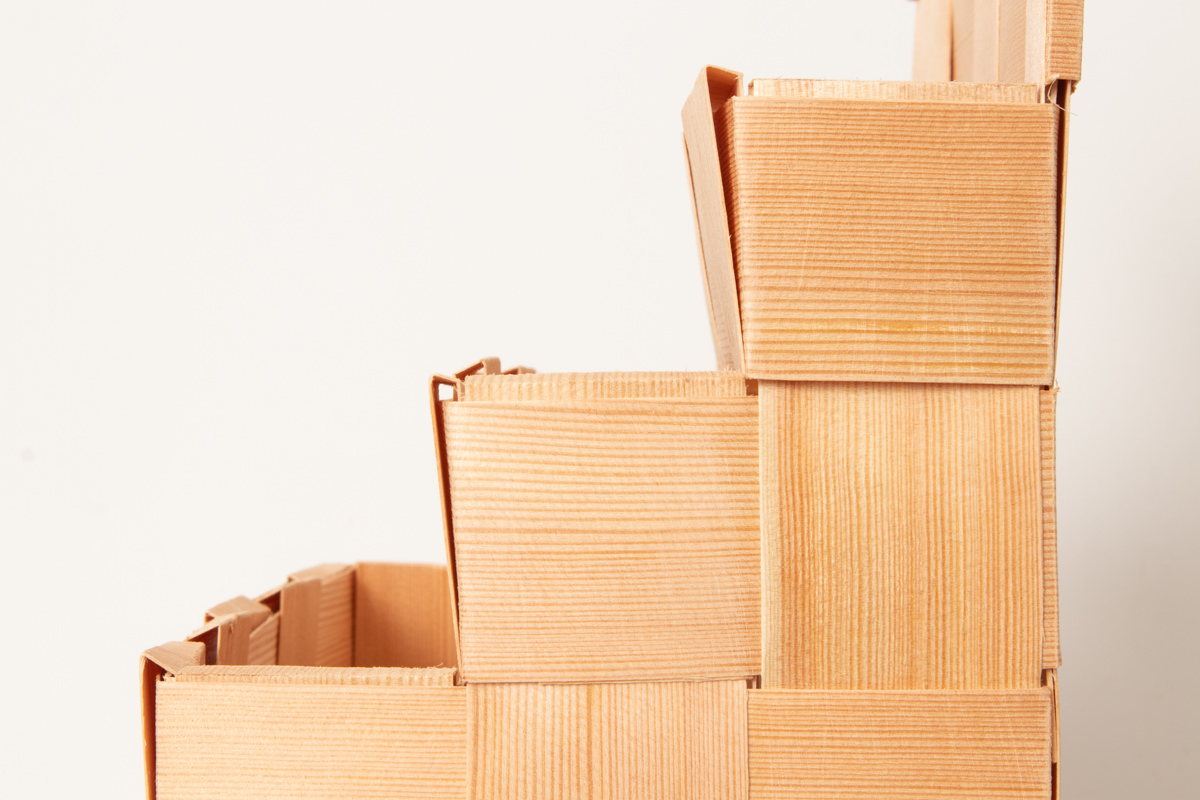
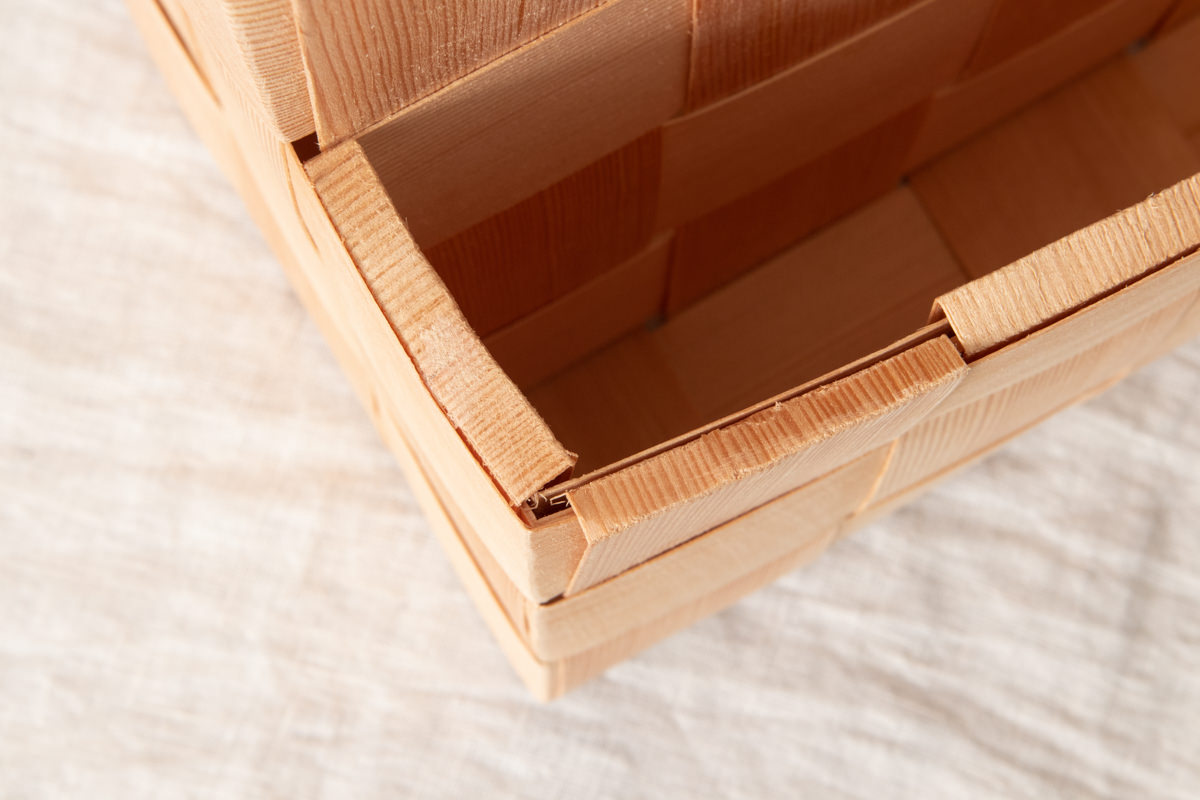
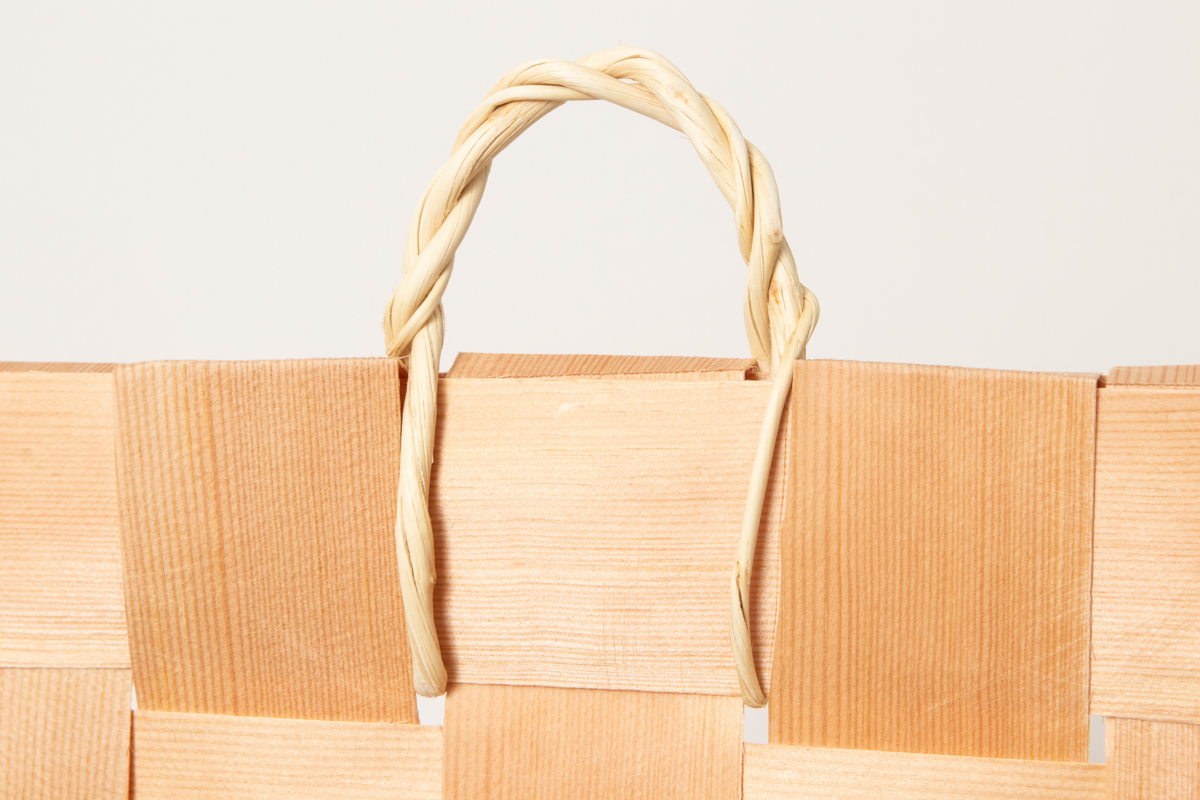
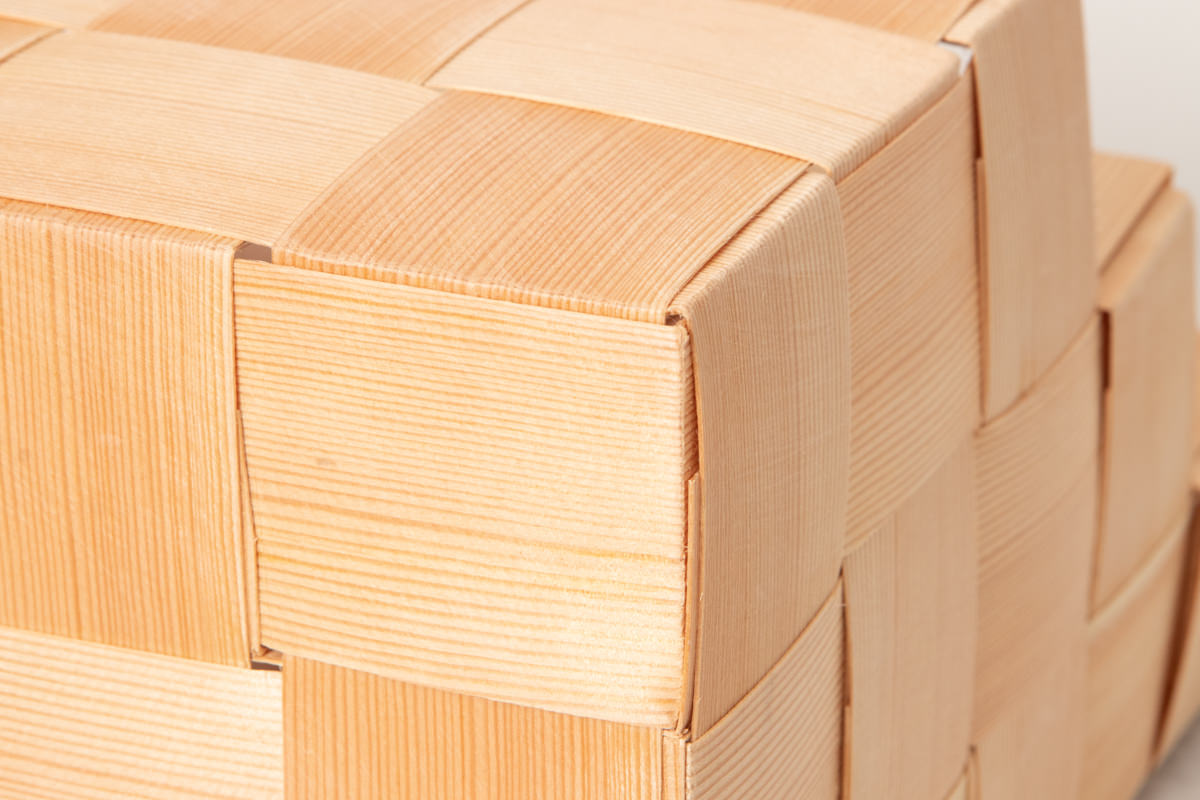
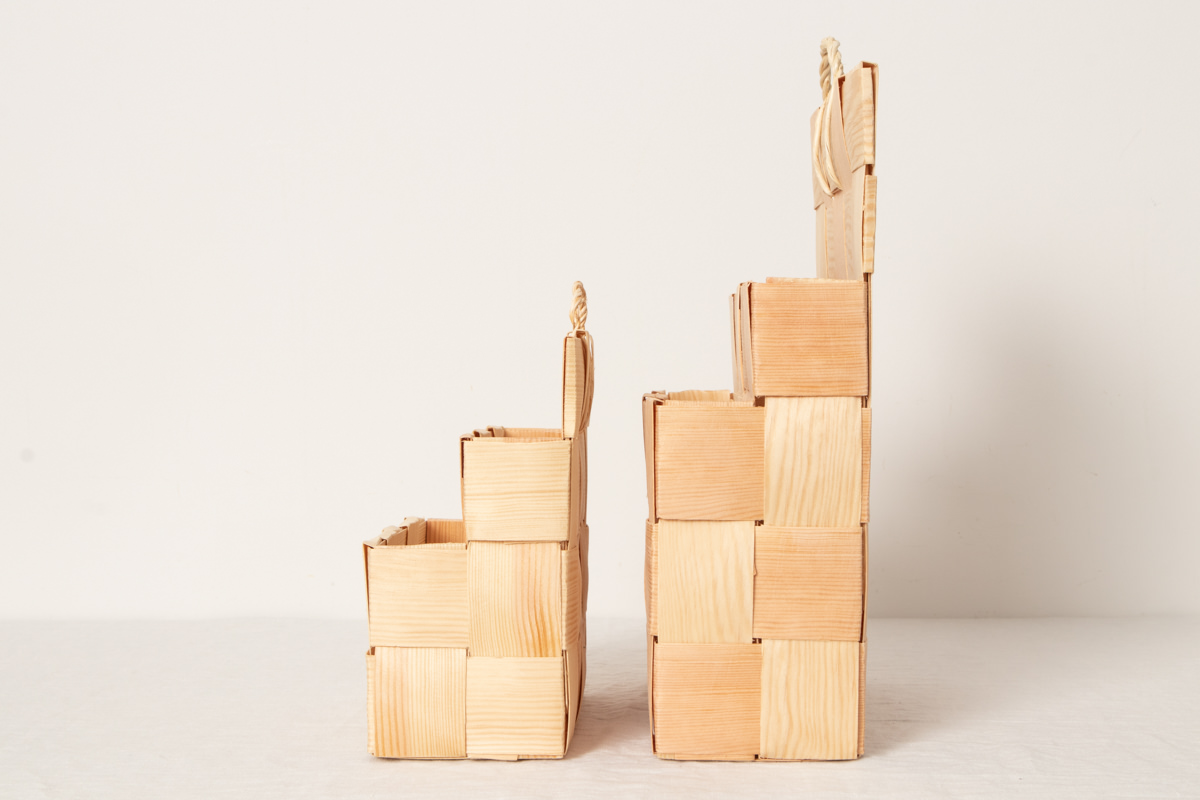
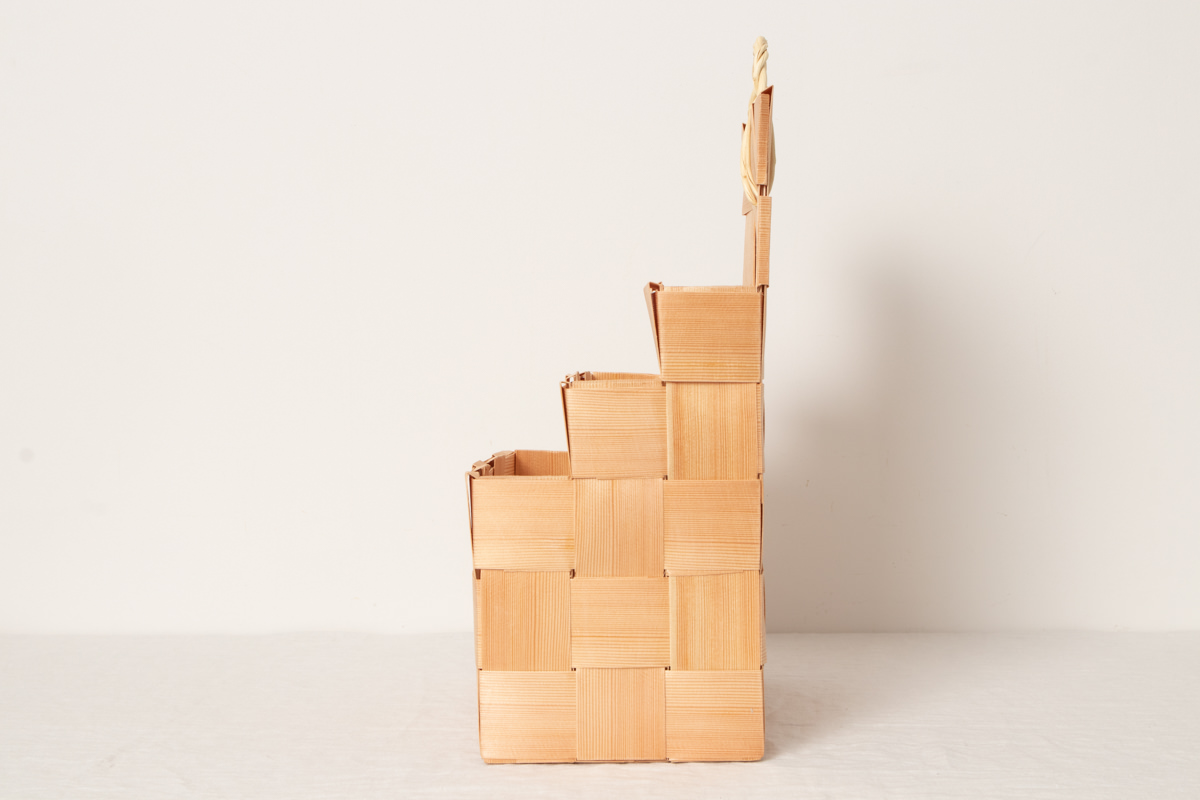
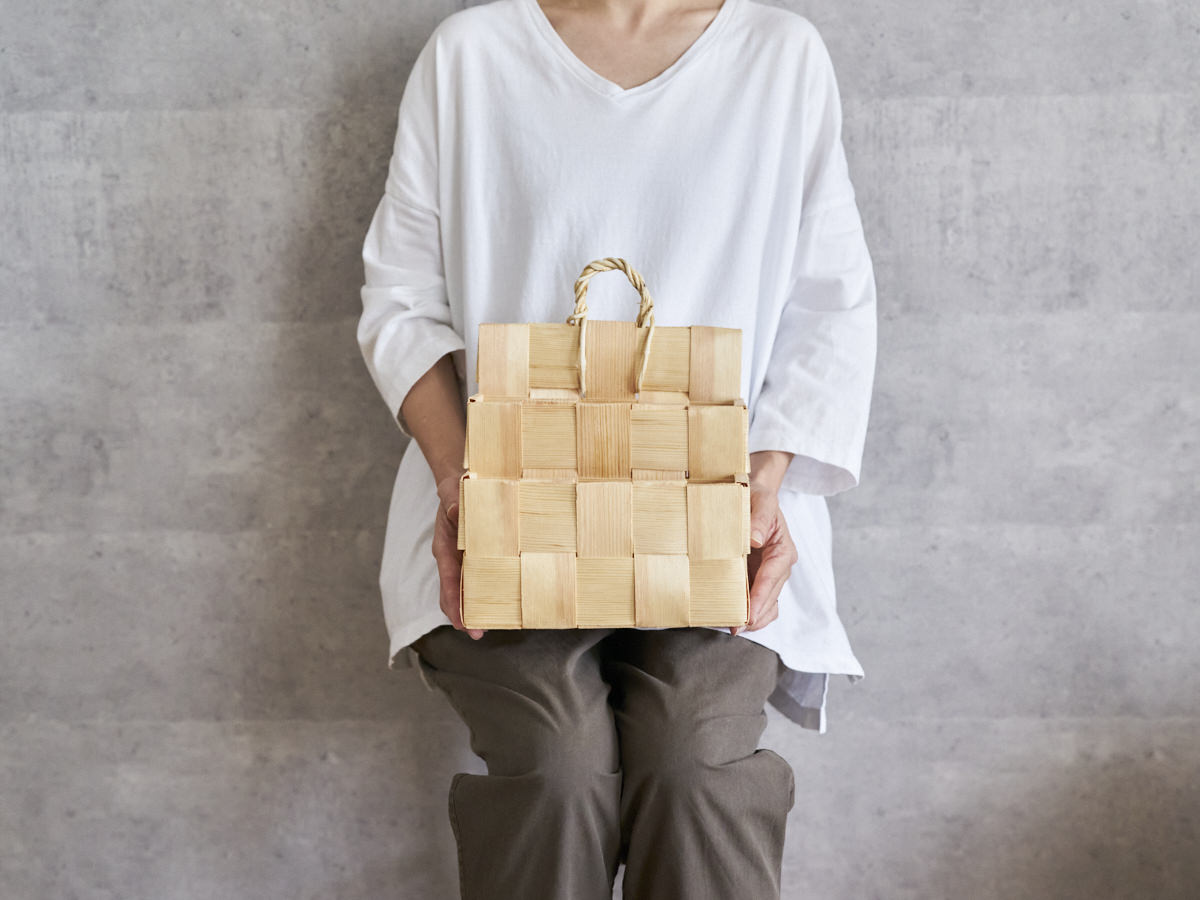
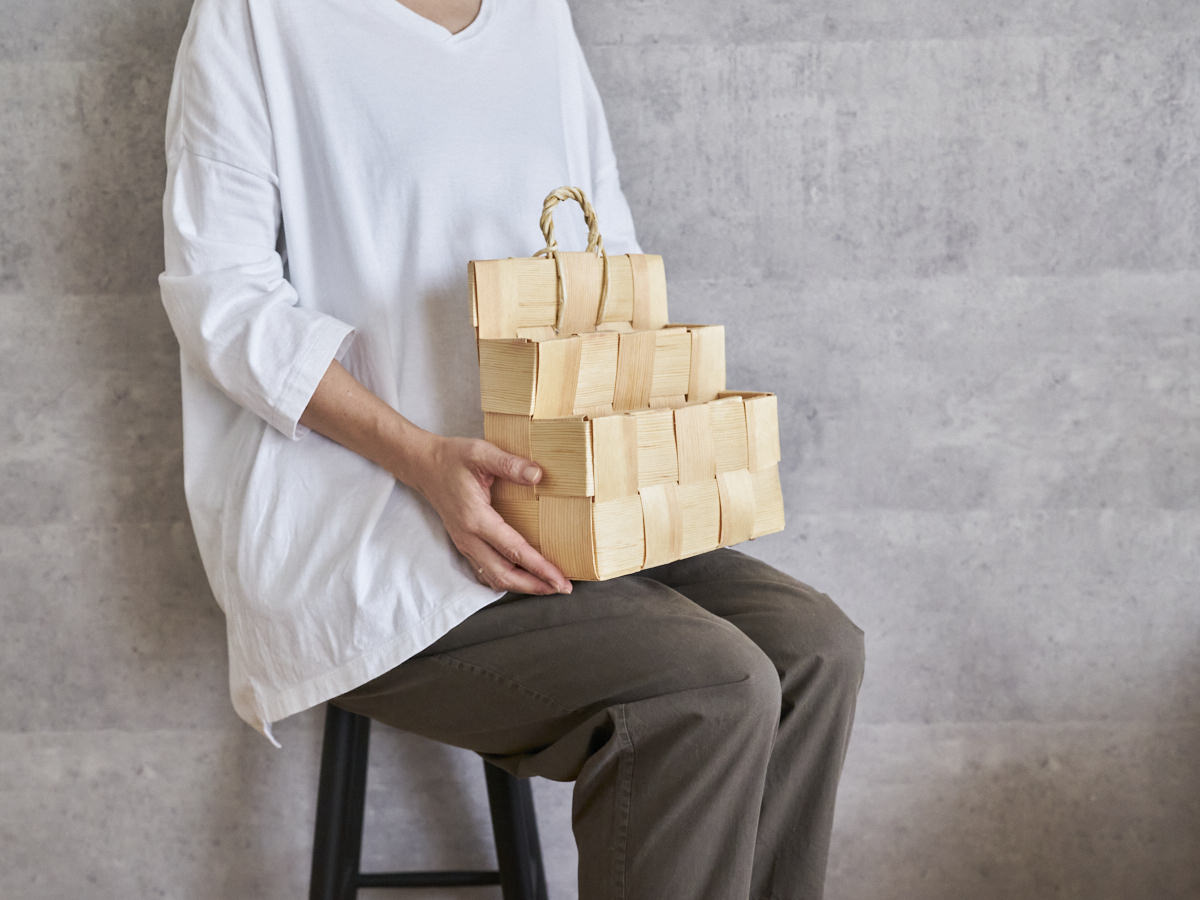
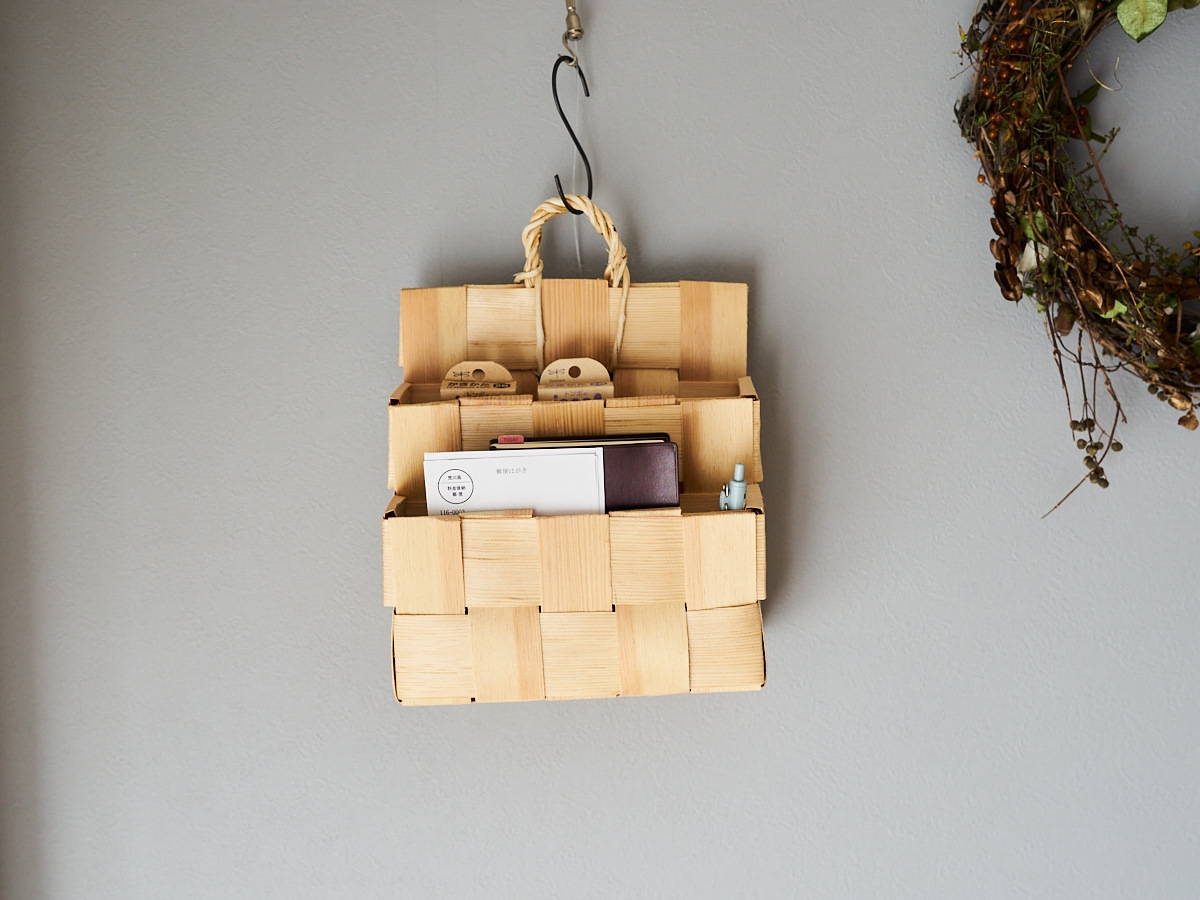
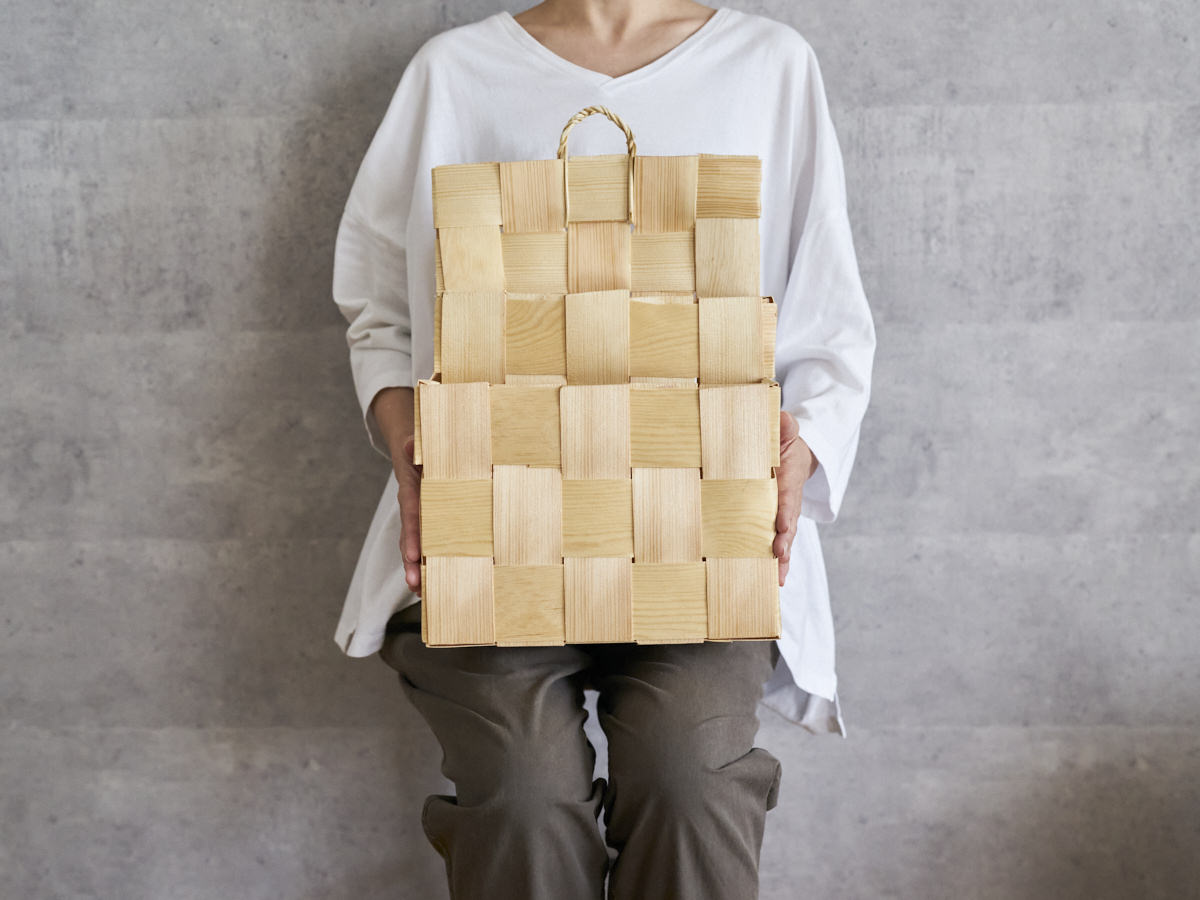
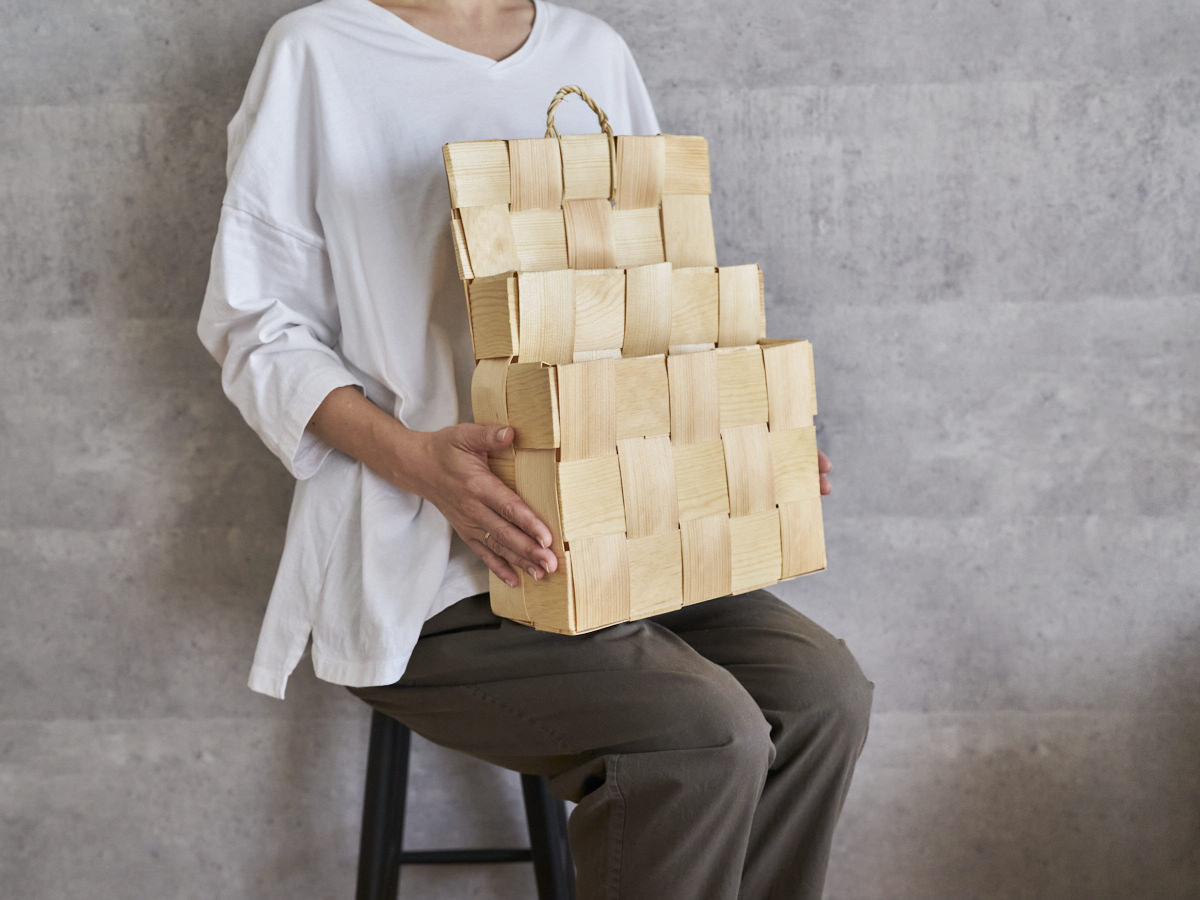
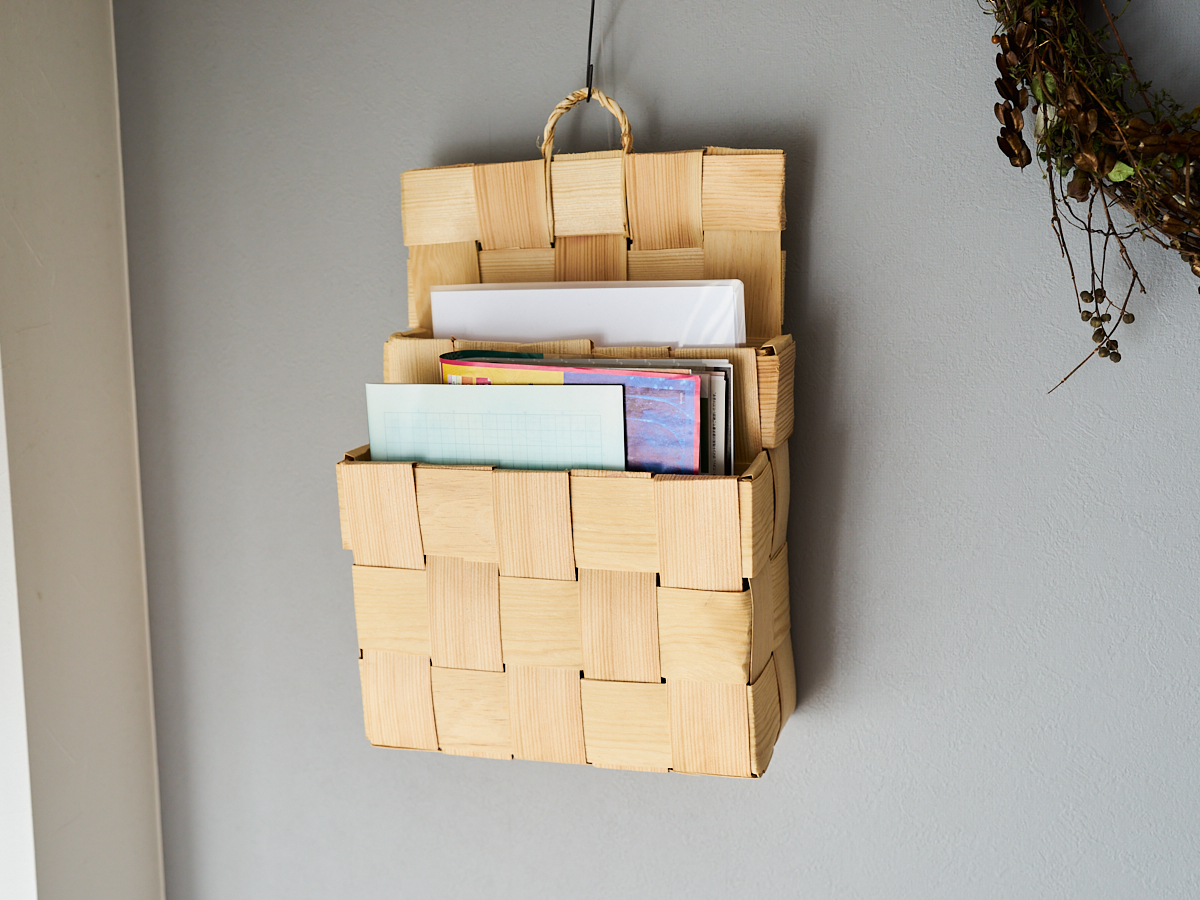
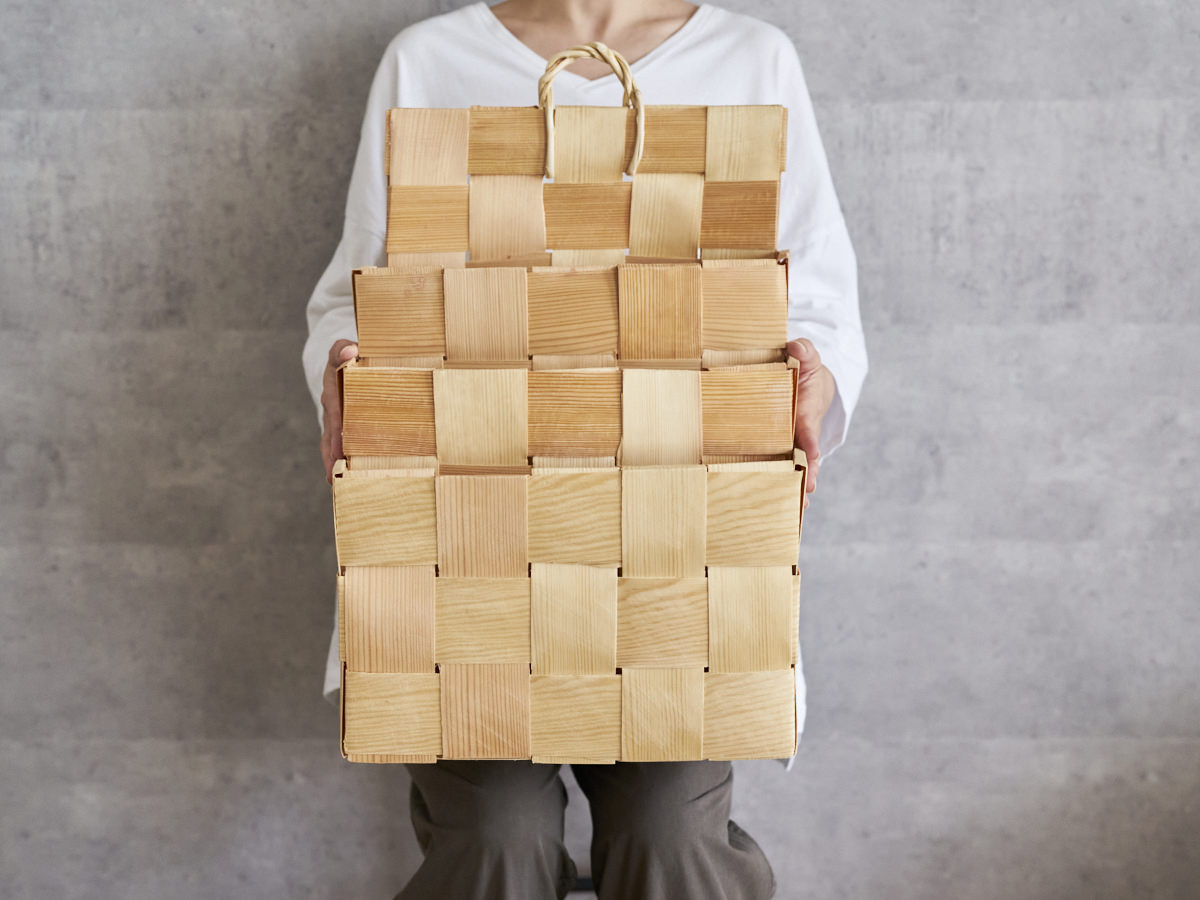
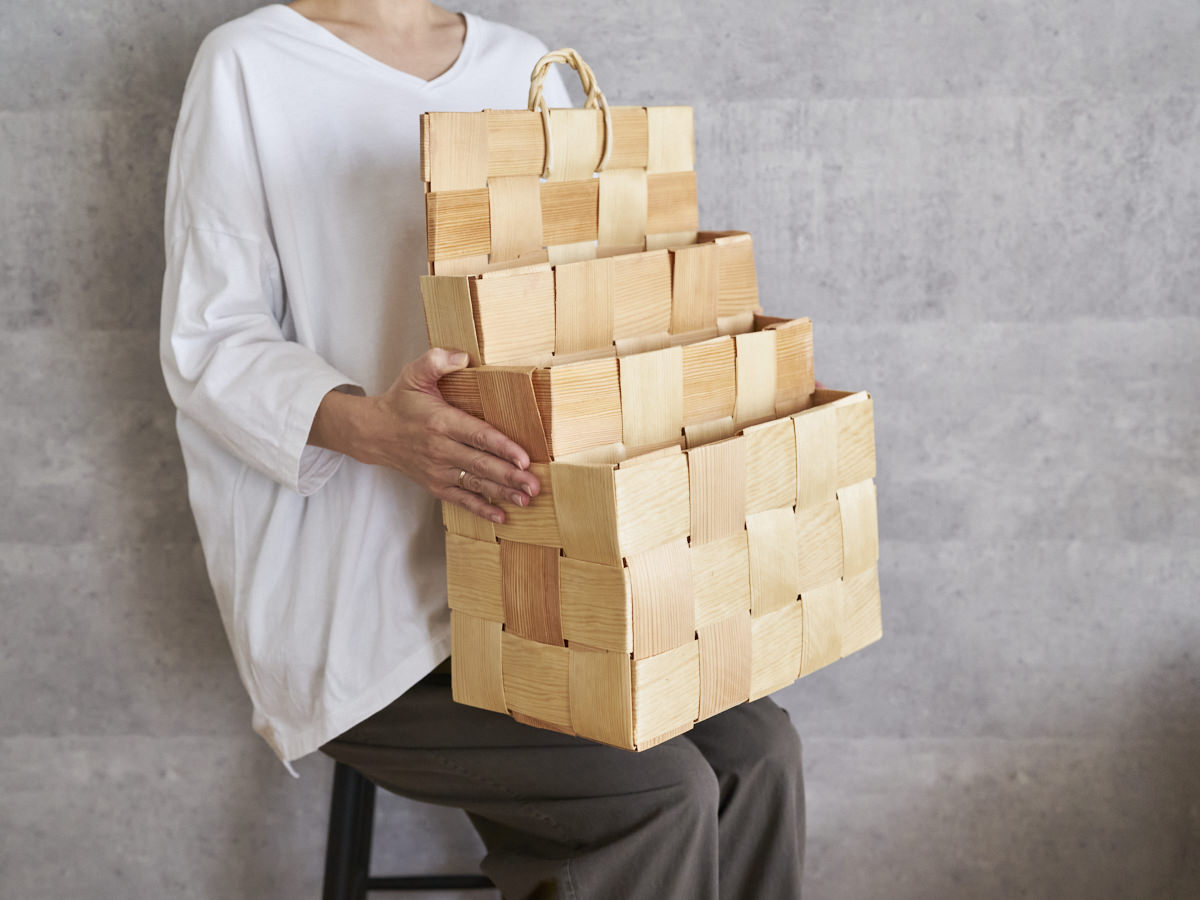
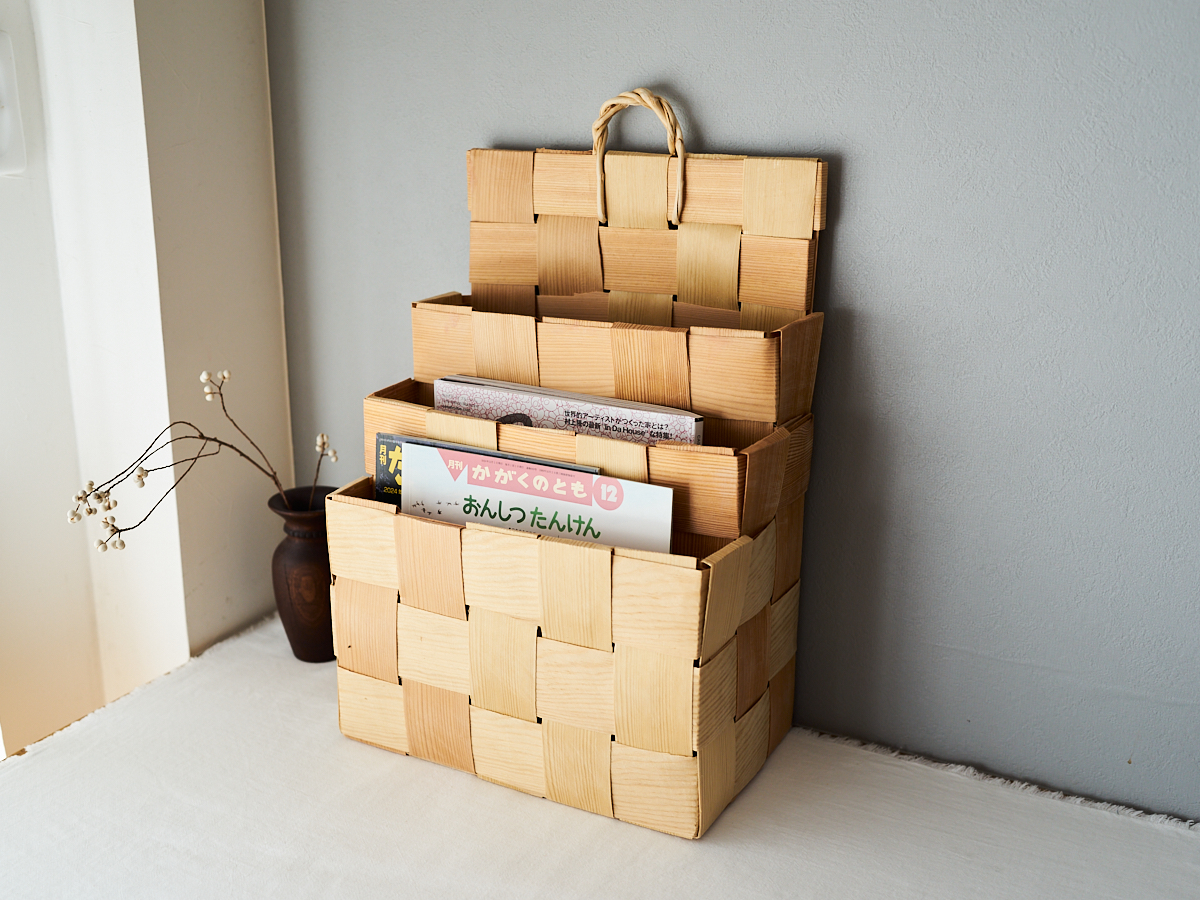
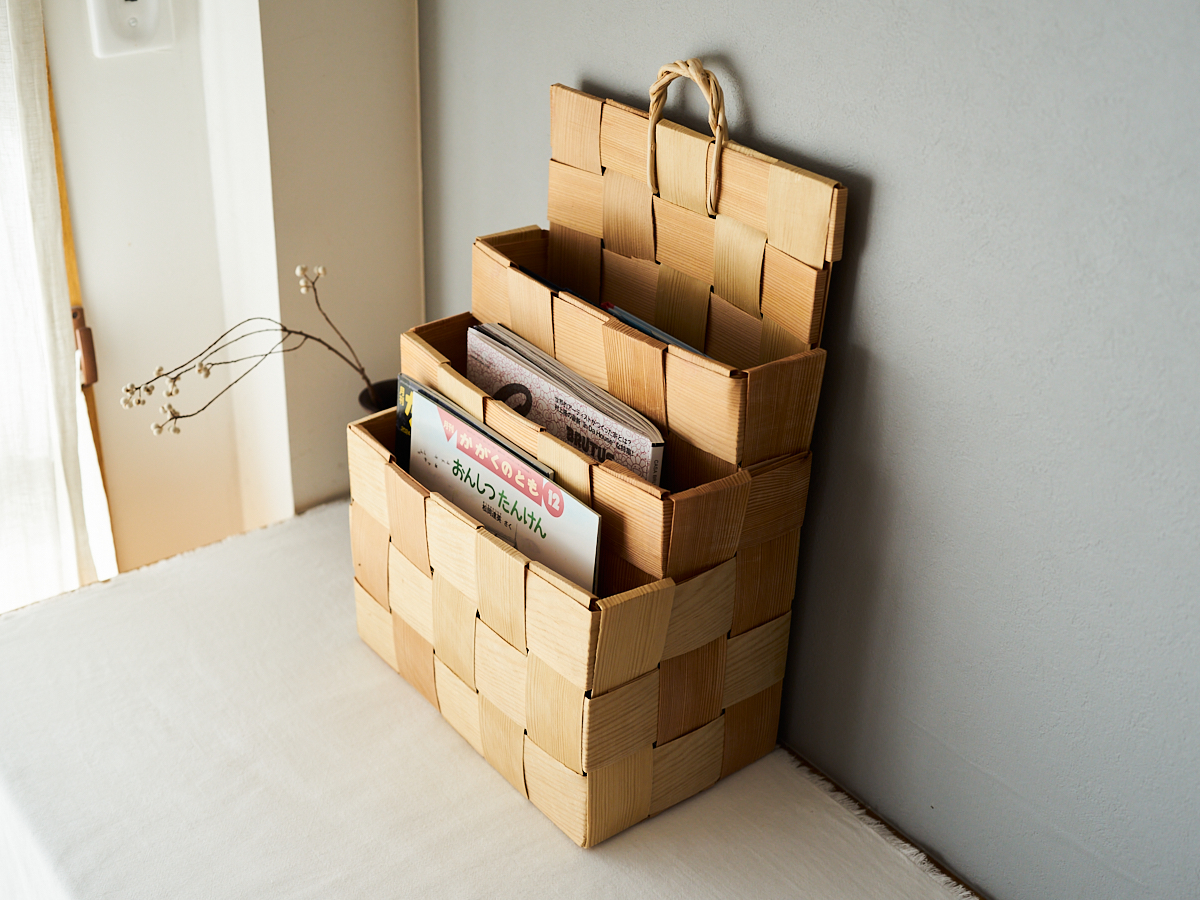
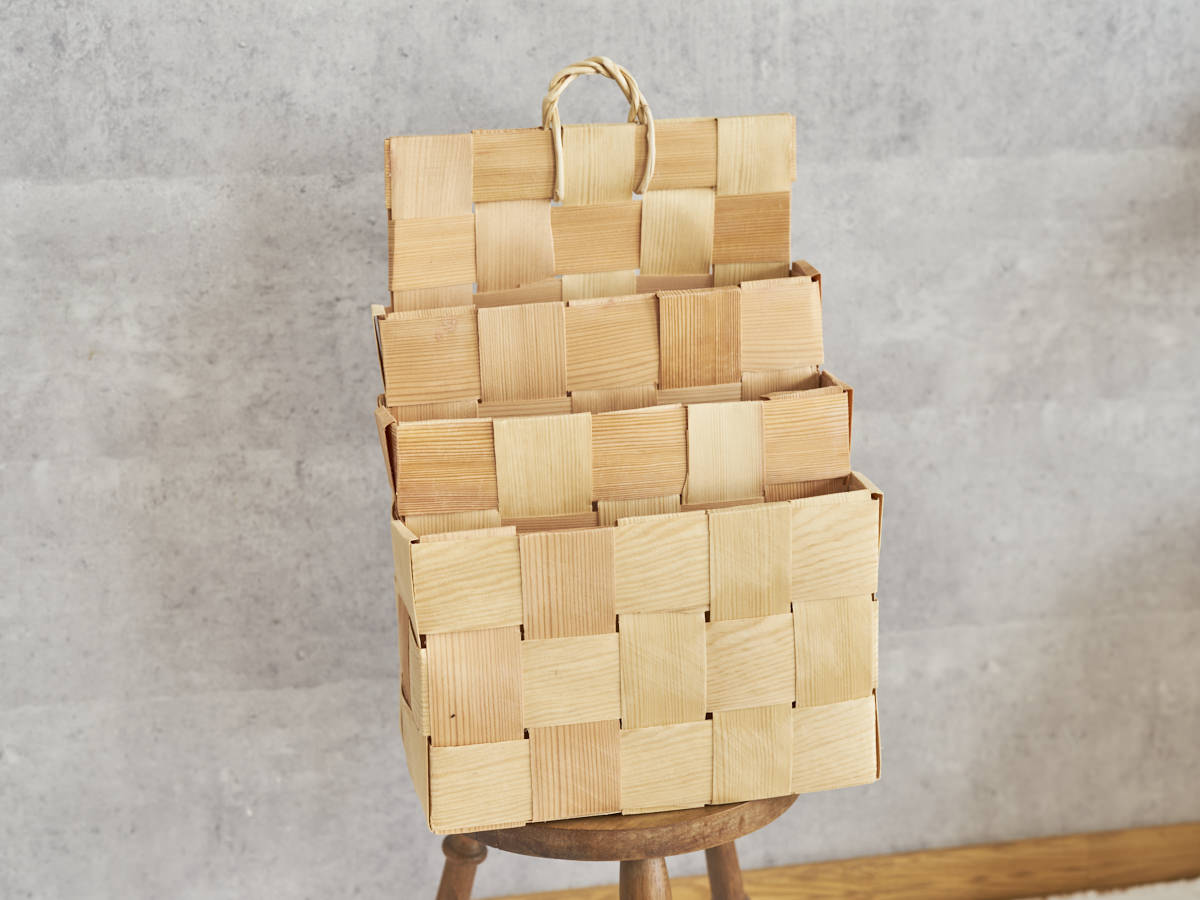
All sizes share the same construction. Wide, thinly sliced strips are woven in a regular crisscross pattern.The pine used has no knots, allowing the natural grain to be seen clearly.Although it has a strong presence, as if woven directly from solid wood, the surface feels smooth to the touch.It has a clean and well-balanced finish.At times, you may notice light scuff marks,or slight fuzz on the surface of the strips. These are natural characteristics of the material and part of its inherent texture.Here, the rim is seen from the outside. It is formed by boldly folding the strips to create the edge.Here, the rim is seen from above. When forming the edge, a small flat surface of about 1 cm is first created before folding it back. This process allows the thin wooden strips to be woven without bending them sharply.At the top, which forms the back of the magazine rack, there is a handle for hanging. It is made by twisting fibers from birch branches.Because the rim is kept clean and simple, the overall impression is slim and refined.Seen from the side. The S and M sizes have two tiers of pockets.The L size has three tiers of pockets.Now, let us introduce each size. This is the S size.It is sized to hold paperback books, manga, postcards, and envelopes.In the front pocket, postcards and an A6-sized notebook with a pen are placed, while the back pocket holds spare pencils and colored pencils.This is the M size.It is sized to hold magazines and newspapers.In the front pocket, a B5-sized notebook and a folded catalog are placed, while the back pocket holds an A4 clear file.This is the L size.Although it is a larger size, it is well suited for organizing and storing documents.In the deepest pocket, a large picture book is placed; magazines are stored in the middle, and monthly picture books are kept in the front.It can be hung, but we also recommend mounting it on the wall in this way.
Depending on the condition of the wood or the finish, some pieces are not designed to stand on their own. In addition, the balance of the items placed inside may also affect stability. When not hanging the rack, we recommend using it by leaning it against a wall, as shown in the photos.
Please note that we are unable to accept returns or exchanges for items that do not stand on their own.
Books, postcards, and documents can easily take up space and become scattered when stacked, making them feel a bit overwhelming to deal with.
By placing them here and storing them vertically, they can be organized and sorted, while also being enjoyed as part of the interior—whether placed or hung.
The L size is particularly generous in scale, but its fresh color and natural texture allow it to blend into a room without feeling overwhelming.
Please take a look at the short video to see the texture and character of each of the three sizes.
A unique magazine rack that is not often seen. Please check the sizes carefully and choose the one that best suits your needs.
— Pine Basketry from Avinurme Village, Estonia —
In Avinurme, a village located in eastern Estonia near Lake Peipus—the largest lake in the country, close to the Russian border— baskets have been made from pine for more than 200 years.
In this village, there is a family-run workshop that has been making baskets for over 25 years, using pine harvested in Estonia. The baskets made there are remarkably simple, woven from wide strips of wood, allowing the natural character of pine to be fully appreciated. Twisted handles made from birch wood are also used, giving the baskets a distinctive look and color palette typical of Northern Europe.
This workshop works with as many as twenty makers. In order to maintain consistent quality and provide feedback to the makers, baskets made by those outside the family are marked with initials on the base.
Designed in response to everyday life and to customers’ requests, their baskets are widely appreciated not only throughout Estonia but also in other regions, valued for their simple design and practical nature.
With such a wide range of styles and sizes, you may well find a shape or size that feels just right for you.
This basket is made from pine, a type of wood. Pine is a coniferous tree commonly found in Europe and North America, known for being easy to work with. It has long been used for furniture, as well as for structural elements such as posts, beams, and flooring.
For this basket, pine sourced in Estonia is used. According to the maker, pine that has grown for around 100 to 120 years is particularly well suited for basket making.
On this page, we introduce a magazine rack made from pine.
The magazine rack comes in three sizes: S, M, and L.
All sizes share the same construction. Wide, thinly sliced strips are woven in a regular crisscross pattern.The pine used has no knots, allowing the natural grain to be seen clearly.Although it has a strong presence, as if woven directly from solid wood, the surface feels smooth to the touch.It has a clean and well-balanced finish.At times, you may notice light scuff marks,or slight fuzz on the surface of the strips. These are natural characteristics of the material and part of its inherent texture.Here, the rim is seen from the outside. It is formed by boldly folding the strips to create the edge.Here, the rim is seen from above. When forming the edge, a small flat surface of about 1 cm is first created before folding it back. This process allows the thin wooden strips to be woven without bending them sharply.At the top, which forms the back of the magazine rack, there is a handle for hanging. It is made by twisting fibers from birch branches.Because the rim is kept clean and simple, the overall impression is slim and refined.Seen from the side. The S and M sizes have two tiers of pockets.The L size has three tiers of pockets.Now, let us introduce each size. This is the S size.It is sized to hold paperback books, manga, postcards, and envelopes.In the front pocket, postcards and an A6-sized notebook with a pen are placed, while the back pocket holds spare pencils and colored pencils.This is the M size.It is sized to hold magazines and newspapers.In the front pocket, a B5-sized notebook and a folded catalog are placed, while the back pocket holds an A4 clear file.This is the L size.Although it is a larger size, it is well suited for organizing and storing documents.In the deepest pocket, a large picture book is placed; magazines are stored in the middle, and monthly picture books are kept in the front.It can be hung, but we also recommend mounting it on the wall in this way.
Depending on the condition of the wood or the finish, some pieces are not designed to stand on their own. In addition, the balance of the items placed inside may also affect stability. When not hanging the rack, we recommend using it by leaning it against a wall, as shown in the photos.
Please note that we are unable to accept returns or exchanges for items that do not stand on their own.
Books, postcards, and documents can easily take up space and become scattered when stacked, making them feel a bit overwhelming to deal with.
By placing them here and storing them vertically, they can be organized and sorted, while also being enjoyed as part of the interior—whether placed or hung.
The L size is particularly generous in scale, but its fresh color and natural texture allow it to blend into a room without feeling overwhelming.
Please take a look at the short video to see the texture and character of each of the three sizes.
A unique magazine rack that is not often seen. Please check the sizes carefully and choose the one that best suits your needs.
— Pine Basketry from Avinurme Village, Estonia —
In Avinurme, a village located in eastern Estonia near Lake Peipus—the largest lake in the country, close to the Russian border— baskets have been made from pine for more than 200 years.
In this village, there is a family-run workshop that has been making baskets for over 25 years, using pine harvested in Estonia. The baskets made there are remarkably simple, woven from wide strips of wood, allowing the natural character of pine to be fully appreciated. Twisted handles made from birch wood are also used, giving the baskets a distinctive look and color palette typical of Northern Europe.
This workshop works with as many as twenty makers. In order to maintain consistent quality and provide feedback to the makers, baskets made by those outside the family are marked with initials on the base.
Designed in response to everyday life and to customers’ requests, their baskets are widely appreciated not only throughout Estonia but also in other regions, valued for their simple design and practical nature.
With such a wide range of styles and sizes, you may well find a shape or size that feels just right for you.
This basket is made from pine, a type of wood. Pine is a coniferous tree commonly found in Europe and North America, known for being easy to work with. It has long been used for furniture, as well as for structural elements such as posts, beams, and flooring.
For this basket, pine sourced in Estonia is used. According to the maker, pine that has grown for around 100 to 120 years is particularly well suited for basket making.
On this page, we introduce a magazine rack made from pine.
The magazine rack comes in three sizes: S, M, and L.
All sizes share the same construction. Wide, thinly sliced strips are woven in a regular crisscross pattern.The pine used has no knots, allowing the natural grain to be seen clearly.Although it has a strong presence, as if woven directly from solid wood, the surface feels smooth to the touch.It has a clean and well-balanced finish.At times, you may notice light scuff marks,or slight fuzz on the surface of the strips. These are natural characteristics of the material and part of its inherent texture.Here, the rim is seen from the outside. It is formed by boldly folding the strips to create the edge.Here, the rim is seen from above. When forming the edge, a small flat surface of about 1 cm is first created before folding it back. This process allows the thin wooden strips to be woven without bending them sharply.At the top, which forms the back of the magazine rack, there is a handle for hanging. It is made by twisting fibers from birch branches.Because the rim is kept clean and simple, the overall impression is slim and refined.Seen from the side. The S and M sizes have two tiers of pockets.The L size has three tiers of pockets.Now, let us introduce each size. This is the S size.It is sized to hold paperback books, manga, postcards, and envelopes.In the front pocket, postcards and an A6-sized notebook with a pen are placed, while the back pocket holds spare pencils and colored pencils.This is the M size.It is sized to hold magazines and newspapers.In the front pocket, a B5-sized notebook and a folded catalog are placed, while the back pocket holds an A4 clear file.This is the L size.Although it is a larger size, it is well suited for organizing and storing documents.In the deepest pocket, a large picture book is placed; magazines are stored in the middle, and monthly picture books are kept in the front.It can be hung, but we also recommend mounting it on the wall in this way.
Depending on the condition of the wood or the finish, some pieces are not designed to stand on their own. In addition, the balance of the items placed inside may also affect stability. When not hanging the rack, we recommend using it by leaning it against a wall, as shown in the photos.
Please note that we are unable to accept returns or exchanges for items that do not stand on their own.
Books, postcards, and documents can easily take up space and become scattered when stacked, making them feel a bit overwhelming to deal with.
By placing them here and storing them vertically, they can be organized and sorted, while also being enjoyed as part of the interior—whether placed or hung.
The L size is particularly generous in scale, but its fresh color and natural texture allow it to blend into a room without feeling overwhelming.
Please take a look at the short video to see the texture and character of each of the three sizes.
A unique magazine rack that is not often seen. Please check the sizes carefully and choose the one that best suits your needs.
— Pine Basketry from Avinurme Village, Estonia —
In Avinurme, a village located in eastern Estonia near Lake Peipus—the largest lake in the country, close to the Russian border— baskets have been made from pine for more than 200 years.
In this village, there is a family-run workshop that has been making baskets for over 25 years, using pine harvested in Estonia. The baskets made there are remarkably simple, woven from wide strips of wood, allowing the natural character of pine to be fully appreciated. Twisted handles made from birch wood are also used, giving the baskets a distinctive look and color palette typical of Northern Europe.
This workshop works with as many as twenty makers. In order to maintain consistent quality and provide feedback to the makers, baskets made by those outside the family are marked with initials on the base.
Designed in response to everyday life and to customers’ requests, their baskets are widely appreciated not only throughout Estonia but also in other regions, valued for their simple design and practical nature.
With such a wide range of styles and sizes, you may well find a shape or size that feels just right for you.