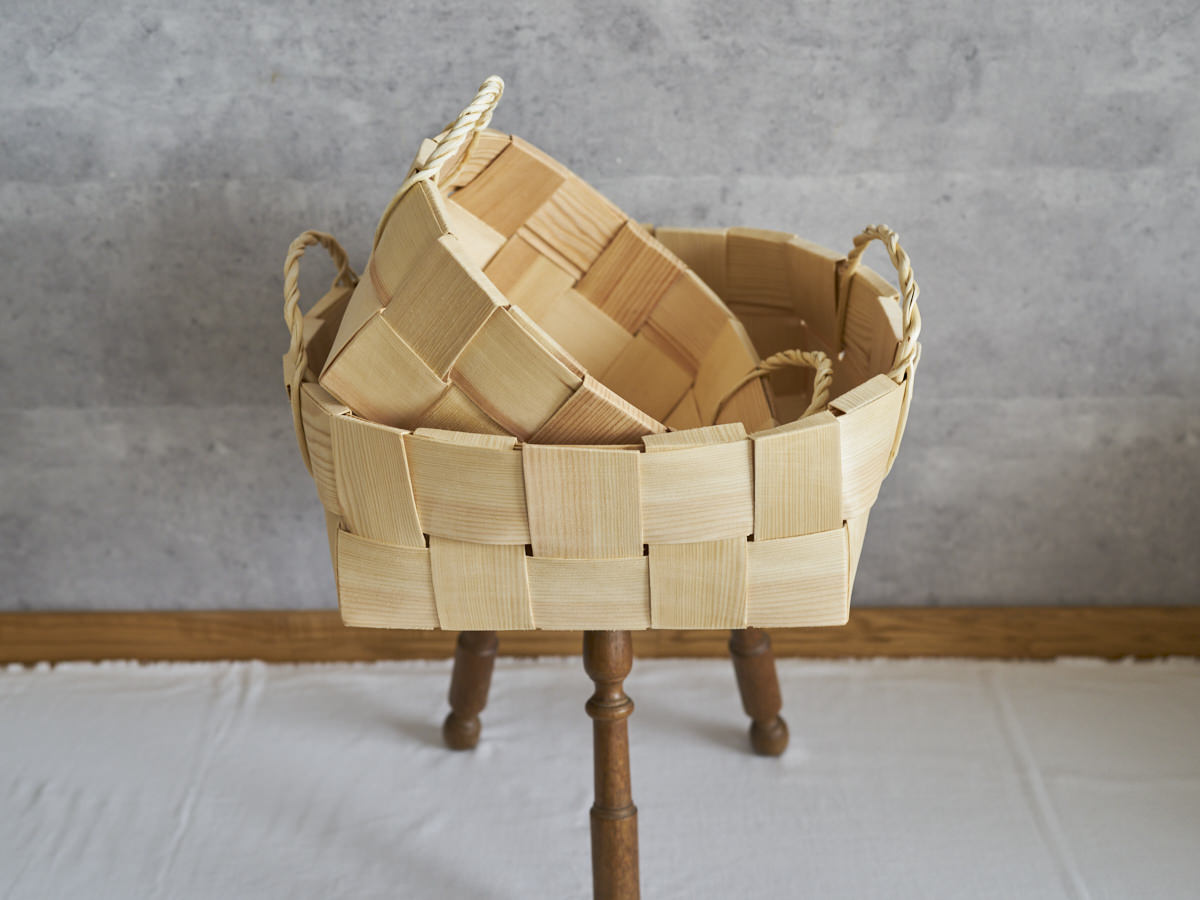
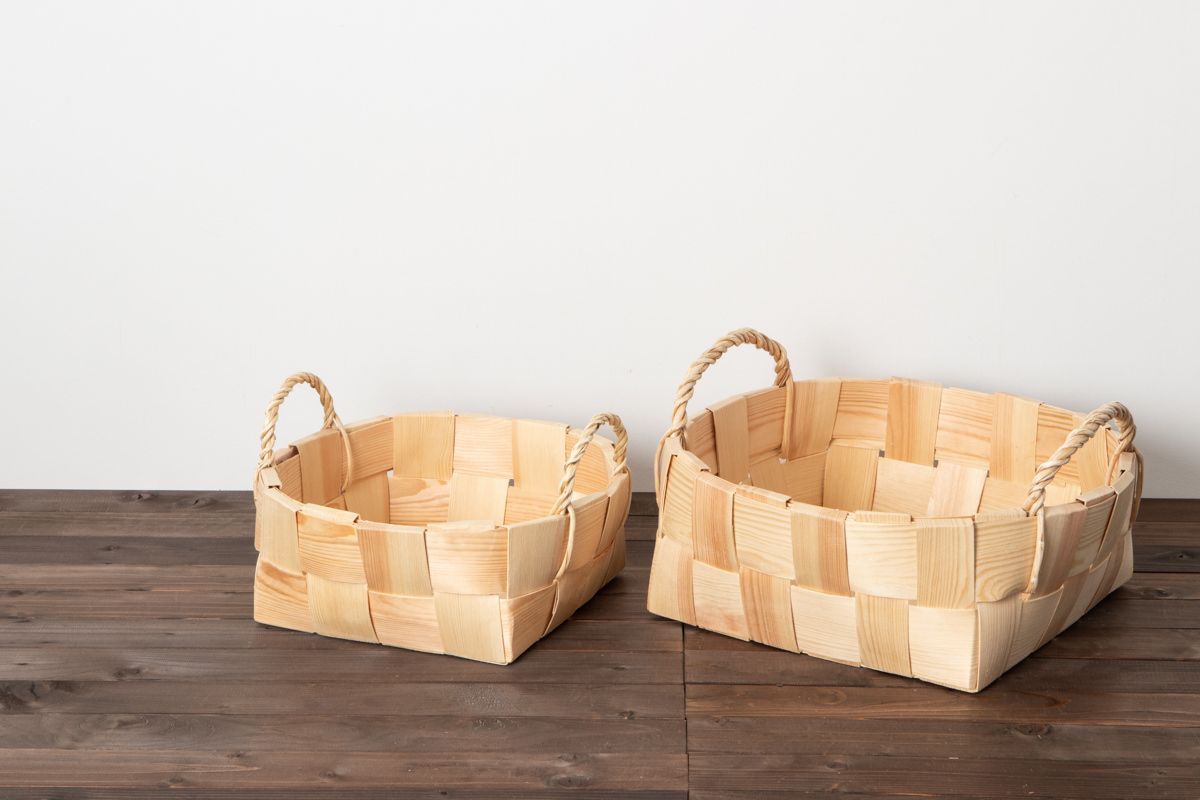
Round Double-Handle Basket / Pine / EST 330726 エストニア/パイン 丸バスケット 浅 ダブルハンドル S・L 2サイズ
Round Double-Handle Basket / Pine / EST 330726 エストニア/パイン 丸バスケット 浅 ダブルハンドル S・L 2サイズ
This basket is made from pine, a type of wood. Pine is a coniferous tree commonly found in Europe and North America, known for being easy to work with. It has long been used for furniture, as well as for structural elements such as posts, beams, and flooring.
For this basket, pine sourced in Estonia is used. According to the maker, pine that has grown for around 100 to 120 years is particularly well suited for basket making.
On this page, we introduce the “Round Double-Handle Basket” made from pine, available in two sizes: S and L.
In its place of origin, Estonia, this basket is known as an “apple basket.”
In Japan as well, colder regions are often famous for apples, and in Estonia—located in Northern Europe—it is said that many apples grow, though they are generally smaller than those found in Japan.
In some parts of Estonia, apple trees can be found growing throughout the town. When the season comes and the fruit ripens in abundance—more than can be eaten— these baskets filled with apples are placed at the entrances of homes, where anyone is free to take them.
This is a shallow, double-handled basket that seems to reflect such scenes from everyday life in Estonia.
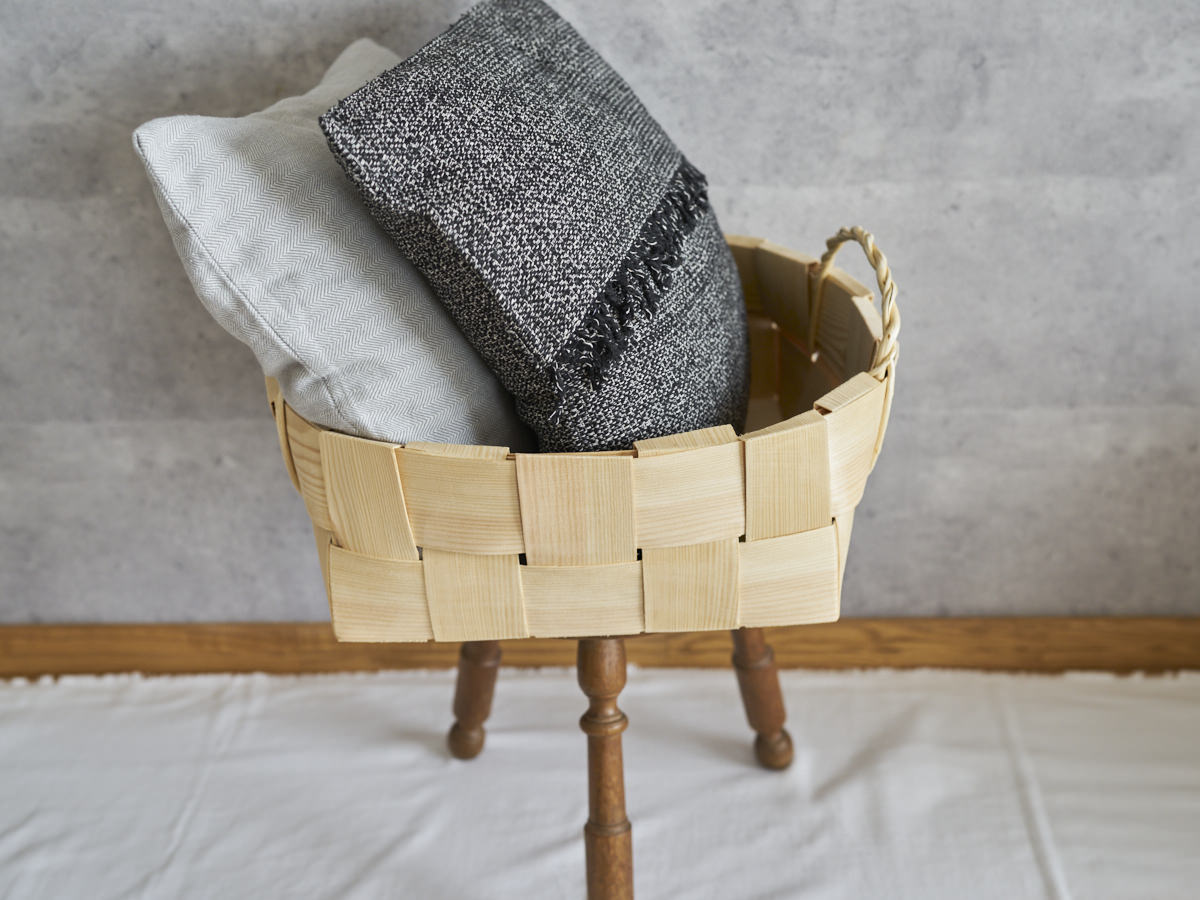
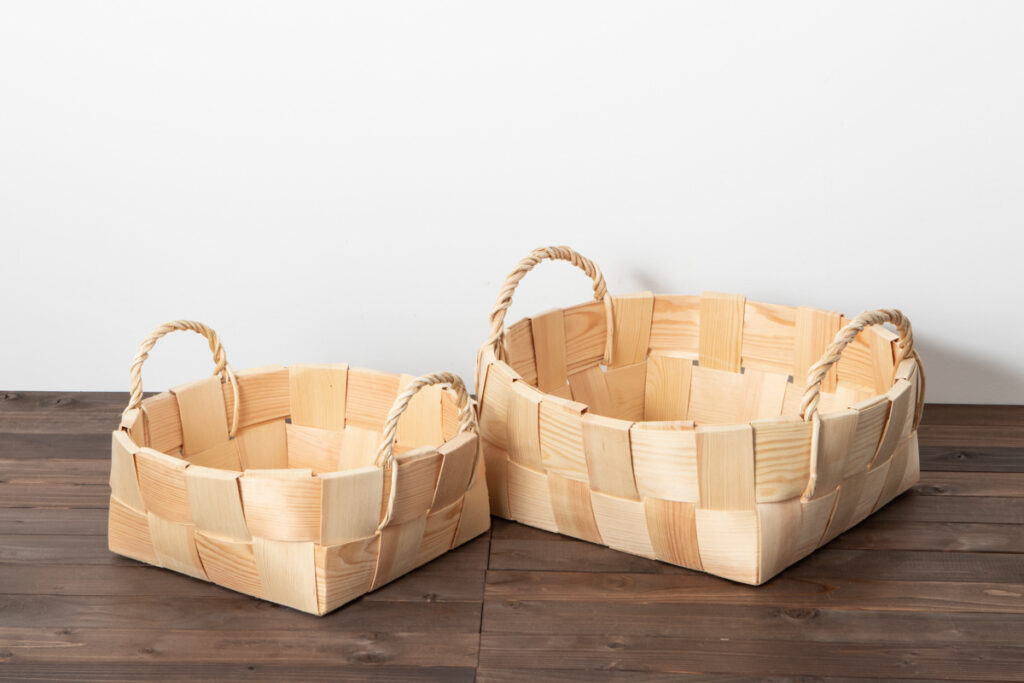
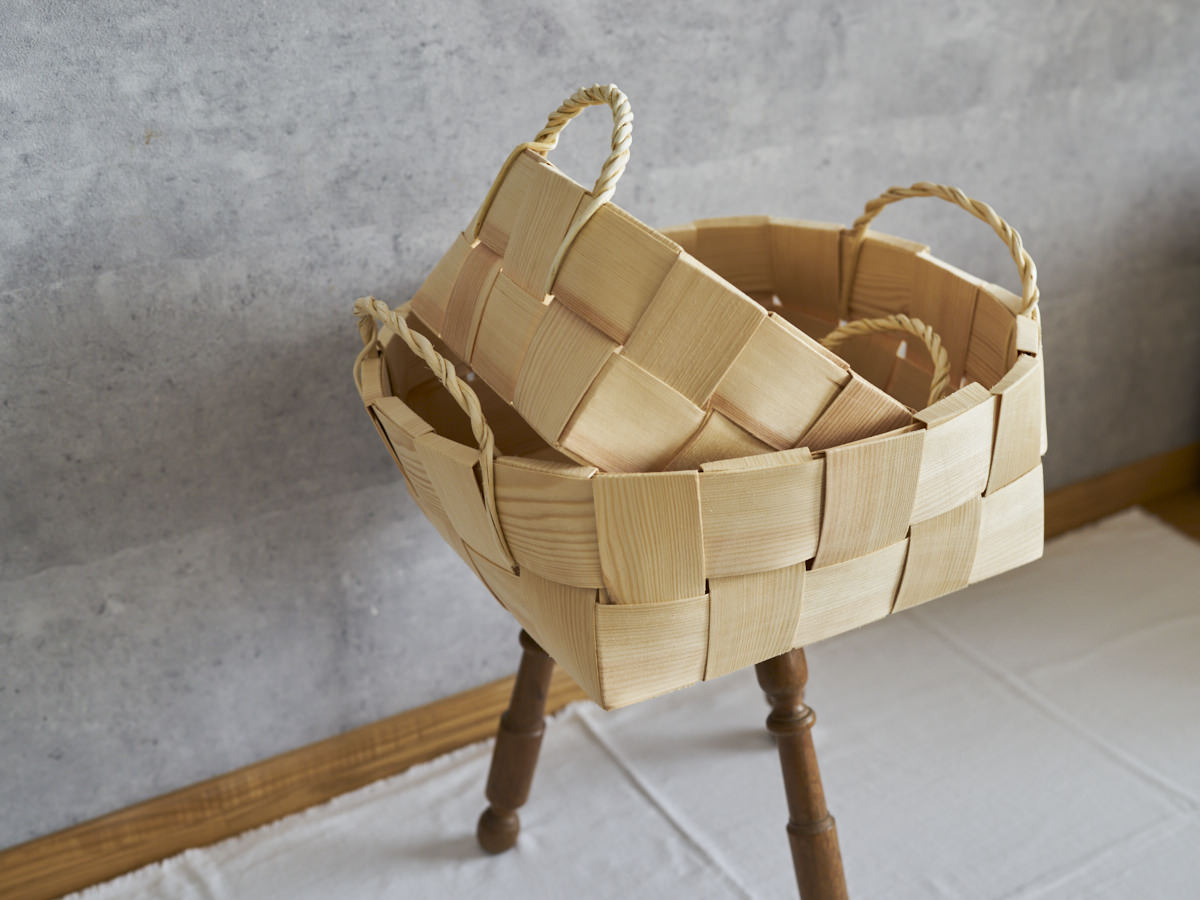
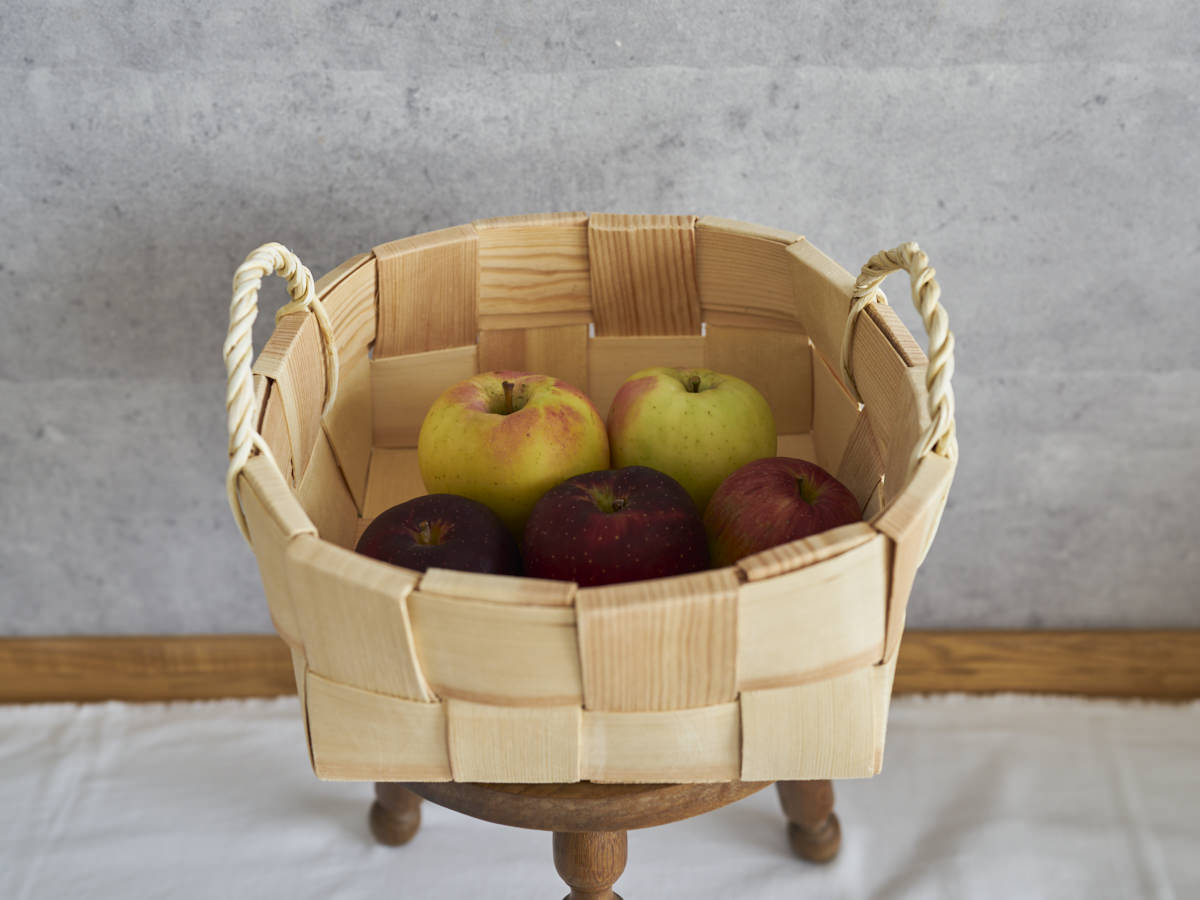
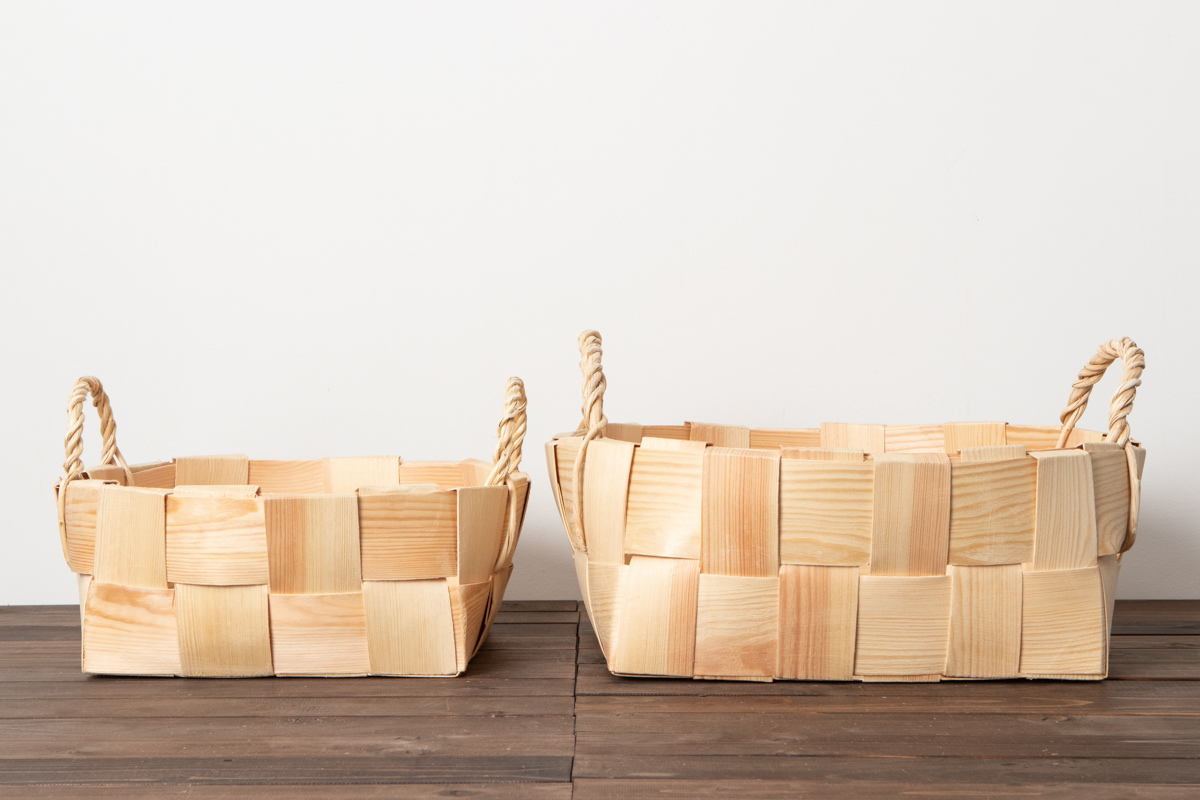
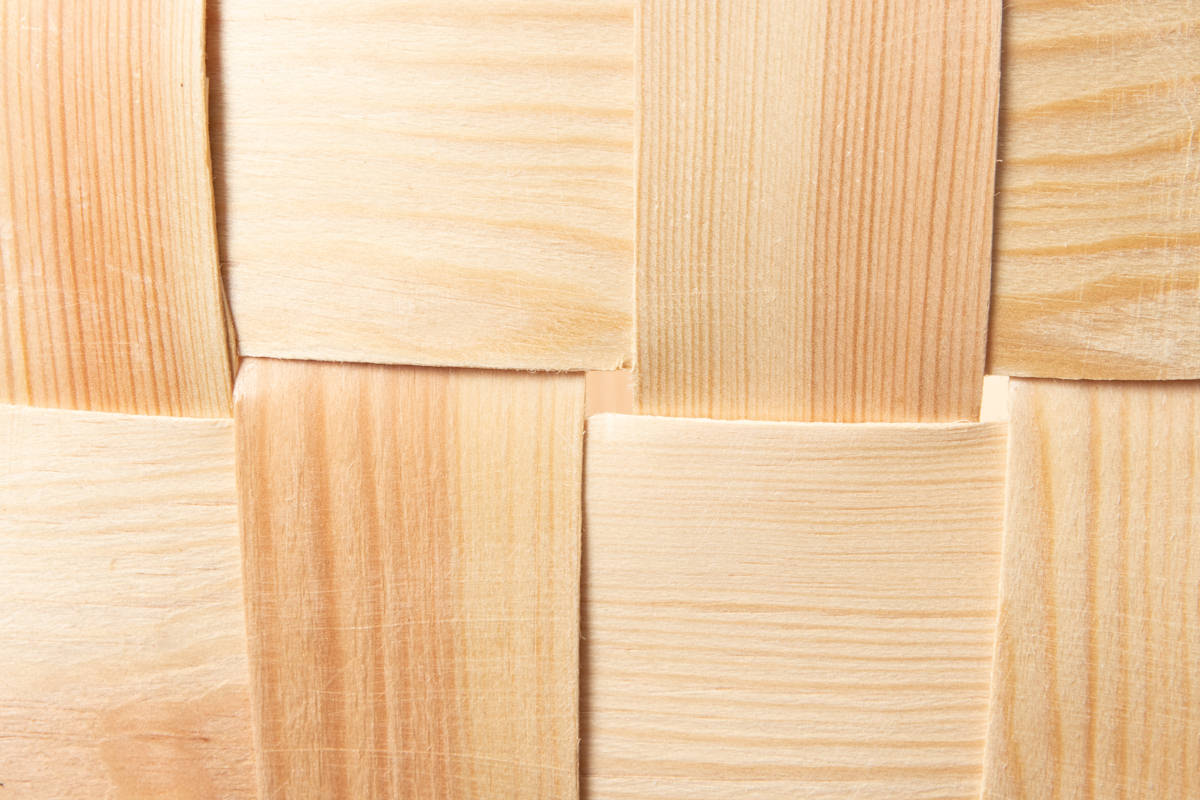
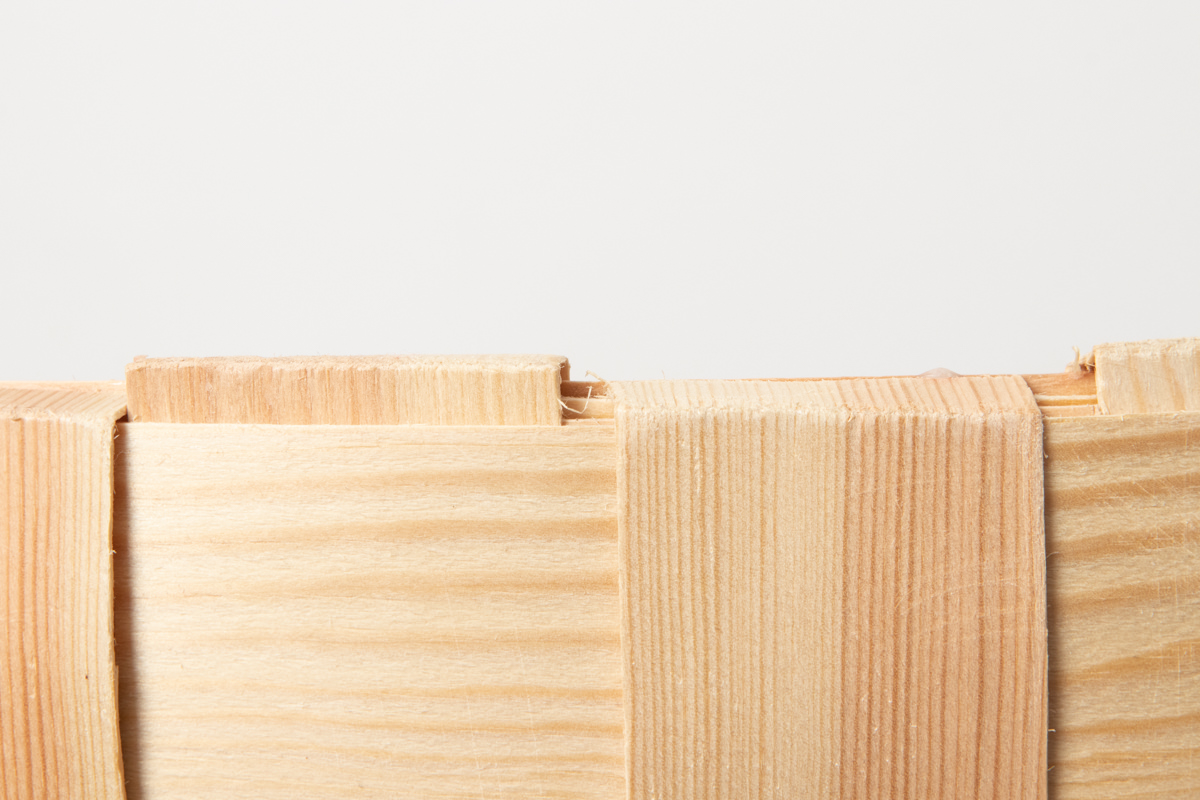
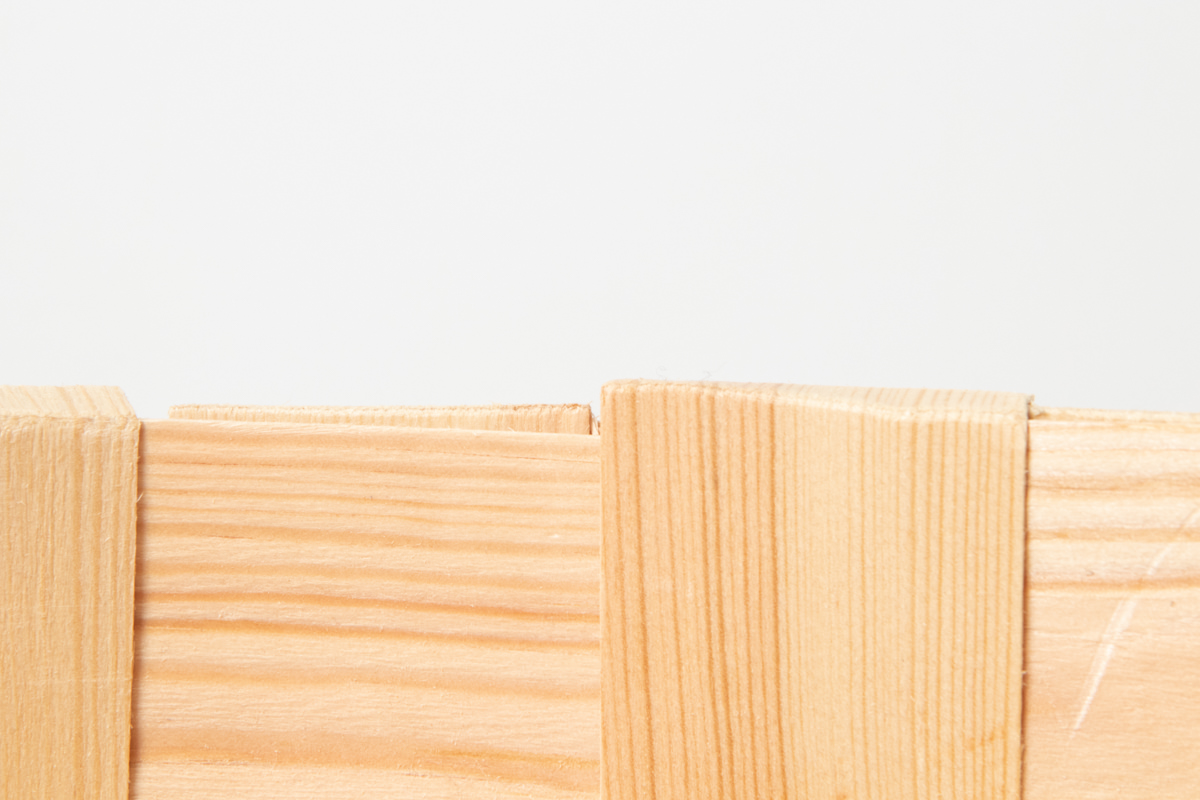
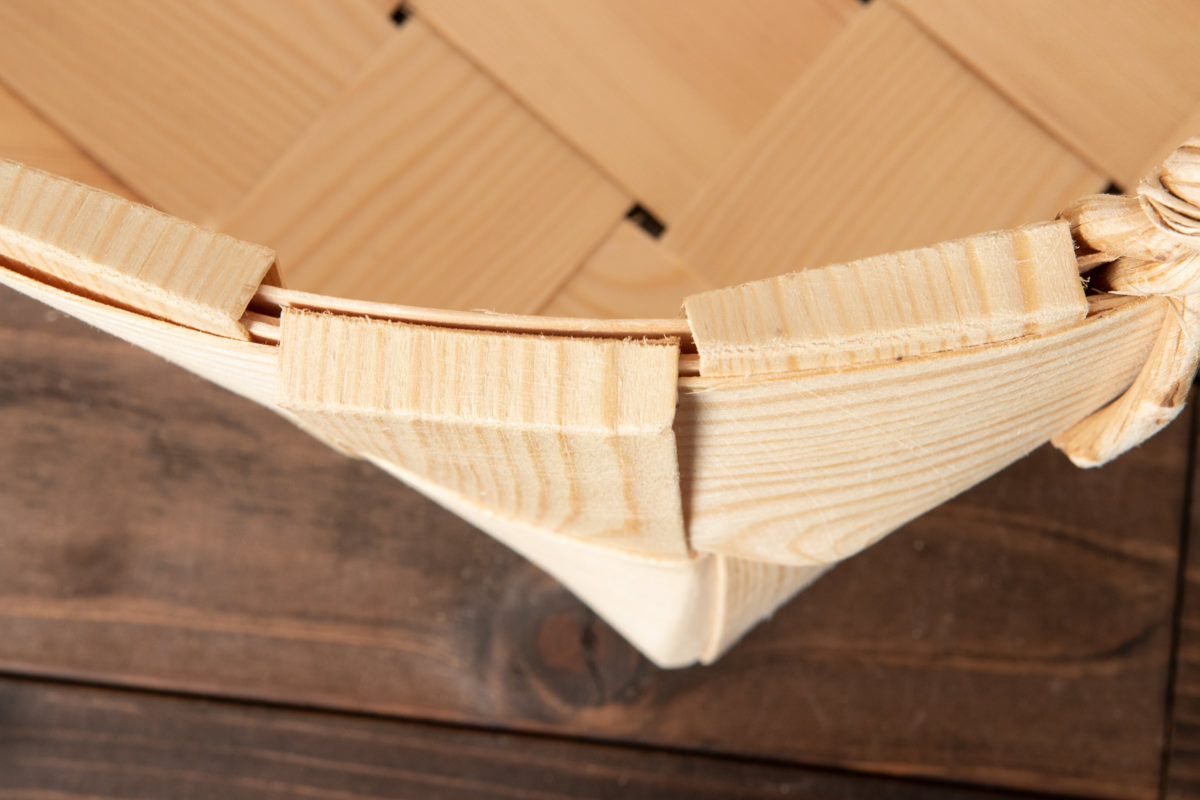
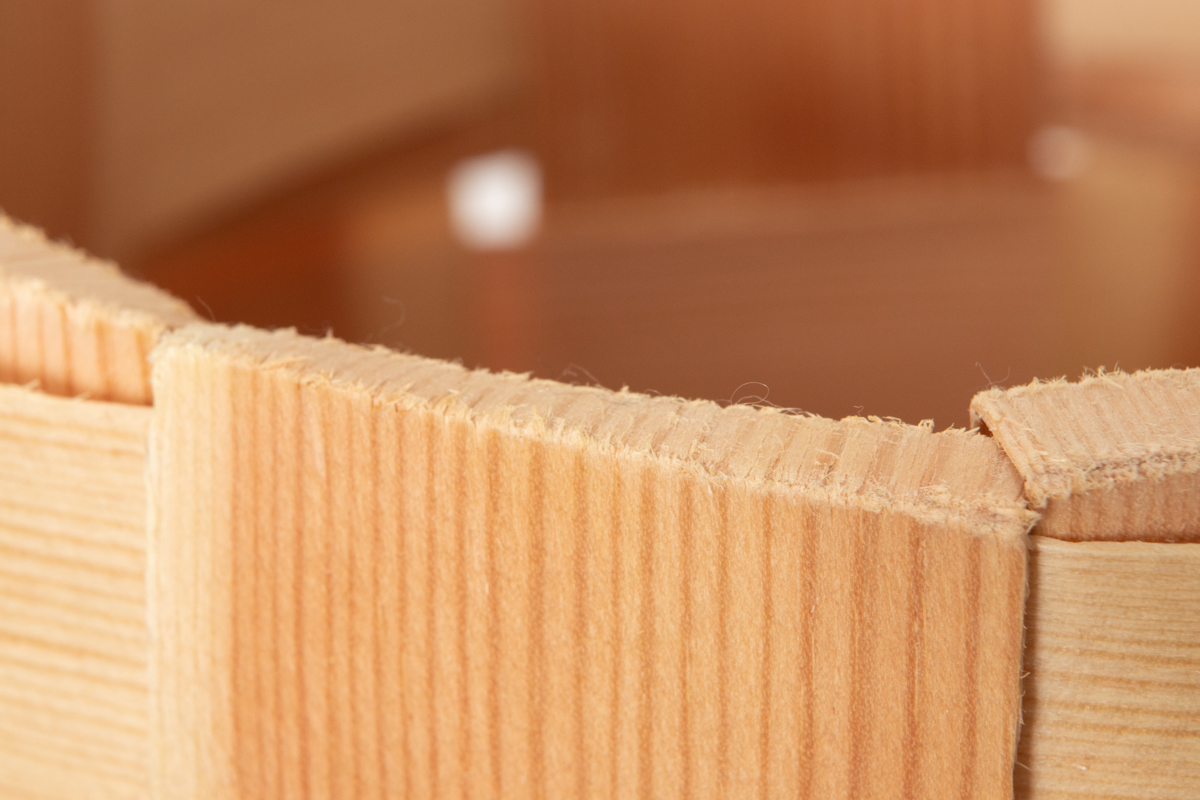
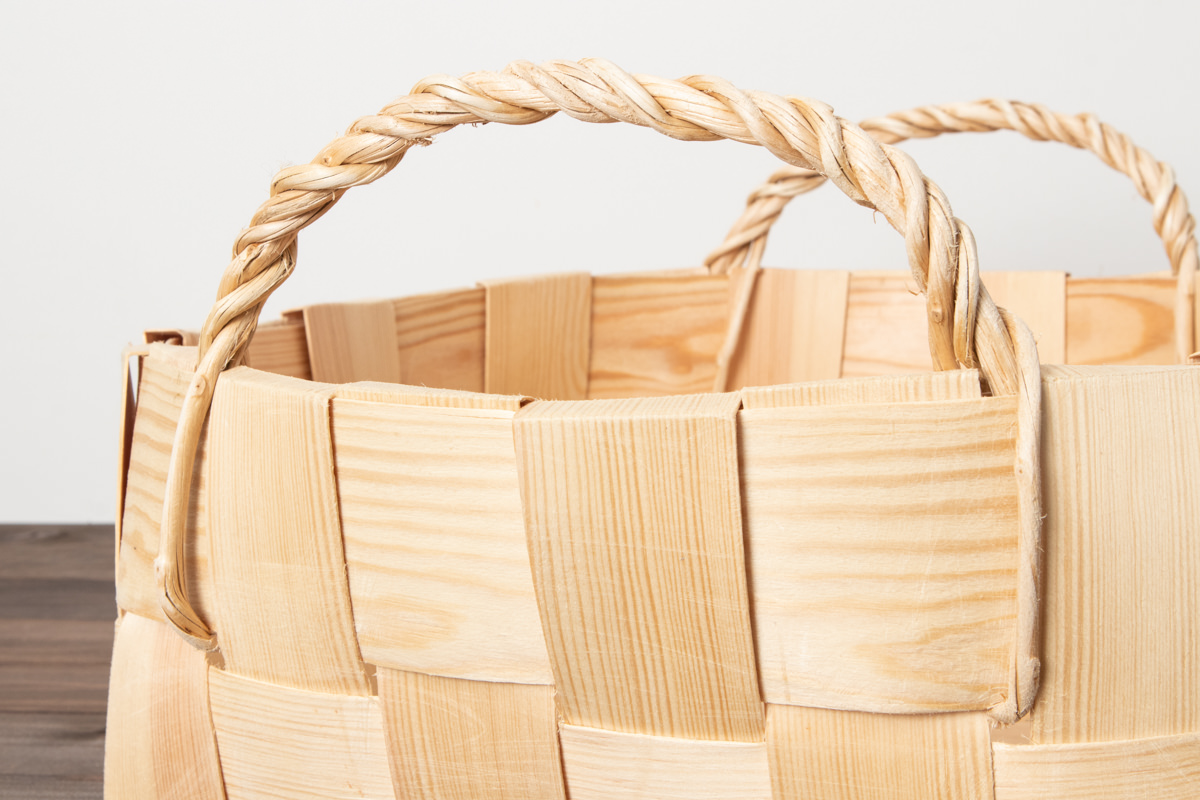
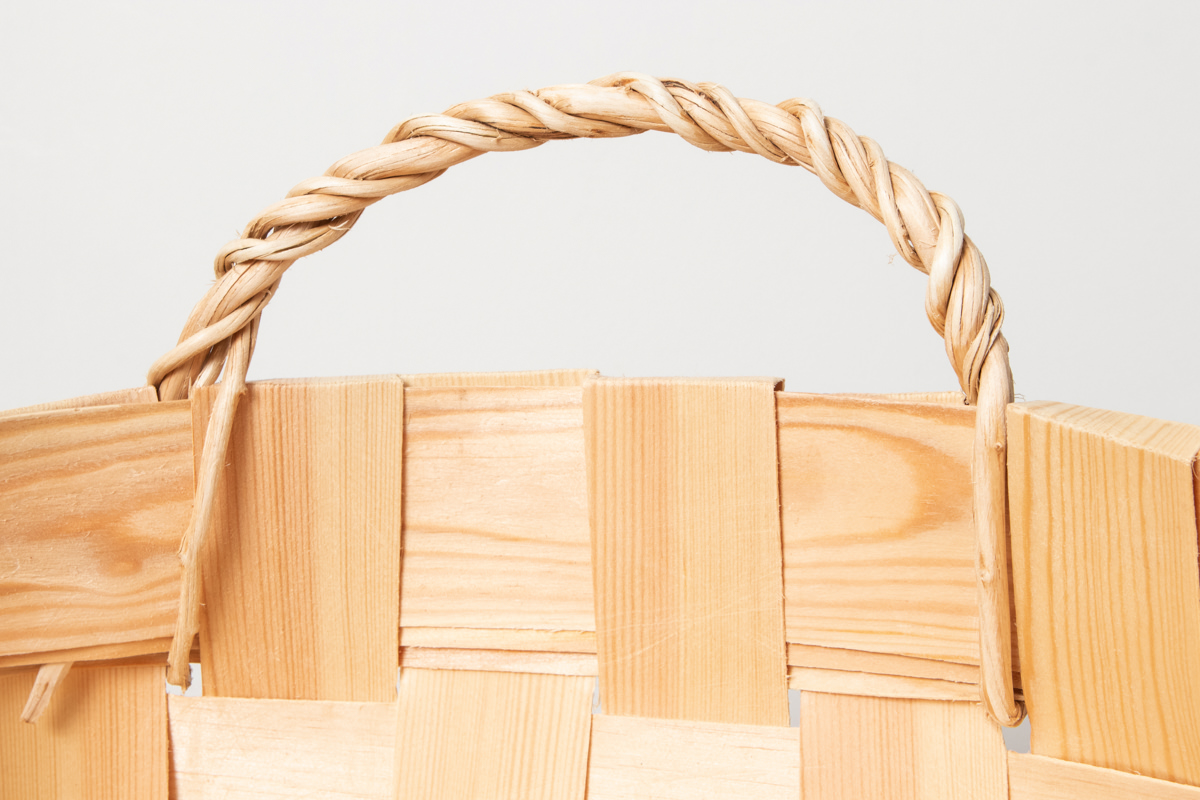
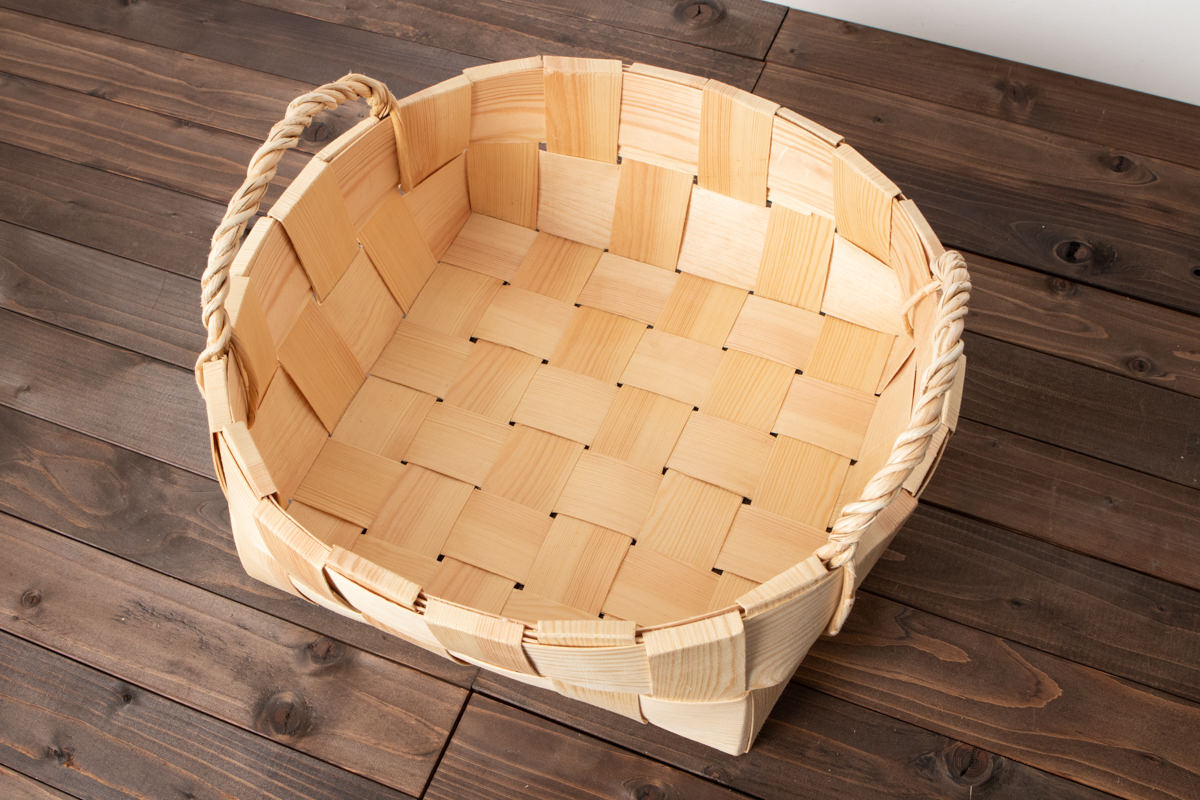
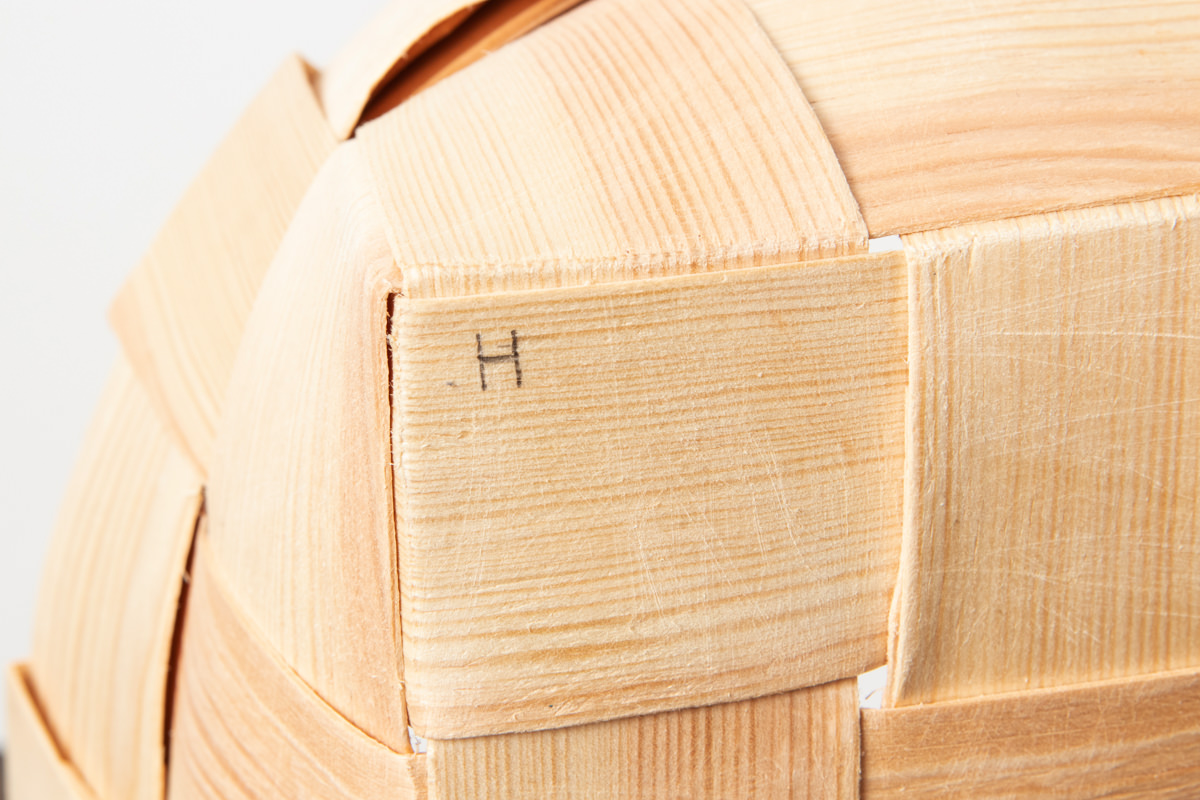
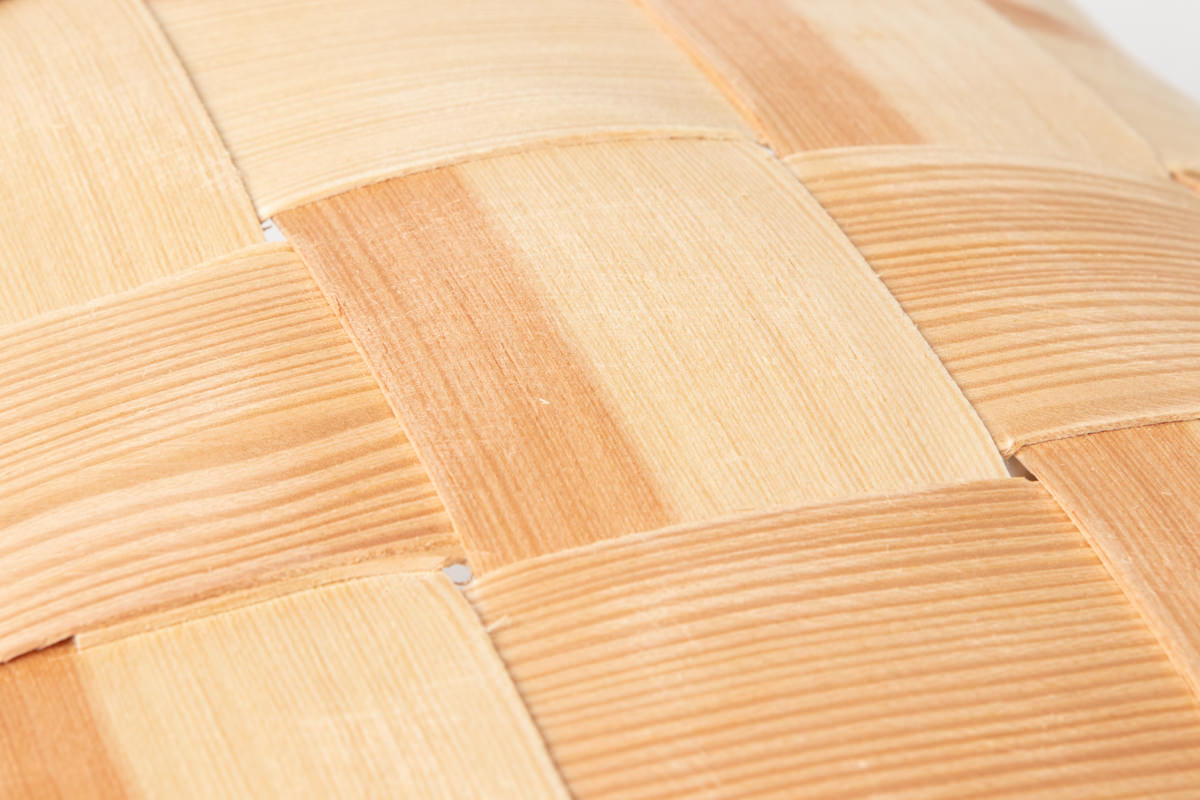
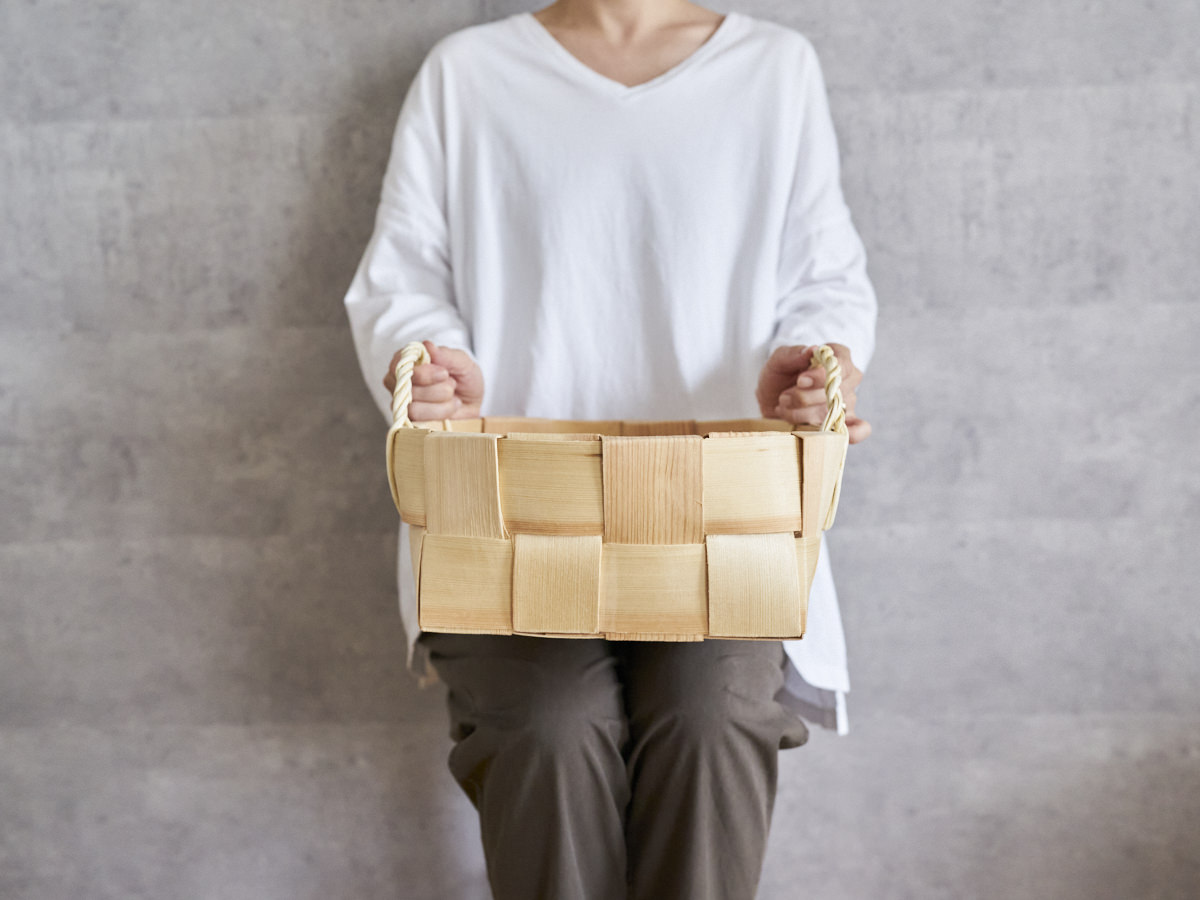
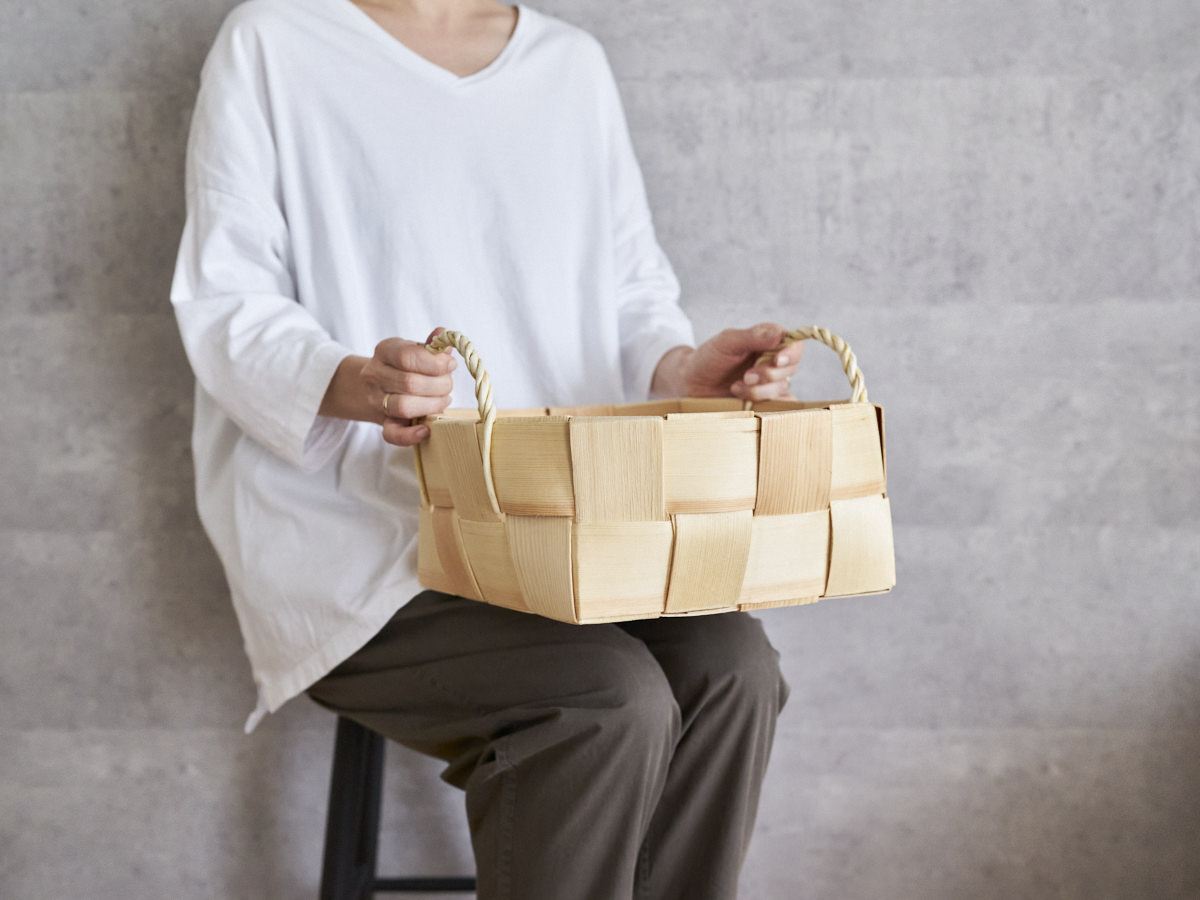
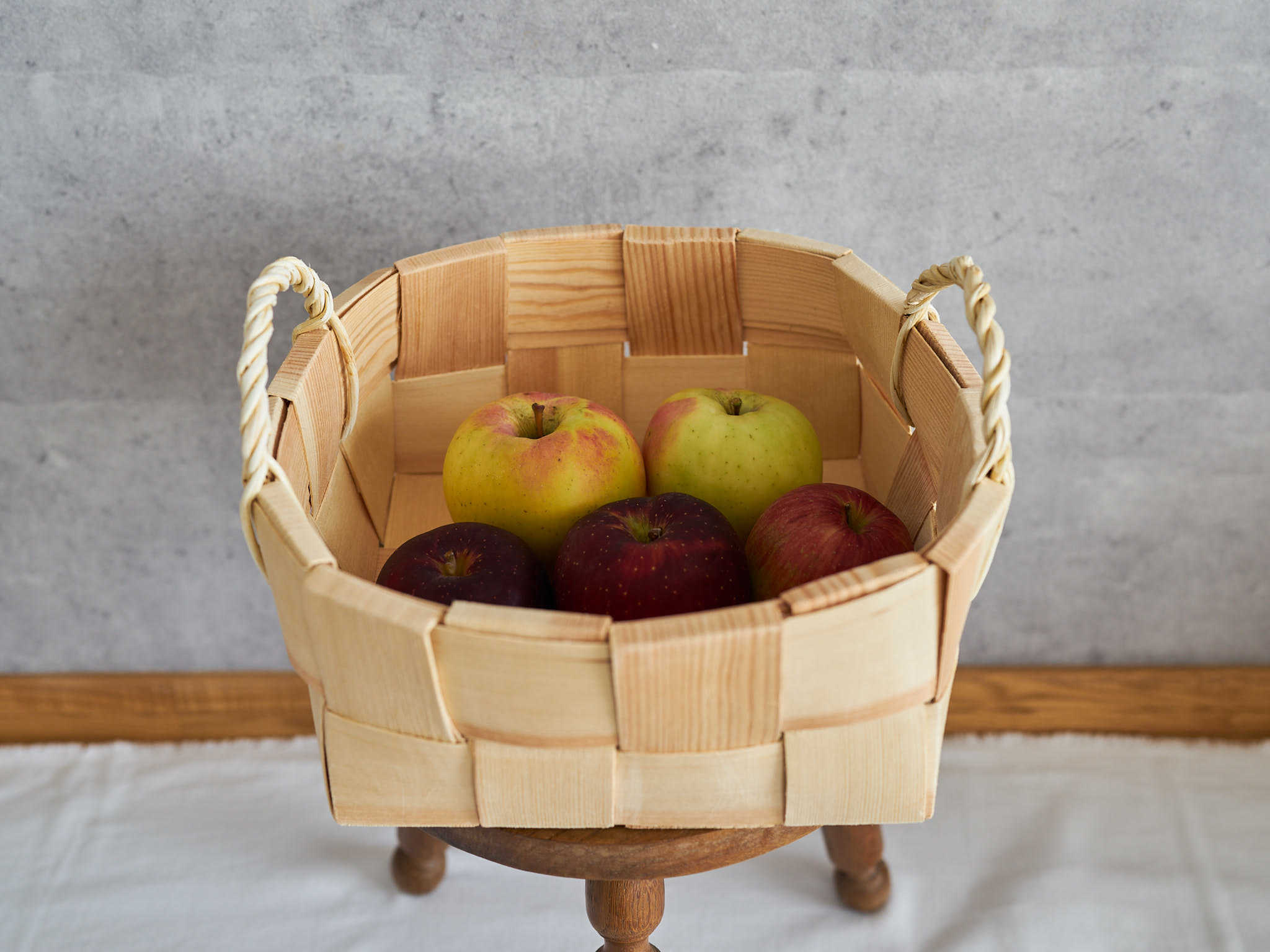
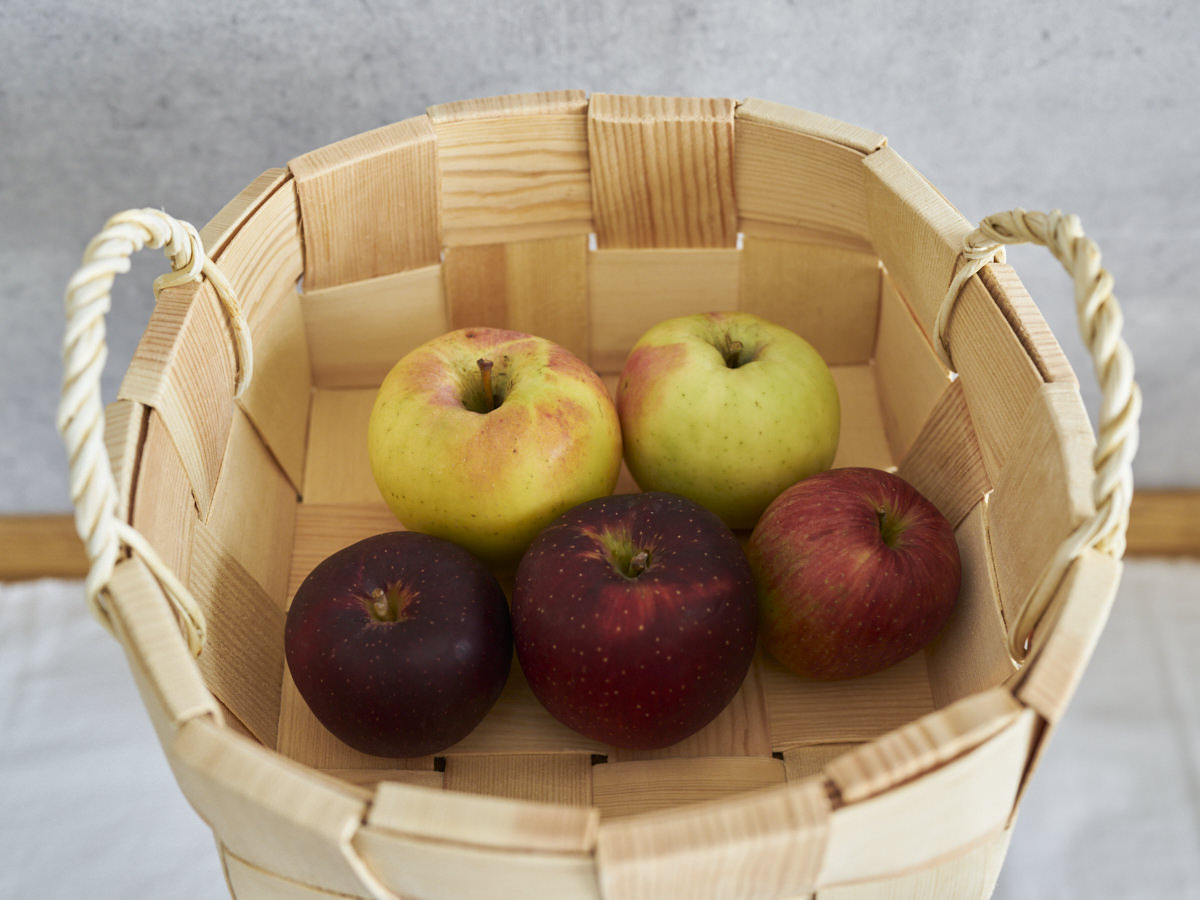
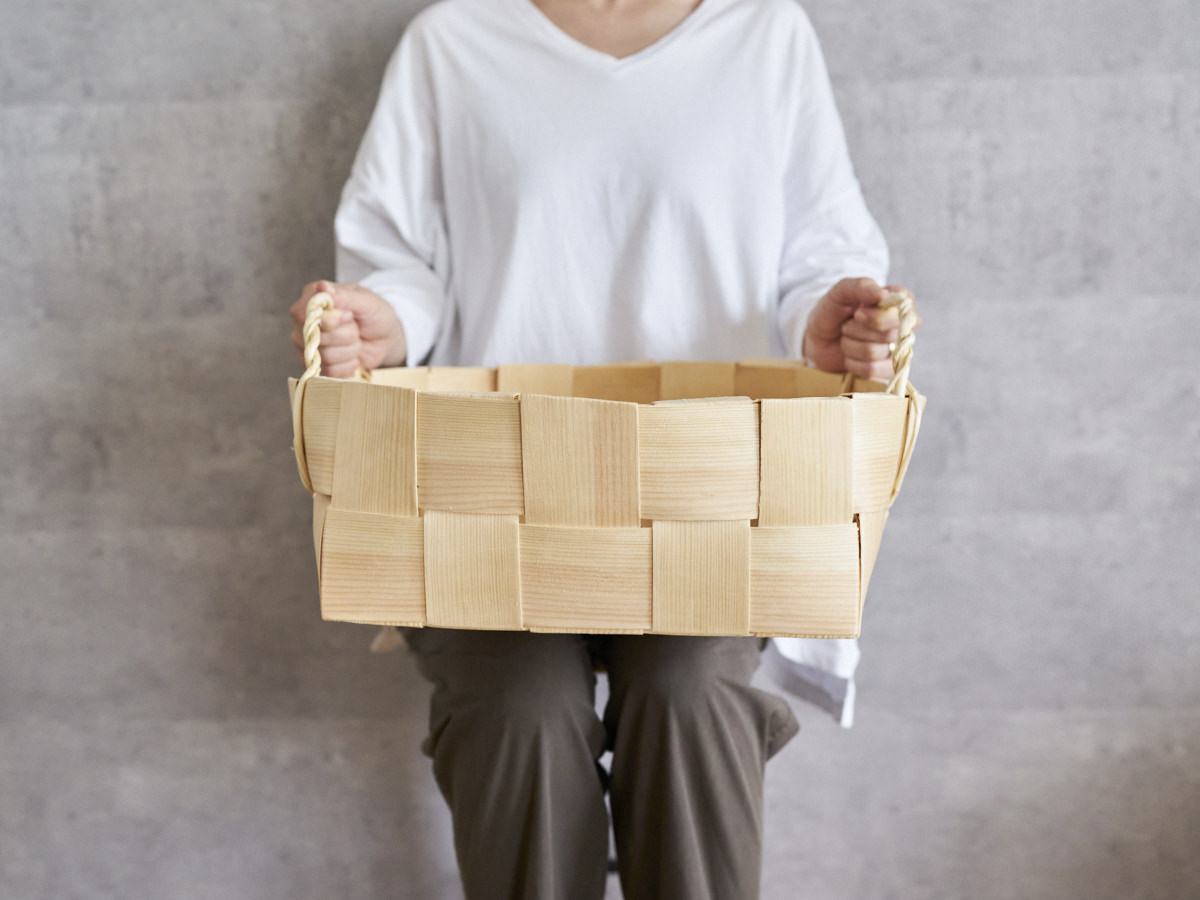
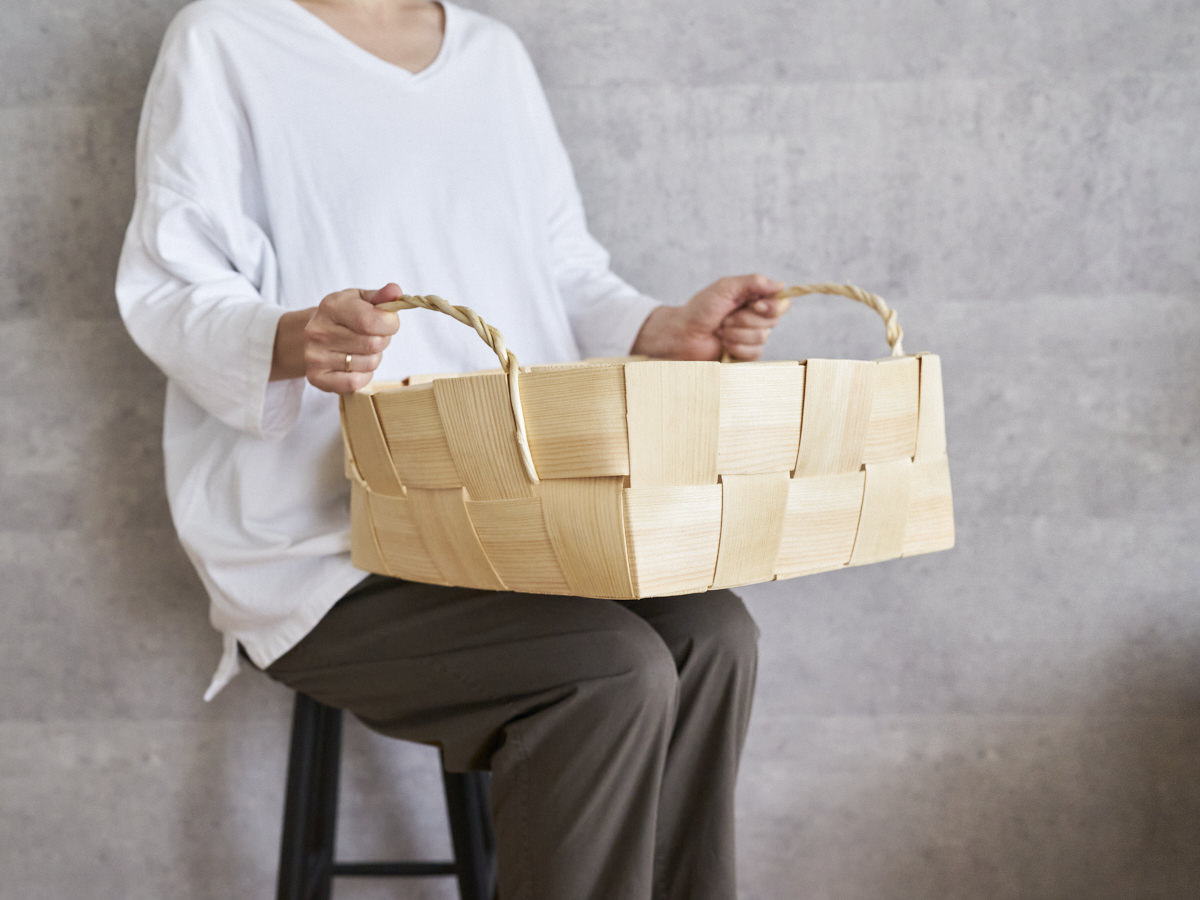
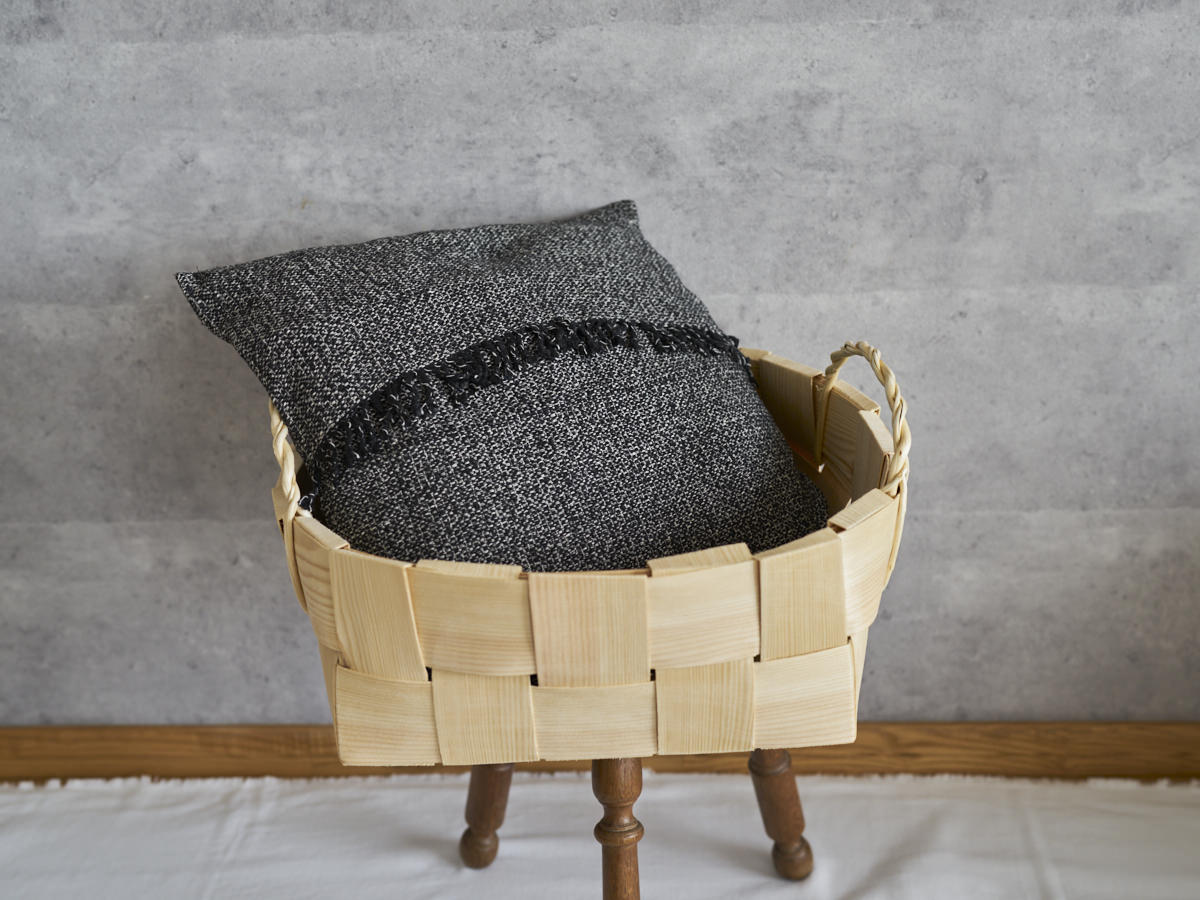
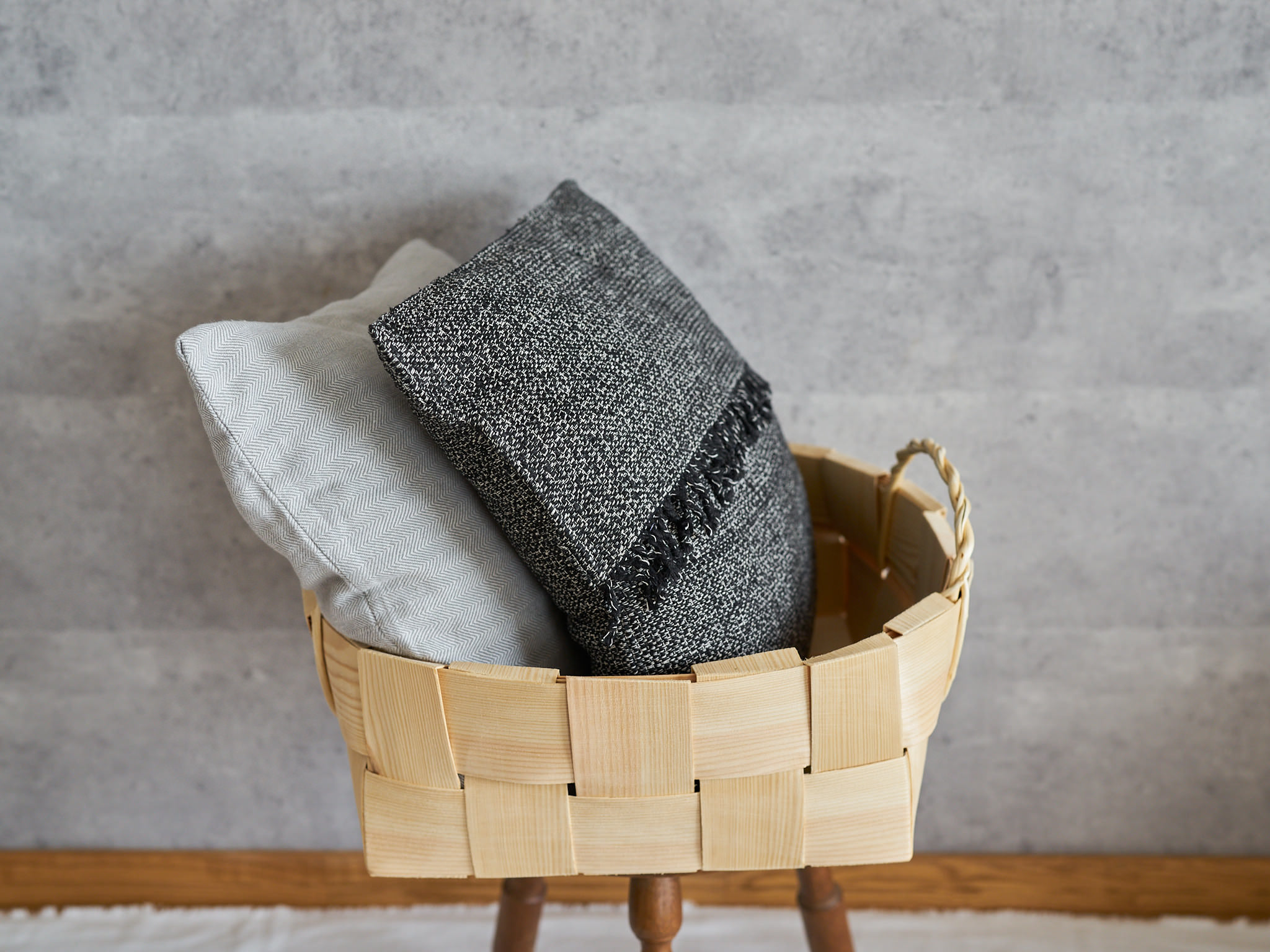
Both sizes share almost the same construction. Wide, thinly sliced strips are woven in a regular crisscross pattern. Here, you can see the weave on the side without handles.It has a powerful presence, as if woven directly from solid wood, yet the surface feels smooth to the touch.Here, the rim is seen from the outside. The edge is formed by boldly folding the strips.Here, the rim is seen from the inside. It shows nearly the same finish as the outside.Here, the rim is seen from above. When forming the edge, a small flat surface of about 1 cm is first created before folding it back. This process allows the thin wooden strips to be woven without splitting them.Because the wooden strips are bent firmly at about a 90-degree angle, there may be slight fuzzing in some areas. This is not particularly noticeable and is not considered a defect. Thank you for your understanding.Handles are attached on both sides, as shown here. They are made by twisting fibers from birch wood.The handles are finished by wrapping them around the first row of strips.Seen from above. The base is square, while the opening forms a rounded shape. This is the L size.This shows the outside of the base. It forms a clean checkered pattern.This is a view of the outer corner. It is neatly folded and woven, and you can see the maker’s signature or initials.The basket is woven with strips of roughly the same width both vertically and horizontally. You may notice scuff-like marks running in a direction different from the grain, but these are not considered defects.This is the S size.Although it is called the S size, it has a solid presence and offers ample capacity for use around the home.Here, apples are placed inside, following the way the basket is used in Estonia.It comfortably holds five large apples. In addition to fruit, it can be used to store root vegetables, or as a storage basket in the living room or for slippers near the entrance.This is the L size.In a home setting, it can be considered a fairly large size.For example, it can be used as a basket for keeping cushions or blankets in the living room.It also looks appealing when filled with cushions. Although it is generously sized, the shallow design keeps it from feeling bulky or overwhelming.
It can also be used as a side basket next to a sofa, for keeping blankets, magazines, or books you are currently reading. The L size may also work as a laundry basket for one to two people. Please note that it is not intended for holding wet clothing.
We hope you enjoy the short video featuring the L size, where you can see the texture and character of the basket.
In Estonia as well, apples are said to be made into a variety of preserved foods, such as jam, syrup, juice, and cakes. From late summer to early autumn is apple season in Estonia, and it can be enjoyable to imagine such scenes of everyday life through this basket.
Please check the sizes carefully and choose the one that best suits your needs.
— Pine Basketry from Avinurme Village, Estonia —
In Avinurme, a village located in eastern Estonia near Lake Peipus—the largest lake in the country, close to the Russian border— baskets have been made from pine for more than 200 years.
In this village, there is a family-run workshop that has been making baskets for over 25 years, using pine harvested in Estonia. The baskets made there are remarkably simple, woven from wide strips of wood, allowing the natural character of pine to be fully appreciated. Twisted handles made from birch wood are also used, giving the baskets a distinctive look and color palette typical of Northern Europe.
This workshop works with as many as twenty makers. In order to maintain consistent quality and provide feedback to the makers, baskets made by those outside the family are marked with initials on the base.
Designed in response to everyday life and to customers’ requests, their baskets are widely appreciated not only throughout Estonia but also in other regions, valued for their simple design and practical nature.
With such a wide range of styles and sizes, you may well find a shape or size that feels just right for you.
This basket is made from pine, a type of wood. Pine is a coniferous tree commonly found in Europe and North America, known for being easy to work with. It has long been used for furniture, as well as for structural elements such as posts, beams, and flooring.
For this basket, pine sourced in Estonia is used. According to the maker, pine that has grown for around 100 to 120 years is particularly well suited for basket making.
On this page, we introduce the “Round Double-Handle Basket” made from pine, available in two sizes: S and L.
In its place of origin, Estonia, this basket is known as an “apple basket.”
In Japan as well, colder regions are often famous for apples, and in Estonia—located in Northern Europe—it is said that many apples grow, though they are generally smaller than those found in Japan.
In some parts of Estonia, apple trees can be found growing throughout the town. When the season comes and the fruit ripens in abundance—more than can be eaten— these baskets filled with apples are placed at the entrances of homes, where anyone is free to take them.
This is a shallow, double-handled basket that seems to reflect such scenes from everyday life in Estonia.
Both sizes share almost the same construction. Wide, thinly sliced strips are woven in a regular crisscross pattern. Here, you can see the weave on the side without handles.It has a powerful presence, as if woven directly from solid wood, yet the surface feels smooth to the touch.Here, the rim is seen from the outside. The edge is formed by boldly folding the strips.Here, the rim is seen from the inside. It shows nearly the same finish as the outside.Here, the rim is seen from above. When forming the edge, a small flat surface of about 1 cm is first created before folding it back. This process allows the thin wooden strips to be woven without splitting them.Because the wooden strips are bent firmly at about a 90-degree angle, there may be slight fuzzing in some areas. This is not particularly noticeable and is not considered a defect. Thank you for your understanding.Handles are attached on both sides, as shown here. They are made by twisting fibers from birch wood.The handles are finished by wrapping them around the first row of strips.Seen from above. The base is square, while the opening forms a rounded shape. This is the L size.This shows the outside of the base. It forms a clean checkered pattern.This is a view of the outer corner. It is neatly folded and woven, and you can see the maker’s signature or initials.The basket is woven with strips of roughly the same width both vertically and horizontally. You may notice scuff-like marks running in a direction different from the grain, but these are not considered defects.This is the S size.Although it is called the S size, it has a solid presence and offers ample capacity for use around the home.Here, apples are placed inside, following the way the basket is used in Estonia.It comfortably holds five large apples. In addition to fruit, it can be used to store root vegetables, or as a storage basket in the living room or for slippers near the entrance.This is the L size.In a home setting, it can be considered a fairly large size.For example, it can be used as a basket for keeping cushions or blankets in the living room.It also looks appealing when filled with cushions. Although it is generously sized, the shallow design keeps it from feeling bulky or overwhelming.
It can also be used as a side basket next to a sofa, for keeping blankets, magazines, or books you are currently reading. The L size may also work as a laundry basket for one to two people. Please note that it is not intended for holding wet clothing.
We hope you enjoy the short video featuring the L size, where you can see the texture and character of the basket.
In Estonia as well, apples are said to be made into a variety of preserved foods, such as jam, syrup, juice, and cakes. From late summer to early autumn is apple season in Estonia, and it can be enjoyable to imagine such scenes of everyday life through this basket.
Please check the sizes carefully and choose the one that best suits your needs.
— Pine Basketry from Avinurme Village, Estonia —
In Avinurme, a village located in eastern Estonia near Lake Peipus—the largest lake in the country, close to the Russian border— baskets have been made from pine for more than 200 years.
In this village, there is a family-run workshop that has been making baskets for over 25 years, using pine harvested in Estonia. The baskets made there are remarkably simple, woven from wide strips of wood, allowing the natural character of pine to be fully appreciated. Twisted handles made from birch wood are also used, giving the baskets a distinctive look and color palette typical of Northern Europe.
This workshop works with as many as twenty makers. In order to maintain consistent quality and provide feedback to the makers, baskets made by those outside the family are marked with initials on the base.
Designed in response to everyday life and to customers’ requests, their baskets are widely appreciated not only throughout Estonia but also in other regions, valued for their simple design and practical nature.
With such a wide range of styles and sizes, you may well find a shape or size that feels just right for you.
This basket is made from pine, a type of wood. Pine is a coniferous tree commonly found in Europe and North America, known for being easy to work with. It has long been used for furniture, as well as for structural elements such as posts, beams, and flooring.
For this basket, pine sourced in Estonia is used. According to the maker, pine that has grown for around 100 to 120 years is particularly well suited for basket making.
On this page, we introduce the “Round Double-Handle Basket” made from pine, available in two sizes: S and L.
In its place of origin, Estonia, this basket is known as an “apple basket.”
In Japan as well, colder regions are often famous for apples, and in Estonia—located in Northern Europe—it is said that many apples grow, though they are generally smaller than those found in Japan.
In some parts of Estonia, apple trees can be found growing throughout the town. When the season comes and the fruit ripens in abundance—more than can be eaten— these baskets filled with apples are placed at the entrances of homes, where anyone is free to take them.
This is a shallow, double-handled basket that seems to reflect such scenes from everyday life in Estonia.
Both sizes share almost the same construction. Wide, thinly sliced strips are woven in a regular crisscross pattern. Here, you can see the weave on the side without handles.It has a powerful presence, as if woven directly from solid wood, yet the surface feels smooth to the touch.Here, the rim is seen from the outside. The edge is formed by boldly folding the strips.Here, the rim is seen from the inside. It shows nearly the same finish as the outside.Here, the rim is seen from above. When forming the edge, a small flat surface of about 1 cm is first created before folding it back. This process allows the thin wooden strips to be woven without splitting them.Because the wooden strips are bent firmly at about a 90-degree angle, there may be slight fuzzing in some areas. This is not particularly noticeable and is not considered a defect. Thank you for your understanding.Handles are attached on both sides, as shown here. They are made by twisting fibers from birch wood.The handles are finished by wrapping them around the first row of strips.Seen from above. The base is square, while the opening forms a rounded shape. This is the L size.This shows the outside of the base. It forms a clean checkered pattern.This is a view of the outer corner. It is neatly folded and woven, and you can see the maker’s signature or initials.The basket is woven with strips of roughly the same width both vertically and horizontally. You may notice scuff-like marks running in a direction different from the grain, but these are not considered defects.This is the S size.Although it is called the S size, it has a solid presence and offers ample capacity for use around the home.Here, apples are placed inside, following the way the basket is used in Estonia.It comfortably holds five large apples. In addition to fruit, it can be used to store root vegetables, or as a storage basket in the living room or for slippers near the entrance.This is the L size.In a home setting, it can be considered a fairly large size.For example, it can be used as a basket for keeping cushions or blankets in the living room.It also looks appealing when filled with cushions. Although it is generously sized, the shallow design keeps it from feeling bulky or overwhelming.
It can also be used as a side basket next to a sofa, for keeping blankets, magazines, or books you are currently reading. The L size may also work as a laundry basket for one to two people. Please note that it is not intended for holding wet clothing.
We hope you enjoy the short video featuring the L size, where you can see the texture and character of the basket.
In Estonia as well, apples are said to be made into a variety of preserved foods, such as jam, syrup, juice, and cakes. From late summer to early autumn is apple season in Estonia, and it can be enjoyable to imagine such scenes of everyday life through this basket.
Please check the sizes carefully and choose the one that best suits your needs.
— Pine Basketry from Avinurme Village, Estonia —
In Avinurme, a village located in eastern Estonia near Lake Peipus—the largest lake in the country, close to the Russian border— baskets have been made from pine for more than 200 years.
In this village, there is a family-run workshop that has been making baskets for over 25 years, using pine harvested in Estonia. The baskets made there are remarkably simple, woven from wide strips of wood, allowing the natural character of pine to be fully appreciated. Twisted handles made from birch wood are also used, giving the baskets a distinctive look and color palette typical of Northern Europe.
This workshop works with as many as twenty makers. In order to maintain consistent quality and provide feedback to the makers, baskets made by those outside the family are marked with initials on the base.
Designed in response to everyday life and to customers’ requests, their baskets are widely appreciated not only throughout Estonia but also in other regions, valued for their simple design and practical nature.
With such a wide range of styles and sizes, you may well find a shape or size that feels just right for you.