In Kagawa Prefecture on the island of Shikoku, everyday life unfolds within a rich natural landscape—stretching from the calm Seto Inland Sea in the north, across the Sanuki Plain, and on to the Sanuki Mountains in the south.
Within this environment, bamboo crafts and the making of mi (traditional winnowing baskets) have long been practiced. Even today, there are craftspeople here who continue to devote themselves to bamboo work as their livelihood, patiently refining their skills day by day.
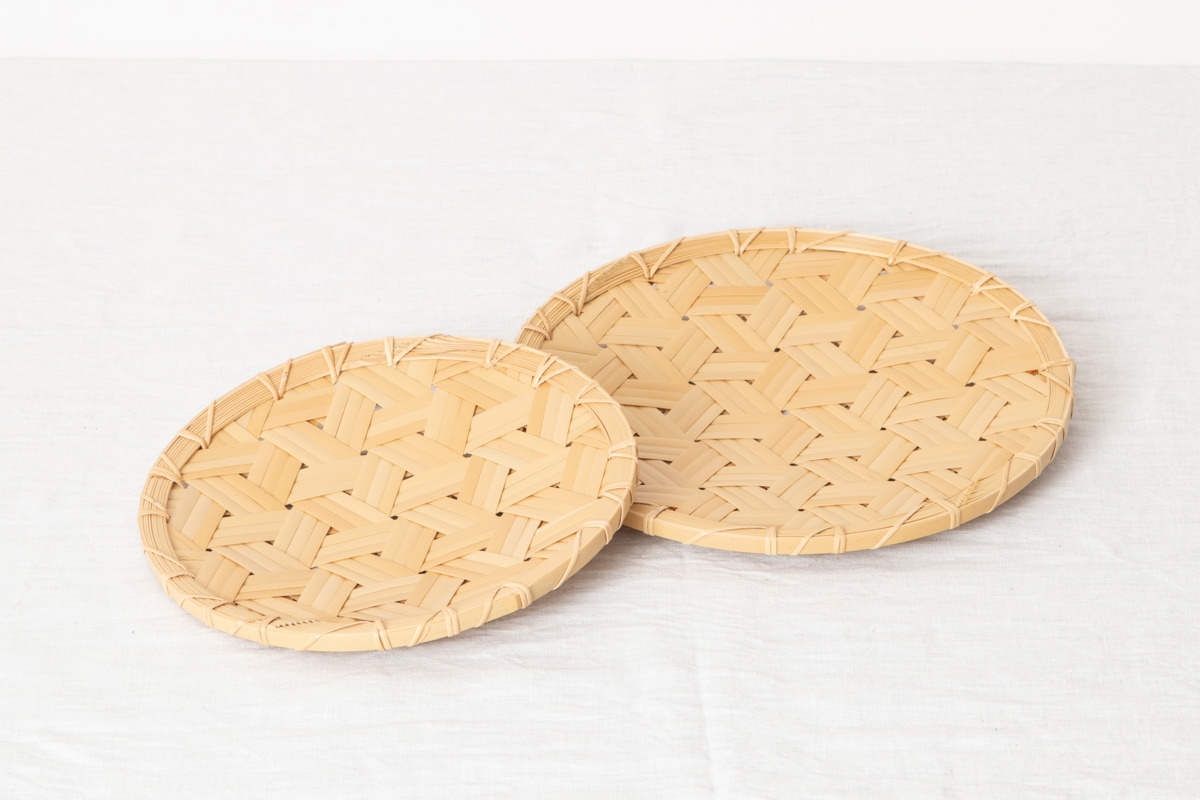
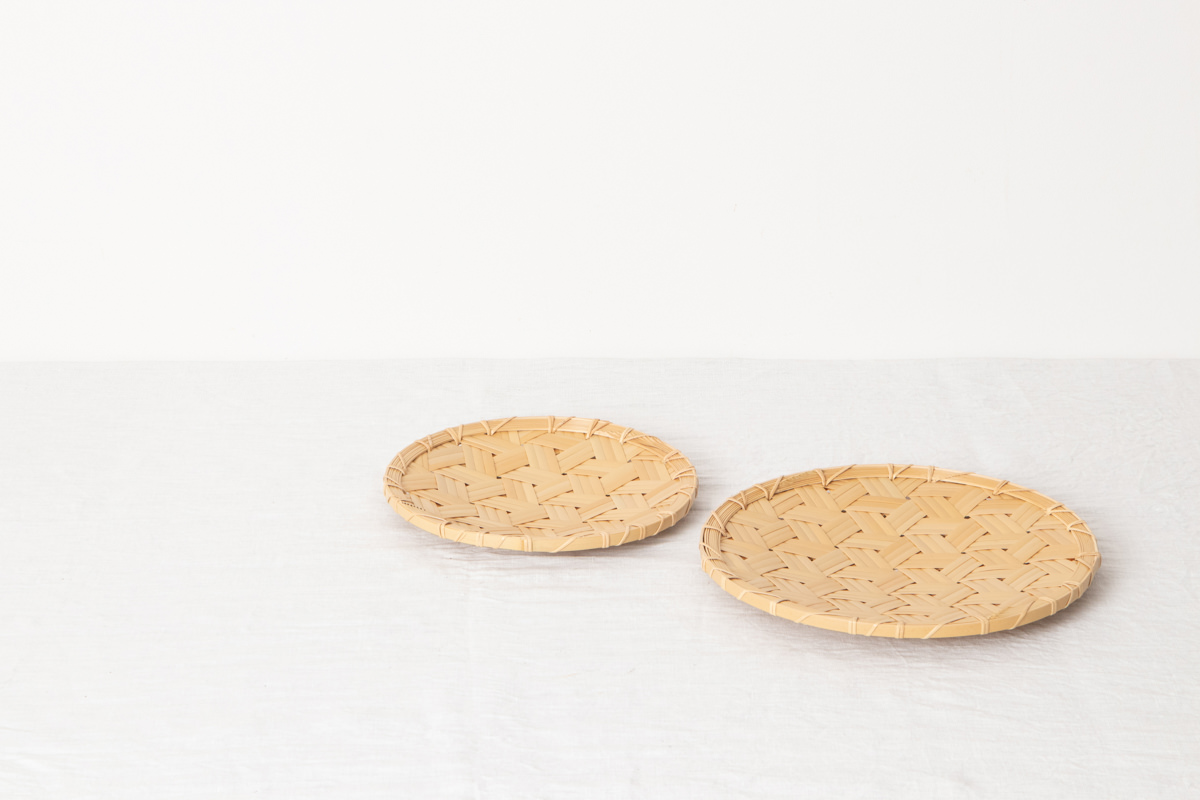
This is a white bamboo strainer made by one such craftsperson. It is available in two sizes: Ø 25 cm and Ø 30 cm.
White bamboo refers to madake bamboo that is harvested while still green in its natural state, then boiled and sun-dried to remove excess oils and moisture, allowing the surface color to gently lighten.
Through this process, the bamboo’s tone becomes more even, the risk of insect damage is reduced, and the material itself tightens and hardens—making it especially well suited for bamboo craftwork.
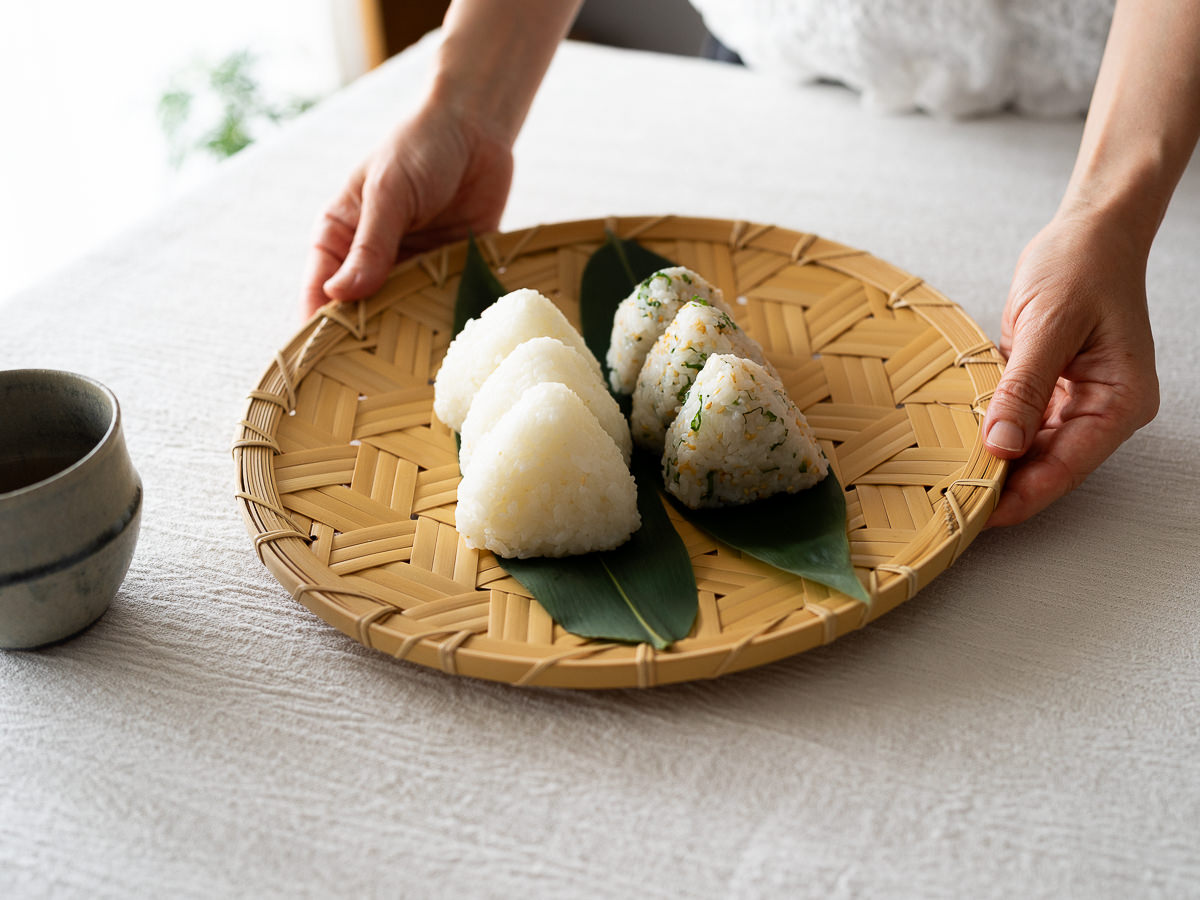
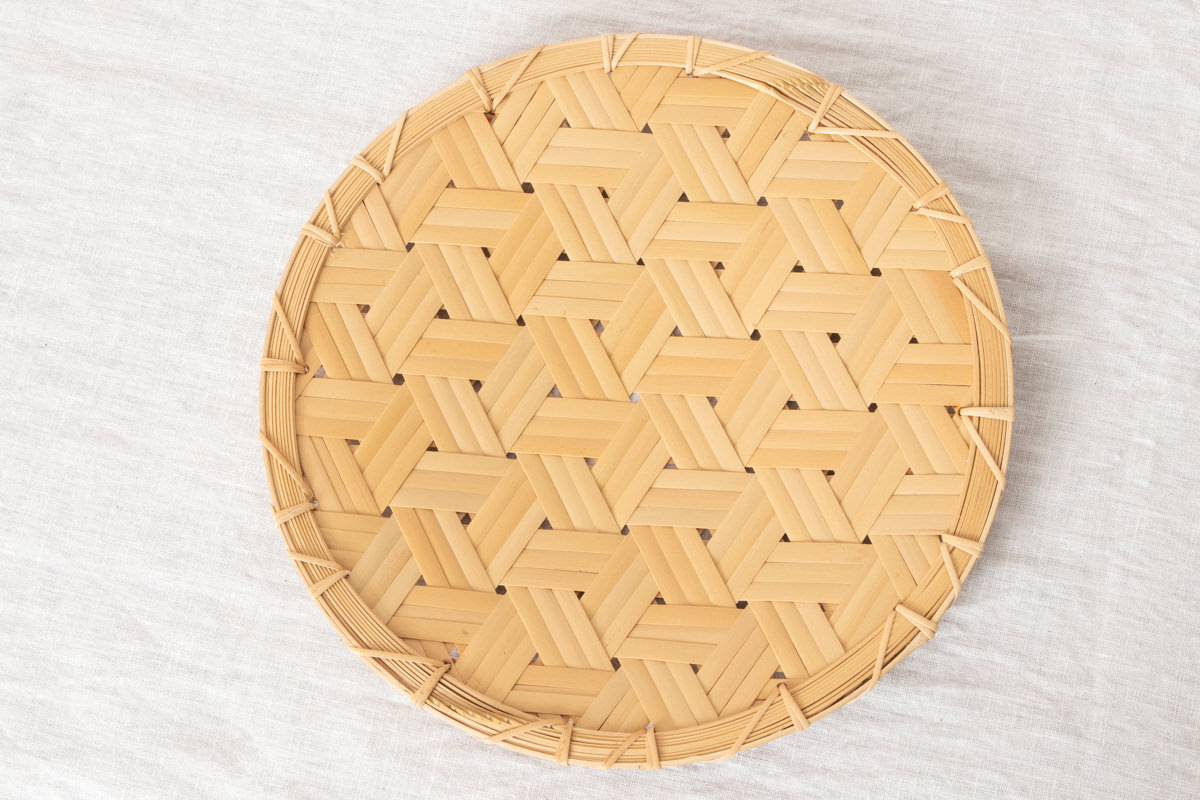
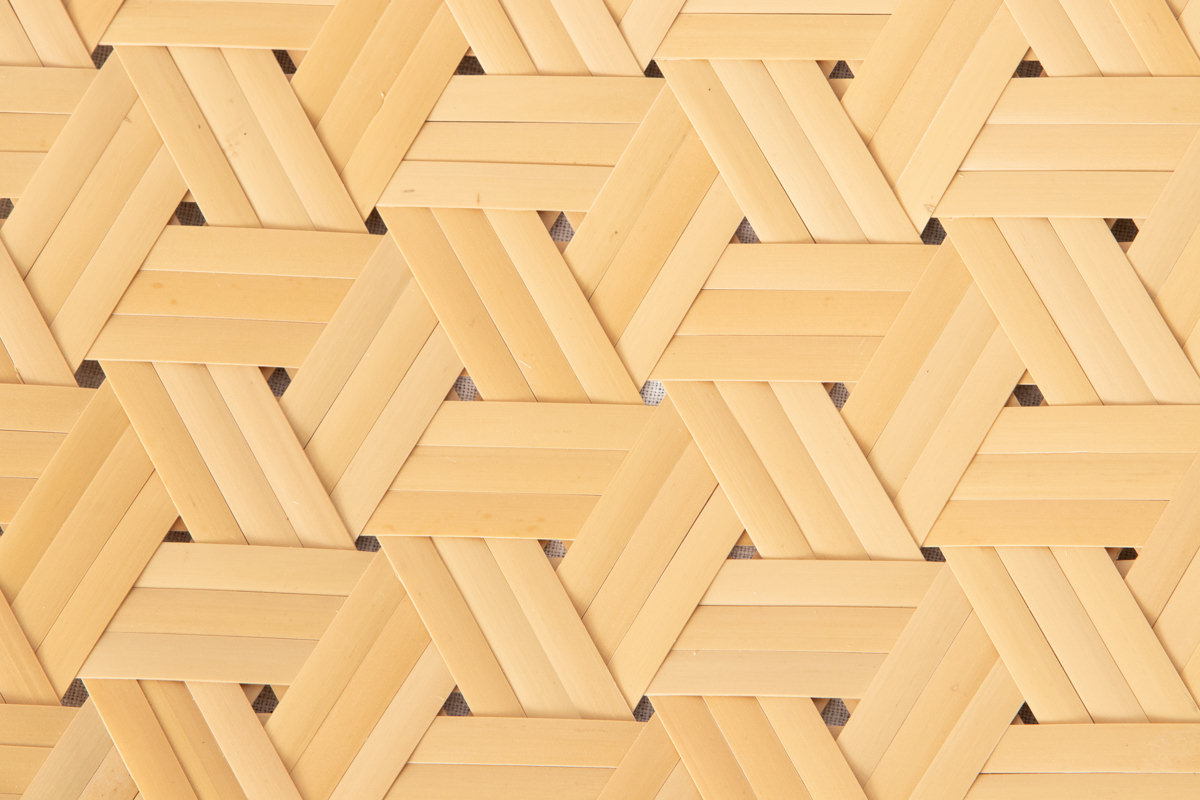
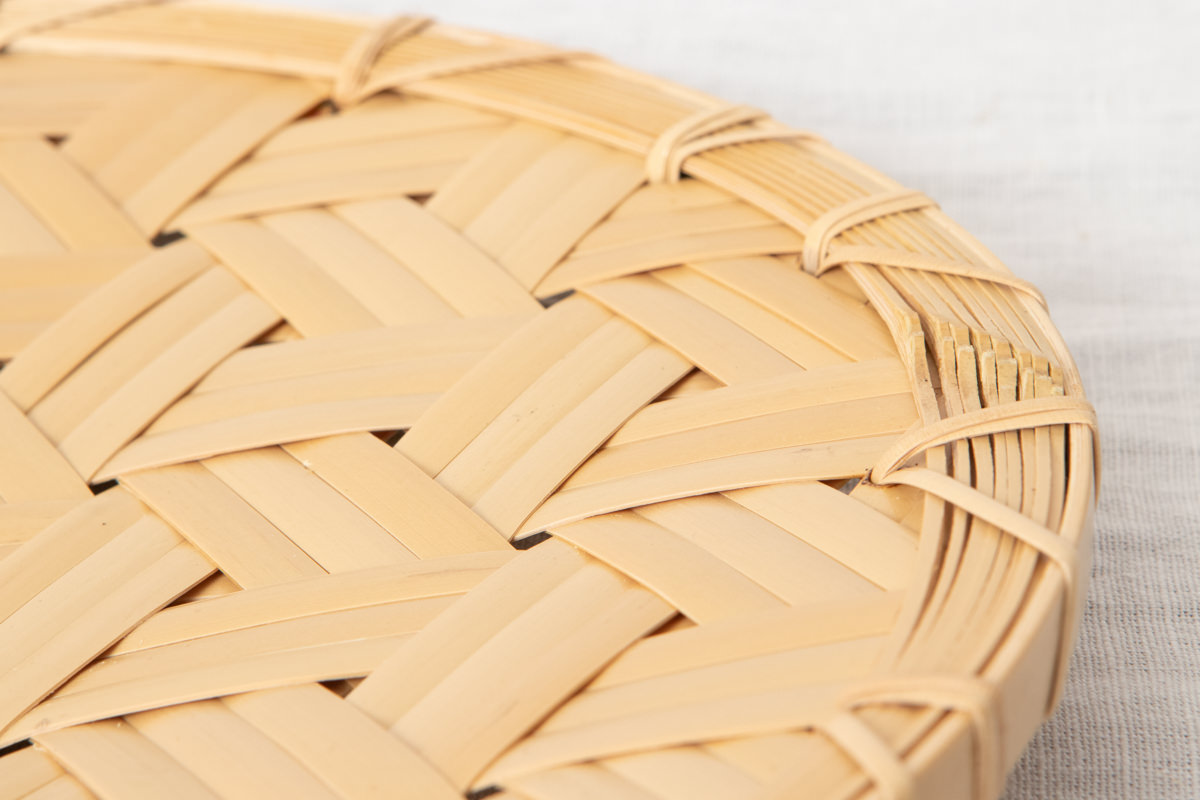
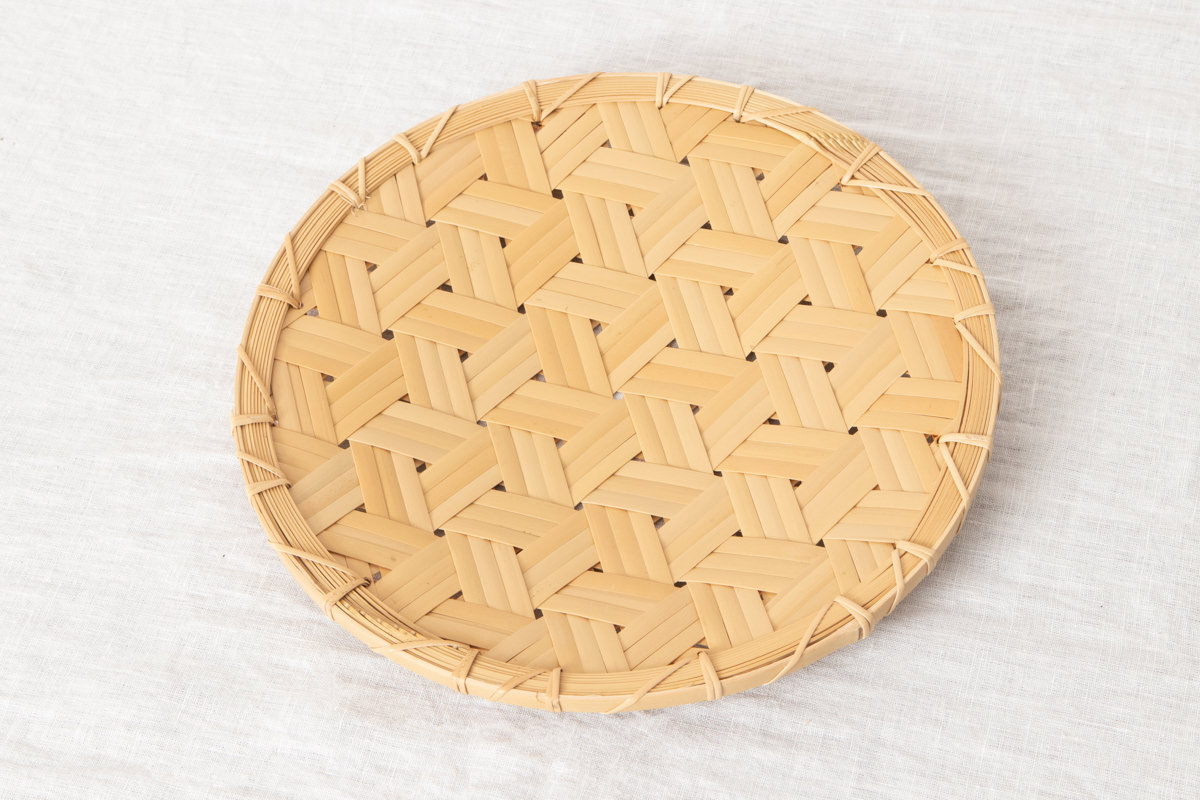
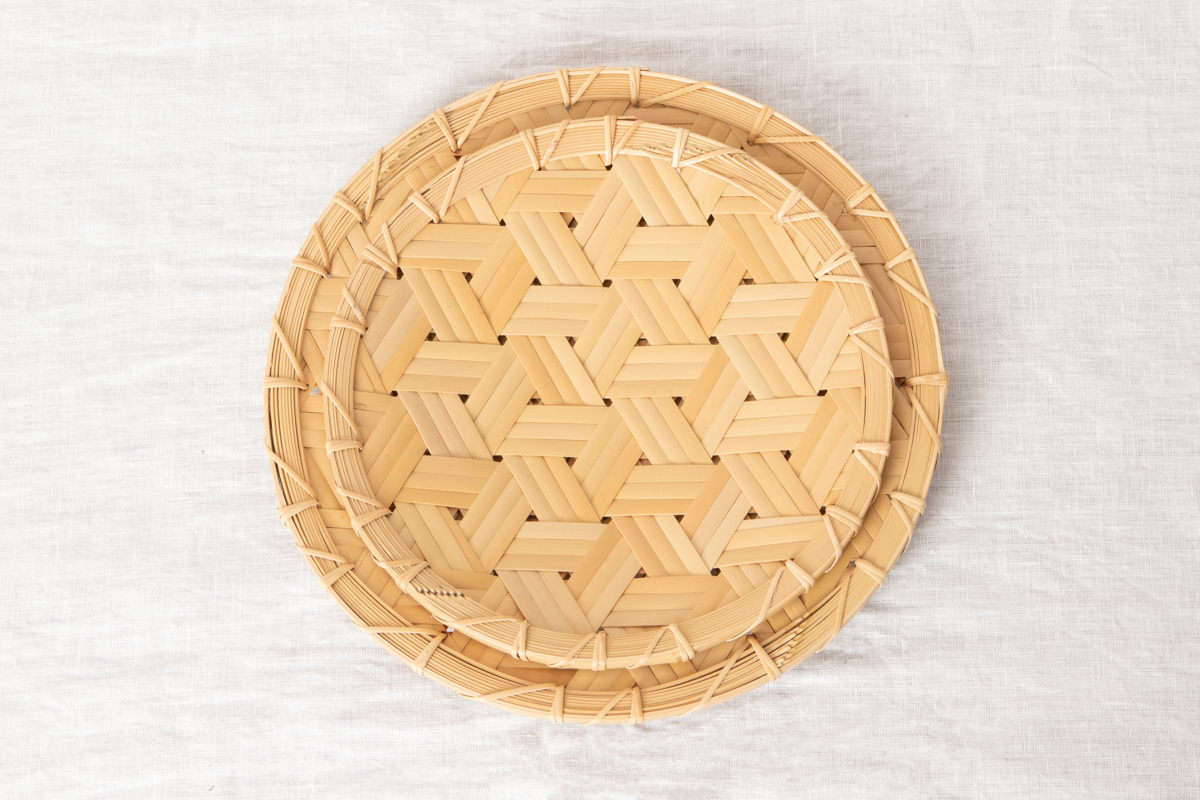
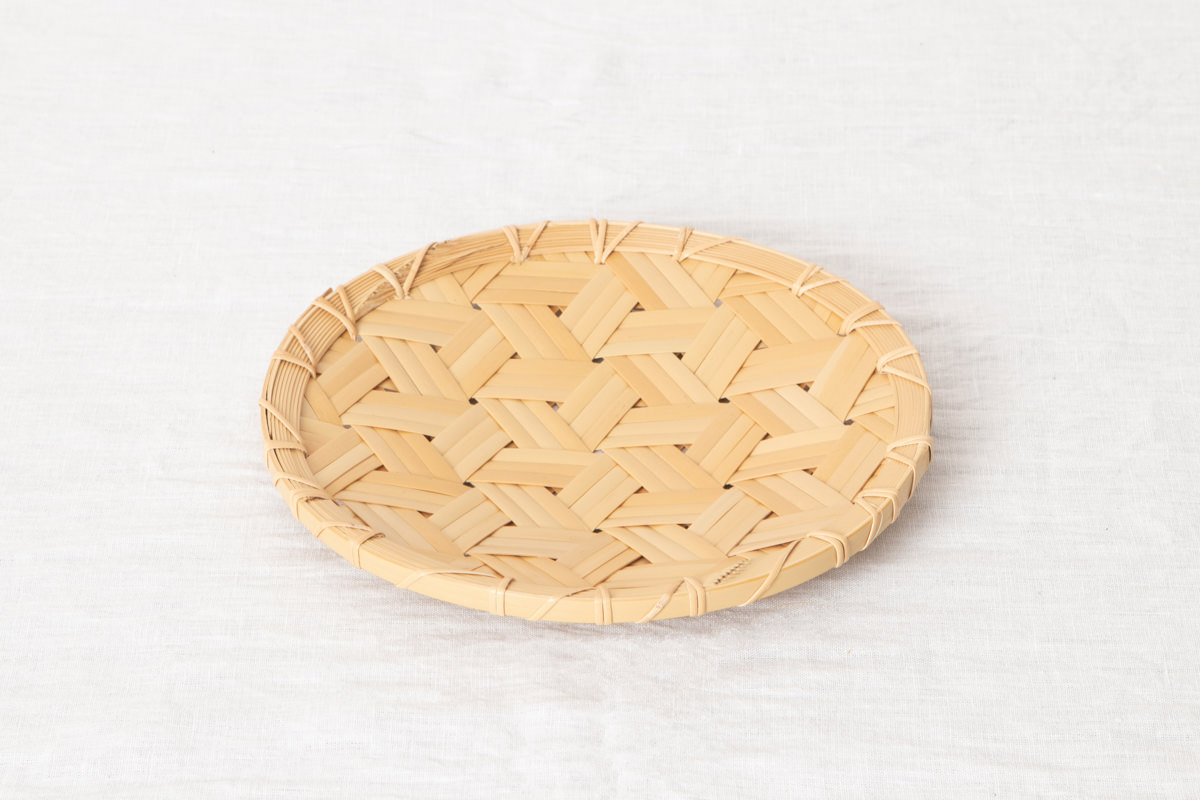
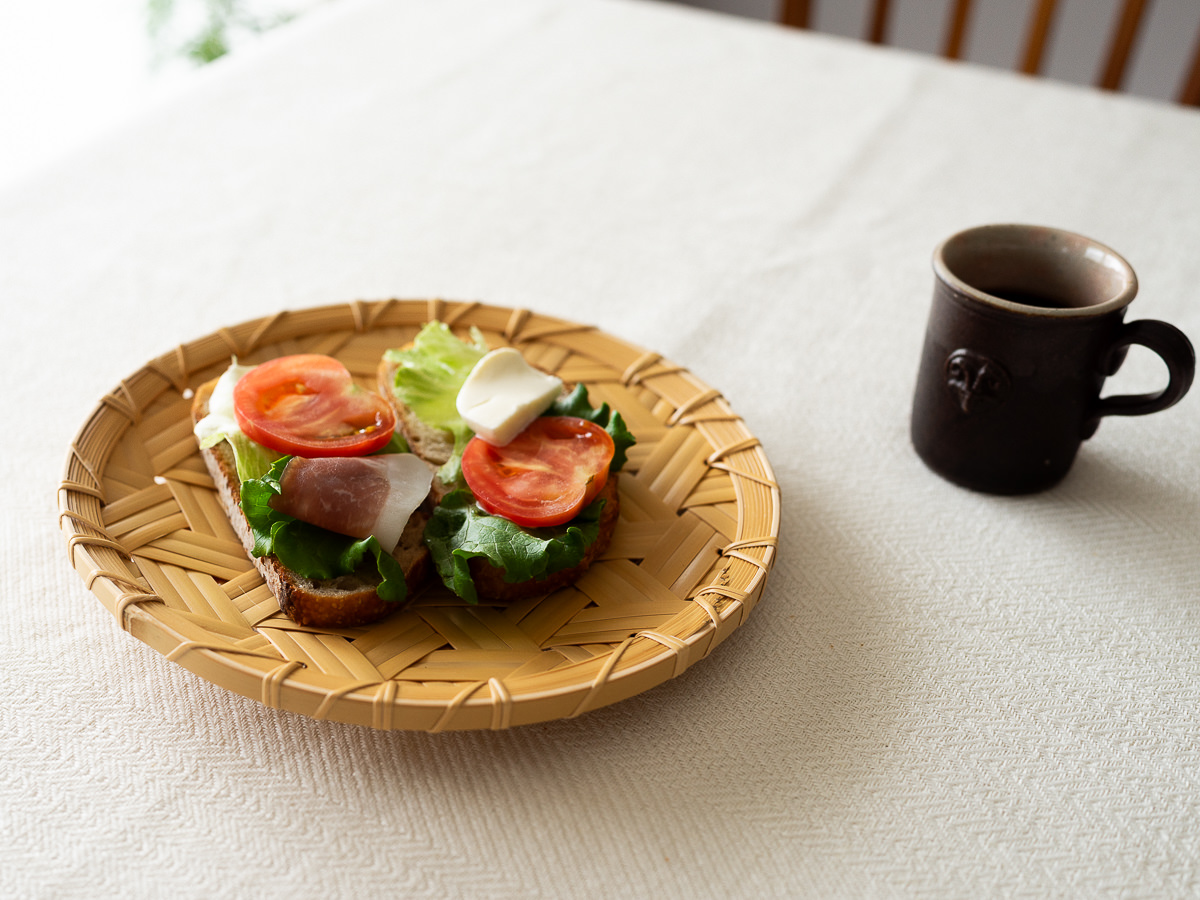
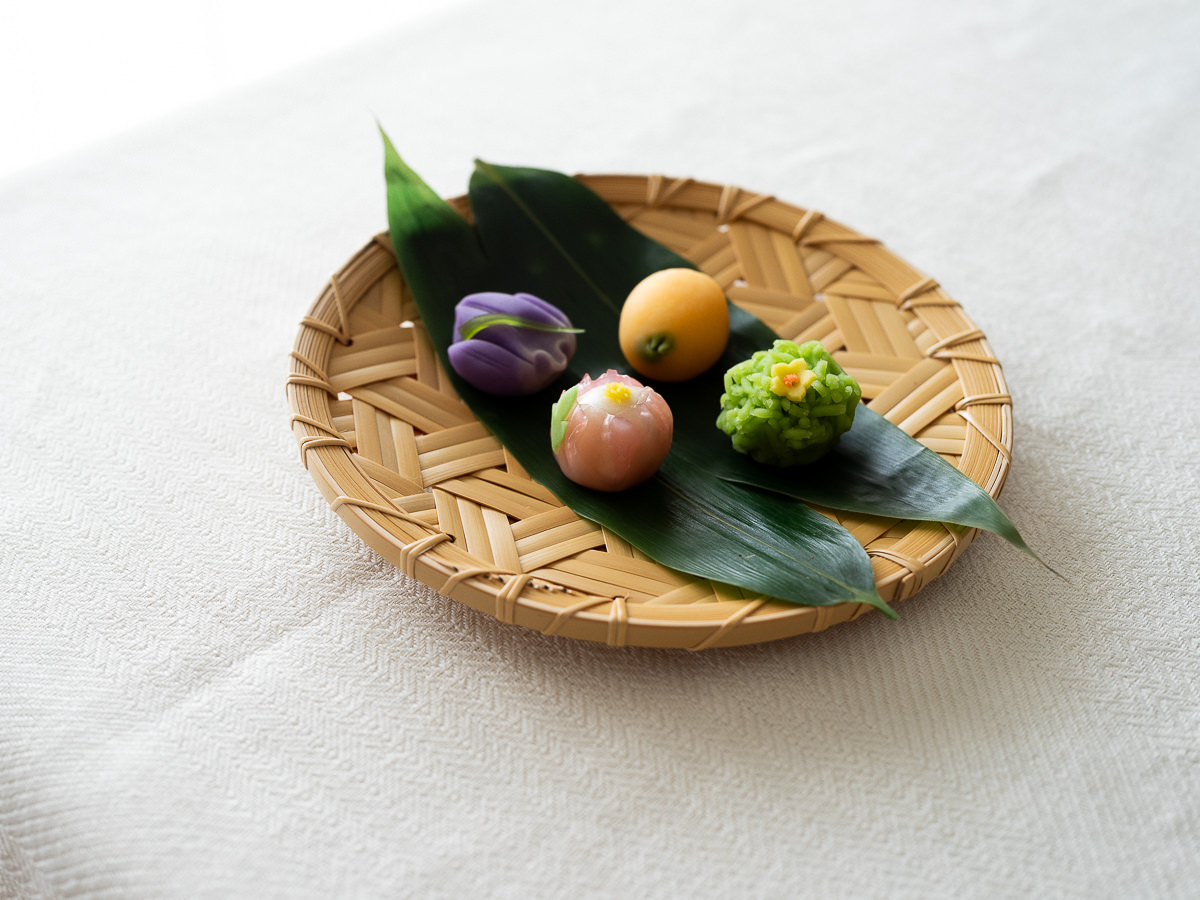
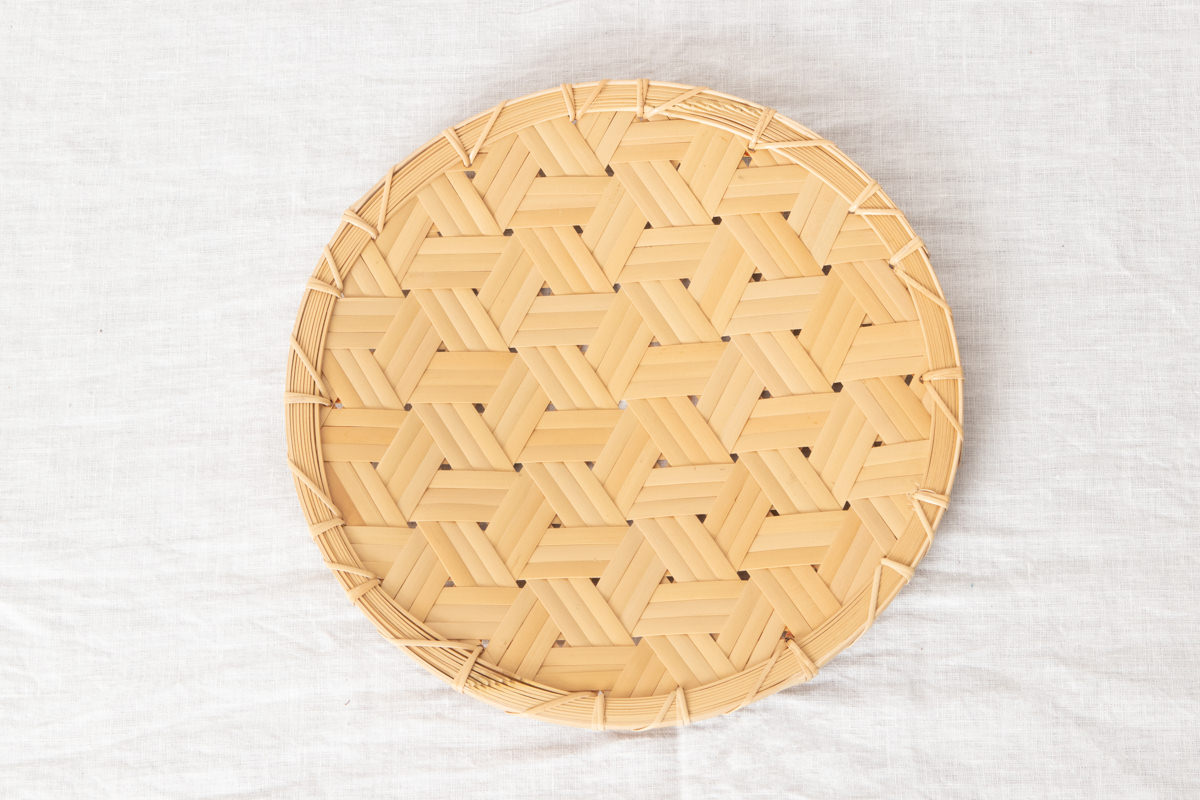
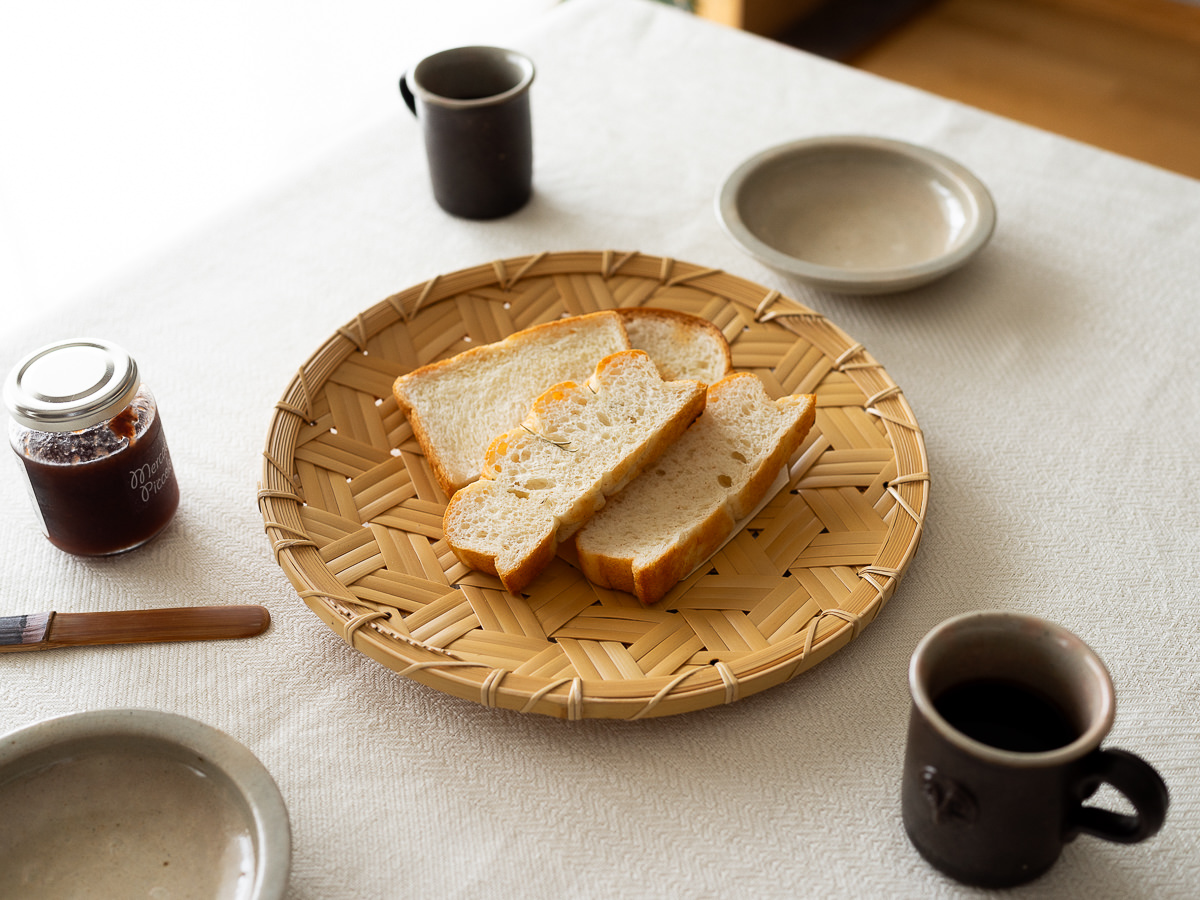
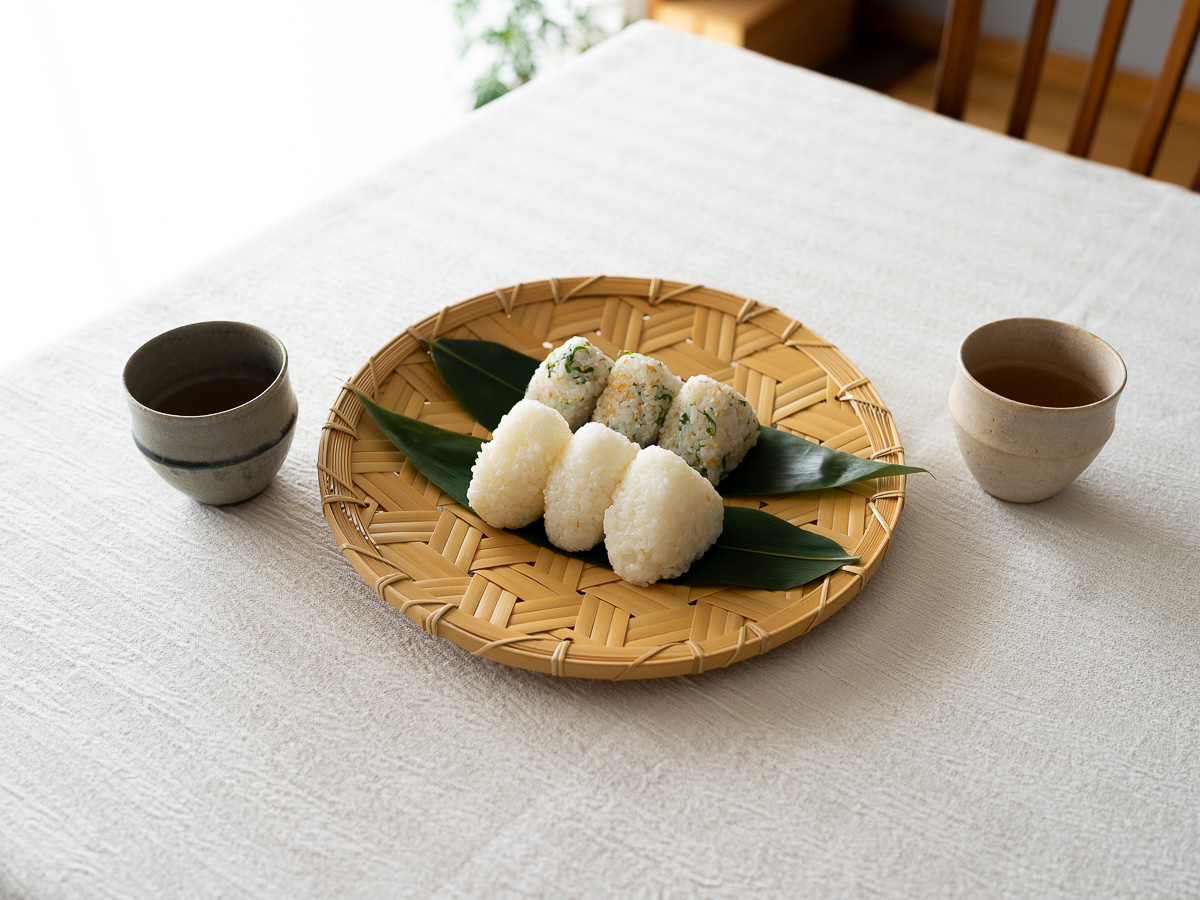
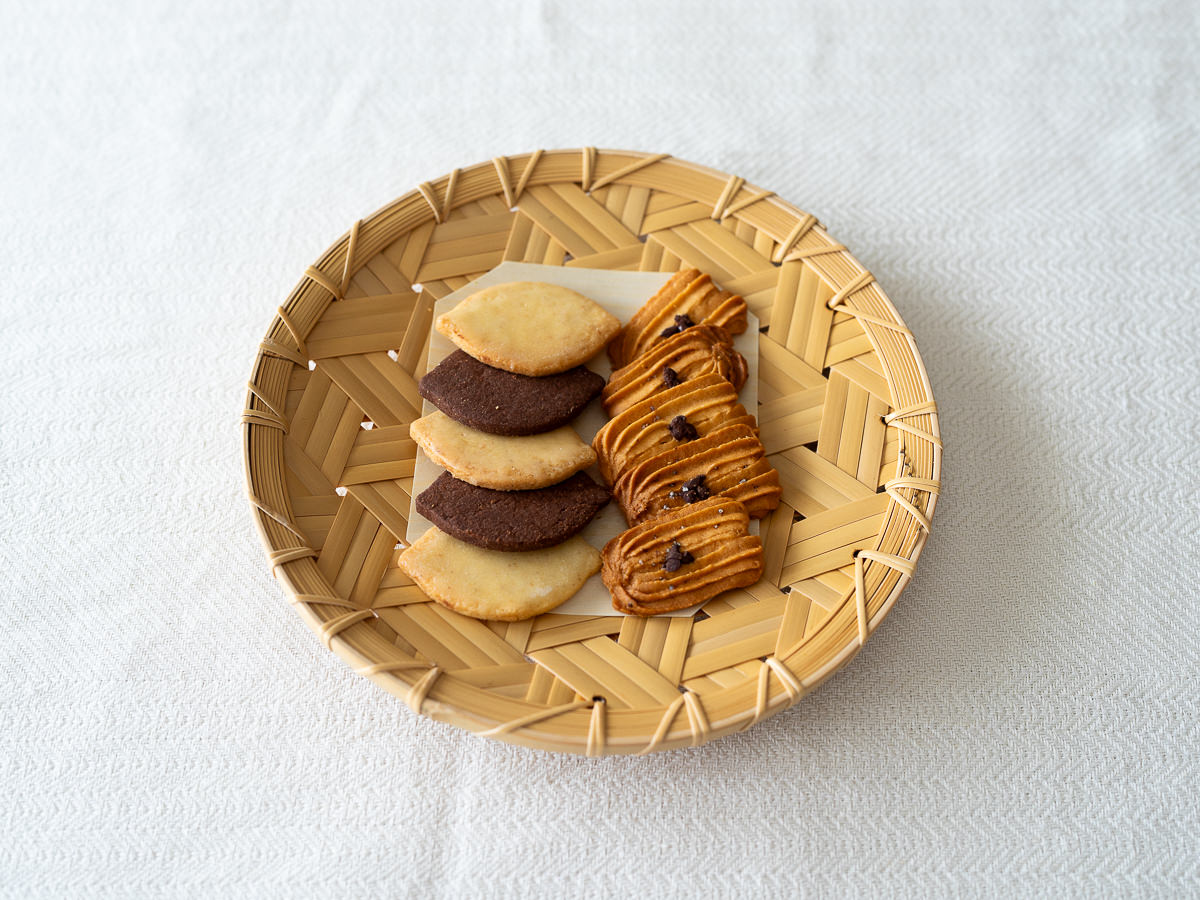
Using this white bamboo, the strainer is woven by grouping three bamboo strips into a single set, forming a turtle-shell-like pattern known as kikkō-ami (tortoiseshell weave), also referred to as tessen-ami.The surface of the strainer is finished with the natural outer skin of the bamboo. As this skin naturally repels water, it is an ideal material for strainers. This allows you to fully appreciate the clean, pale whiteness of the white bamboo, along with the crisp, well-defined lines of the weave.While this strainer is designed for holding and serving food, it can also be enjoyed simply on its own when not in use—propped up and left empty, allowing the beauty of the woven pattern to be appreciated.A band of white bamboo is wrapped all the way around the rim of the strainer and secured at regular intervals with rattan binding.Each set of three bamboo strips is woven into a firm, plank-like structure, resulting in a crisp, solid finish. The strainer does not flex or warp.With only a gentle slope across the surface—about a 2 cm difference in height—and finely spaced weaving, this piece can be used not only as a strainer but also like a plate.This is the underside of the strainer. The inner side of the bamboo skin—the body of the material—has also been carefully finished, resulting in a smooth and pleasant feel to the touch.Now, let us introduce each size.This is the 25cm (9.84″) size.It’s just right for serving a single portion of soba, udon, or Chinese noodles, or for use as an individual plate.Use it as a breakfast plate, serving open-faced sandwiches on the bamboo strainer.The simple, clean appearance of white bamboo gently highlights whatever is placed on it. It is also a lovely way to enjoy the colors and textures of traditional Japanese sweets.This is the 30cm (11.81″) size.It works well for serving noodles for 2–3 people, or as a large shared platter.The woven surface allows steam from freshly toasted bread to escape gently through the gaps.It is also well suited for shared dishes, allowing several people to reach in together. It brings a bright, lively feeling to the table.
Line it with paper or leaves, then arrange rice balls or sushi on top. You can also place small side dishes in bowls and set them on the strainer, enjoying different arrangements.
For everyday care, if the strainer is not heavily soiled after use, simply wipe both sides with a well-wrung damp cloth and allow it to dry thoroughly.
If there is oil or more noticeable dirt, rinse it with water using a mild detergent or pour boiling water over it, then gently scrub with a brush. Rinse well and be sure to let it dry completely.
The refreshing pale tone of the white bamboo and the clean, orderly weave make this kikkō-ami strainer a pleasure to look at.
Please choose the size you prefer.
Please note: This item ships from Japan. As the buyer, you are responsible for any import duties, customs fees, or local taxes that may be charged in your country. These costs are not included in the item price or shipping cost. Please check with your local customs authority if you are unsure about any potential charges before placing your order.
In Kagawa Prefecture on the island of Shikoku, everyday life unfolds within a rich natural landscape—stretching from the calm Seto Inland Sea in the north, across the Sanuki Plain, and on to the Sanuki Mountains in the south.
Within this environment, bamboo crafts and the making of mi (traditional winnowing baskets) have long been practiced. Even today, there are craftspeople here who continue to devote themselves to bamboo work as their livelihood, patiently refining their skills day by day.
This is a white bamboo strainer made by one such craftsperson. It is available in two sizes: Ø 25 cm and Ø 30 cm.
White bamboo refers to madake bamboo that is harvested while still green in its natural state, then boiled and sun-dried to remove excess oils and moisture, allowing the surface color to gently lighten.
Through this process, the bamboo’s tone becomes more even, the risk of insect damage is reduced, and the material itself tightens and hardens—making it especially well suited for bamboo craftwork.
Using this white bamboo, the strainer is woven by grouping three bamboo strips into a single set, forming a turtle-shell-like pattern known as kikkō-ami (tortoiseshell weave), also referred to as tessen-ami.The surface of the strainer is finished with the natural outer skin of the bamboo. As this skin naturally repels water, it is an ideal material for strainers. This allows you to fully appreciate the clean, pale whiteness of the white bamboo, along with the crisp, well-defined lines of the weave.While this strainer is designed for holding and serving food, it can also be enjoyed simply on its own when not in use—propped up and left empty, allowing the beauty of the woven pattern to be appreciated.A band of white bamboo is wrapped all the way around the rim of the strainer and secured at regular intervals with rattan binding.Each set of three bamboo strips is woven into a firm, plank-like structure, resulting in a crisp, solid finish. The strainer does not flex or warp.With only a gentle slope across the surface—about a 2 cm difference in height—and finely spaced weaving, this piece can be used not only as a strainer but also like a plate.This is the underside of the strainer. The inner side of the bamboo skin—the body of the material—has also been carefully finished, resulting in a smooth and pleasant feel to the touch.Now, let us introduce each size.This is the 25cm (9.84″) size.It’s just right for serving a single portion of soba, udon, or Chinese noodles, or for use as an individual plate.Use it as a breakfast plate, serving open-faced sandwiches on the bamboo strainer.The simple, clean appearance of white bamboo gently highlights whatever is placed on it. It is also a lovely way to enjoy the colors and textures of traditional Japanese sweets.This is the 30cm (11.81″) size.It works well for serving noodles for 2–3 people, or as a large shared platter.The woven surface allows steam from freshly toasted bread to escape gently through the gaps.It is also well suited for shared dishes, allowing several people to reach in together. It brings a bright, lively feeling to the table.
Line it with paper or leaves, then arrange rice balls or sushi on top. You can also place small side dishes in bowls and set them on the strainer, enjoying different arrangements.
For everyday care, if the strainer is not heavily soiled after use, simply wipe both sides with a well-wrung damp cloth and allow it to dry thoroughly.
If there is oil or more noticeable dirt, rinse it with water using a mild detergent or pour boiling water over it, then gently scrub with a brush. Rinse well and be sure to let it dry completely.
The refreshing pale tone of the white bamboo and the clean, orderly weave make this kikkō-ami strainer a pleasure to look at.
Please choose the size you prefer.
Please note: This item ships from Japan. As the buyer, you are responsible for any import duties, customs fees, or local taxes that may be charged in your country. These costs are not included in the item price or shipping cost. Please check with your local customs authority if you are unsure about any potential charges before placing your order.
In Kagawa Prefecture on the island of Shikoku, everyday life unfolds within a rich natural landscape—stretching from the calm Seto Inland Sea in the north, across the Sanuki Plain, and on to the Sanuki Mountains in the south.
Within this environment, bamboo crafts and the making of mi (traditional winnowing baskets) have long been practiced. Even today, there are craftspeople here who continue to devote themselves to bamboo work as their livelihood, patiently refining their skills day by day.
This is a white bamboo strainer made by one such craftsperson. It is available in two sizes: Ø 25 cm and Ø 30 cm.
White bamboo refers to madake bamboo that is harvested while still green in its natural state, then boiled and sun-dried to remove excess oils and moisture, allowing the surface color to gently lighten.
Through this process, the bamboo’s tone becomes more even, the risk of insect damage is reduced, and the material itself tightens and hardens—making it especially well suited for bamboo craftwork.
Using this white bamboo, the strainer is woven by grouping three bamboo strips into a single set, forming a turtle-shell-like pattern known as kikkō-ami (tortoiseshell weave), also referred to as tessen-ami.The surface of the strainer is finished with the natural outer skin of the bamboo. As this skin naturally repels water, it is an ideal material for strainers. This allows you to fully appreciate the clean, pale whiteness of the white bamboo, along with the crisp, well-defined lines of the weave.While this strainer is designed for holding and serving food, it can also be enjoyed simply on its own when not in use—propped up and left empty, allowing the beauty of the woven pattern to be appreciated.A band of white bamboo is wrapped all the way around the rim of the strainer and secured at regular intervals with rattan binding.Each set of three bamboo strips is woven into a firm, plank-like structure, resulting in a crisp, solid finish. The strainer does not flex or warp.With only a gentle slope across the surface—about a 2 cm difference in height—and finely spaced weaving, this piece can be used not only as a strainer but also like a plate.This is the underside of the strainer. The inner side of the bamboo skin—the body of the material—has also been carefully finished, resulting in a smooth and pleasant feel to the touch.Now, let us introduce each size.This is the 25cm (9.84″) size.It’s just right for serving a single portion of soba, udon, or Chinese noodles, or for use as an individual plate.Use it as a breakfast plate, serving open-faced sandwiches on the bamboo strainer.The simple, clean appearance of white bamboo gently highlights whatever is placed on it. It is also a lovely way to enjoy the colors and textures of traditional Japanese sweets.This is the 30cm (11.81″) size.It works well for serving noodles for 2–3 people, or as a large shared platter.The woven surface allows steam from freshly toasted bread to escape gently through the gaps.It is also well suited for shared dishes, allowing several people to reach in together. It brings a bright, lively feeling to the table.
Line it with paper or leaves, then arrange rice balls or sushi on top. You can also place small side dishes in bowls and set them on the strainer, enjoying different arrangements.
For everyday care, if the strainer is not heavily soiled after use, simply wipe both sides with a well-wrung damp cloth and allow it to dry thoroughly.
If there is oil or more noticeable dirt, rinse it with water using a mild detergent or pour boiling water over it, then gently scrub with a brush. Rinse well and be sure to let it dry completely.
The refreshing pale tone of the white bamboo and the clean, orderly weave make this kikkō-ami strainer a pleasure to look at.
Please choose the size you prefer.
Please note: This item ships from Japan. As the buyer, you are responsible for any import duties, customs fees, or local taxes that may be charged in your country. These costs are not included in the item price or shipping cost. Please check with your local customs authority if you are unsure about any potential charges before placing your order.