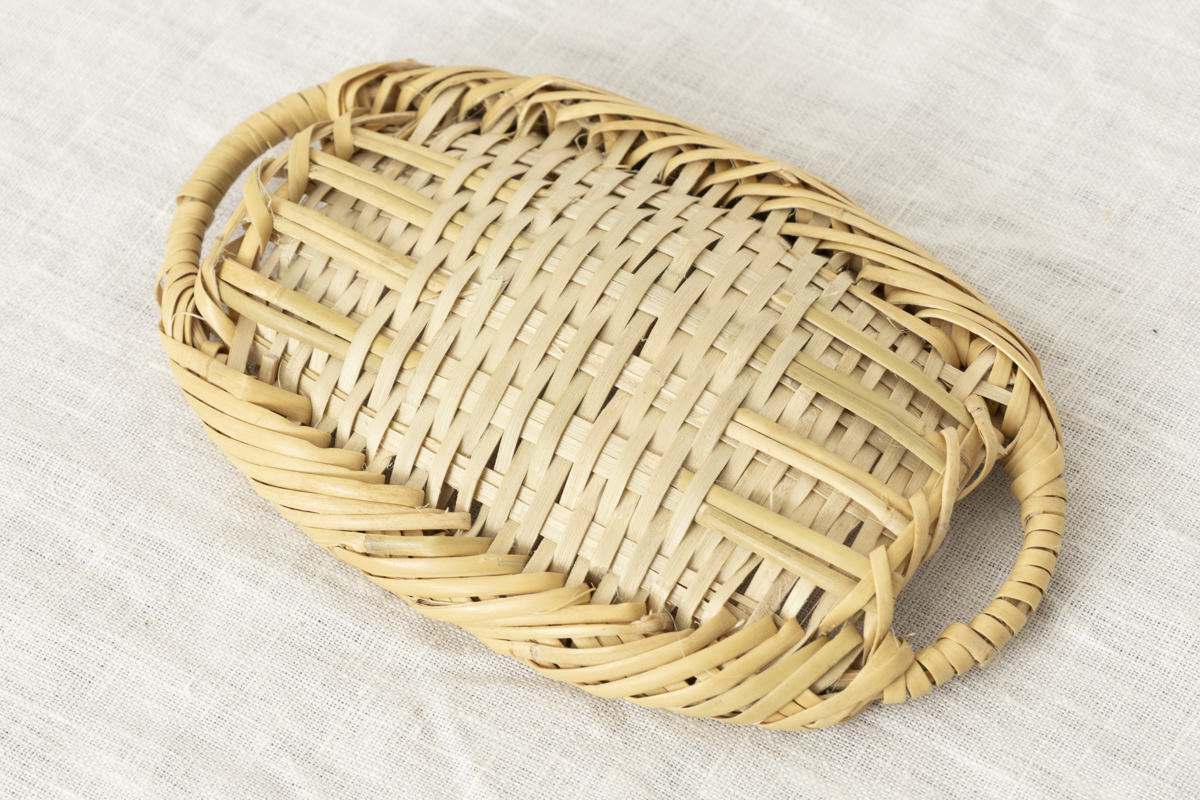
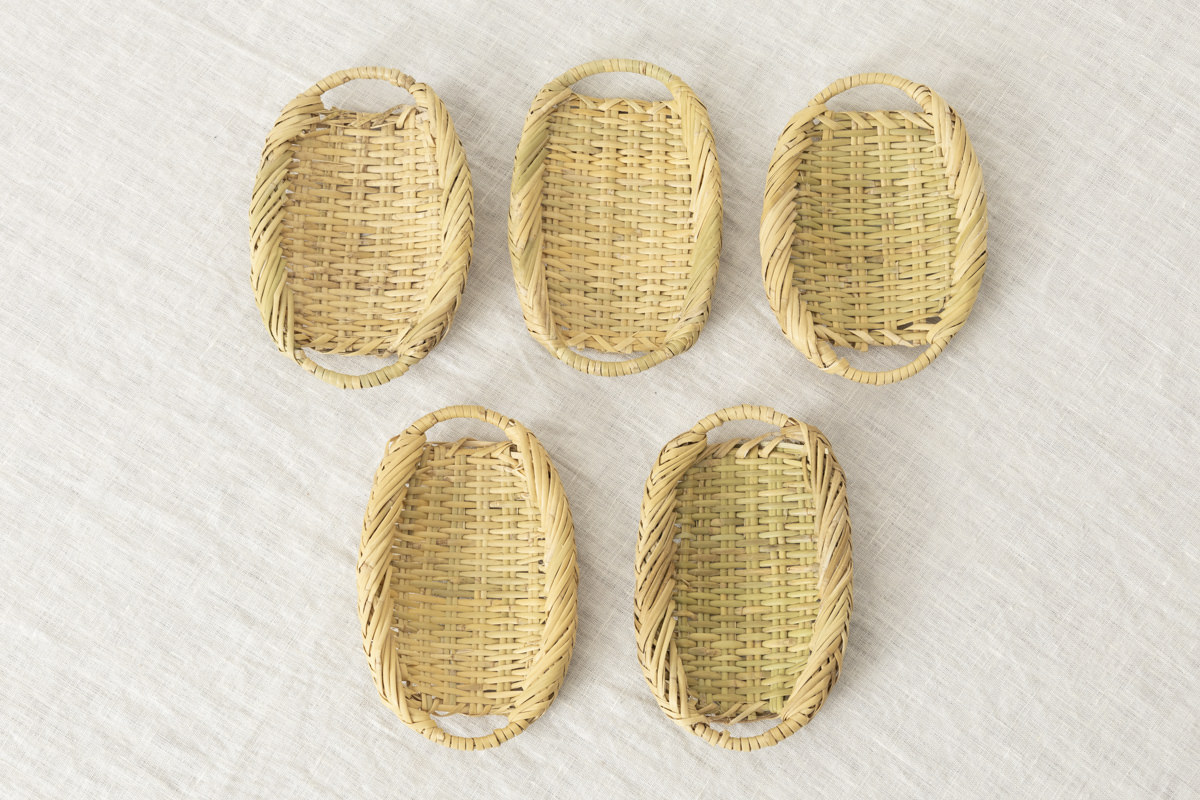
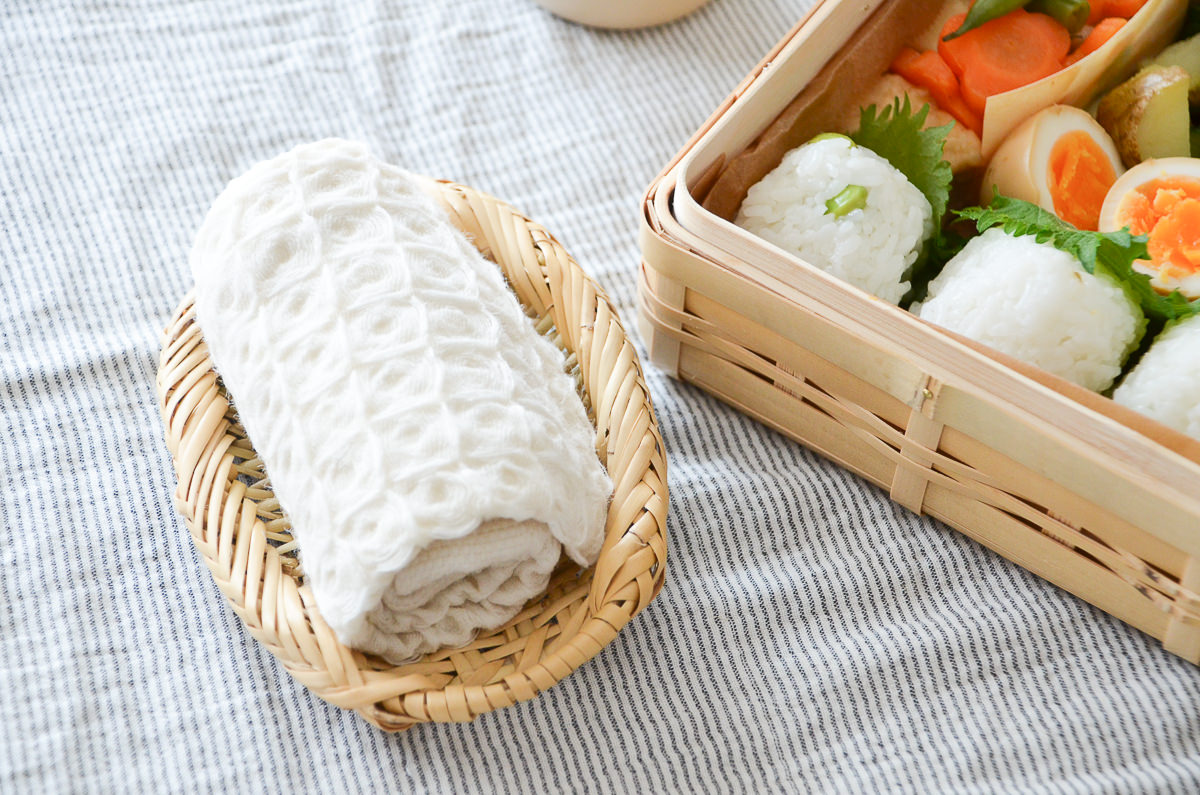
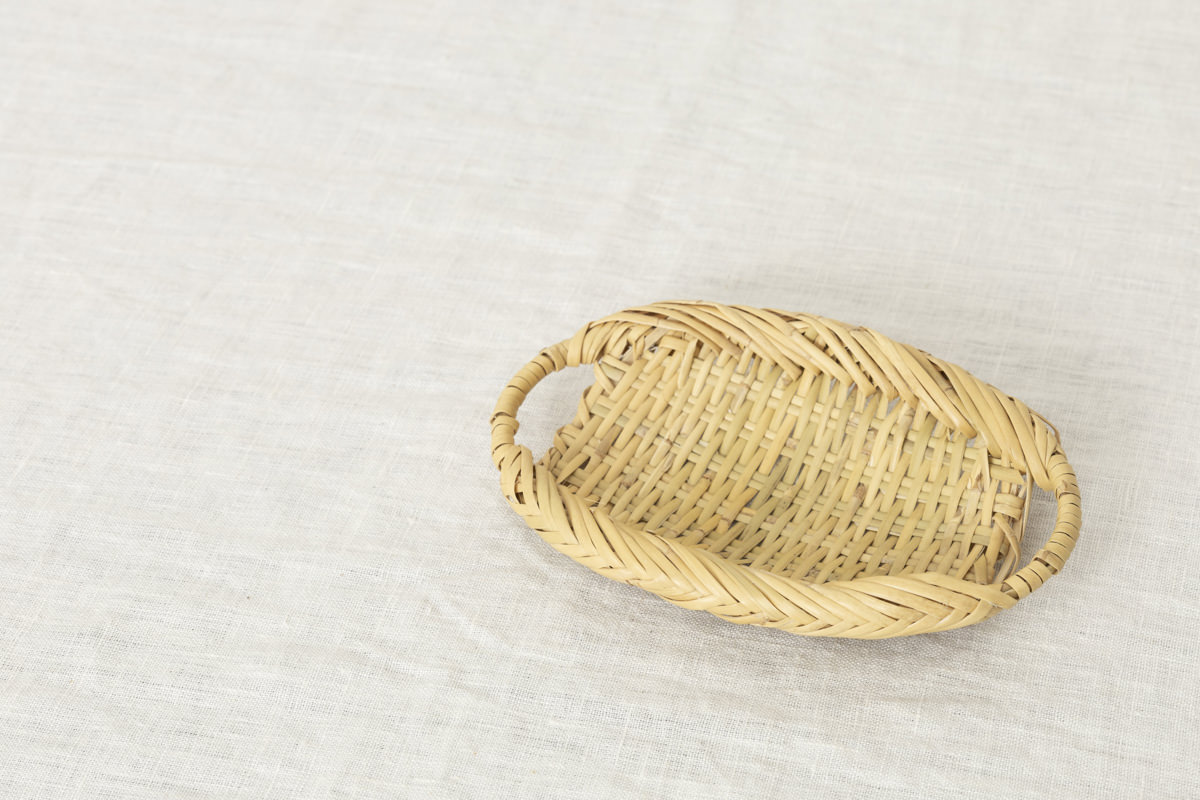
It has a charming form, with handles on both sides. Among Suzutake craft from Iwate, it belongs to the smallest category.
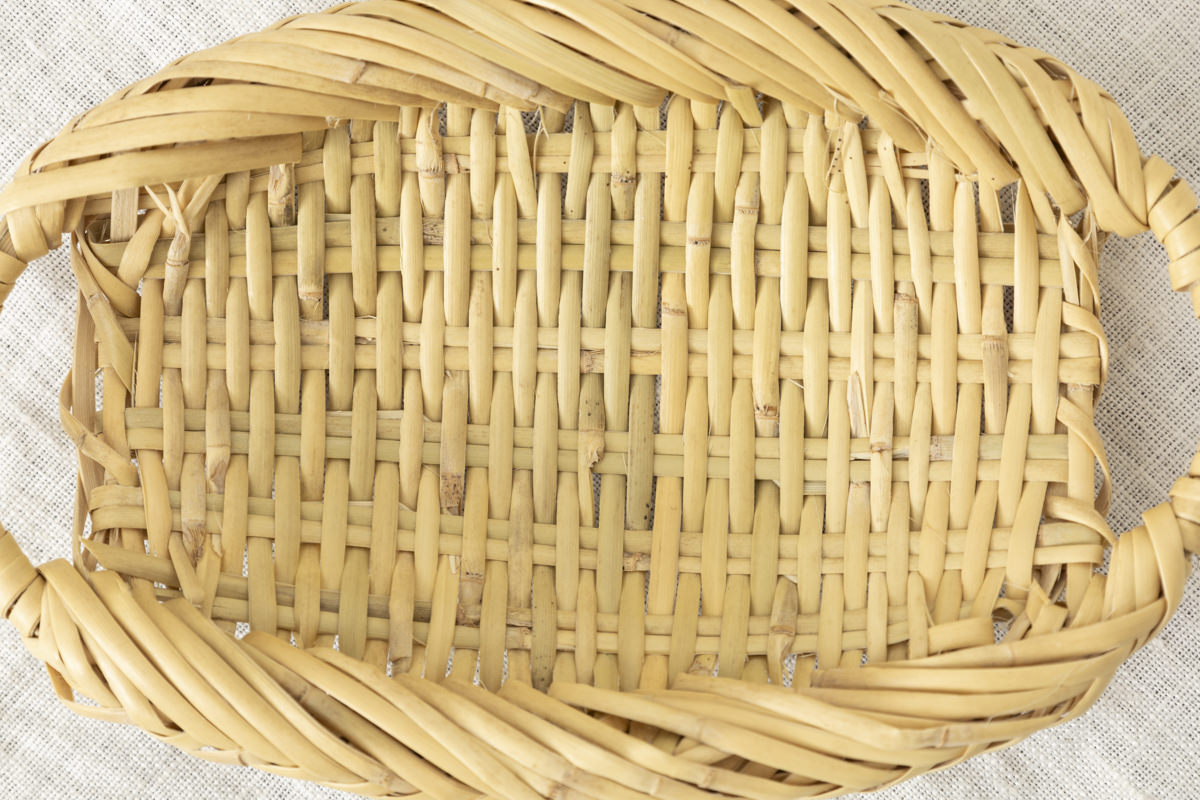
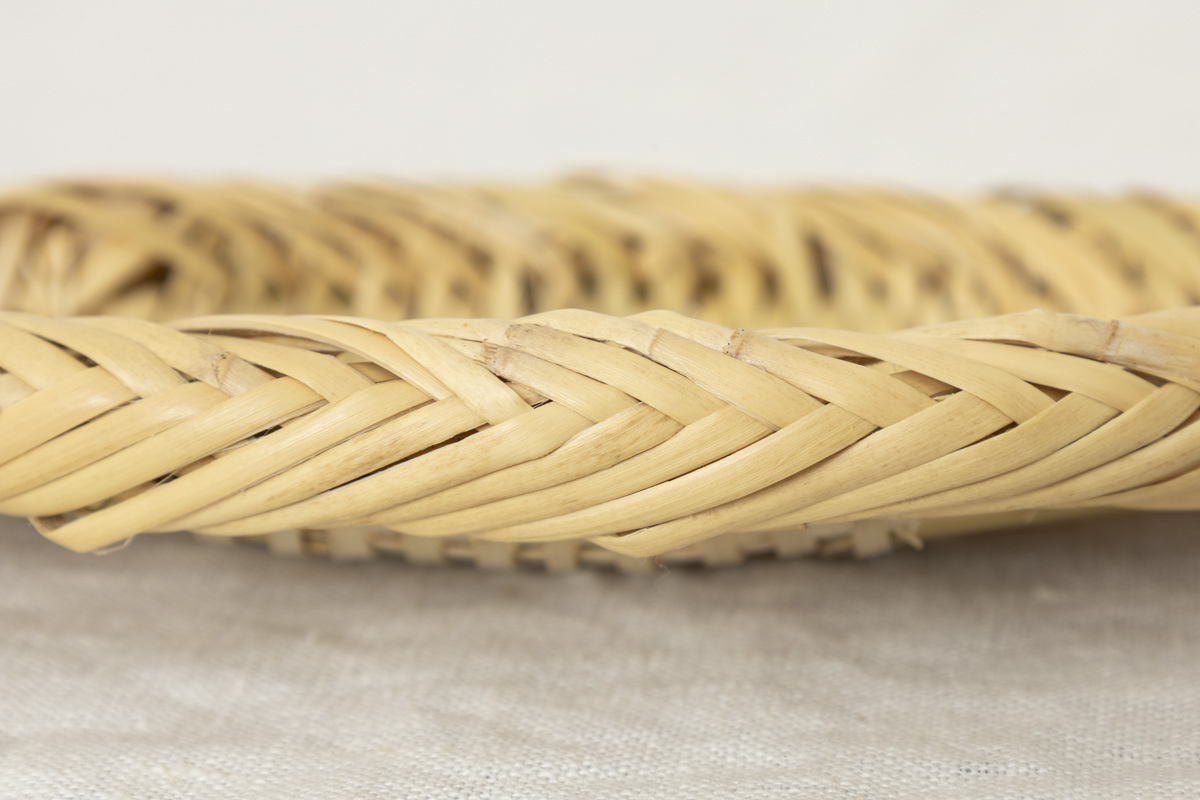
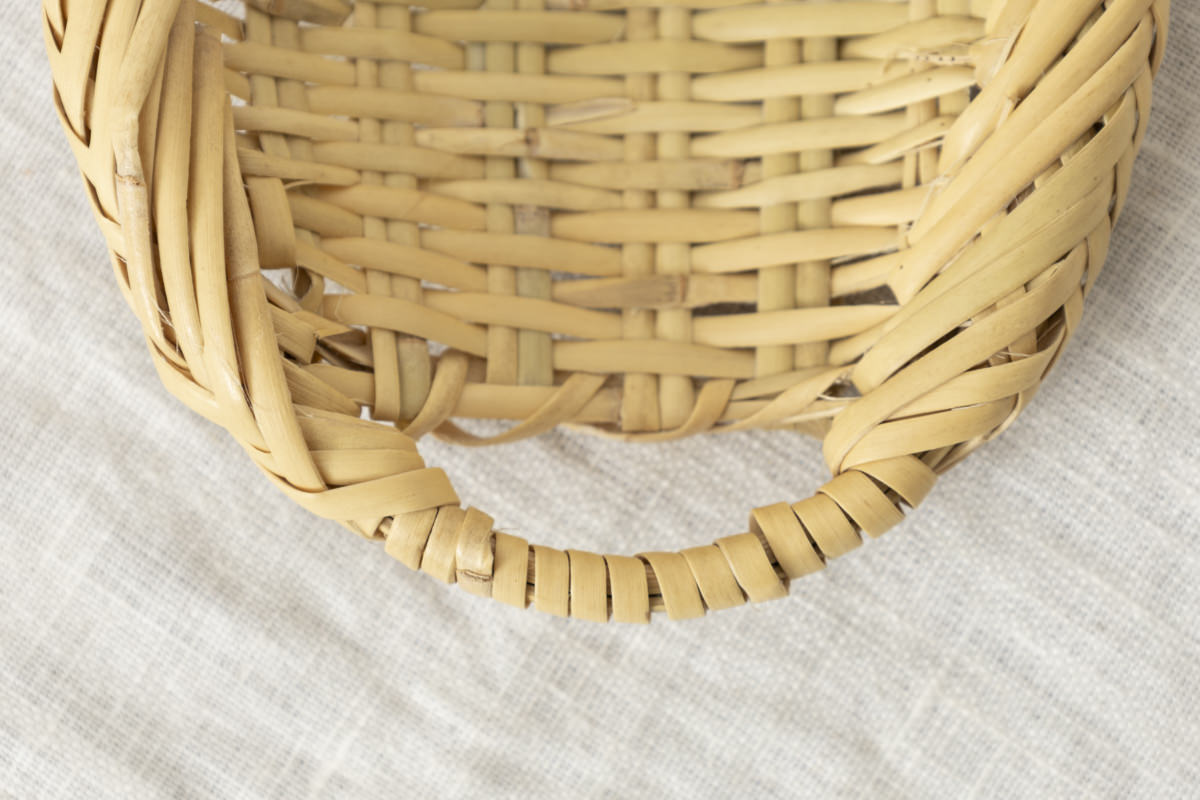
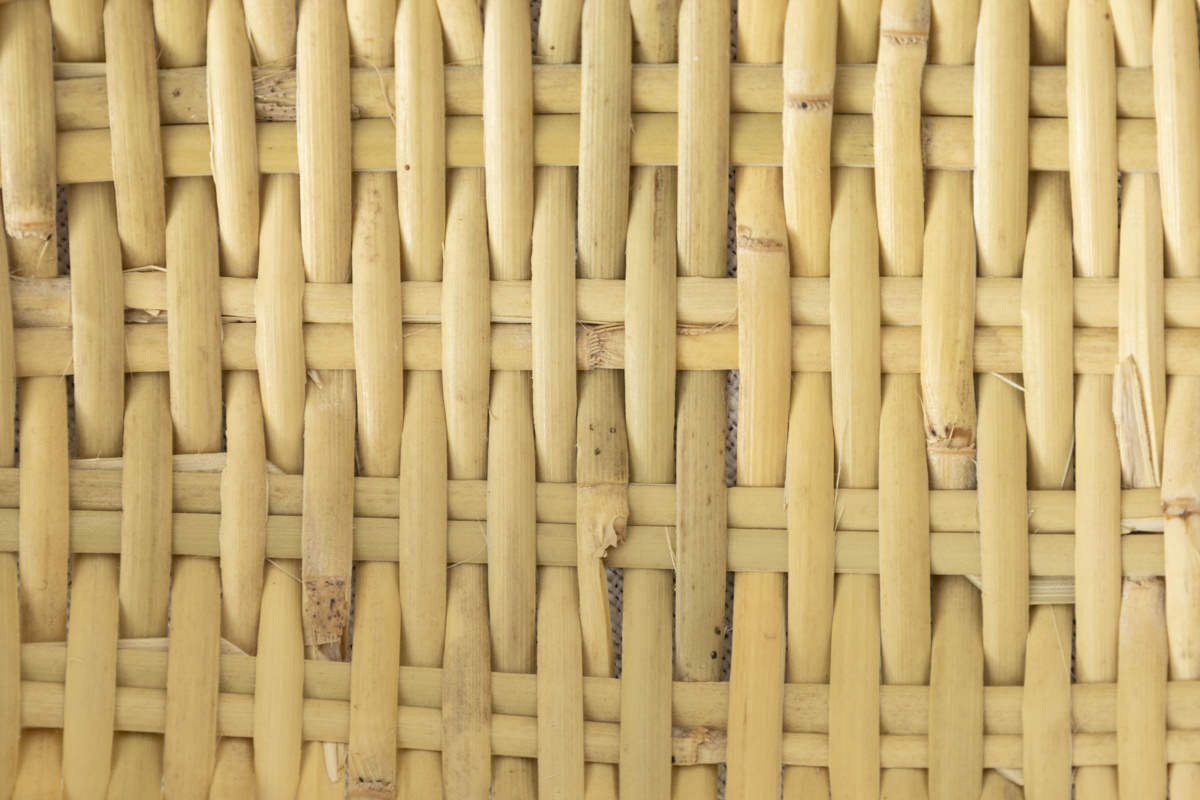
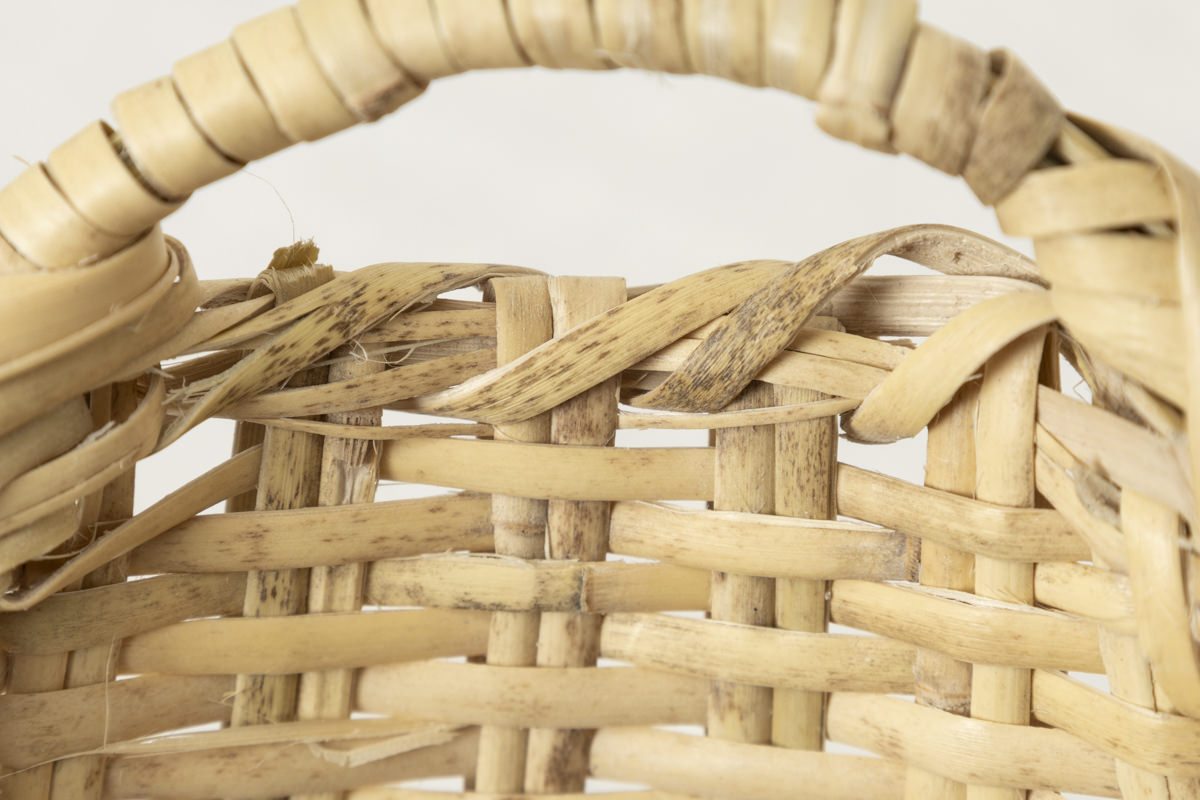
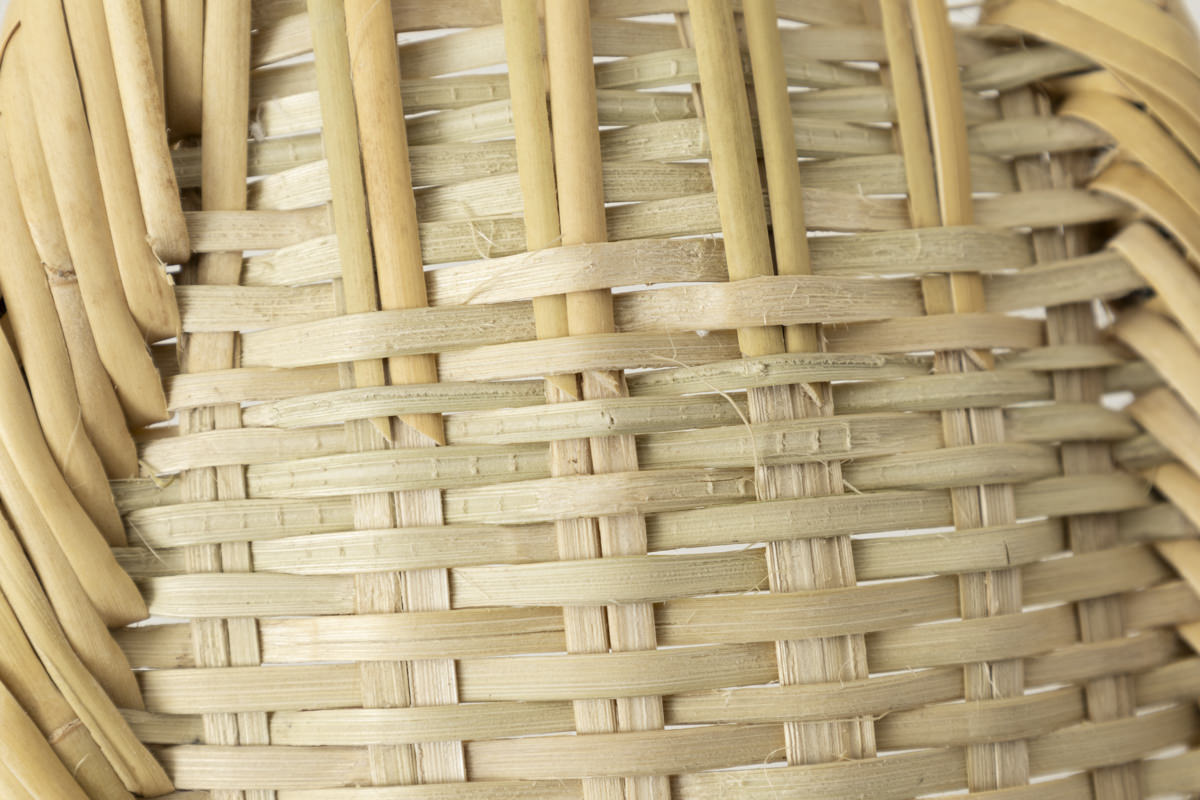
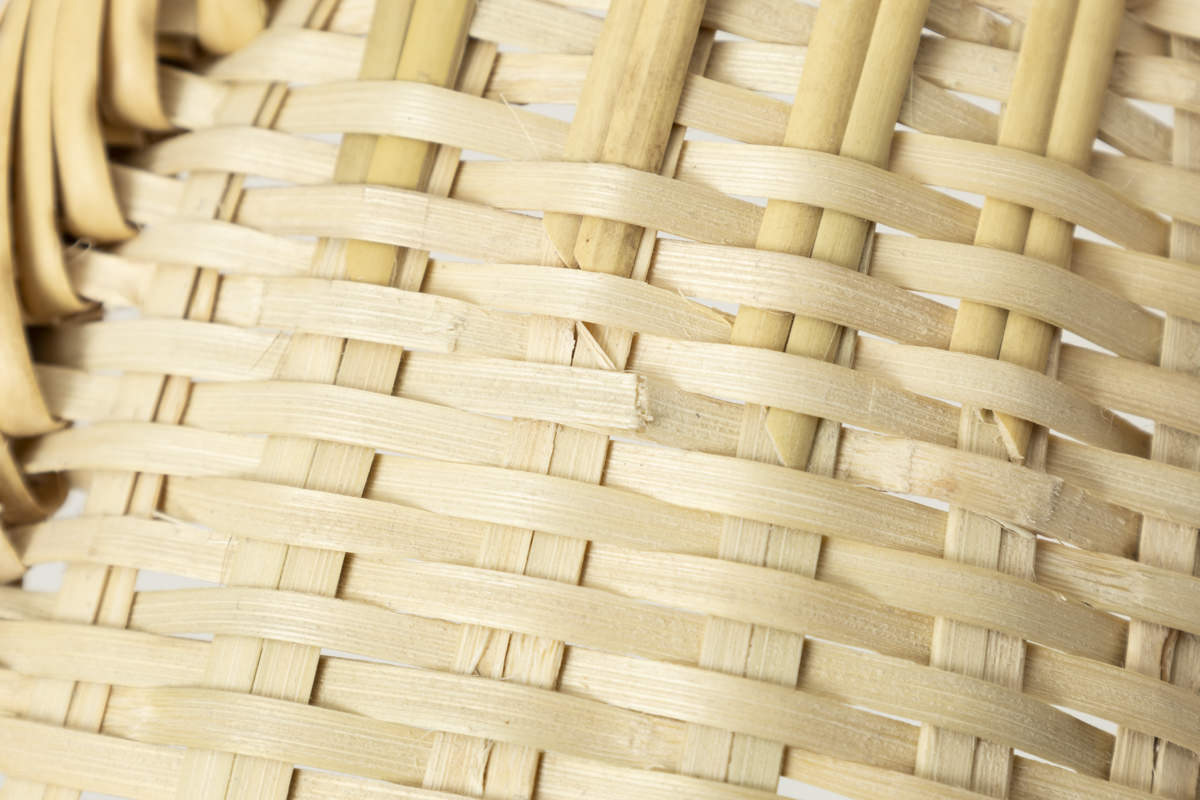
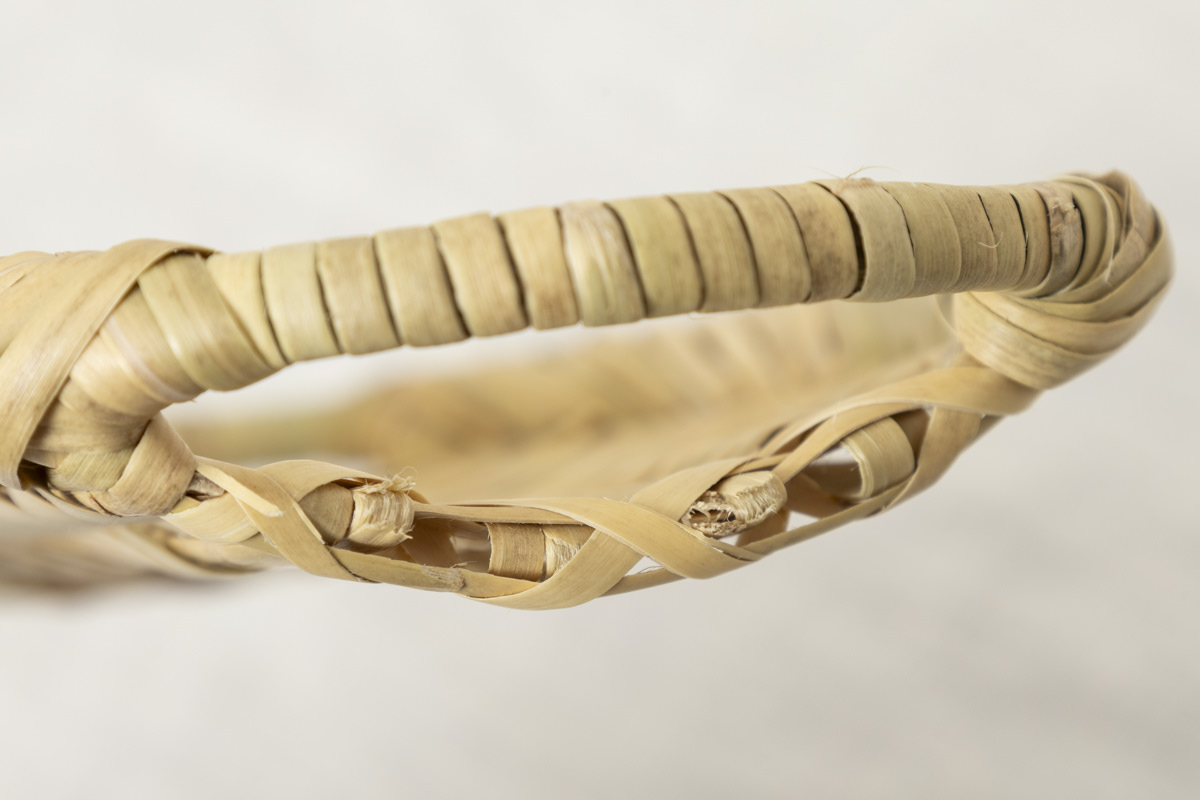
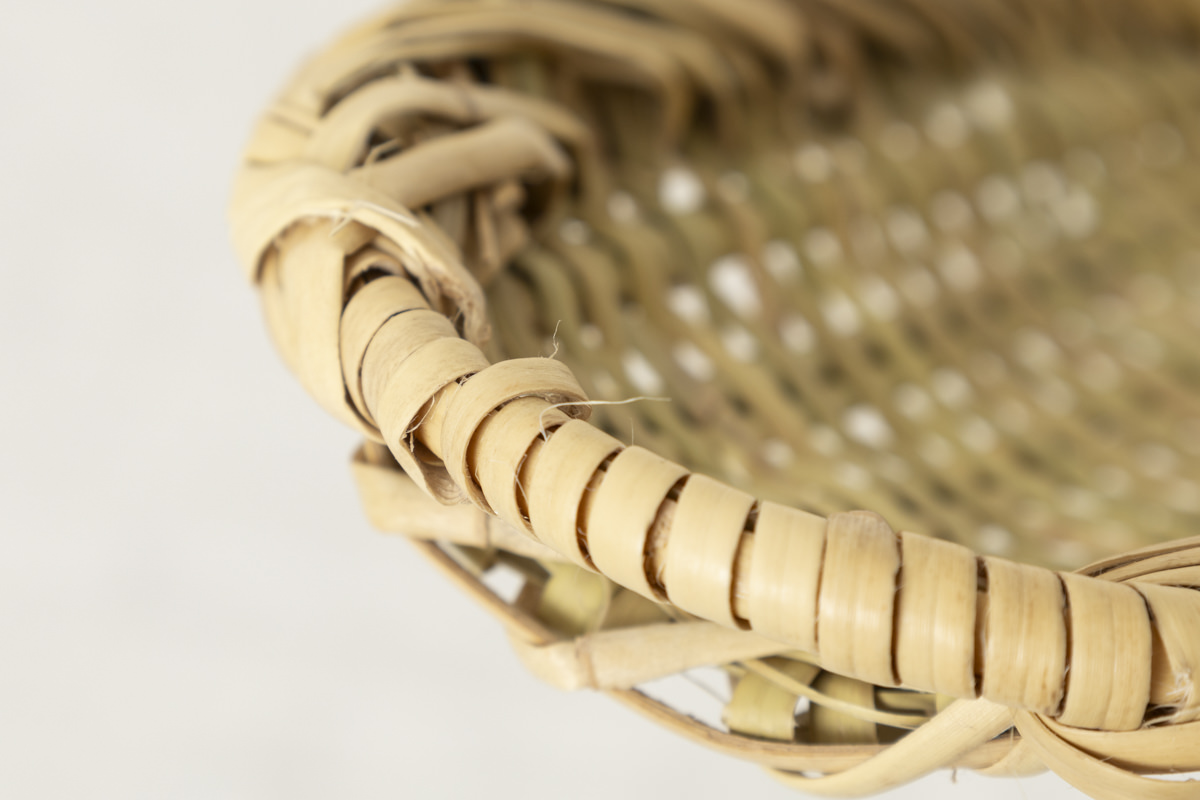
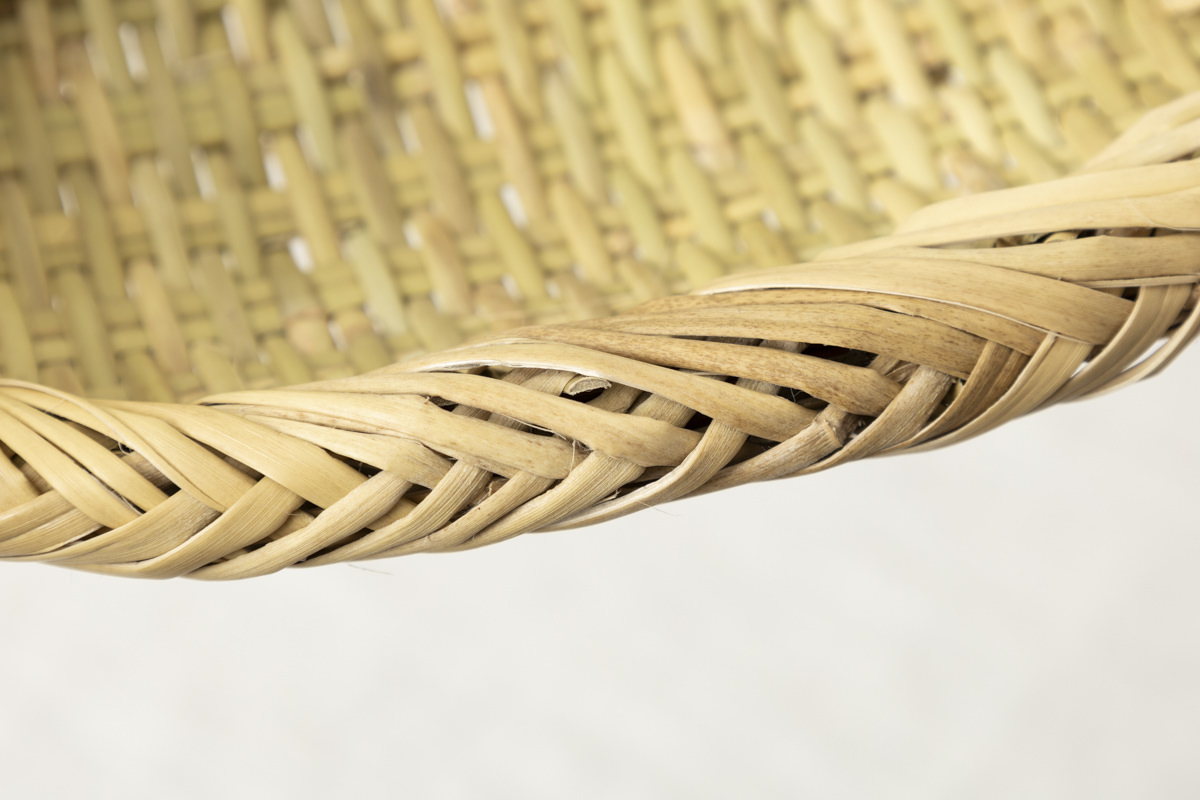
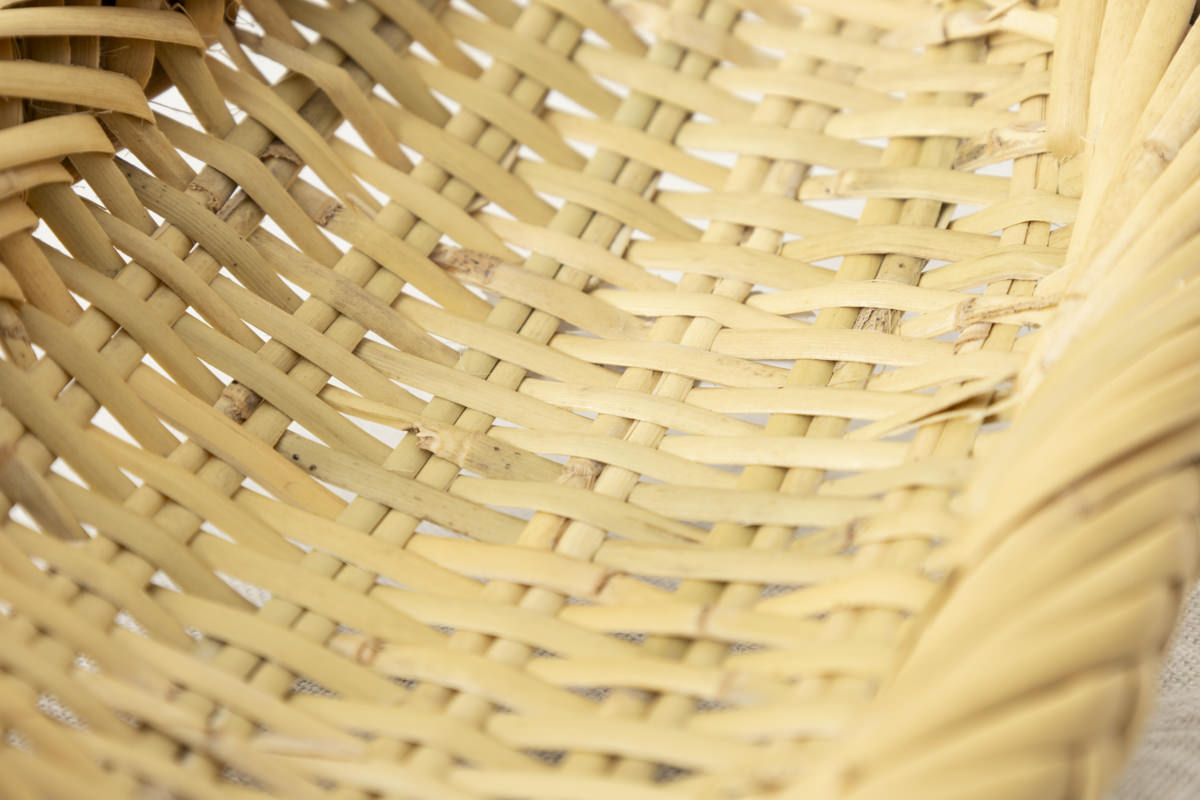
It is woven in gozame-ami, with the outer skin of the bamboo strips facing outward.The rim is finished with yahazu-maki, a wrapping technique that reinforces its strength.Handles are attached to both ends of the tray. It can be hooked onto an S-shaped hook when drying after washing or for storage.This is the underside of the tray. The vertical ribs are folded back and woven into the horizontal strips on the reverse side.At times, parts of the bamboo may appear purplish or darker. This is a natural coloration that occurs when ultraviolet light reaches the surface through gaps in the outer skin.There may also be spots or marks that resemble stains. We hope you will appreciate them as part of the natural character of the bamboo. Please note that this is not a defect.
As shown in the photos, there are individual differences in the color of the bamboo, the rim and handles, the finishing of the strips, and the oval shape. As each piece is made by hand, please allow us to select one for you.
Items that pass our inspection and are suitable for use are sent as acceptable items. The following are examples of variations that may be seen and are not considered defects.
*Small splinters on the bamboo strips*Minor breaks in the bamboo strips*Peeling at the folded sections of the vertical ribs*Loosening of the wrapping on the handles, and possible exposure of the temporary tape on the inside*Loosening of the rim weaving, or strips protruding from the weaveIf splinters or peeling are of concern, they can be carefully trimmed with nippers or a similar tool. Any looseness in the wrapping of the rim or handles will not cause the weaving to unravel, so please rest assured.
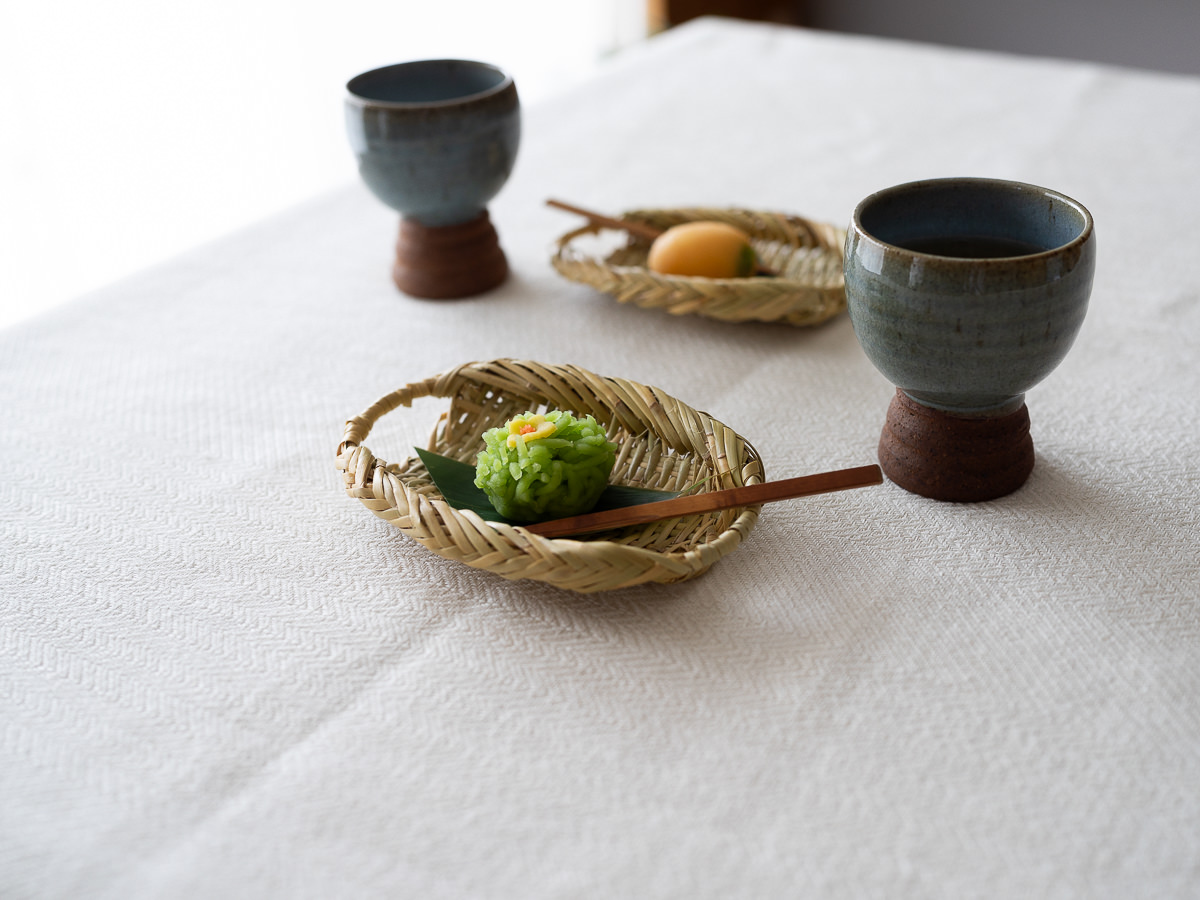
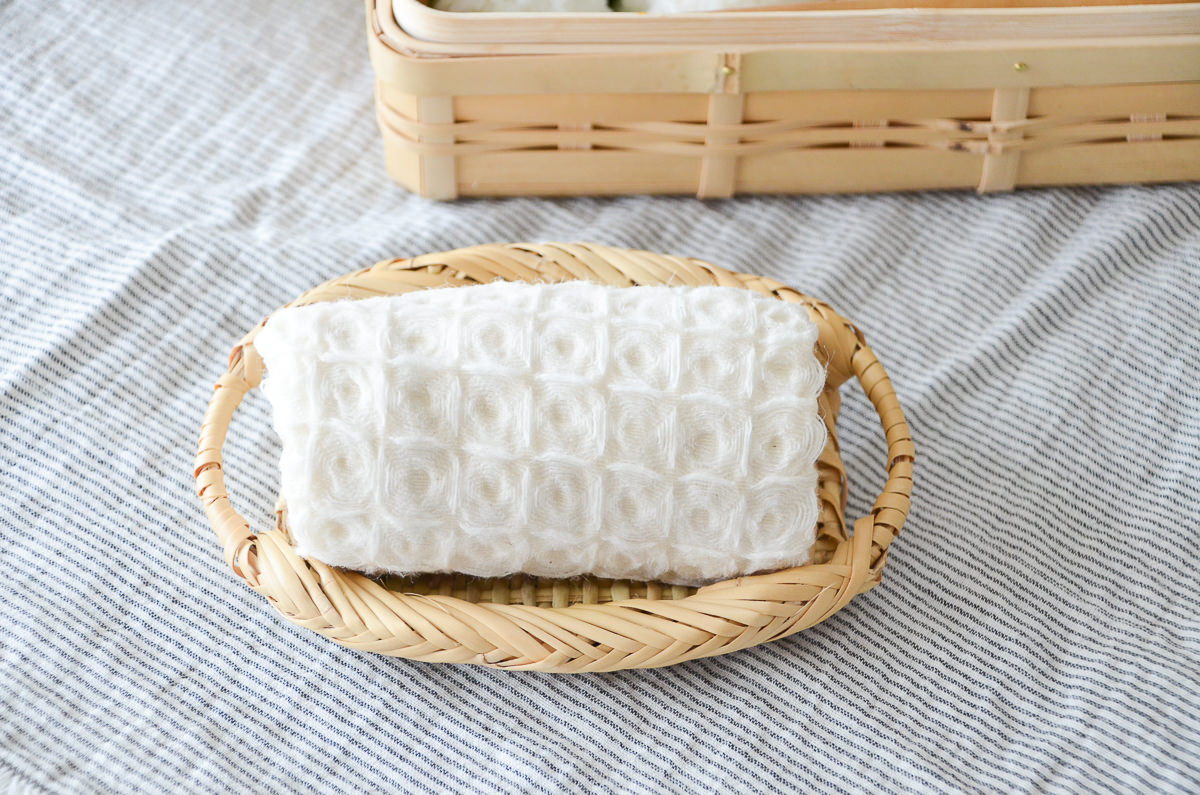
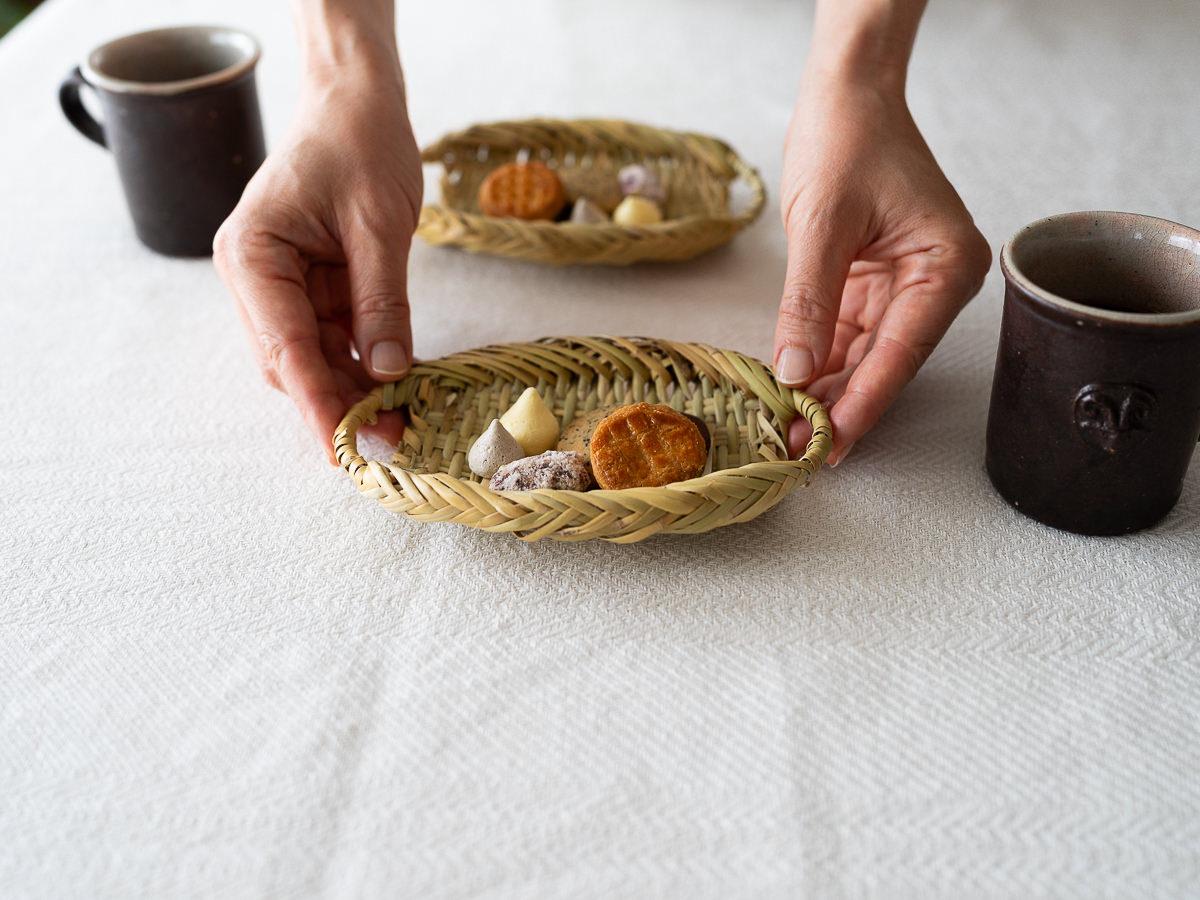
It can be used as a tray for oshibori, or for serving small sweets. Place a few biscuits or pieces of chocolate, or arrange seasonal wagashi. It suits everyday use as well as moments of hospitality.
It can also be placed near the entrance to hold house or bicycle keys, or used beside a washbasin or dressing table for hairpins and accessories.
Suzutake bamboo is known for its smooth, glossy surface, a pleasant suppleness and gentle resilience, and its durability.
Its color gradually deepens into a warm amber tone over time, which is also part of its appeal. Even after this change, washing with water brings back a subtle sheen to the surface, showing the material’s lasting quality.
A “Fine” type, more carefully made—from the preparation of the materials through to the weaving, the wrapping of the rim, and the finishing of the handles—is also introduced on a separate page.
A small tray that gently adds a touch to everyday life. We hope it will find its place in many moments.
Suzutake Craft from Torigoe, Iwate Prefecture
Torigoe is a small village located in Ichinohe Town, Ninohe District, in the northern part of Iwate Prefecture. It is well known as a traditional center of Suzutake bamboo craft.
The Suzutake bamboo that grows in the Torigoe region is said to be especially strong and flexible. For over a thousand years, people in the area have used it to weave durable and practical baskets and tools.
However, since around 2015, many areas of Iwate have experienced a widespread dieback of Suzutake bamboo, making it increasingly difficult to secure high-quality material. Since then, sourcing good-quality material has become much more difficult, making Suzutake craft even more precious today.
It is said that once every 120 years, the bamboo reaches the end of its life cycle, produces small yellow flowers, and then dies off. After that, it may take 10 to 20 years for new shoots to grow tall enough to be used in bamboo craft.
Even for the artisans who have worked with Suzutake for many years, this is an unprecedented challenge. And yet, to keep their craft alive, they continue to walk the mountains carefully, gathering what little bamboo they can find— sometimes just a fraction of what was once available—and carrying on the tradition with care.
Please note: This item ships from Japan. As the buyer, you are responsible for any import duties, customs fees, or local taxes that may be charged in your country. These costs are not included in the item price or shipping cost. Please check with your local customs authority if you are unsure about any potential charges before placing your order.
This tray is woven from Suzutake bamboo.
It has a charming form, with handles on both sides. Among Suzutake craft from Iwate, it belongs to the smallest category.
It is woven in gozame-ami, with the outer skin of the bamboo strips facing outward.The rim is finished with yahazu-maki, a wrapping technique that reinforces its strength.Handles are attached to both ends of the tray. It can be hooked onto an S-shaped hook when drying after washing or for storage.This is the underside of the tray. The vertical ribs are folded back and woven into the horizontal strips on the reverse side.At times, parts of the bamboo may appear purplish or darker. This is a natural coloration that occurs when ultraviolet light reaches the surface through gaps in the outer skin.There may also be spots or marks that resemble stains. We hope you will appreciate them as part of the natural character of the bamboo. Please note that this is not a defect.
As shown in the photos, there are individual differences in the color of the bamboo, the rim and handles, the finishing of the strips, and the oval shape. As each piece is made by hand, please allow us to select one for you.
Items that pass our inspection and are suitable for use are sent as acceptable items. The following are examples of variations that may be seen and are not considered defects.
*Small splinters on the bamboo strips*Minor breaks in the bamboo strips*Peeling at the folded sections of the vertical ribs*Loosening of the wrapping on the handles, and possible exposure of the temporary tape on the inside*Loosening of the rim weaving, or strips protruding from the weaveIf splinters or peeling are of concern, they can be carefully trimmed with nippers or a similar tool. Any looseness in the wrapping of the rim or handles will not cause the weaving to unravel, so please rest assured.
It can be used as a tray for oshibori, or for serving small sweets. Place a few biscuits or pieces of chocolate, or arrange seasonal wagashi. It suits everyday use as well as moments of hospitality.
It can also be placed near the entrance to hold house or bicycle keys, or used beside a washbasin or dressing table for hairpins and accessories.
Suzutake bamboo is known for its smooth, glossy surface, a pleasant suppleness and gentle resilience, and its durability.
Its color gradually deepens into a warm amber tone over time, which is also part of its appeal. Even after this change, washing with water brings back a subtle sheen to the surface, showing the material’s lasting quality.
A “Fine” type, more carefully made—from the preparation of the materials through to the weaving, the wrapping of the rim, and the finishing of the handles—is also introduced on a separate page.
A small tray that gently adds a touch to everyday life. We hope it will find its place in many moments.
Suzutake Craft from Torigoe, Iwate Prefecture
Torigoe is a small village located in Ichinohe Town, Ninohe District, in the northern part of Iwate Prefecture. It is well known as a traditional center of Suzutake bamboo craft.
The Suzutake bamboo that grows in the Torigoe region is said to be especially strong and flexible. For over a thousand years, people in the area have used it to weave durable and practical baskets and tools.
However, since around 2015, many areas of Iwate have experienced a widespread dieback of Suzutake bamboo, making it increasingly difficult to secure high-quality material. Since then, sourcing good-quality material has become much more difficult, making Suzutake craft even more precious today.
It is said that once every 120 years, the bamboo reaches the end of its life cycle, produces small yellow flowers, and then dies off. After that, it may take 10 to 20 years for new shoots to grow tall enough to be used in bamboo craft.
Even for the artisans who have worked with Suzutake for many years, this is an unprecedented challenge. And yet, to keep their craft alive, they continue to walk the mountains carefully, gathering what little bamboo they can find— sometimes just a fraction of what was once available—and carrying on the tradition with care.
Please note: This item ships from Japan. As the buyer, you are responsible for any import duties, customs fees, or local taxes that may be charged in your country. These costs are not included in the item price or shipping cost. Please check with your local customs authority if you are unsure about any potential charges before placing your order.
This tray is woven from Suzutake bamboo.
It has a charming form, with handles on both sides. Among Suzutake craft from Iwate, it belongs to the smallest category.
It is woven in gozame-ami, with the outer skin of the bamboo strips facing outward.The rim is finished with yahazu-maki, a wrapping technique that reinforces its strength.Handles are attached to both ends of the tray. It can be hooked onto an S-shaped hook when drying after washing or for storage.This is the underside of the tray. The vertical ribs are folded back and woven into the horizontal strips on the reverse side.At times, parts of the bamboo may appear purplish or darker. This is a natural coloration that occurs when ultraviolet light reaches the surface through gaps in the outer skin.There may also be spots or marks that resemble stains. We hope you will appreciate them as part of the natural character of the bamboo. Please note that this is not a defect.
As shown in the photos, there are individual differences in the color of the bamboo, the rim and handles, the finishing of the strips, and the oval shape. As each piece is made by hand, please allow us to select one for you.
Items that pass our inspection and are suitable for use are sent as acceptable items. The following are examples of variations that may be seen and are not considered defects.
*Small splinters on the bamboo strips*Minor breaks in the bamboo strips*Peeling at the folded sections of the vertical ribs*Loosening of the wrapping on the handles, and possible exposure of the temporary tape on the inside*Loosening of the rim weaving, or strips protruding from the weaveIf splinters or peeling are of concern, they can be carefully trimmed with nippers or a similar tool. Any looseness in the wrapping of the rim or handles will not cause the weaving to unravel, so please rest assured.
It can be used as a tray for oshibori, or for serving small sweets. Place a few biscuits or pieces of chocolate, or arrange seasonal wagashi. It suits everyday use as well as moments of hospitality.
It can also be placed near the entrance to hold house or bicycle keys, or used beside a washbasin or dressing table for hairpins and accessories.
Suzutake bamboo is known for its smooth, glossy surface, a pleasant suppleness and gentle resilience, and its durability.
Its color gradually deepens into a warm amber tone over time, which is also part of its appeal. Even after this change, washing with water brings back a subtle sheen to the surface, showing the material’s lasting quality.
A “Fine” type, more carefully made—from the preparation of the materials through to the weaving, the wrapping of the rim, and the finishing of the handles—is also introduced on a separate page.
A small tray that gently adds a touch to everyday life. We hope it will find its place in many moments.
Suzutake Craft from Torigoe, Iwate Prefecture
Torigoe is a small village located in Ichinohe Town, Ninohe District, in the northern part of Iwate Prefecture. It is well known as a traditional center of Suzutake bamboo craft.
The Suzutake bamboo that grows in the Torigoe region is said to be especially strong and flexible. For over a thousand years, people in the area have used it to weave durable and practical baskets and tools.
However, since around 2015, many areas of Iwate have experienced a widespread dieback of Suzutake bamboo, making it increasingly difficult to secure high-quality material. Since then, sourcing good-quality material has become much more difficult, making Suzutake craft even more precious today.
It is said that once every 120 years, the bamboo reaches the end of its life cycle, produces small yellow flowers, and then dies off. After that, it may take 10 to 20 years for new shoots to grow tall enough to be used in bamboo craft.
Even for the artisans who have worked with Suzutake for many years, this is an unprecedented challenge. And yet, to keep their craft alive, they continue to walk the mountains carefully, gathering what little bamboo they can find— sometimes just a fraction of what was once available—and carrying on the tradition with care.
Please note: This item ships from Japan. As the buyer, you are responsible for any import duties, customs fees, or local taxes that may be charged in your country. These costs are not included in the item price or shipping cost. Please check with your local customs authority if you are unsure about any potential charges before placing your order.