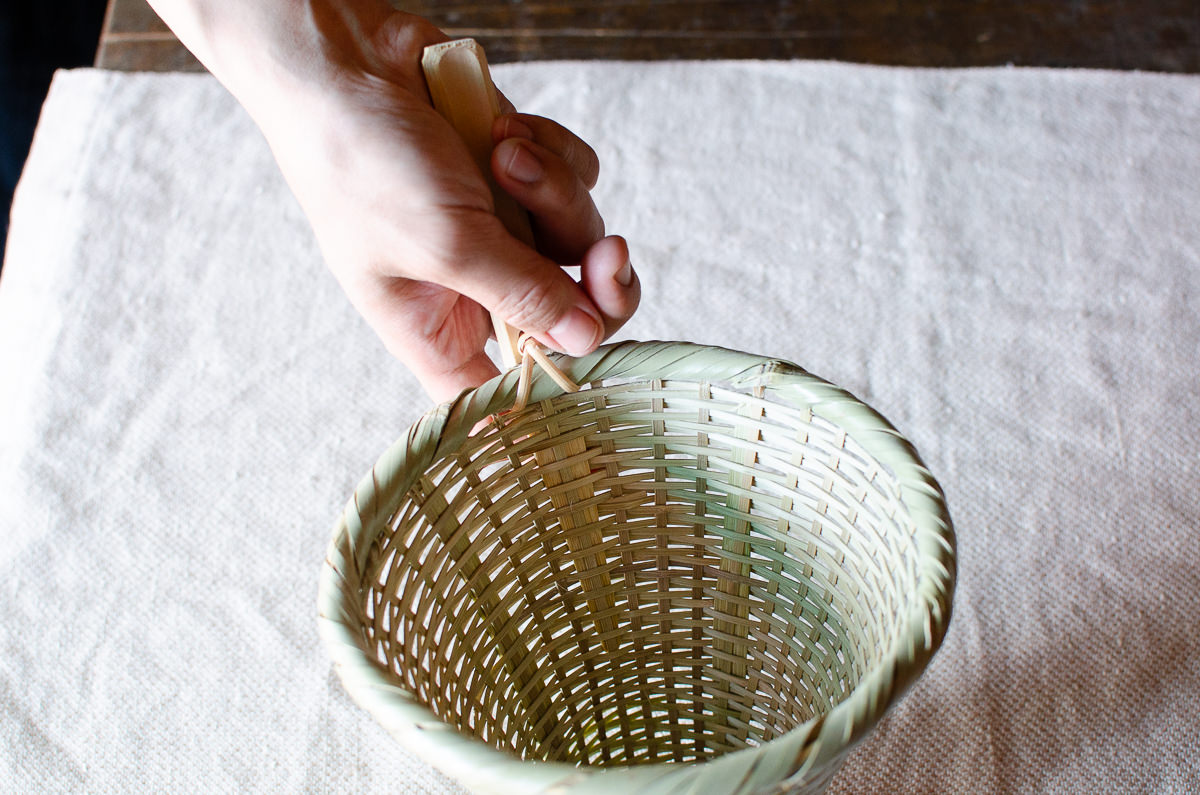
As its name suggests, this is a tool used by soba restaurants when draining freshly boiled soba noodles. It is known by many names, such as “soba-toji-zaru,” “sobafuri-zaru,” “sobafuri,” or simply “furizara.” A short bamboo handle is attached to the basket.
While its primary purpose is draining water or hot water, it is especially used when preparing warm soba. After boiling, the noodles are first cooled in water, then a single portion is briefly dipped back into hot water to reheat.
This prevents the dipping broth from cooling, allowing the soba to be served piping hot.
Some people also use it simply for draining soba noodles. Others use it to scoop up noodles remaining in the boiling pot.
The craftsman who made this has been working with bamboo since his youth, and even now, in his nineties, he continues to devote himself energetically to the craft every day. From large-scale pieces made for professional use to smaller household items, he has created nearly everything once used in the Kanto region.
The sobafuri made by such a craftsman is crafted from madake bamboo. Today, most sobafuri are made using stainless steel wire, but this one is finished using only madake bamboo and rattan.
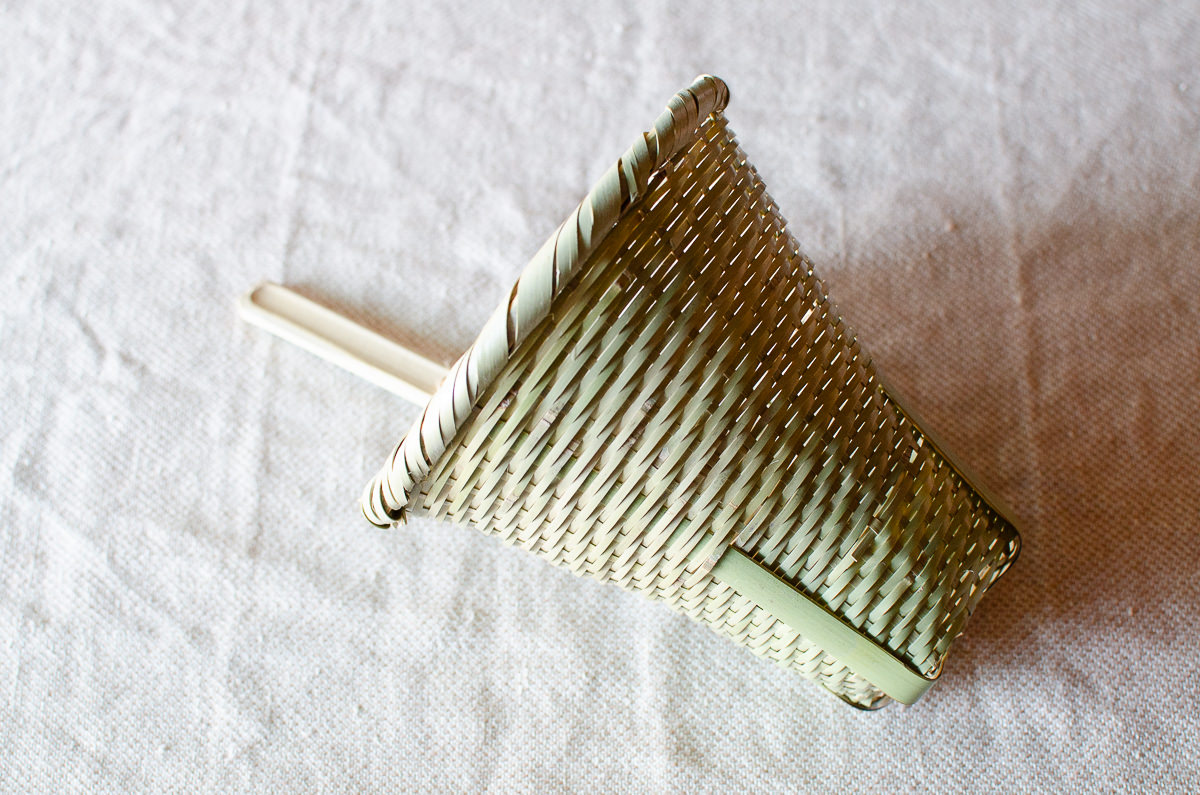
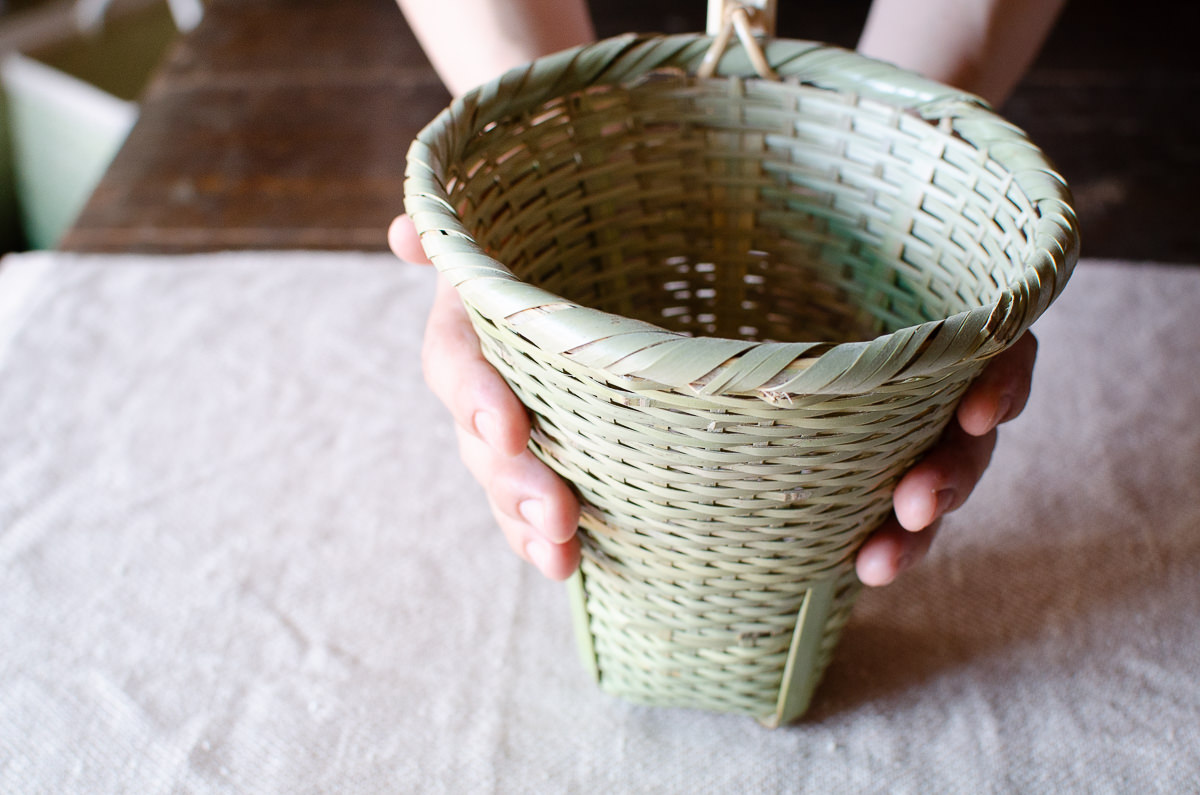
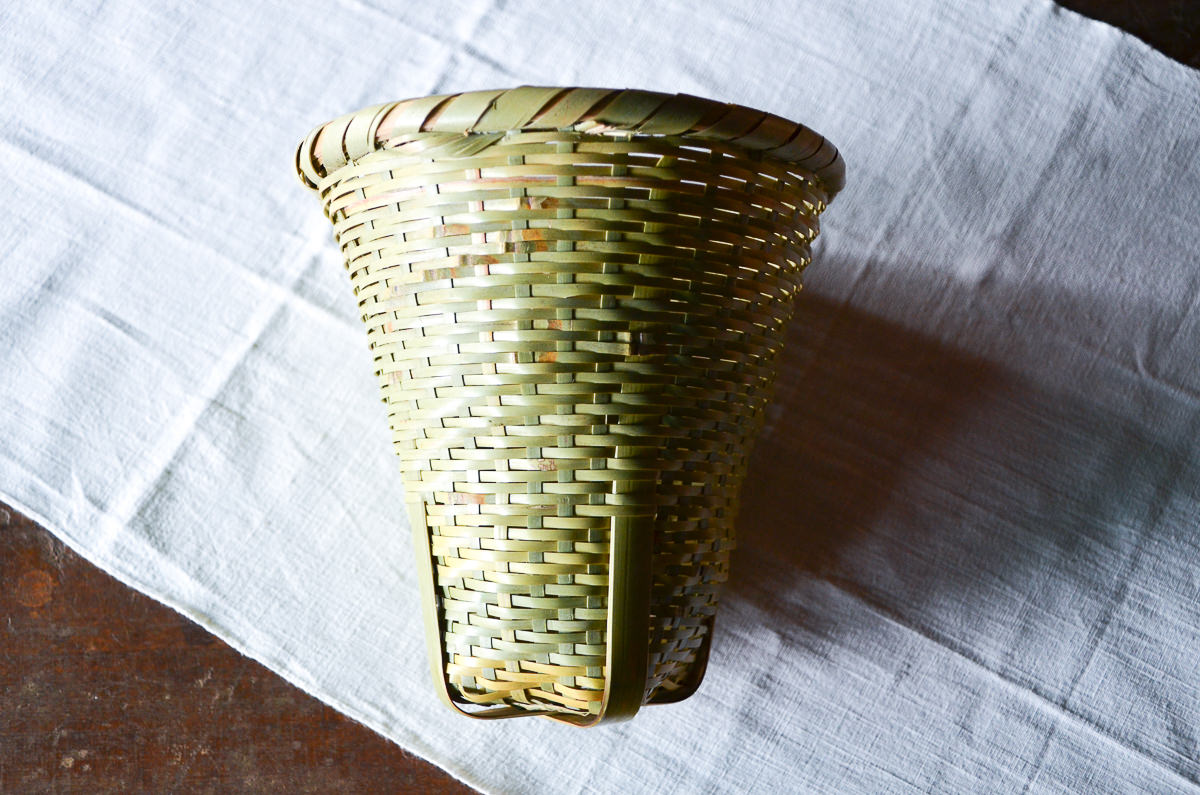
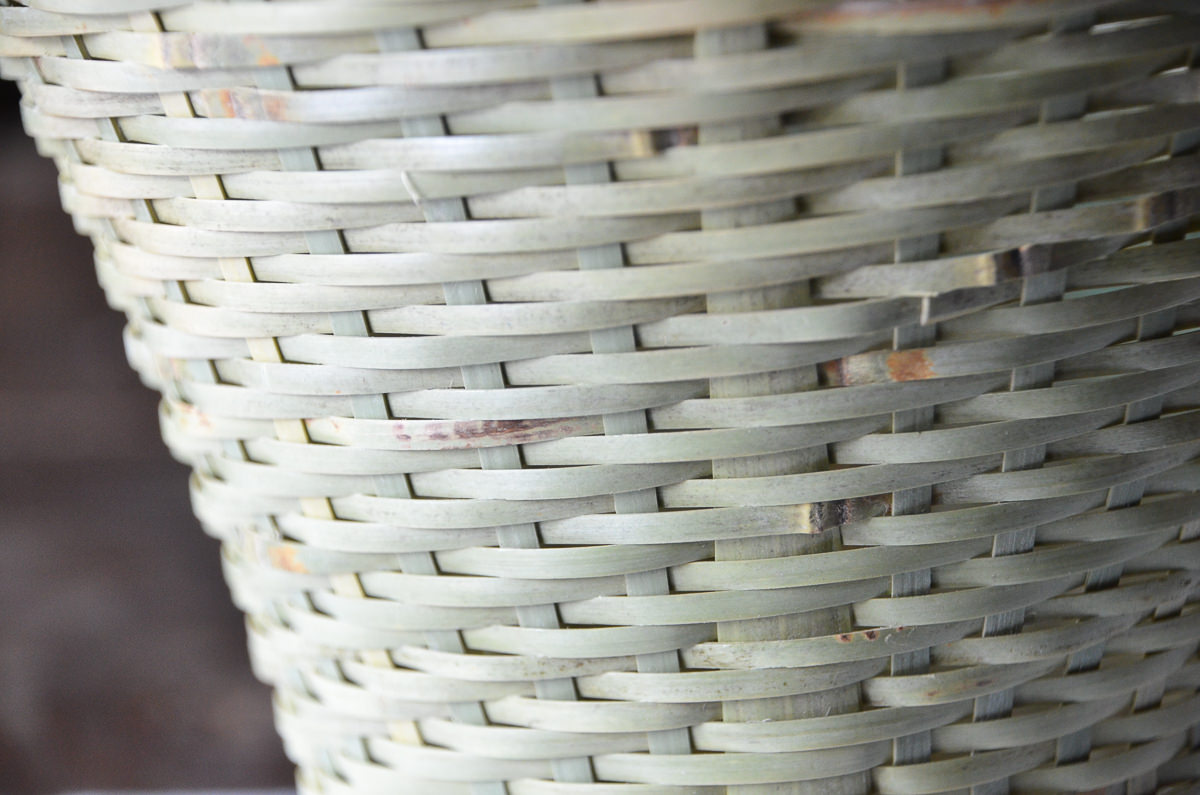
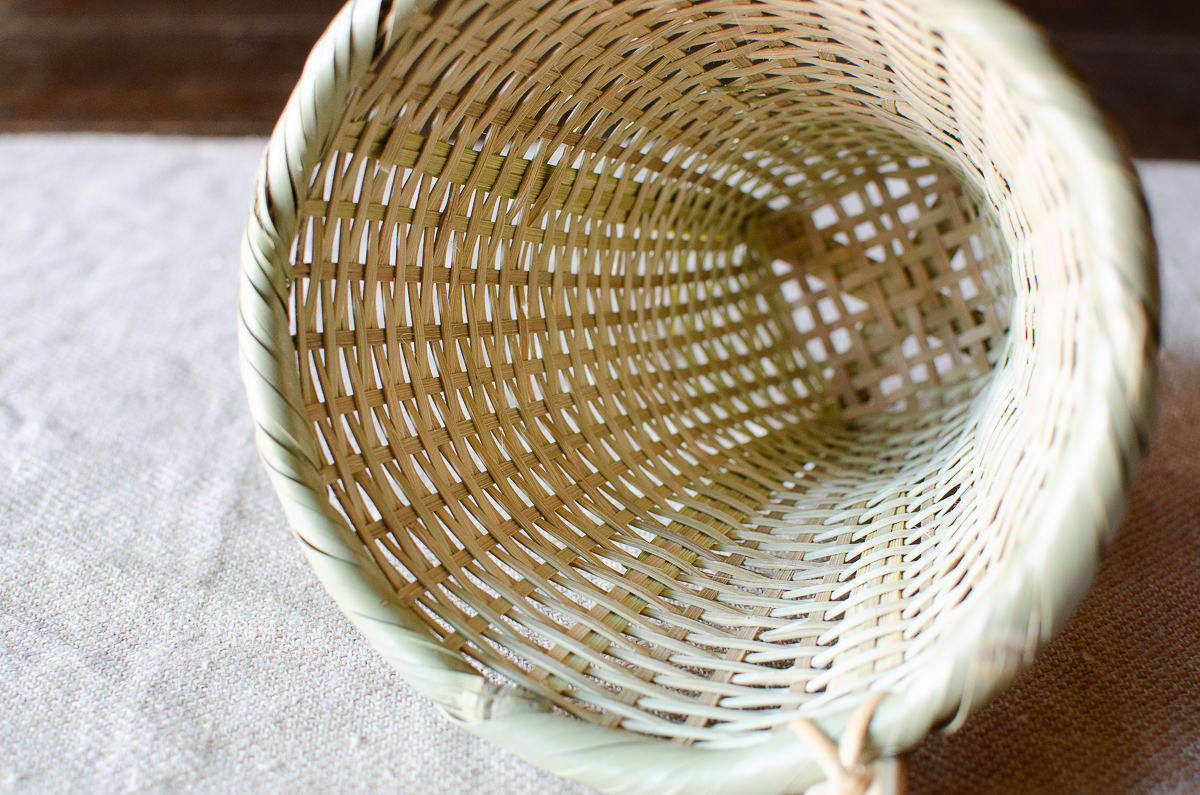
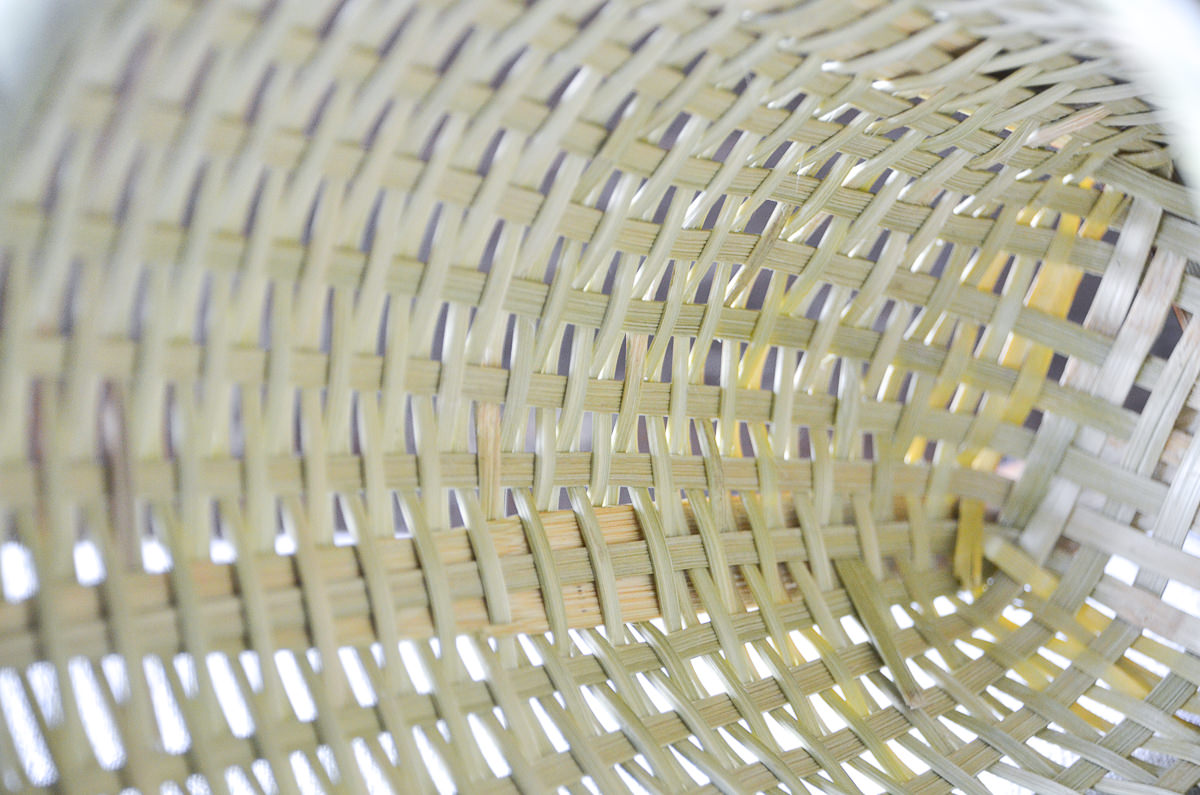
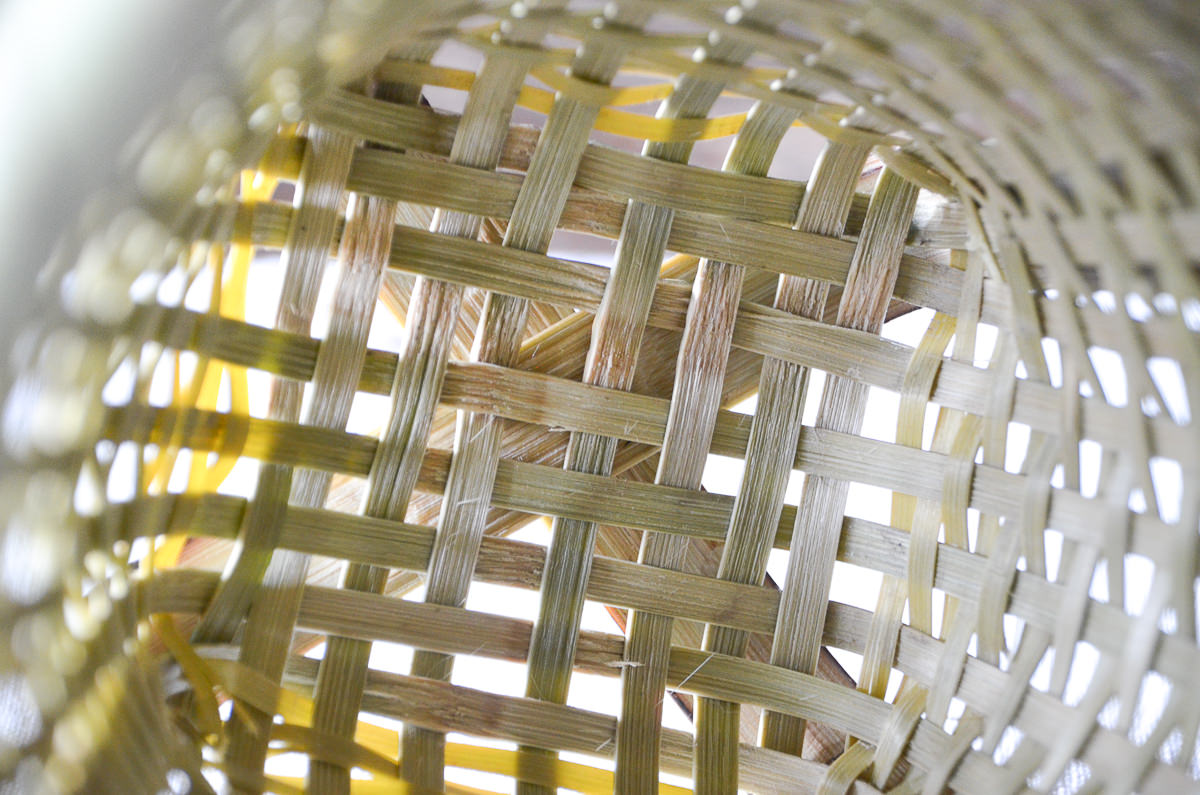
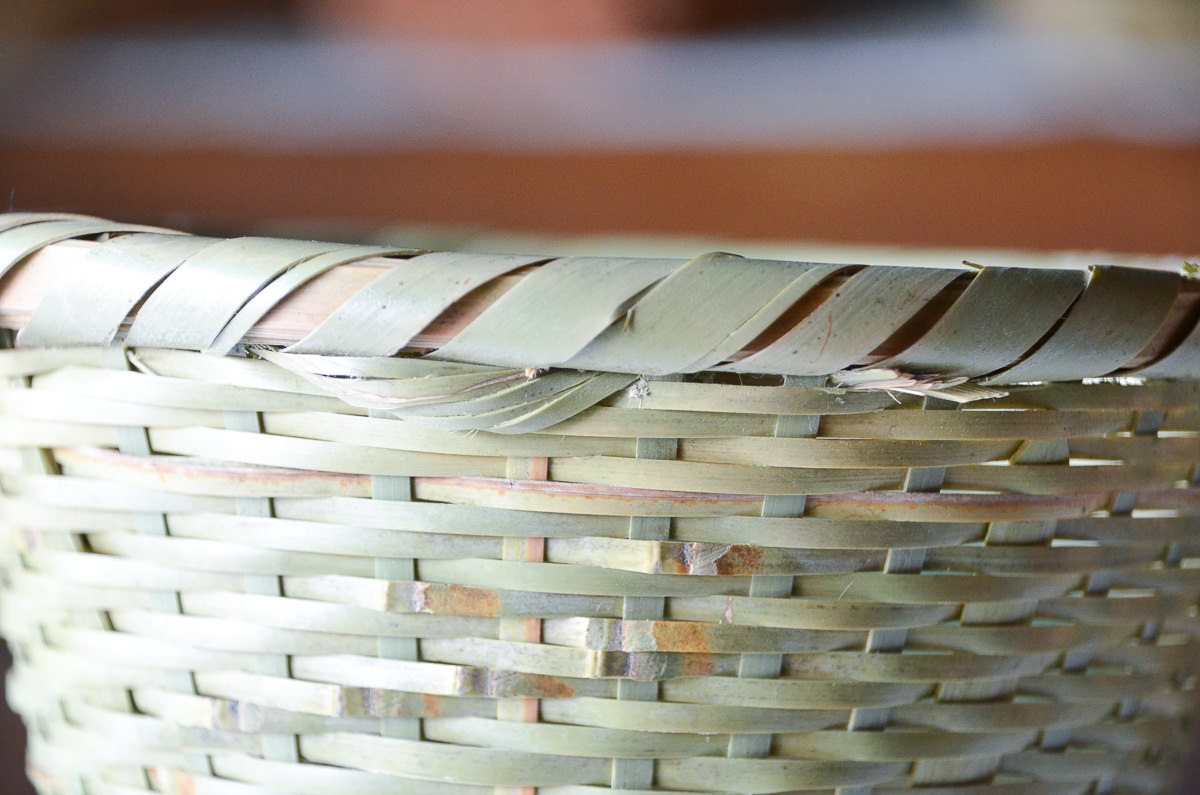
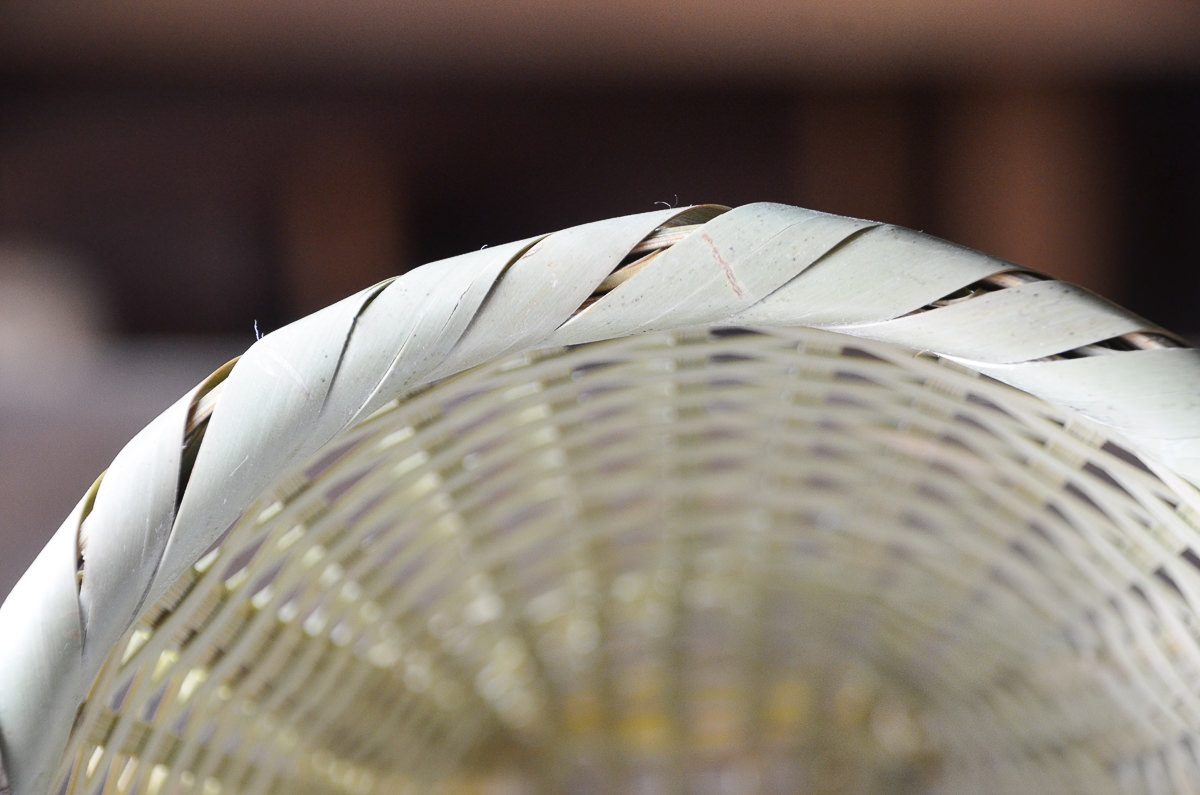
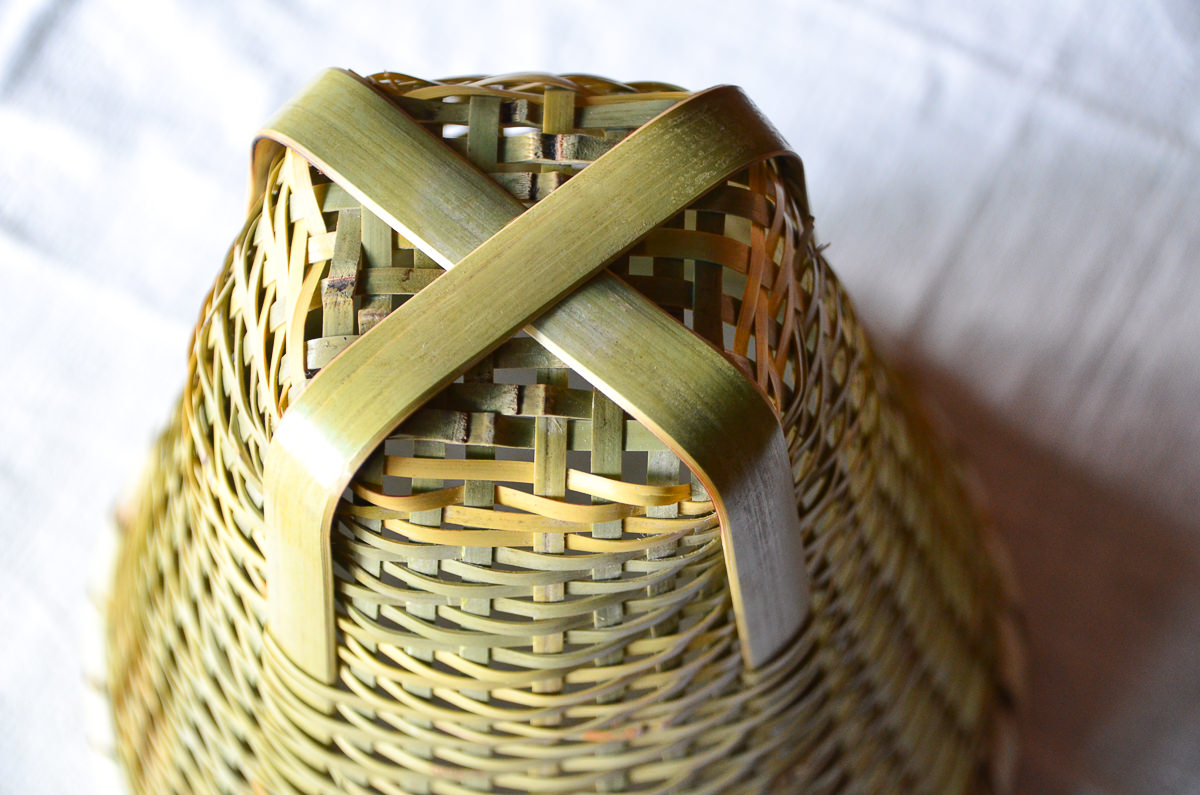
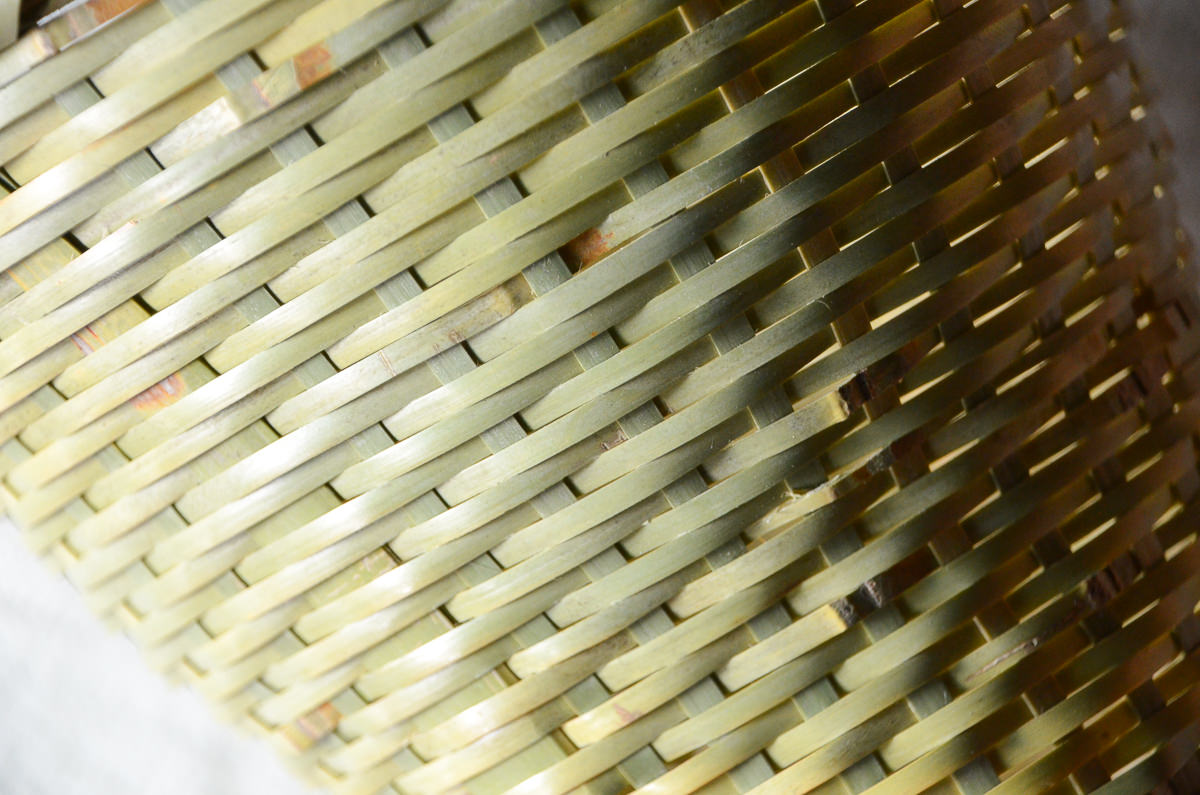
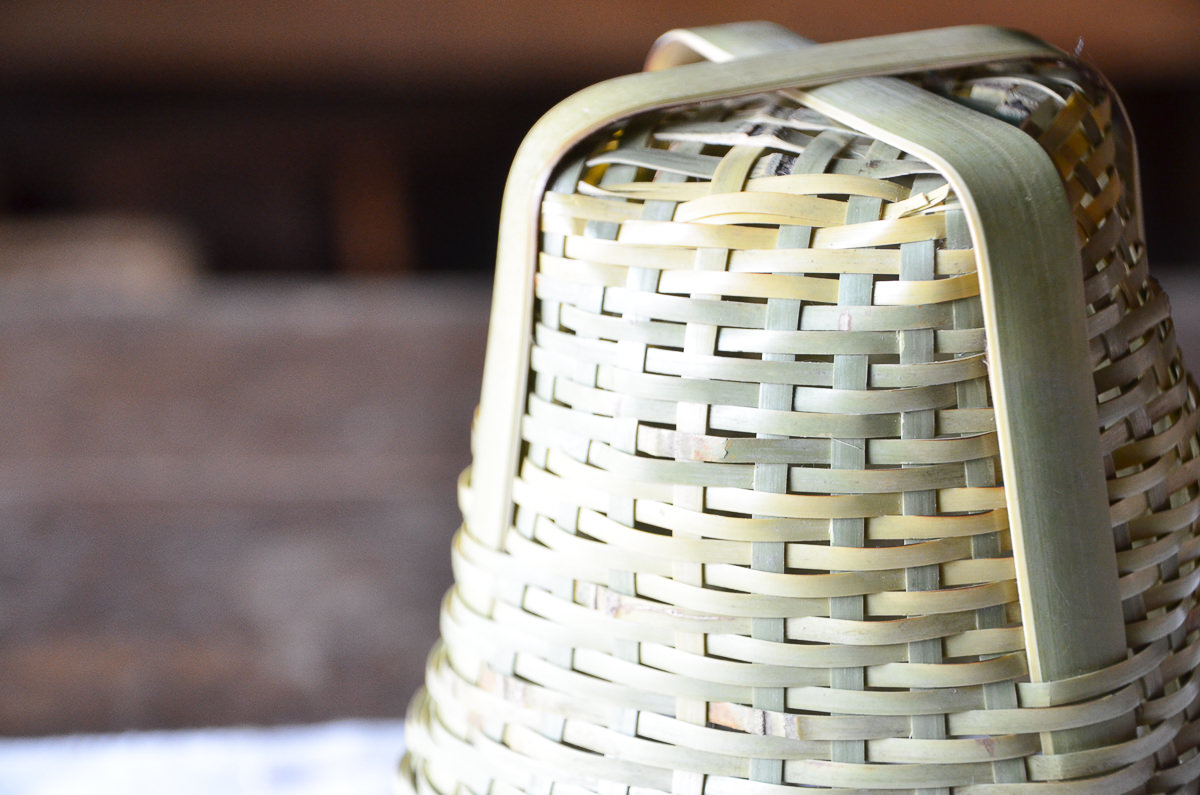
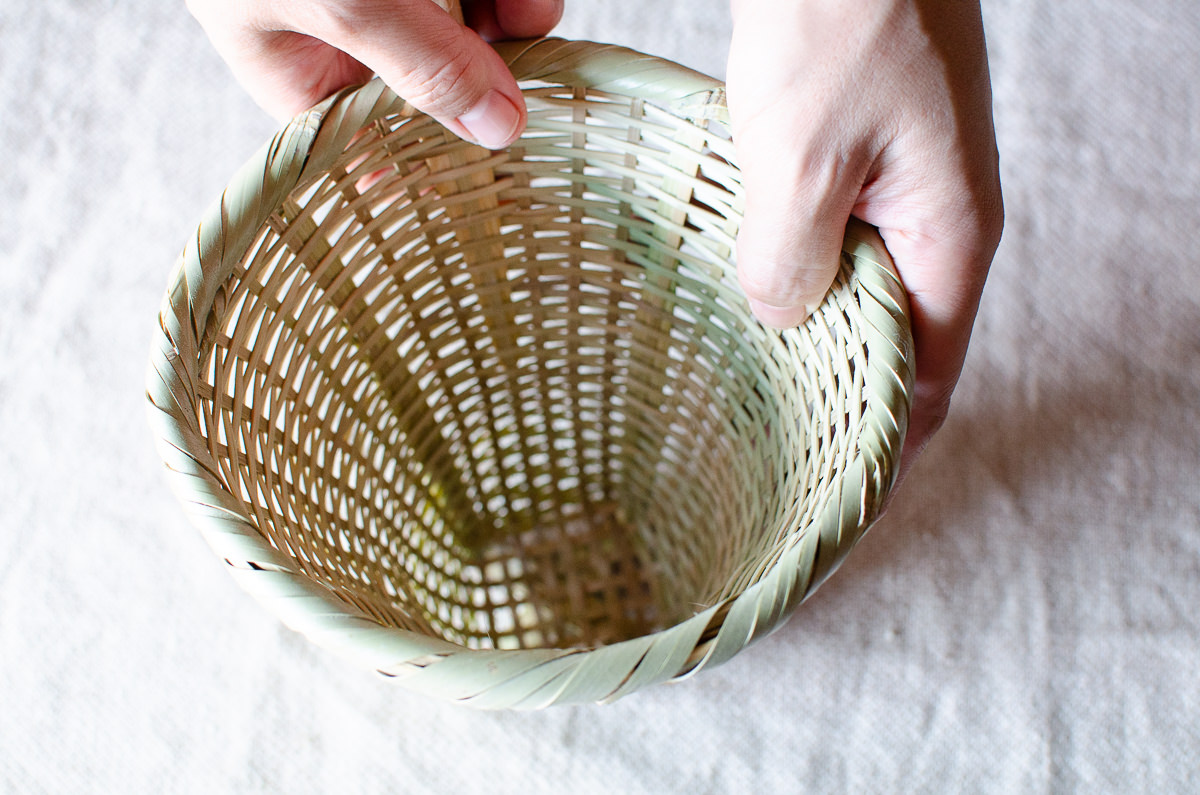
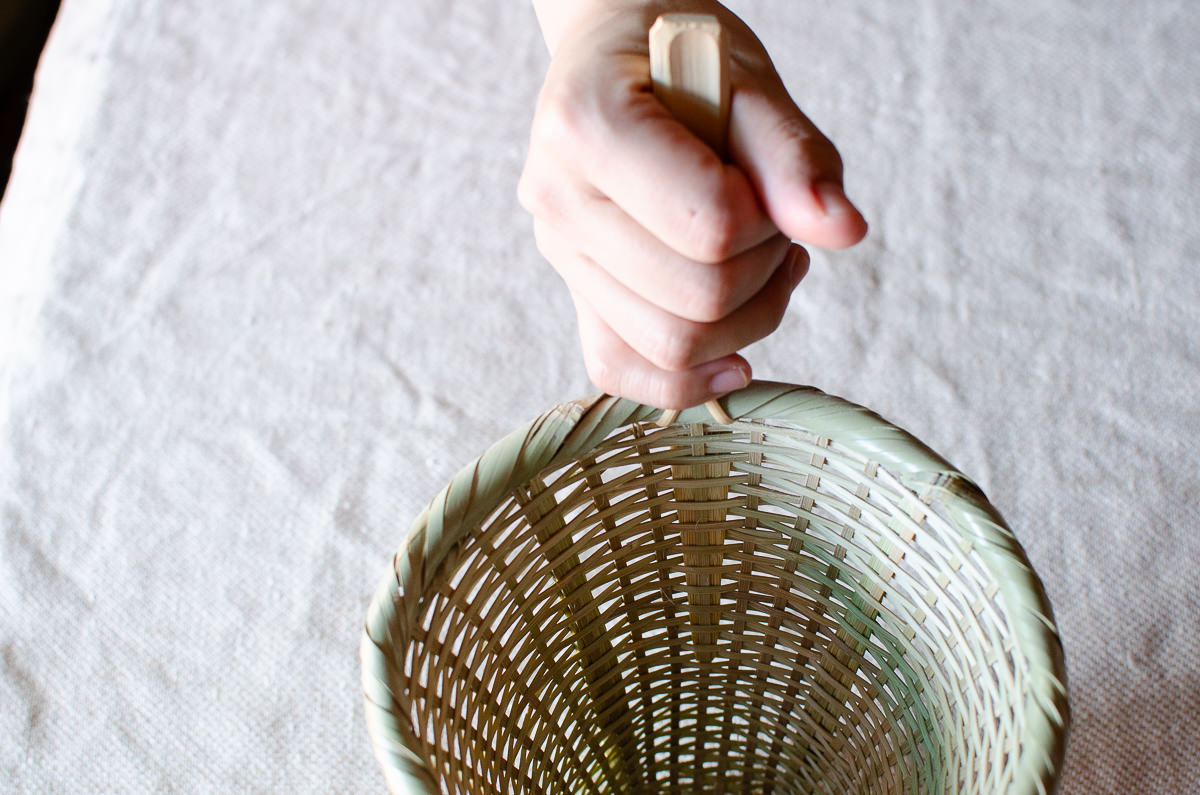
Using thin bamboo strips, the basket is woven in a regular pattern that flows smoothly across the surface.This weaving pattern is known as “tobi-gozame-ami.” While standard gozami weaving alternates over and under each vertical rib one by one, this method skips two vertical ribs at a time, which is how it earned its name. All strips are arranged so that the outer green skin of the bamboo faces outward.Here is a view of the inside from above. Because the green outer skin faces outward, the white inner layer of the bamboo naturally appears on the inside.The inside also shows the same graceful, flowing weave.This is the inner bottom of the basket. To ensure good drainage, it is woven in a “yotsume-ami” pattern, with relatively larger openings.Here is the rim seen from the outside. It is wrapped and secured using bamboo alone, a finish known as “maki-buchi”.Viewed from above, you can see how the bamboo is carefully wrapped around the rim.This is the underside of the bottom. The reinforcing support bamboos strengthen the corners and support the entire basket.
In professional kitchens today, stainless-steel tools are commonly used for their productivity, durability, and low cost. However, bamboo is often said to offer the best drainage performance. As you can see, this basket has generous openings in the weave and is remarkably light. In a busy kitchen, where soba noodles are drained repeatedly throughout the day, the weight of the tool directly affects physical strain.
It might be a pleasure to return to using traditional, lightweight bamboo tools once again. For those who truly love noodles, why not try proper, authentic draining with this basket?
If you require a larger quantity for professional use, please feel free to contact us.
Bamboo Artisans of Ibaraki
In Ibaraki Prefecture, a small number of seasoned bamboo artisans continue to work actively while also mentoring the next generation.
Some inherited their craft from parents at a time when bamboo tools were simply part of everyday life, while others honed their skills working in bamboo workshops in Tokyo.
Though they still embody the old-school spirit of craftsmanship, they are all warm-hearted and generous people —we are truly grateful for their continued support of our work.
These skilled artisans are typically able to make just about anything. From rustic everyday wares to fine bamboo crafts, they carry with them a wide range of techniques passed down through generations.
Please note: This item ships from Japan. As the buyer, you are responsible for any import duties, customs fees, or local taxes that may be charged in your country. These costs are not included in the item price or shipping cost. Please check with your local customs authority if you are unsure about any potential charges before placing your order.
As its name suggests, this is a tool used by soba restaurants when draining freshly boiled soba noodles. It is known by many names, such as “soba-toji-zaru,” “sobafuri-zaru,” “sobafuri,” or simply “furizara.” A short bamboo handle is attached to the basket.
While its primary purpose is draining water or hot water, it is especially used when preparing warm soba. After boiling, the noodles are first cooled in water, then a single portion is briefly dipped back into hot water to reheat.
This prevents the dipping broth from cooling, allowing the soba to be served piping hot.
Some people also use it simply for draining soba noodles. Others use it to scoop up noodles remaining in the boiling pot.
The craftsman who made this has been working with bamboo since his youth, and even now, in his nineties, he continues to devote himself energetically to the craft every day. From large-scale pieces made for professional use to smaller household items, he has created nearly everything once used in the Kanto region.
The sobafuri made by such a craftsman is crafted from madake bamboo. Today, most sobafuri are made using stainless steel wire, but this one is finished using only madake bamboo and rattan.
Using thin bamboo strips, the basket is woven in a regular pattern that flows smoothly across the surface.This weaving pattern is known as “tobi-gozame-ami.” While standard gozami weaving alternates over and under each vertical rib one by one, this method skips two vertical ribs at a time, which is how it earned its name. All strips are arranged so that the outer green skin of the bamboo faces outward.Here is a view of the inside from above. Because the green outer skin faces outward, the white inner layer of the bamboo naturally appears on the inside.The inside also shows the same graceful, flowing weave.This is the inner bottom of the basket. To ensure good drainage, it is woven in a “yotsume-ami” pattern, with relatively larger openings.Here is the rim seen from the outside. It is wrapped and secured using bamboo alone, a finish known as “maki-buchi”.Viewed from above, you can see how the bamboo is carefully wrapped around the rim.This is the underside of the bottom. The reinforcing support bamboos strengthen the corners and support the entire basket.
In professional kitchens today, stainless-steel tools are commonly used for their productivity, durability, and low cost. However, bamboo is often said to offer the best drainage performance. As you can see, this basket has generous openings in the weave and is remarkably light. In a busy kitchen, where soba noodles are drained repeatedly throughout the day, the weight of the tool directly affects physical strain.
It might be a pleasure to return to using traditional, lightweight bamboo tools once again. For those who truly love noodles, why not try proper, authentic draining with this basket?
If you require a larger quantity for professional use, please feel free to contact us.
Bamboo Artisans of Ibaraki
In Ibaraki Prefecture, a small number of seasoned bamboo artisans continue to work actively while also mentoring the next generation.
Some inherited their craft from parents at a time when bamboo tools were simply part of everyday life, while others honed their skills working in bamboo workshops in Tokyo.
Though they still embody the old-school spirit of craftsmanship, they are all warm-hearted and generous people —we are truly grateful for their continued support of our work.
These skilled artisans are typically able to make just about anything. From rustic everyday wares to fine bamboo crafts, they carry with them a wide range of techniques passed down through generations.
Please note: This item ships from Japan. As the buyer, you are responsible for any import duties, customs fees, or local taxes that may be charged in your country. These costs are not included in the item price or shipping cost. Please check with your local customs authority if you are unsure about any potential charges before placing your order.
As its name suggests, this is a tool used by soba restaurants when draining freshly boiled soba noodles. It is known by many names, such as “soba-toji-zaru,” “sobafuri-zaru,” “sobafuri,” or simply “furizara.” A short bamboo handle is attached to the basket.
While its primary purpose is draining water or hot water, it is especially used when preparing warm soba. After boiling, the noodles are first cooled in water, then a single portion is briefly dipped back into hot water to reheat.
This prevents the dipping broth from cooling, allowing the soba to be served piping hot.
Some people also use it simply for draining soba noodles. Others use it to scoop up noodles remaining in the boiling pot.
The craftsman who made this has been working with bamboo since his youth, and even now, in his nineties, he continues to devote himself energetically to the craft every day. From large-scale pieces made for professional use to smaller household items, he has created nearly everything once used in the Kanto region.
The sobafuri made by such a craftsman is crafted from madake bamboo. Today, most sobafuri are made using stainless steel wire, but this one is finished using only madake bamboo and rattan.
Using thin bamboo strips, the basket is woven in a regular pattern that flows smoothly across the surface.This weaving pattern is known as “tobi-gozame-ami.” While standard gozami weaving alternates over and under each vertical rib one by one, this method skips two vertical ribs at a time, which is how it earned its name. All strips are arranged so that the outer green skin of the bamboo faces outward.Here is a view of the inside from above. Because the green outer skin faces outward, the white inner layer of the bamboo naturally appears on the inside.The inside also shows the same graceful, flowing weave.This is the inner bottom of the basket. To ensure good drainage, it is woven in a “yotsume-ami” pattern, with relatively larger openings.Here is the rim seen from the outside. It is wrapped and secured using bamboo alone, a finish known as “maki-buchi”.Viewed from above, you can see how the bamboo is carefully wrapped around the rim.This is the underside of the bottom. The reinforcing support bamboos strengthen the corners and support the entire basket.
In professional kitchens today, stainless-steel tools are commonly used for their productivity, durability, and low cost. However, bamboo is often said to offer the best drainage performance. As you can see, this basket has generous openings in the weave and is remarkably light. In a busy kitchen, where soba noodles are drained repeatedly throughout the day, the weight of the tool directly affects physical strain.
It might be a pleasure to return to using traditional, lightweight bamboo tools once again. For those who truly love noodles, why not try proper, authentic draining with this basket?
If you require a larger quantity for professional use, please feel free to contact us.
Bamboo Artisans of Ibaraki
In Ibaraki Prefecture, a small number of seasoned bamboo artisans continue to work actively while also mentoring the next generation.
Some inherited their craft from parents at a time when bamboo tools were simply part of everyday life, while others honed their skills working in bamboo workshops in Tokyo.
Though they still embody the old-school spirit of craftsmanship, they are all warm-hearted and generous people —we are truly grateful for their continued support of our work.
These skilled artisans are typically able to make just about anything. From rustic everyday wares to fine bamboo crafts, they carry with them a wide range of techniques passed down through generations.
Please note: This item ships from Japan. As the buyer, you are responsible for any import duties, customs fees, or local taxes that may be charged in your country. These costs are not included in the item price or shipping cost. Please check with your local customs authority if you are unsure about any potential charges before placing your order.