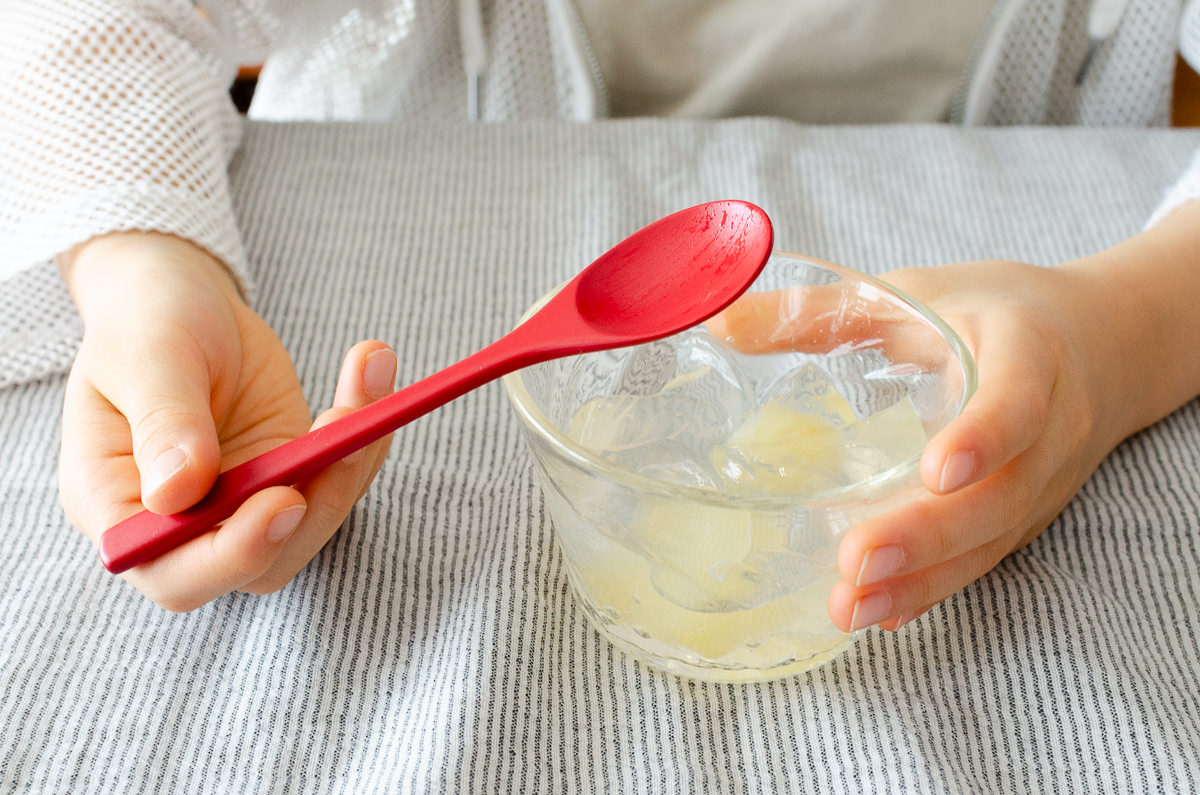
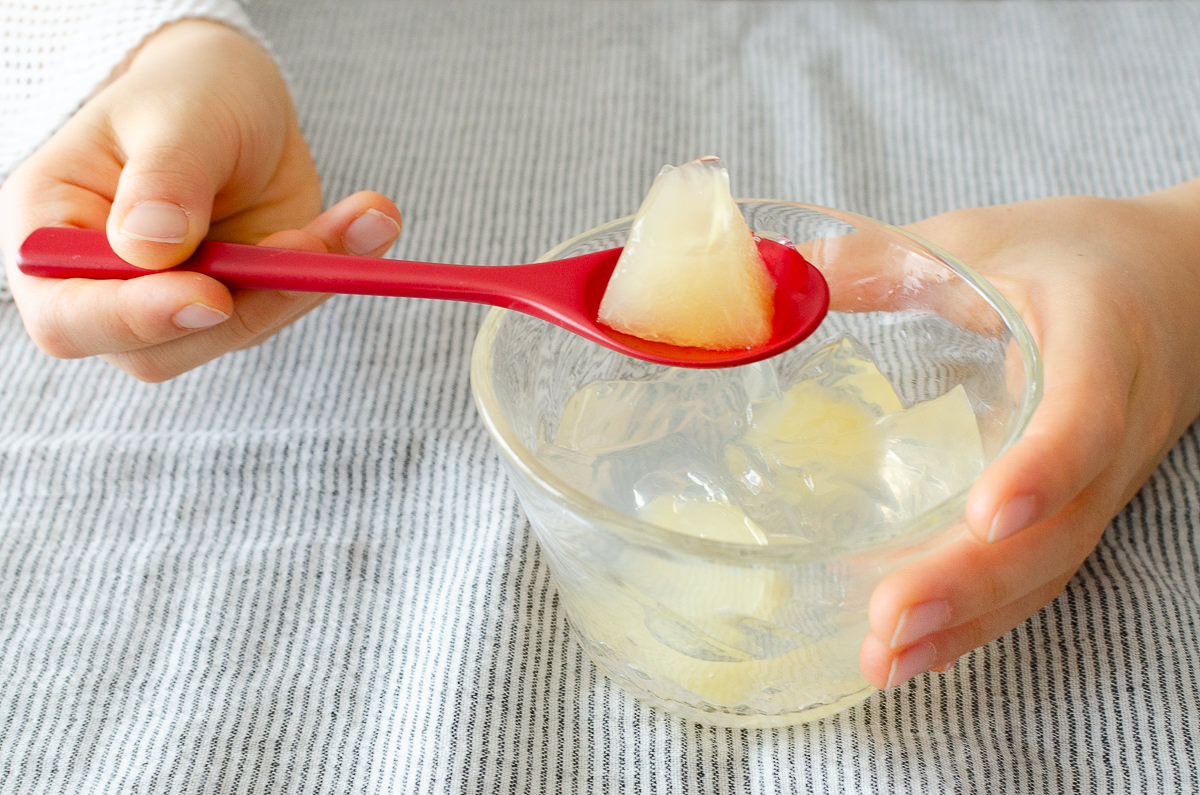
This spoon is just the right size for children to use.
Kyushu is an area where Moso bamboo is abundantly harvested, and this spoon is also made from that Moso bamboo.
Moso bamboo has a thick and dense inner layer, making it hard and durable. Because of this strength, it is a very suitable material for a spoon that is used and washed almost every day.
It is also very light and smooth to the touch. With its gentle warmth, it is a spoon you will naturally find yourself reaching for.
Although it is sized just right for children, adults can also enjoy using it in daily life—for example, as a dessert spoon.
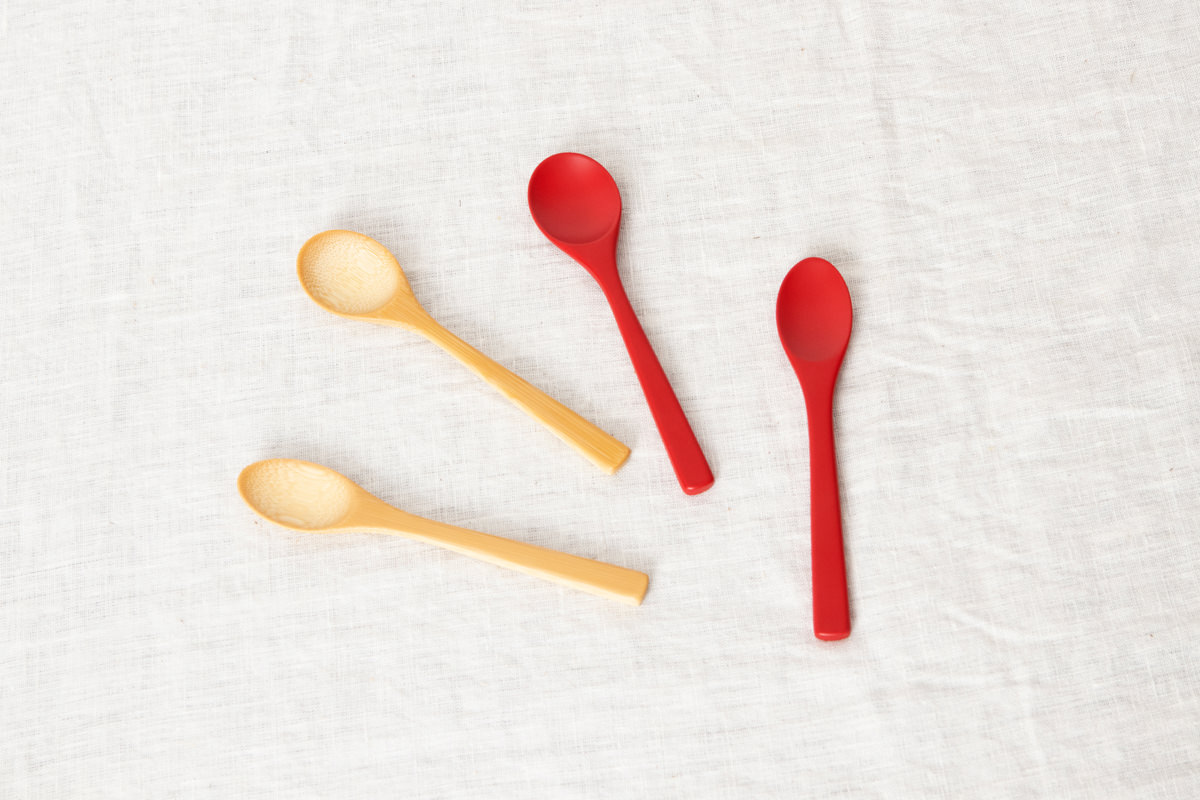
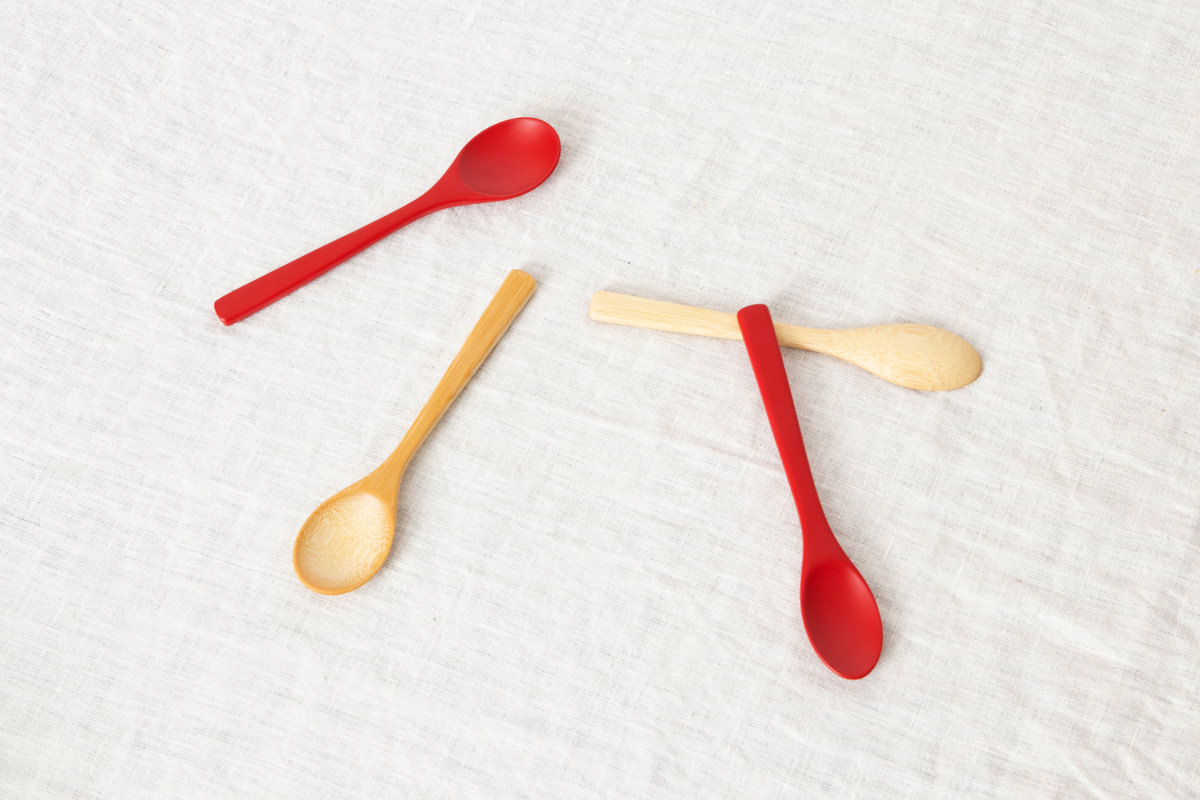
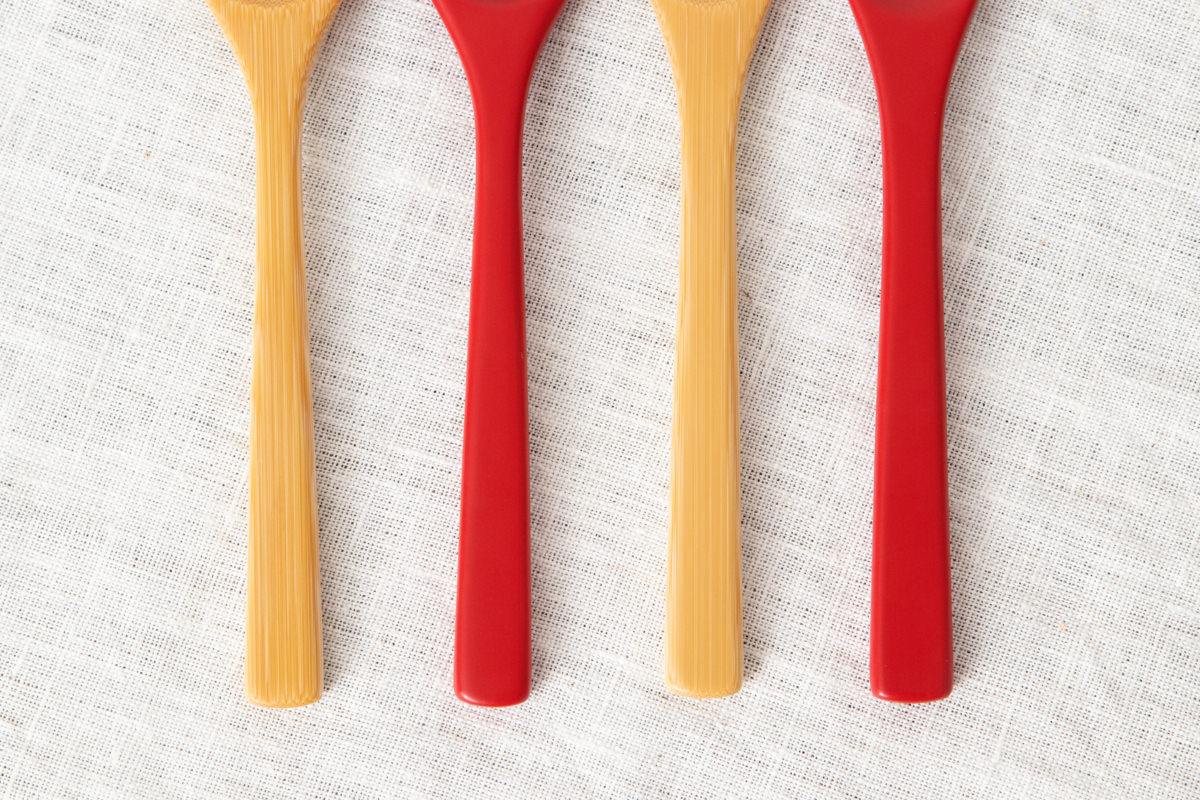
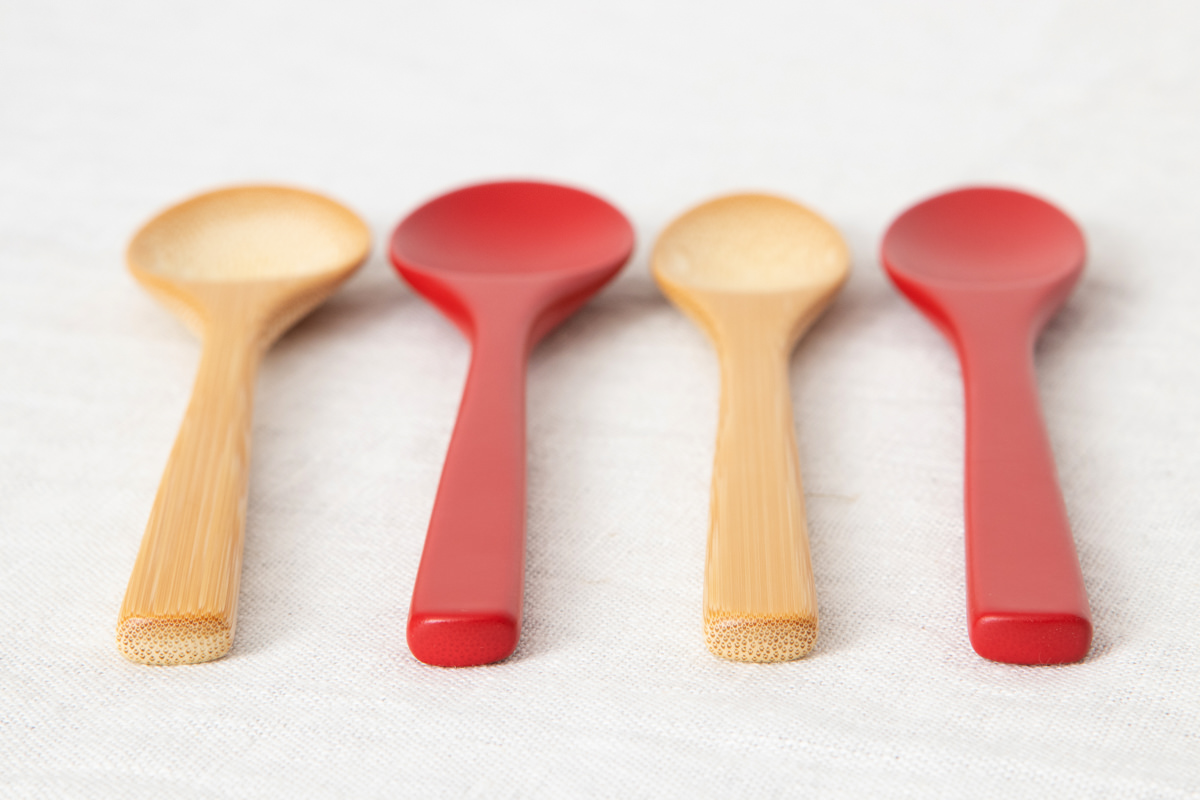
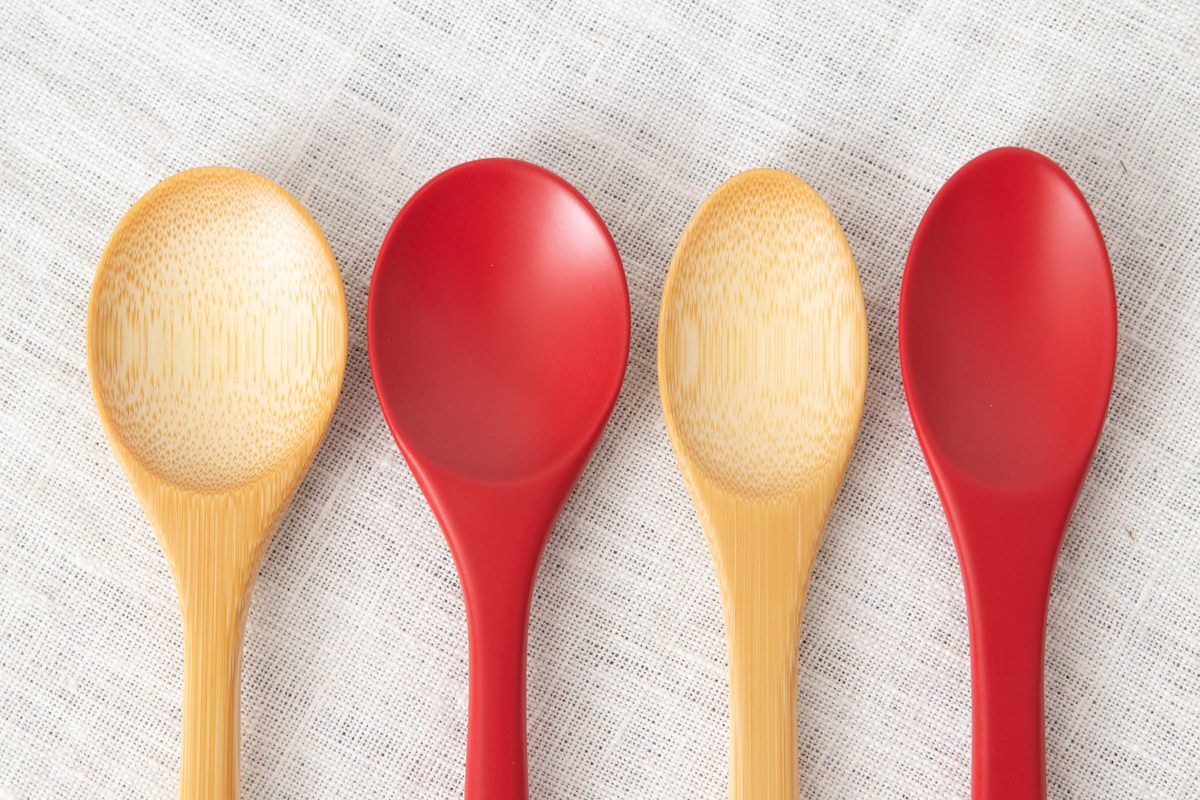
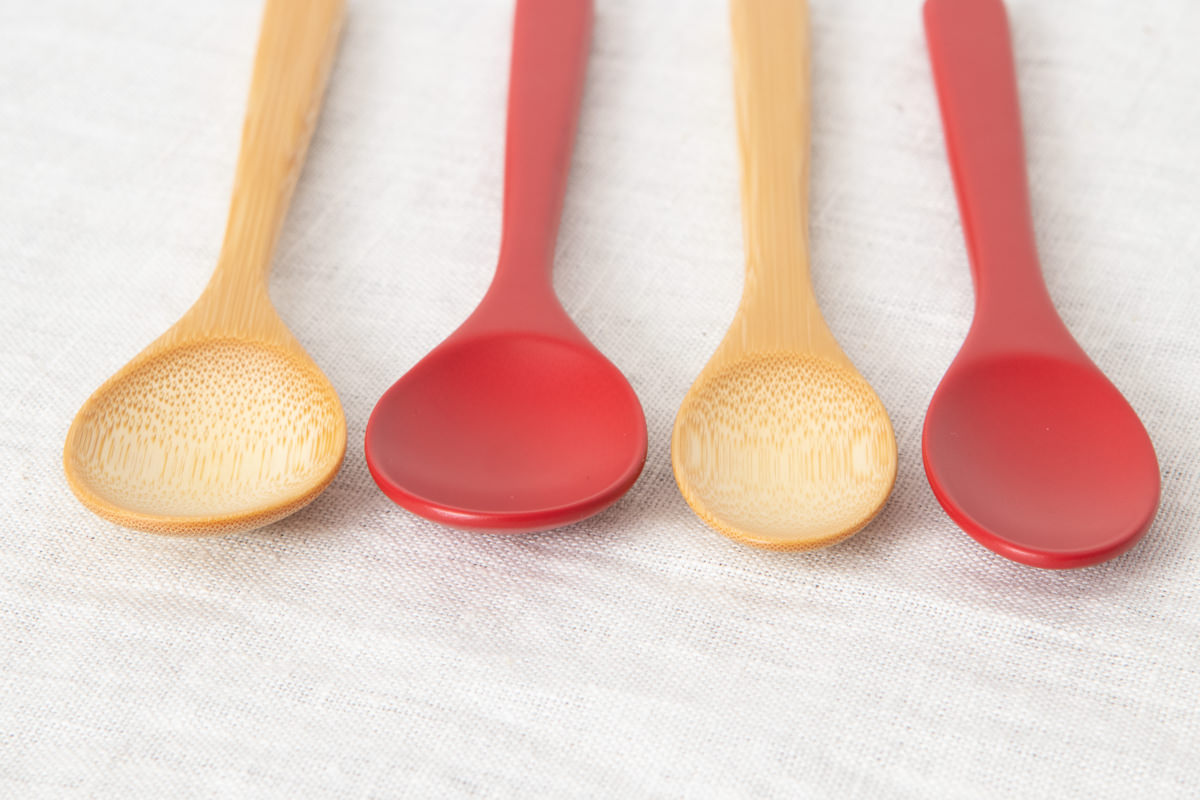
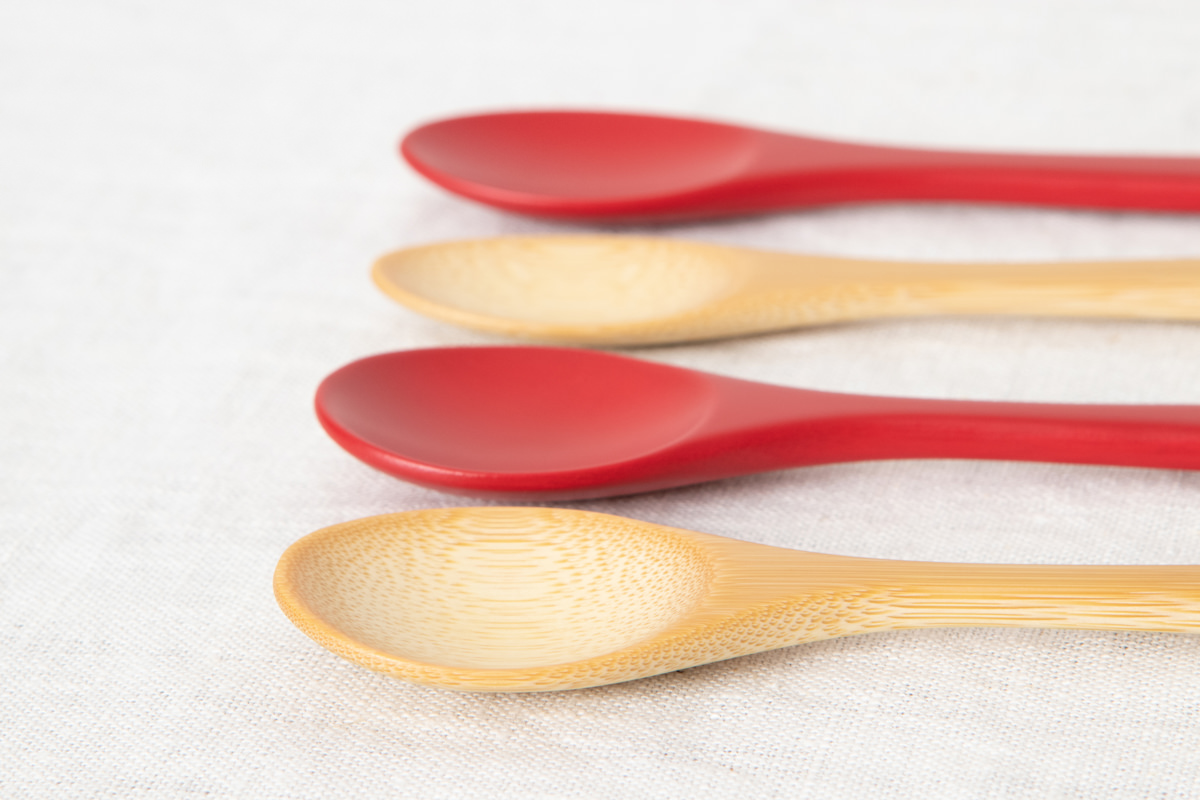
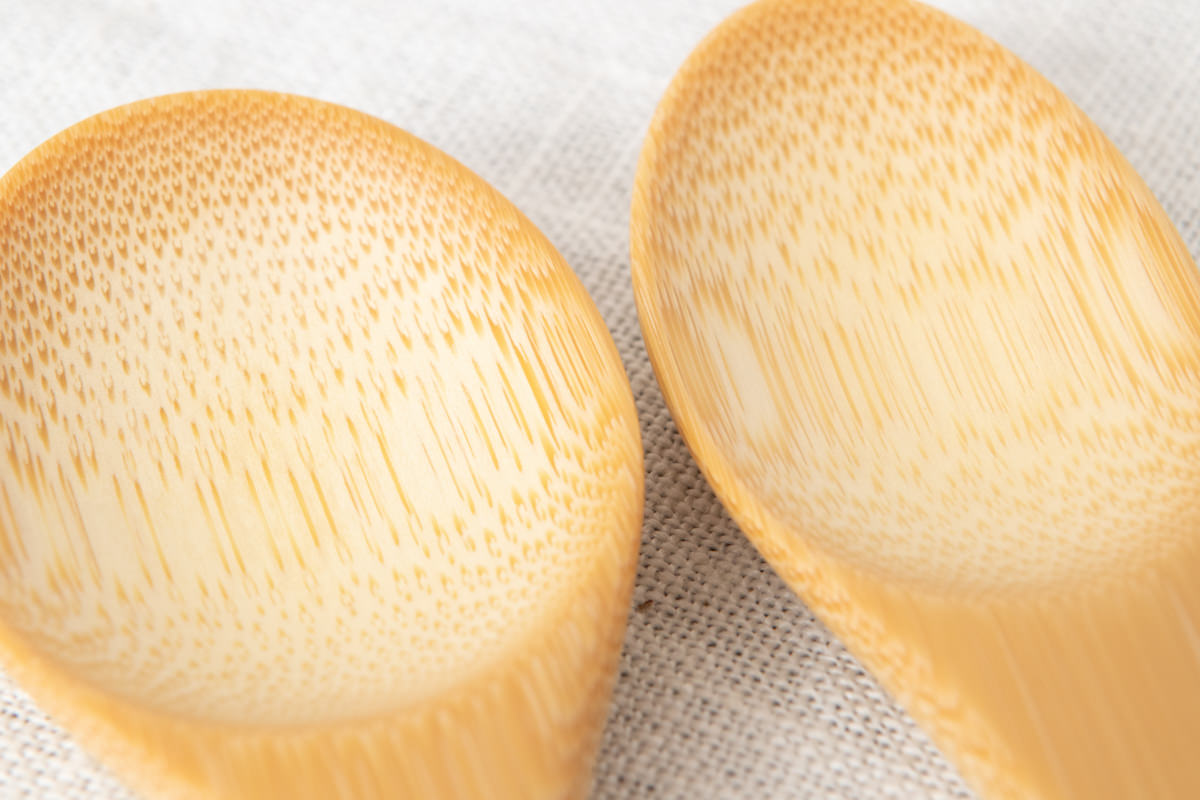
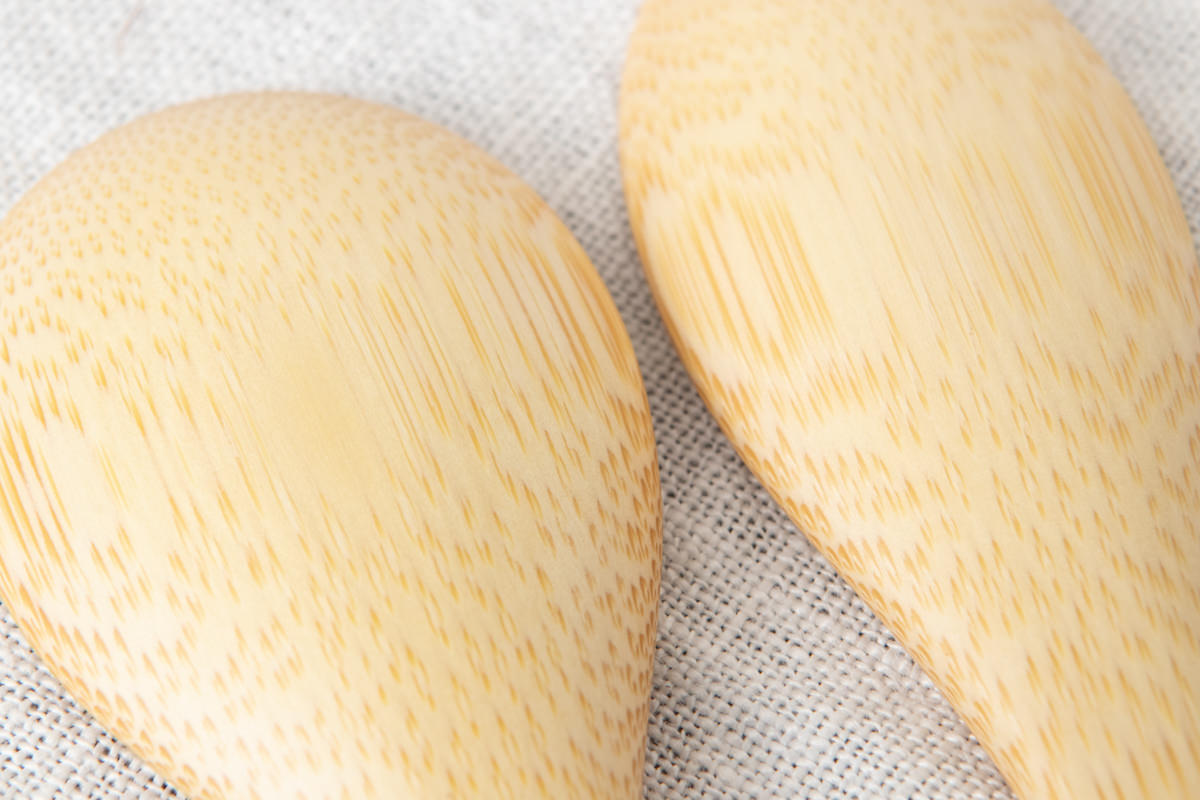
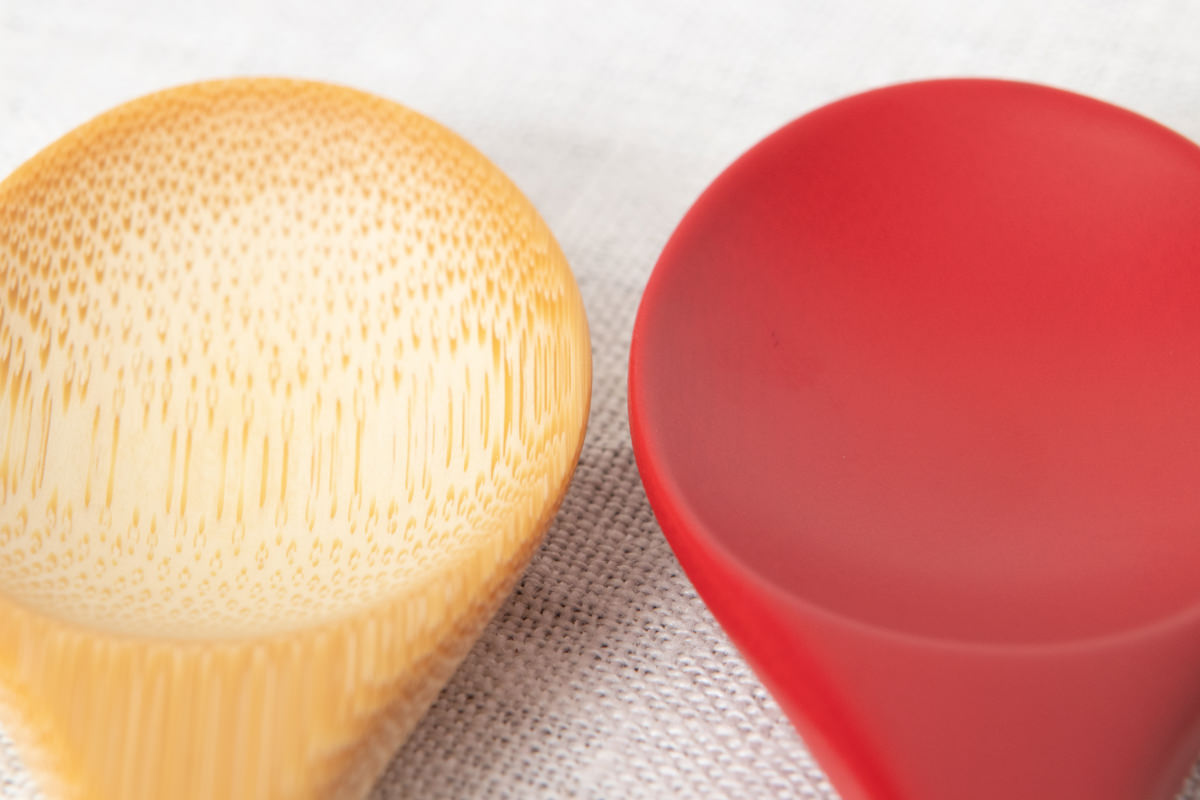
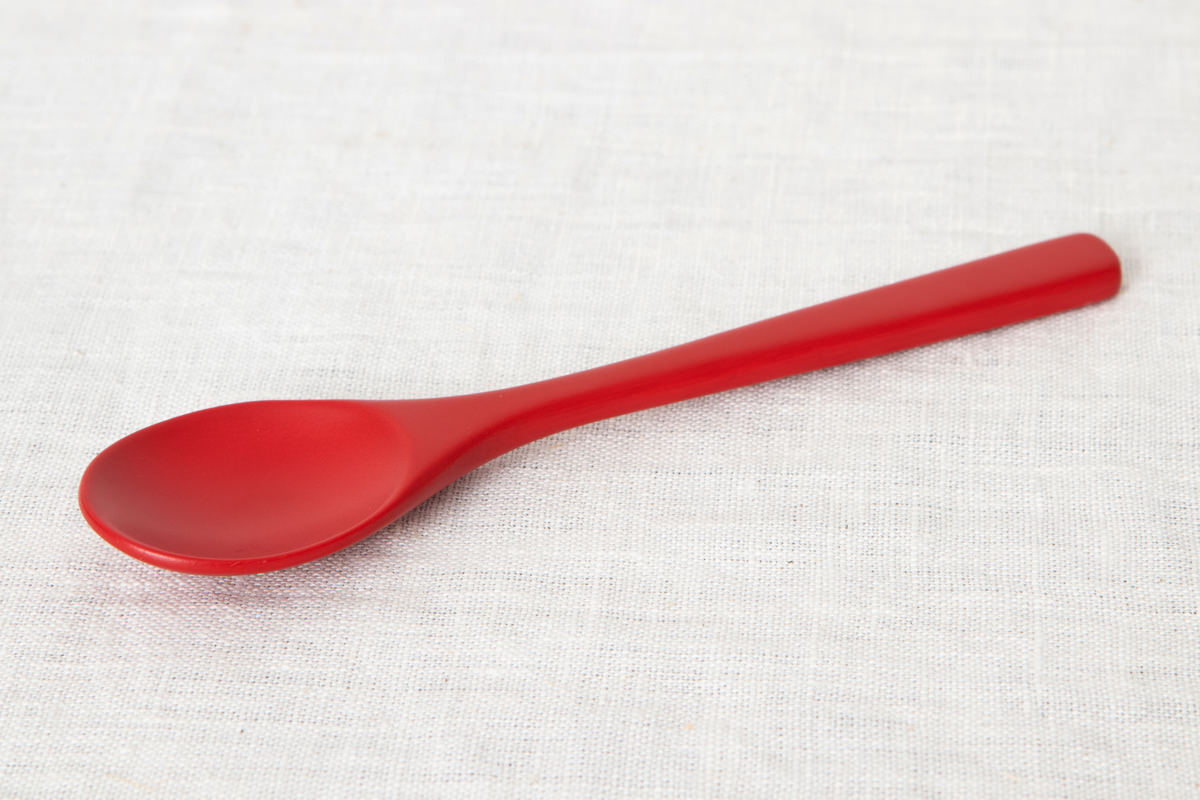
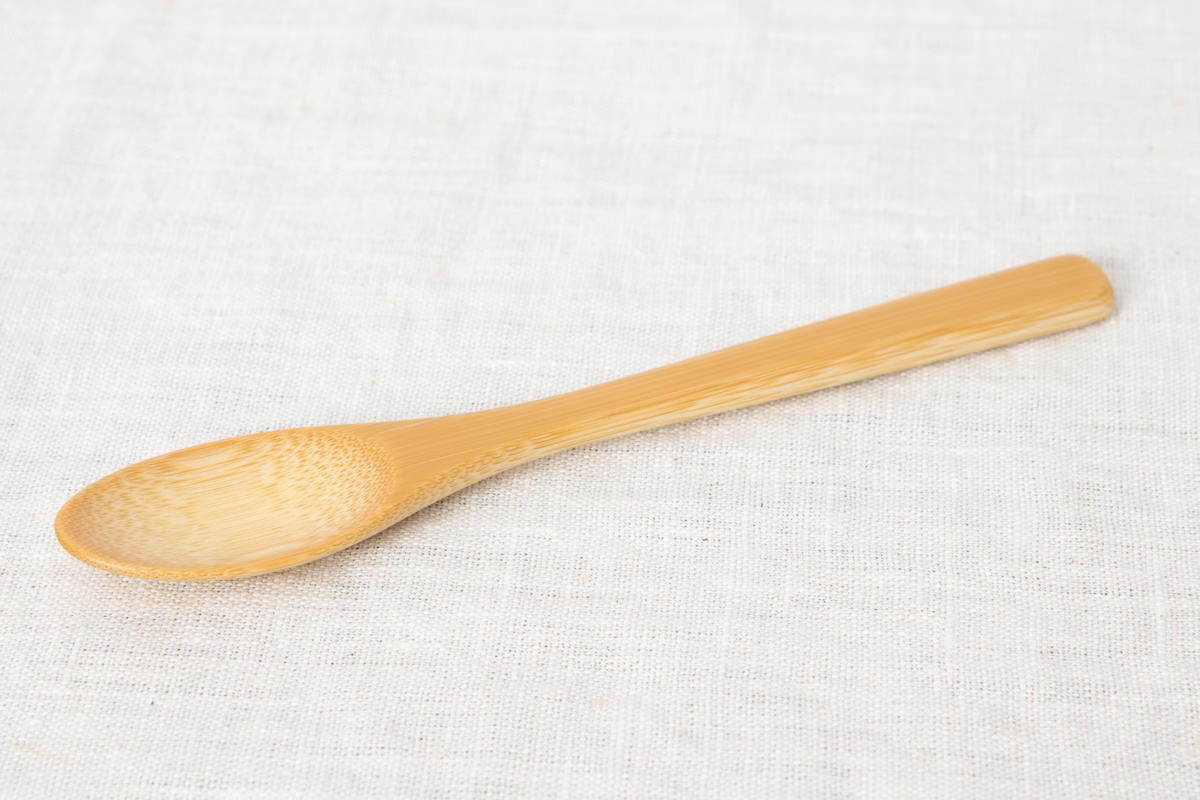
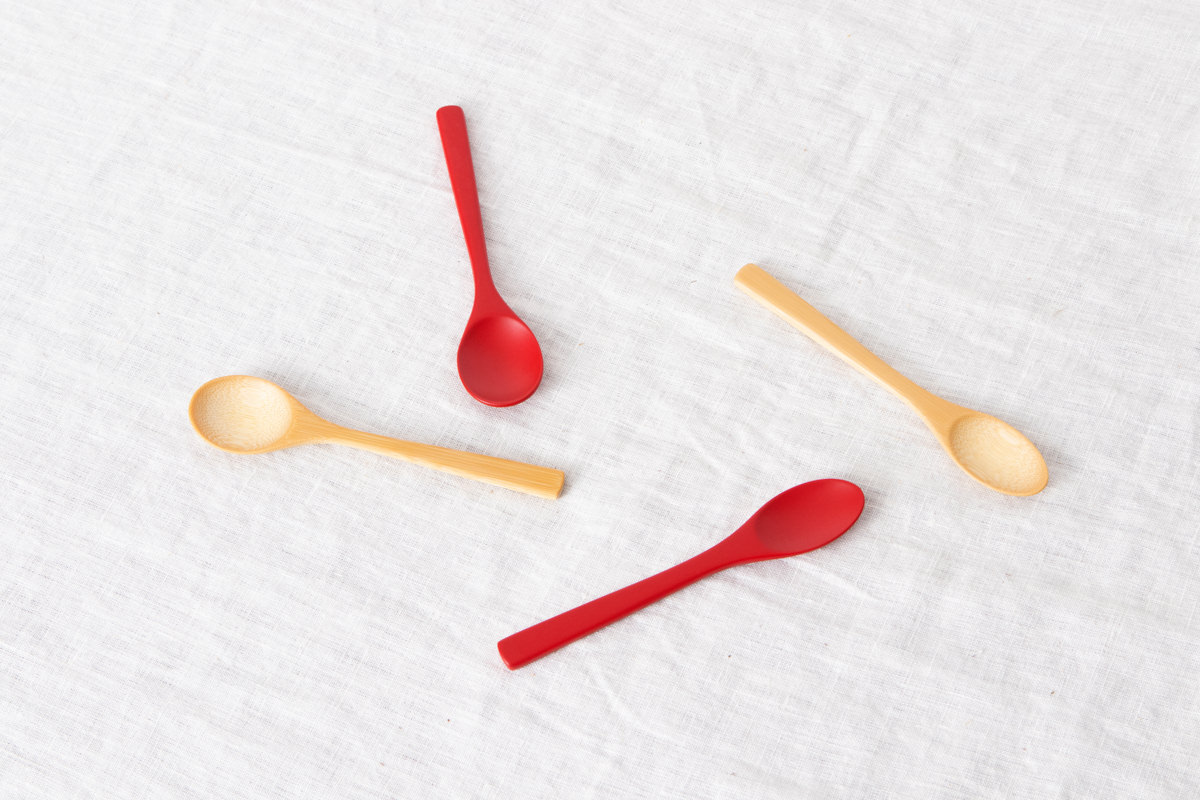
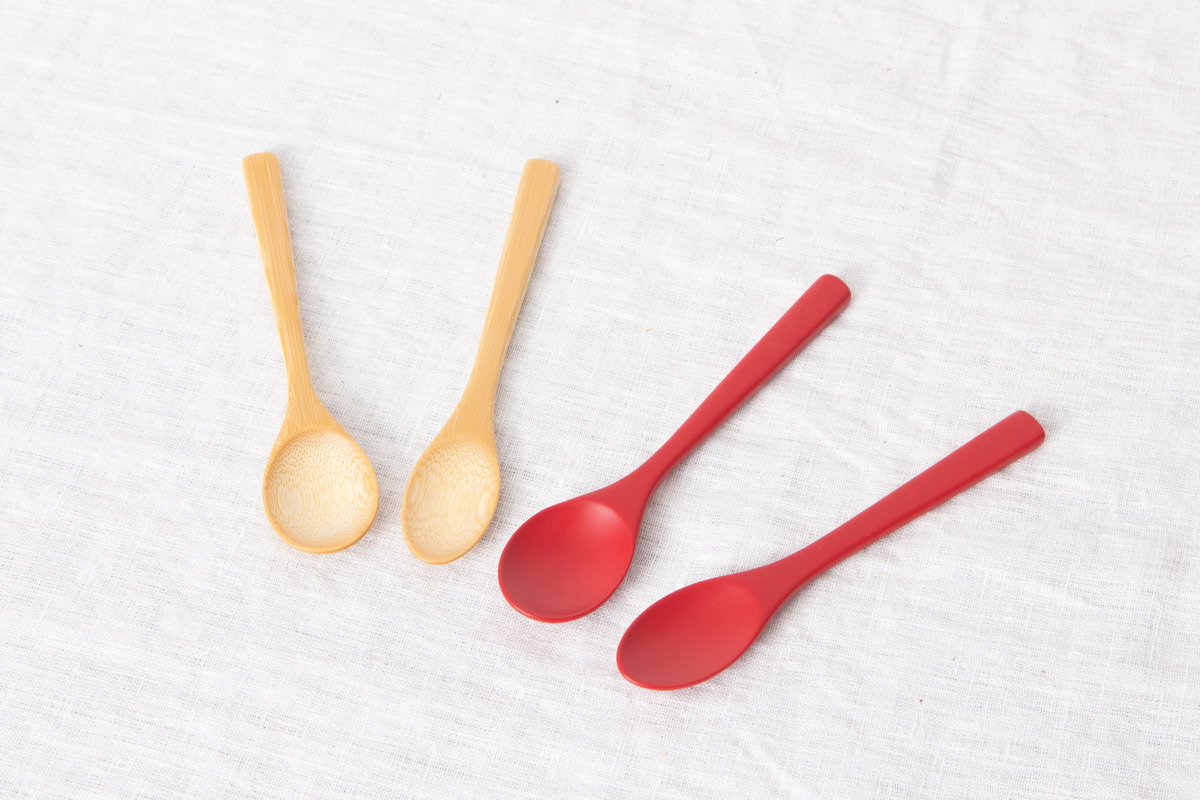
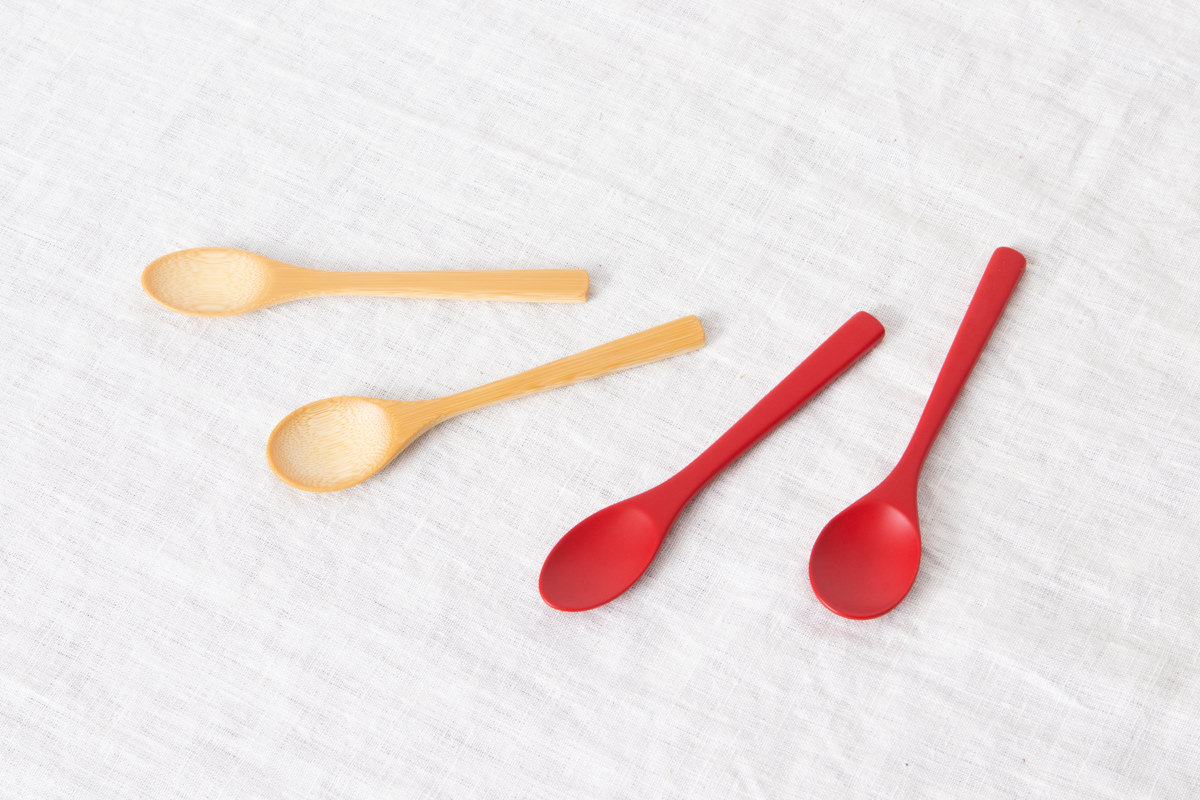
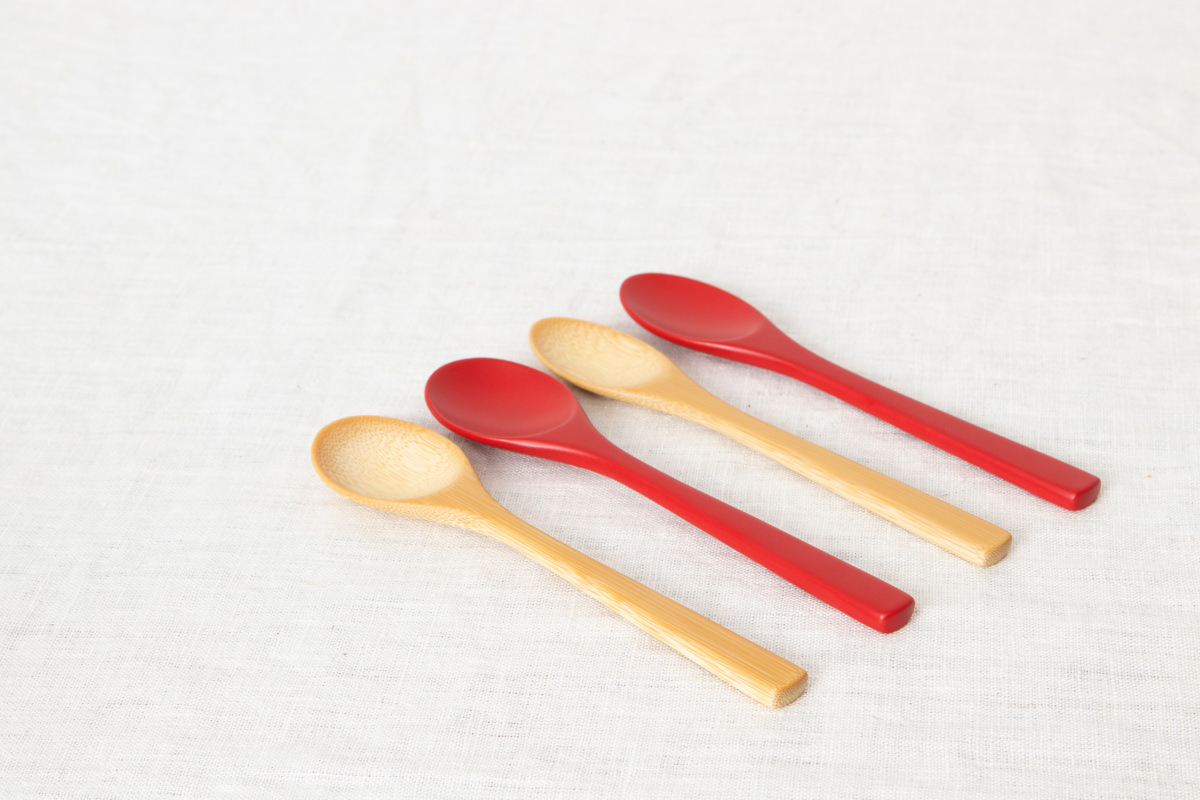
Here, we introduce four variations in total: two scoop shapes—Oval and Round—each available in two colors, Natural and Red.The handle of the spoon gently tapers from the tip toward the end.The slightly thick handle fits comfortably and naturally in the hand.If you look at the handle from the tip side, you will notice that it has a rectangular shape. This helps prevent the spoon from easily rolling over on its own.This is the bowl of the spoon—the part used for scooping. The “Round” type has a shape close to a circle, forming a soft oval, while the “Oval” type features a longer, more elongated oval shape.In general, the “Round” type holds a slightly larger amount, while the “Oval” type is shaped to be easier to bring to the mouth—especially for younger children, making it more comfortable when feeding them.Although the bowl of both types is relatively shallow, it is large enough to hold a suitable bite for a child.Whichever one you pick up, you can feel the care that has gone into each piece. They are repeatedly polished using special tools and machinery, resulting in a smooth and refined finish.Moso bamboo is originally a very hard and fibrous material, yet the surface is finished so smoothly that you would hardly notice its natural toughness.The spoon on the left is the “Natural” type, and the one on the right is the “Red” type. The “Natural” finish shows the original color of the bamboo, allowing the grain and fibers unique to bamboo to be seen, creating a gentle and organic appearance. The “Red” type features a fairly vivid red tone with a subdued sheen.Let us introduce each color and shape in turn. This is the “Round – Natural” type. Simple and refreshing in appearance, it is a classic and versatile option.This is the “Round – Red” type. Its passionate red color, which naturally stimulates the appetite, adds a lively accent to the table—whether at mealtime or during snack time.This is the “Oval – Natural” type.This is the “Oval – Red” type.
We are often asked from what age this fork can be used. It can be used from around one to two years old, whether an adult is helping to feed a young child or the child is using it on their own.
That said, during stages when children tend to bite or chew on items placed in their mouths, tooth marks may appear and the surface finish may wear more quickly. Please keep this in mind. (Even if the finish wears off, the spoon can of course continue to be used.)
Of course, this may vary from child to child, but from around the age of three, many children are able to use it comfortably for a longer period of time.
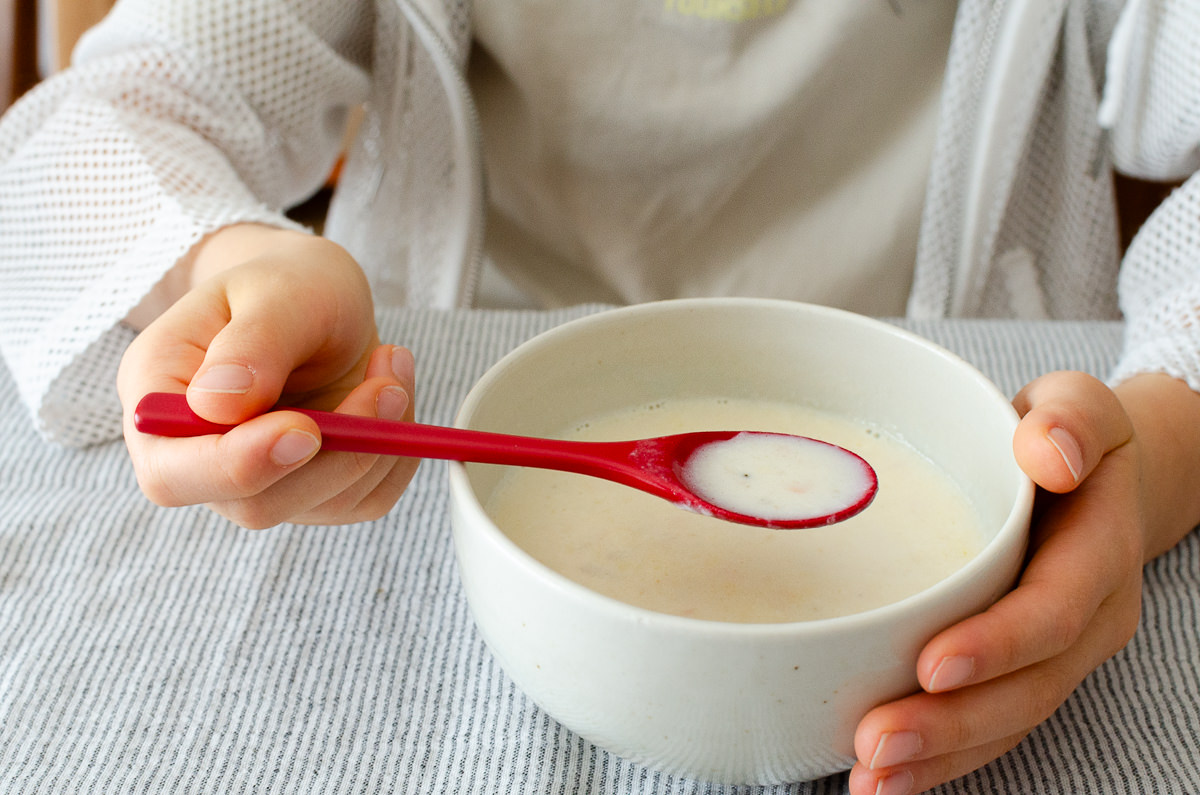
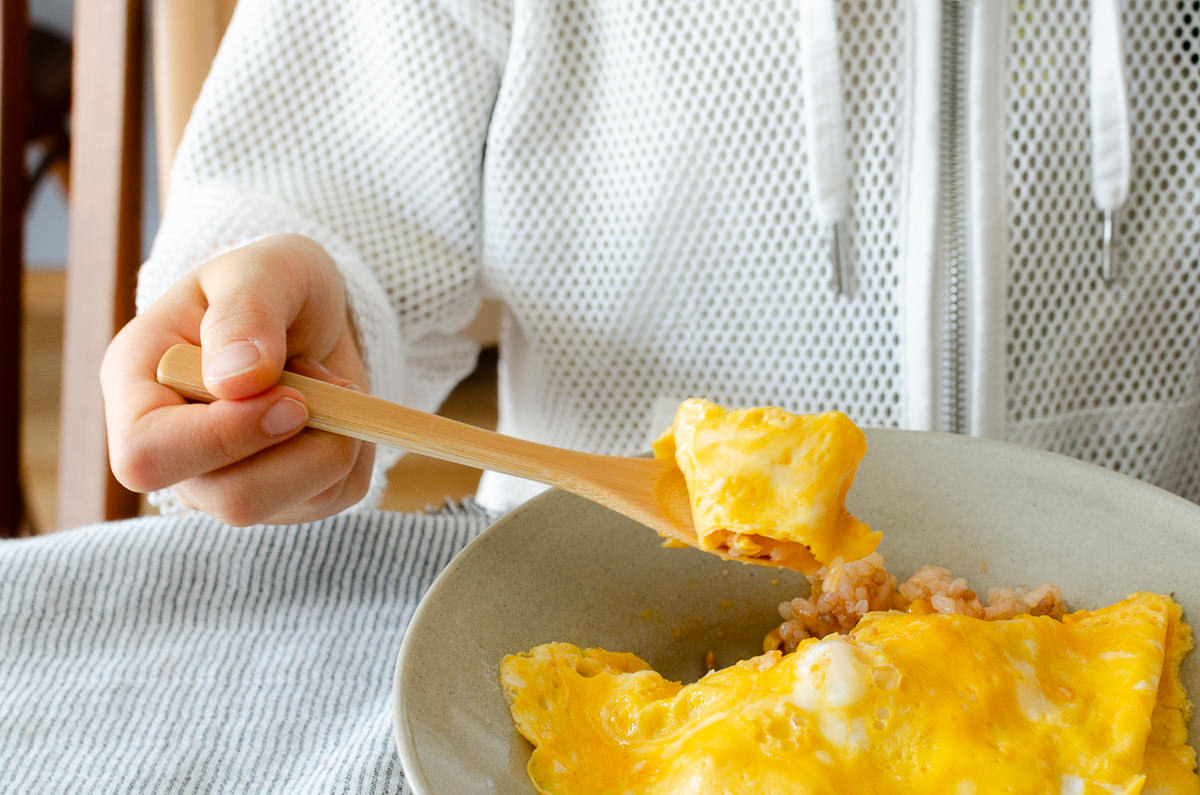
It pairs well with curry, stew, hayashi rice, and omelet rice. It is also suitable for dishes such as rice porridge or risotto, and works nicely for scooping soups and other broths.
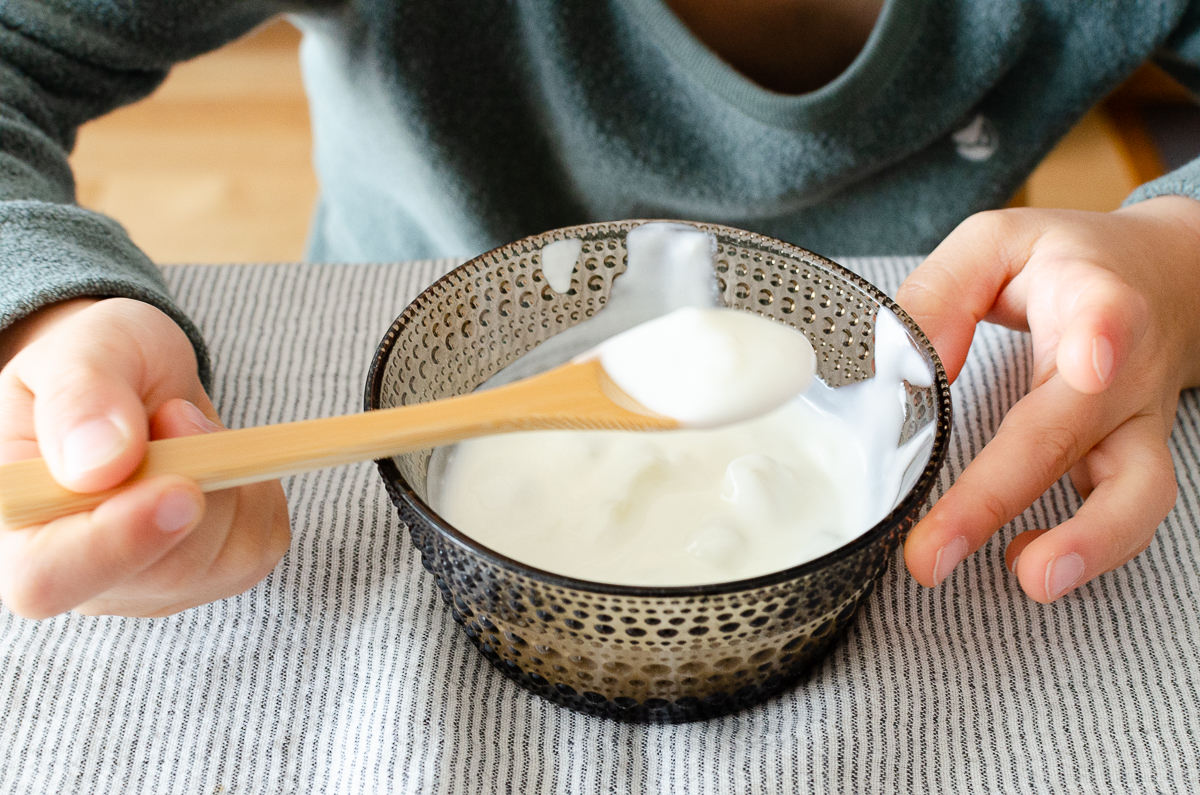
From yogurt and jelly to ice cream and more, it can become a reliable companion at everyday meals.
Both the Natural and Red finishes are treated with a food-safe polyurethane coating as the final step.
This finish smooths the surface and helps prevent water and oil from penetrating into the bamboo, increasing durability.
It is also thanks to this finish that strong pigments—such as those from curry—are less likely to stain the spoon. Compared to untreated, uncoated bamboo, it can retain its original appearance for a considerably longer time.
If the spoon is bitten or scratched by sharp objects, the coating may peel, making it easier for water to penetrate. This can lead to darkening of the bamboo or the development of mold. Please be aware of this in advance.
Dishwashers can also accelerate wear, so we recommend avoiding their use. When cleaning, please use a soft sponge and a mild, neutral detergent.
Over time, the coating will gradually wear away with use. However, with gentle and careful handling, the spoon can be enjoyed for a long time.
When it comes to color transfer from food, the Red finish tends to make stains less noticeable than the Natural finish.
That said, with the Natural finish as well, staining is minimal even after two to three years of use, depending on frequency and how it is used.
It can be enjoyable to choose between the two colors depending on the atmosphere of your tableware, the season, your mood, or the type of food being served.
Using different colors for siblings or family members is also a simple and practical way to tell them apart, and something we recommend.
We hope it will be a pleasant companion at the table.
It can also be nice to use it as a set, matching the colors with Kids Fork or Chopsticks from the same series.
Please choose the finish you prefer.
— Two Generations of Cutlery Making in Oita Prefecture —
In Oita Prefecture, there is a craftsperson who has continued making cutlery since their parents’ generation.
Although they did not originally intend to take over the family craft, they chose to inherit it and reconsider cutlery making from their own perspective. Today, they continue to create a wide range of pieces, producing them day by day.
While the previous generation worked exclusively with bamboo, the current maker sought to expand the range of forms. They undertook further training in wooden cutlery making, allowing them to create items that are difficult to achieve with bamboo alone, such as ladles and spoons with generous depth, as well as plates.
With the belief that “cutlery is something for everyday use,” usability is always placed first. At the same time, the finished pieces naturally carry pleasing tones and a sense of design that delights the eye.
Through uncompromising polishing by skilled hands and a carefully applied polyurethane finish, these cutlery pieces offer a smooth, comfortable feel at the mouth and ease of care, making them suitable for users of all ages.
Among the many pieces, we believe you will find one that fits comfortably in your hand and feels just right to use.
Please note: This item ships from Japan. As the buyer, you are responsible for any import duties, customs fees, or local taxes that may be charged in your country. These costs are not included in the item price or shipping cost. Please check with your local customs authority if you are unsure about any potential charges before placing your order.
This spoon is just the right size for children to use.
Kyushu is an area where Moso bamboo is abundantly harvested, and this spoon is also made from that Moso bamboo.
Moso bamboo has a thick and dense inner layer, making it hard and durable. Because of this strength, it is a very suitable material for a spoon that is used and washed almost every day.
It is also very light and smooth to the touch. With its gentle warmth, it is a spoon you will naturally find yourself reaching for.
Although it is sized just right for children, adults can also enjoy using it in daily life—for example, as a dessert spoon.
Here, we introduce four variations in total: two scoop shapes—Oval and Round—each available in two colors, Natural and Red.The handle of the spoon gently tapers from the tip toward the end.The slightly thick handle fits comfortably and naturally in the hand.If you look at the handle from the tip side, you will notice that it has a rectangular shape. This helps prevent the spoon from easily rolling over on its own.This is the bowl of the spoon—the part used for scooping. The “Round” type has a shape close to a circle, forming a soft oval, while the “Oval” type features a longer, more elongated oval shape.In general, the “Round” type holds a slightly larger amount, while the “Oval” type is shaped to be easier to bring to the mouth—especially for younger children, making it more comfortable when feeding them.Although the bowl of both types is relatively shallow, it is large enough to hold a suitable bite for a child.Whichever one you pick up, you can feel the care that has gone into each piece. They are repeatedly polished using special tools and machinery, resulting in a smooth and refined finish.Moso bamboo is originally a very hard and fibrous material, yet the surface is finished so smoothly that you would hardly notice its natural toughness.The spoon on the left is the “Natural” type, and the one on the right is the “Red” type. The “Natural” finish shows the original color of the bamboo, allowing the grain and fibers unique to bamboo to be seen, creating a gentle and organic appearance. The “Red” type features a fairly vivid red tone with a subdued sheen.Let us introduce each color and shape in turn. This is the “Round – Natural” type. Simple and refreshing in appearance, it is a classic and versatile option.This is the “Round – Red” type. Its passionate red color, which naturally stimulates the appetite, adds a lively accent to the table—whether at mealtime or during snack time.This is the “Oval – Natural” type.This is the “Oval – Red” type.
We are often asked from what age this fork can be used. It can be used from around one to two years old, whether an adult is helping to feed a young child or the child is using it on their own.
That said, during stages when children tend to bite or chew on items placed in their mouths, tooth marks may appear and the surface finish may wear more quickly. Please keep this in mind. (Even if the finish wears off, the spoon can of course continue to be used.)
Of course, this may vary from child to child, but from around the age of three, many children are able to use it comfortably for a longer period of time.
It pairs well with curry, stew, hayashi rice, and omelet rice. It is also suitable for dishes such as rice porridge or risotto, and works nicely for scooping soups and other broths.
From yogurt and jelly to ice cream and more, it can become a reliable companion at everyday meals.
Both the Natural and Red finishes are treated with a food-safe polyurethane coating as the final step.
This finish smooths the surface and helps prevent water and oil from penetrating into the bamboo, increasing durability.
It is also thanks to this finish that strong pigments—such as those from curry—are less likely to stain the spoon. Compared to untreated, uncoated bamboo, it can retain its original appearance for a considerably longer time.
If the spoon is bitten or scratched by sharp objects, the coating may peel, making it easier for water to penetrate. This can lead to darkening of the bamboo or the development of mold. Please be aware of this in advance.
Dishwashers can also accelerate wear, so we recommend avoiding their use. When cleaning, please use a soft sponge and a mild, neutral detergent.
Over time, the coating will gradually wear away with use. However, with gentle and careful handling, the spoon can be enjoyed for a long time.
When it comes to color transfer from food, the Red finish tends to make stains less noticeable than the Natural finish.
That said, with the Natural finish as well, staining is minimal even after two to three years of use, depending on frequency and how it is used.
It can be enjoyable to choose between the two colors depending on the atmosphere of your tableware, the season, your mood, or the type of food being served.
Using different colors for siblings or family members is also a simple and practical way to tell them apart, and something we recommend.
We hope it will be a pleasant companion at the table.
It can also be nice to use it as a set, matching the colors with Kids Fork or Chopsticks from the same series.
Please choose the finish you prefer.
— Two Generations of Cutlery Making in Oita Prefecture —
In Oita Prefecture, there is a craftsperson who has continued making cutlery since their parents’ generation.
Although they did not originally intend to take over the family craft, they chose to inherit it and reconsider cutlery making from their own perspective. Today, they continue to create a wide range of pieces, producing them day by day.
While the previous generation worked exclusively with bamboo, the current maker sought to expand the range of forms. They undertook further training in wooden cutlery making, allowing them to create items that are difficult to achieve with bamboo alone, such as ladles and spoons with generous depth, as well as plates.
With the belief that “cutlery is something for everyday use,” usability is always placed first. At the same time, the finished pieces naturally carry pleasing tones and a sense of design that delights the eye.
Through uncompromising polishing by skilled hands and a carefully applied polyurethane finish, these cutlery pieces offer a smooth, comfortable feel at the mouth and ease of care, making them suitable for users of all ages.
Among the many pieces, we believe you will find one that fits comfortably in your hand and feels just right to use.
Please note: This item ships from Japan. As the buyer, you are responsible for any import duties, customs fees, or local taxes that may be charged in your country. These costs are not included in the item price or shipping cost. Please check with your local customs authority if you are unsure about any potential charges before placing your order.
This spoon is just the right size for children to use.
Kyushu is an area where Moso bamboo is abundantly harvested, and this spoon is also made from that Moso bamboo.
Moso bamboo has a thick and dense inner layer, making it hard and durable. Because of this strength, it is a very suitable material for a spoon that is used and washed almost every day.
It is also very light and smooth to the touch. With its gentle warmth, it is a spoon you will naturally find yourself reaching for.
Although it is sized just right for children, adults can also enjoy using it in daily life—for example, as a dessert spoon.
Here, we introduce four variations in total: two scoop shapes—Oval and Round—each available in two colors, Natural and Red.The handle of the spoon gently tapers from the tip toward the end.The slightly thick handle fits comfortably and naturally in the hand.If you look at the handle from the tip side, you will notice that it has a rectangular shape. This helps prevent the spoon from easily rolling over on its own.This is the bowl of the spoon—the part used for scooping. The “Round” type has a shape close to a circle, forming a soft oval, while the “Oval” type features a longer, more elongated oval shape.In general, the “Round” type holds a slightly larger amount, while the “Oval” type is shaped to be easier to bring to the mouth—especially for younger children, making it more comfortable when feeding them.Although the bowl of both types is relatively shallow, it is large enough to hold a suitable bite for a child.Whichever one you pick up, you can feel the care that has gone into each piece. They are repeatedly polished using special tools and machinery, resulting in a smooth and refined finish.Moso bamboo is originally a very hard and fibrous material, yet the surface is finished so smoothly that you would hardly notice its natural toughness.The spoon on the left is the “Natural” type, and the one on the right is the “Red” type. The “Natural” finish shows the original color of the bamboo, allowing the grain and fibers unique to bamboo to be seen, creating a gentle and organic appearance. The “Red” type features a fairly vivid red tone with a subdued sheen.Let us introduce each color and shape in turn. This is the “Round – Natural” type. Simple and refreshing in appearance, it is a classic and versatile option.This is the “Round – Red” type. Its passionate red color, which naturally stimulates the appetite, adds a lively accent to the table—whether at mealtime or during snack time.This is the “Oval – Natural” type.This is the “Oval – Red” type.
We are often asked from what age this fork can be used. It can be used from around one to two years old, whether an adult is helping to feed a young child or the child is using it on their own.
That said, during stages when children tend to bite or chew on items placed in their mouths, tooth marks may appear and the surface finish may wear more quickly. Please keep this in mind. (Even if the finish wears off, the spoon can of course continue to be used.)
Of course, this may vary from child to child, but from around the age of three, many children are able to use it comfortably for a longer period of time.
It pairs well with curry, stew, hayashi rice, and omelet rice. It is also suitable for dishes such as rice porridge or risotto, and works nicely for scooping soups and other broths.
From yogurt and jelly to ice cream and more, it can become a reliable companion at everyday meals.
Both the Natural and Red finishes are treated with a food-safe polyurethane coating as the final step.
This finish smooths the surface and helps prevent water and oil from penetrating into the bamboo, increasing durability.
It is also thanks to this finish that strong pigments—such as those from curry—are less likely to stain the spoon. Compared to untreated, uncoated bamboo, it can retain its original appearance for a considerably longer time.
If the spoon is bitten or scratched by sharp objects, the coating may peel, making it easier for water to penetrate. This can lead to darkening of the bamboo or the development of mold. Please be aware of this in advance.
Dishwashers can also accelerate wear, so we recommend avoiding their use. When cleaning, please use a soft sponge and a mild, neutral detergent.
Over time, the coating will gradually wear away with use. However, with gentle and careful handling, the spoon can be enjoyed for a long time.
When it comes to color transfer from food, the Red finish tends to make stains less noticeable than the Natural finish.
That said, with the Natural finish as well, staining is minimal even after two to three years of use, depending on frequency and how it is used.
It can be enjoyable to choose between the two colors depending on the atmosphere of your tableware, the season, your mood, or the type of food being served.
Using different colors for siblings or family members is also a simple and practical way to tell them apart, and something we recommend.
We hope it will be a pleasant companion at the table.
It can also be nice to use it as a set, matching the colors with Kids Fork or Chopsticks from the same series.
Please choose the finish you prefer.
— Two Generations of Cutlery Making in Oita Prefecture —
In Oita Prefecture, there is a craftsperson who has continued making cutlery since their parents’ generation.
Although they did not originally intend to take over the family craft, they chose to inherit it and reconsider cutlery making from their own perspective. Today, they continue to create a wide range of pieces, producing them day by day.
While the previous generation worked exclusively with bamboo, the current maker sought to expand the range of forms. They undertook further training in wooden cutlery making, allowing them to create items that are difficult to achieve with bamboo alone, such as ladles and spoons with generous depth, as well as plates.
With the belief that “cutlery is something for everyday use,” usability is always placed first. At the same time, the finished pieces naturally carry pleasing tones and a sense of design that delights the eye.
Through uncompromising polishing by skilled hands and a carefully applied polyurethane finish, these cutlery pieces offer a smooth, comfortable feel at the mouth and ease of care, making them suitable for users of all ages.
Among the many pieces, we believe you will find one that fits comfortably in your hand and feels just right to use.
Please note: This item ships from Japan. As the buyer, you are responsible for any import duties, customs fees, or local taxes that may be charged in your country. These costs are not included in the item price or shipping cost. Please check with your local customs authority if you are unsure about any potential charges before placing your order.