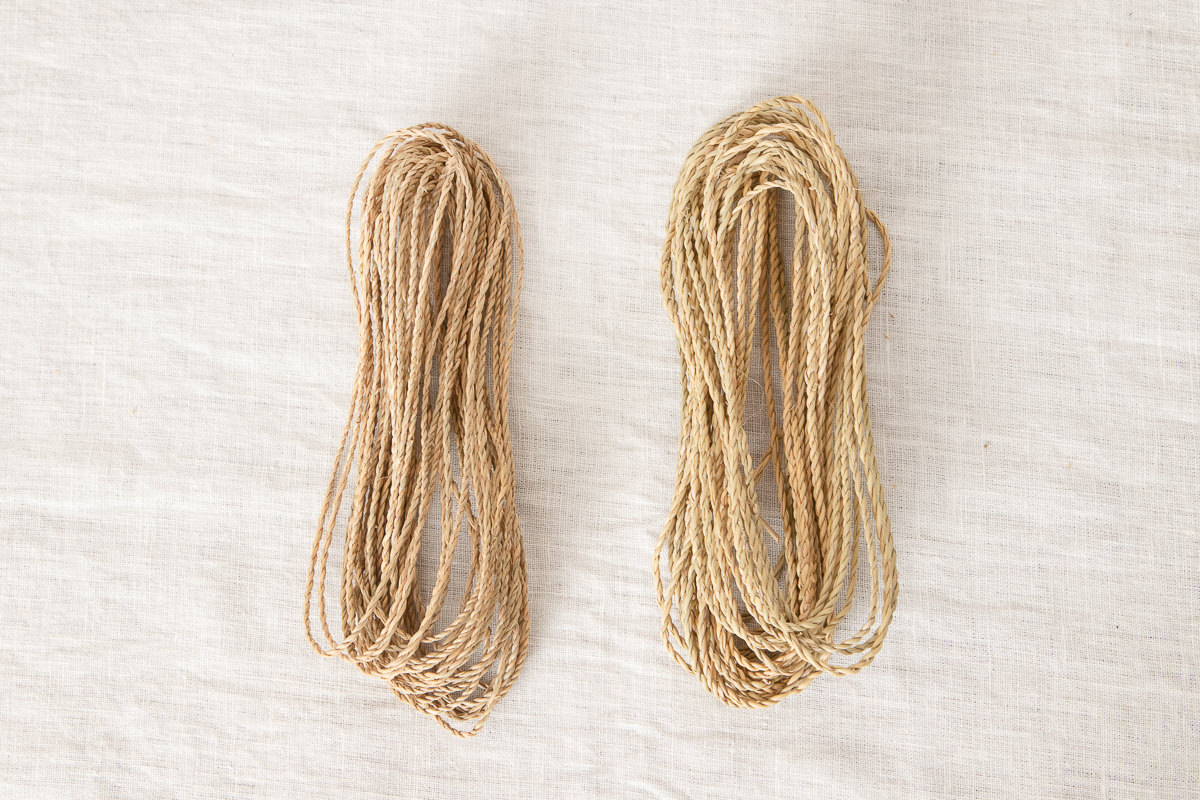
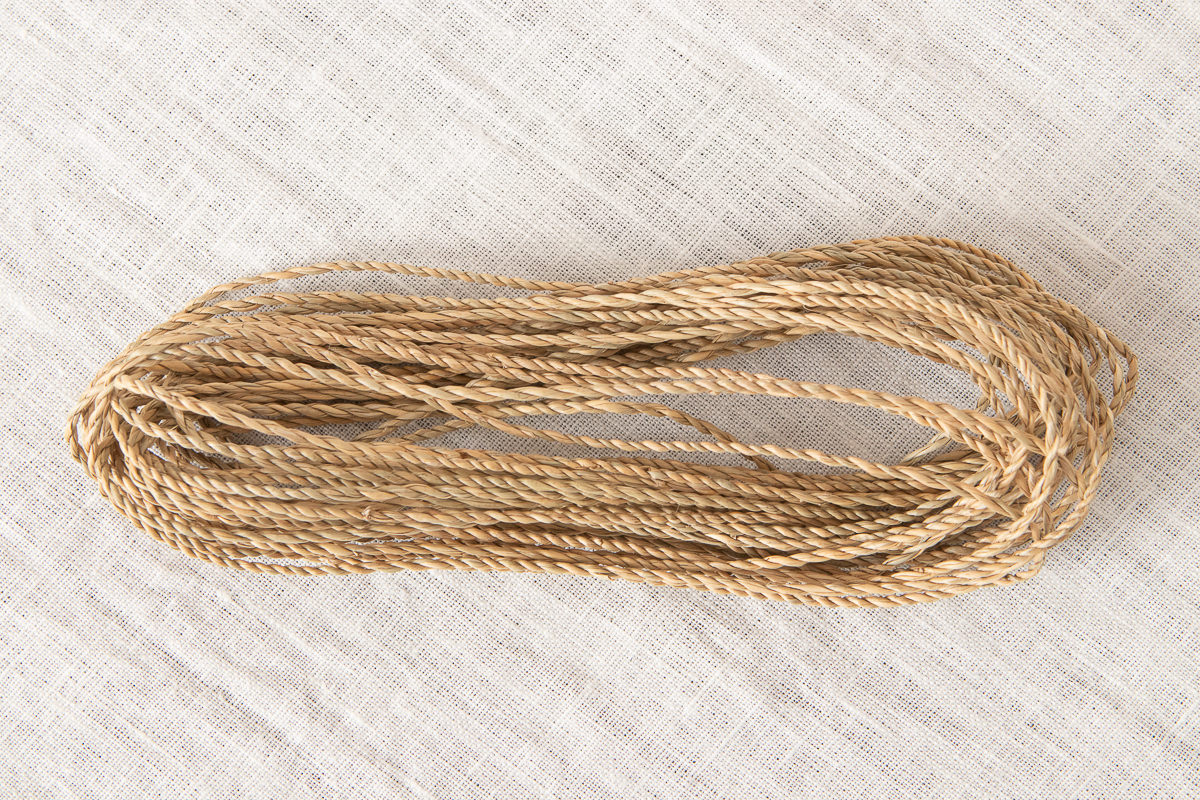
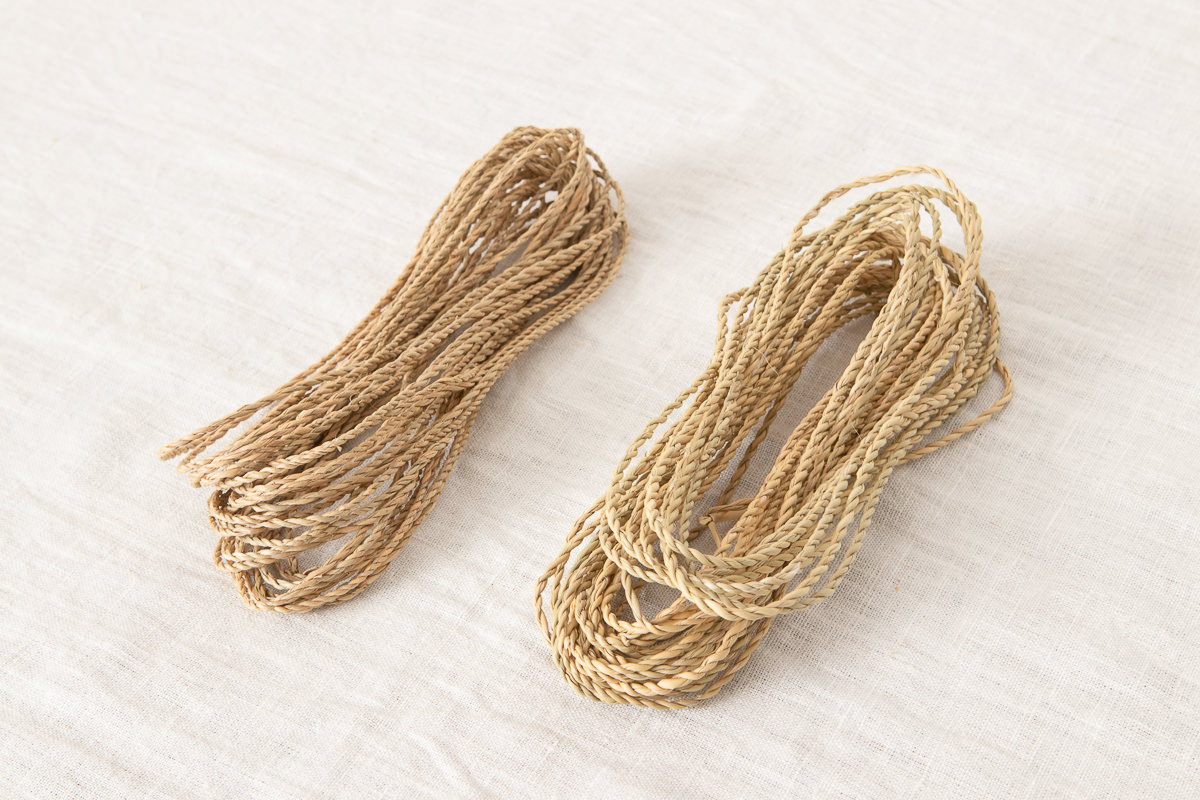
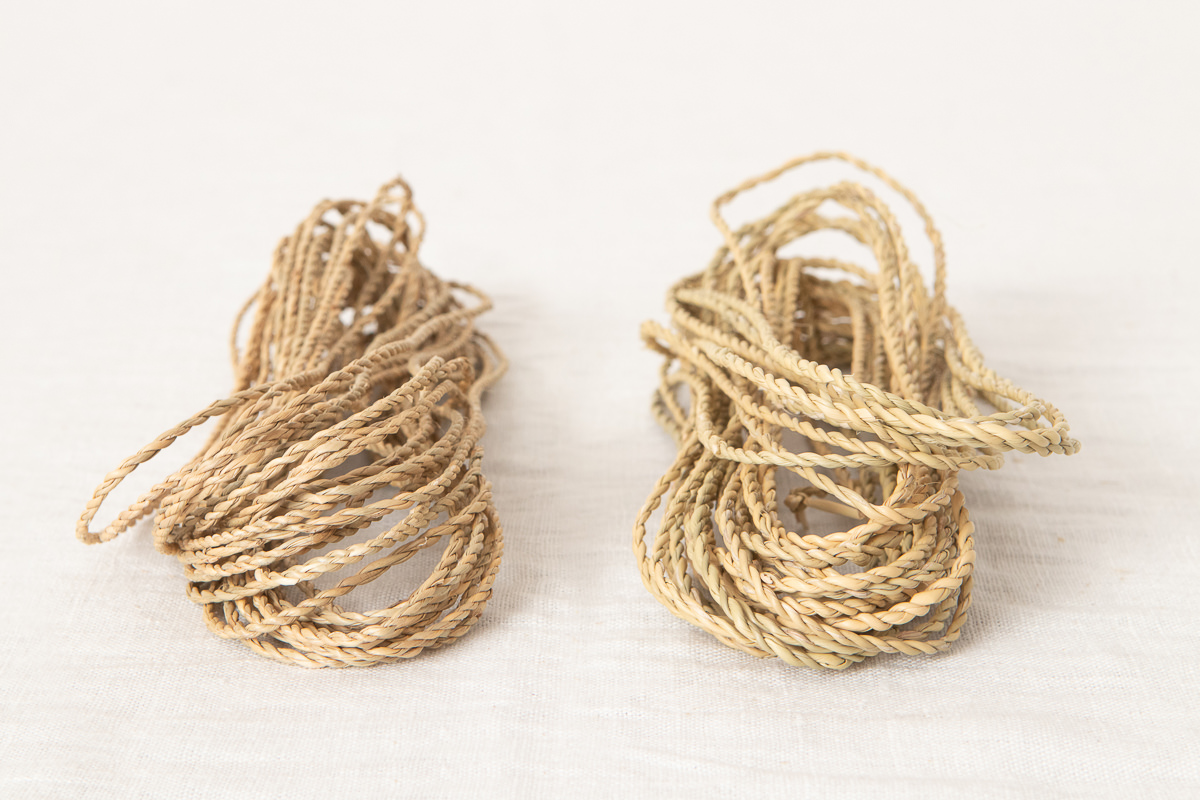
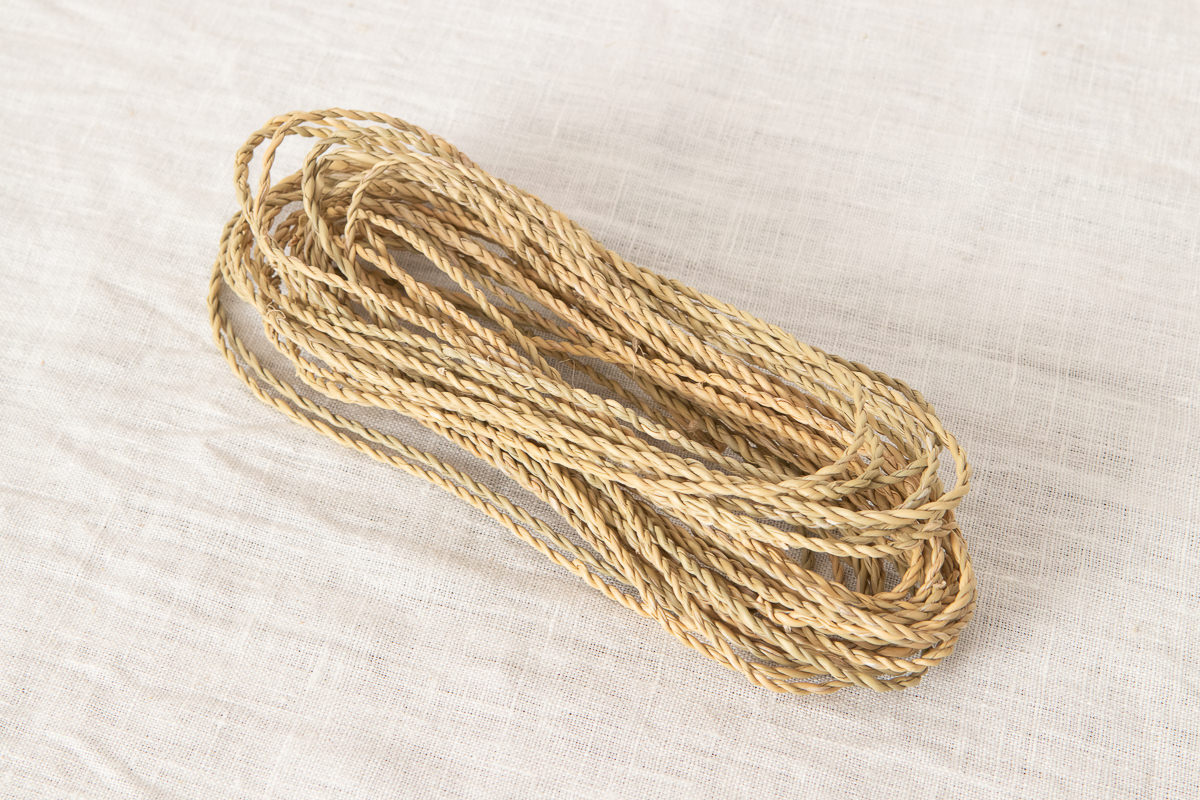
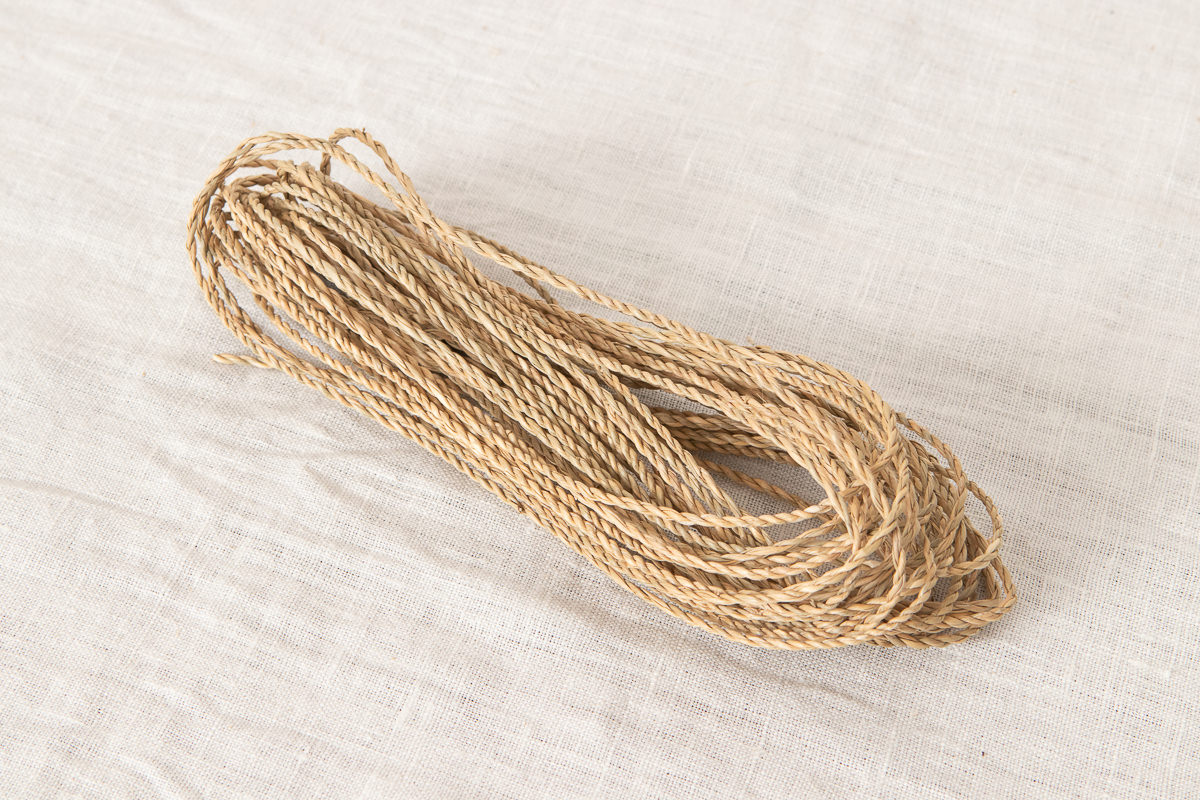
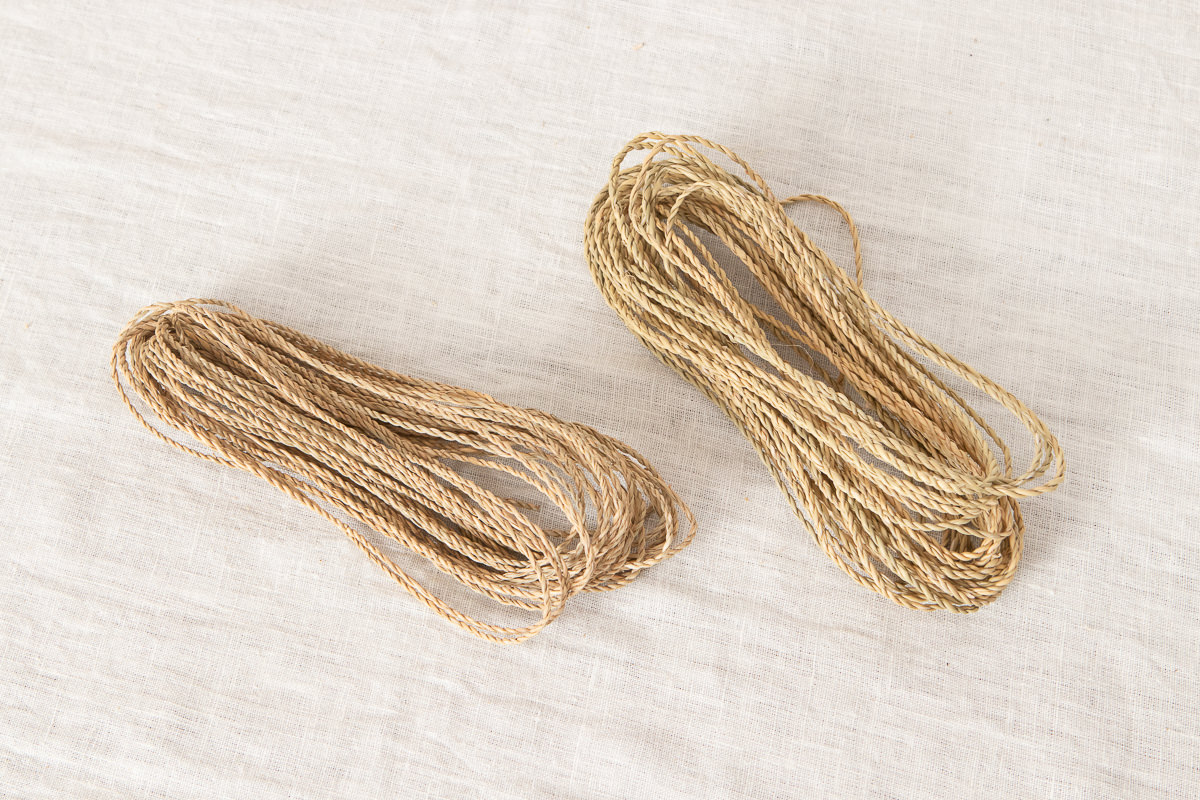
This is a twisted cord made from a grass that grows naturally in wetlands, called “Kok” in Thai.
*In the photo, two bundles of cord are shown, but this item is sold per bundle (JPY 715 including tax).
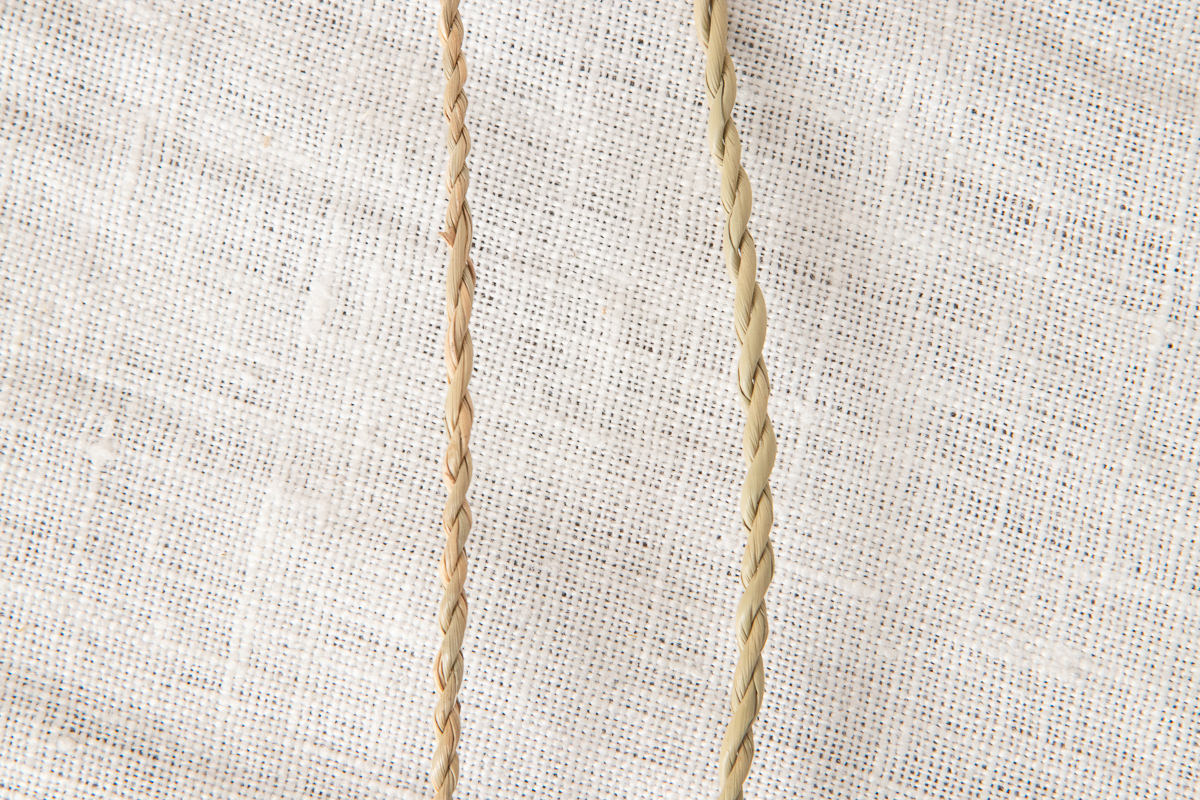
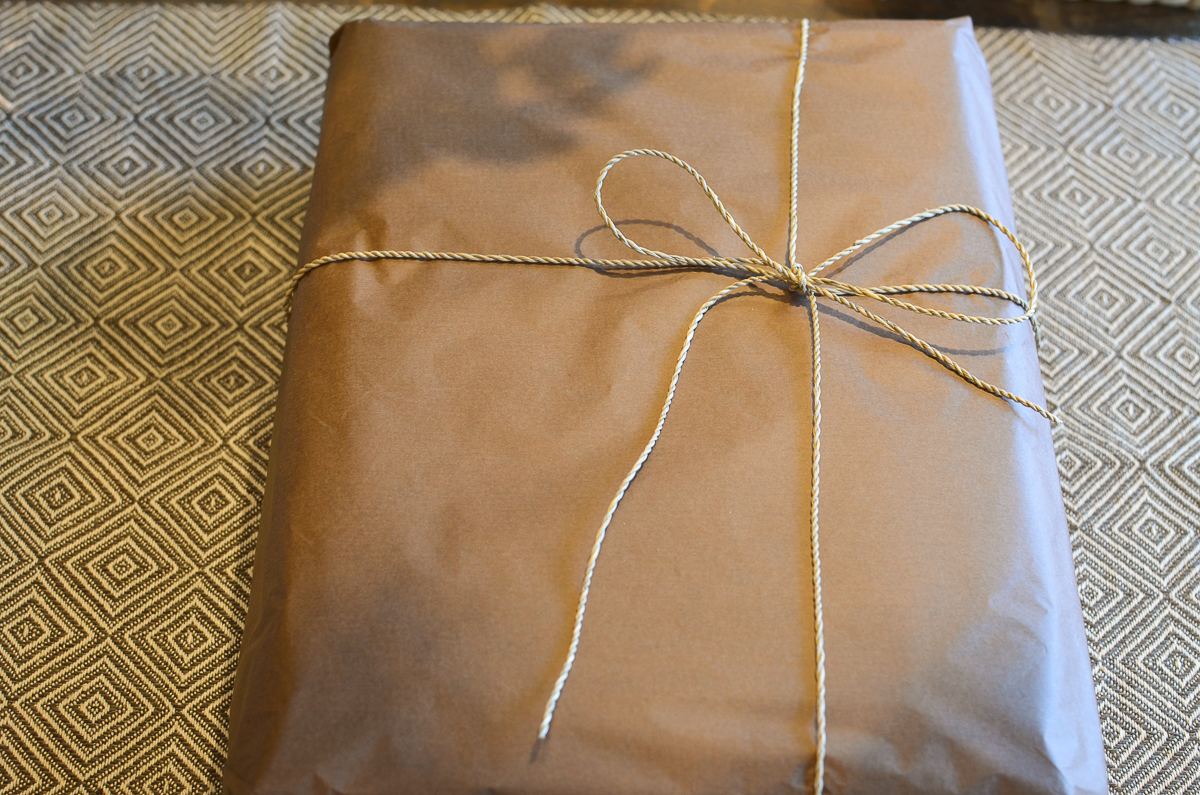
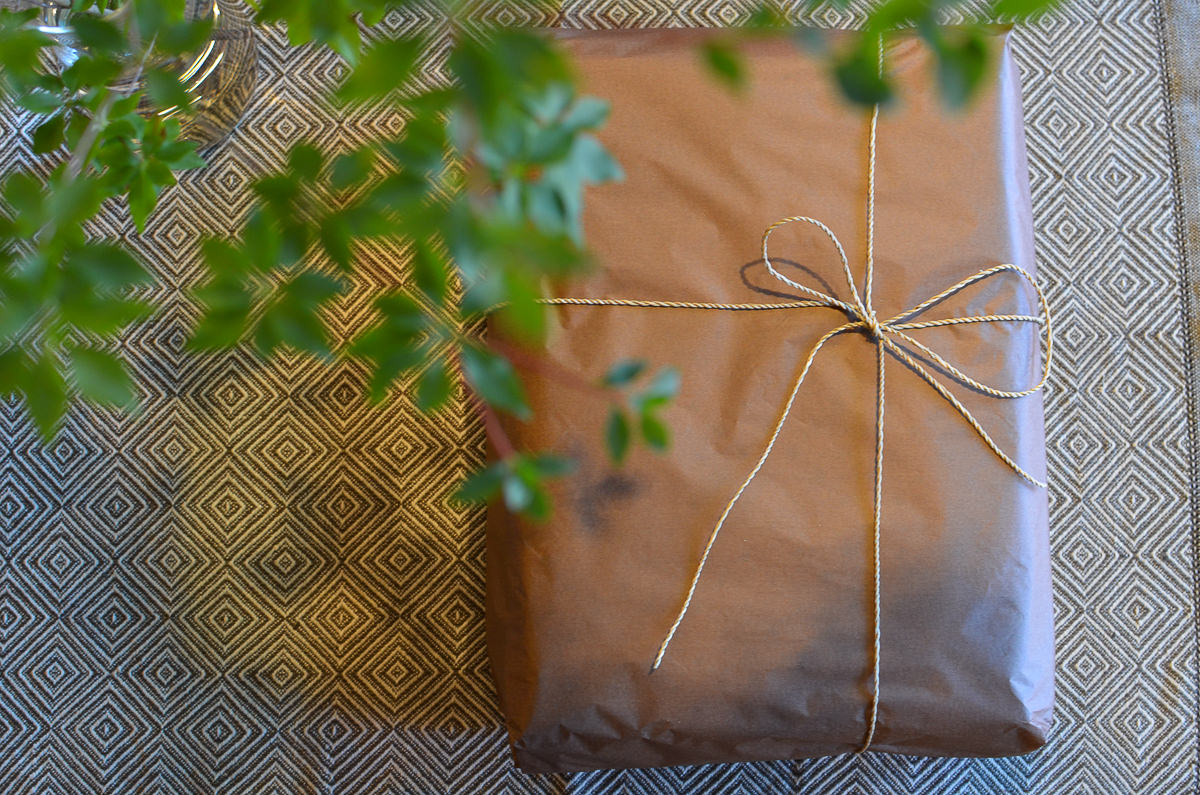
This is the same material used for the cord handles of our Krajood basket bags.After harvesting, the Kok grass is thoroughly dried in the sun.After drying, the Kok grass is softened and twisted by hand, joining the strands along the way to form one long cord. Each bundle measures approximately 10 meters in length.The surface of the cord is smooth, and the material is relatively light with a firm, resilient texture.You can also enjoy the gentle change in color over time. The color of the Kok grass may vary slightly from bundle to bundle.The thickness of the cord is not perfectly uniform and may vary by about 1 mm (approx. 0.04 in). As we ship the bundles from the current stock available at the time of your order, please note that slight variations may occur.It can be used for wrapping or handicrafts. It is also useful for hanging, tying, bundling, and many other everyday purposes.It also has a charming, natural look when used as a wrapping ribbon.
Kok grass is a supple yet durable material with natural resilience, making it useful in many situations, both indoors and outdoors. Another pleasant feature is that it can be used repeatedly.
*Some photos show two bundles of cord, but this item is sold per bundle (JPY 660 including tax).
About Kok Craft in Thailand
The grass known as “Kok” in Thai is a member of the sedge family that grows naturally in wetlands. It is believed to be a type of grass also known in Japan as “Suge,” a name shared by thousands of species worldwide.
In Japan, Suge is traditionally used to make hats, straw raincoats, and ropes. Similarly, Kok in Thailand can be twisted by hand to create strong cords for craftwork.
Kok can be harvested year-round in Thailand, though it is said that better-quality grass is obtained outside of the dry season (January to April).
Processing methods vary—some use thick stems that are split to different widths for weaving, others twist stems into ropes before weaving, peel them into thin sheets for wrapping, or shave them down. It is a material known for its flexibility in use. Basket bags are shaped using wooden molds, while mats and similar items are woven entirely by hand without molds.
The pieces introduced here are made in “Isan,” a broad highland region at about 200 meters elevation in northeastern Thailand, known for its gentle undulating terrain.
Southern Isan – Buriram Province, which borders Cambodia
Northern Isan – Nakhon Phanom Province, along the Mekong River, bordering Laos
Please note: This item ships from Japan. As the buyer, you are responsible for any import duties, customs fees, or local taxes that may be charged in your country. These costs are not included in the item price or shipping cost. Please check with your local customs authority if you are unsure about any potential charges before placing your order.
This is a twisted cord made from a grass that grows naturally in wetlands, called “Kok” in Thai.
*In the photo, two bundles of cord are shown, but this item is sold per bundle (JPY 715 including tax).
This is the same material used for the cord handles of our Krajood basket bags.After harvesting, the Kok grass is thoroughly dried in the sun.After drying, the Kok grass is softened and twisted by hand, joining the strands along the way to form one long cord. Each bundle measures approximately 10 meters in length.The surface of the cord is smooth, and the material is relatively light with a firm, resilient texture.You can also enjoy the gentle change in color over time. The color of the Kok grass may vary slightly from bundle to bundle.The thickness of the cord is not perfectly uniform and may vary by about 1 mm (approx. 0.04 in). As we ship the bundles from the current stock available at the time of your order, please note that slight variations may occur.It can be used for wrapping or handicrafts. It is also useful for hanging, tying, bundling, and many other everyday purposes.It also has a charming, natural look when used as a wrapping ribbon.
Kok grass is a supple yet durable material with natural resilience, making it useful in many situations, both indoors and outdoors. Another pleasant feature is that it can be used repeatedly.
*Some photos show two bundles of cord, but this item is sold per bundle (JPY 660 including tax).
About Kok Craft in Thailand
The grass known as “Kok” in Thai is a member of the sedge family that grows naturally in wetlands. It is believed to be a type of grass also known in Japan as “Suge,” a name shared by thousands of species worldwide.
In Japan, Suge is traditionally used to make hats, straw raincoats, and ropes. Similarly, Kok in Thailand can be twisted by hand to create strong cords for craftwork.
Kok can be harvested year-round in Thailand, though it is said that better-quality grass is obtained outside of the dry season (January to April).
Processing methods vary—some use thick stems that are split to different widths for weaving, others twist stems into ropes before weaving, peel them into thin sheets for wrapping, or shave them down. It is a material known for its flexibility in use. Basket bags are shaped using wooden molds, while mats and similar items are woven entirely by hand without molds.
The pieces introduced here are made in “Isan,” a broad highland region at about 200 meters elevation in northeastern Thailand, known for its gentle undulating terrain.
Southern Isan – Buriram Province, which borders Cambodia
Northern Isan – Nakhon Phanom Province, along the Mekong River, bordering Laos
Please note: This item ships from Japan. As the buyer, you are responsible for any import duties, customs fees, or local taxes that may be charged in your country. These costs are not included in the item price or shipping cost. Please check with your local customs authority if you are unsure about any potential charges before placing your order.
This is a twisted cord made from a grass that grows naturally in wetlands, called “Kok” in Thai.
*In the photo, two bundles of cord are shown, but this item is sold per bundle (JPY 715 including tax).
This is the same material used for the cord handles of our Krajood basket bags.After harvesting, the Kok grass is thoroughly dried in the sun.After drying, the Kok grass is softened and twisted by hand, joining the strands along the way to form one long cord. Each bundle measures approximately 10 meters in length.The surface of the cord is smooth, and the material is relatively light with a firm, resilient texture.You can also enjoy the gentle change in color over time. The color of the Kok grass may vary slightly from bundle to bundle.The thickness of the cord is not perfectly uniform and may vary by about 1 mm (approx. 0.04 in). As we ship the bundles from the current stock available at the time of your order, please note that slight variations may occur.It can be used for wrapping or handicrafts. It is also useful for hanging, tying, bundling, and many other everyday purposes.It also has a charming, natural look when used as a wrapping ribbon.
Kok grass is a supple yet durable material with natural resilience, making it useful in many situations, both indoors and outdoors. Another pleasant feature is that it can be used repeatedly.
*Some photos show two bundles of cord, but this item is sold per bundle (JPY 660 including tax).
About Kok Craft in Thailand
The grass known as “Kok” in Thai is a member of the sedge family that grows naturally in wetlands. It is believed to be a type of grass also known in Japan as “Suge,” a name shared by thousands of species worldwide.
In Japan, Suge is traditionally used to make hats, straw raincoats, and ropes. Similarly, Kok in Thailand can be twisted by hand to create strong cords for craftwork.
Kok can be harvested year-round in Thailand, though it is said that better-quality grass is obtained outside of the dry season (January to April).
Processing methods vary—some use thick stems that are split to different widths for weaving, others twist stems into ropes before weaving, peel them into thin sheets for wrapping, or shave them down. It is a material known for its flexibility in use. Basket bags are shaped using wooden molds, while mats and similar items are woven entirely by hand without molds.
The pieces introduced here are made in “Isan,” a broad highland region at about 200 meters elevation in northeastern Thailand, known for its gentle undulating terrain.
Southern Isan – Buriram Province, which borders Cambodia
Northern Isan – Nakhon Phanom Province, along the Mekong River, bordering Laos
Please note: This item ships from Japan. As the buyer, you are responsible for any import duties, customs fees, or local taxes that may be charged in your country. These costs are not included in the item price or shipping cost. Please check with your local customs authority if you are unsure about any potential charges before placing your order.