Round Basket with Two Handles / Willow / ESP 610606-1 スペイン/やなぎ 両手つき丸バスケット
Round Basket with Two Handles / Willow / ESP 610606-1 スペイン/やなぎ 両手つき丸バスケット
This is a basket handwoven from willow.
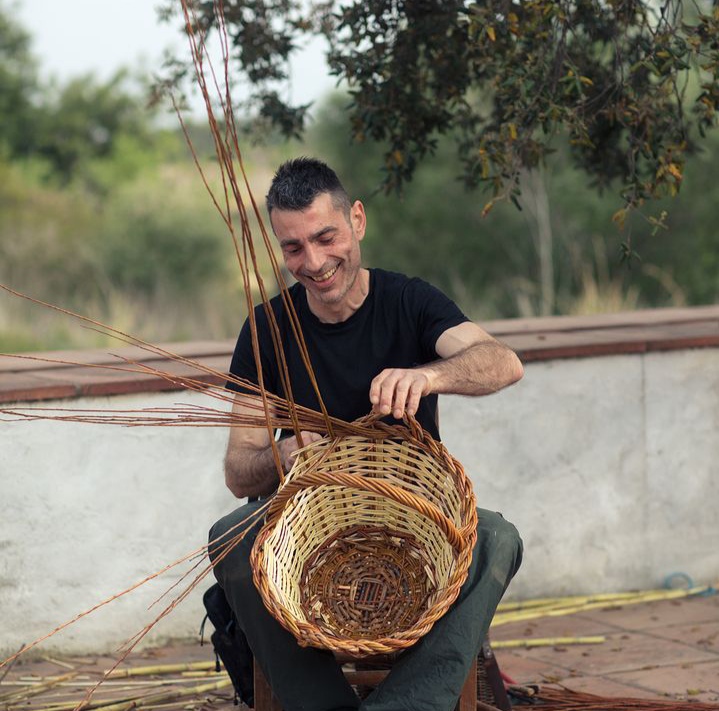
The maker is Pau, a fourth-generation basket maker from a family that has continued the craft for generations in Catalonia, in northeastern Spain along the Mediterranean coast.
The baskets he creates are deeply rooted in the rural culture of Catalonia, representing traditional basketry in its original form.
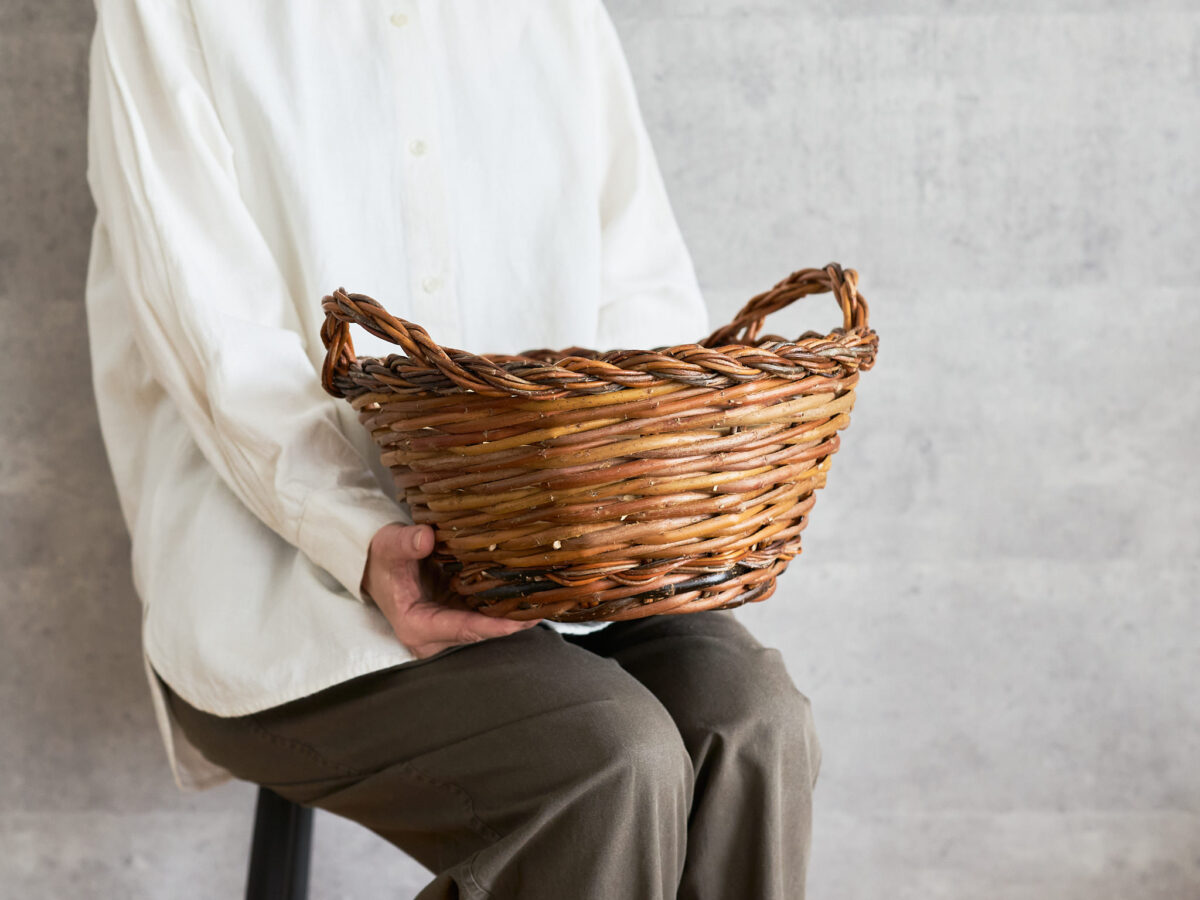
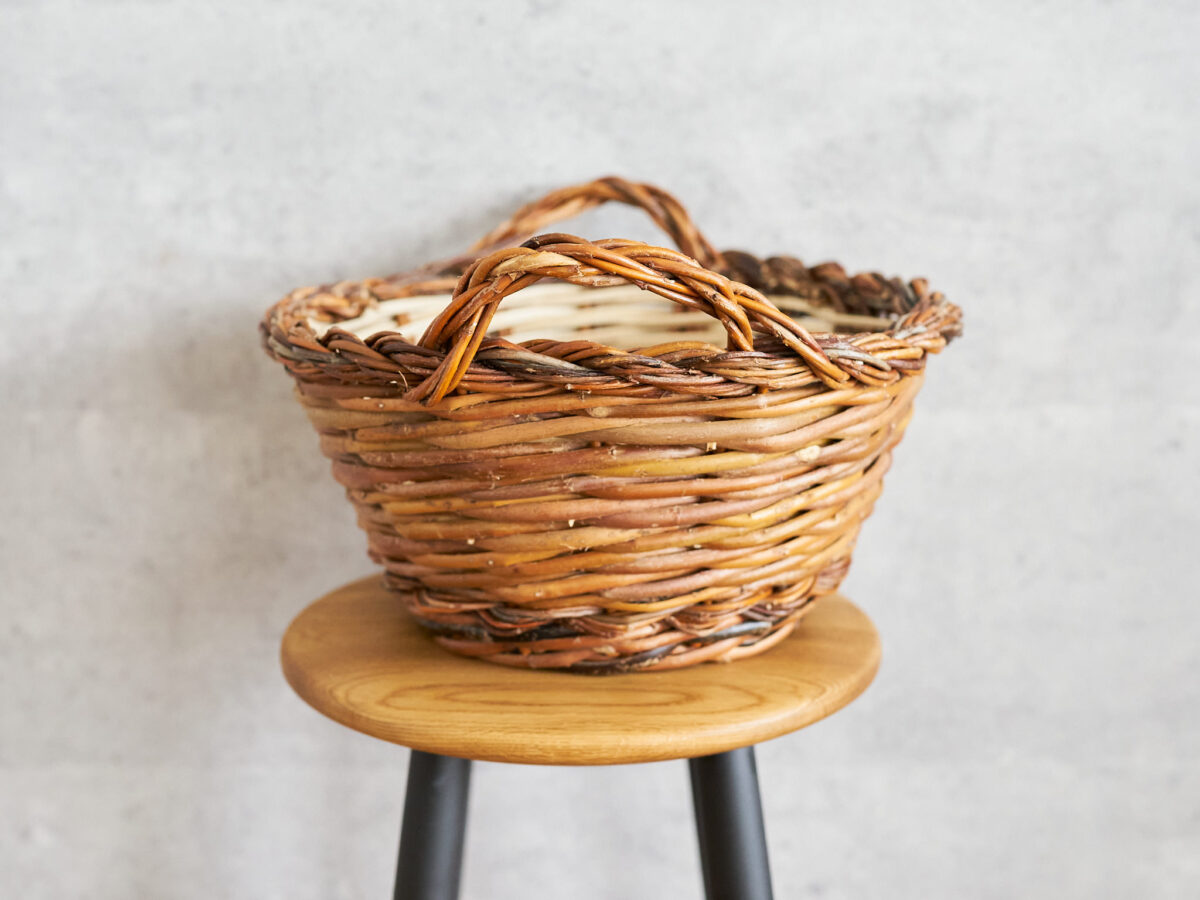
On this page, we introduce a round basket with two handles, made entirely from willow without using caña, a material that resembles bamboo.
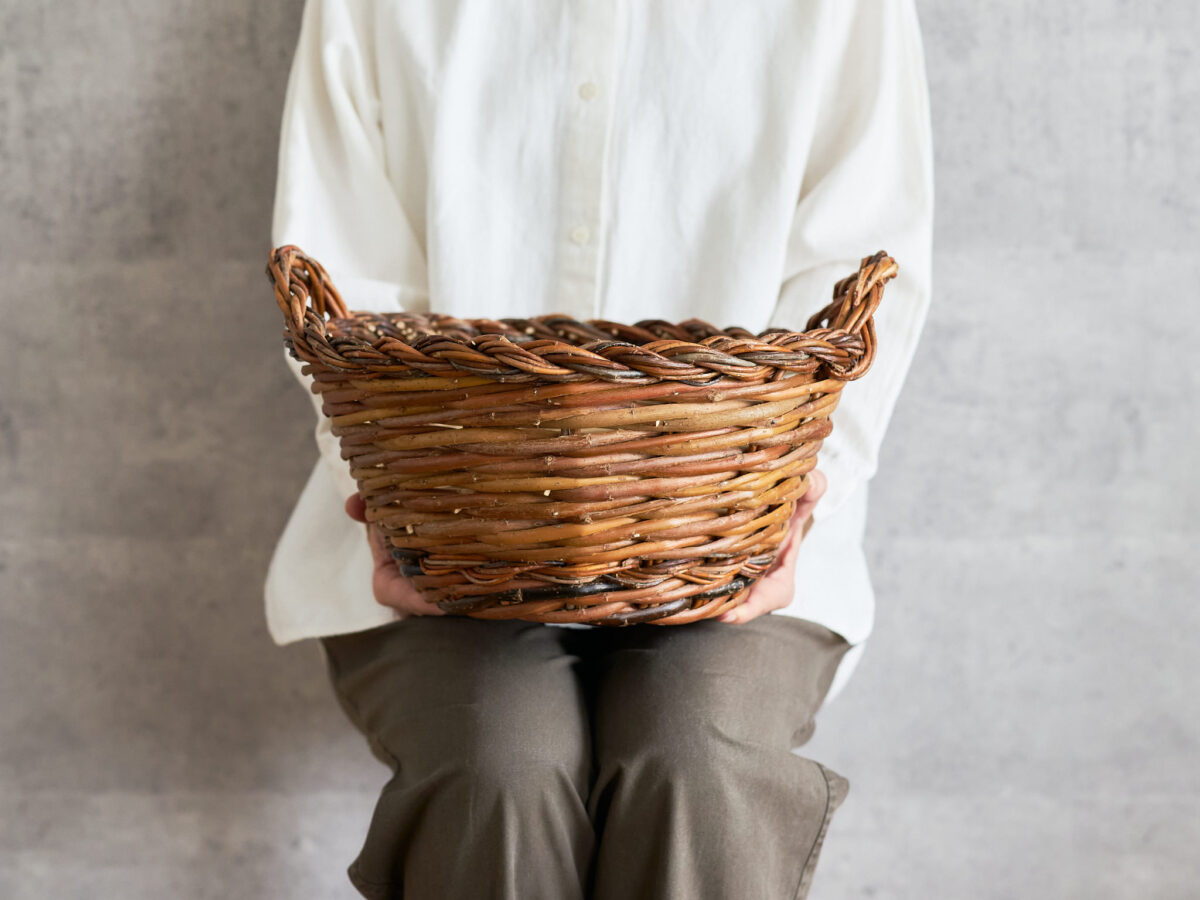
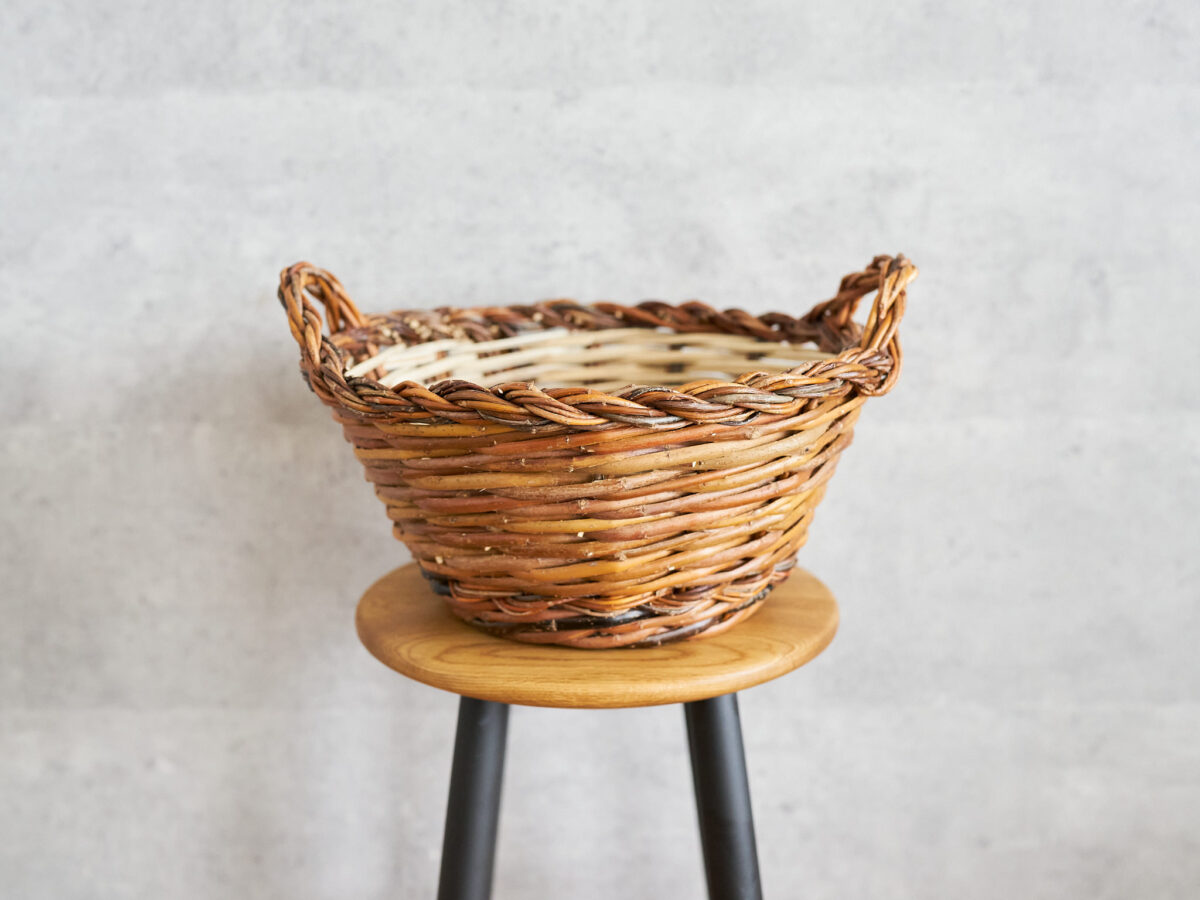
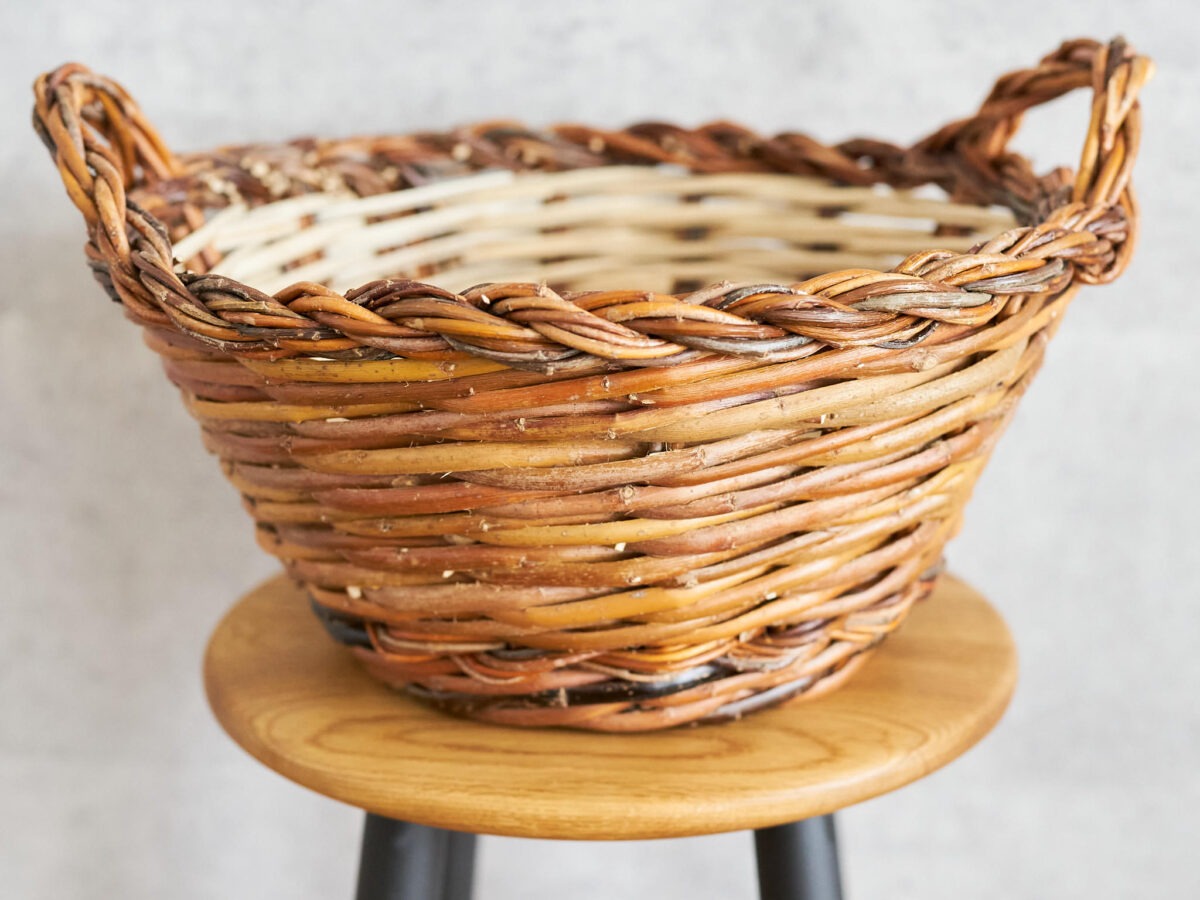
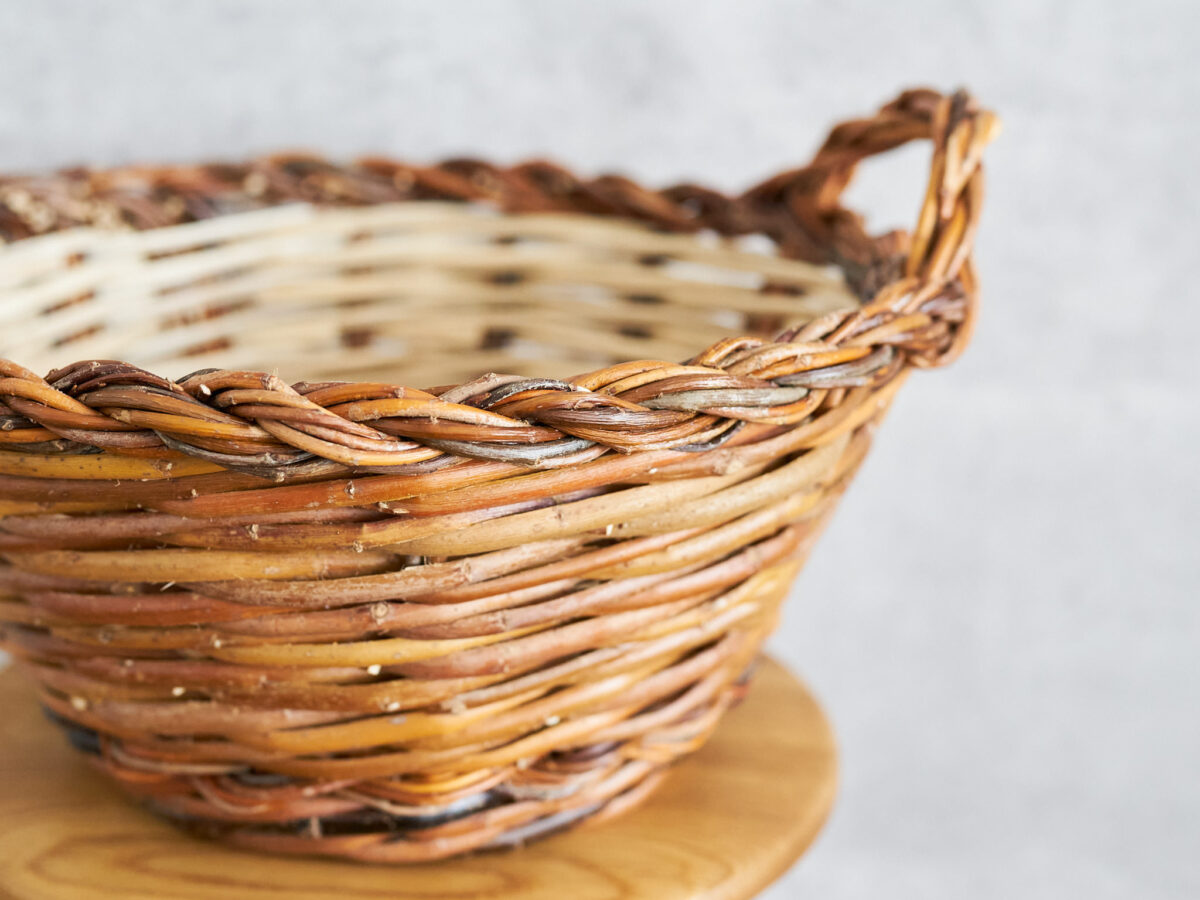
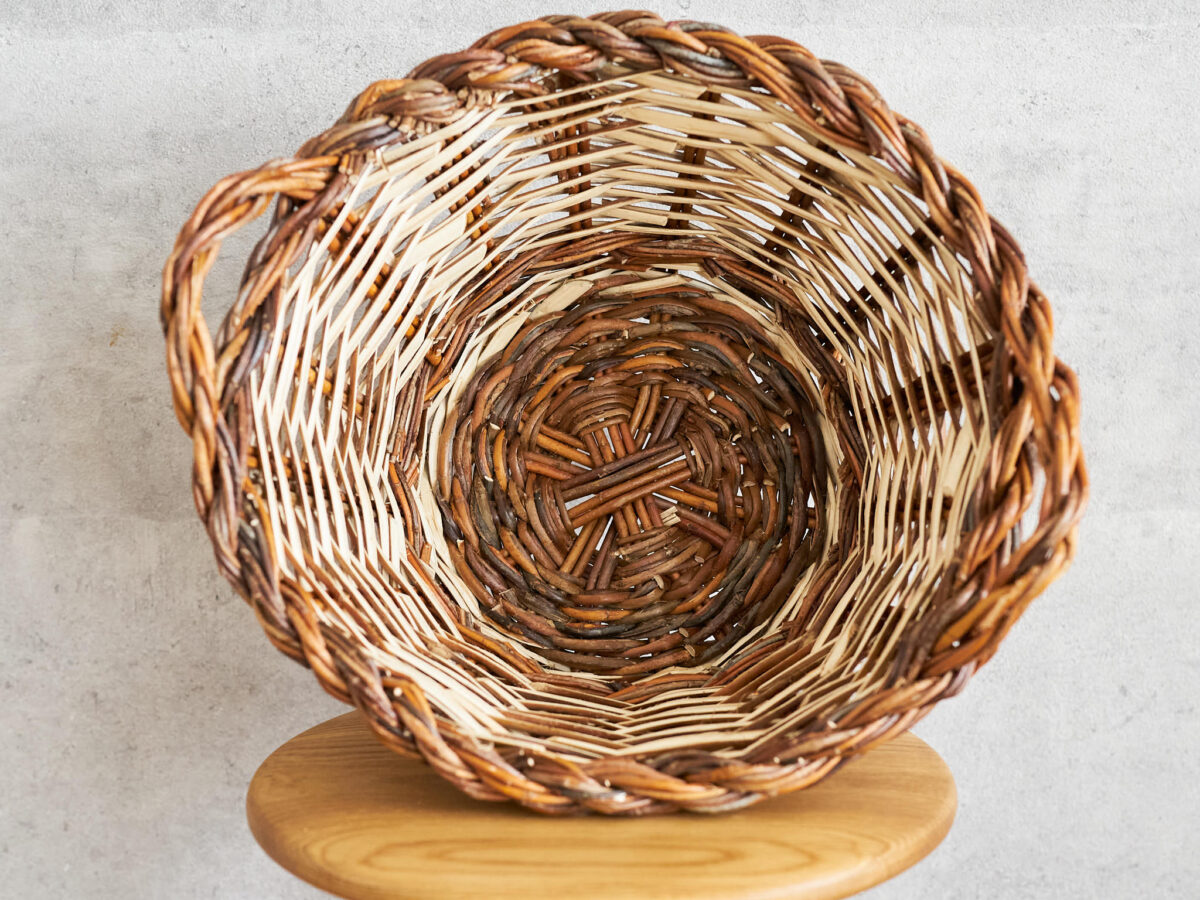
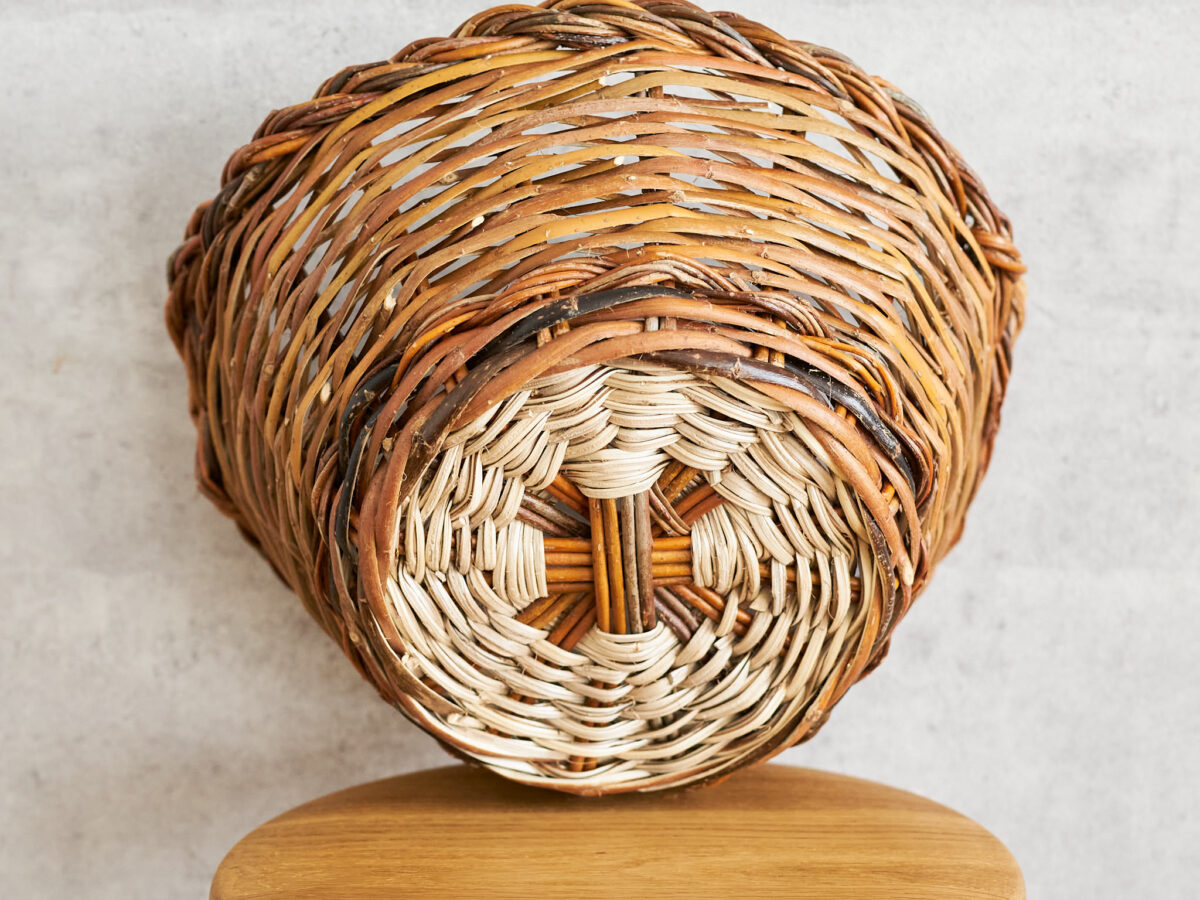
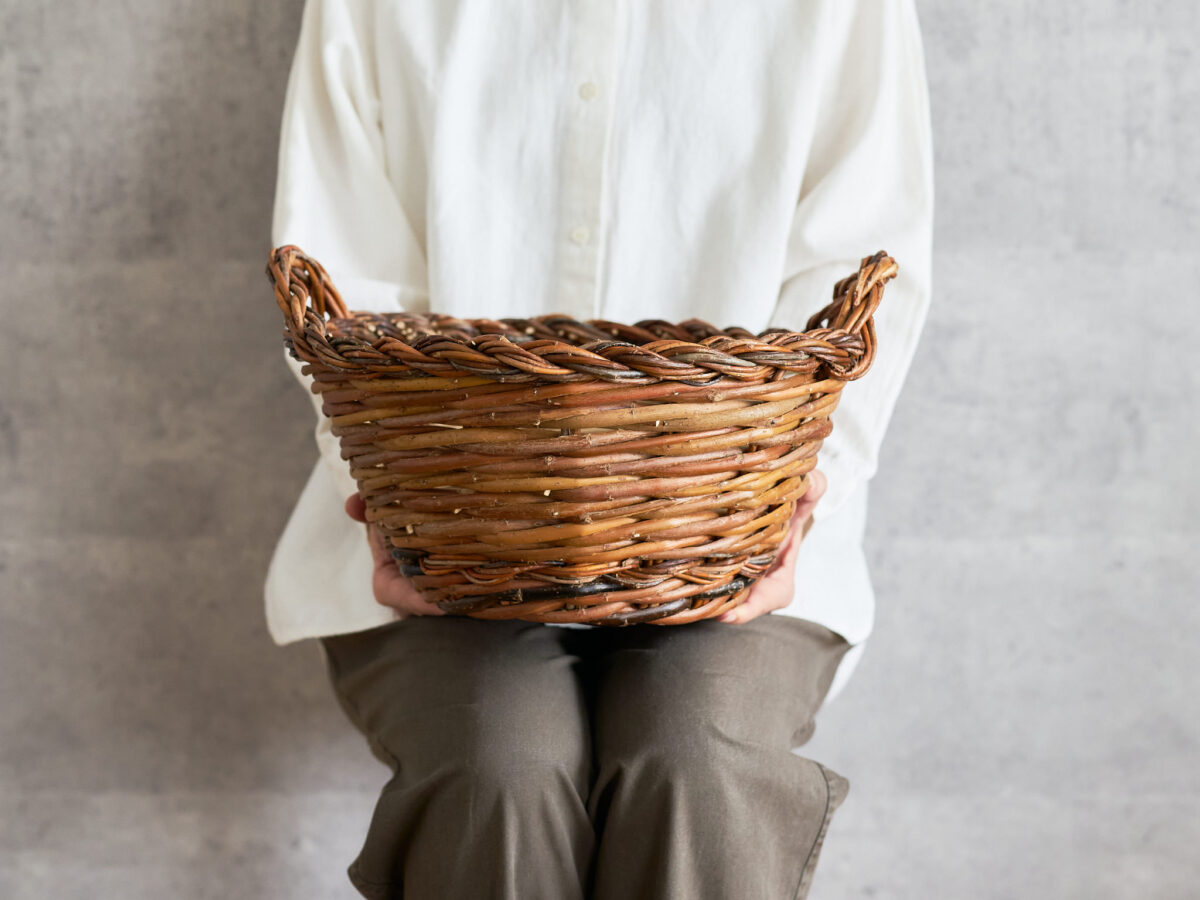
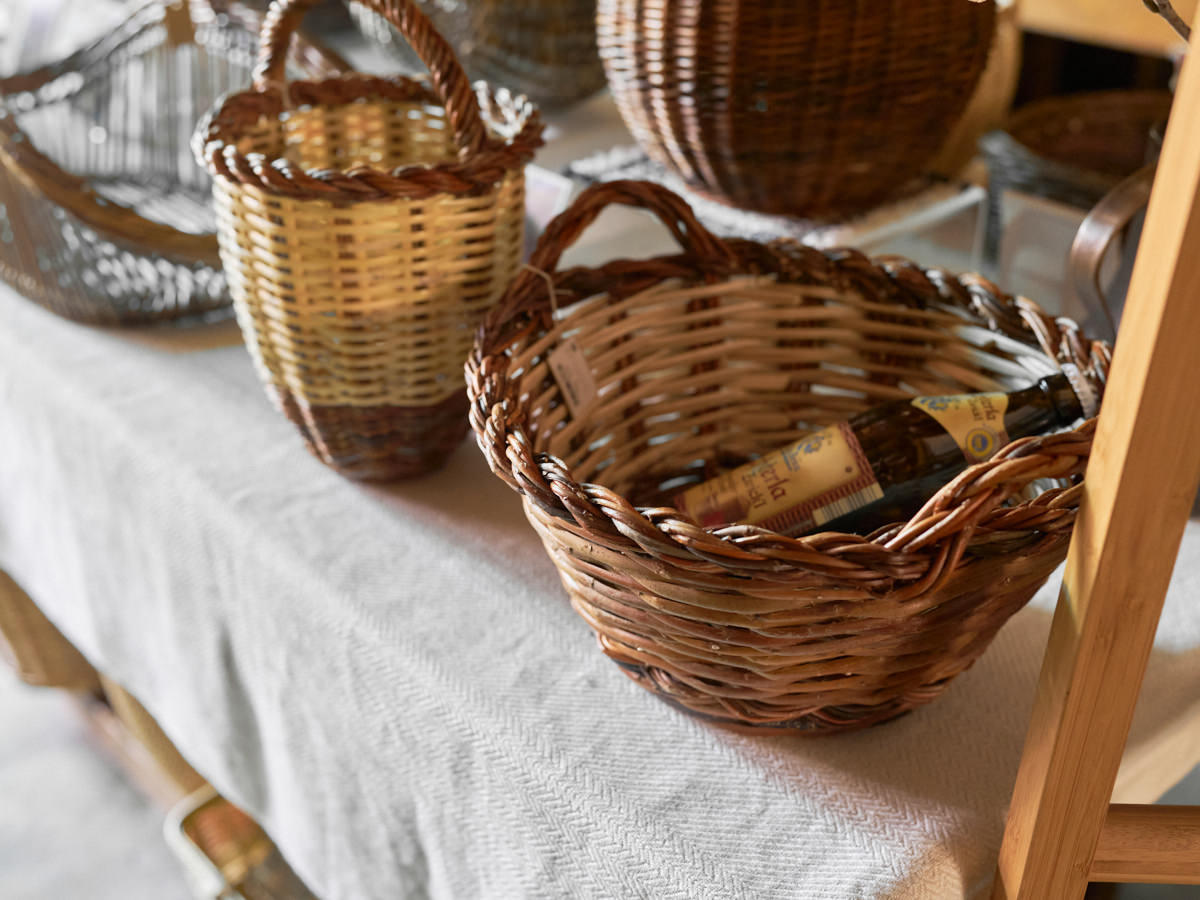
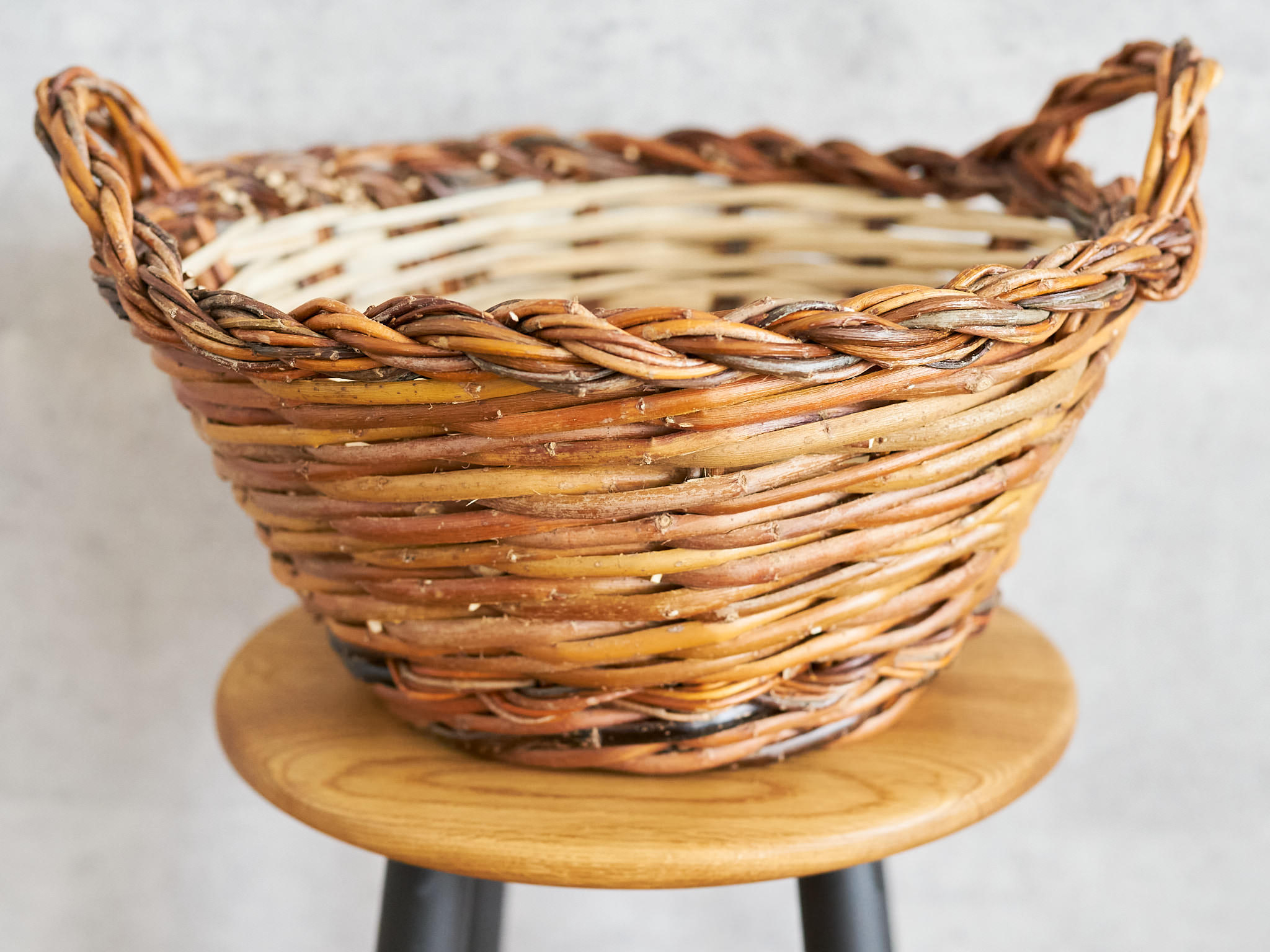
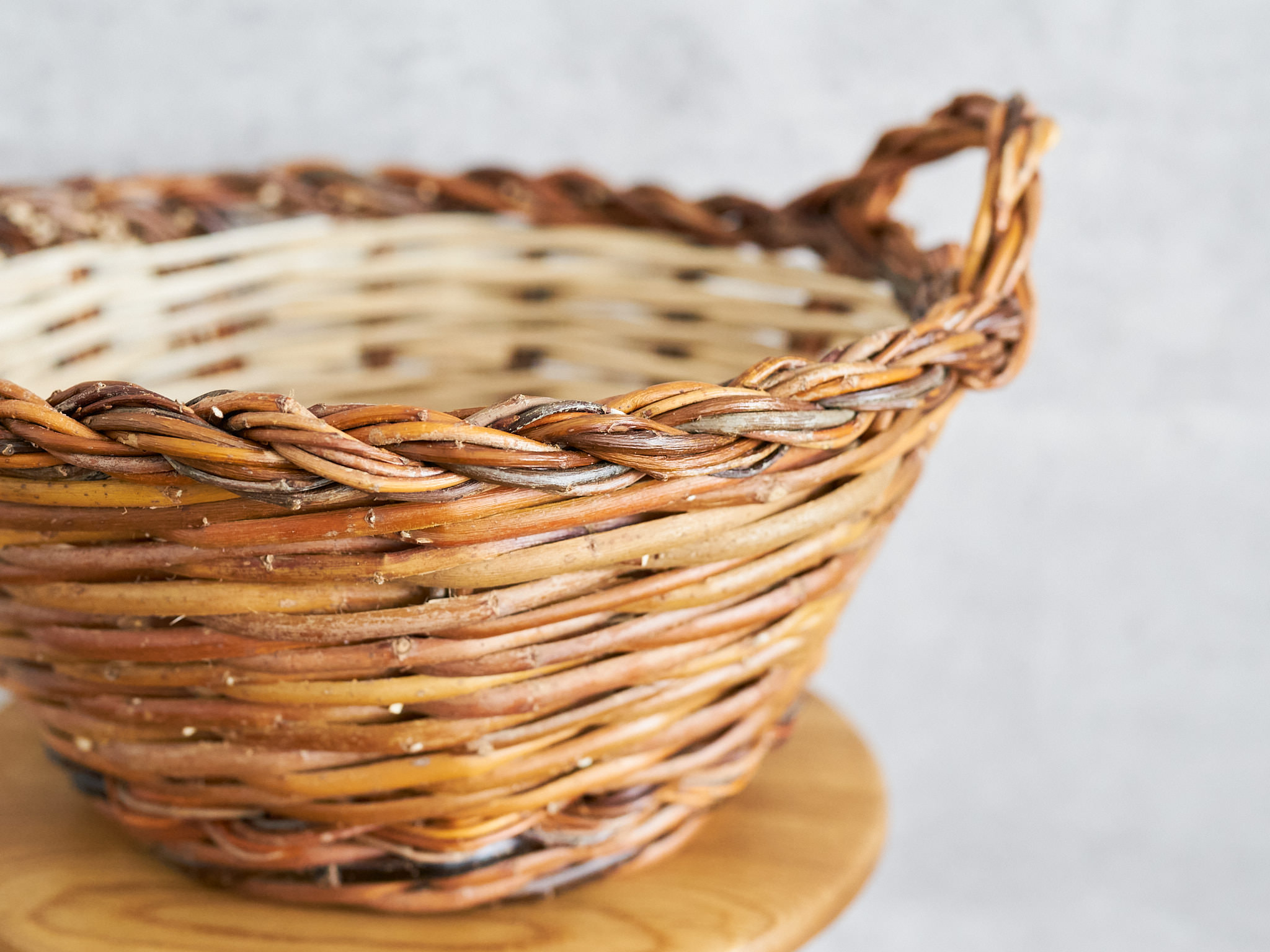
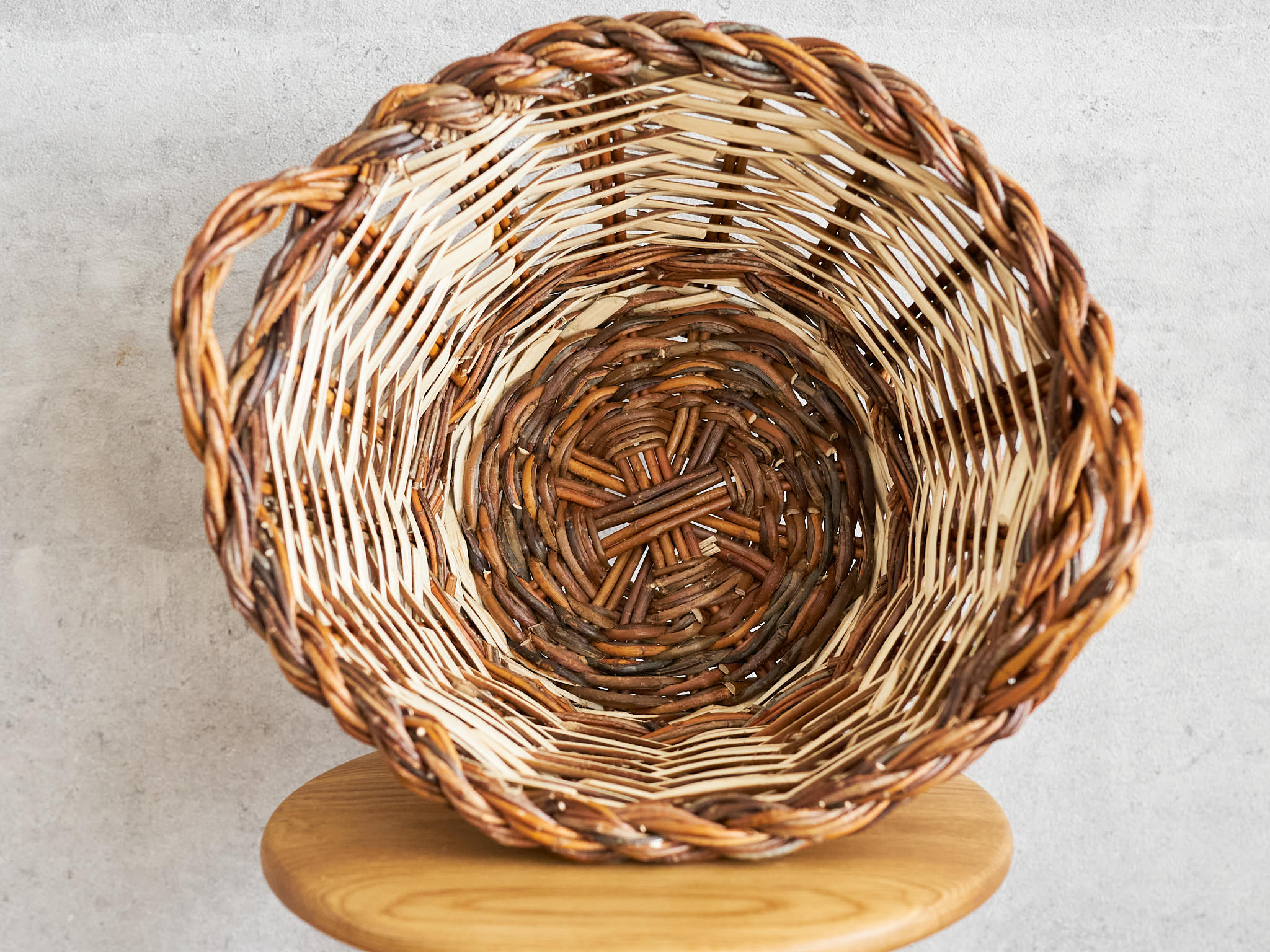
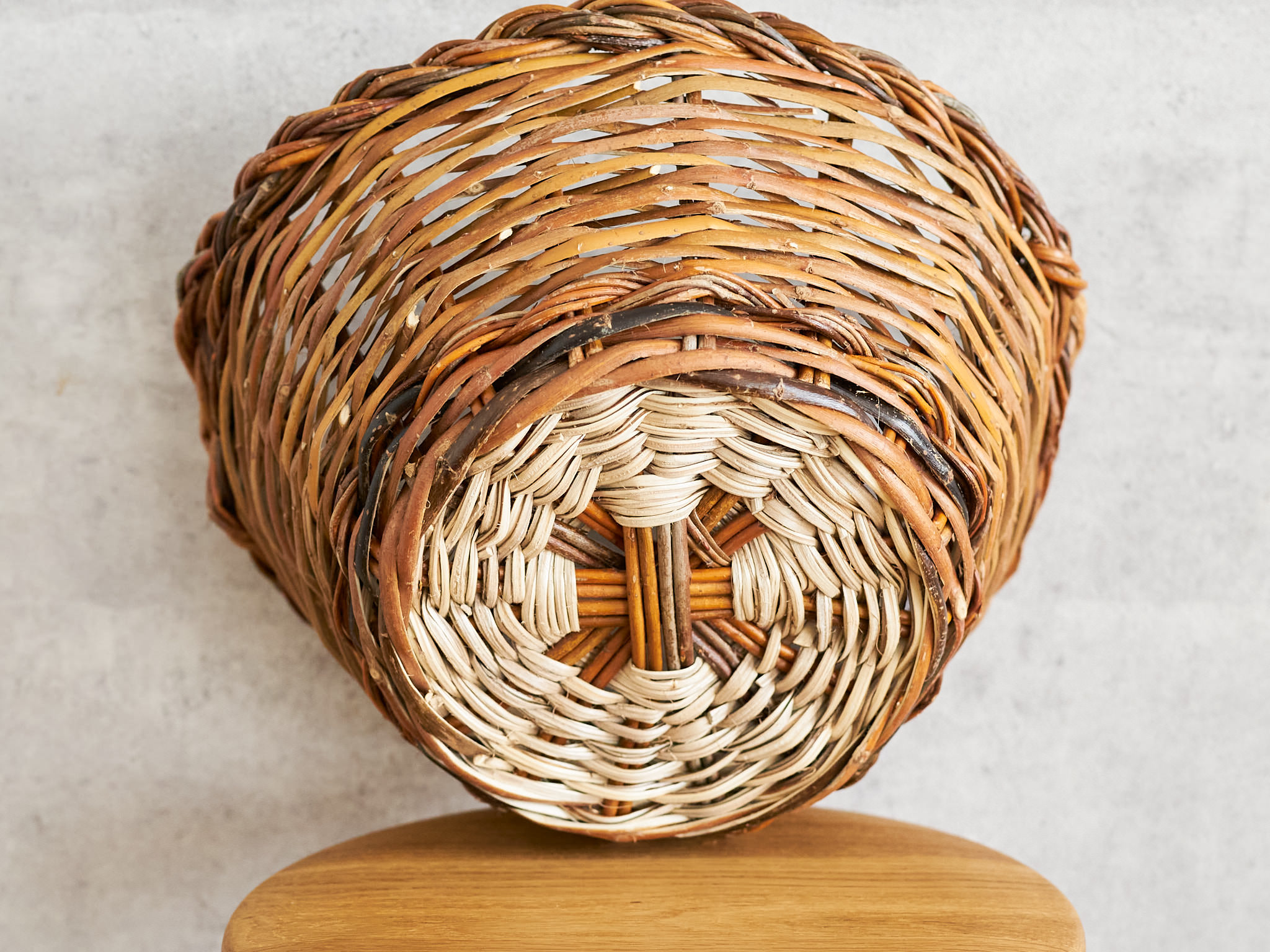
The sides of the basket are woven using splits made from thick willow branches, each piece carefully halved into weaving strips. The flowing pattern of the weave leaves a strong impression.The rim and handles of the basket are also firmly constructed. In some areas, there are hard willow “buds,” and parts of the handle where the outer bark has peeled. Please take care not to catch your fingers or clothing on these areas.The base of the basket is woven using thick willow rods, arranged in groups of four.When turned over, you can see the inner surfaces of the split willow used in the weaving. The base is tightly and firmly woven.In Catalonia, this type of round basket is traditionally used for harvesting vegetables, fruits, olives, and grapes.It is just the right size for holding fruits or root vegetables.
In a home garden, it also works well as a basket for daily harvesting.
With handles on both sides, the load on the rim is evenly distributed, allowing it to be carried steadily. It is easy to handle and designed in a way that puts less strain on the basket.
It can be enjoyed in a variety of settings, depending on your needs.
Basket Maker Pau of Spain — A Fourth-Generation Tradition from Catalonia —
Catalonia, in northeastern Spain, faces the Mediterranean Sea. In this region, centered around Barcelona and known for its own language and culture, Pau continues the craft of basket making.
As a fourth-generation basket maker, he works with familiar local materials such as willow and caña, a plant native to Catalonia, carrying on traditional basketry.
“The knowledge and techniques of basket making can only truly be learned within tradition. It is this foundation that allows new baskets to be created,” Pau says.
He began learning the craft in his father’s workshop at the age of eighteen. At the time, it was not something he had chosen for himself, but now he finds deep meaning in the work, takes pride in carrying it on, and considers it an essential part of his life.
Pau does not use molds when making baskets. Instead, he works directly with the materials, allowing each piece to take shape naturally. His baskets carry both the strength and the simplicity that have long been part of everyday life in Catalonia.
We hope you enjoy the many forms rooted in this region, from grape harvest baskets and wine bottle baskets to traditional rabbit baskets.
We introduce Pau’s basket making in more detail in this journal. We hope you will enjoy reading it.
The maker is Pau, a fourth-generation basket maker from a family that has continued the craft for generations in Catalonia, in northeastern Spain along the Mediterranean coast.
The baskets he creates are deeply rooted in the rural culture of Catalonia, representing traditional basketry in its original form.
On this page, we introduce a round basket with two handles, made entirely from willow without using caña, a material that resembles bamboo.
The sides of the basket are woven using splits made from thick willow branches, each piece carefully halved into weaving strips. The flowing pattern of the weave leaves a strong impression.The rim and handles of the basket are also firmly constructed. In some areas, there are hard willow “buds,” and parts of the handle where the outer bark has peeled. Please take care not to catch your fingers or clothing on these areas.The base of the basket is woven using thick willow rods, arranged in groups of four.When turned over, you can see the inner surfaces of the split willow used in the weaving. The base is tightly and firmly woven.In Catalonia, this type of round basket is traditionally used for harvesting vegetables, fruits, olives, and grapes.It is just the right size for holding fruits or root vegetables.
In a home garden, it also works well as a basket for daily harvesting.
With handles on both sides, the load on the rim is evenly distributed, allowing it to be carried steadily. It is easy to handle and designed in a way that puts less strain on the basket.
It can be enjoyed in a variety of settings, depending on your needs.
Basket Maker Pau of Spain — A Fourth-Generation Tradition from Catalonia —
Catalonia, in northeastern Spain, faces the Mediterranean Sea. In this region, centered around Barcelona and known for its own language and culture, Pau continues the craft of basket making.
As a fourth-generation basket maker, he works with familiar local materials such as willow and caña, a plant native to Catalonia, carrying on traditional basketry.
“The knowledge and techniques of basket making can only truly be learned within tradition. It is this foundation that allows new baskets to be created,” Pau says.
He began learning the craft in his father’s workshop at the age of eighteen. At the time, it was not something he had chosen for himself, but now he finds deep meaning in the work, takes pride in carrying it on, and considers it an essential part of his life.
Pau does not use molds when making baskets. Instead, he works directly with the materials, allowing each piece to take shape naturally. His baskets carry both the strength and the simplicity that have long been part of everyday life in Catalonia.
We hope you enjoy the many forms rooted in this region, from grape harvest baskets and wine bottle baskets to traditional rabbit baskets.
We introduce Pau’s basket making in more detail in this journal. We hope you will enjoy reading it.
The maker is Pau, a fourth-generation basket maker from a family that has continued the craft for generations in Catalonia, in northeastern Spain along the Mediterranean coast.
The baskets he creates are deeply rooted in the rural culture of Catalonia, representing traditional basketry in its original form.
On this page, we introduce a round basket with two handles, made entirely from willow without using caña, a material that resembles bamboo.
The sides of the basket are woven using splits made from thick willow branches, each piece carefully halved into weaving strips. The flowing pattern of the weave leaves a strong impression.The rim and handles of the basket are also firmly constructed. In some areas, there are hard willow “buds,” and parts of the handle where the outer bark has peeled. Please take care not to catch your fingers or clothing on these areas.The base of the basket is woven using thick willow rods, arranged in groups of four.When turned over, you can see the inner surfaces of the split willow used in the weaving. The base is tightly and firmly woven.In Catalonia, this type of round basket is traditionally used for harvesting vegetables, fruits, olives, and grapes.It is just the right size for holding fruits or root vegetables.
In a home garden, it also works well as a basket for daily harvesting.
With handles on both sides, the load on the rim is evenly distributed, allowing it to be carried steadily. It is easy to handle and designed in a way that puts less strain on the basket.
It can be enjoyed in a variety of settings, depending on your needs.
Basket Maker Pau of Spain — A Fourth-Generation Tradition from Catalonia —
Catalonia, in northeastern Spain, faces the Mediterranean Sea. In this region, centered around Barcelona and known for its own language and culture, Pau continues the craft of basket making.
As a fourth-generation basket maker, he works with familiar local materials such as willow and caña, a plant native to Catalonia, carrying on traditional basketry.
“The knowledge and techniques of basket making can only truly be learned within tradition. It is this foundation that allows new baskets to be created,” Pau says.
He began learning the craft in his father’s workshop at the age of eighteen. At the time, it was not something he had chosen for himself, but now he finds deep meaning in the work, takes pride in carrying it on, and considers it an essential part of his life.
Pau does not use molds when making baskets. Instead, he works directly with the materials, allowing each piece to take shape naturally. His baskets carry both the strength and the simplicity that have long been part of everyday life in Catalonia.
We hope you enjoy the many forms rooted in this region, from grape harvest baskets and wine bottle baskets to traditional rabbit baskets.
We introduce Pau’s basket making in more detail in this journal. We hope you will enjoy reading it.