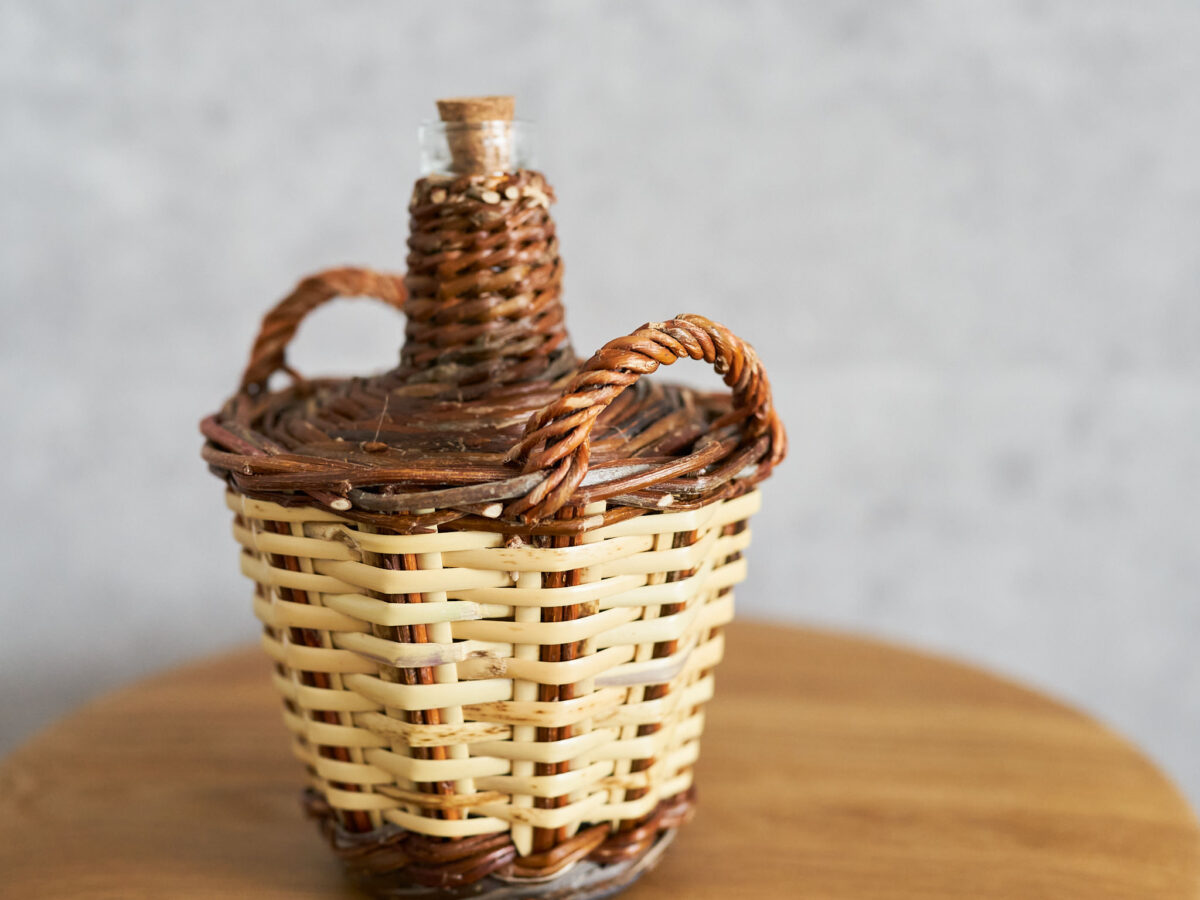
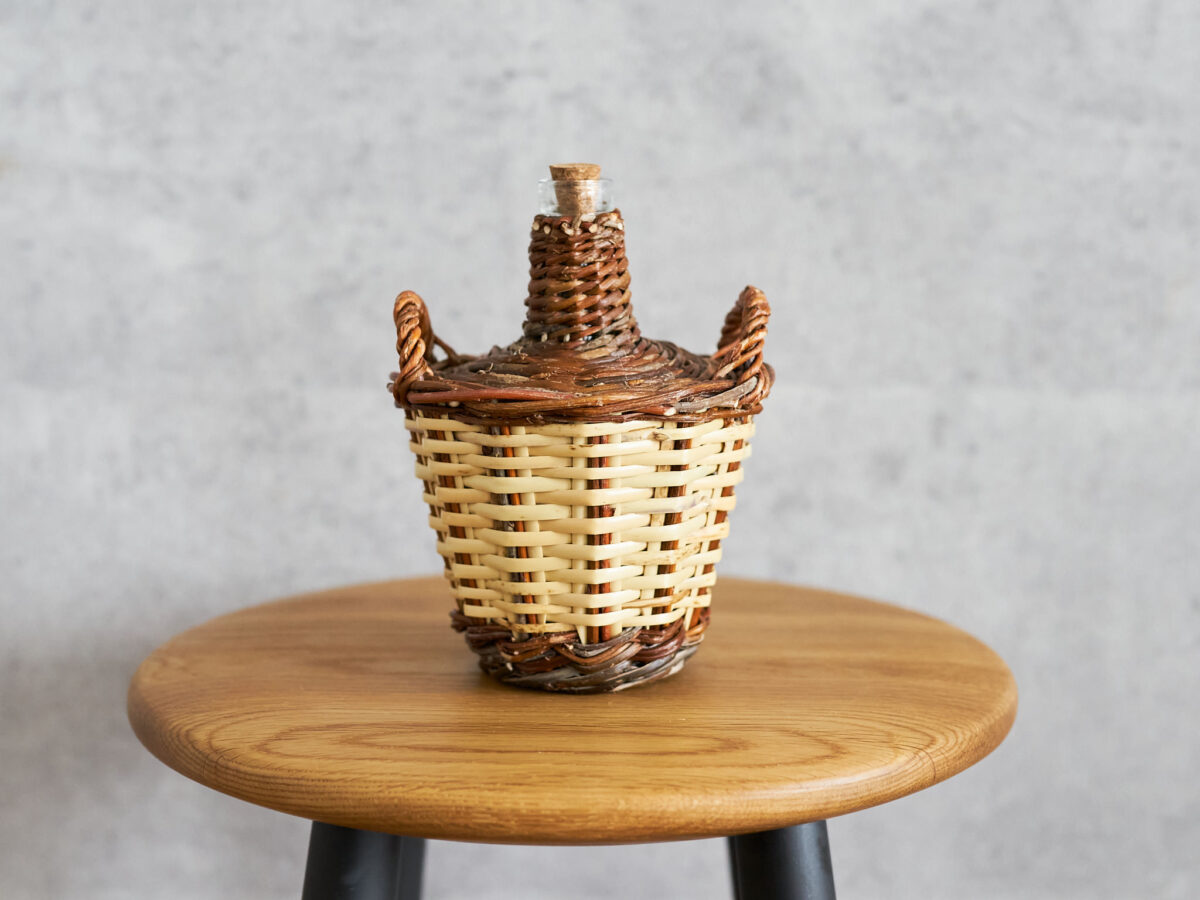
This is a charming basket, handwoven from willow and caña.
Caña is a plant that grows naturally in the Mediterranean region. Belonging to the reed family, it has a form that resembles bamboo. Somewhere between bamboo and sasa (thin bamboo), it carries a texture that may also recall Nemagari bamboo found in Japan.
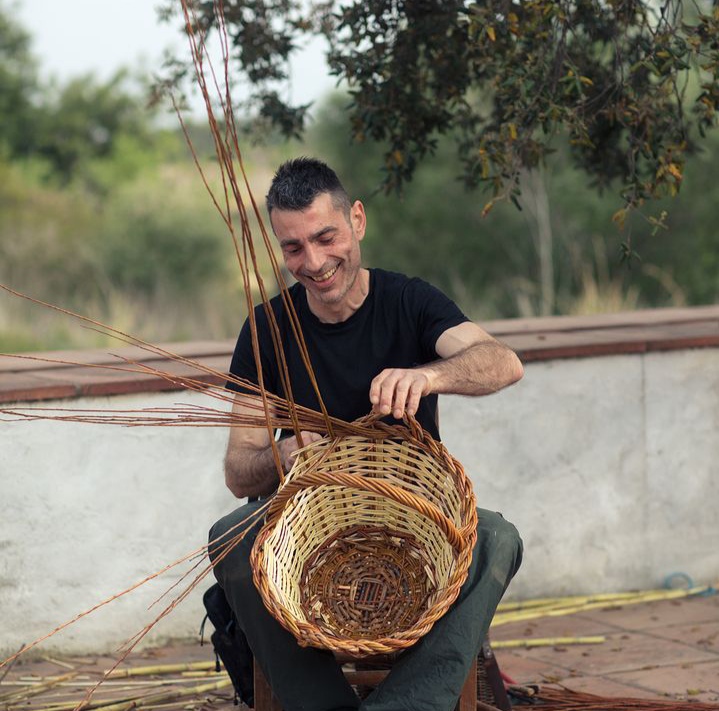
The maker is Pau, a fourth-generation basket maker from a family that has continued the craft for generations in Catalonia, in northeastern Spain along the Mediterranean coast.
The baskets he creates are deeply rooted in the rural culture of Catalonia, representing traditional basketry in its original form.
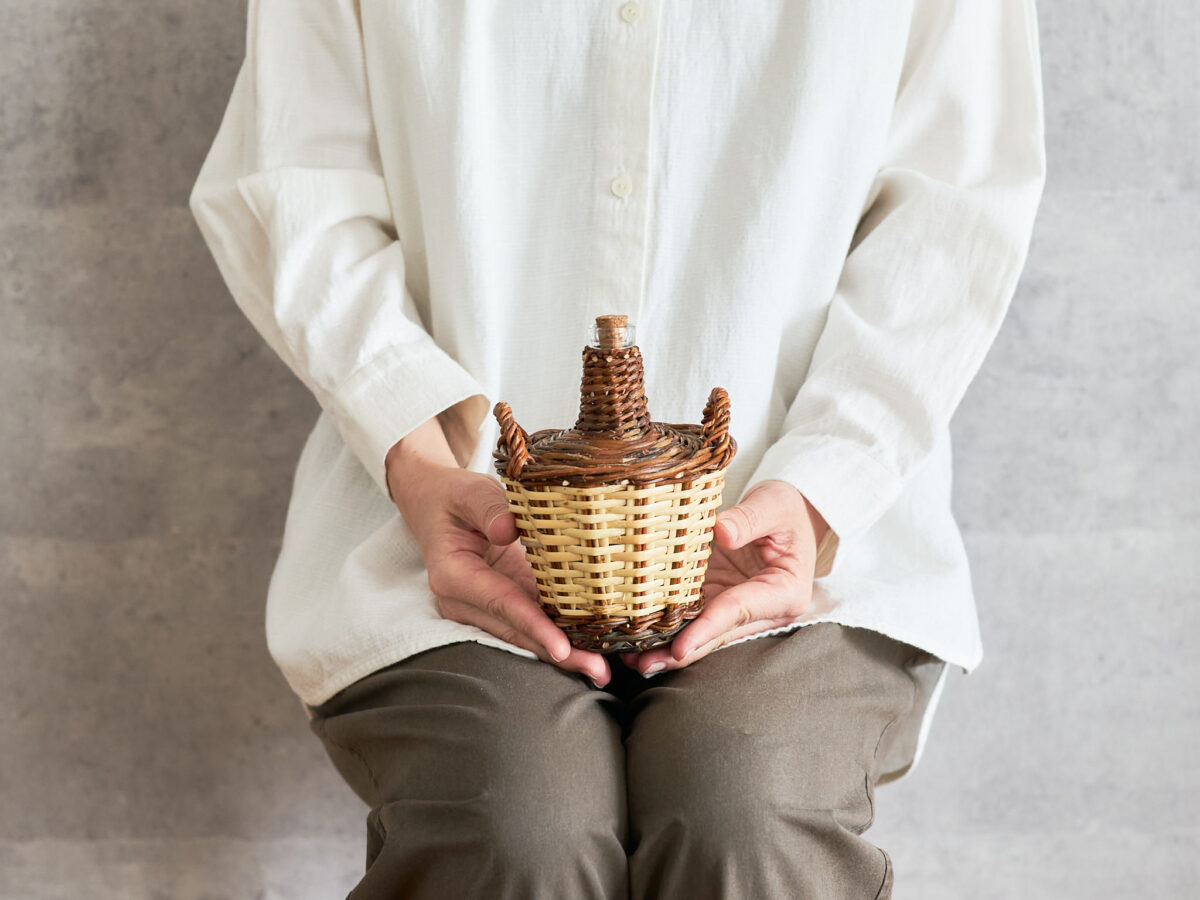
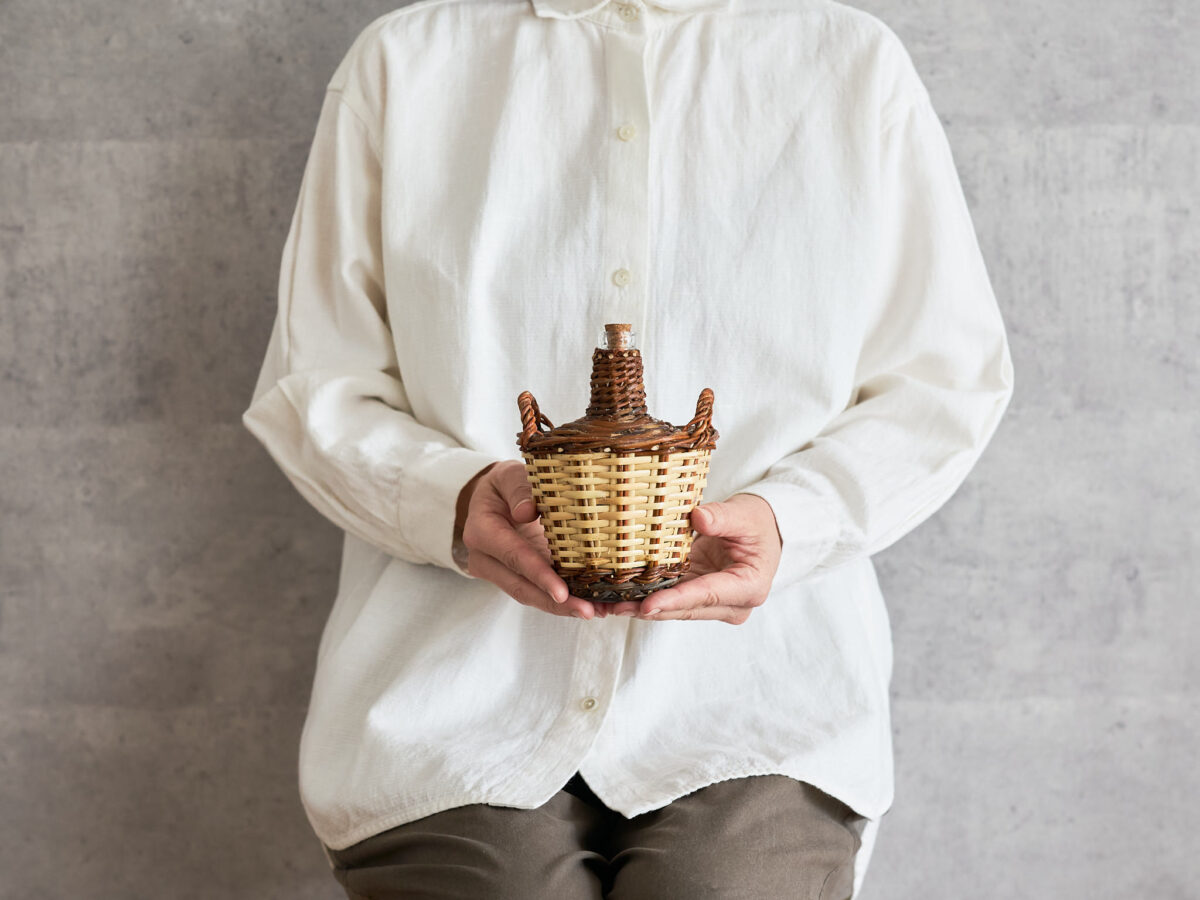
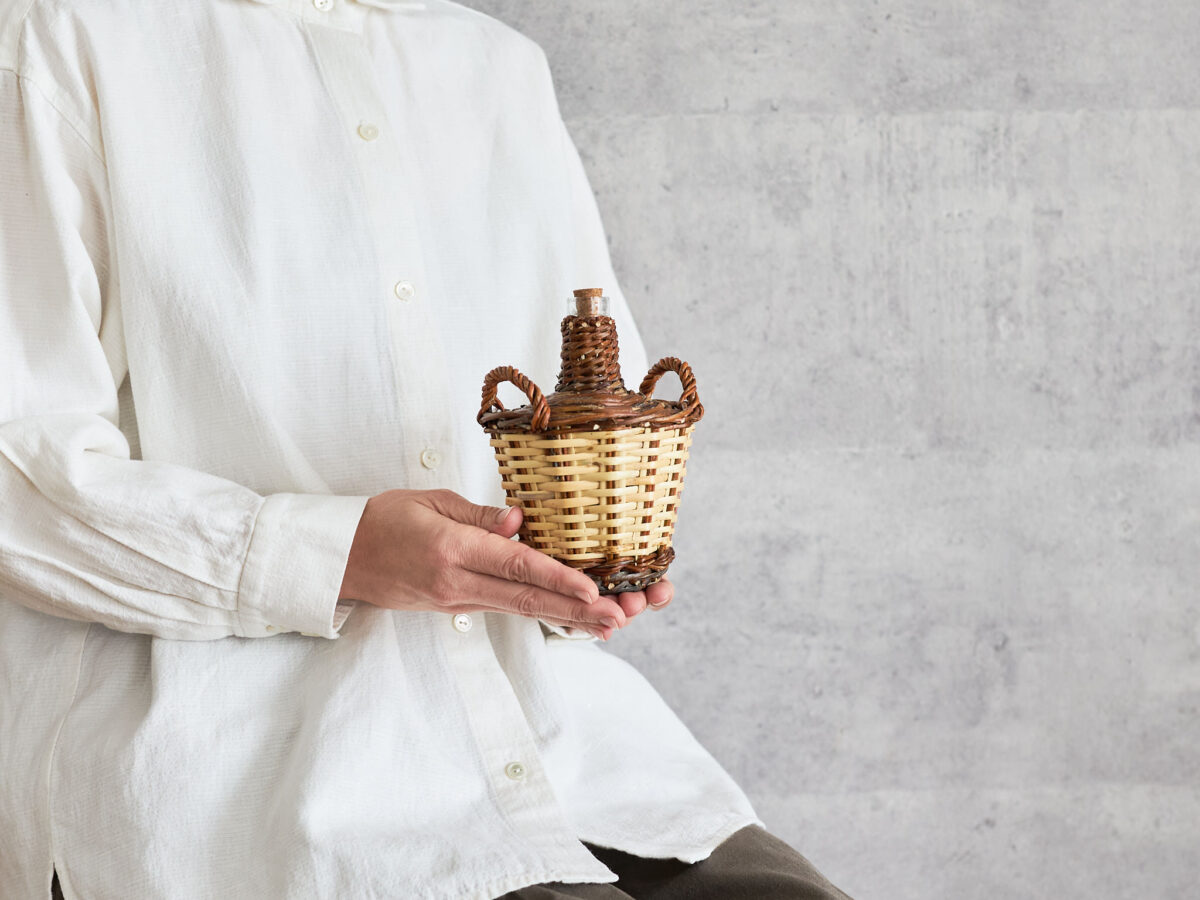
On this page, we introduce a very small bottle basket, small enough to fit in the palm of your hand.
The original versions were made in larger sizes, with the bottle woven into the basket from the beginning, and were used to hold wine, olive oil, vinegar, and similar liquids.
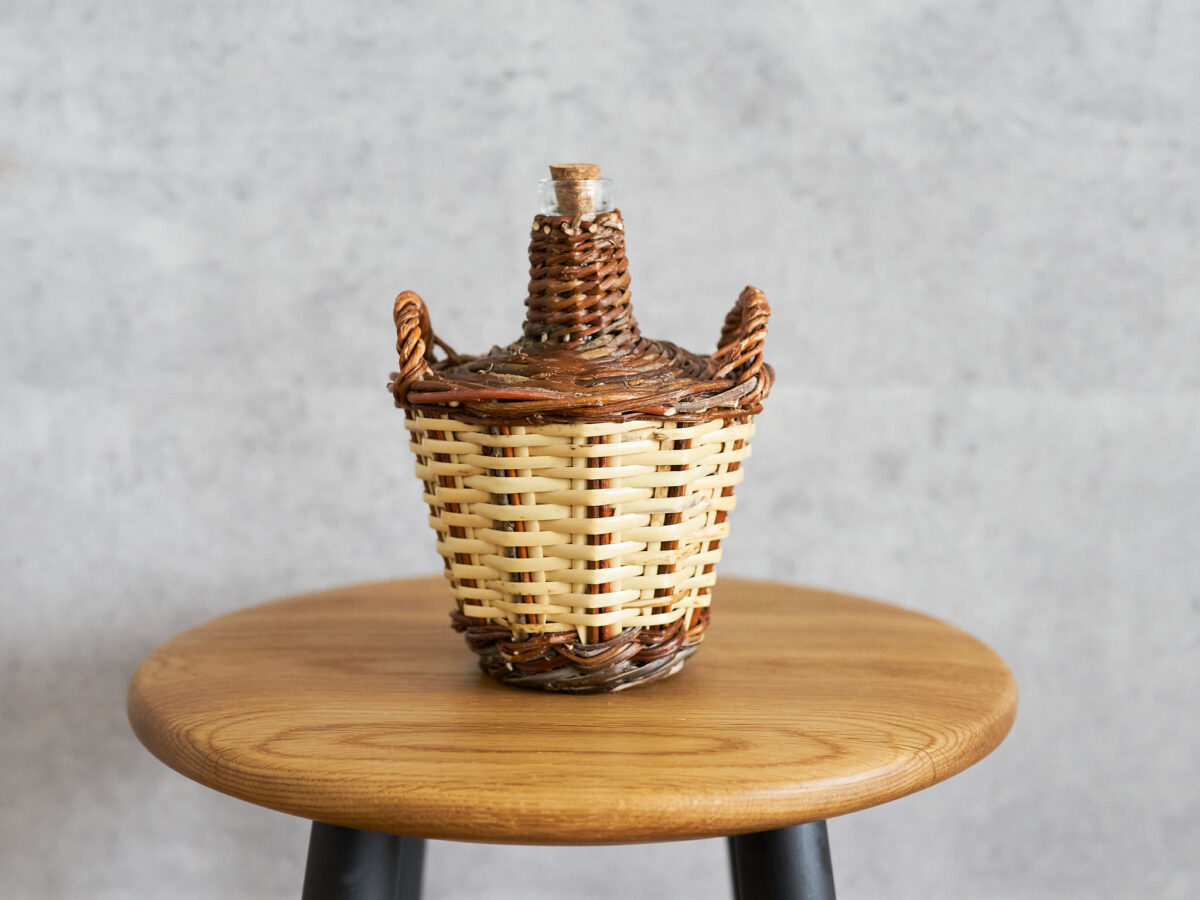
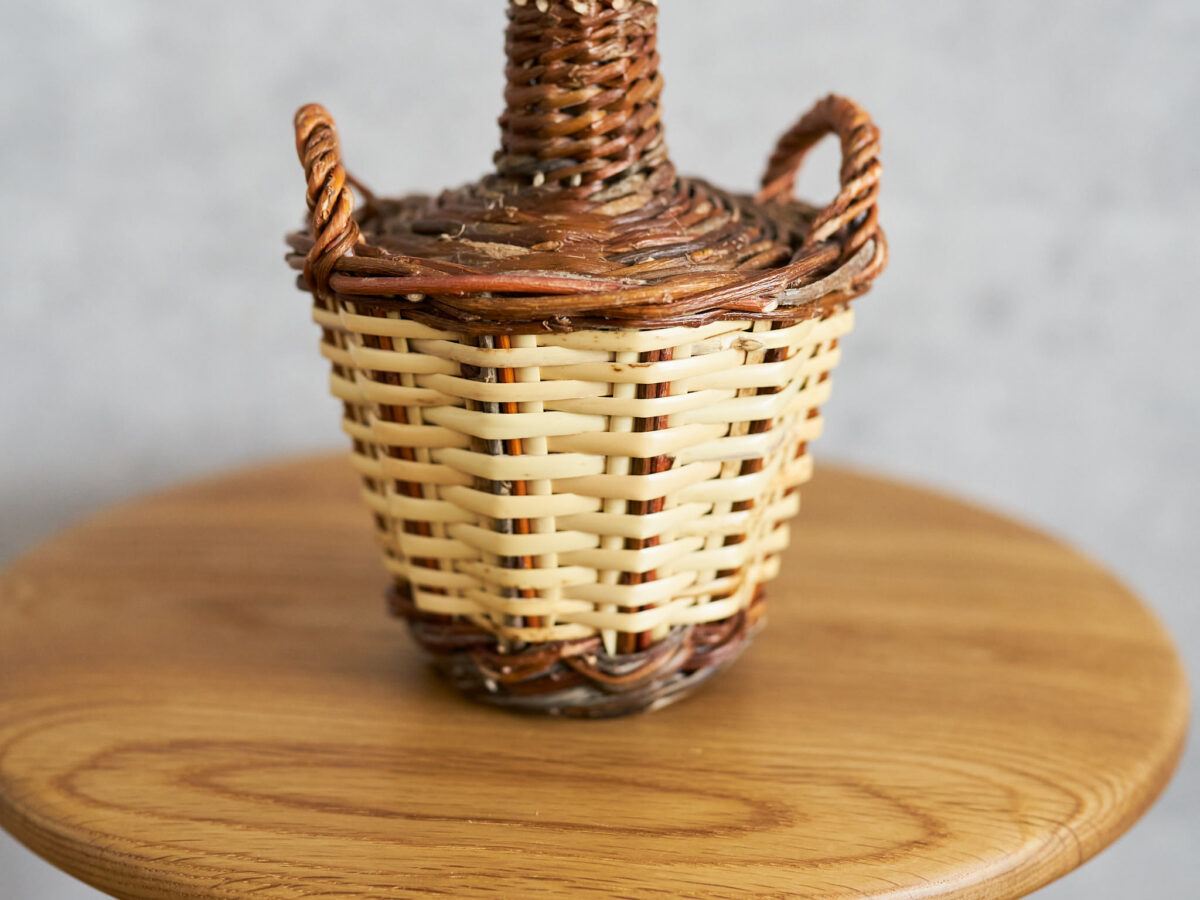
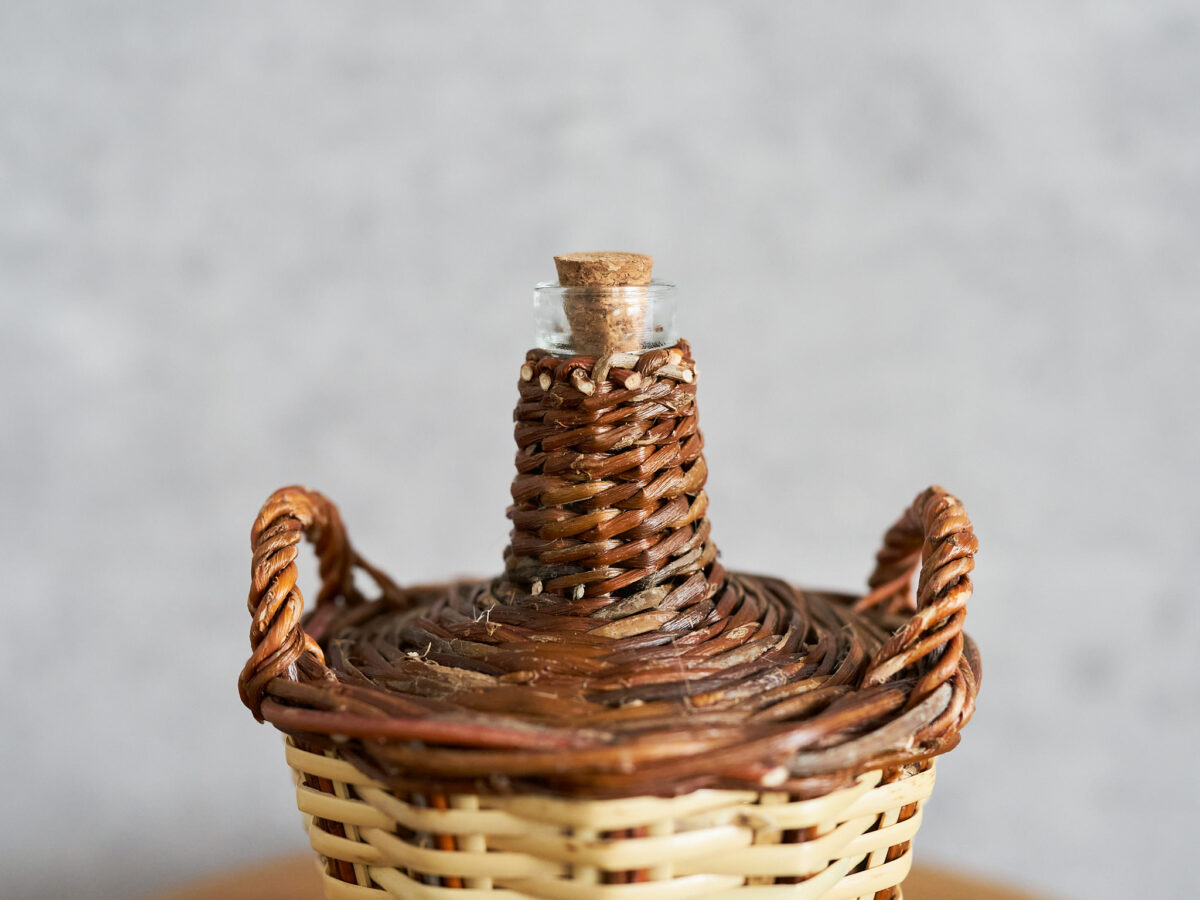
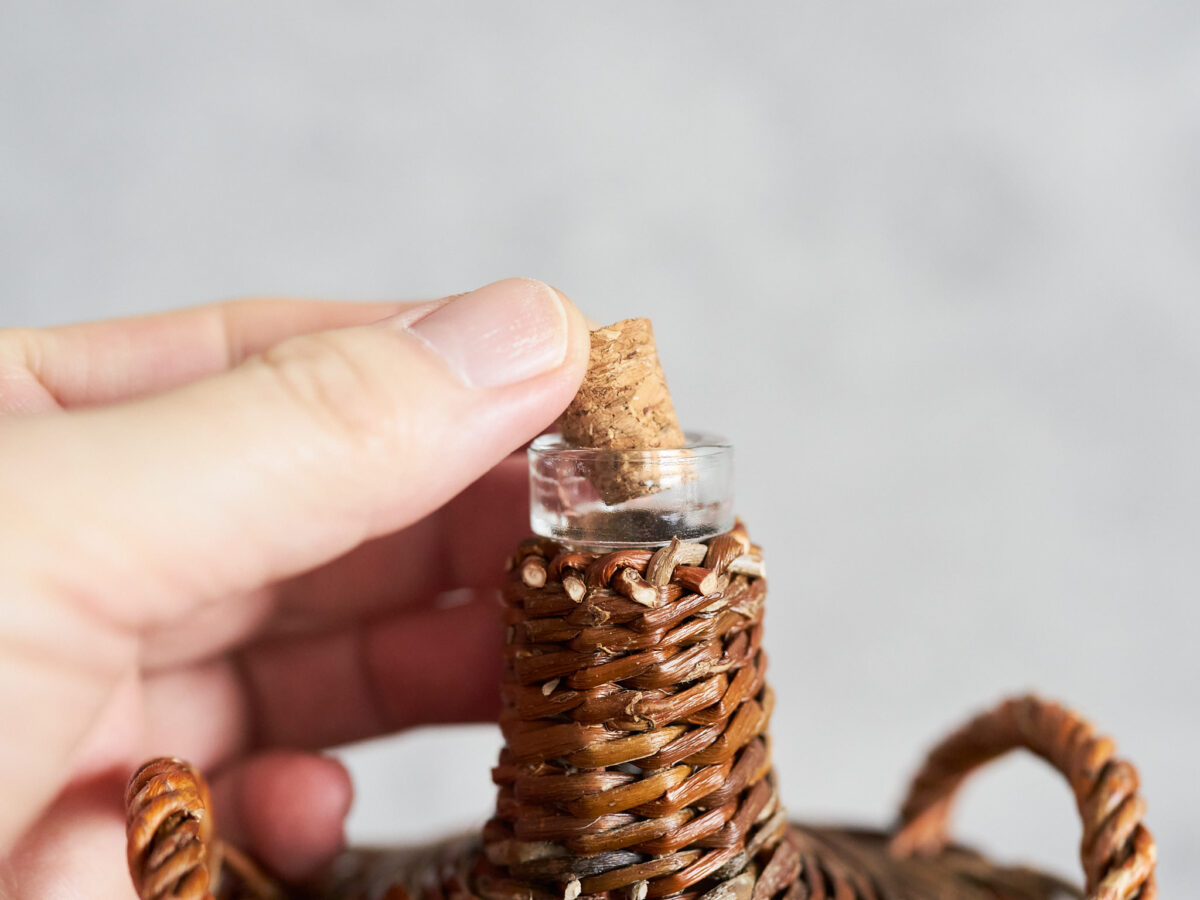
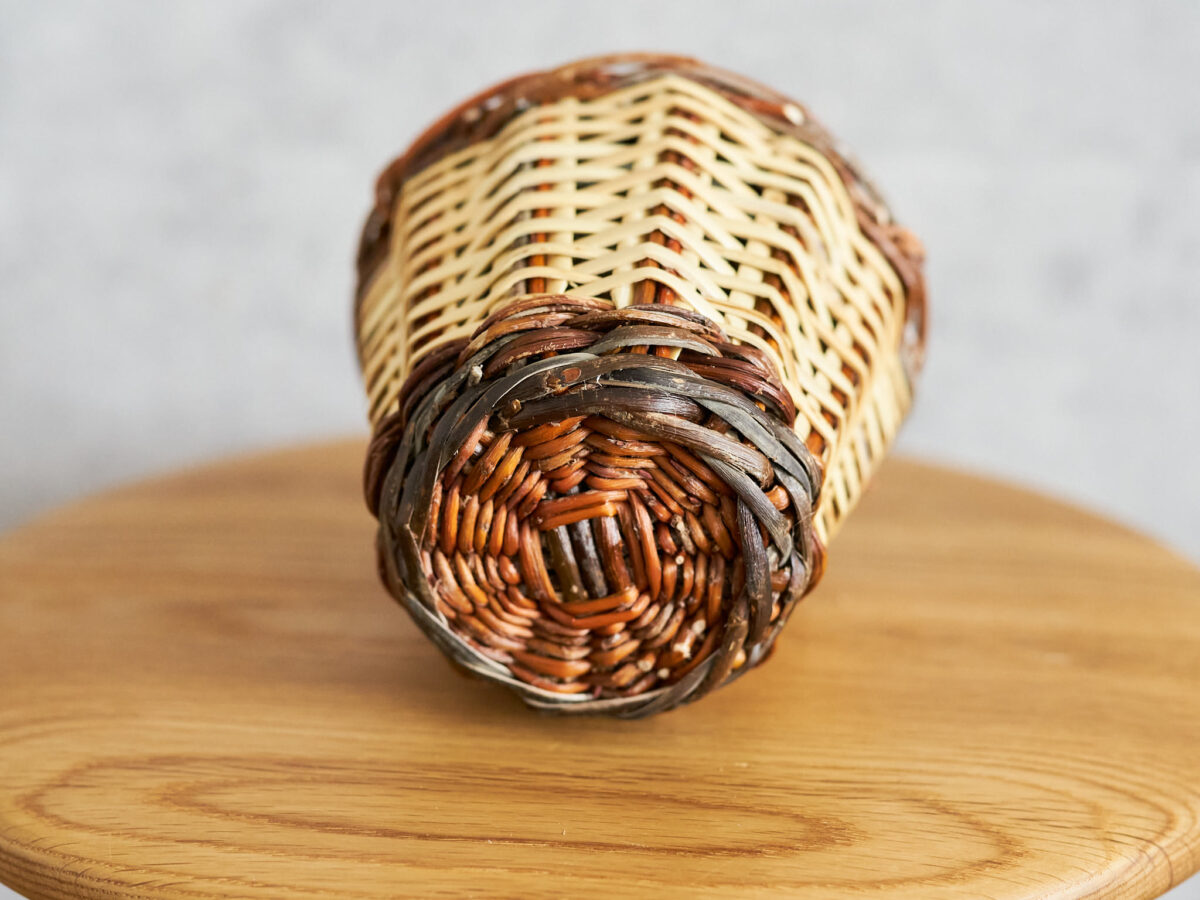
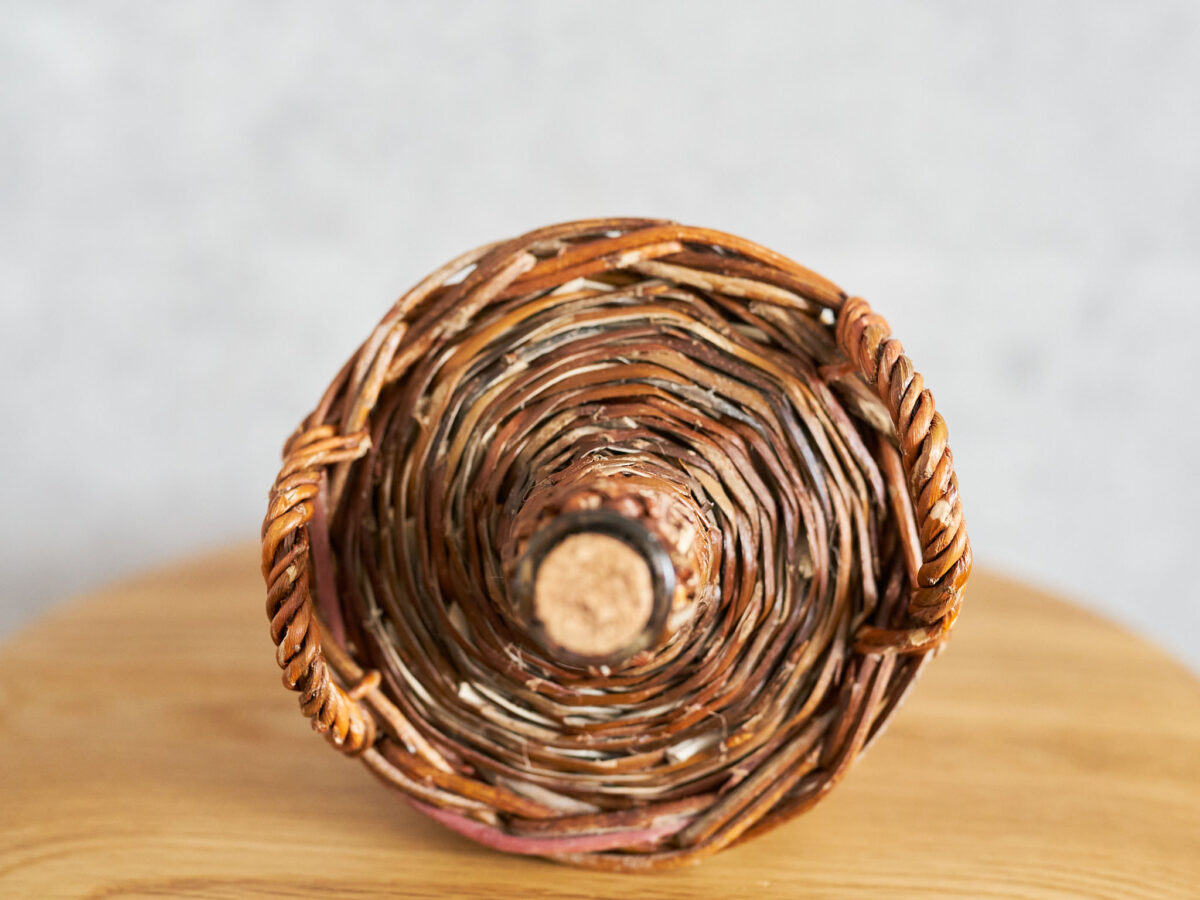
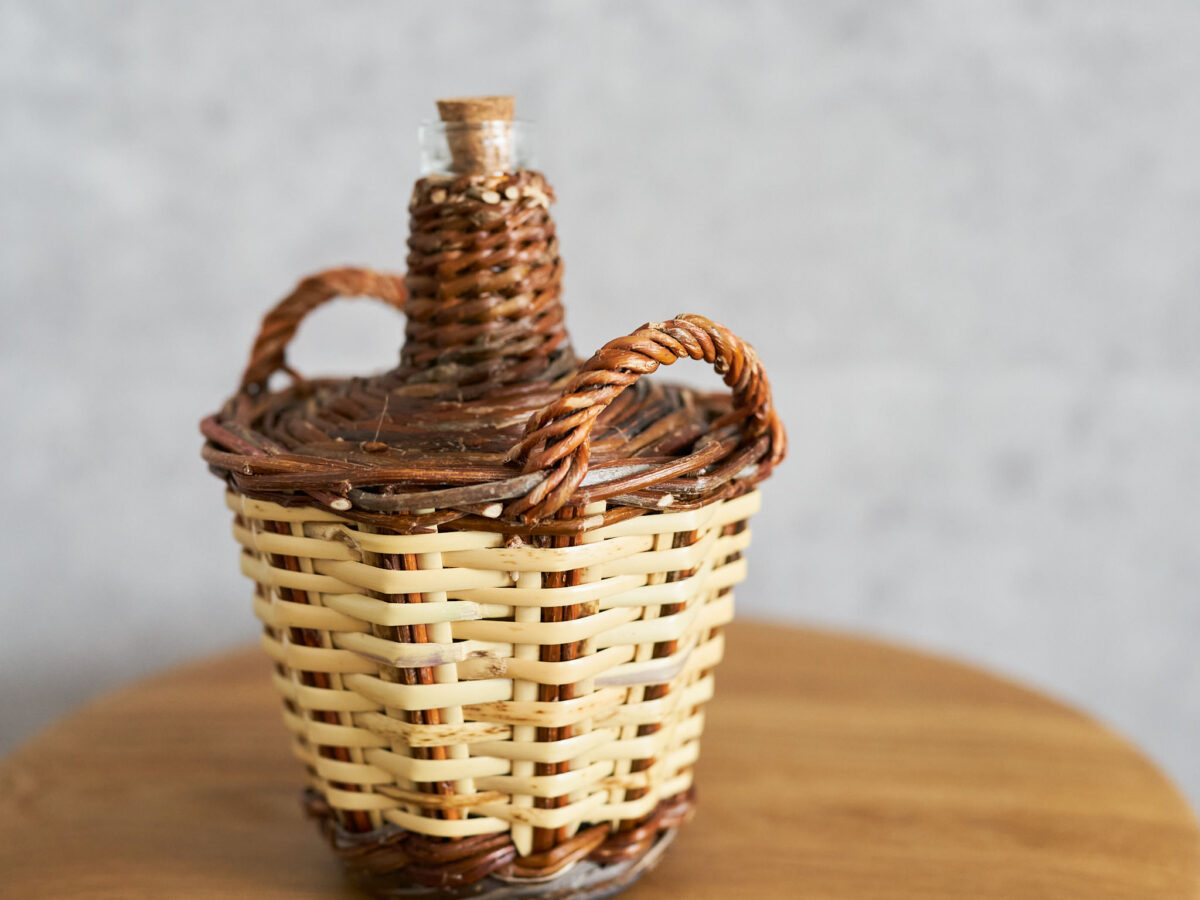
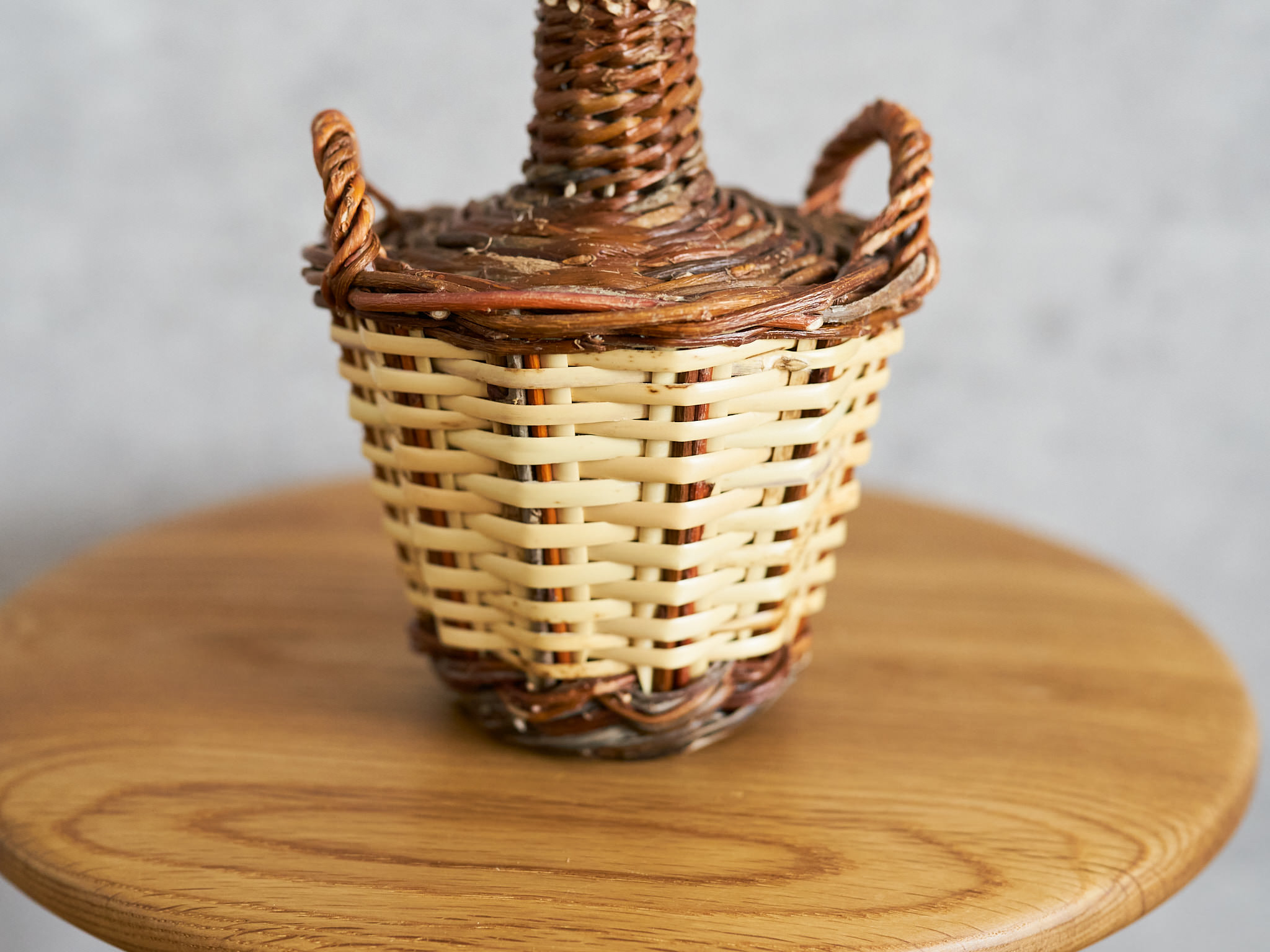
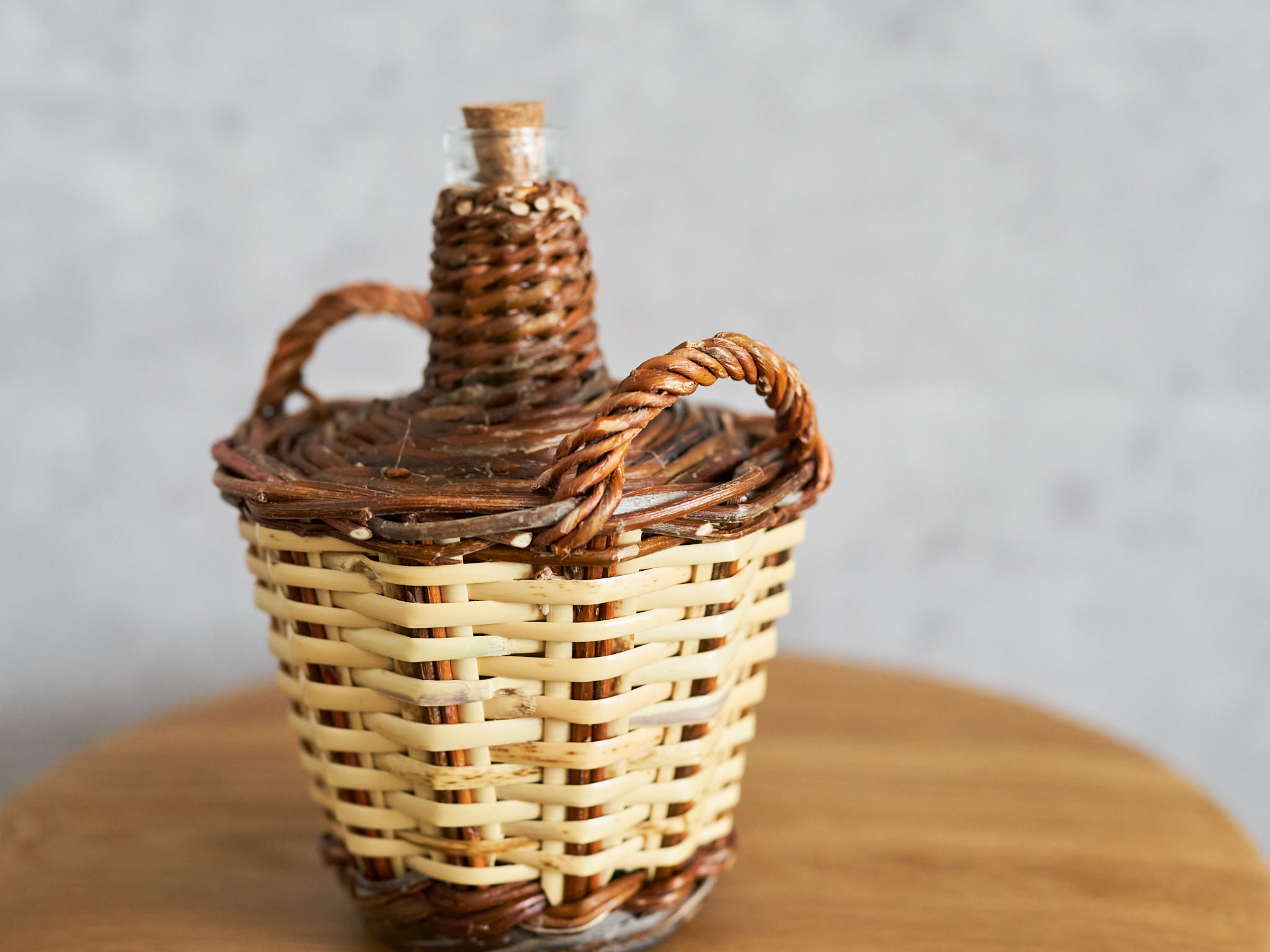
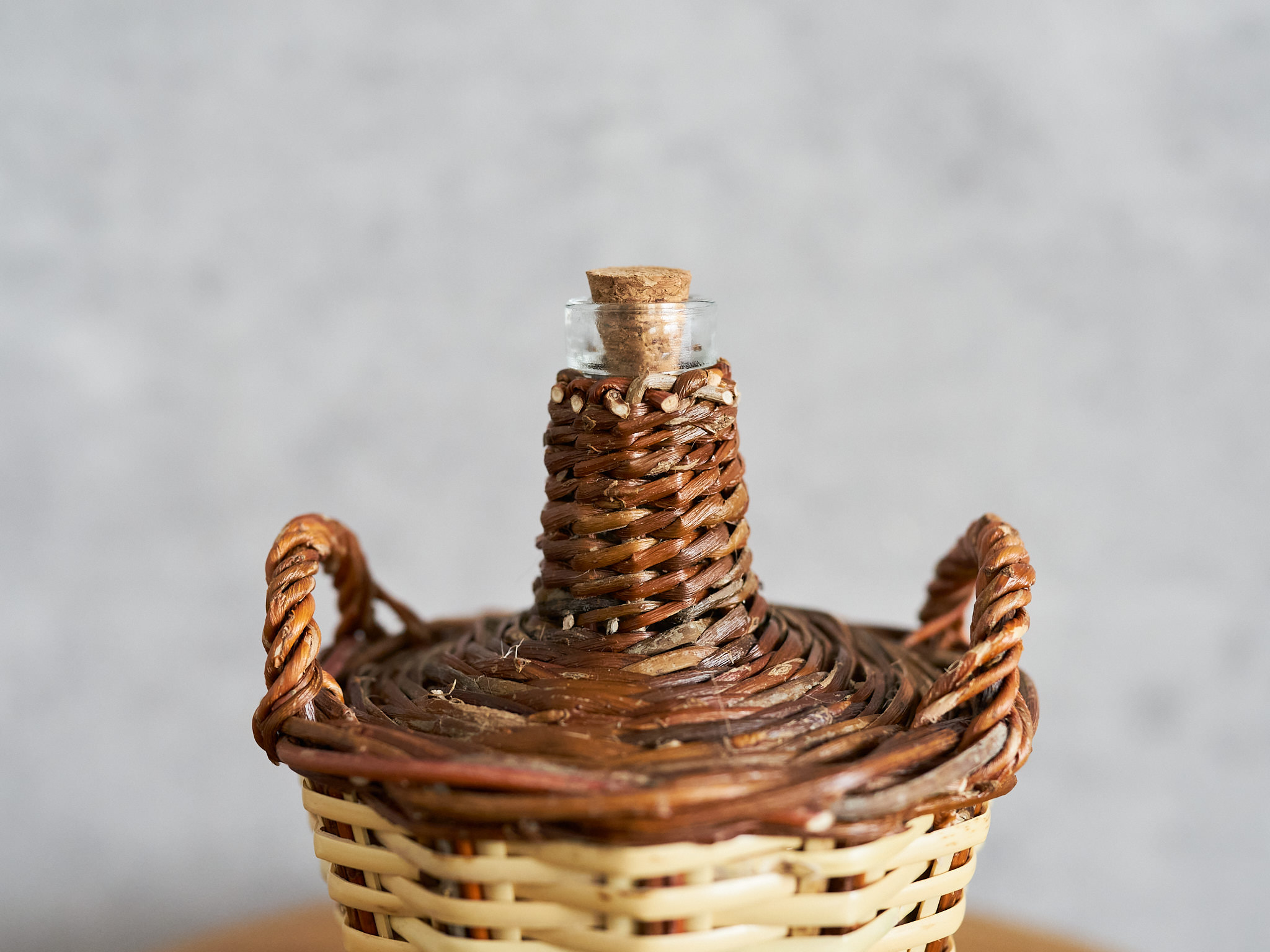
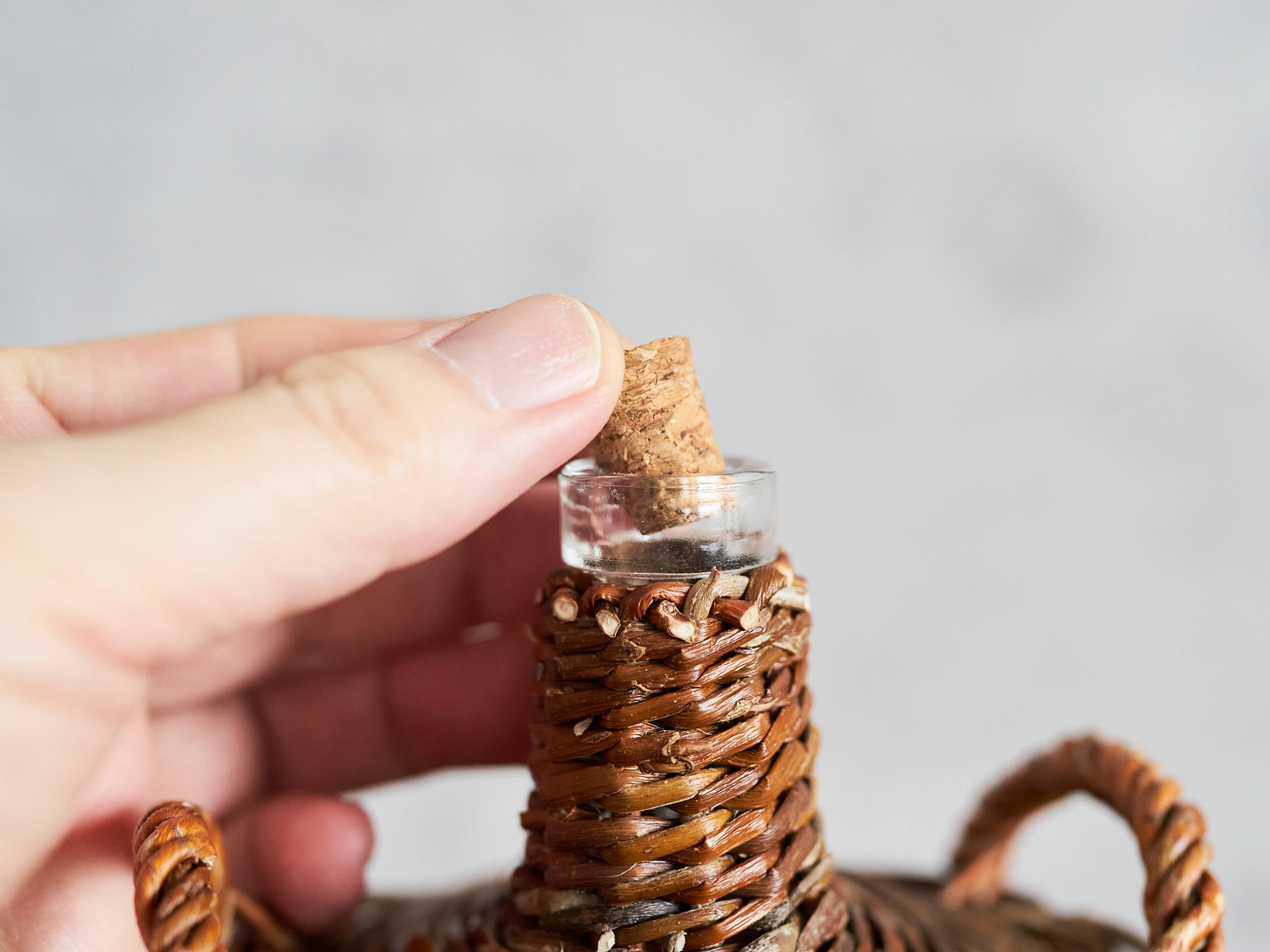
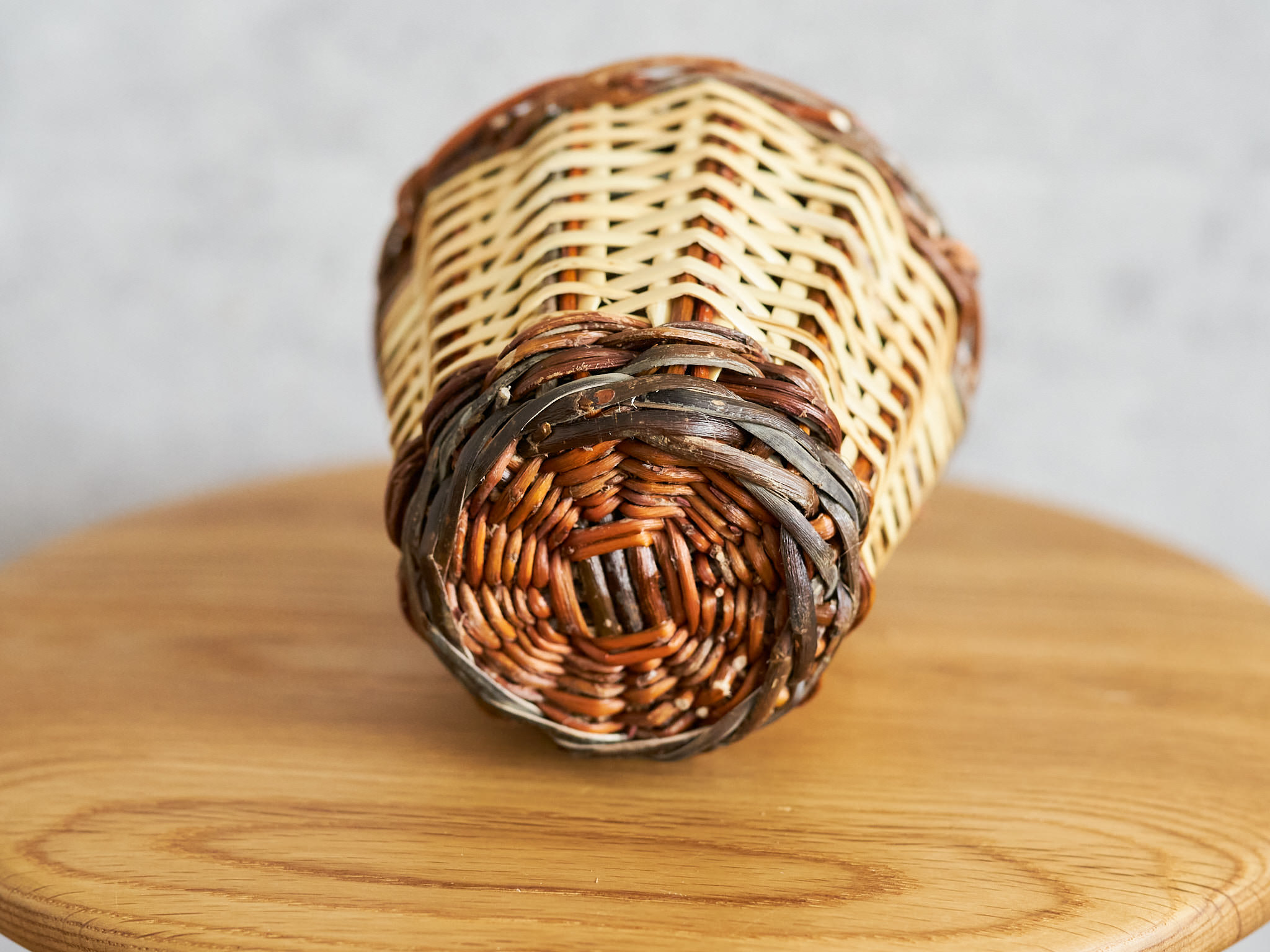
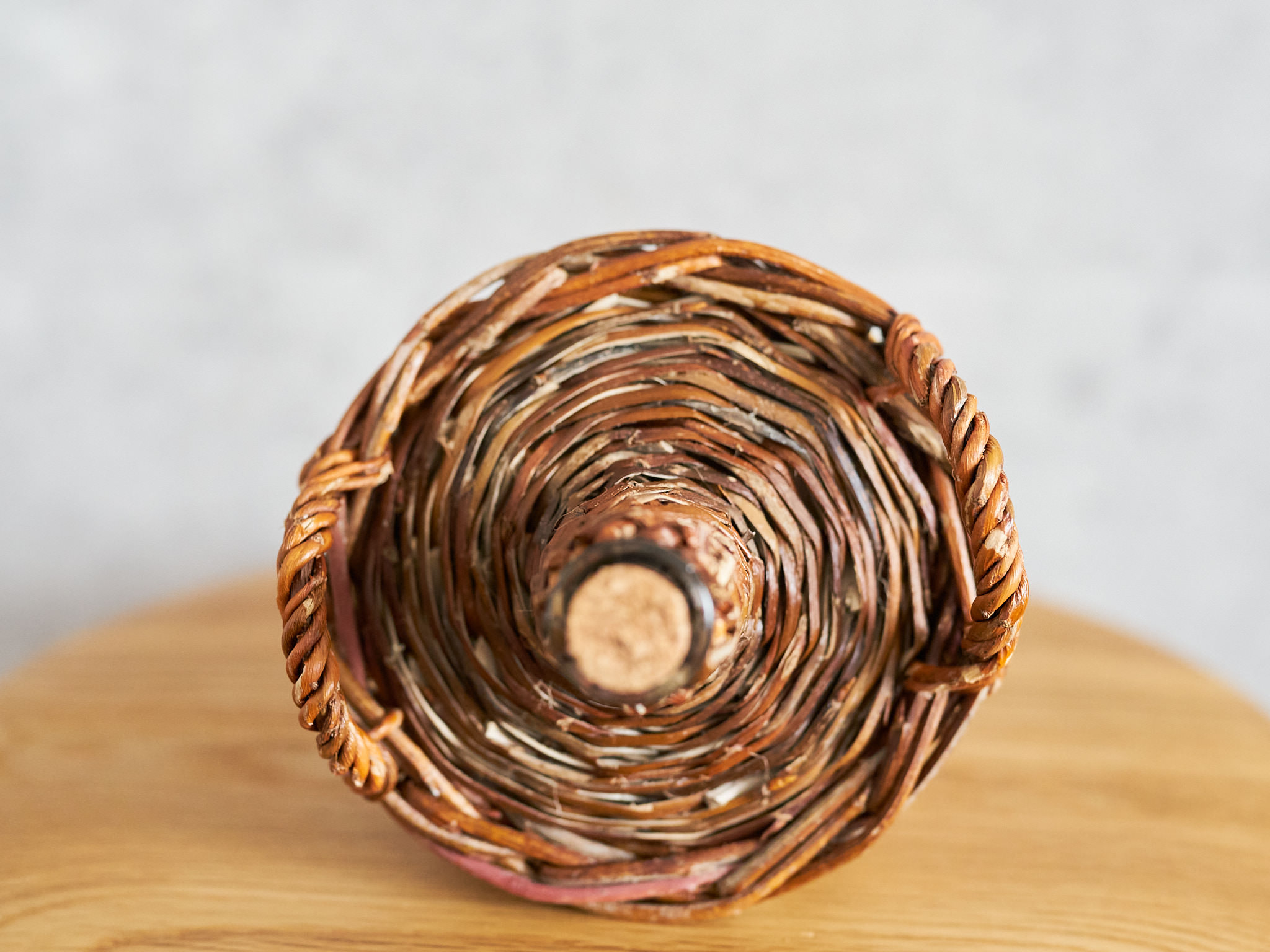
The sides of the basket are woven with bright, glossy caña. Willow is used for the vertical ribs, with caña inserted to support and hold them in place. It is remarkable that even at this small size, the basket is made with the same construction as larger ones.The rim and handle are also firmly constructed, giving the basket a sturdy feel. In some areas, there are hard willow “buds,” and parts of the twisted handle where the outer bark has peeled. Please take care not to catch your fingers or clothing on these areas.A small bottle is set inside the basket, and the willow is woven up to the narrow neck of the bottle. By securing it in this way, the bottle is held firmly in place.The cork is also shaped to fit the mouth of the bottle, making it easy to insert and remove.The base is also carefully and firmly woven, despite the small size of the basket.The upper section is also finely and carefully woven using willow that has been split in half.The miniature scale gives it a charming presence, and it is small enough to be used on a tabletop. Even the fine details of the handle faithfully recreate the construction of larger, functional baskets.The contrast between the bright tones of the caña and the color of the willow stands out beautifully.
In the kitchen or at the table, it can be used to hold oil or seasonings for drizzling over salads and other dishes. It may also be lovely to fill it with your favorite liqueur or drink and take it along on an outing.
The basket itself does not need to be washed unless it becomes dirty. Please wash only the inside of the bottle thoroughly before use.
If the basket gets dusty or soiled, wipe it with a tightly wrung cloth, or brush it off well with a tawashi or similar brush.
It can also be washed with water, but if you do so, please wipe away the moisture thoroughly with a cloth and let the basket dry completely in a well-ventilated place.
This basket seems to brighten the mood simply by being in the kitchen or on the table. We hope you will enjoy using it for a long time.
This is a small basket. Please check the dimensions carefully before purchasing.
Basket Maker Pau of Spain — A Fourth-Generation Tradition from Catalonia —
Catalonia, in northeastern Spain, faces the Mediterranean Sea. In this region, centered around Barcelona and known for its own language and culture, Pau continues the craft of basket making.
As a fourth-generation basket maker, he works with familiar local materials such as willow and caña, a plant native to Catalonia, carrying on traditional basketry.
“The knowledge and techniques of basket making can only truly be learned within tradition. It is this foundation that allows new baskets to be created,” Pau says.
He began learning the craft in his father’s workshop at the age of eighteen. At the time, it was not something he had chosen for himself, but now he finds deep meaning in the work, takes pride in carrying it on, and considers it an essential part of his life.
Pau does not use molds when making baskets. Instead, he works directly with the materials, allowing each piece to take shape naturally. His baskets carry both the strength and the simplicity that have long been part of everyday life in Catalonia.
We hope you enjoy the many forms rooted in this region, from grape harvest baskets and wine bottle baskets to traditional rabbit baskets.
We introduce Pau’s basket making in more detail in this journal. We hope you will enjoy reading it.
This is a charming basket, handwoven from willow and caña.
Caña is a plant that grows naturally in the Mediterranean region. Belonging to the reed family, it has a form that resembles bamboo. Somewhere between bamboo and sasa (thin bamboo), it carries a texture that may also recall Nemagari bamboo found in Japan.
The maker is Pau, a fourth-generation basket maker from a family that has continued the craft for generations in Catalonia, in northeastern Spain along the Mediterranean coast.
The baskets he creates are deeply rooted in the rural culture of Catalonia, representing traditional basketry in its original form.
On this page, we introduce a very small bottle basket, small enough to fit in the palm of your hand.
The original versions were made in larger sizes, with the bottle woven into the basket from the beginning, and were used to hold wine, olive oil, vinegar, and similar liquids.
The sides of the basket are woven with bright, glossy caña. Willow is used for the vertical ribs, with caña inserted to support and hold them in place. It is remarkable that even at this small size, the basket is made with the same construction as larger ones.The rim and handle are also firmly constructed, giving the basket a sturdy feel. In some areas, there are hard willow “buds,” and parts of the twisted handle where the outer bark has peeled. Please take care not to catch your fingers or clothing on these areas.A small bottle is set inside the basket, and the willow is woven up to the narrow neck of the bottle. By securing it in this way, the bottle is held firmly in place.The cork is also shaped to fit the mouth of the bottle, making it easy to insert and remove.The base is also carefully and firmly woven, despite the small size of the basket.The upper section is also finely and carefully woven using willow that has been split in half.The miniature scale gives it a charming presence, and it is small enough to be used on a tabletop. Even the fine details of the handle faithfully recreate the construction of larger, functional baskets.The contrast between the bright tones of the caña and the color of the willow stands out beautifully.
In the kitchen or at the table, it can be used to hold oil or seasonings for drizzling over salads and other dishes. It may also be lovely to fill it with your favorite liqueur or drink and take it along on an outing.
The basket itself does not need to be washed unless it becomes dirty. Please wash only the inside of the bottle thoroughly before use.
If the basket gets dusty or soiled, wipe it with a tightly wrung cloth, or brush it off well with a tawashi or similar brush.
It can also be washed with water, but if you do so, please wipe away the moisture thoroughly with a cloth and let the basket dry completely in a well-ventilated place.
This basket seems to brighten the mood simply by being in the kitchen or on the table. We hope you will enjoy using it for a long time.
This is a small basket. Please check the dimensions carefully before purchasing.
Basket Maker Pau of Spain — A Fourth-Generation Tradition from Catalonia —
Catalonia, in northeastern Spain, faces the Mediterranean Sea. In this region, centered around Barcelona and known for its own language and culture, Pau continues the craft of basket making.
As a fourth-generation basket maker, he works with familiar local materials such as willow and caña, a plant native to Catalonia, carrying on traditional basketry.
“The knowledge and techniques of basket making can only truly be learned within tradition. It is this foundation that allows new baskets to be created,” Pau says.
He began learning the craft in his father’s workshop at the age of eighteen. At the time, it was not something he had chosen for himself, but now he finds deep meaning in the work, takes pride in carrying it on, and considers it an essential part of his life.
Pau does not use molds when making baskets. Instead, he works directly with the materials, allowing each piece to take shape naturally. His baskets carry both the strength and the simplicity that have long been part of everyday life in Catalonia.
We hope you enjoy the many forms rooted in this region, from grape harvest baskets and wine bottle baskets to traditional rabbit baskets.
We introduce Pau’s basket making in more detail in this journal. We hope you will enjoy reading it.
This is a charming basket, handwoven from willow and caña.
Caña is a plant that grows naturally in the Mediterranean region. Belonging to the reed family, it has a form that resembles bamboo. Somewhere between bamboo and sasa (thin bamboo), it carries a texture that may also recall Nemagari bamboo found in Japan.
The maker is Pau, a fourth-generation basket maker from a family that has continued the craft for generations in Catalonia, in northeastern Spain along the Mediterranean coast.
The baskets he creates are deeply rooted in the rural culture of Catalonia, representing traditional basketry in its original form.
On this page, we introduce a very small bottle basket, small enough to fit in the palm of your hand.
The original versions were made in larger sizes, with the bottle woven into the basket from the beginning, and were used to hold wine, olive oil, vinegar, and similar liquids.
The sides of the basket are woven with bright, glossy caña. Willow is used for the vertical ribs, with caña inserted to support and hold them in place. It is remarkable that even at this small size, the basket is made with the same construction as larger ones.The rim and handle are also firmly constructed, giving the basket a sturdy feel. In some areas, there are hard willow “buds,” and parts of the twisted handle where the outer bark has peeled. Please take care not to catch your fingers or clothing on these areas.A small bottle is set inside the basket, and the willow is woven up to the narrow neck of the bottle. By securing it in this way, the bottle is held firmly in place.The cork is also shaped to fit the mouth of the bottle, making it easy to insert and remove.The base is also carefully and firmly woven, despite the small size of the basket.The upper section is also finely and carefully woven using willow that has been split in half.The miniature scale gives it a charming presence, and it is small enough to be used on a tabletop. Even the fine details of the handle faithfully recreate the construction of larger, functional baskets.The contrast between the bright tones of the caña and the color of the willow stands out beautifully.
In the kitchen or at the table, it can be used to hold oil or seasonings for drizzling over salads and other dishes. It may also be lovely to fill it with your favorite liqueur or drink and take it along on an outing.
The basket itself does not need to be washed unless it becomes dirty. Please wash only the inside of the bottle thoroughly before use.
If the basket gets dusty or soiled, wipe it with a tightly wrung cloth, or brush it off well with a tawashi or similar brush.
It can also be washed with water, but if you do so, please wipe away the moisture thoroughly with a cloth and let the basket dry completely in a well-ventilated place.
This basket seems to brighten the mood simply by being in the kitchen or on the table. We hope you will enjoy using it for a long time.
This is a small basket. Please check the dimensions carefully before purchasing.
Basket Maker Pau of Spain — A Fourth-Generation Tradition from Catalonia —
Catalonia, in northeastern Spain, faces the Mediterranean Sea. In this region, centered around Barcelona and known for its own language and culture, Pau continues the craft of basket making.
As a fourth-generation basket maker, he works with familiar local materials such as willow and caña, a plant native to Catalonia, carrying on traditional basketry.
“The knowledge and techniques of basket making can only truly be learned within tradition. It is this foundation that allows new baskets to be created,” Pau says.
He began learning the craft in his father’s workshop at the age of eighteen. At the time, it was not something he had chosen for himself, but now he finds deep meaning in the work, takes pride in carrying it on, and considers it an essential part of his life.
Pau does not use molds when making baskets. Instead, he works directly with the materials, allowing each piece to take shape naturally. His baskets carry both the strength and the simplicity that have long been part of everyday life in Catalonia.
We hope you enjoy the many forms rooted in this region, from grape harvest baskets and wine bottle baskets to traditional rabbit baskets.
We introduce Pau’s basket making in more detail in this journal. We hope you will enjoy reading it.