Caña is a plant that grows naturally in the Mediterranean region. Belonging to the reed family, it has a form that resembles bamboo. Somewhere between bamboo and sasa (thin bamboo), it carries a texture that may also recall Nemagari bamboo found in Japan.
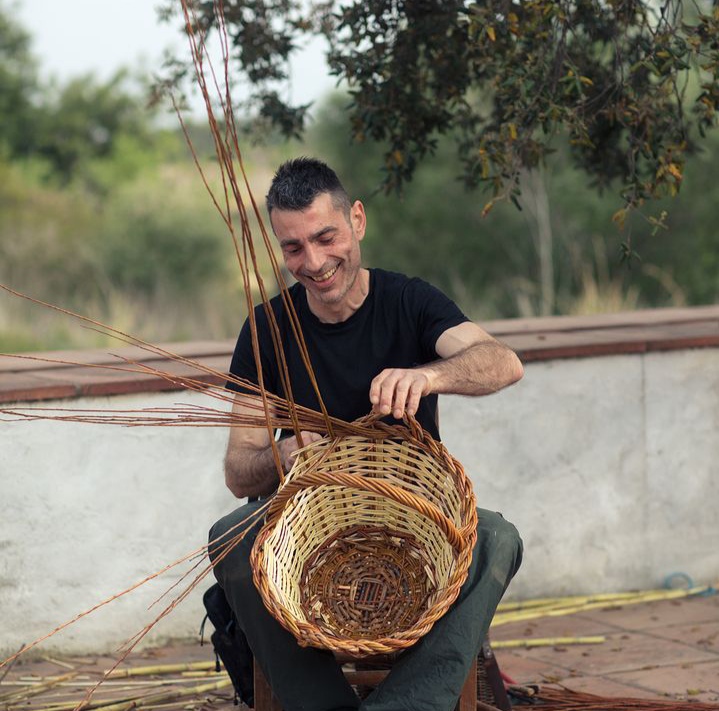
The maker is Pau, a fourth-generation basket maker from a family that has continued the craft for generations in Catalonia, in northeastern Spain along the Mediterranean coast.
The baskets he creates are deeply rooted in the rural culture of Catalonia, representing traditional basketry in its original form.
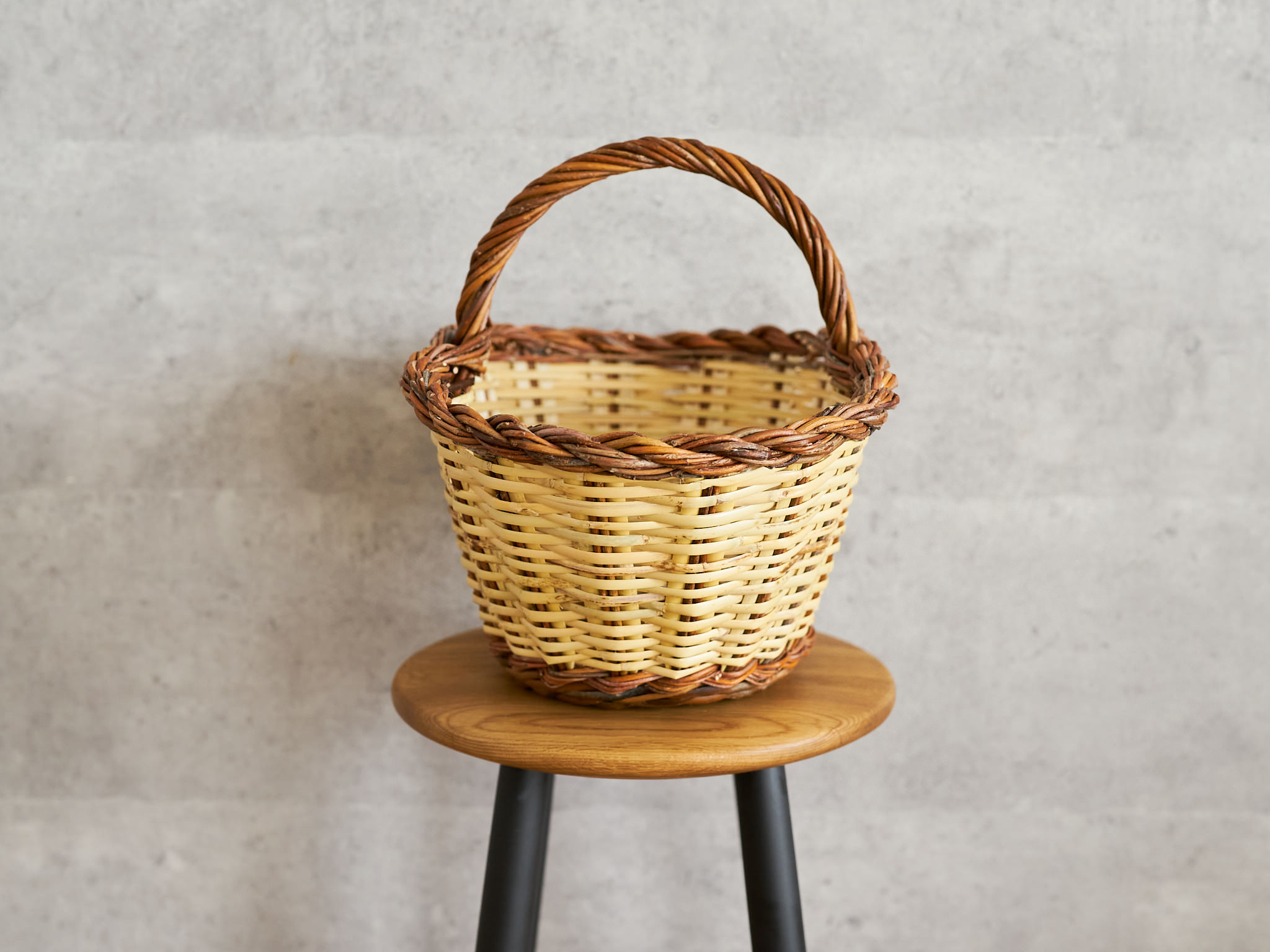
On this page, we introduce a one-handle basket that has been used for harvesting vegetables, fruits, grapes, and more.
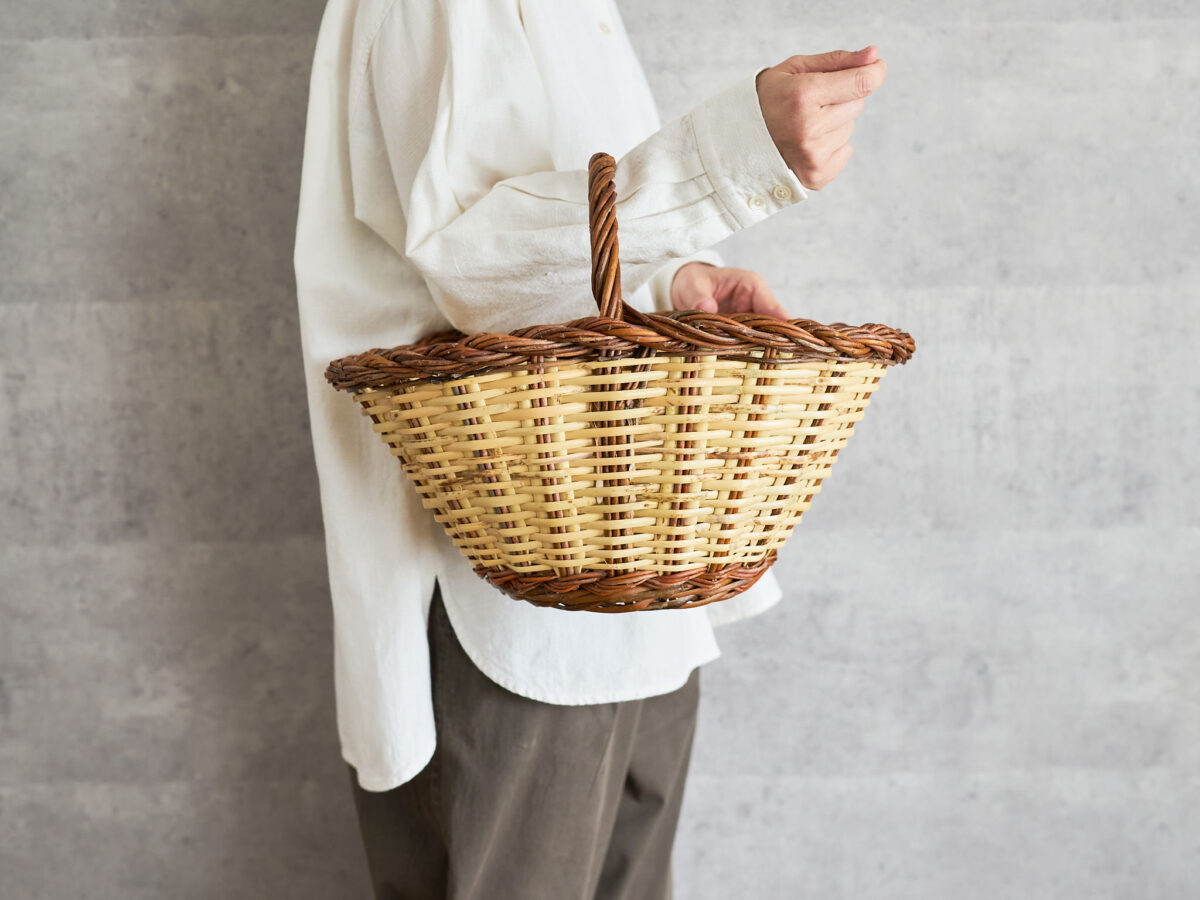
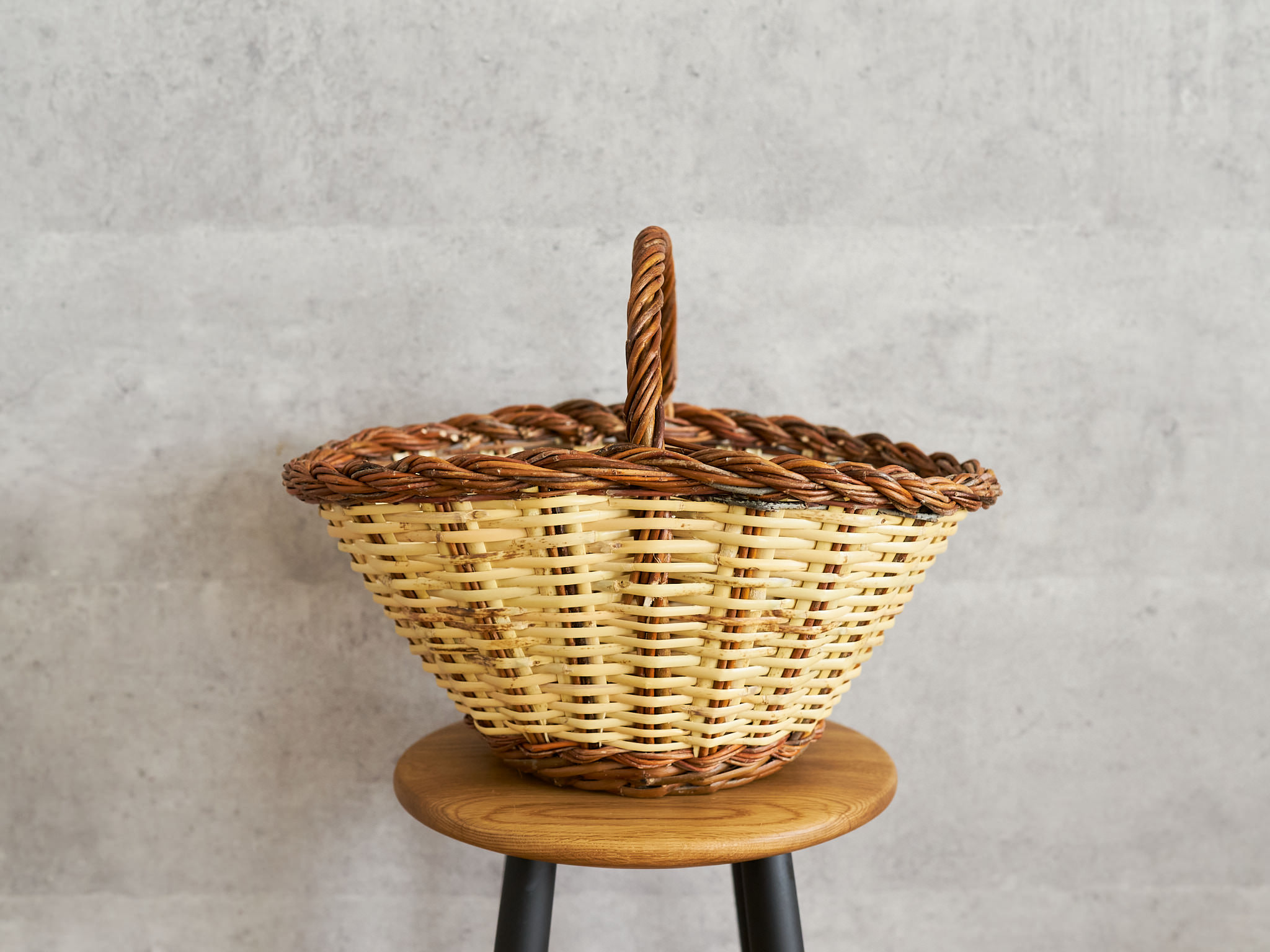
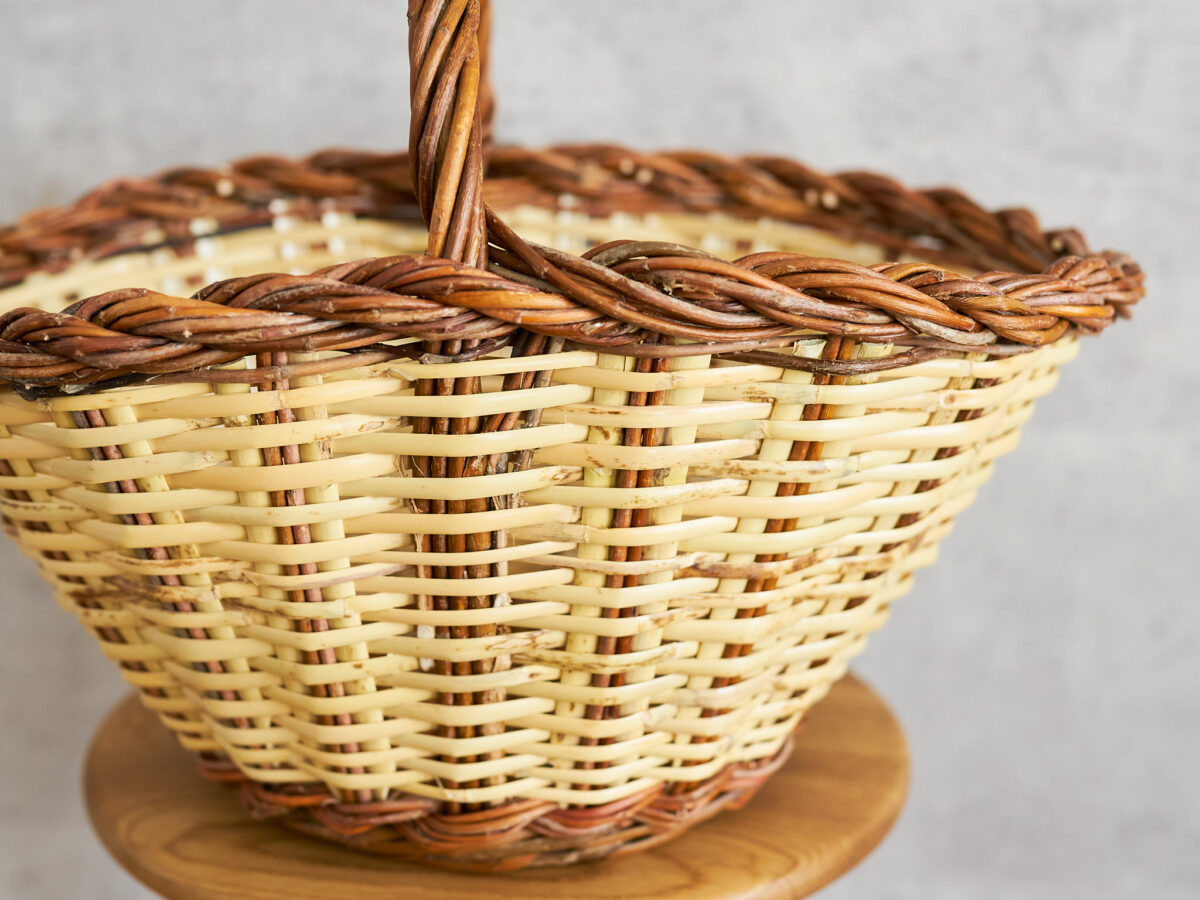
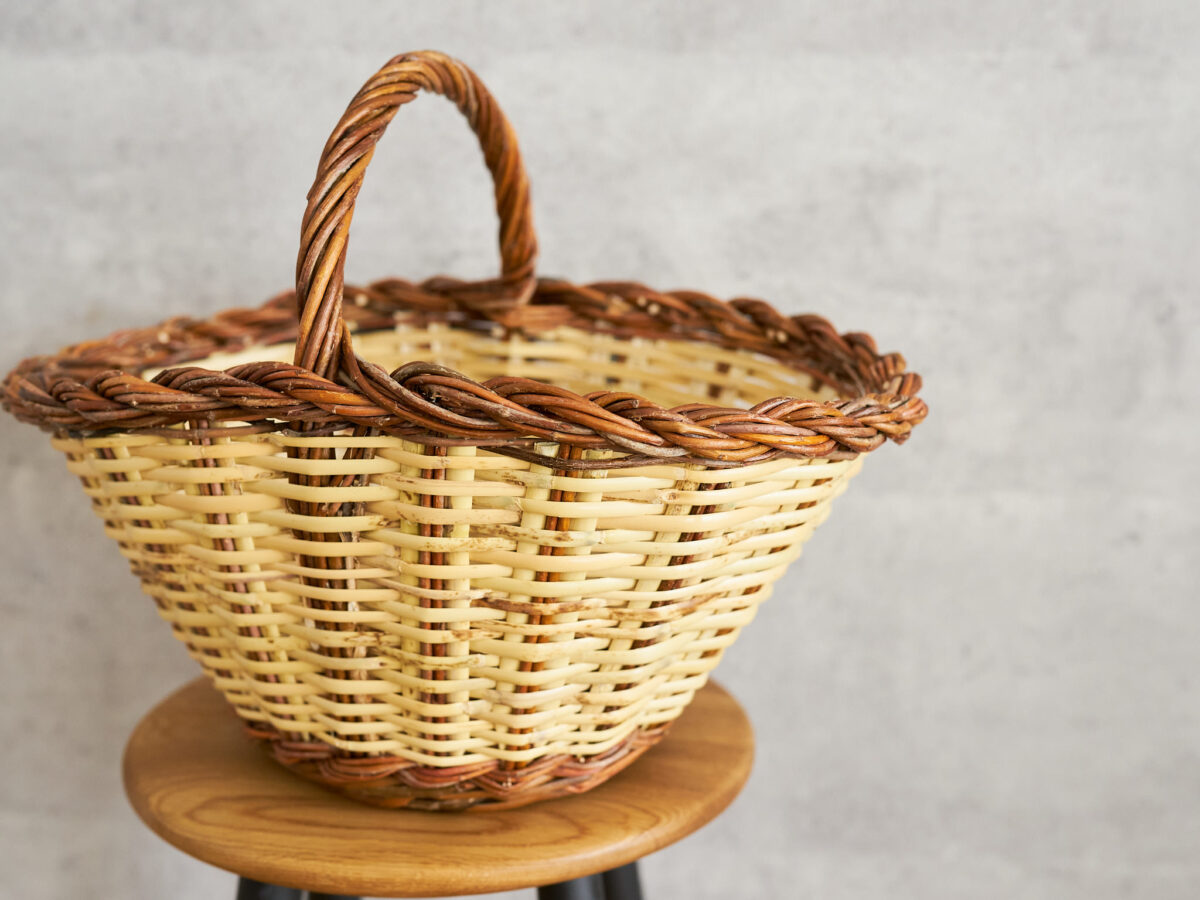
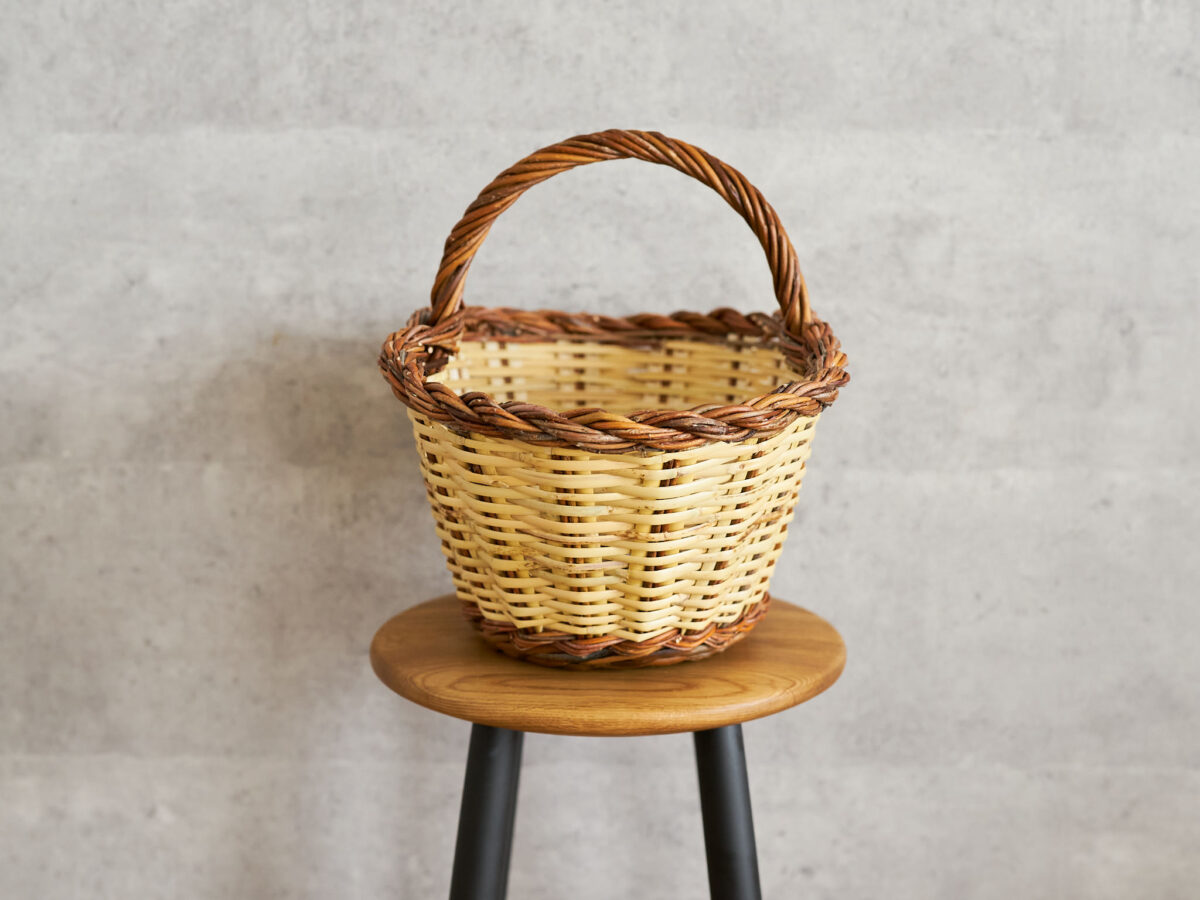
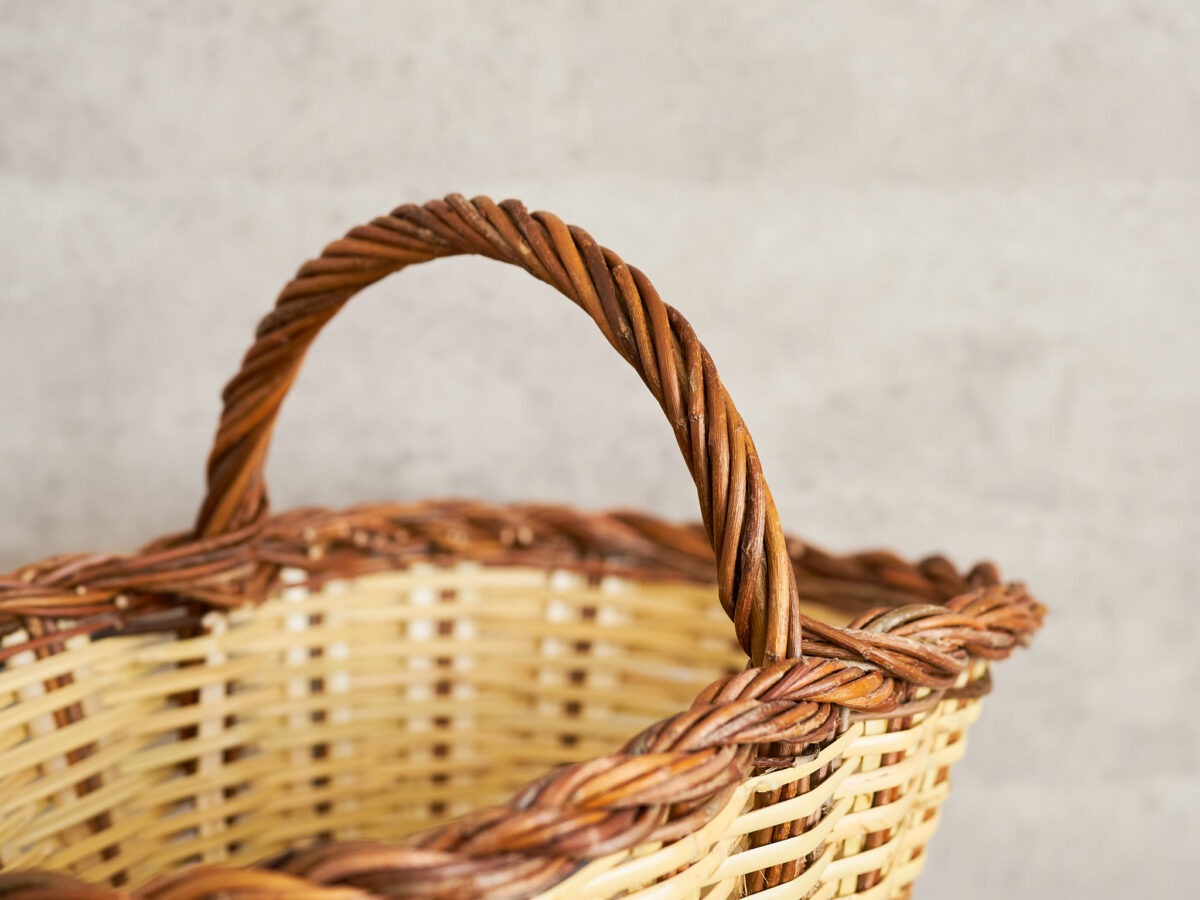
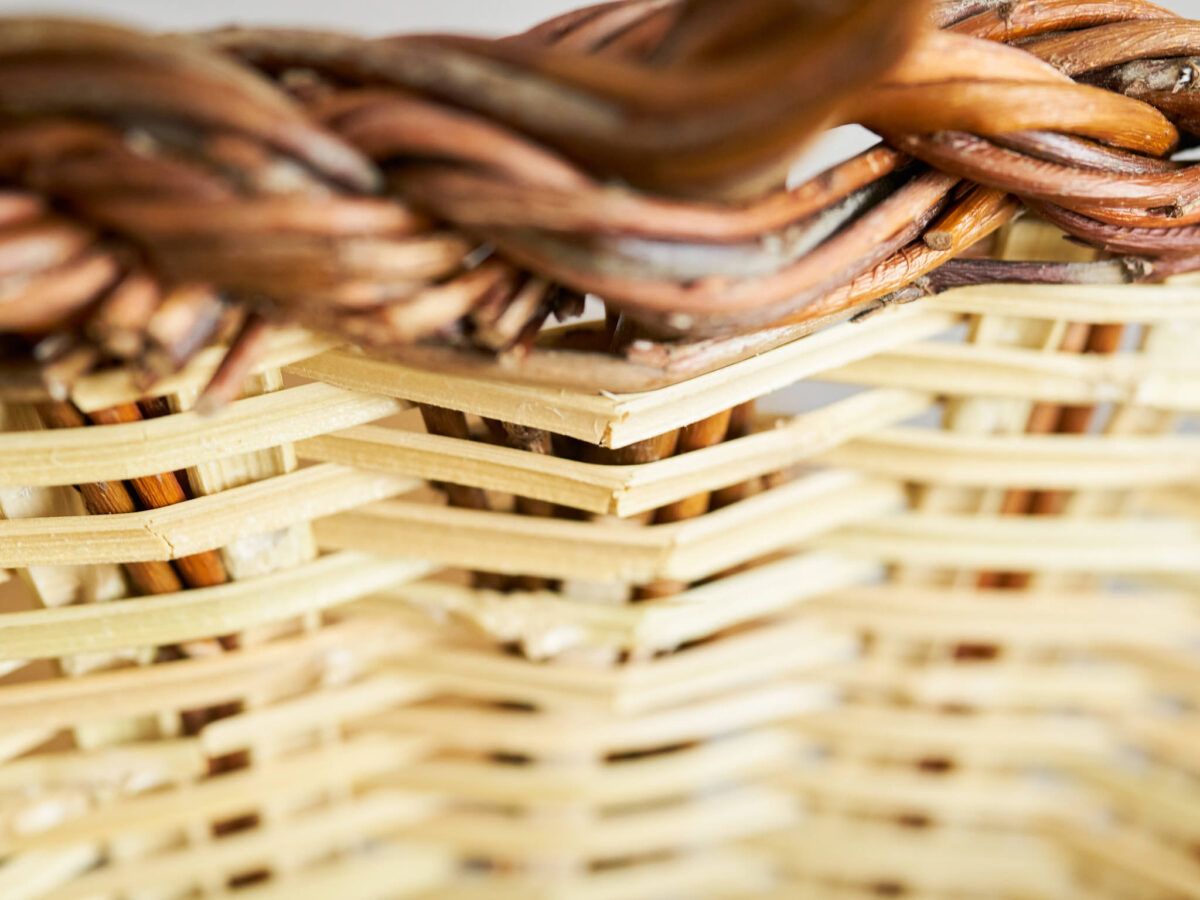
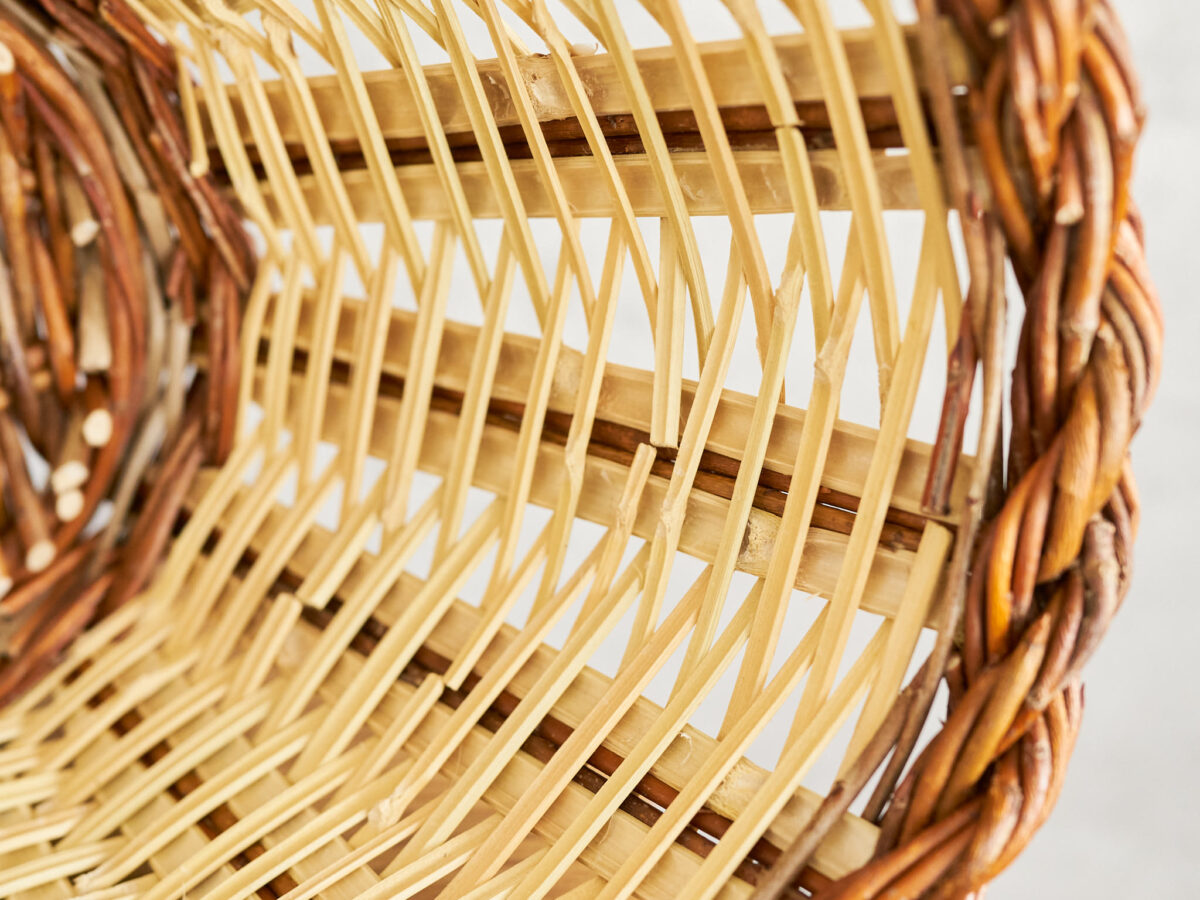
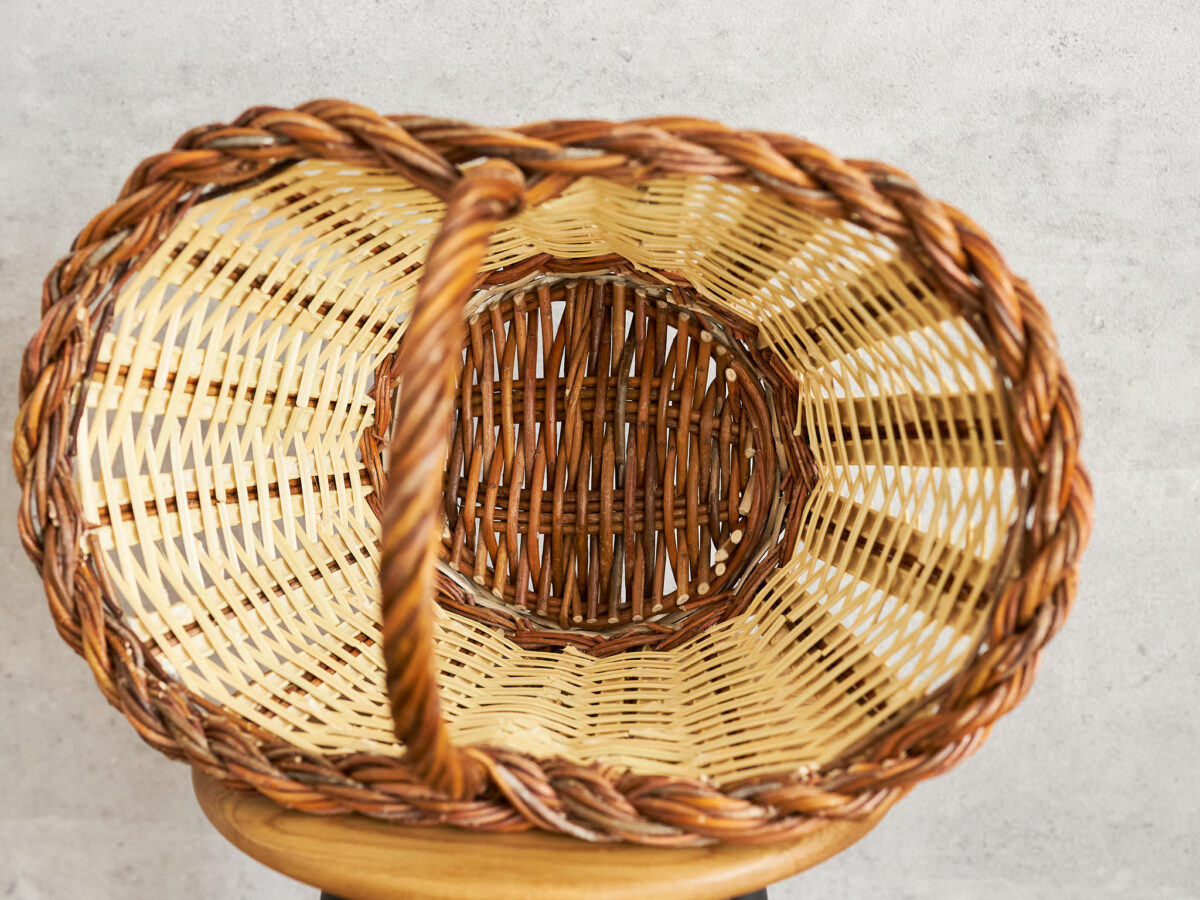
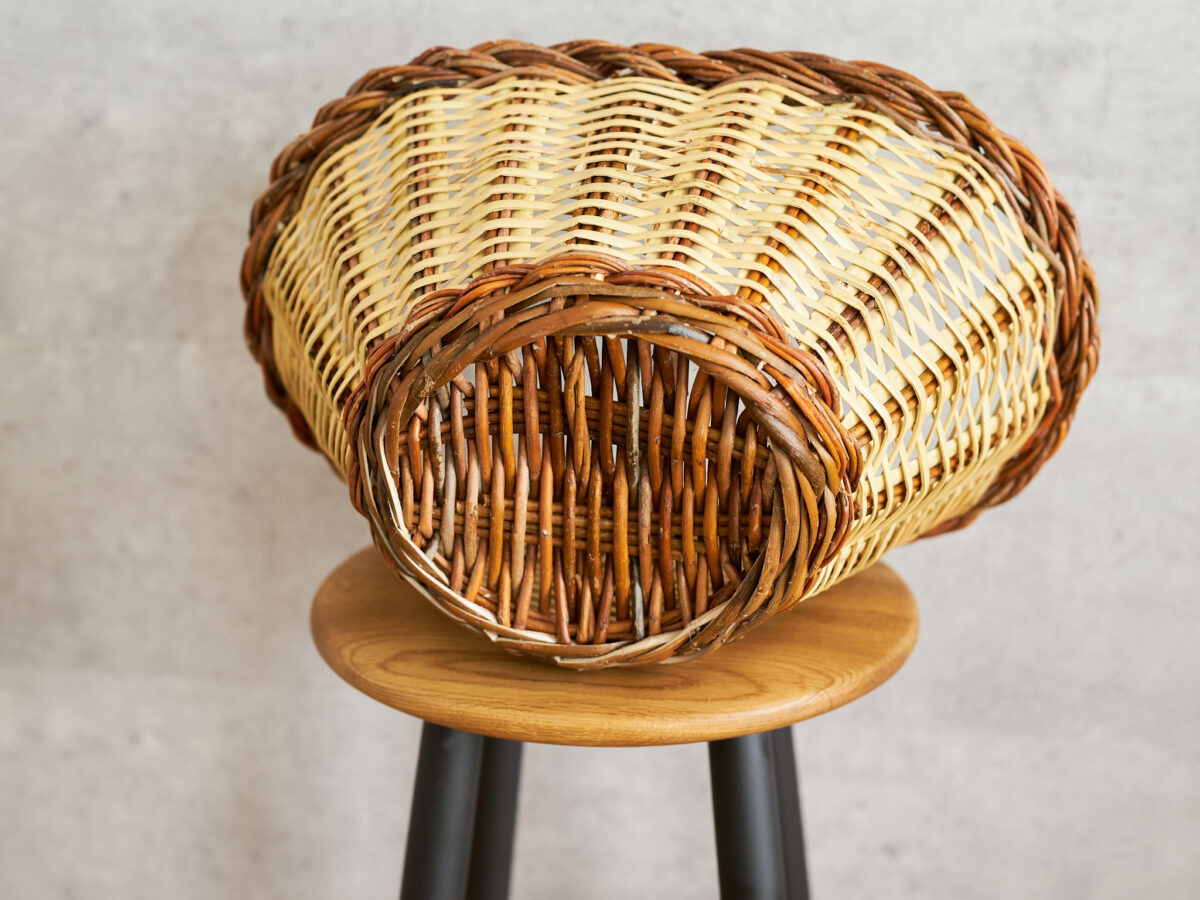
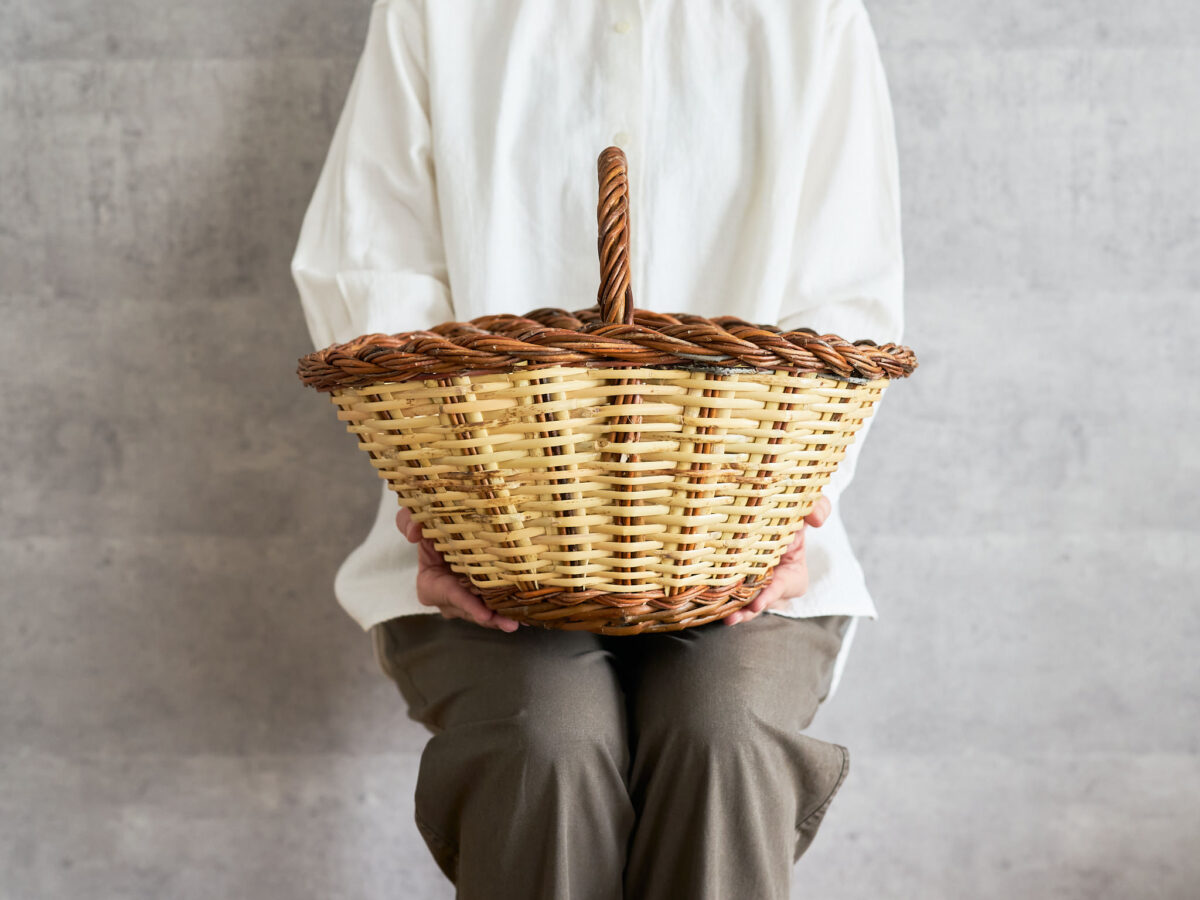
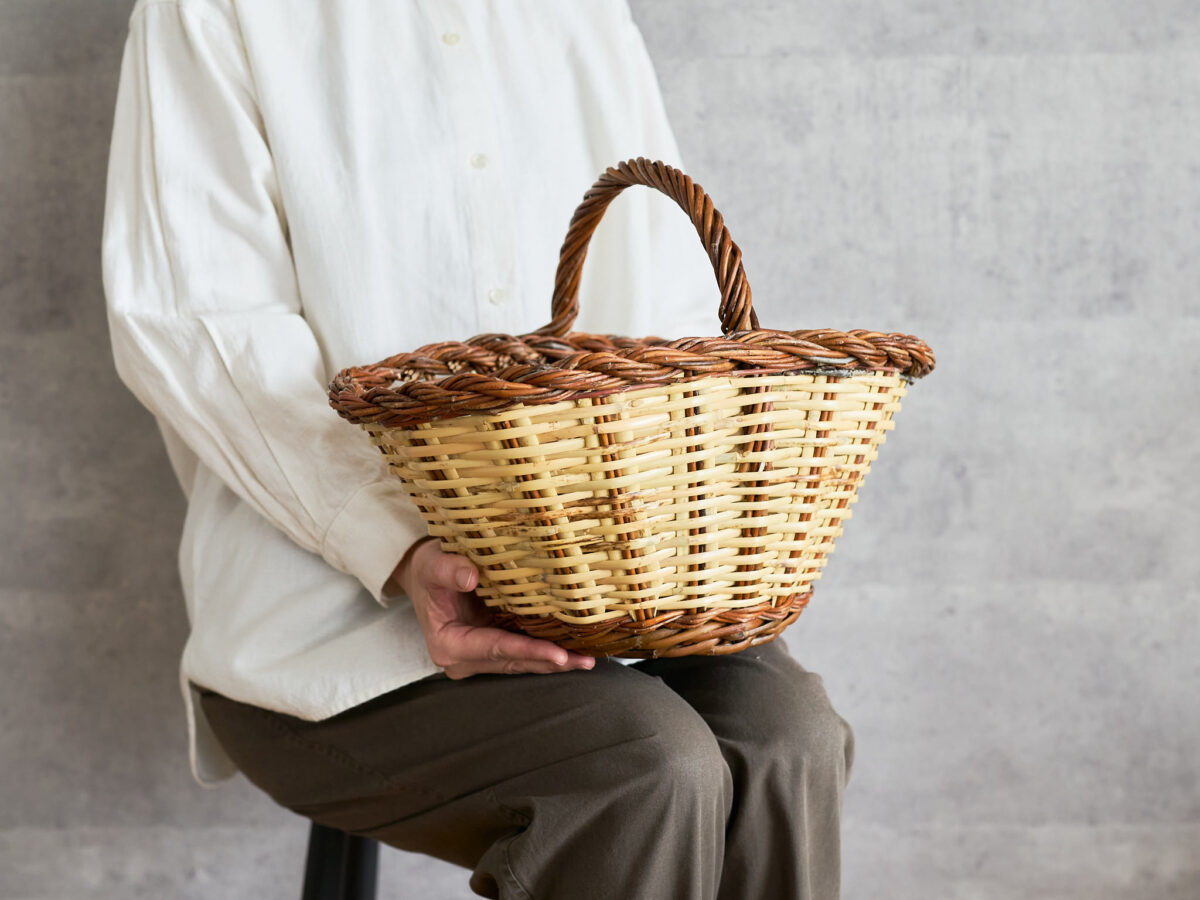
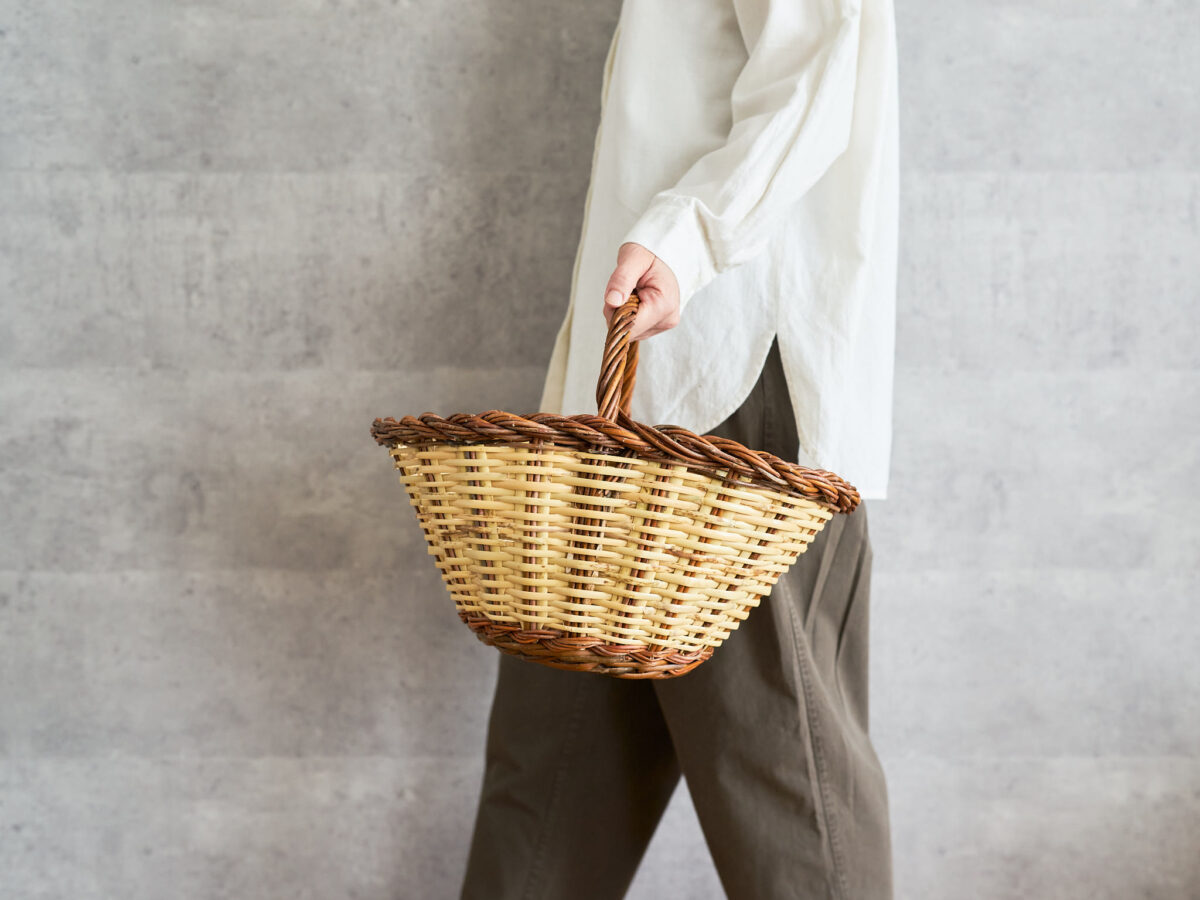
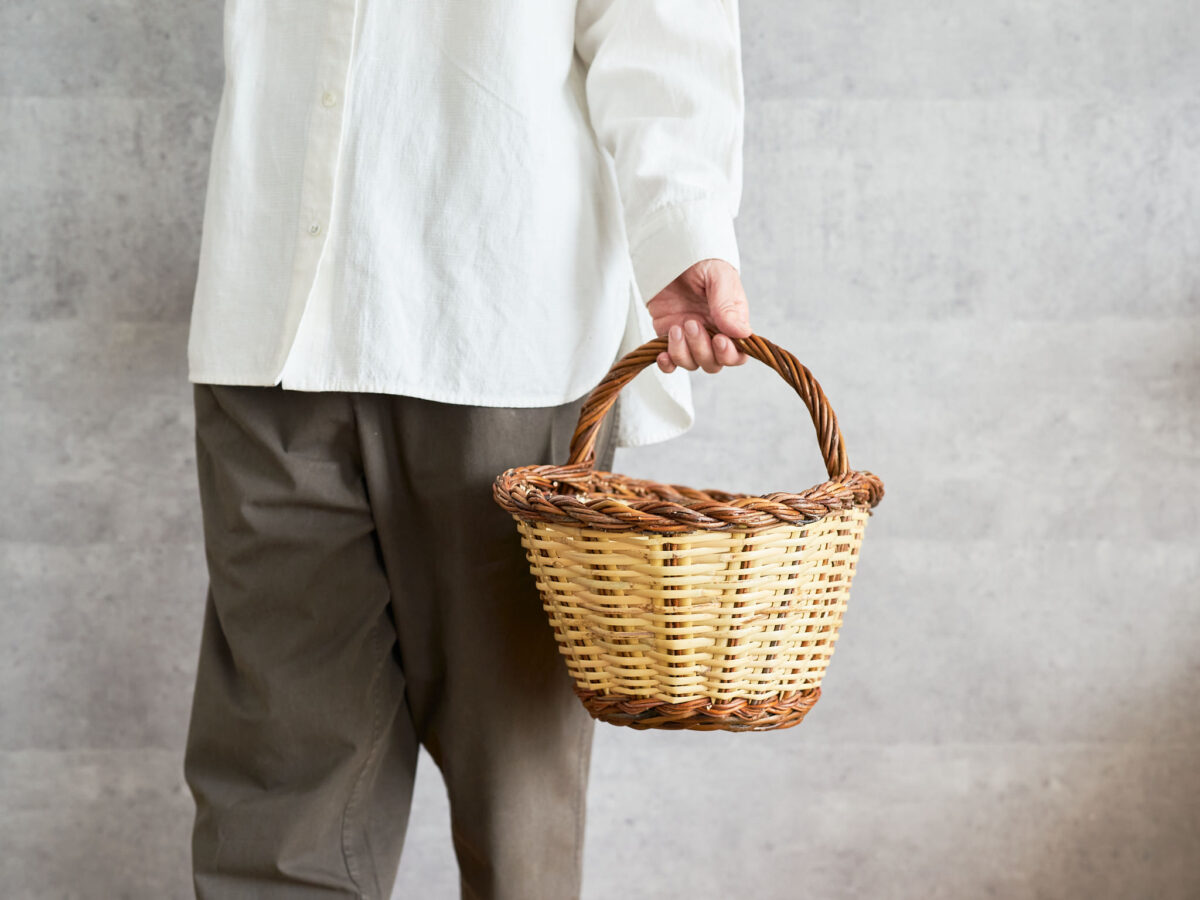
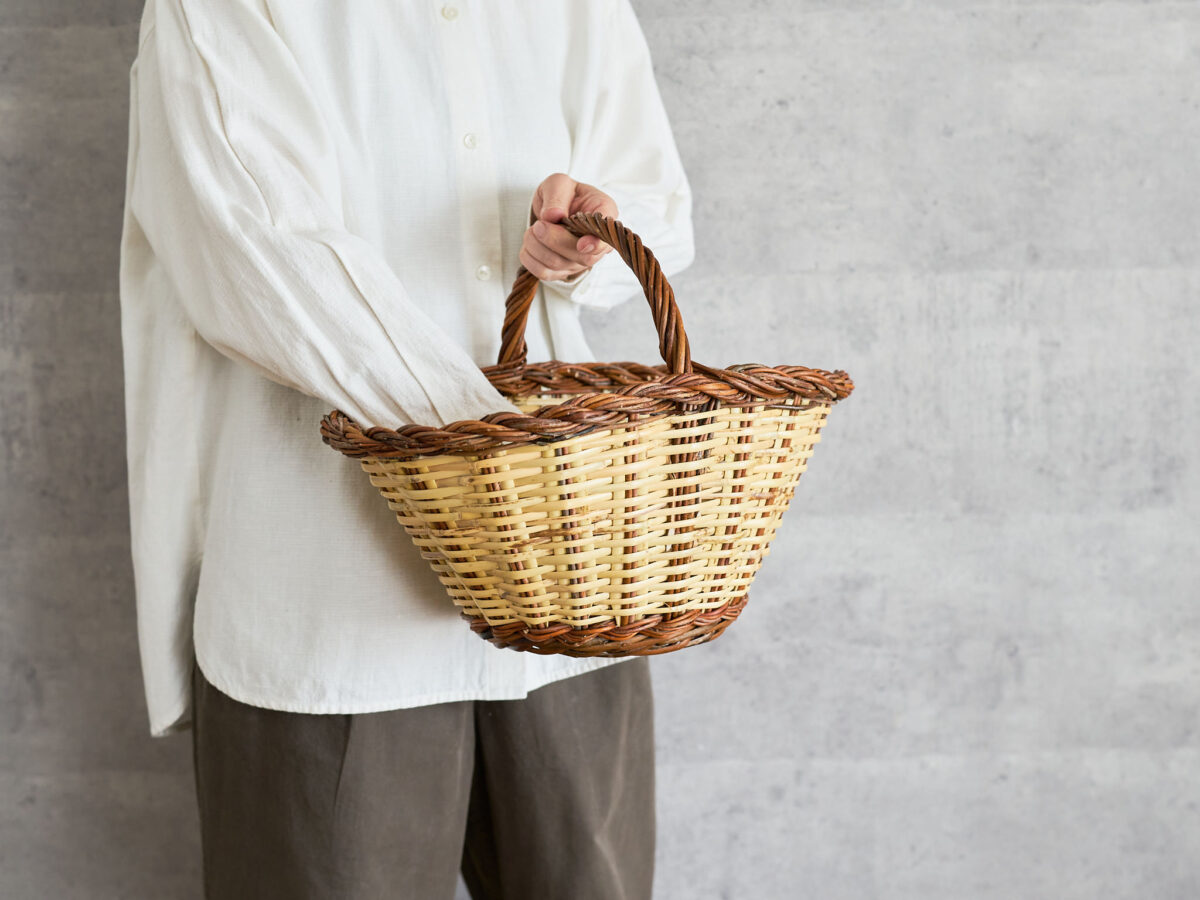
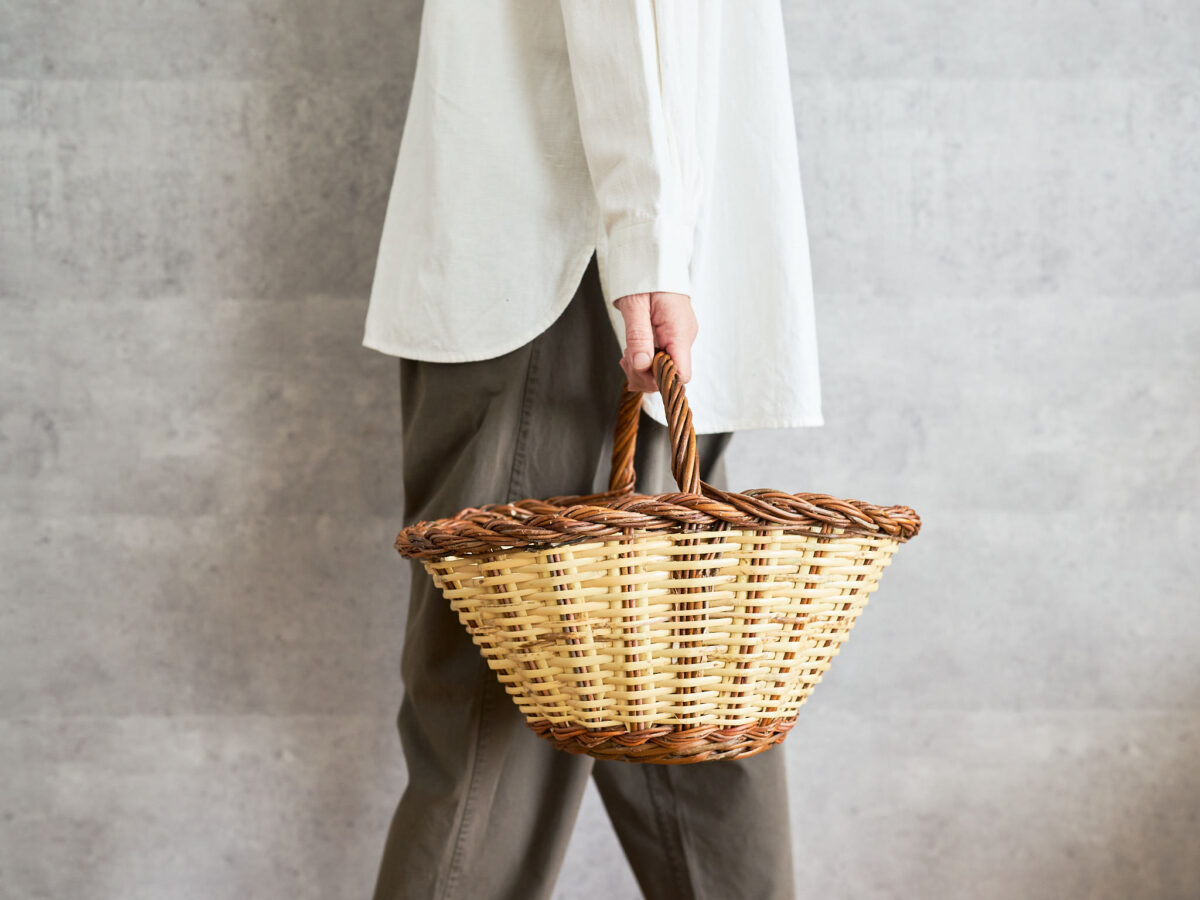
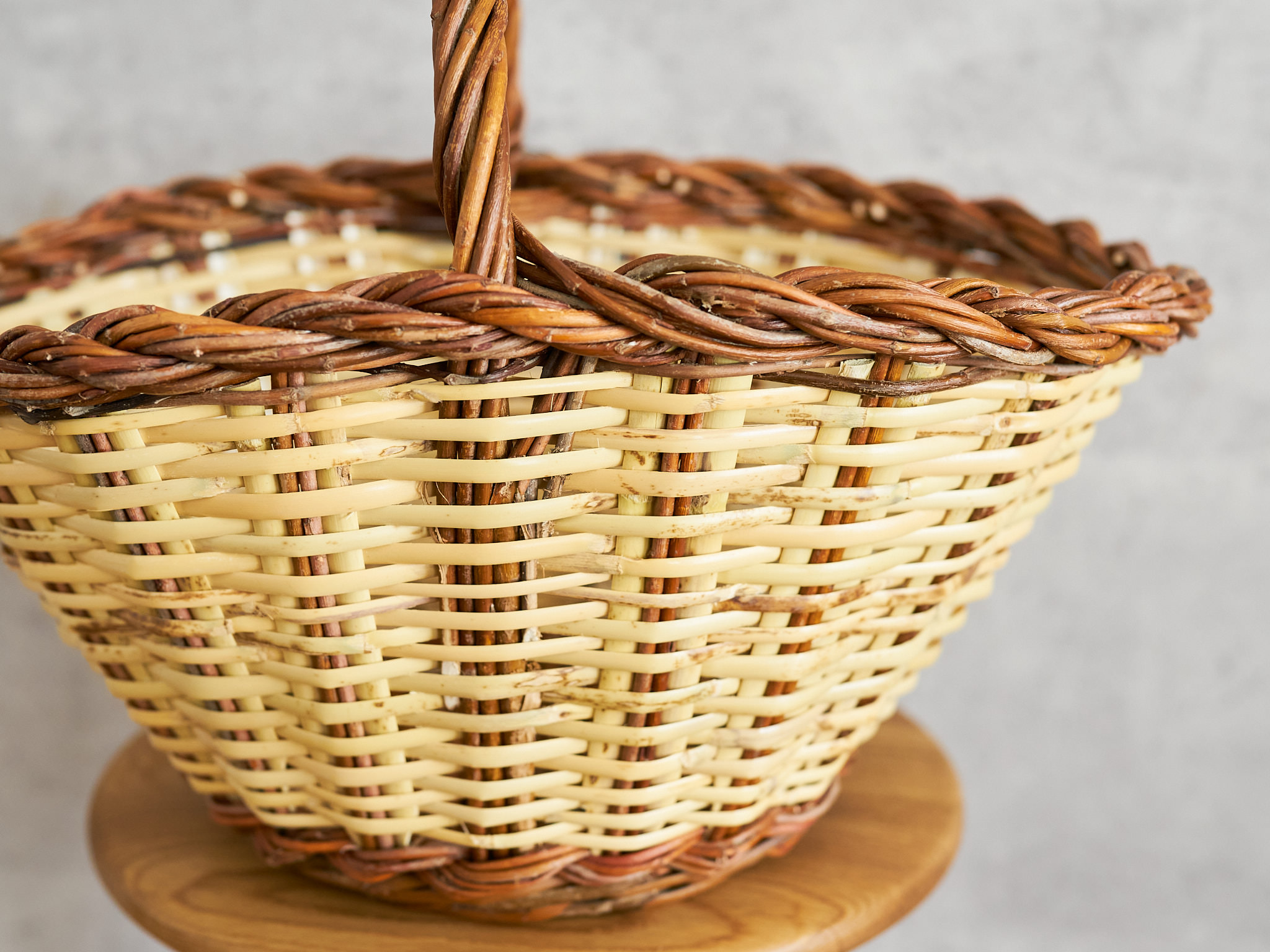
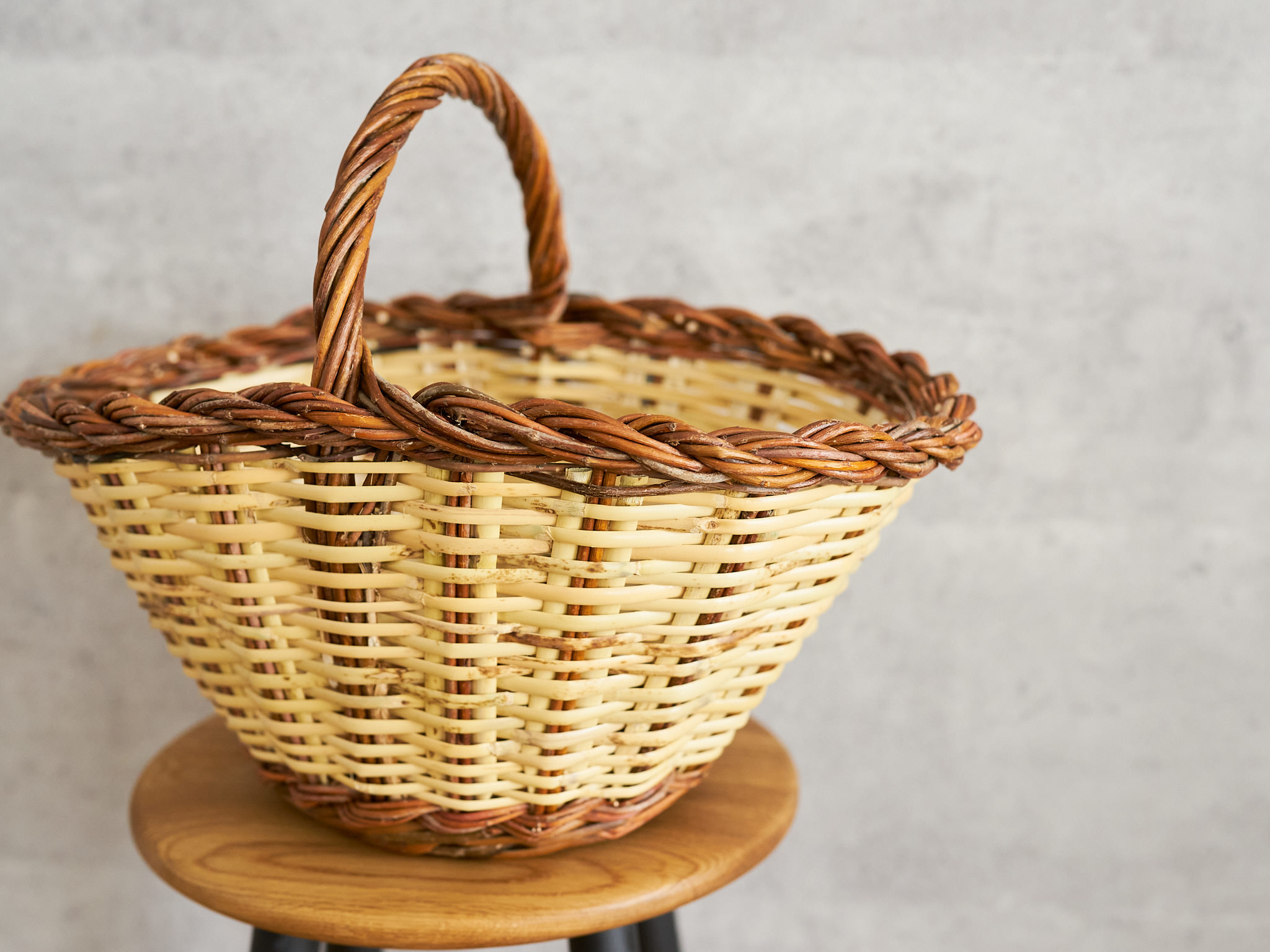
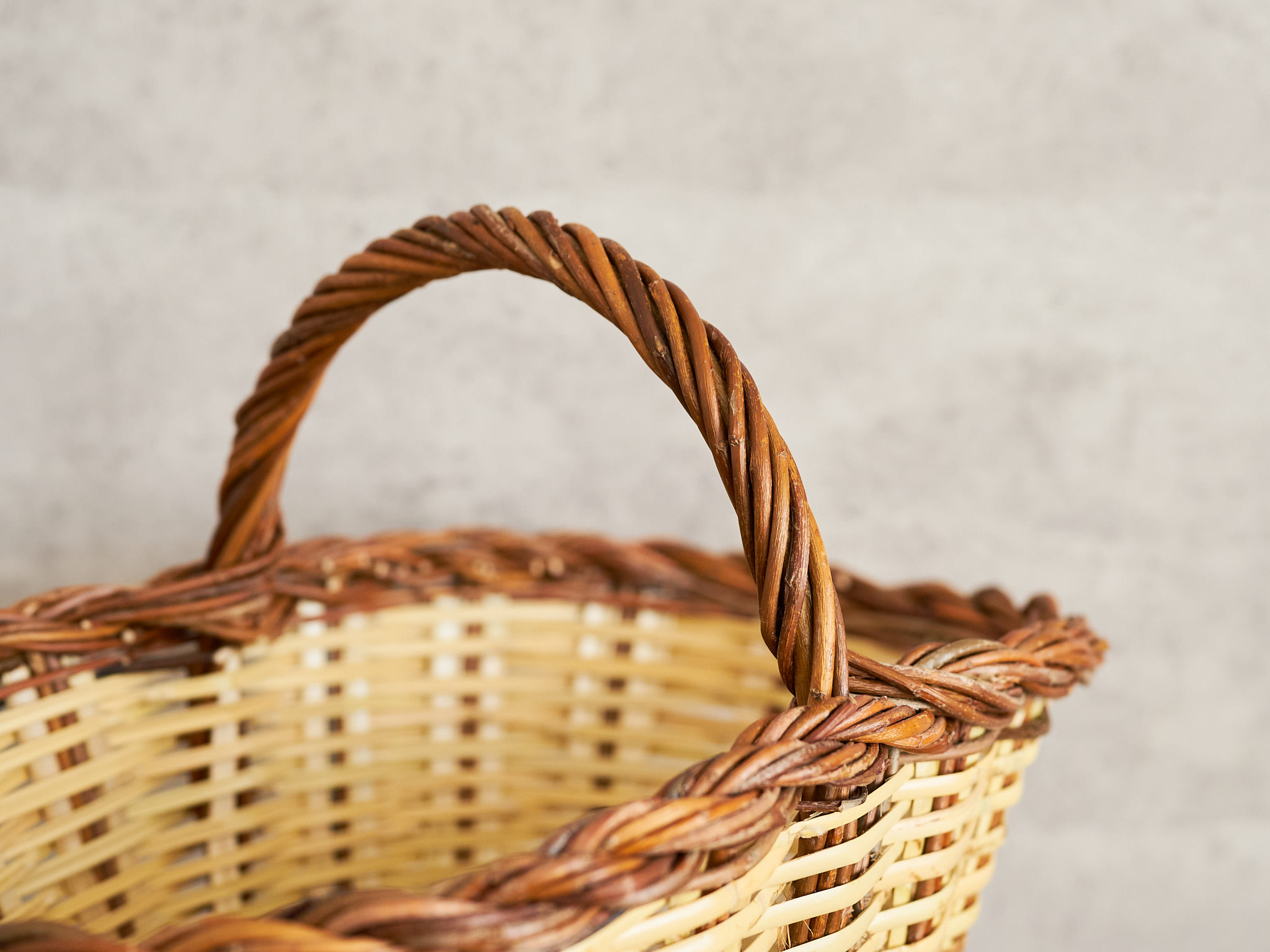
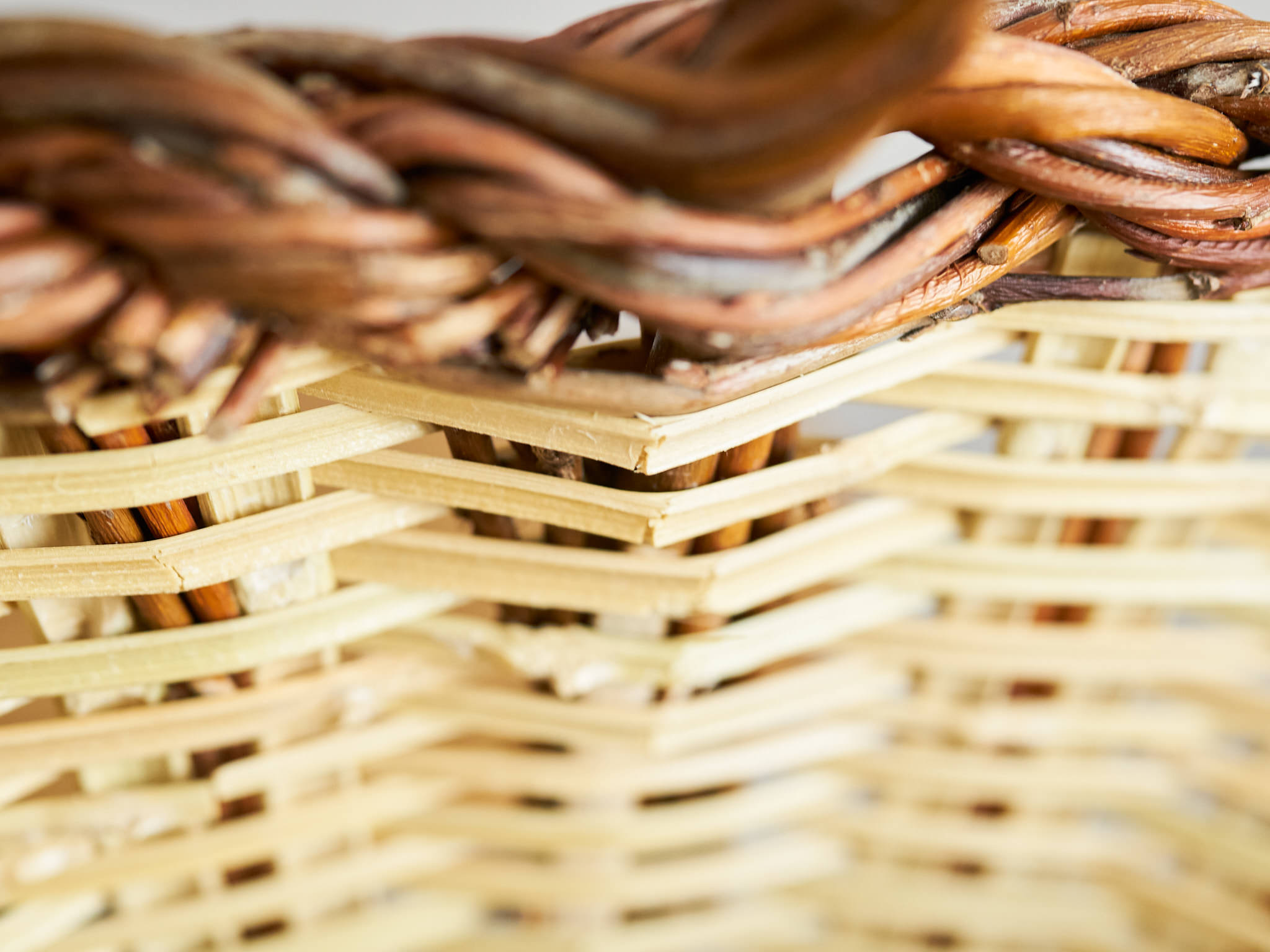
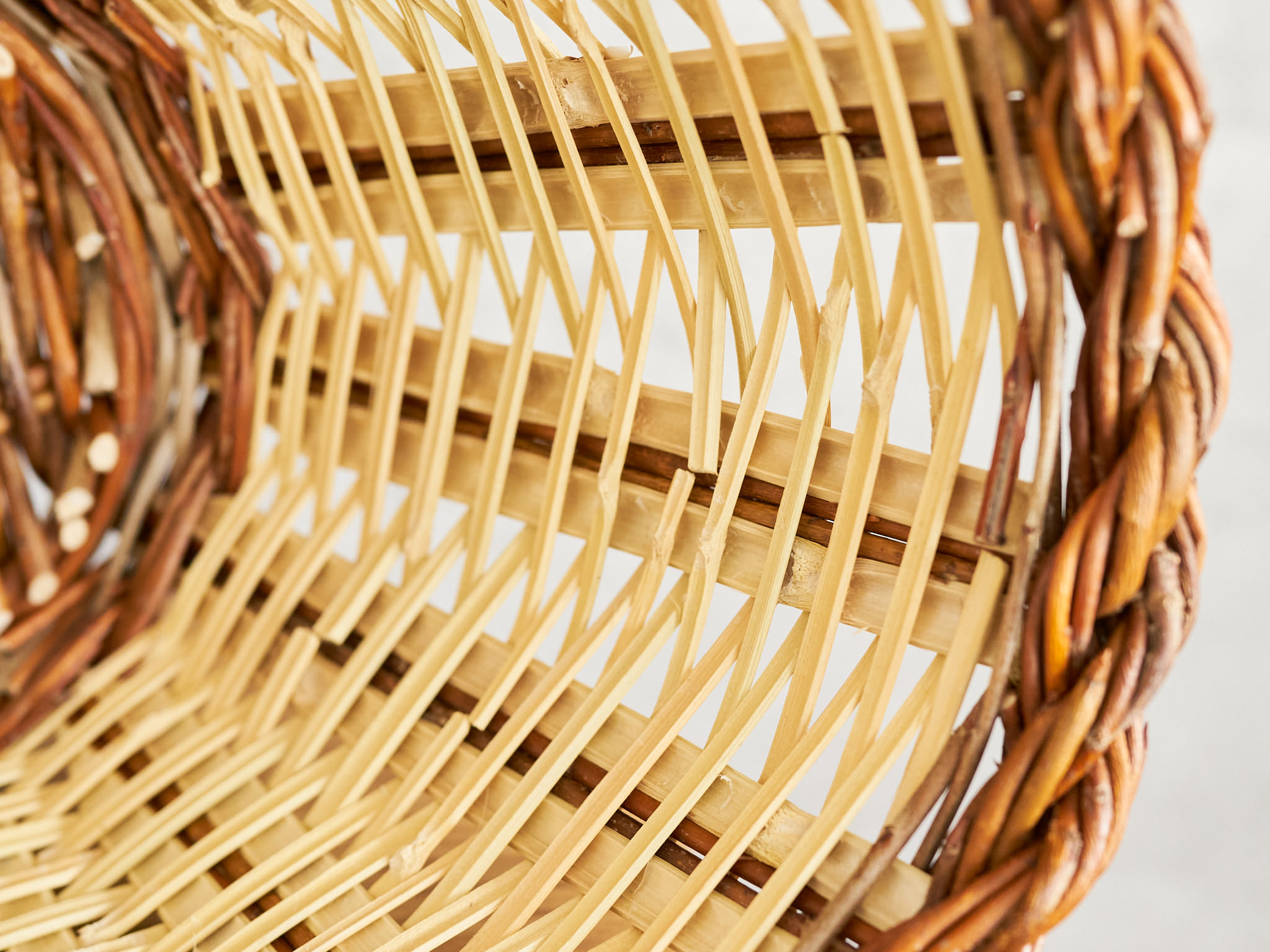
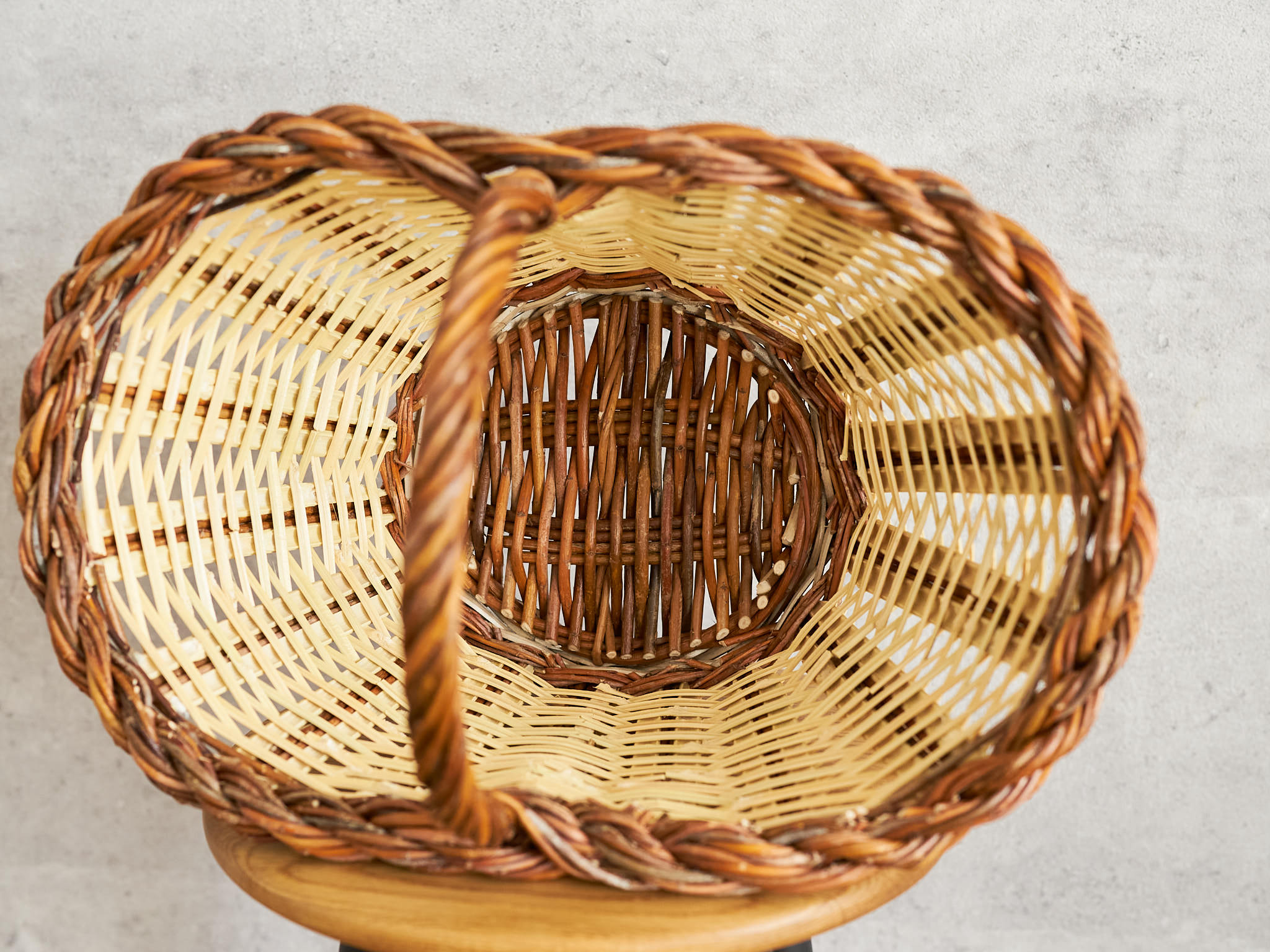
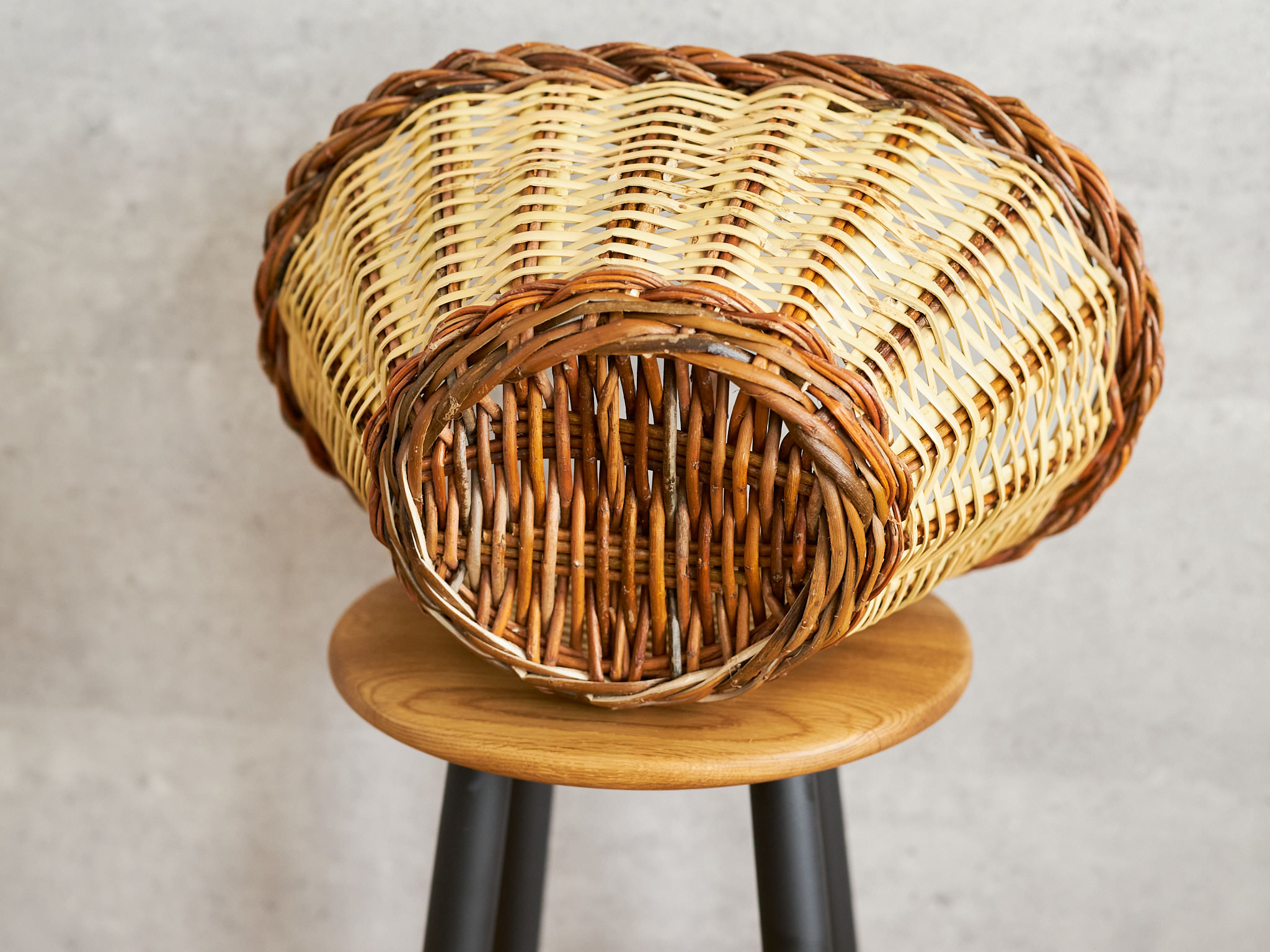
The sides of the basket are woven with bright, glossy caña. Willow is used for the vertical ribs, with caña inserted to support and hold them in place.The vertical ribs rising from the base are twisted and finished directly into the rim, ensuring that the rim will not come loose. This method of construction is also one of the distinctive features of baskets from the Catalonia region.Viewed from the side, it has a slightly slim shape, making it easy to take items in and out.The handle is made with a thick willow rod as the core, wrapped with thinner willow branches. It is constructed using the vertical ribs and rim bindings themselves, resulting in a firm and sturdy structure.In some cases, small cracks may be visible in the caña on the inside of the basket. This is due to the nature of the material and the structure of the basket, and is not a defect. We hope you will appreciate it as a characteristic unique to natural materials.The linear arrangement of the caña creates a clean and orderly impression. On the inside, you may notice occasional joints where the caña has been joined. These are not breaks in the material, but occur naturally during the weaving process. Please understand this as part of the construction.The base of the basket is close to round in shape, and it is woven to gradually widen toward the opening.This is the underside of the base. It is firmly woven with thick willow. In some areas, hard willow “buds” can be seen, so please take care not to catch your fingers or clothing on them.The shape gently widens from the base toward the top.The contrast between the bright tones of the caña and the color of the willow is striking, and together with this shape, it is one of the distinctive features of baskets from the Catalonia region.In Spain and across Europe, it is also said to be used as a shopping basket.As the basket has a wide opening, it is also recommended to cover it with a cloth according to the season or your preference.
The combination of willow and caña has an exotic presence. Yet the caña in particular carries a texture reminiscent of Japanese bamboo, giving it a sense of familiarity.
It is well suited for carrying a few small items or for a quick trip to the bakery. It also works well as a basket for holding vegetables and fruits. As an interior piece, it is also lovely to place dried flowers loosely inside.
It is a reliable basket for everyday use. Please enjoy it in a way that suits your lifestyle.
Basket Maker Pau of Spain — A Fourth-Generation Tradition from Catalonia —
Catalonia, in northeastern Spain, faces the Mediterranean Sea. In this region, centered around Barcelona and known for its own language and culture, Pau continues the craft of basket making.
As a fourth-generation basket maker, he works with familiar local materials such as willow and caña, a plant native to Catalonia, carrying on traditional basketry.
“The knowledge and techniques of basket making can only truly be learned within tradition. It is this foundation that allows new baskets to be created,” Pau says.
He began learning the craft in his father’s workshop at the age of eighteen. At the time, it was not something he had chosen for himself, but now he finds deep meaning in the work, takes pride in carrying it on, and considers it an essential part of his life.
Pau does not use molds when making baskets. Instead, he works directly with the materials, allowing each piece to take shape naturally. His baskets carry both the strength and the simplicity that have long been part of everyday life in Catalonia.
We hope you enjoy the many forms rooted in this region, from grape harvest baskets and wine bottle baskets to traditional rabbit baskets.
We introduce Pau’s basket making in more detail in this journal. We hope you will enjoy reading it.
Caña is a plant that grows naturally in the Mediterranean region. Belonging to the reed family, it has a form that resembles bamboo. Somewhere between bamboo and sasa (thin bamboo), it carries a texture that may also recall Nemagari bamboo found in Japan.
The maker is Pau, a fourth-generation basket maker from a family that has continued the craft for generations in Catalonia, in northeastern Spain along the Mediterranean coast.
The baskets he creates are deeply rooted in the rural culture of Catalonia, representing traditional basketry in its original form.
On this page, we introduce a one-handle basket that has been used for harvesting vegetables, fruits, grapes, and more.
The sides of the basket are woven with bright, glossy caña. Willow is used for the vertical ribs, with caña inserted to support and hold them in place.The vertical ribs rising from the base are twisted and finished directly into the rim, ensuring that the rim will not come loose. This method of construction is also one of the distinctive features of baskets from the Catalonia region.Viewed from the side, it has a slightly slim shape, making it easy to take items in and out.The handle is made with a thick willow rod as the core, wrapped with thinner willow branches. It is constructed using the vertical ribs and rim bindings themselves, resulting in a firm and sturdy structure.In some cases, small cracks may be visible in the caña on the inside of the basket. This is due to the nature of the material and the structure of the basket, and is not a defect. We hope you will appreciate it as a characteristic unique to natural materials.The linear arrangement of the caña creates a clean and orderly impression. On the inside, you may notice occasional joints where the caña has been joined. These are not breaks in the material, but occur naturally during the weaving process. Please understand this as part of the construction.The base of the basket is close to round in shape, and it is woven to gradually widen toward the opening.This is the underside of the base. It is firmly woven with thick willow. In some areas, hard willow “buds” can be seen, so please take care not to catch your fingers or clothing on them.The shape gently widens from the base toward the top.The contrast between the bright tones of the caña and the color of the willow is striking, and together with this shape, it is one of the distinctive features of baskets from the Catalonia region.In Spain and across Europe, it is also said to be used as a shopping basket.As the basket has a wide opening, it is also recommended to cover it with a cloth according to the season or your preference.
The combination of willow and caña has an exotic presence. Yet the caña in particular carries a texture reminiscent of Japanese bamboo, giving it a sense of familiarity.
It is well suited for carrying a few small items or for a quick trip to the bakery. It also works well as a basket for holding vegetables and fruits. As an interior piece, it is also lovely to place dried flowers loosely inside.
It is a reliable basket for everyday use. Please enjoy it in a way that suits your lifestyle.
Basket Maker Pau of Spain — A Fourth-Generation Tradition from Catalonia —
Catalonia, in northeastern Spain, faces the Mediterranean Sea. In this region, centered around Barcelona and known for its own language and culture, Pau continues the craft of basket making.
As a fourth-generation basket maker, he works with familiar local materials such as willow and caña, a plant native to Catalonia, carrying on traditional basketry.
“The knowledge and techniques of basket making can only truly be learned within tradition. It is this foundation that allows new baskets to be created,” Pau says.
He began learning the craft in his father’s workshop at the age of eighteen. At the time, it was not something he had chosen for himself, but now he finds deep meaning in the work, takes pride in carrying it on, and considers it an essential part of his life.
Pau does not use molds when making baskets. Instead, he works directly with the materials, allowing each piece to take shape naturally. His baskets carry both the strength and the simplicity that have long been part of everyday life in Catalonia.
We hope you enjoy the many forms rooted in this region, from grape harvest baskets and wine bottle baskets to traditional rabbit baskets.
We introduce Pau’s basket making in more detail in this journal. We hope you will enjoy reading it.
Caña is a plant that grows naturally in the Mediterranean region. Belonging to the reed family, it has a form that resembles bamboo. Somewhere between bamboo and sasa (thin bamboo), it carries a texture that may also recall Nemagari bamboo found in Japan.
The maker is Pau, a fourth-generation basket maker from a family that has continued the craft for generations in Catalonia, in northeastern Spain along the Mediterranean coast.
The baskets he creates are deeply rooted in the rural culture of Catalonia, representing traditional basketry in its original form.
On this page, we introduce a one-handle basket that has been used for harvesting vegetables, fruits, grapes, and more.
The sides of the basket are woven with bright, glossy caña. Willow is used for the vertical ribs, with caña inserted to support and hold them in place.The vertical ribs rising from the base are twisted and finished directly into the rim, ensuring that the rim will not come loose. This method of construction is also one of the distinctive features of baskets from the Catalonia region.Viewed from the side, it has a slightly slim shape, making it easy to take items in and out.The handle is made with a thick willow rod as the core, wrapped with thinner willow branches. It is constructed using the vertical ribs and rim bindings themselves, resulting in a firm and sturdy structure.In some cases, small cracks may be visible in the caña on the inside of the basket. This is due to the nature of the material and the structure of the basket, and is not a defect. We hope you will appreciate it as a characteristic unique to natural materials.The linear arrangement of the caña creates a clean and orderly impression. On the inside, you may notice occasional joints where the caña has been joined. These are not breaks in the material, but occur naturally during the weaving process. Please understand this as part of the construction.The base of the basket is close to round in shape, and it is woven to gradually widen toward the opening.This is the underside of the base. It is firmly woven with thick willow. In some areas, hard willow “buds” can be seen, so please take care not to catch your fingers or clothing on them.The shape gently widens from the base toward the top.The contrast between the bright tones of the caña and the color of the willow is striking, and together with this shape, it is one of the distinctive features of baskets from the Catalonia region.In Spain and across Europe, it is also said to be used as a shopping basket.As the basket has a wide opening, it is also recommended to cover it with a cloth according to the season or your preference.
The combination of willow and caña has an exotic presence. Yet the caña in particular carries a texture reminiscent of Japanese bamboo, giving it a sense of familiarity.
It is well suited for carrying a few small items or for a quick trip to the bakery. It also works well as a basket for holding vegetables and fruits. As an interior piece, it is also lovely to place dried flowers loosely inside.
It is a reliable basket for everyday use. Please enjoy it in a way that suits your lifestyle.
Basket Maker Pau of Spain — A Fourth-Generation Tradition from Catalonia —
Catalonia, in northeastern Spain, faces the Mediterranean Sea. In this region, centered around Barcelona and known for its own language and culture, Pau continues the craft of basket making.
As a fourth-generation basket maker, he works with familiar local materials such as willow and caña, a plant native to Catalonia, carrying on traditional basketry.
“The knowledge and techniques of basket making can only truly be learned within tradition. It is this foundation that allows new baskets to be created,” Pau says.
He began learning the craft in his father’s workshop at the age of eighteen. At the time, it was not something he had chosen for himself, but now he finds deep meaning in the work, takes pride in carrying it on, and considers it an essential part of his life.
Pau does not use molds when making baskets. Instead, he works directly with the materials, allowing each piece to take shape naturally. His baskets carry both the strength and the simplicity that have long been part of everyday life in Catalonia.
We hope you enjoy the many forms rooted in this region, from grape harvest baskets and wine bottle baskets to traditional rabbit baskets.
We introduce Pau’s basket making in more detail in this journal. We hope you will enjoy reading it.