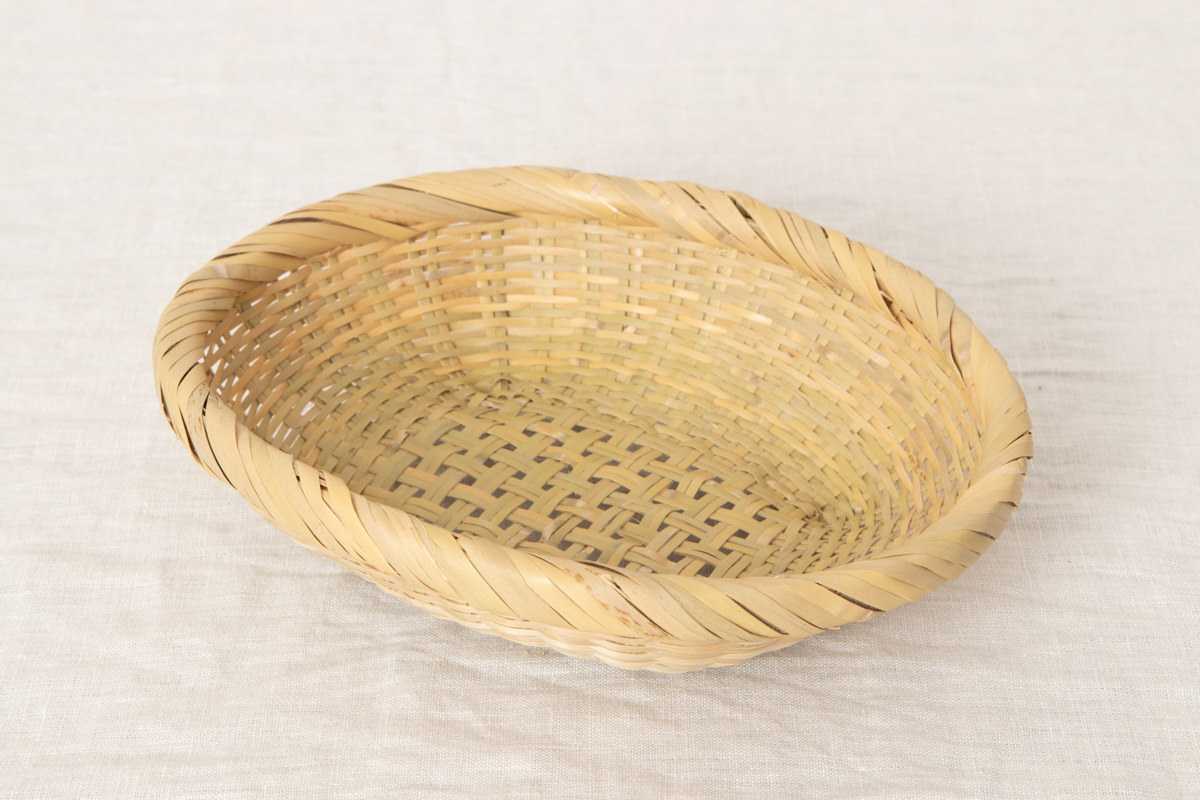
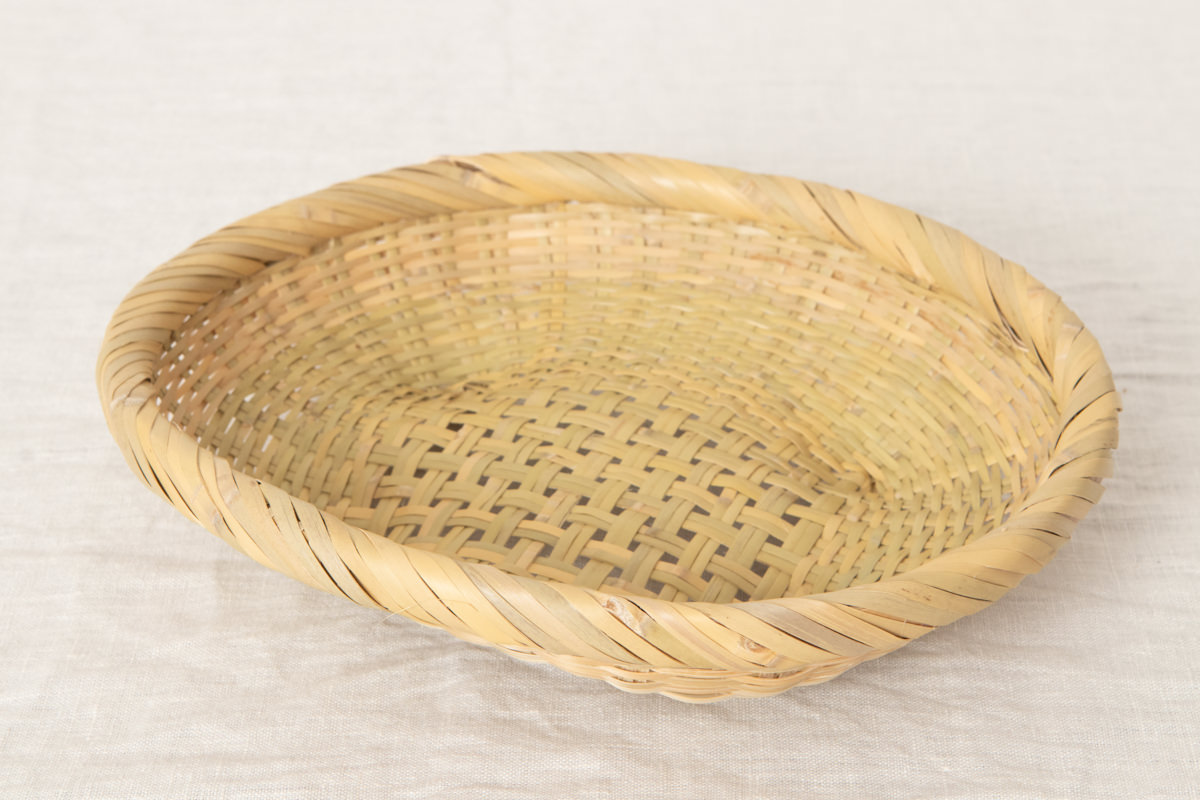
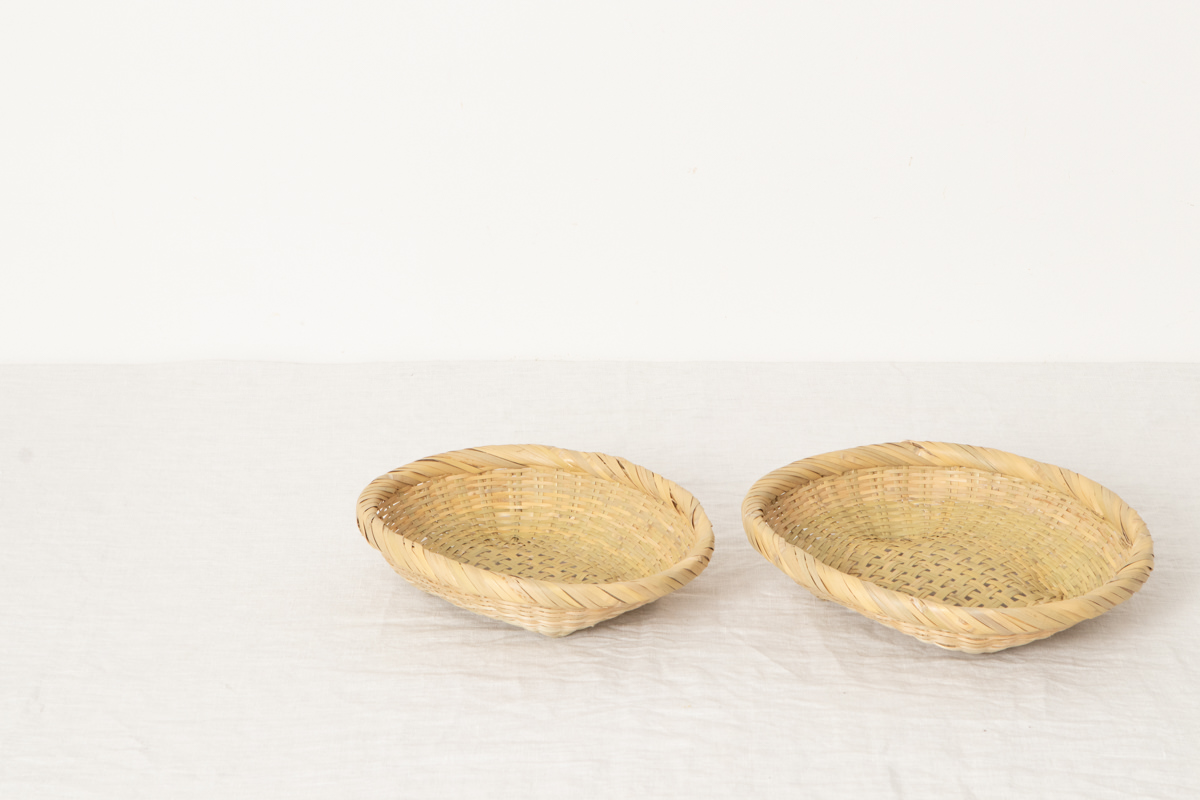
This is a Square Flat Tray (kakuhira zaru) woven from medake bamboo grown in Ehime, Japan.
Although made in Ehime, it is based on the techniques of “shinodake craft,” a traditional bamboo craft designated in Miyagi Prefecture.
The maker studied the techniques of “zaru” making in shinodake craft in Miyagi for several years, then moved to Ehime, where the material was changed from shinodake to locally sourced medake bamboo.
While making careful adjustments, a wide variety of zaru are crafted.
Shinodake craft from Miyagi is regarded as one of the finest traditions of zaru making in Japan.
Today, however, production has declined significantly due to the aging of makers.
In this context, it feels deeply meaningful that these techniques are being carried on in a different environment, with the maker continuing to devote themselves to the making of zaru.
Many makers study bamboo craft from Oita and Kyushu at the Beppu Bamboo Craft Training Center in Oita Prefecture, and later return to their hometowns to continue their work.
However, it is extremely rare—and truly valuable—for someone to learn the bamboo craft techniques of the Tohoku region, then move to another area and carry on that tradition in their work.
When continuing bamboo craft in a different region, one of the most significant challenges is how to source materials.
In Japan, the types of bamboo that grow naturally vary by area —such as shinodake, medake, madake, nemagari bamboo, and moso bamboo— so once the location changes, it becomes difficult to obtain the same materials used in other regions.
In this case, the maker harvests medake bamboo growing in the mountains of Ehime and Kochi, using it as a substitute for shinodake, and prepares the material themselves while weaving each zaru.
Medake is sometimes referred to as “shinodake” because of its similar appearance, but in fact it is harder than the shinodake used in Miyagi, resulting in a sturdier finished piece.
During their training in Miyagi, the maker also traveled throughout Japan to study bamboo craft in different regions.
As a result, this piece can be seen as a kind of hybrid—combining the techniques of Miyagi-style zaru with elements of bamboo craft from across the country.
On this page, we introduce the Square Flat Tray (kakuhira zaru) in two sizes: small and medium.
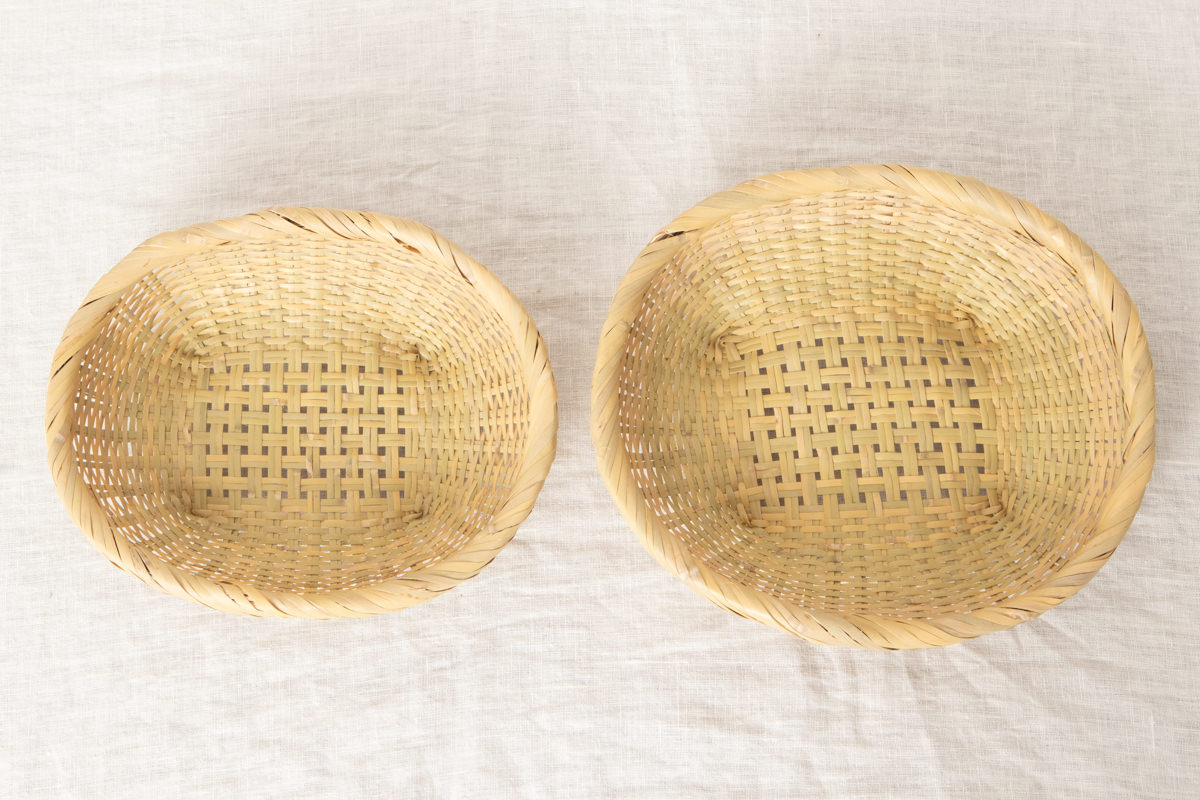
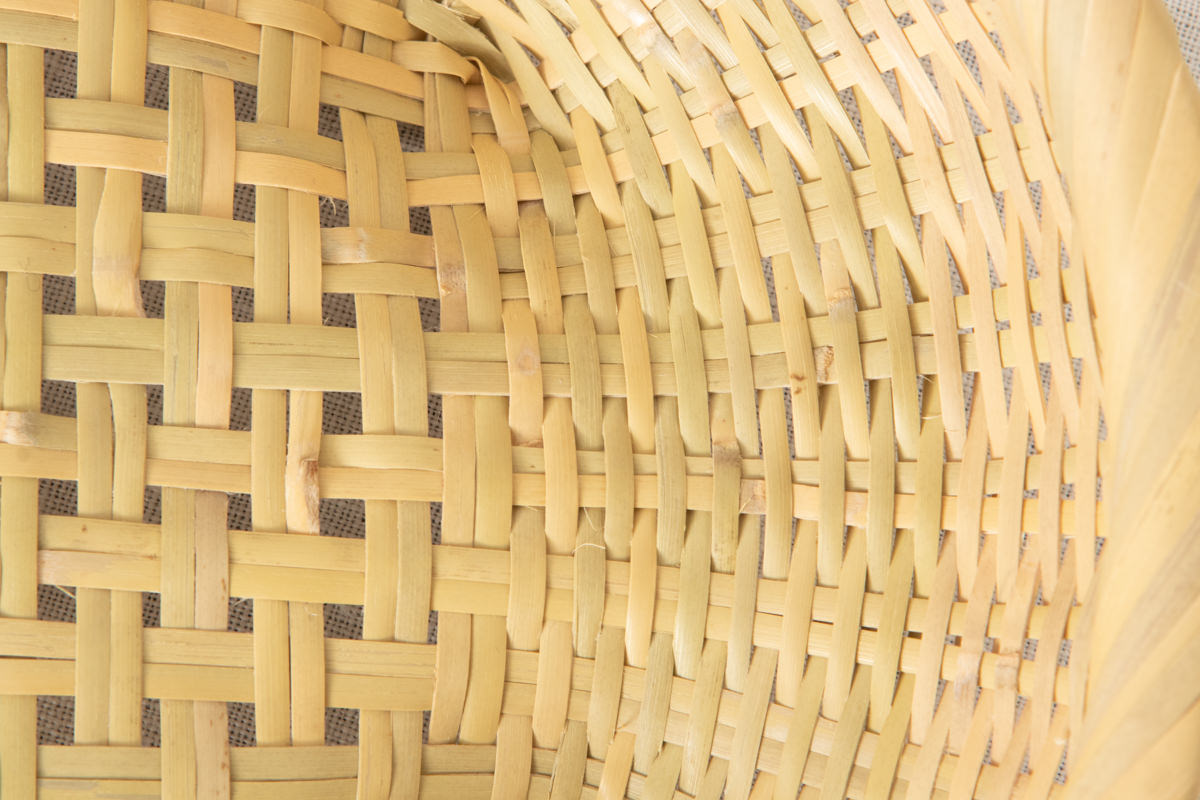
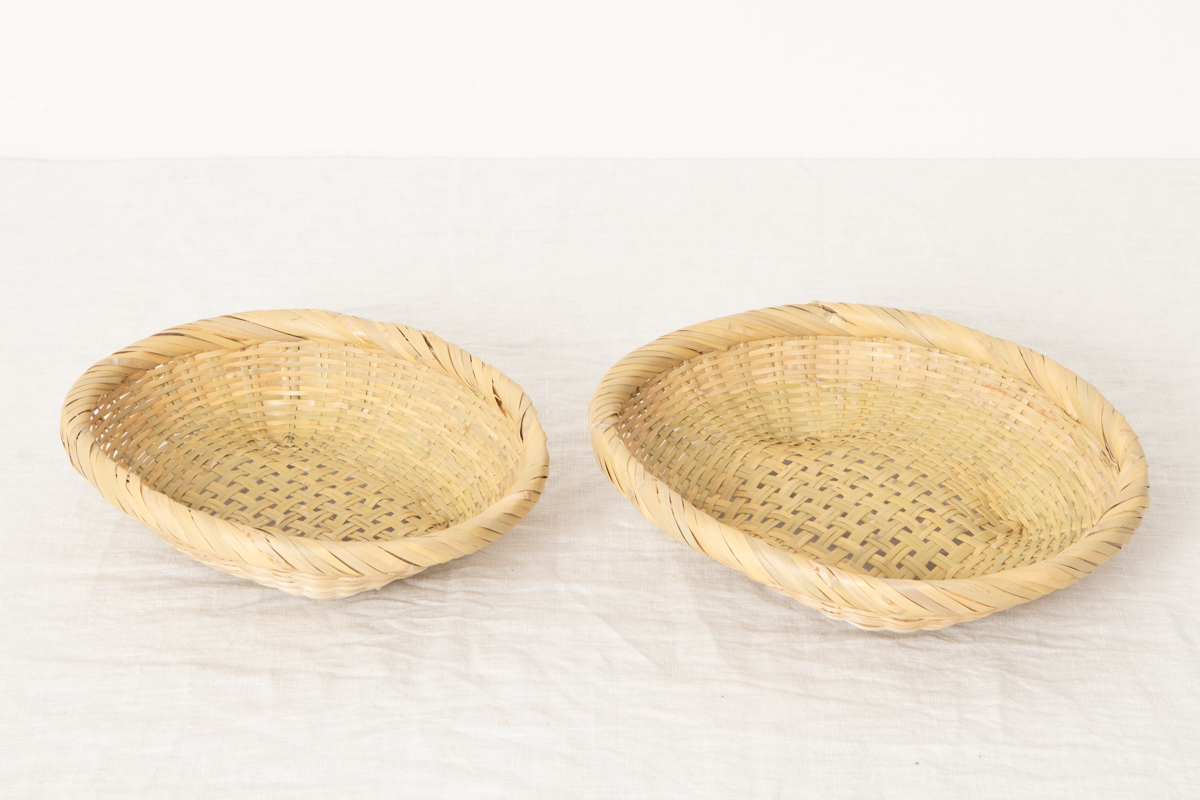
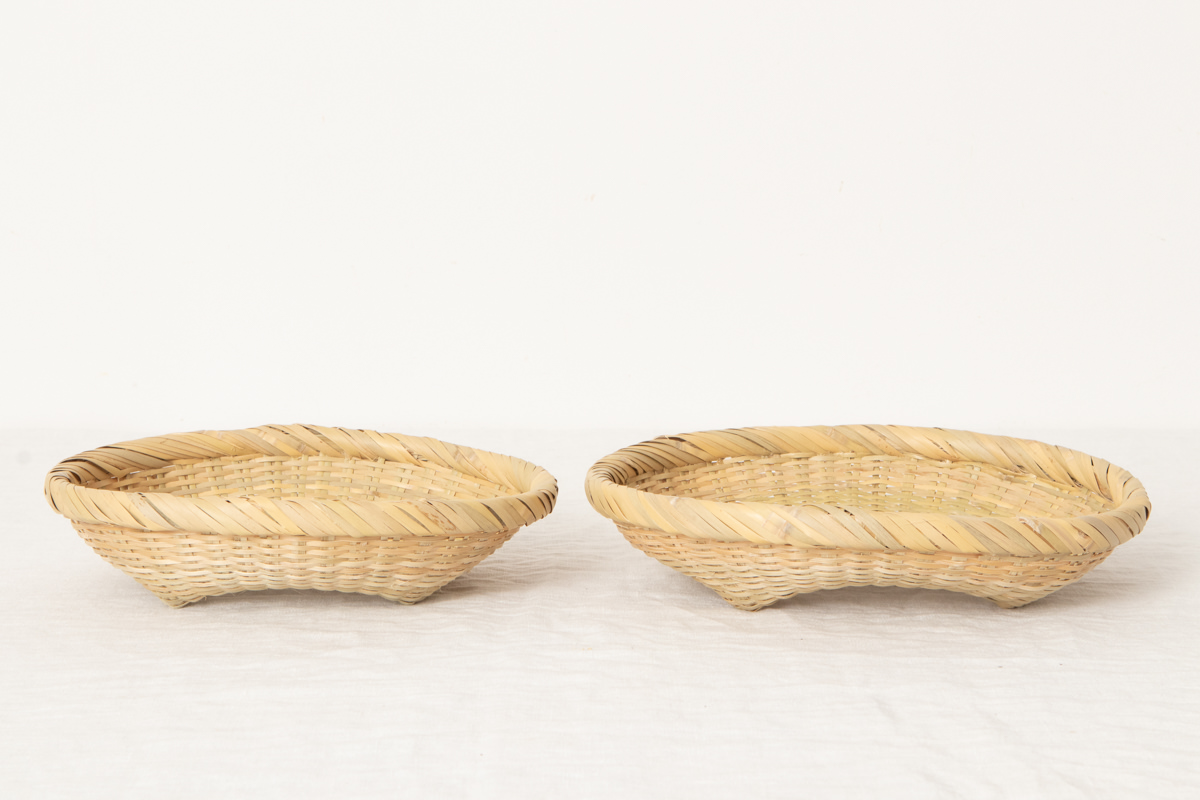
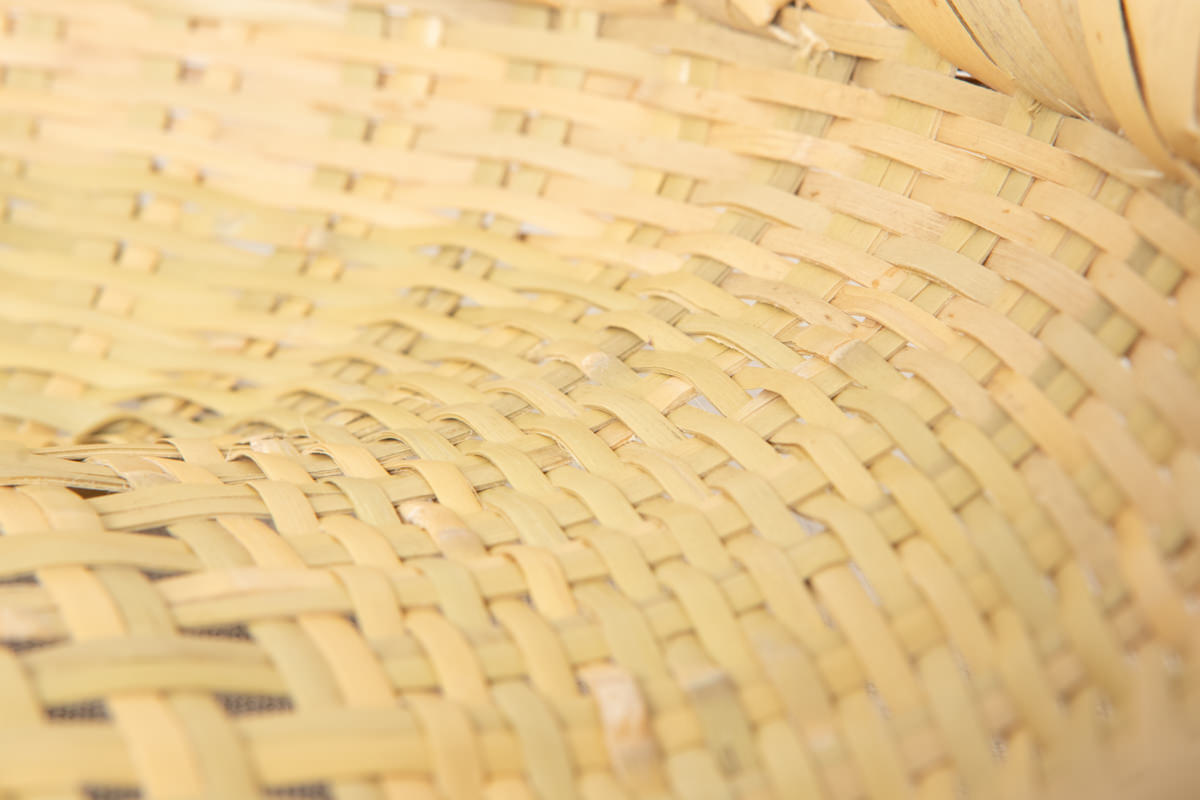
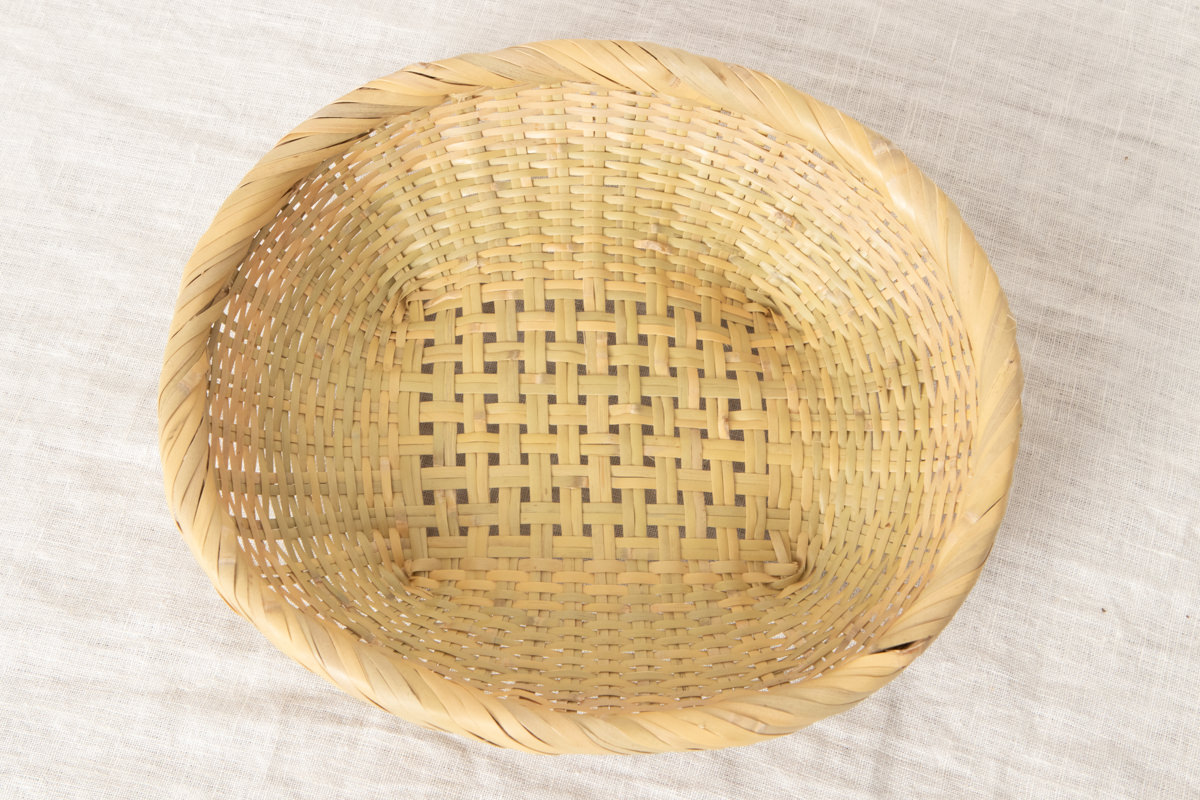
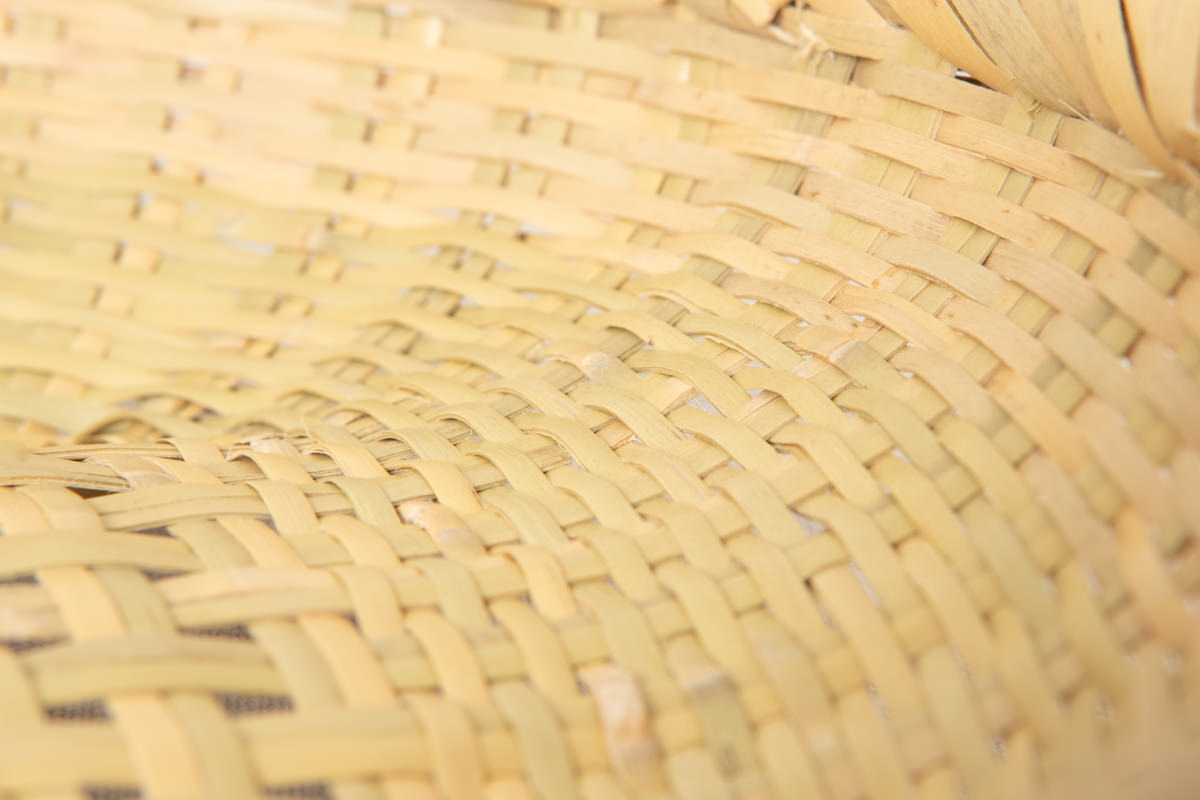
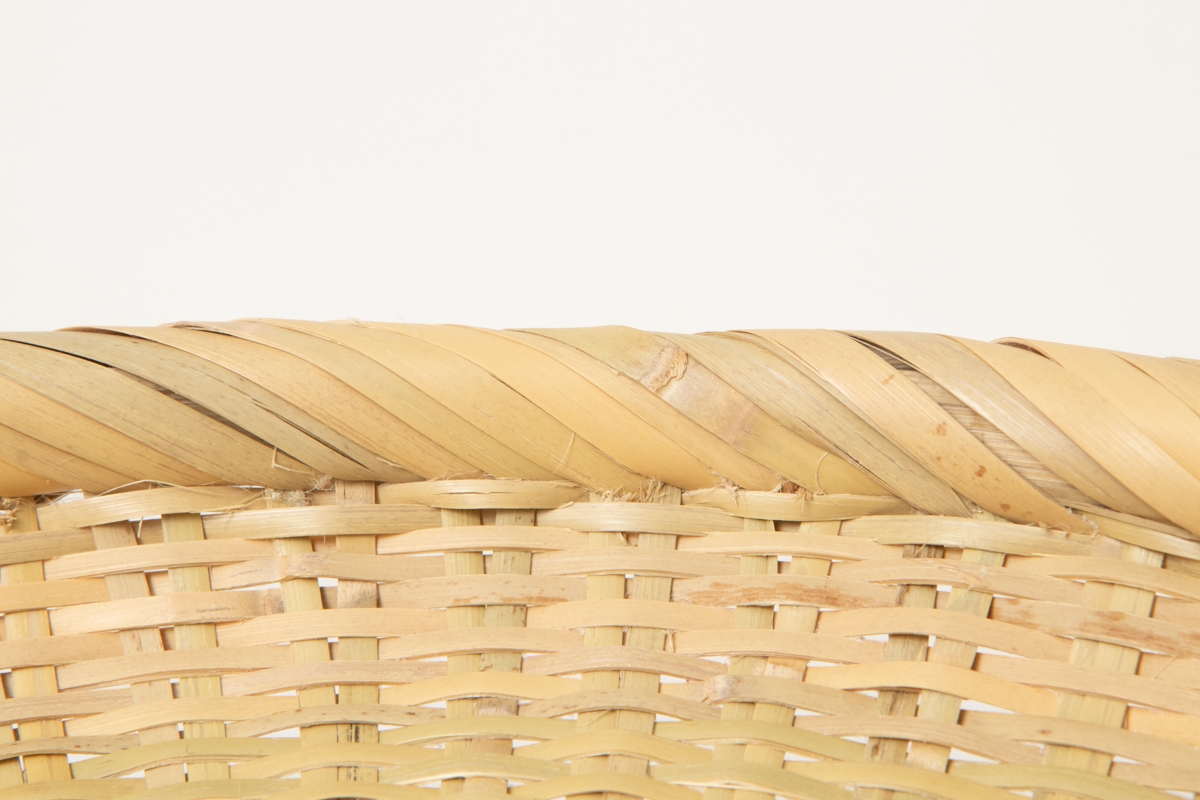
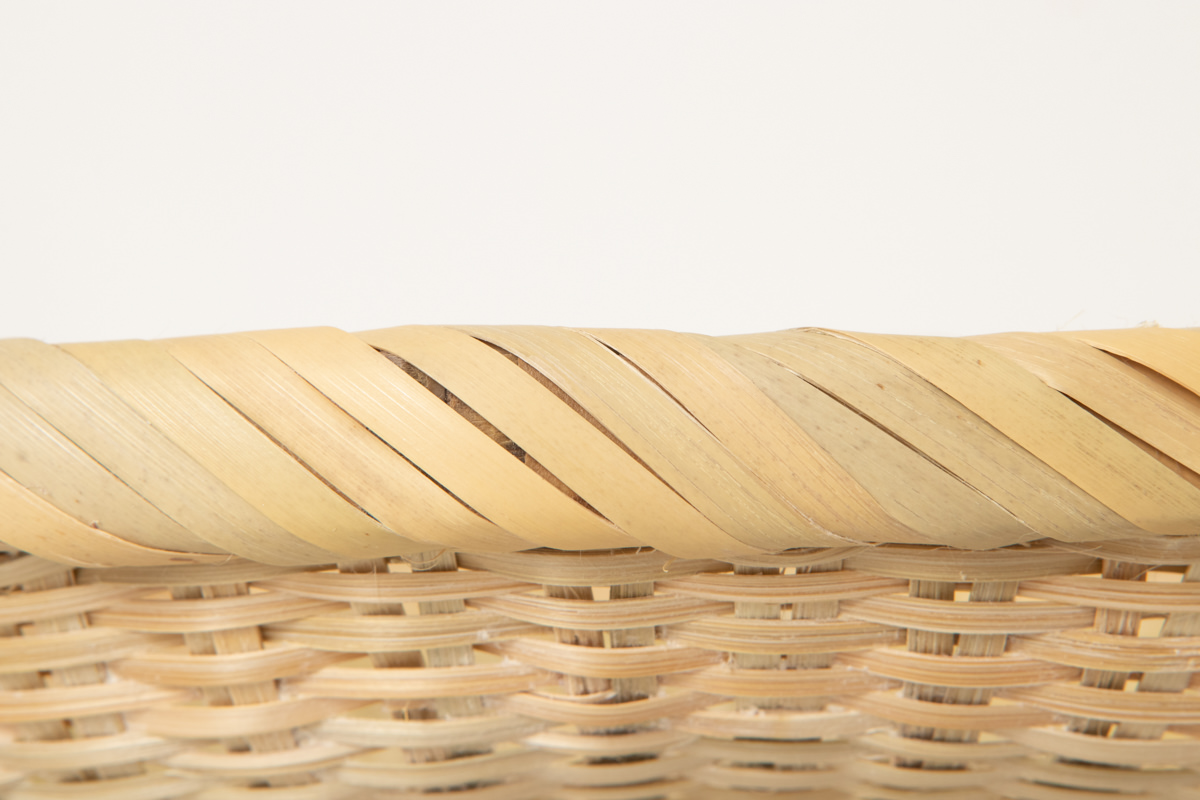
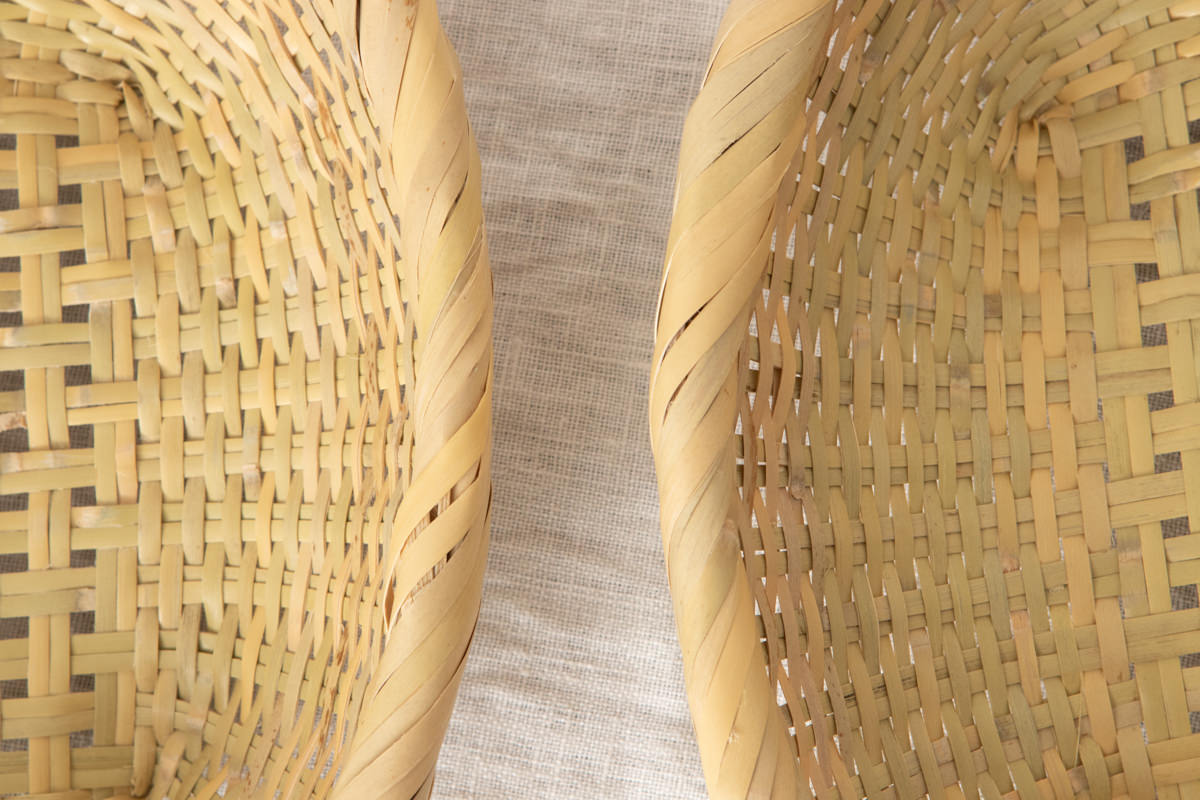
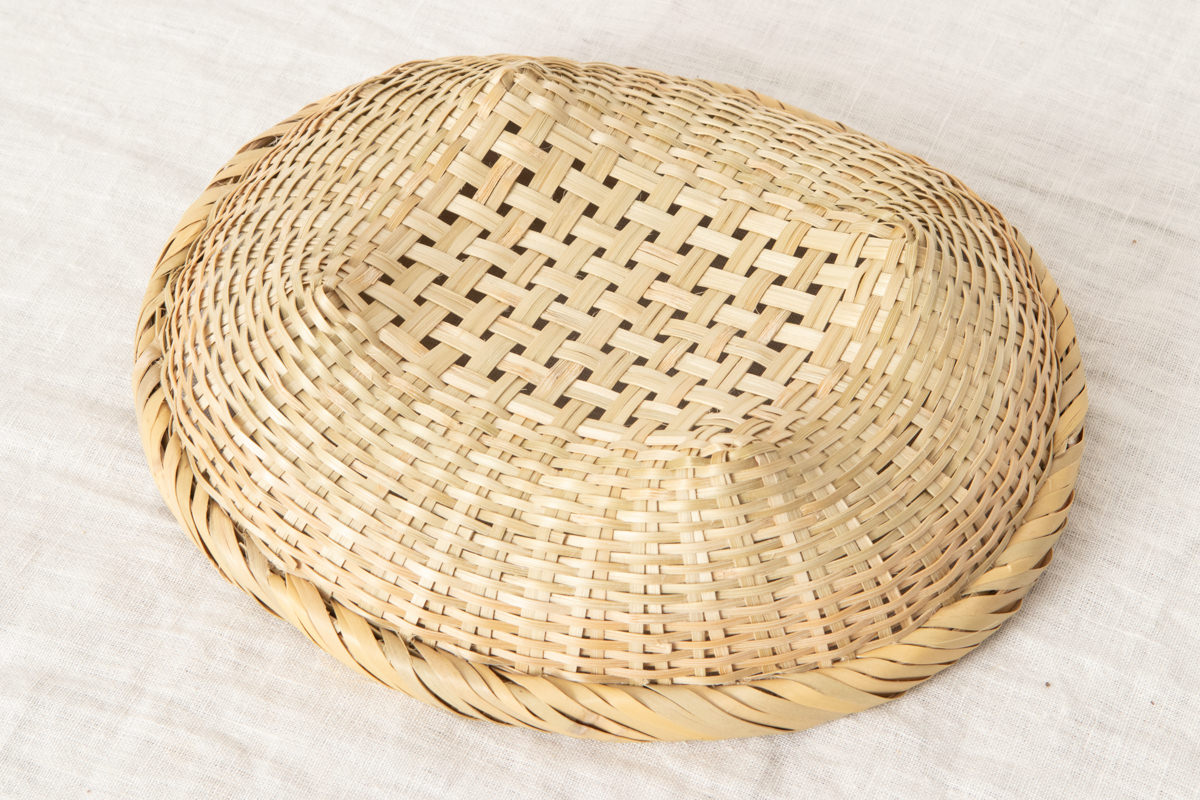
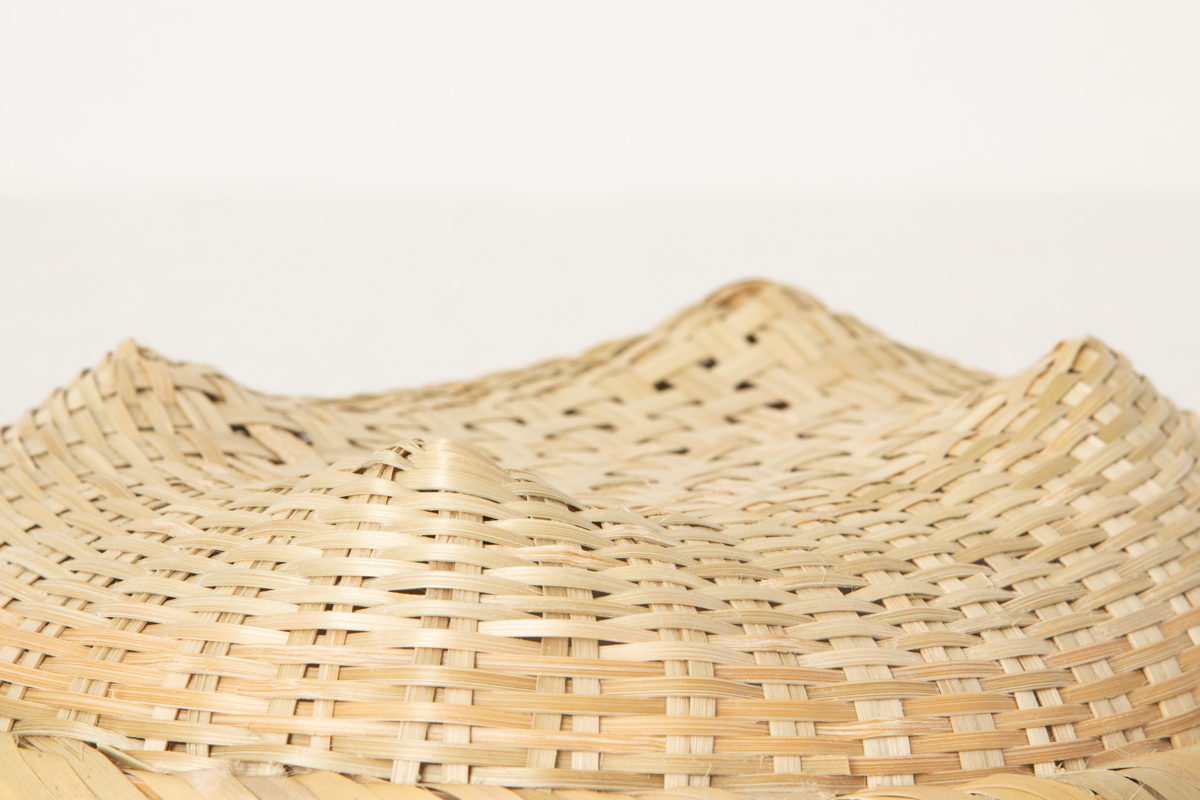
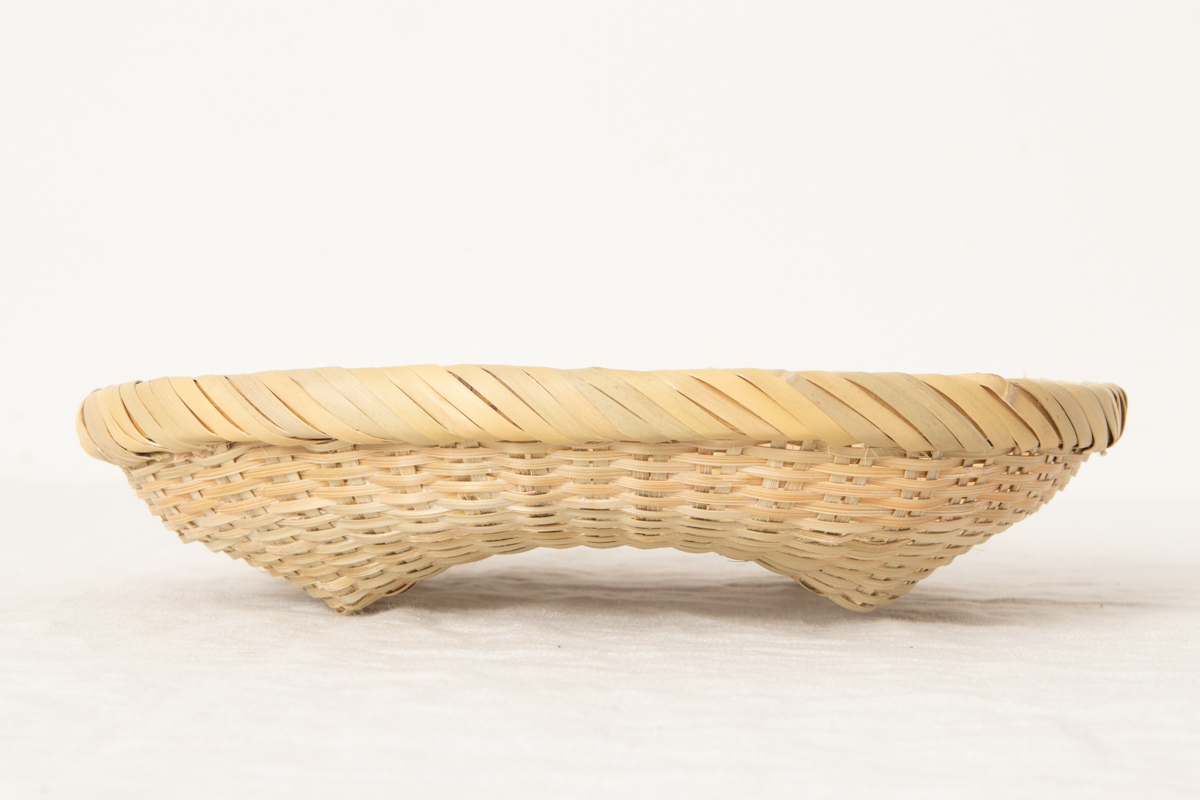
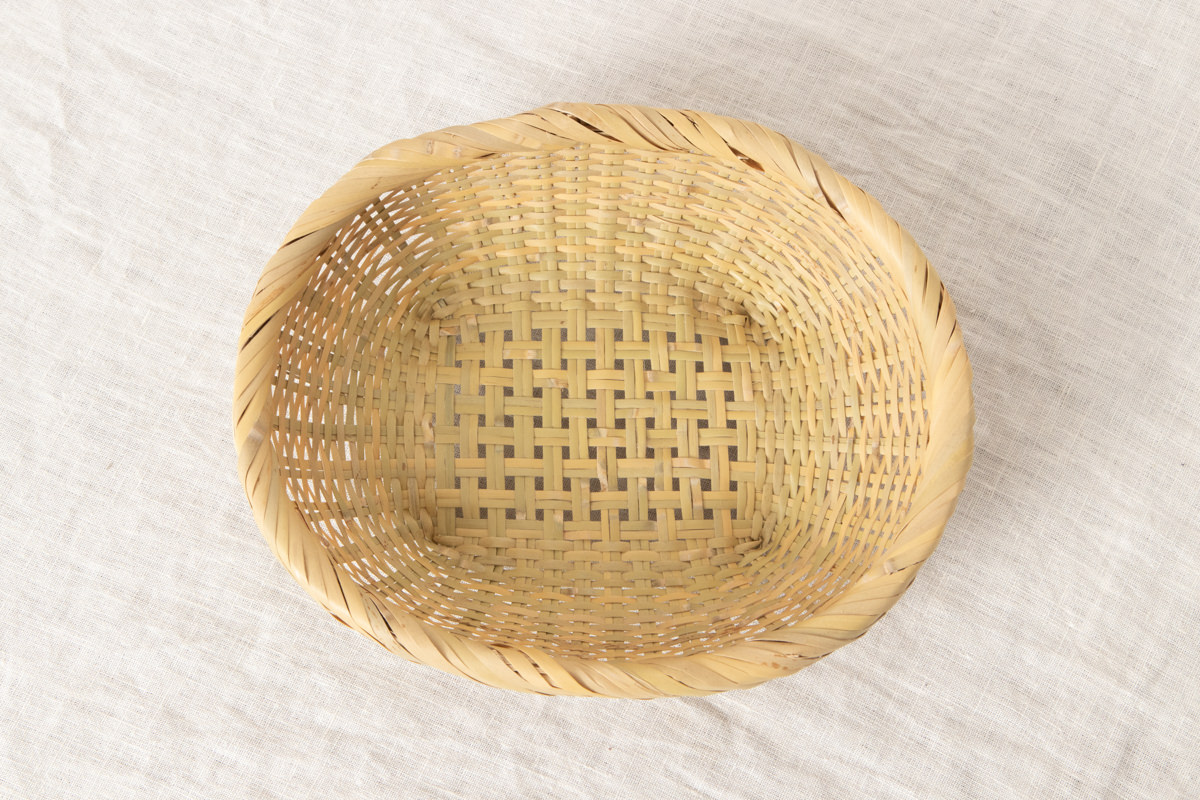
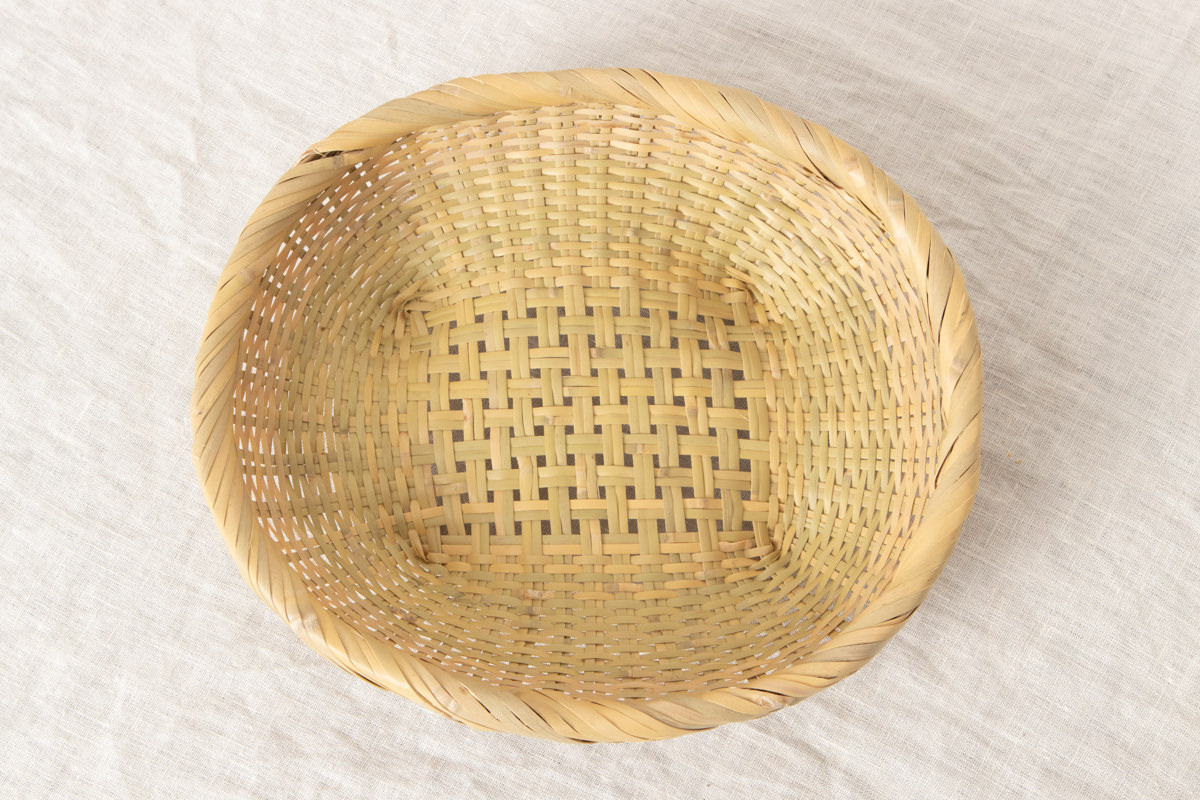
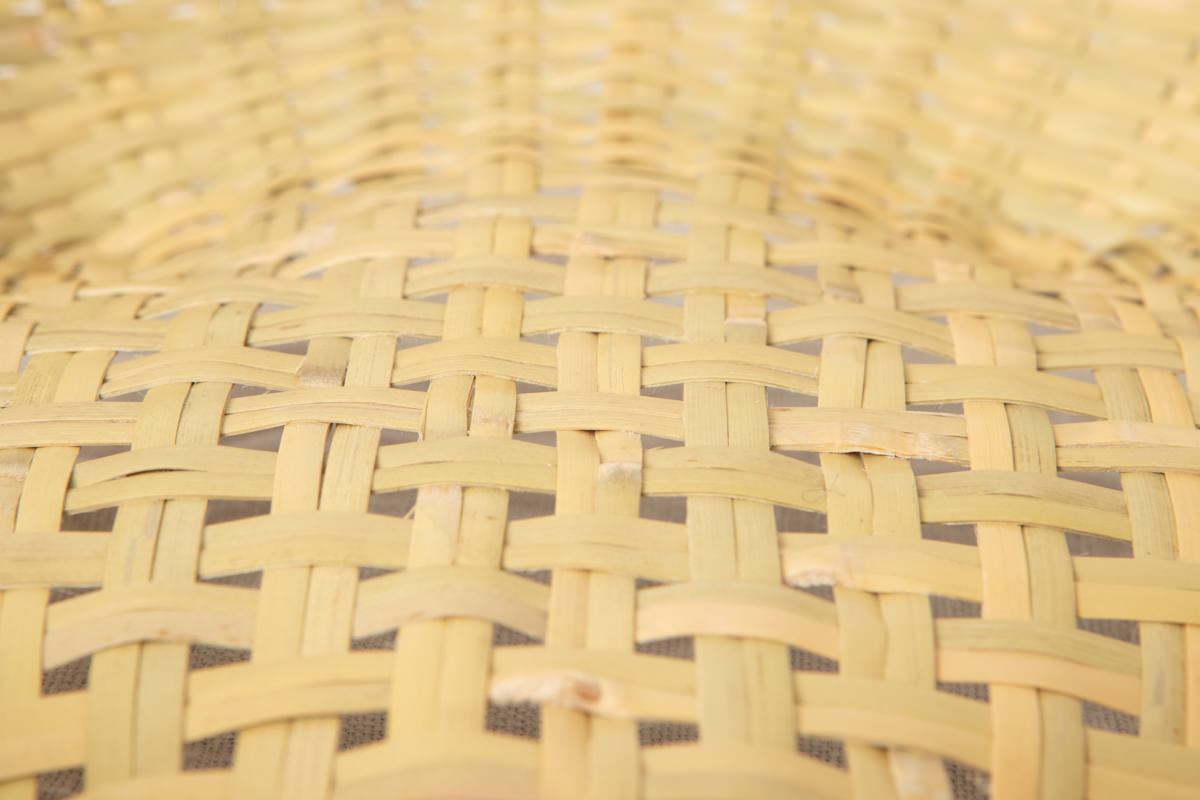
Although it is called “flat,” when viewed from the side, it stands on four small feet, and the rim rises firmly.The base is woven in “yotsume-ami,” a technique that forms a square pattern.The large open weave helps to drain moisture and release heat effectively.The surface gently slopes toward the four corners, allowing moisture to run off naturally.From above, the smooth outer surface of the bamboo skin is used on the front side. It repels water and helps prevent splinters from scratching your hands or ingredients.As it moves from the base toward the sides, the weave becomes finer, and the careful weaving continues throughout.This is the rim. Madake bamboo is used as the core, and medake bamboo is carefully wrapped around it to finish.From the side, you can see that the rim is made with a wide, generous edge.The fine bamboo strips run diagonally in a flowing pattern, creating a regular and beautiful weave.This is the underside of the tray. The bamboo strips are carefully finished here as well, so that the surface feels smooth to the touch.The four small feet stand upright with a crisp form, adding a sense of beauty.Viewed from the side, it stands on its feet and holds itself upright. This appearance is also part of its charm.
Now, we will introduce each size in turn.
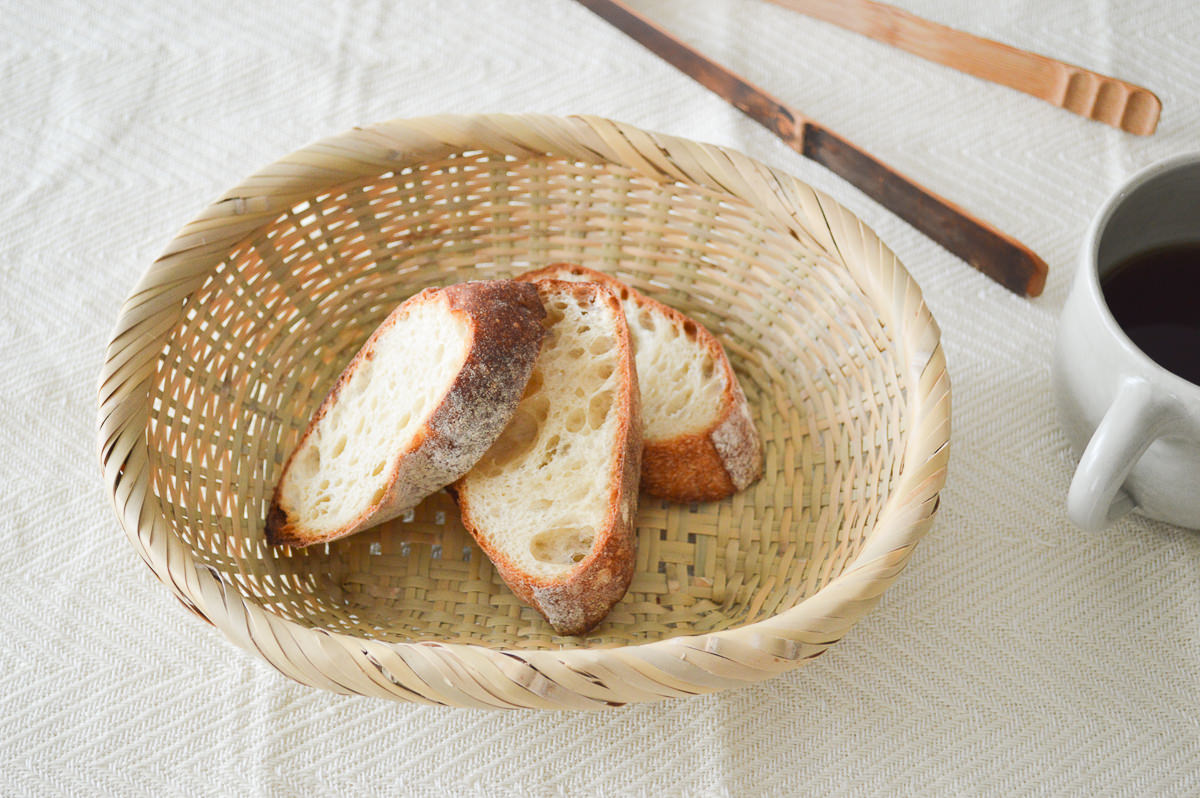
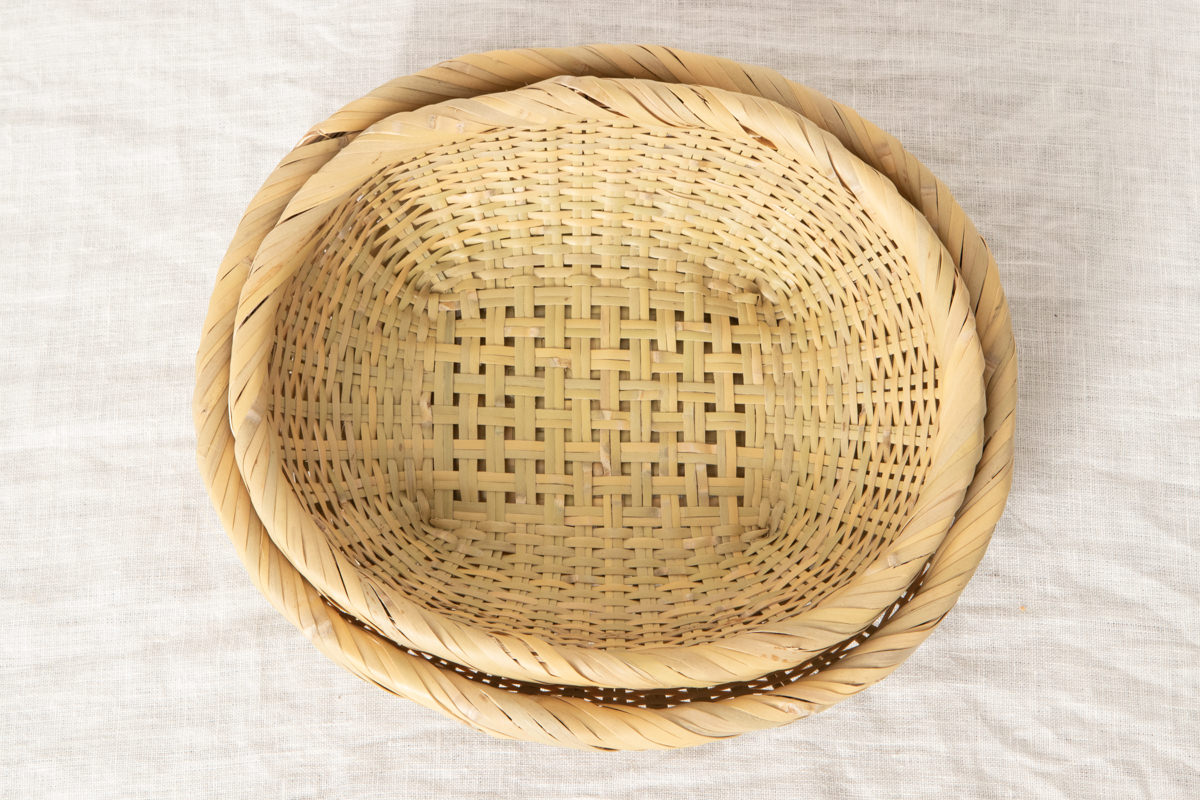
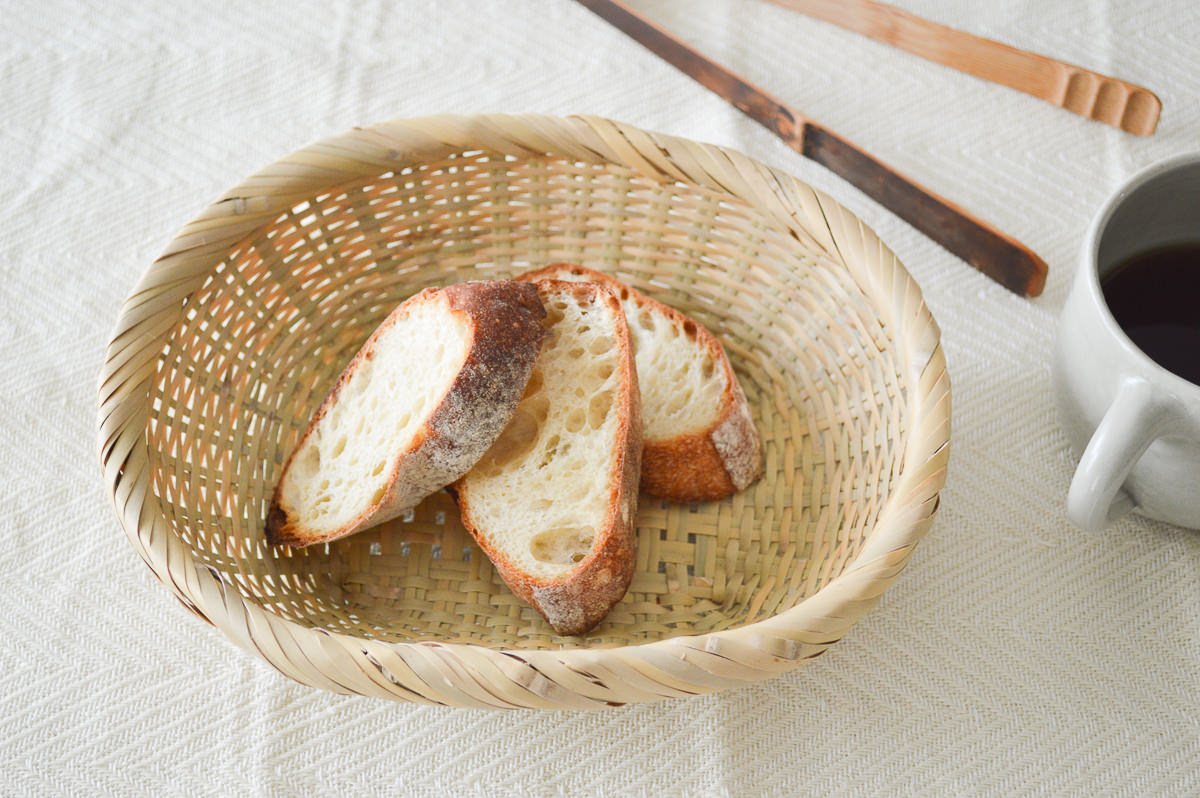
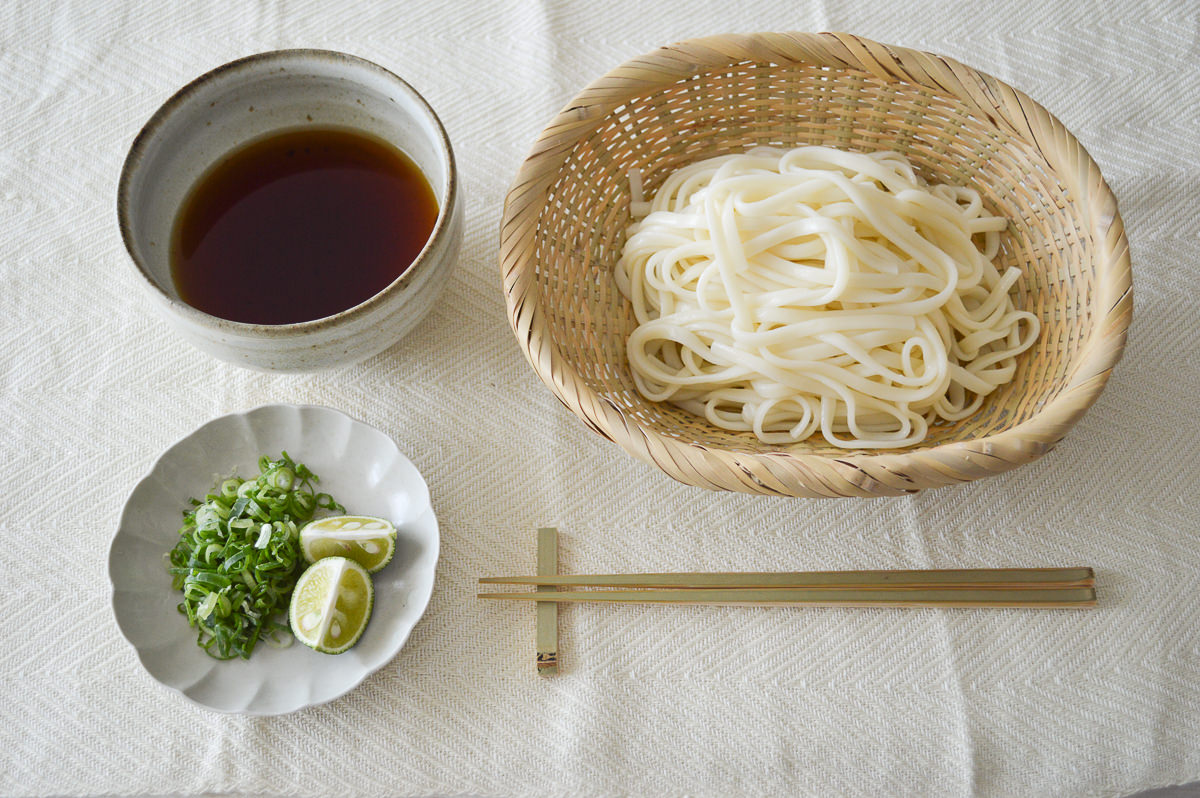
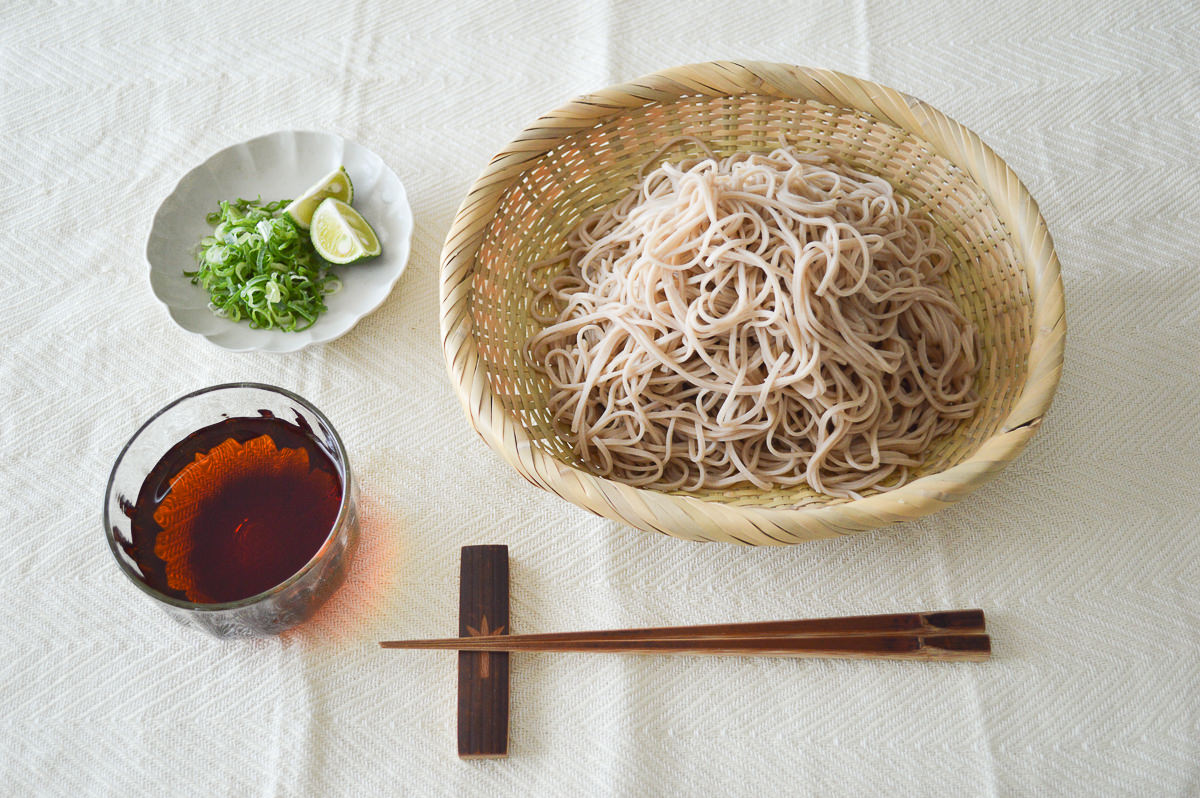
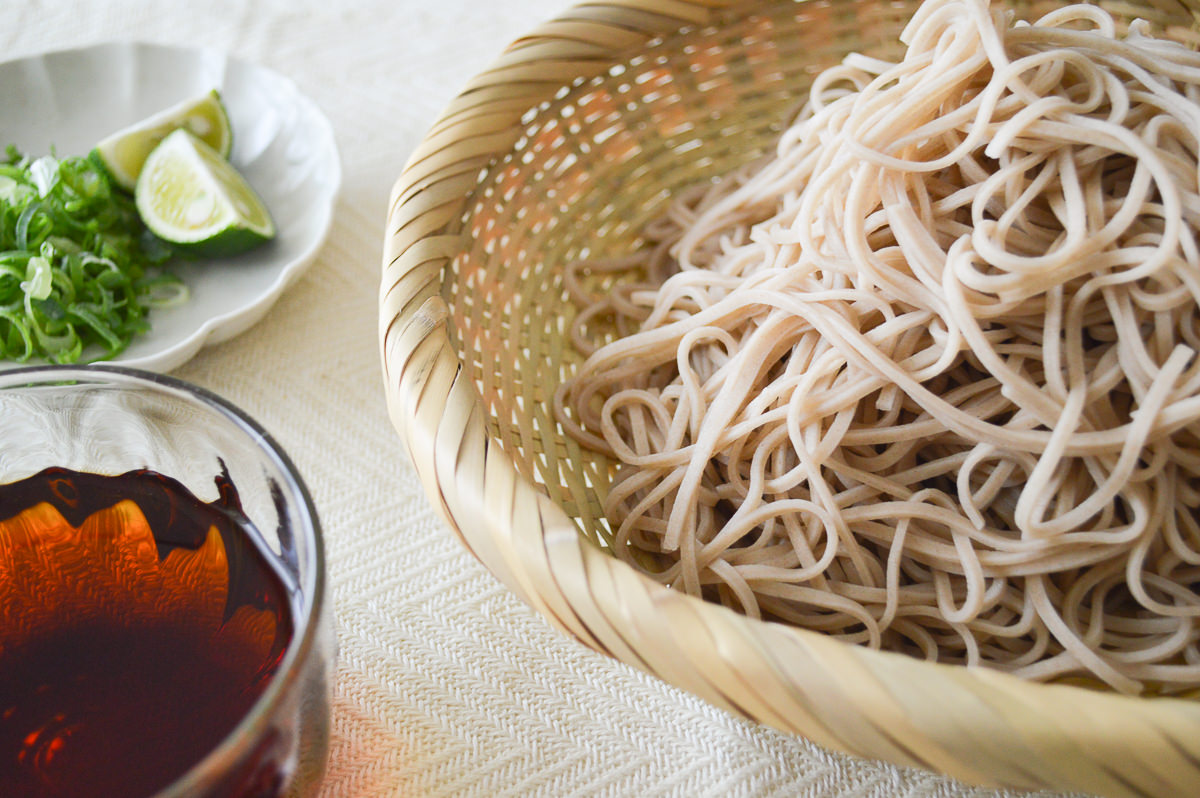
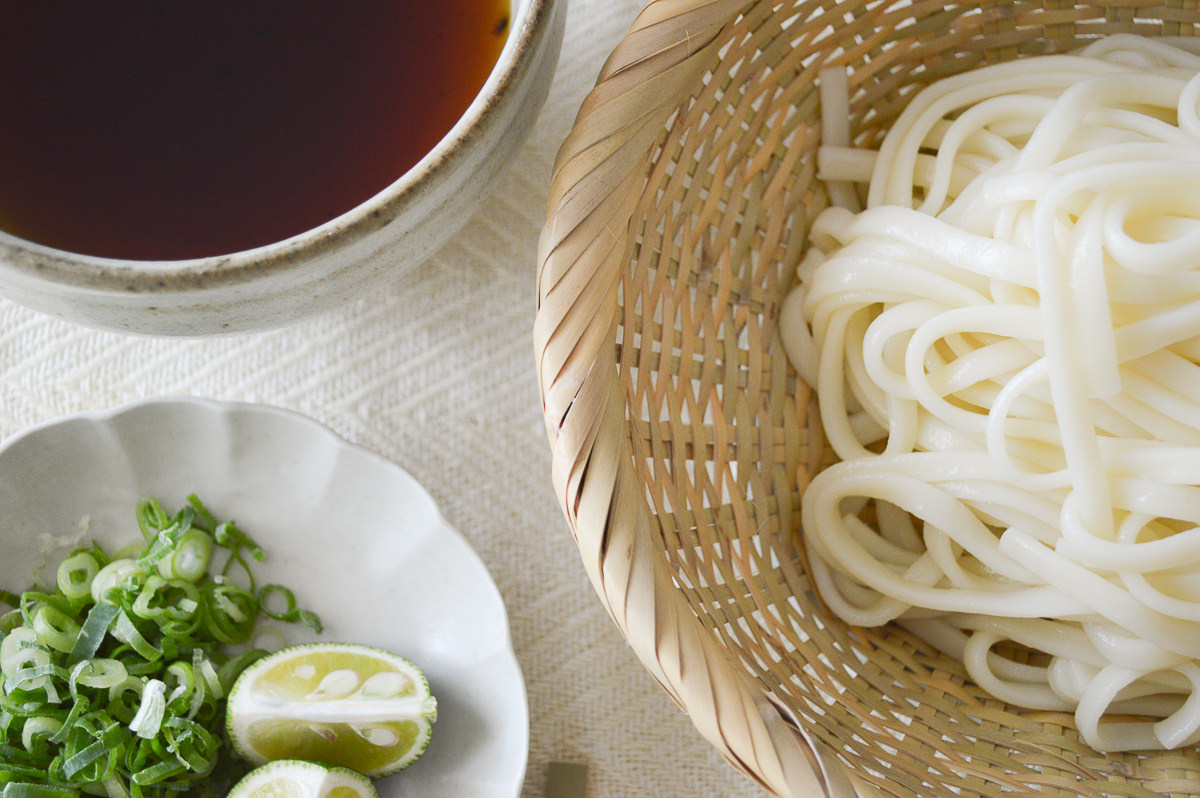
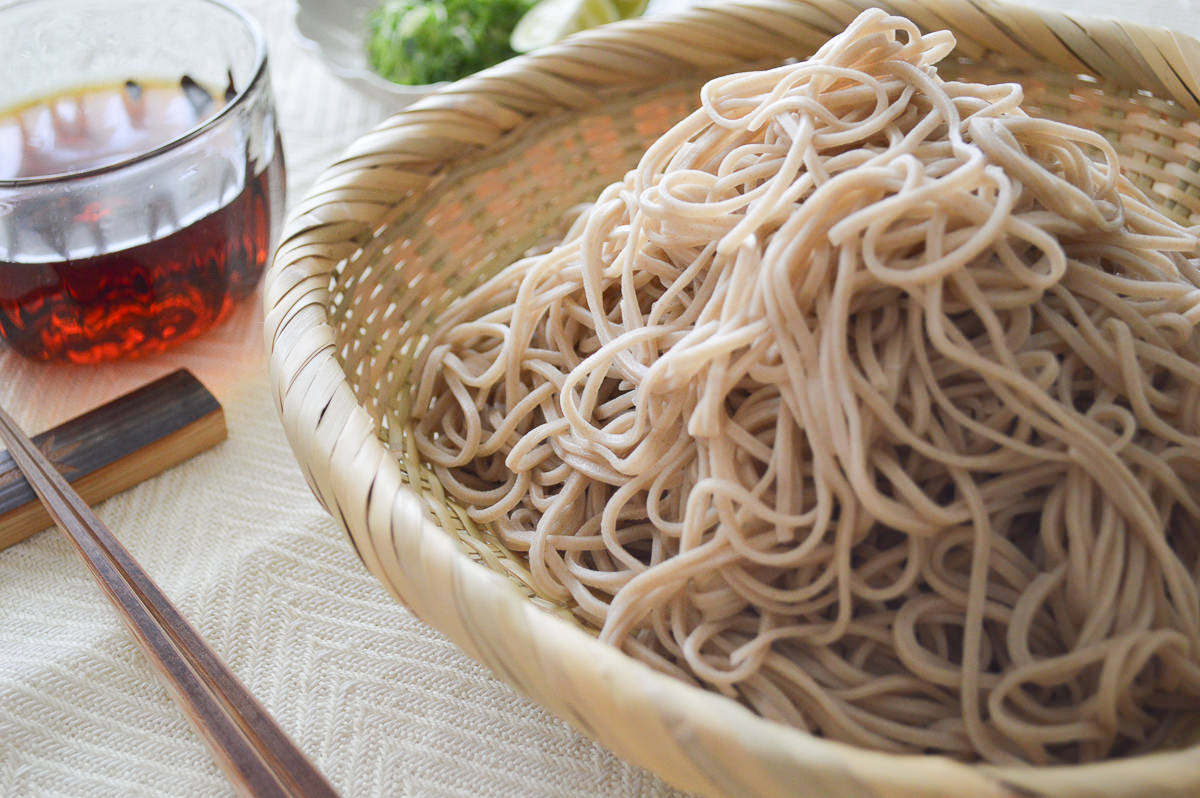
This is the small size.Three slices of baguette are placed on the small size.About 100 grams (3.53 oz) of udon noodles are placed on the small size.Next, this is the medium size.About 200 grams (7.05 oz) of soba noodles are placed on the medium size.
Ideal for serving zaru soba, zaru udon, somen, or Chinese noodles.
It can also be used for bread, onigiri, tempura, or fried dishes.
After use, if it becomes oily, apply a small amount of mild detergent and scrub lightly with a brush, then rinse thoroughly.
If there are only crumbs or small food residues, simply brushing it off is sufficient.
Even when not in use, you can enjoy the beautiful weave.
Simple, yet with a depth to it, this tray offers a quiet richness.
Its oval shape makes it easy to handle and use.
It invites a wide range of uses, depending on how you choose to enjoy it.
Please choose the size you prefer.
Please note: This item ships from Japan. As the buyer, you are responsible for any import duties, customs fees, or local taxes that may be charged in your country. These costs are not included in the item price or shipping cost. Please check with your local customs authority if you are unsure about any potential charges before placing your order.
This is a Square Flat Tray (kakuhira zaru) woven from medake bamboo grown in Ehime, Japan.
Although made in Ehime, it is based on the techniques of “shinodake craft,” a traditional bamboo craft designated in Miyagi Prefecture.
The maker studied the techniques of “zaru” making in shinodake craft in Miyagi for several years, then moved to Ehime, where the material was changed from shinodake to locally sourced medake bamboo.
While making careful adjustments, a wide variety of zaru are crafted.
Shinodake craft from Miyagi is regarded as one of the finest traditions of zaru making in Japan.
Today, however, production has declined significantly due to the aging of makers.
In this context, it feels deeply meaningful that these techniques are being carried on in a different environment, with the maker continuing to devote themselves to the making of zaru.
Many makers study bamboo craft from Oita and Kyushu at the Beppu Bamboo Craft Training Center in Oita Prefecture, and later return to their hometowns to continue their work.
However, it is extremely rare—and truly valuable—for someone to learn the bamboo craft techniques of the Tohoku region, then move to another area and carry on that tradition in their work.
When continuing bamboo craft in a different region, one of the most significant challenges is how to source materials.
In Japan, the types of bamboo that grow naturally vary by area —such as shinodake, medake, madake, nemagari bamboo, and moso bamboo— so once the location changes, it becomes difficult to obtain the same materials used in other regions.
In this case, the maker harvests medake bamboo growing in the mountains of Ehime and Kochi, using it as a substitute for shinodake, and prepares the material themselves while weaving each zaru.
Medake is sometimes referred to as “shinodake” because of its similar appearance, but in fact it is harder than the shinodake used in Miyagi, resulting in a sturdier finished piece.
During their training in Miyagi, the maker also traveled throughout Japan to study bamboo craft in different regions.
As a result, this piece can be seen as a kind of hybrid—combining the techniques of Miyagi-style zaru with elements of bamboo craft from across the country.
On this page, we introduce the Square Flat Tray (kakuhira zaru) in two sizes: small and medium.
Although it is called “flat,” when viewed from the side, it stands on four small feet, and the rim rises firmly.The base is woven in “yotsume-ami,” a technique that forms a square pattern.The large open weave helps to drain moisture and release heat effectively.The surface gently slopes toward the four corners, allowing moisture to run off naturally.From above, the smooth outer surface of the bamboo skin is used on the front side. It repels water and helps prevent splinters from scratching your hands or ingredients.As it moves from the base toward the sides, the weave becomes finer, and the careful weaving continues throughout.This is the rim. Madake bamboo is used as the core, and medake bamboo is carefully wrapped around it to finish.From the side, you can see that the rim is made with a wide, generous edge.The fine bamboo strips run diagonally in a flowing pattern, creating a regular and beautiful weave.This is the underside of the tray. The bamboo strips are carefully finished here as well, so that the surface feels smooth to the touch.The four small feet stand upright with a crisp form, adding a sense of beauty.Viewed from the side, it stands on its feet and holds itself upright. This appearance is also part of its charm.
Now, we will introduce each size in turn.
This is the small size.Three slices of baguette are placed on the small size.About 100 grams (3.53 oz) of udon noodles are placed on the small size.Next, this is the medium size.About 200 grams (7.05 oz) of soba noodles are placed on the medium size.
Ideal for serving zaru soba, zaru udon, somen, or Chinese noodles.
It can also be used for bread, onigiri, tempura, or fried dishes.
After use, if it becomes oily, apply a small amount of mild detergent and scrub lightly with a brush, then rinse thoroughly.
If there are only crumbs or small food residues, simply brushing it off is sufficient.
Even when not in use, you can enjoy the beautiful weave.
Simple, yet with a depth to it, this tray offers a quiet richness.
Its oval shape makes it easy to handle and use.
It invites a wide range of uses, depending on how you choose to enjoy it.
Please choose the size you prefer.
Please note: This item ships from Japan. As the buyer, you are responsible for any import duties, customs fees, or local taxes that may be charged in your country. These costs are not included in the item price or shipping cost. Please check with your local customs authority if you are unsure about any potential charges before placing your order.
This is a Square Flat Tray (kakuhira zaru) woven from medake bamboo grown in Ehime, Japan.
Although made in Ehime, it is based on the techniques of “shinodake craft,” a traditional bamboo craft designated in Miyagi Prefecture.
The maker studied the techniques of “zaru” making in shinodake craft in Miyagi for several years, then moved to Ehime, where the material was changed from shinodake to locally sourced medake bamboo.
While making careful adjustments, a wide variety of zaru are crafted.
Shinodake craft from Miyagi is regarded as one of the finest traditions of zaru making in Japan.
Today, however, production has declined significantly due to the aging of makers.
In this context, it feels deeply meaningful that these techniques are being carried on in a different environment, with the maker continuing to devote themselves to the making of zaru.
Many makers study bamboo craft from Oita and Kyushu at the Beppu Bamboo Craft Training Center in Oita Prefecture, and later return to their hometowns to continue their work.
However, it is extremely rare—and truly valuable—for someone to learn the bamboo craft techniques of the Tohoku region, then move to another area and carry on that tradition in their work.
When continuing bamboo craft in a different region, one of the most significant challenges is how to source materials.
In Japan, the types of bamboo that grow naturally vary by area —such as shinodake, medake, madake, nemagari bamboo, and moso bamboo— so once the location changes, it becomes difficult to obtain the same materials used in other regions.
In this case, the maker harvests medake bamboo growing in the mountains of Ehime and Kochi, using it as a substitute for shinodake, and prepares the material themselves while weaving each zaru.
Medake is sometimes referred to as “shinodake” because of its similar appearance, but in fact it is harder than the shinodake used in Miyagi, resulting in a sturdier finished piece.
During their training in Miyagi, the maker also traveled throughout Japan to study bamboo craft in different regions.
As a result, this piece can be seen as a kind of hybrid—combining the techniques of Miyagi-style zaru with elements of bamboo craft from across the country.
On this page, we introduce the Square Flat Tray (kakuhira zaru) in two sizes: small and medium.
Although it is called “flat,” when viewed from the side, it stands on four small feet, and the rim rises firmly.The base is woven in “yotsume-ami,” a technique that forms a square pattern.The large open weave helps to drain moisture and release heat effectively.The surface gently slopes toward the four corners, allowing moisture to run off naturally.From above, the smooth outer surface of the bamboo skin is used on the front side. It repels water and helps prevent splinters from scratching your hands or ingredients.As it moves from the base toward the sides, the weave becomes finer, and the careful weaving continues throughout.This is the rim. Madake bamboo is used as the core, and medake bamboo is carefully wrapped around it to finish.From the side, you can see that the rim is made with a wide, generous edge.The fine bamboo strips run diagonally in a flowing pattern, creating a regular and beautiful weave.This is the underside of the tray. The bamboo strips are carefully finished here as well, so that the surface feels smooth to the touch.The four small feet stand upright with a crisp form, adding a sense of beauty.Viewed from the side, it stands on its feet and holds itself upright. This appearance is also part of its charm.
Now, we will introduce each size in turn.
This is the small size.Three slices of baguette are placed on the small size.About 100 grams (3.53 oz) of udon noodles are placed on the small size.Next, this is the medium size.About 200 grams (7.05 oz) of soba noodles are placed on the medium size.
Ideal for serving zaru soba, zaru udon, somen, or Chinese noodles.
It can also be used for bread, onigiri, tempura, or fried dishes.
After use, if it becomes oily, apply a small amount of mild detergent and scrub lightly with a brush, then rinse thoroughly.
If there are only crumbs or small food residues, simply brushing it off is sufficient.
Even when not in use, you can enjoy the beautiful weave.
Simple, yet with a depth to it, this tray offers a quiet richness.
Its oval shape makes it easy to handle and use.
It invites a wide range of uses, depending on how you choose to enjoy it.
Please choose the size you prefer.
Please note: This item ships from Japan. As the buyer, you are responsible for any import duties, customs fees, or local taxes that may be charged in your country. These costs are not included in the item price or shipping cost. Please check with your local customs authority if you are unsure about any potential charges before placing your order.