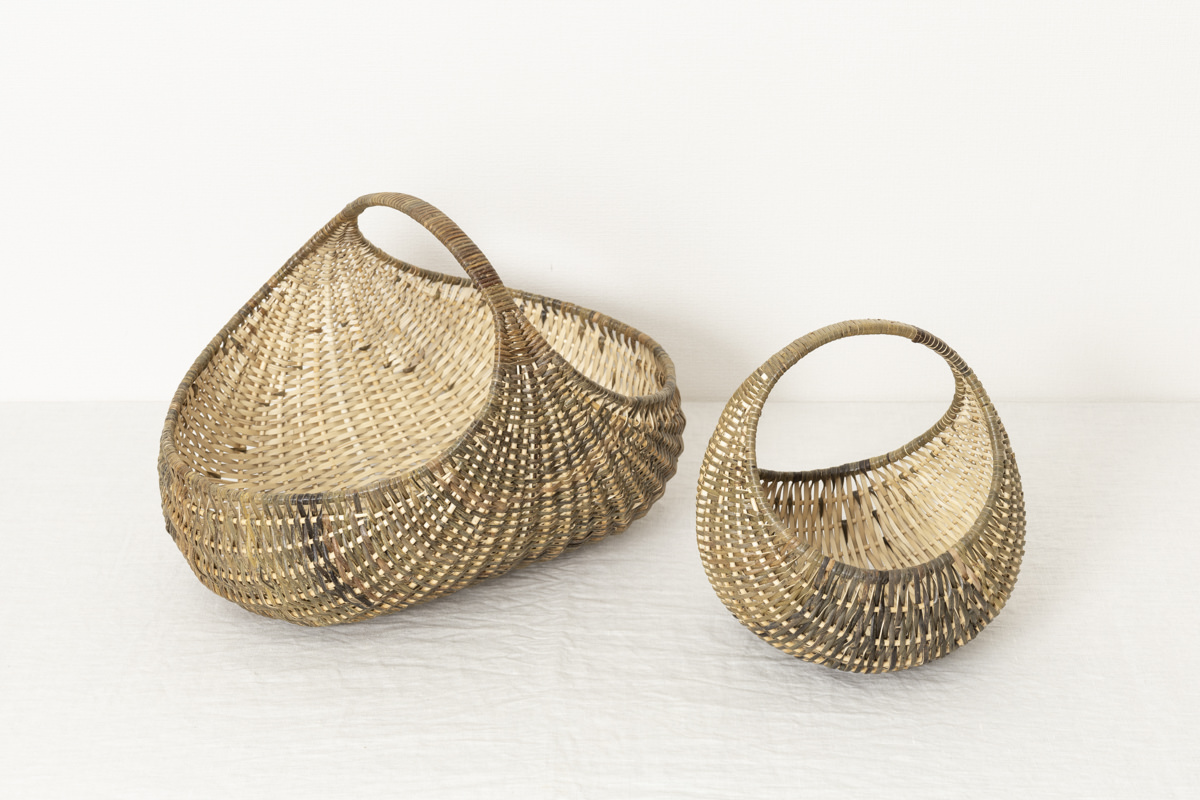
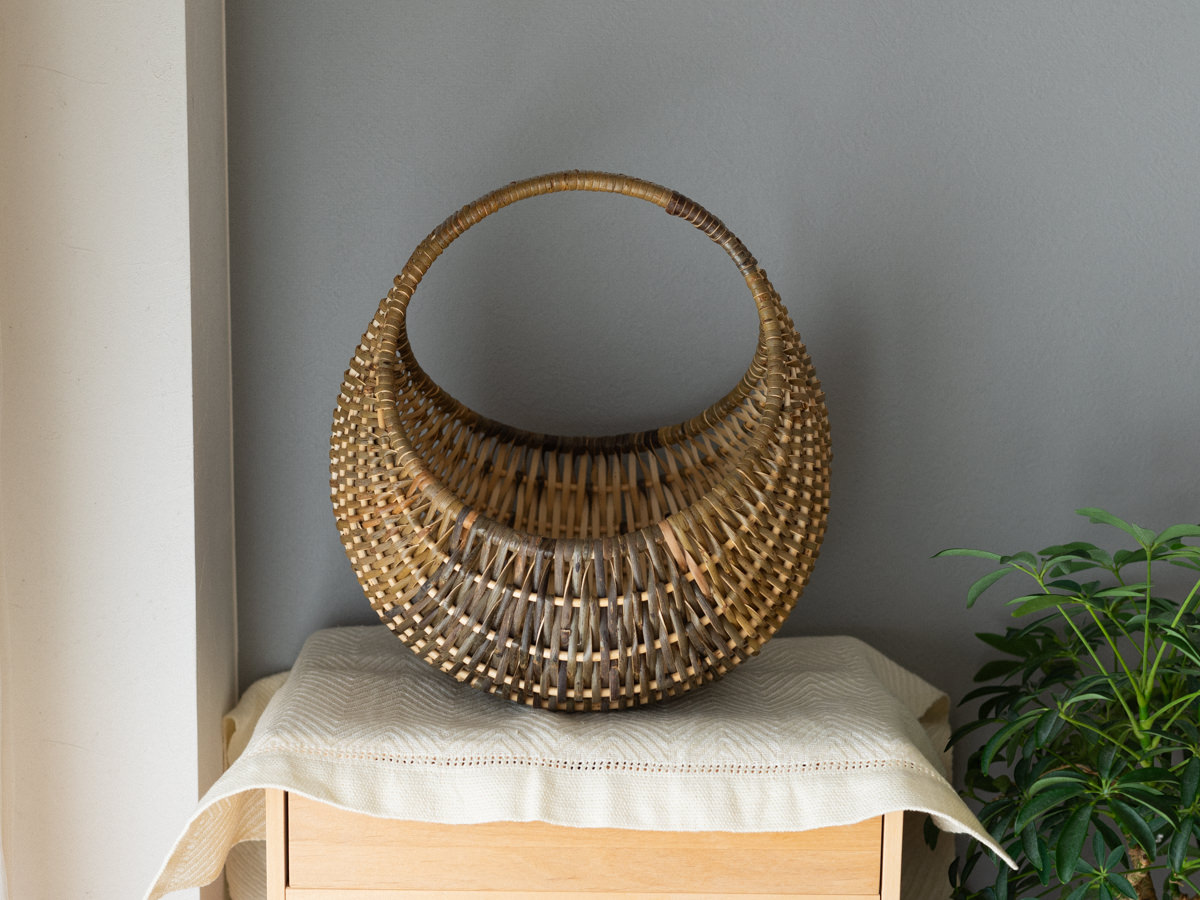
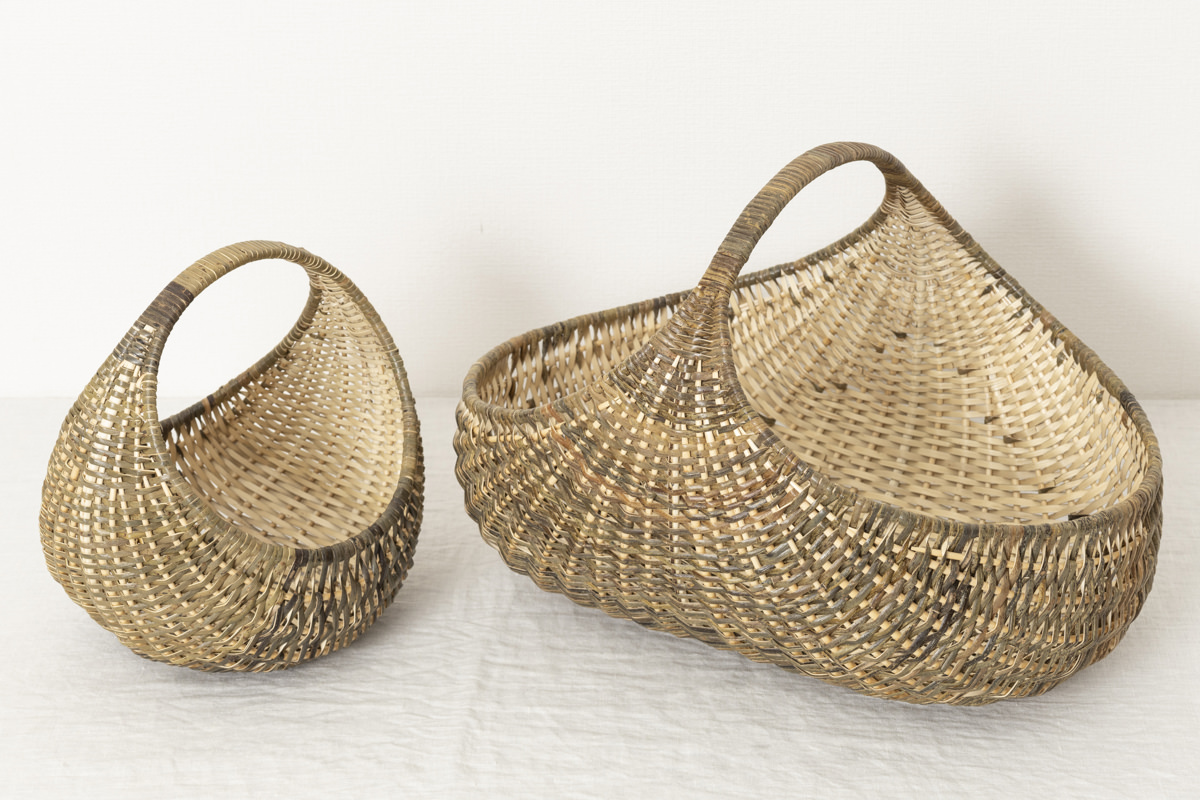
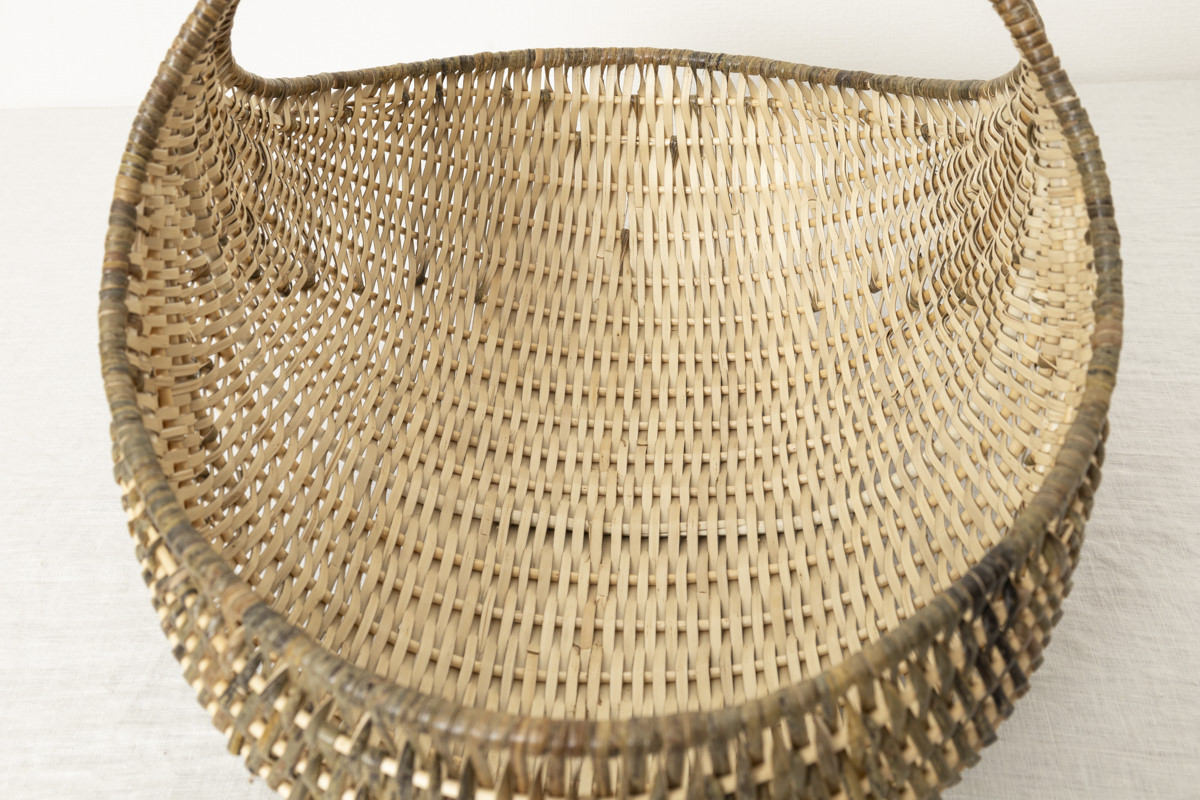
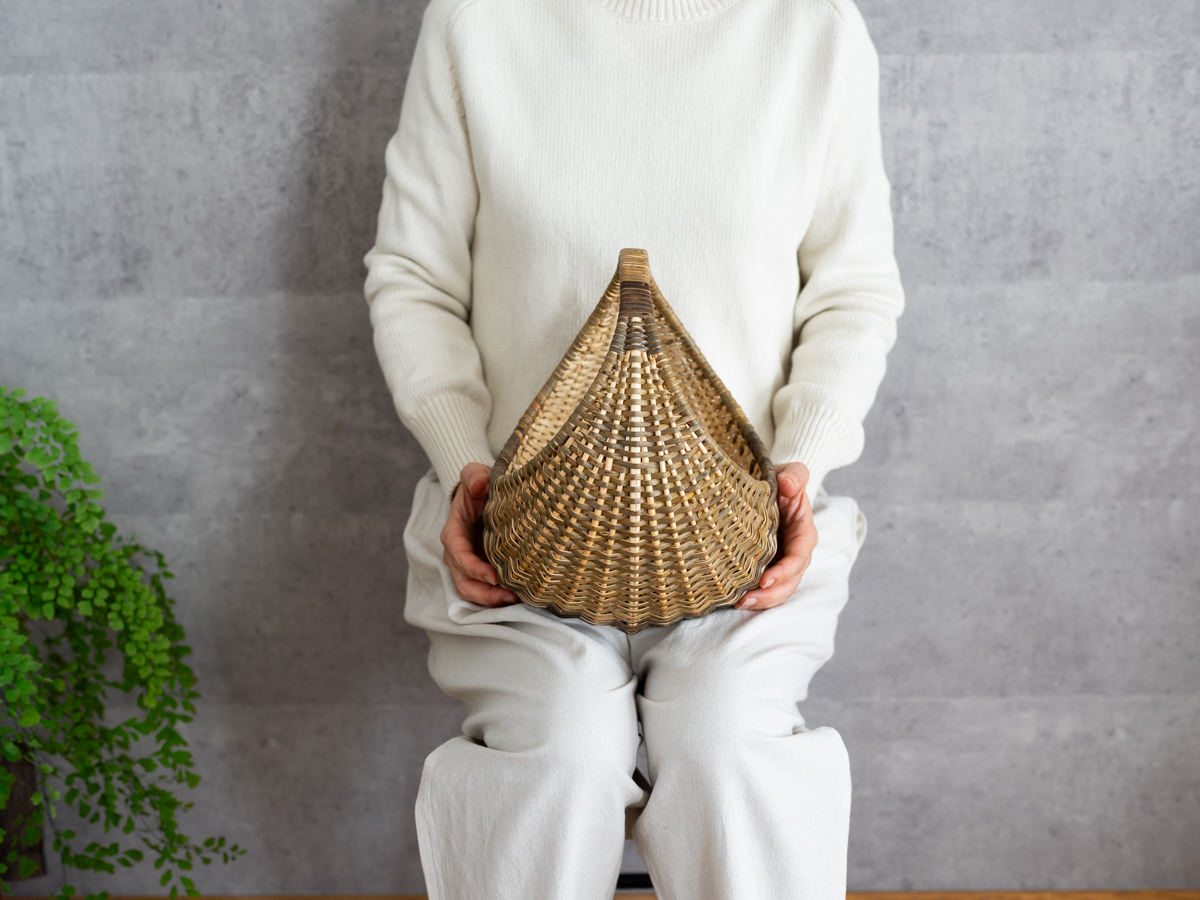
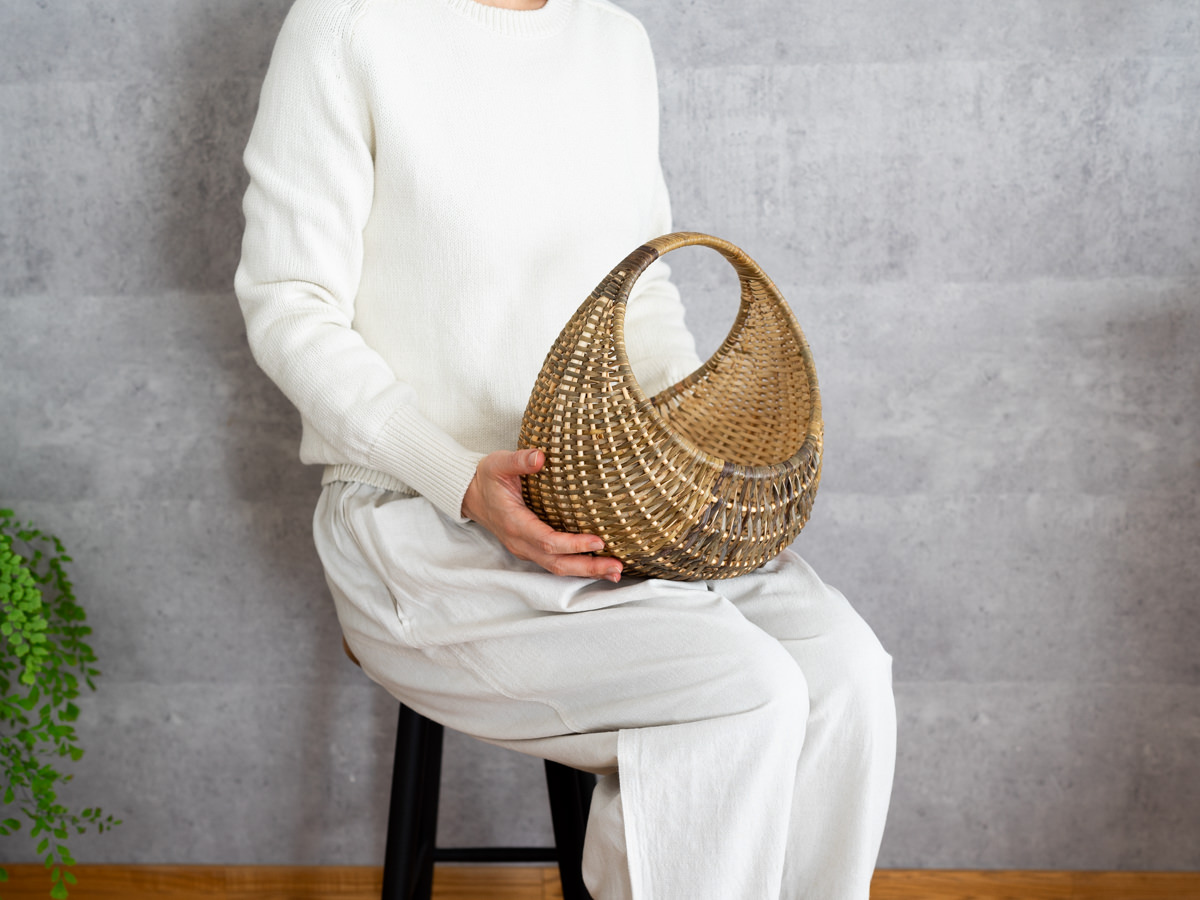
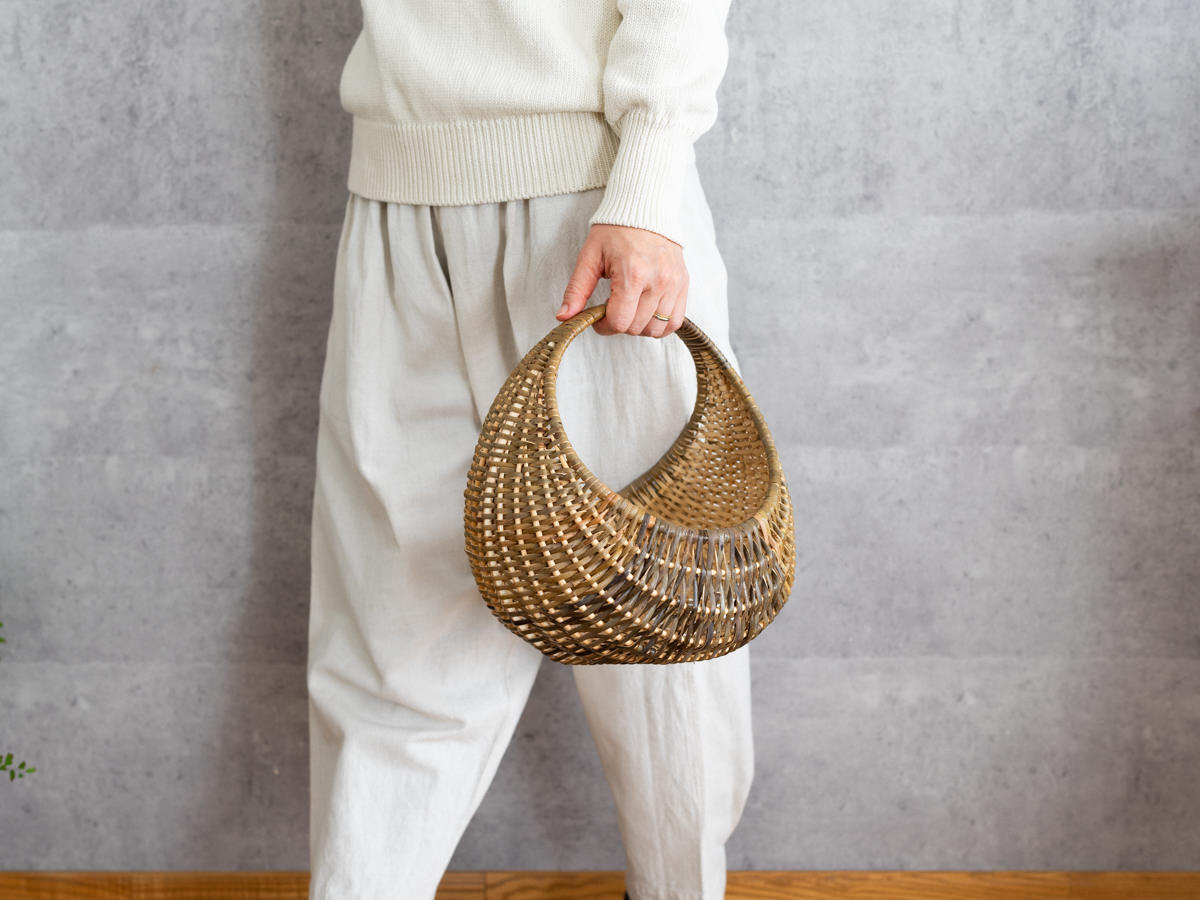
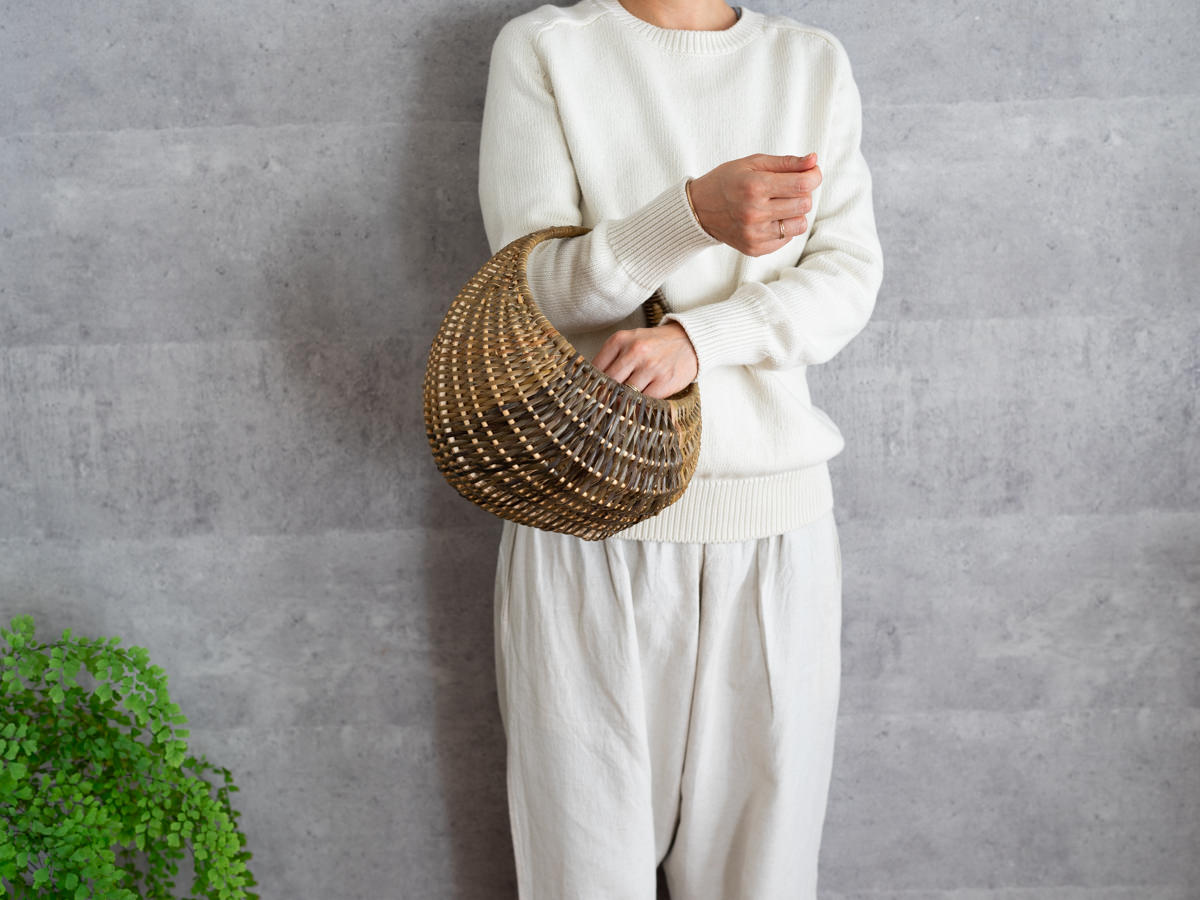
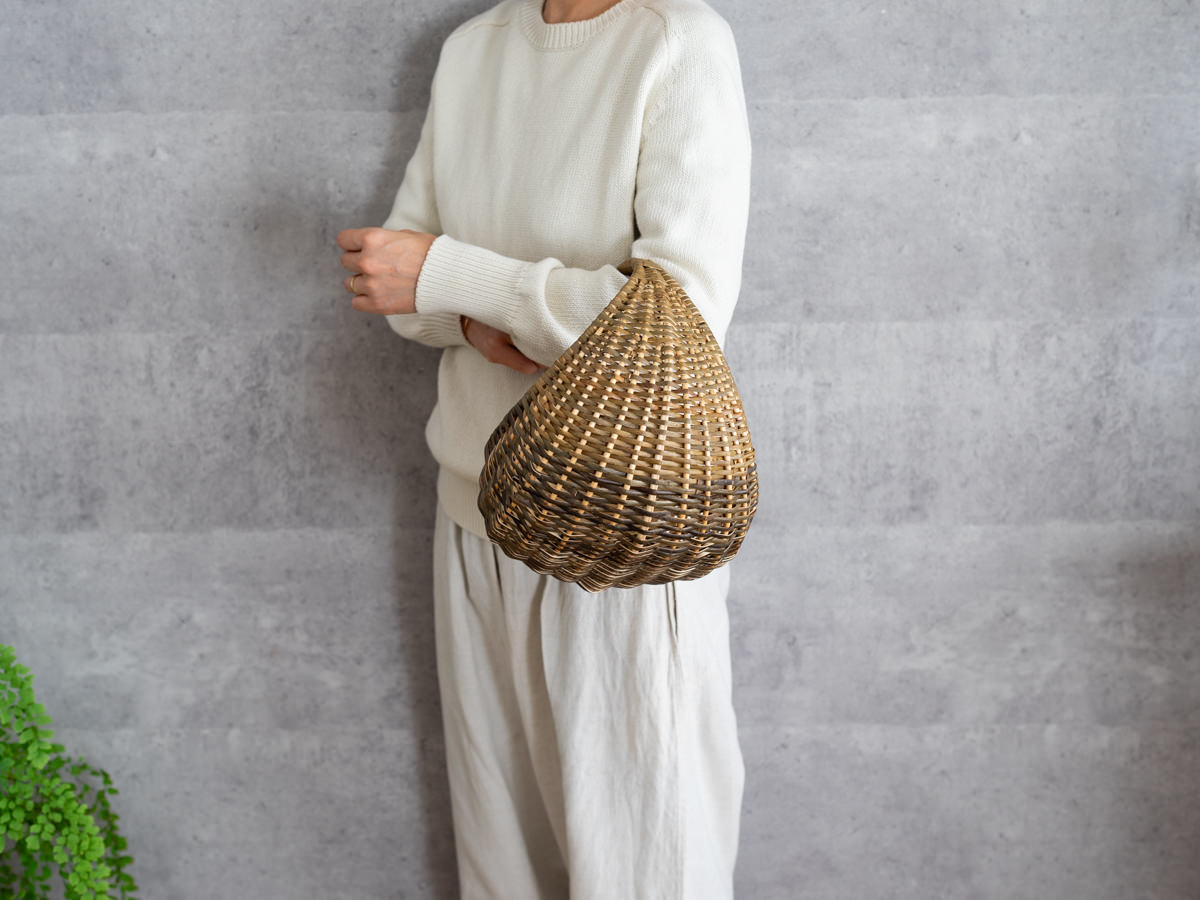
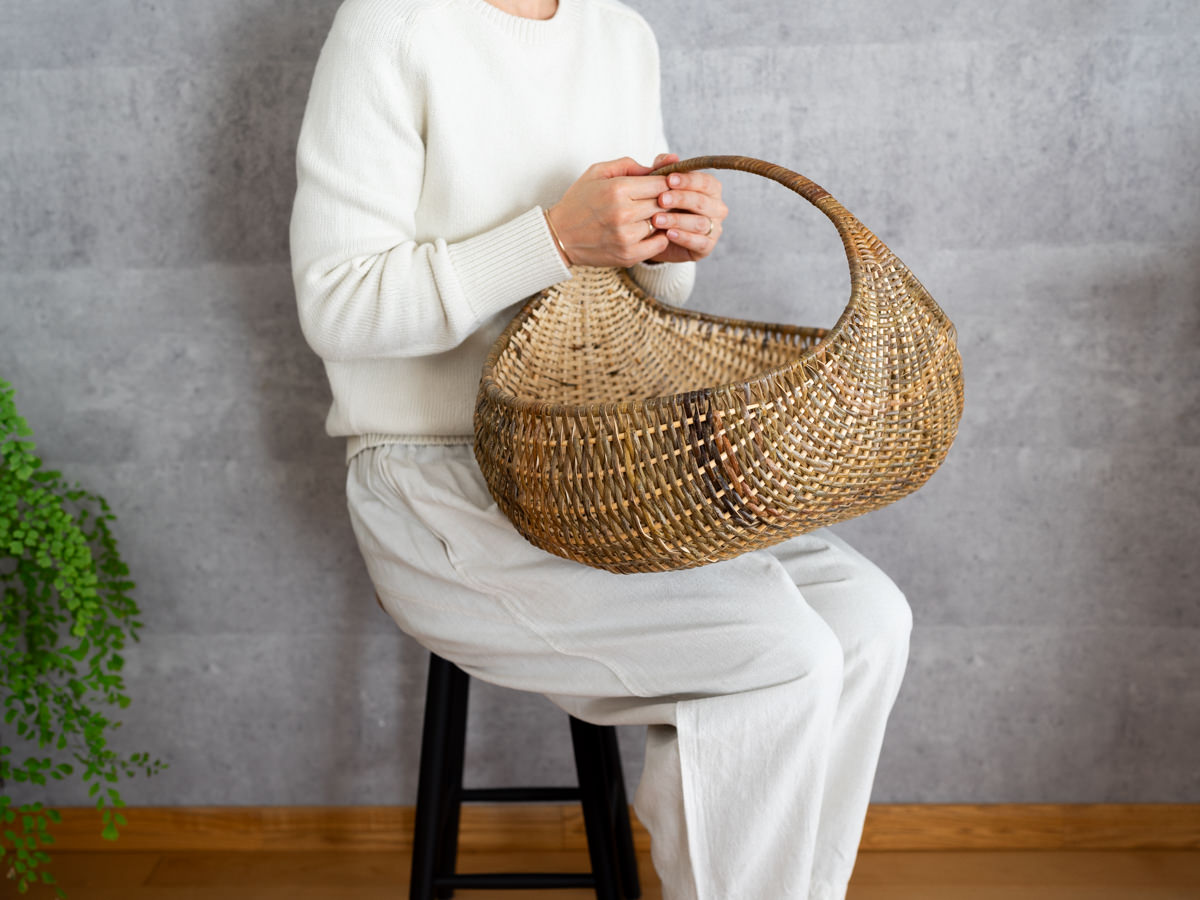
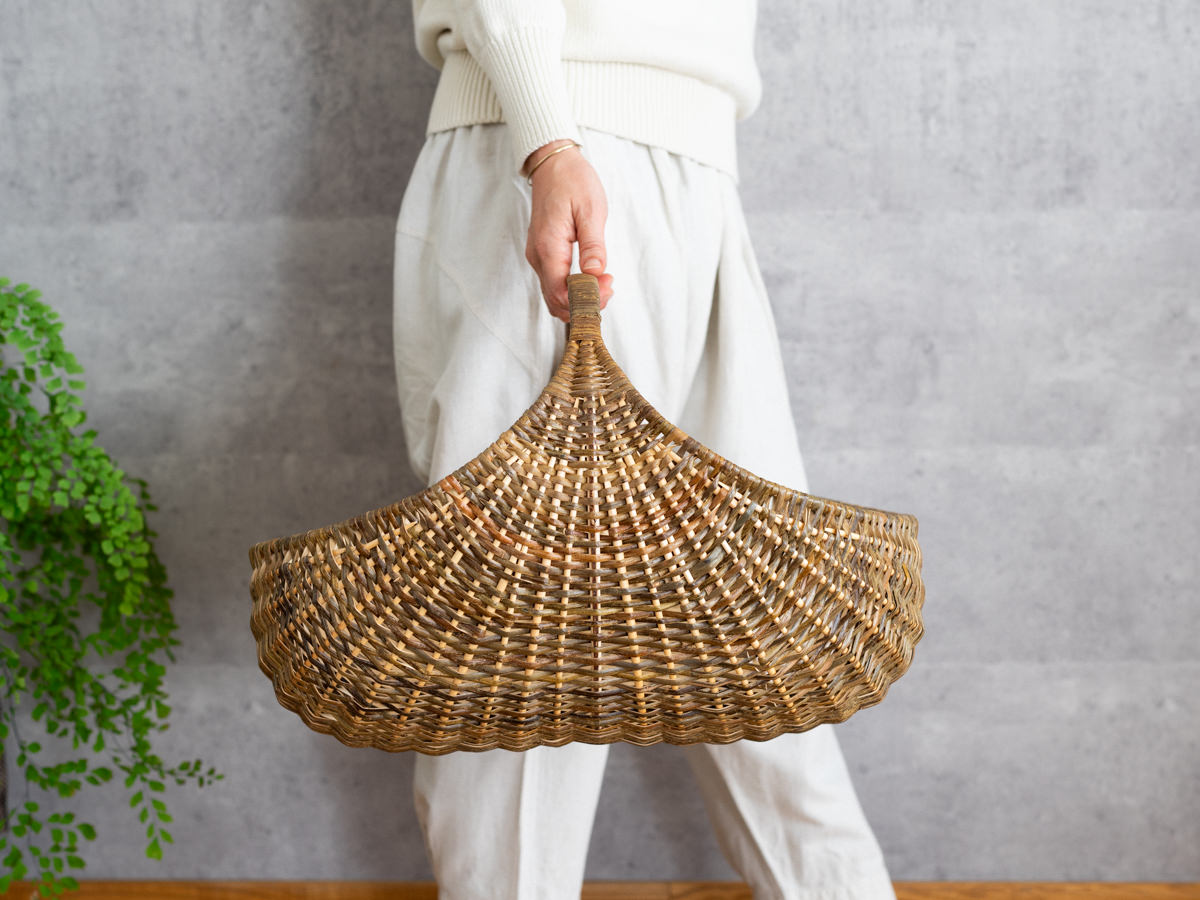
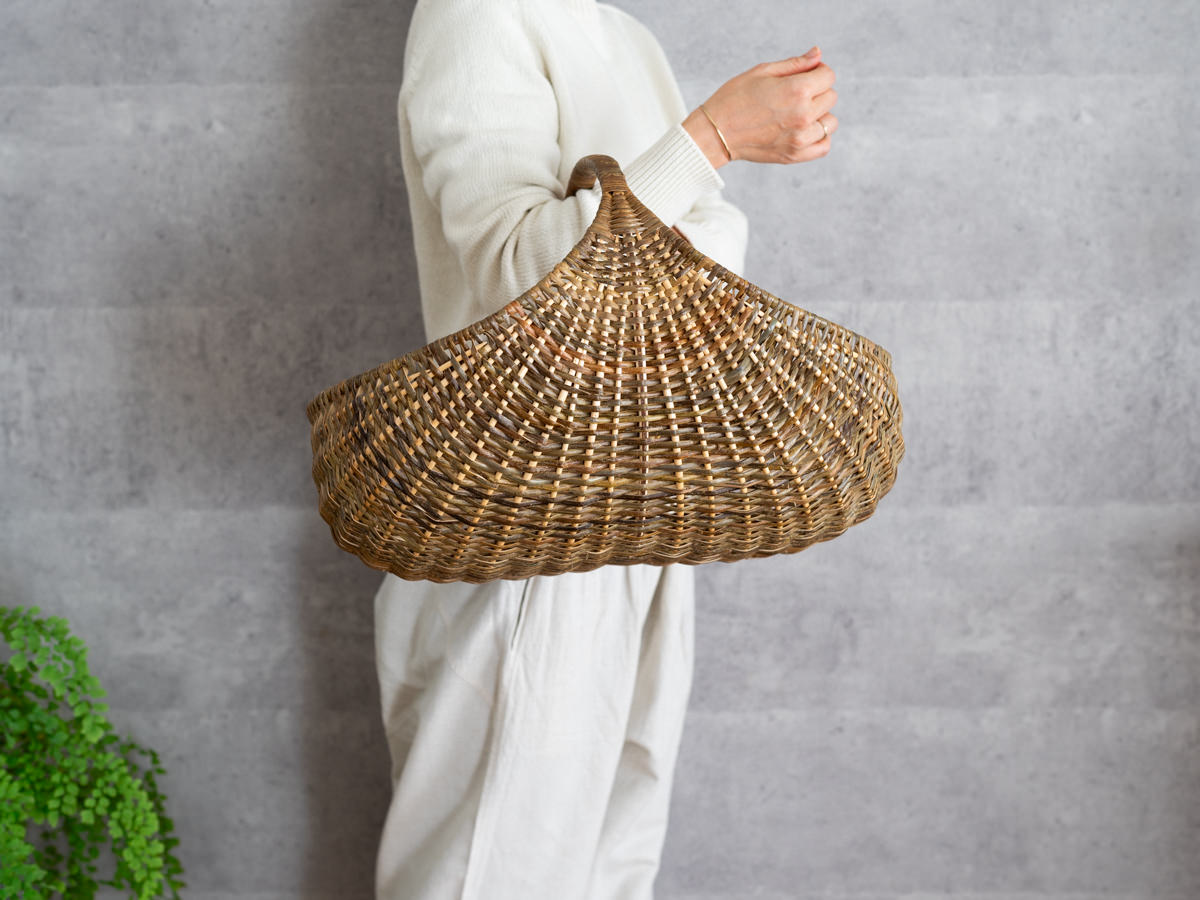
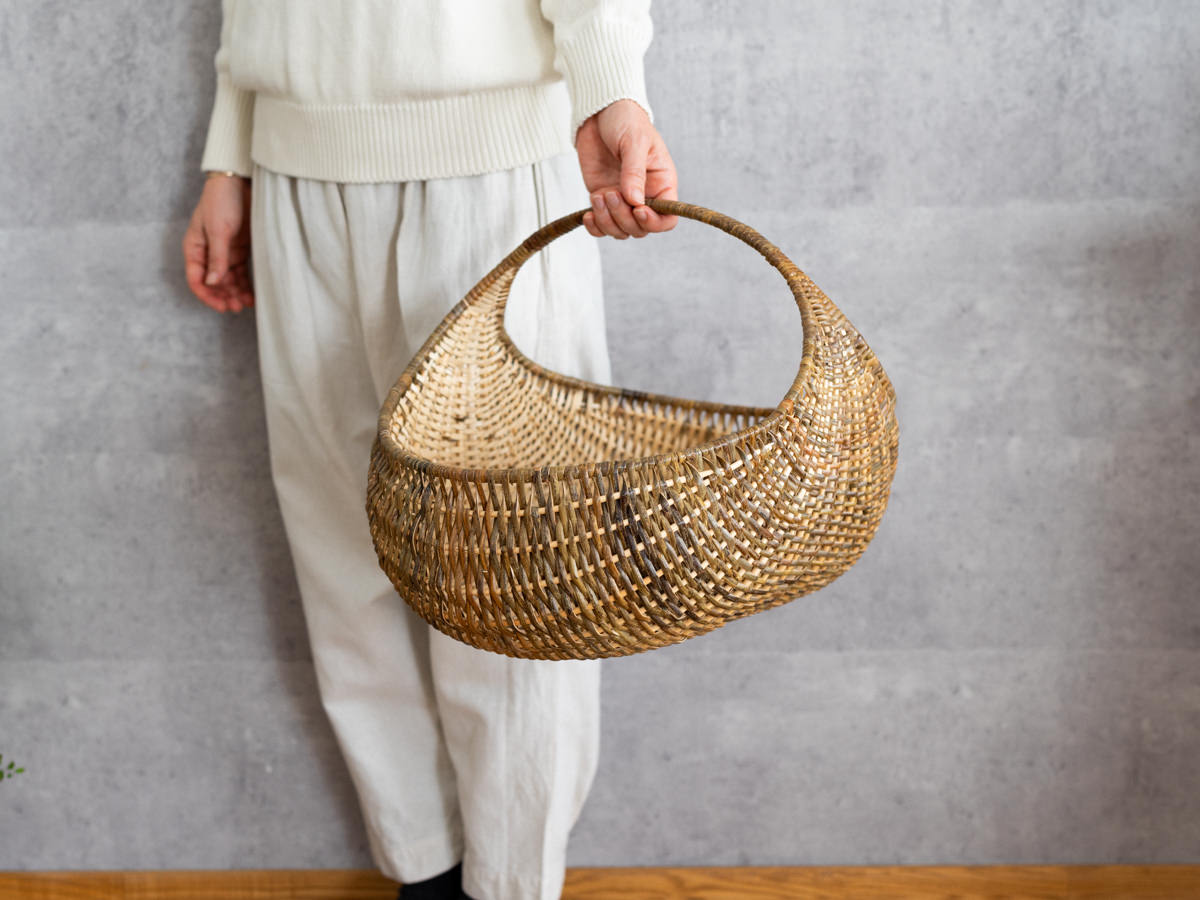
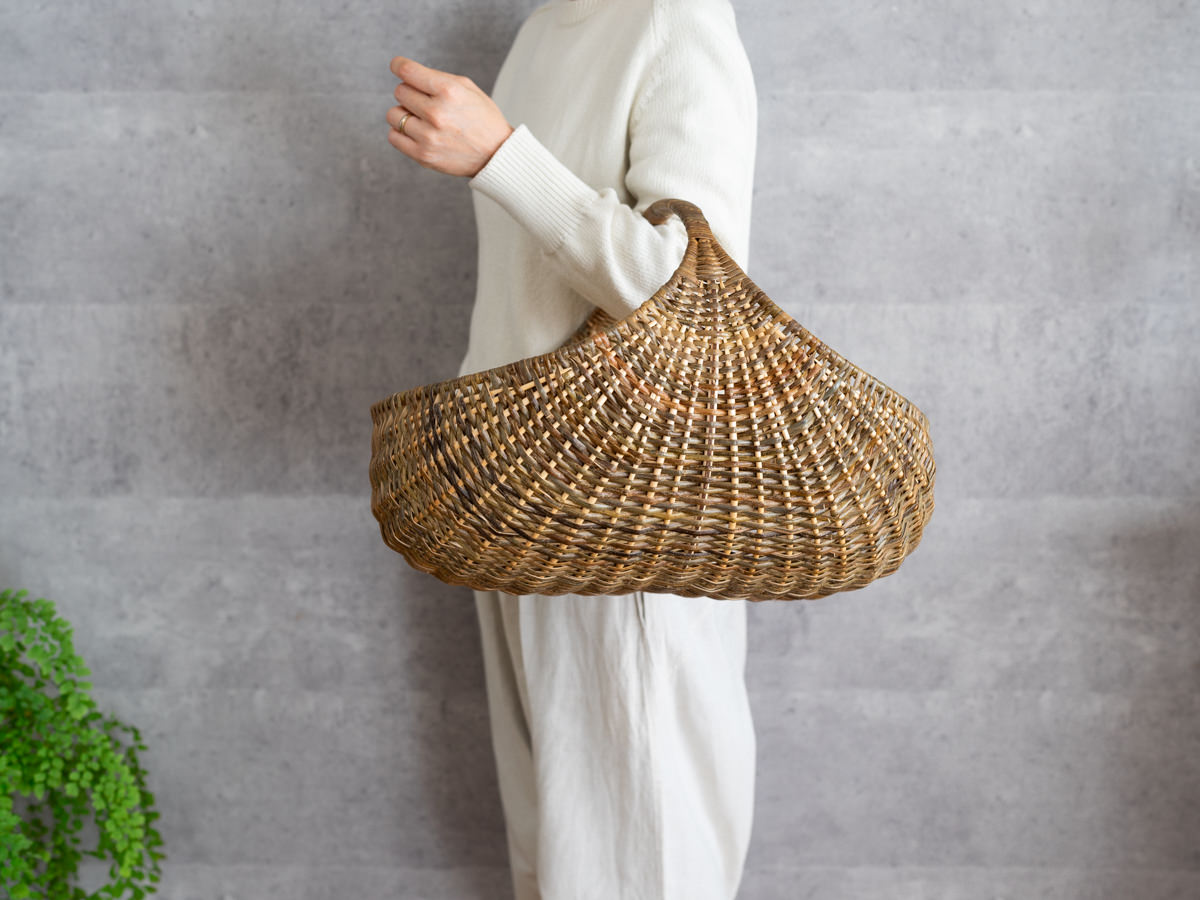
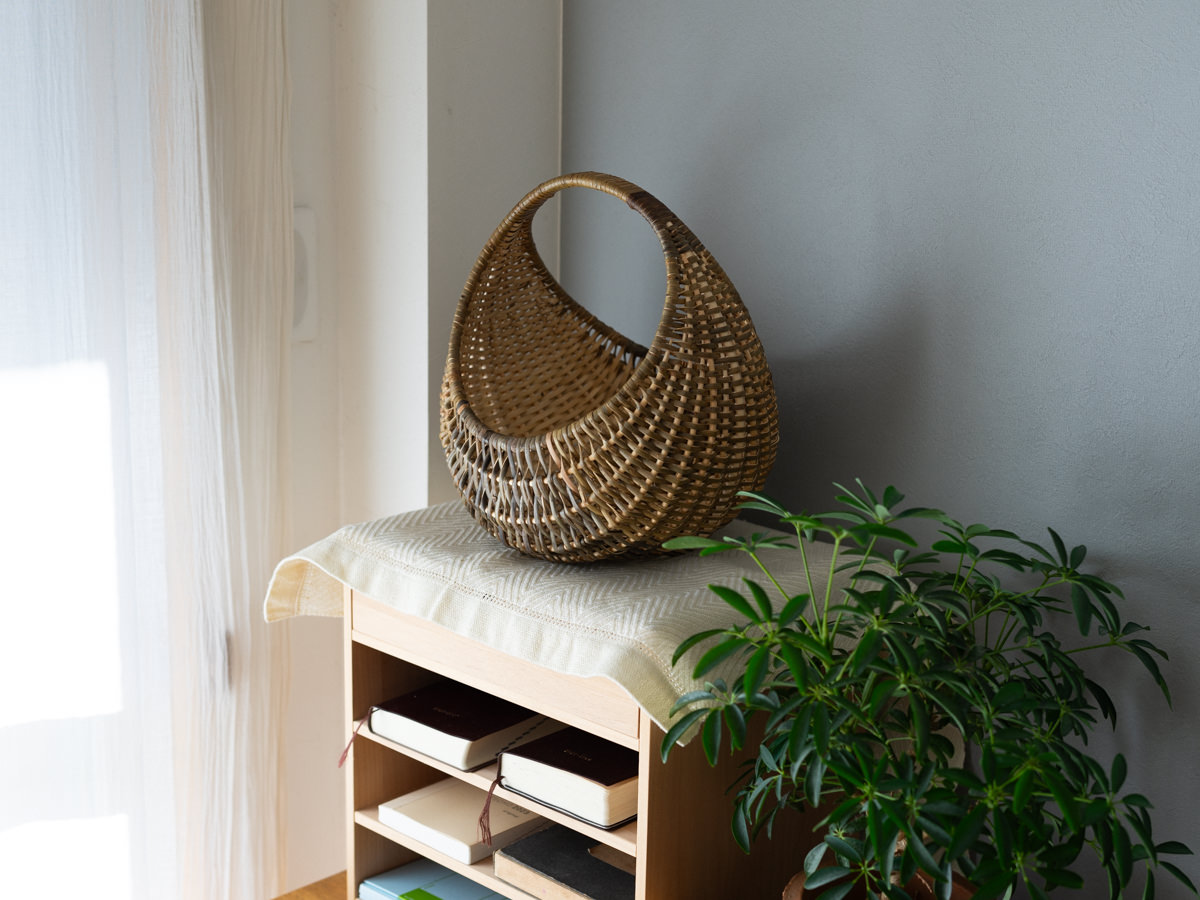
This basket is woven from willow and hazel, and features a handle.
Its form, with gentle, flowing curves, is reminiscent of a gondola gliding quietly along the canals of Venice.
The maker is Benjamin, who lives in Germany.
While a form like this “Gondola” can be found in traditional European basketry, the soft, flowing lines and the finely detailed weave are distinctive to Benjamin’s work.
In this basket, hazel is used for the vertical ribs that run through the center.
Its fruit is widely known as “hazelnuts,” and hazel—also called Corylus avellana—is a deciduous shrub belonging to the birch family.
In the United Kingdom, also in Europe, hazel is one of the most commonly seen shrubs. Since ancient times, it has been used as a material for thatching roofs, as well as for wattle fencing, coracle boats, and walking sticks—making it an essential material in everyday life.
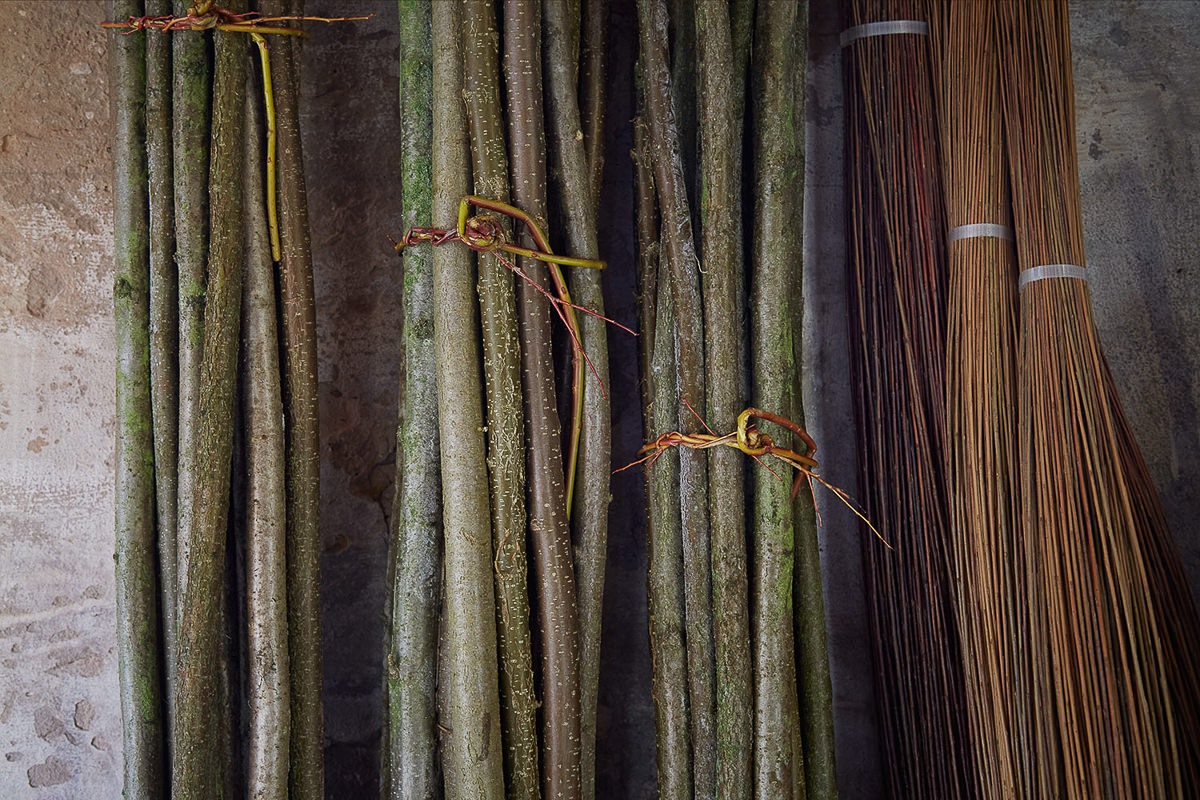
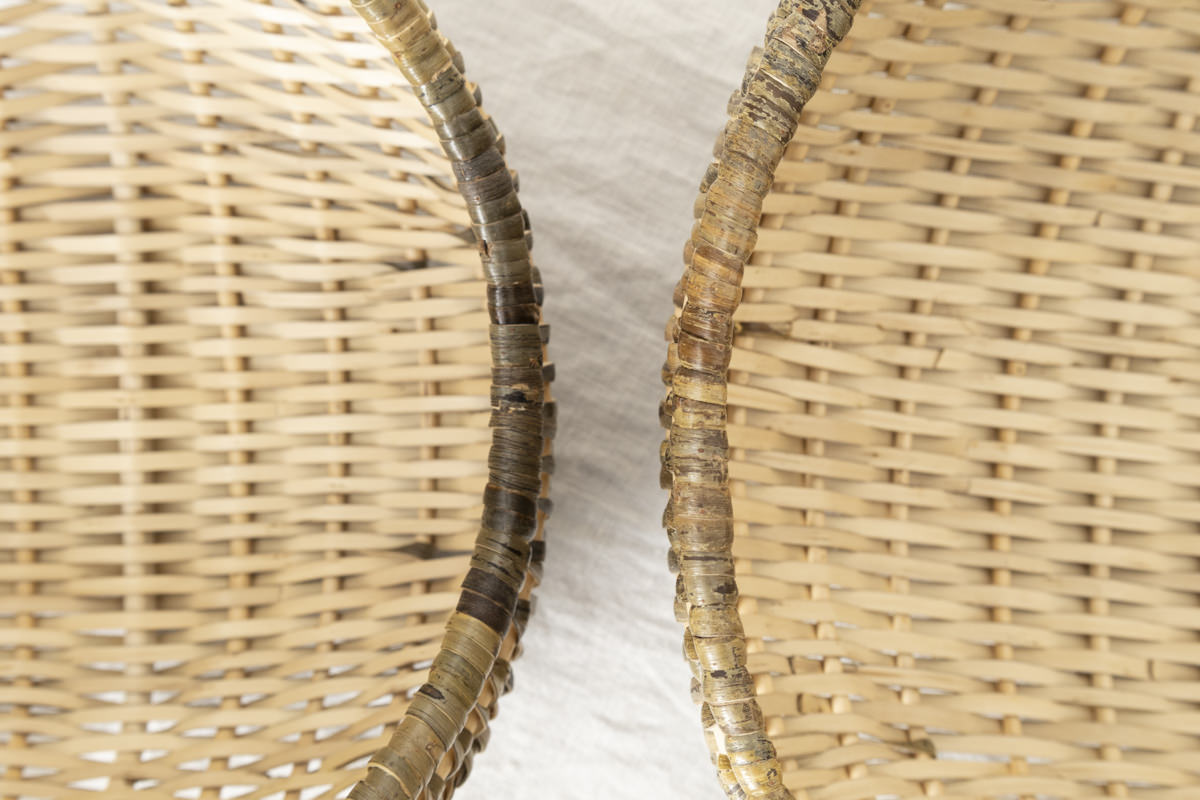
The material shown on the left side of the photo is a hazel twig. Benjamin harvests only what he needs at the time of making, from plants that grow naturally in hedgerows.
He says he especially prefers hazel in winter, choosing pieces that are fresh and healthy.
As a material, hazel is easy to split lengthwise and to twist. It is strong yet lightweight, making it well suited for basketry.
Depending on the piece, European chestnut, dogwood, and buckthorn may also be used.
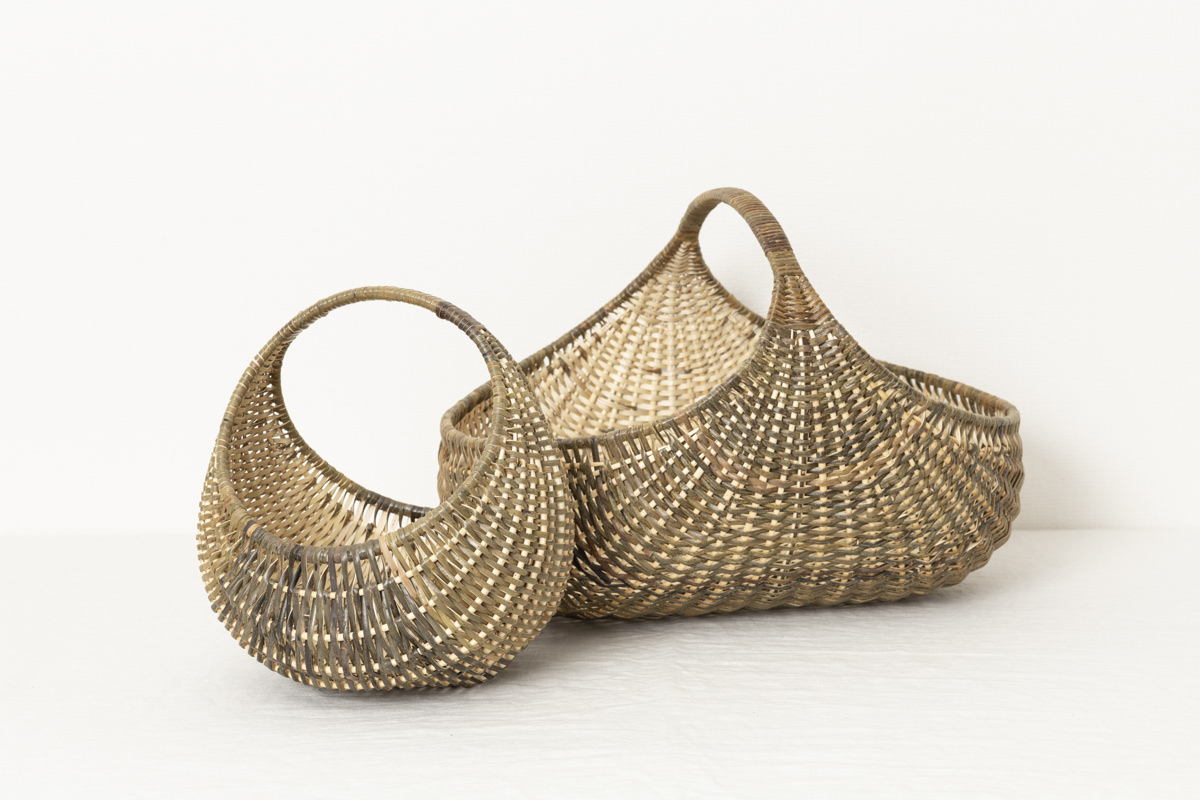
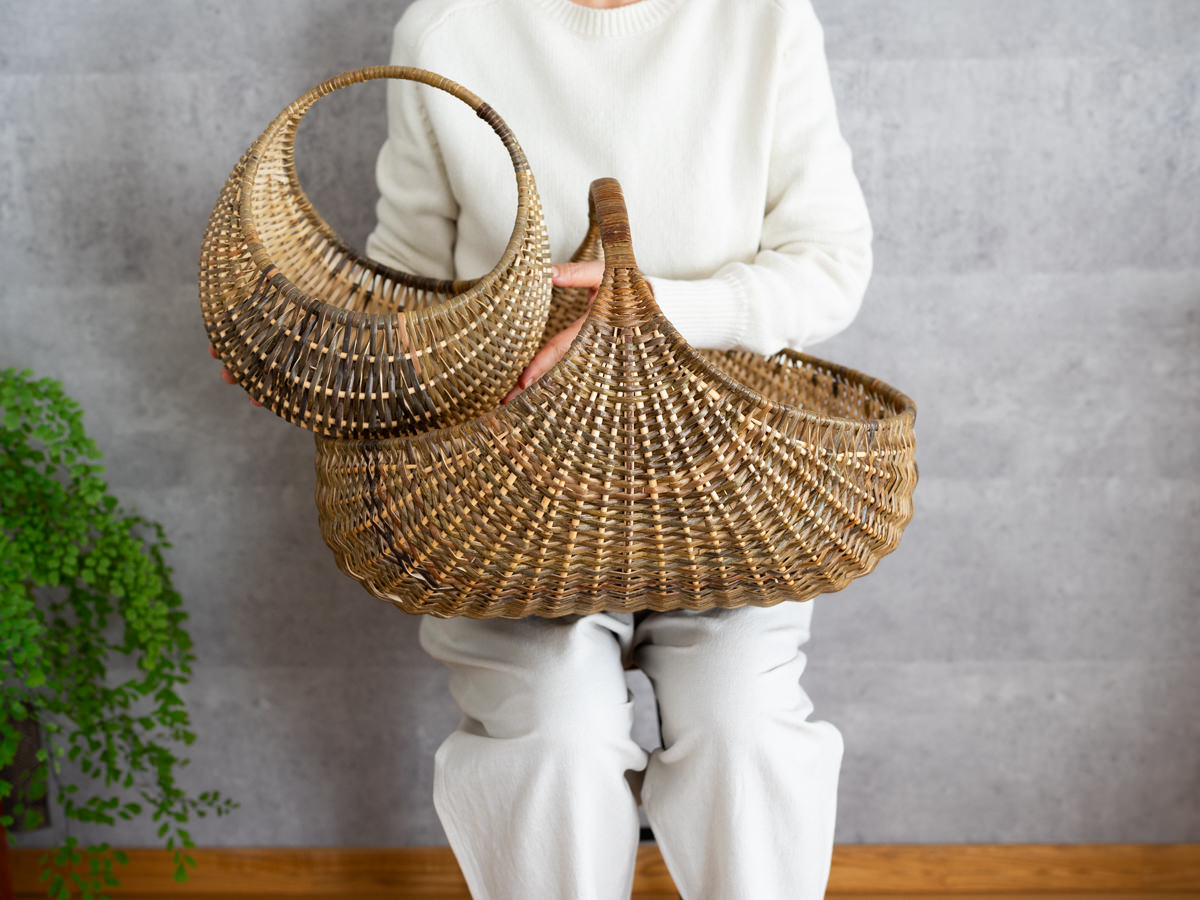
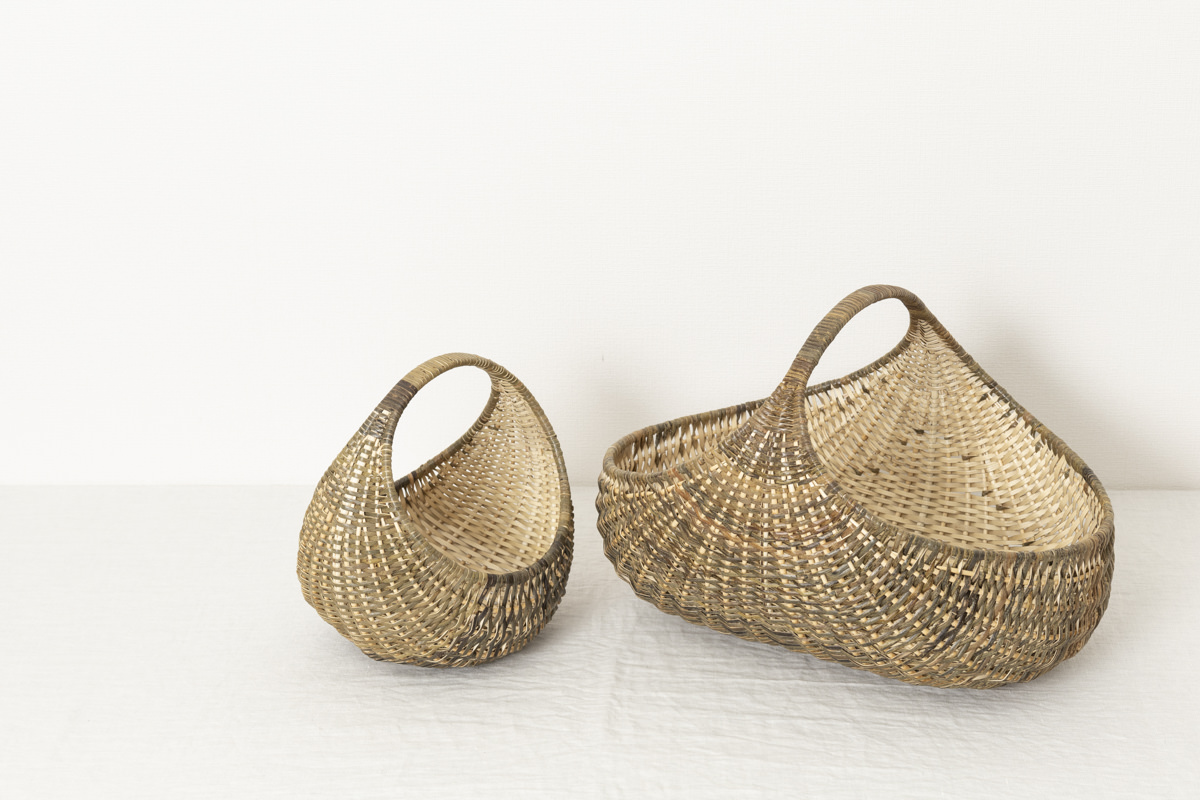
Here, we introduce the “Gondola” basket, woven from deep green willow strips, in two sizes: S and L.
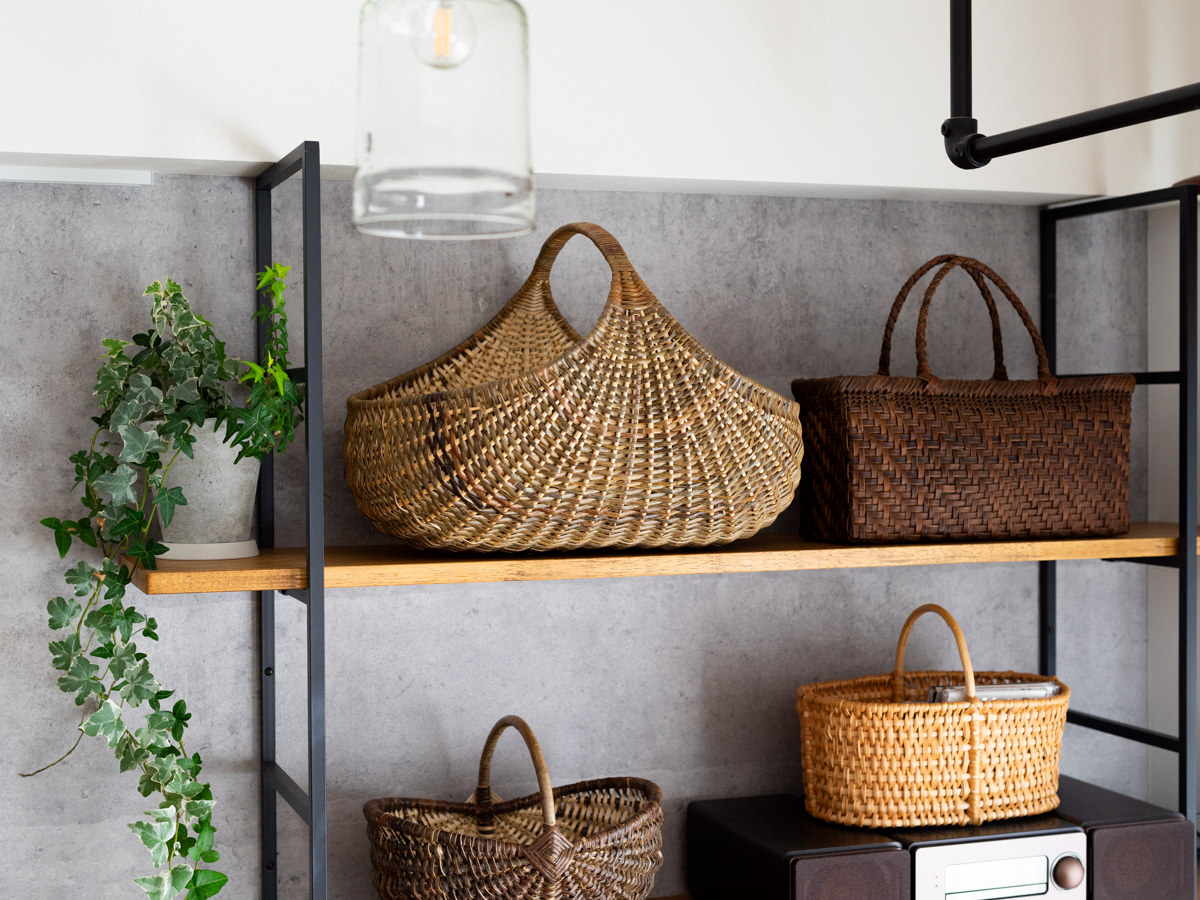
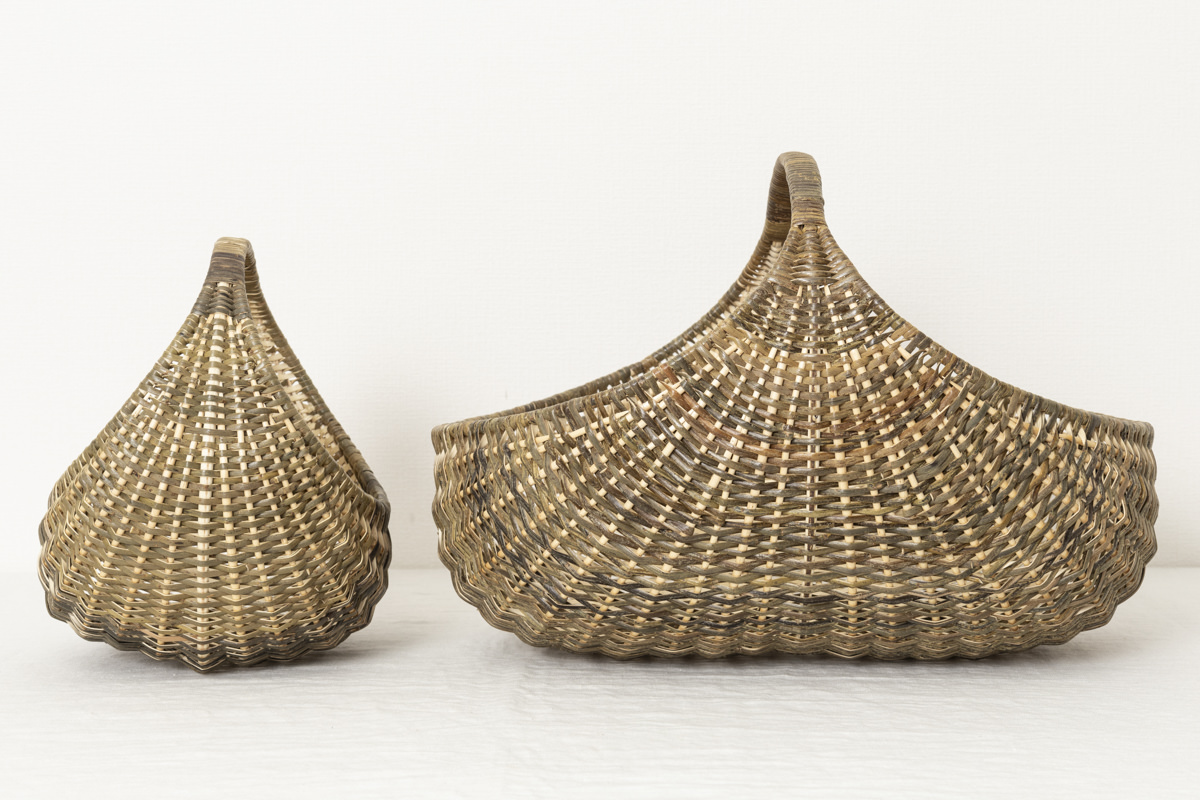
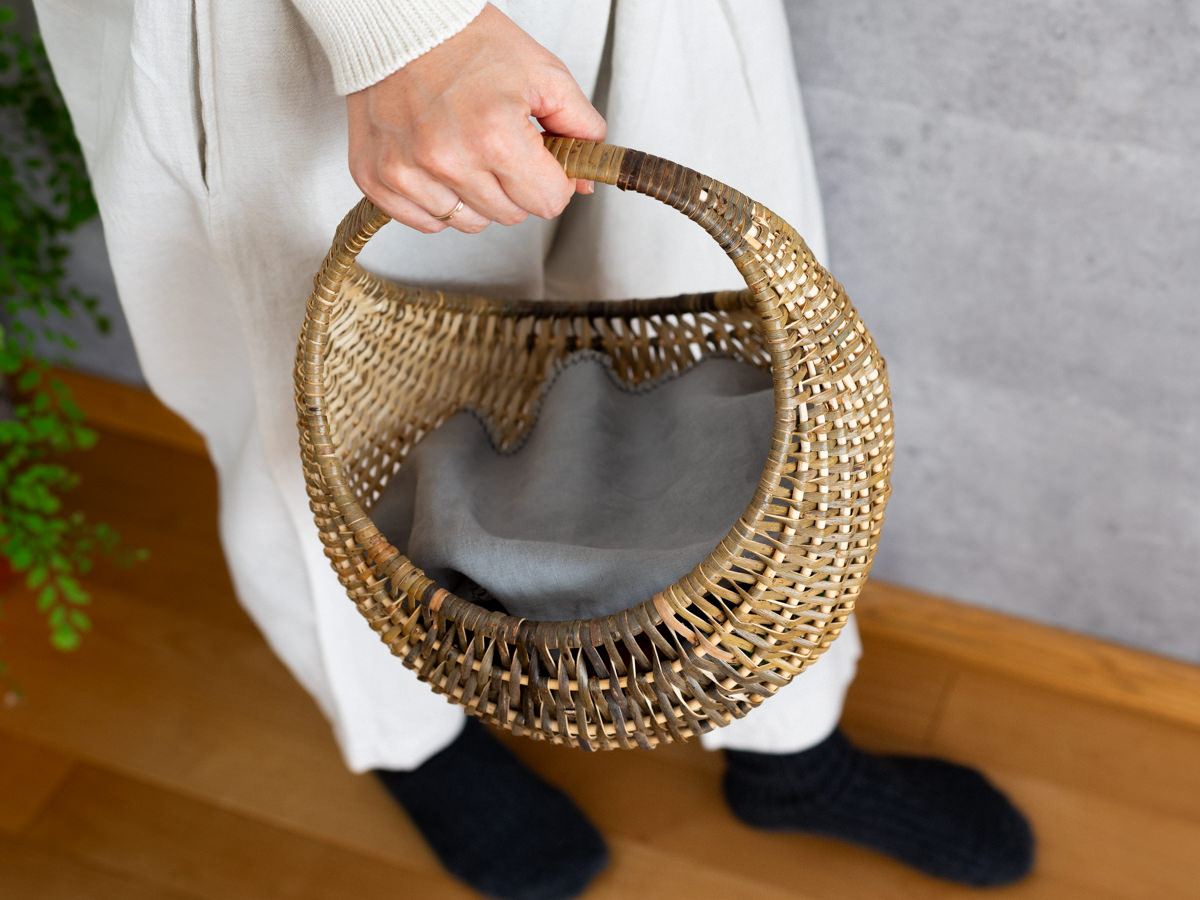
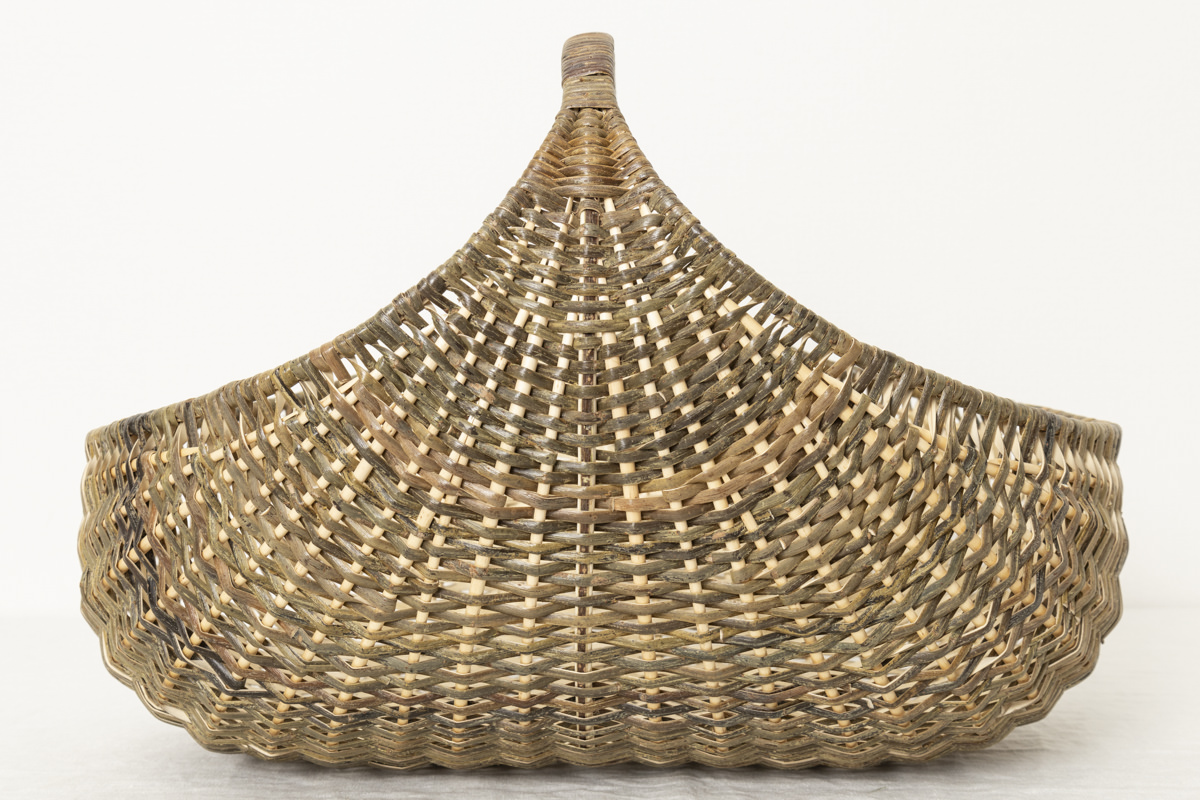
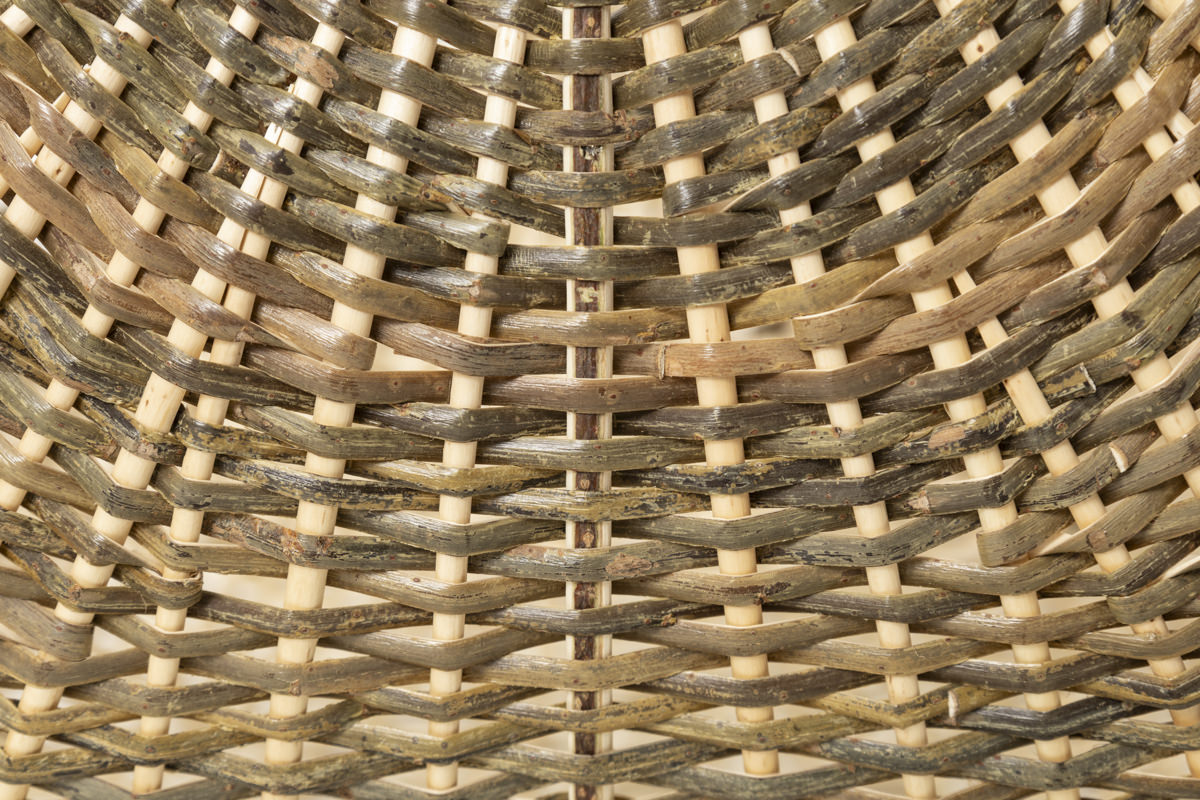
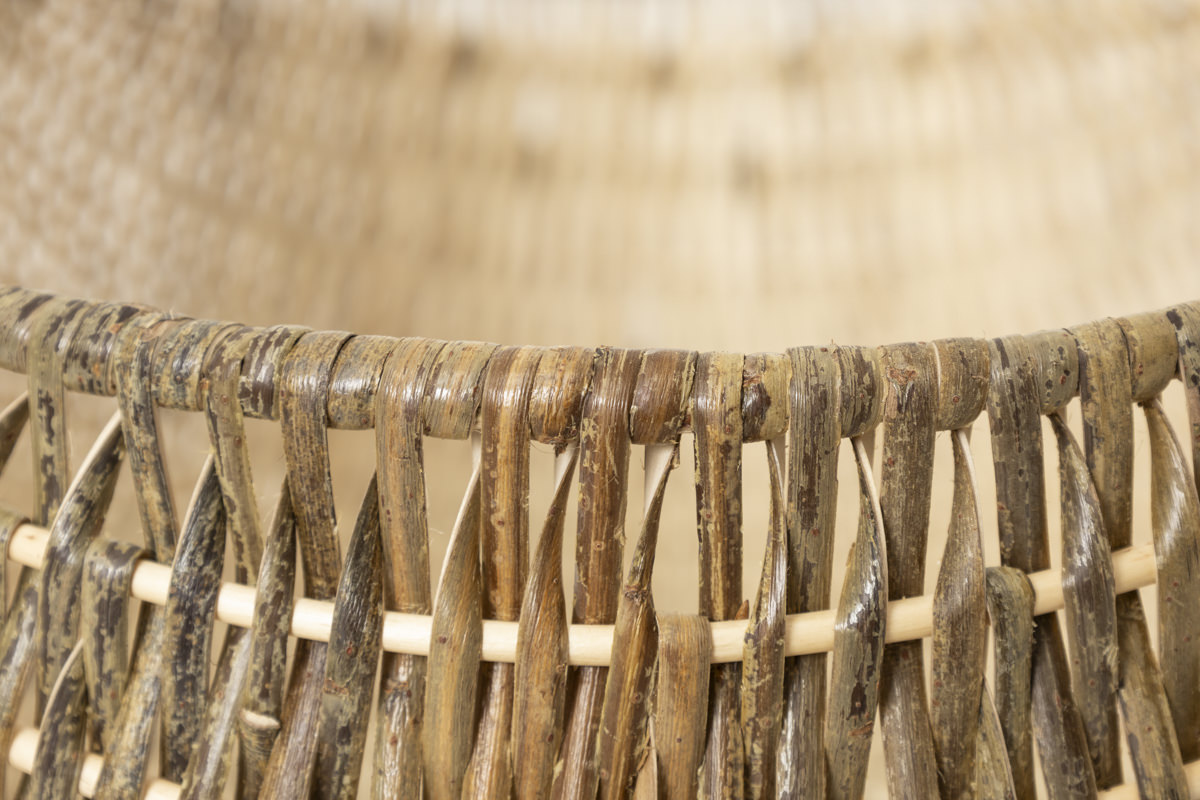
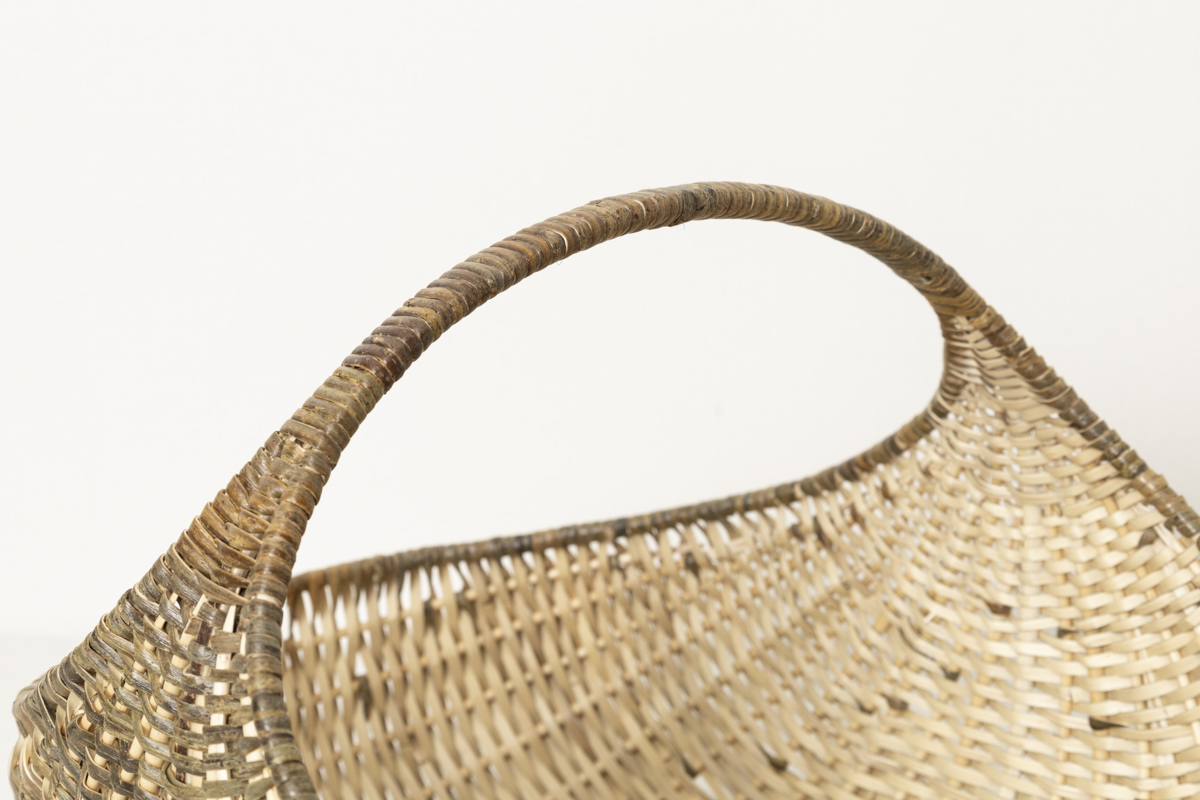
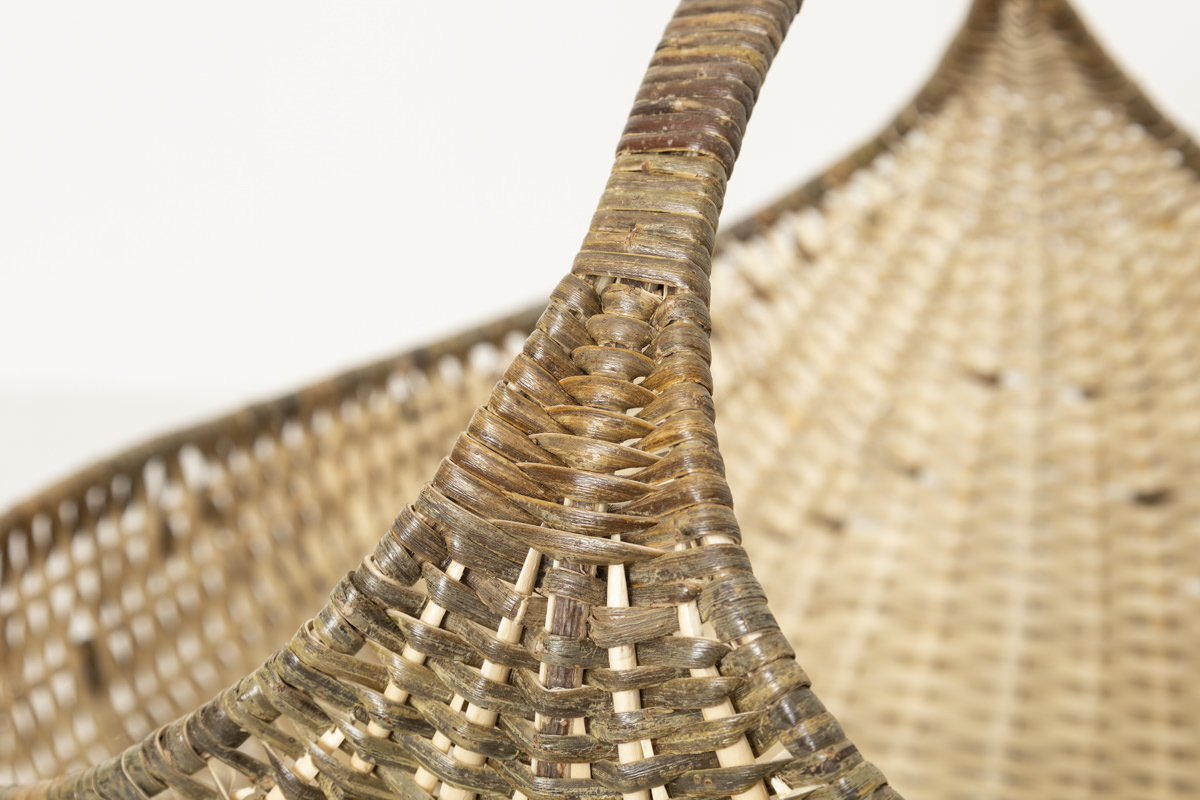
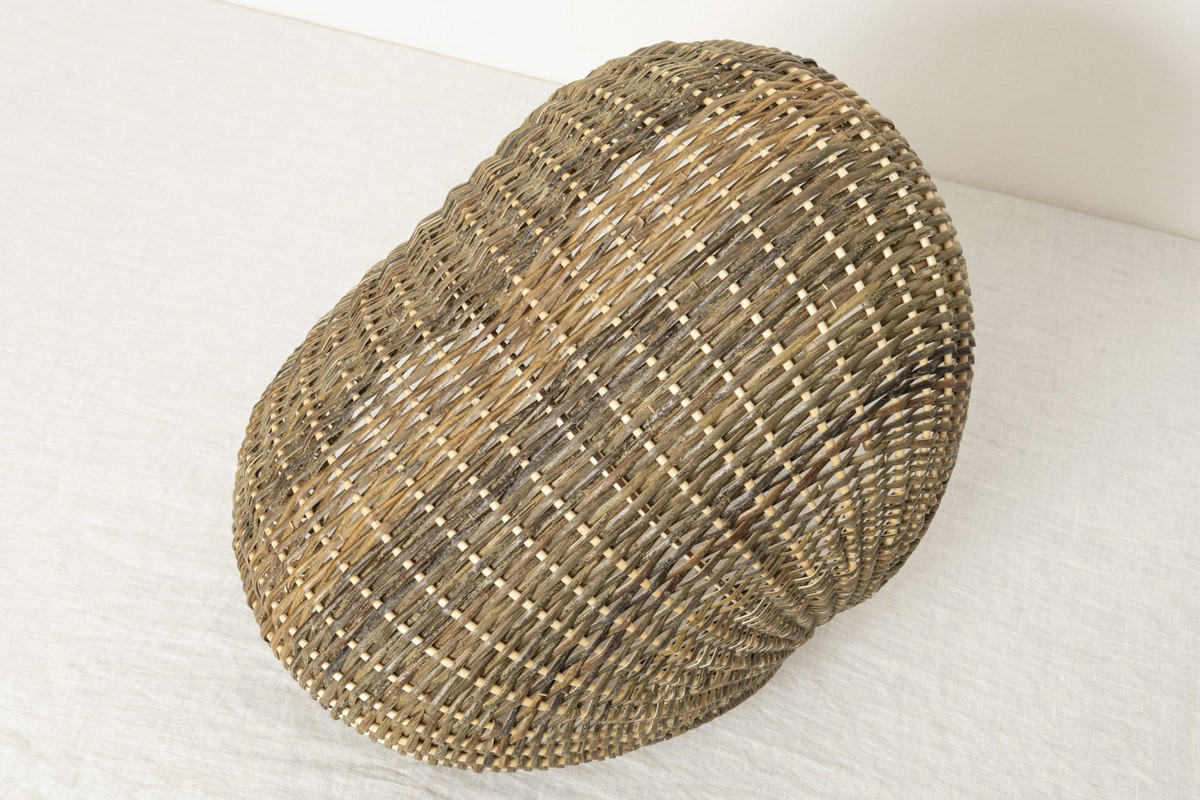
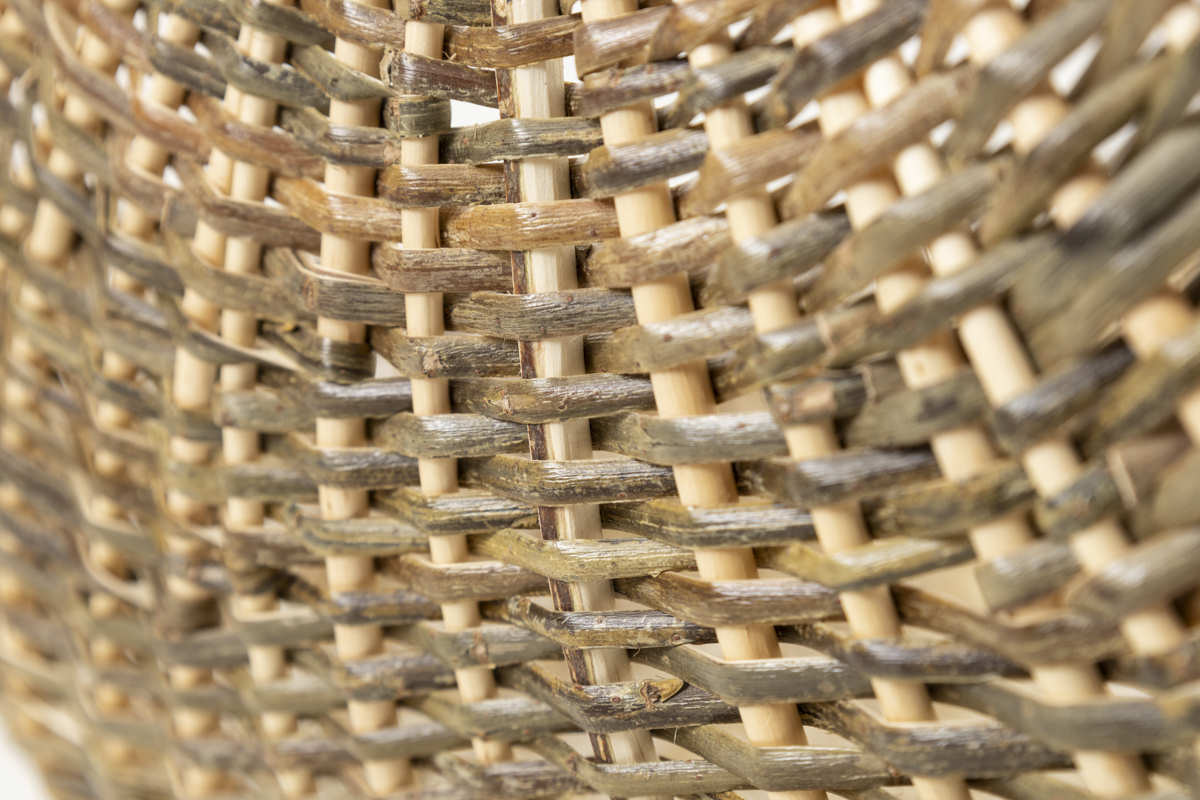
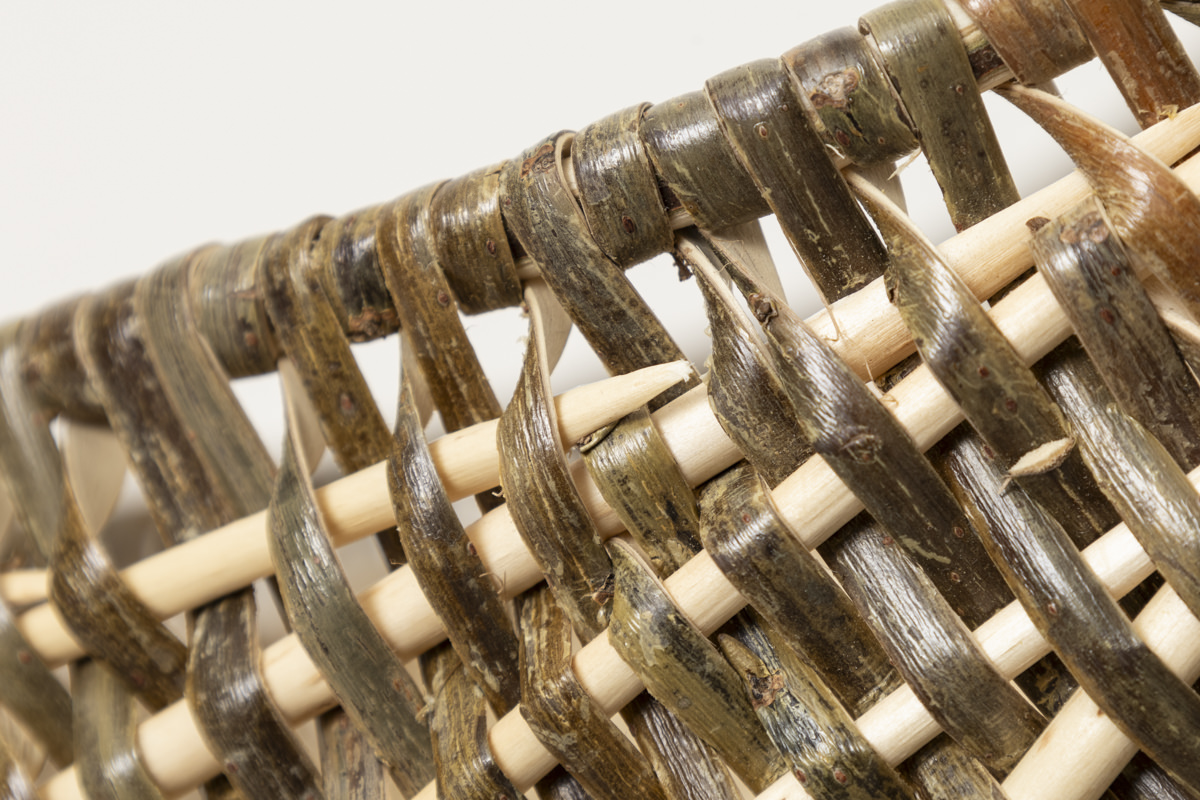
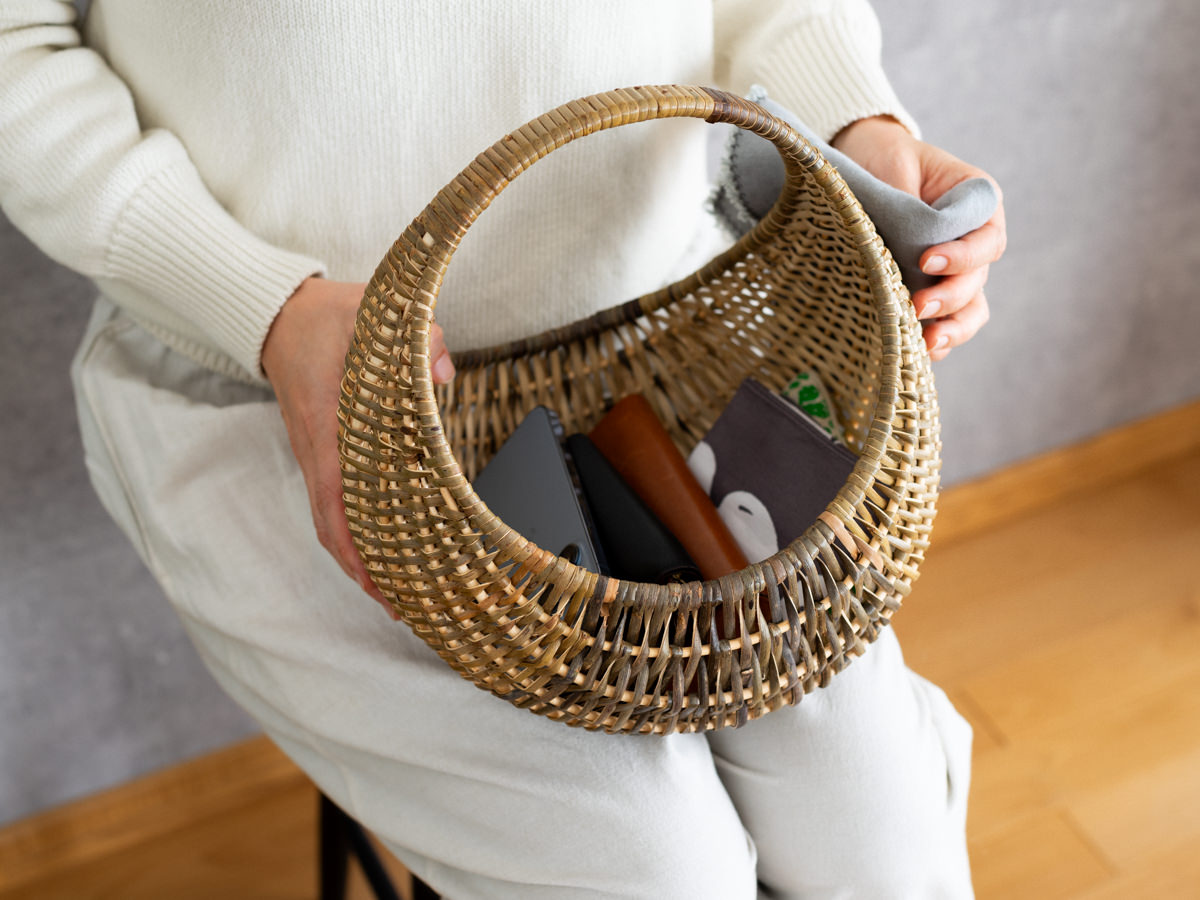
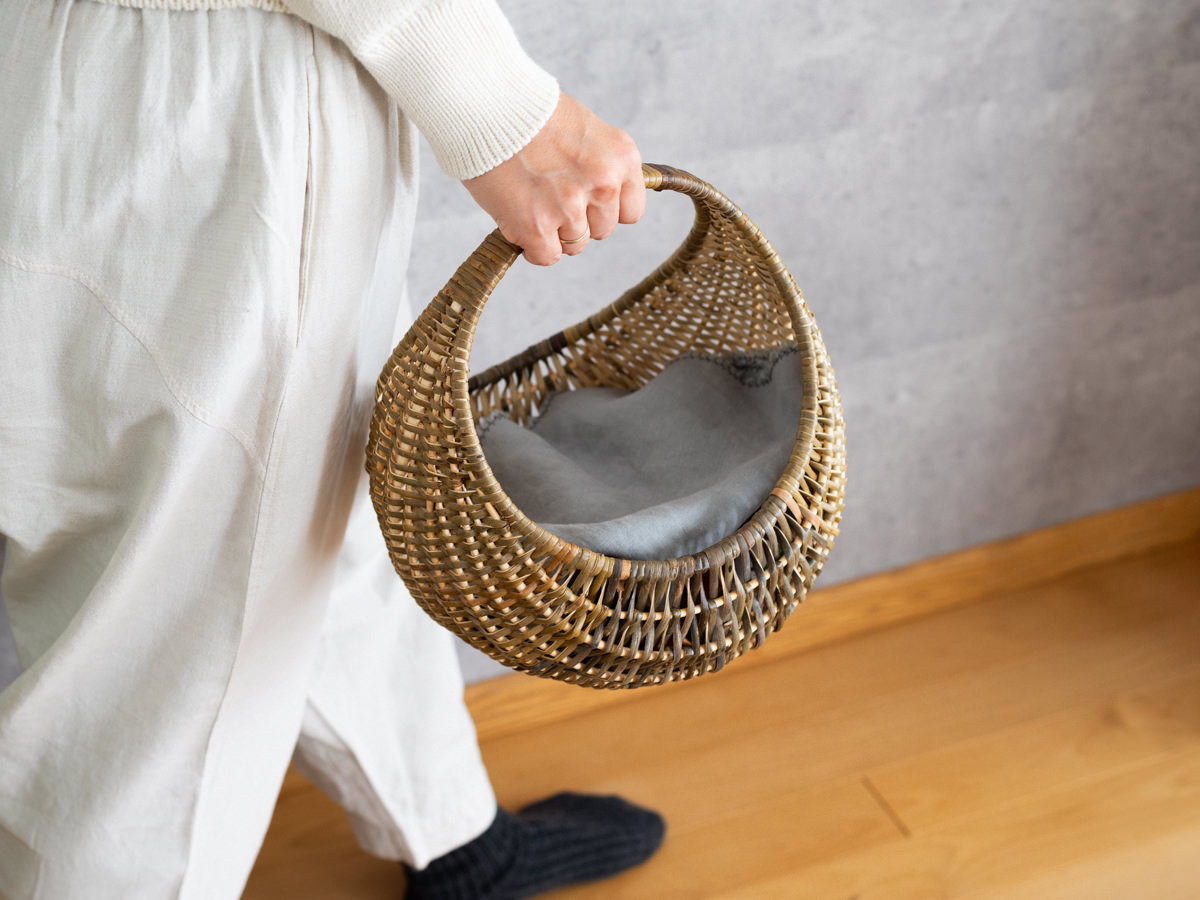
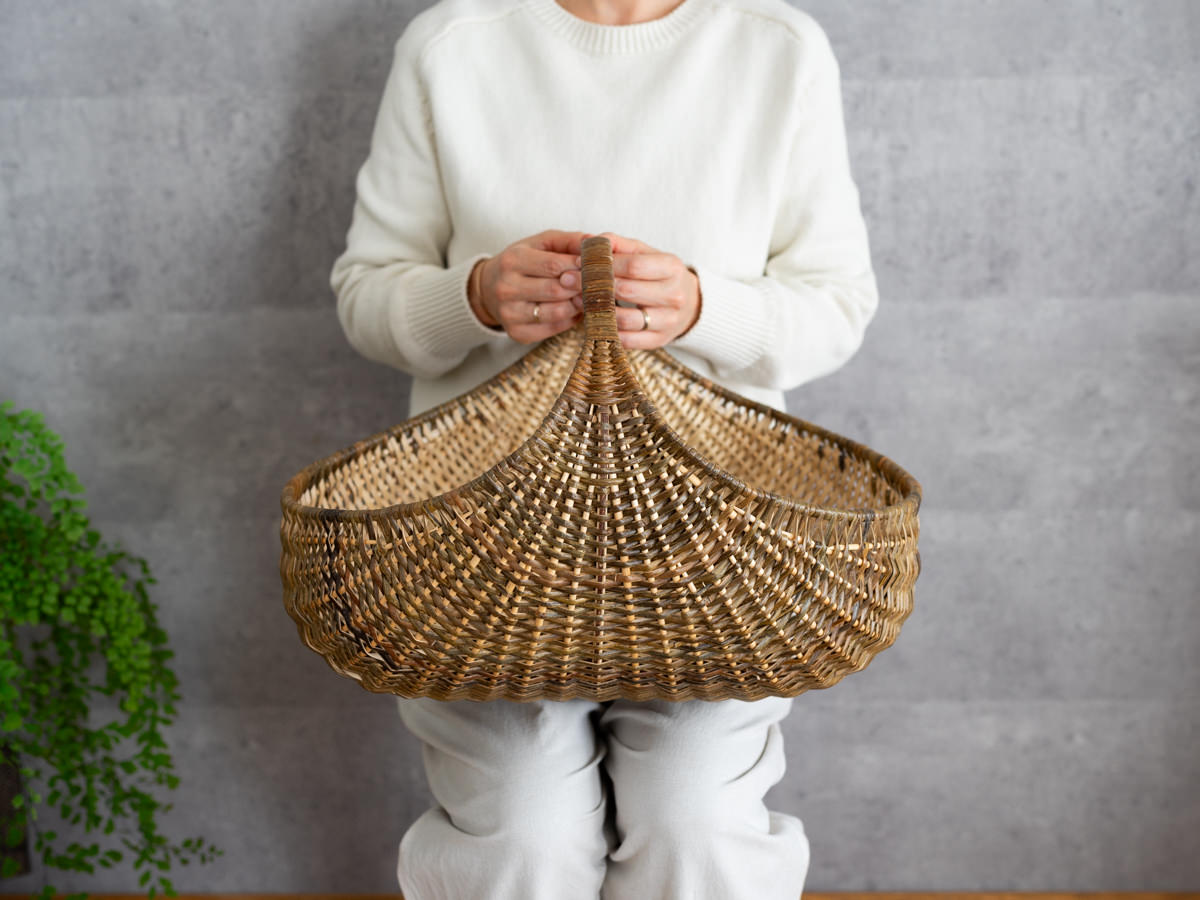
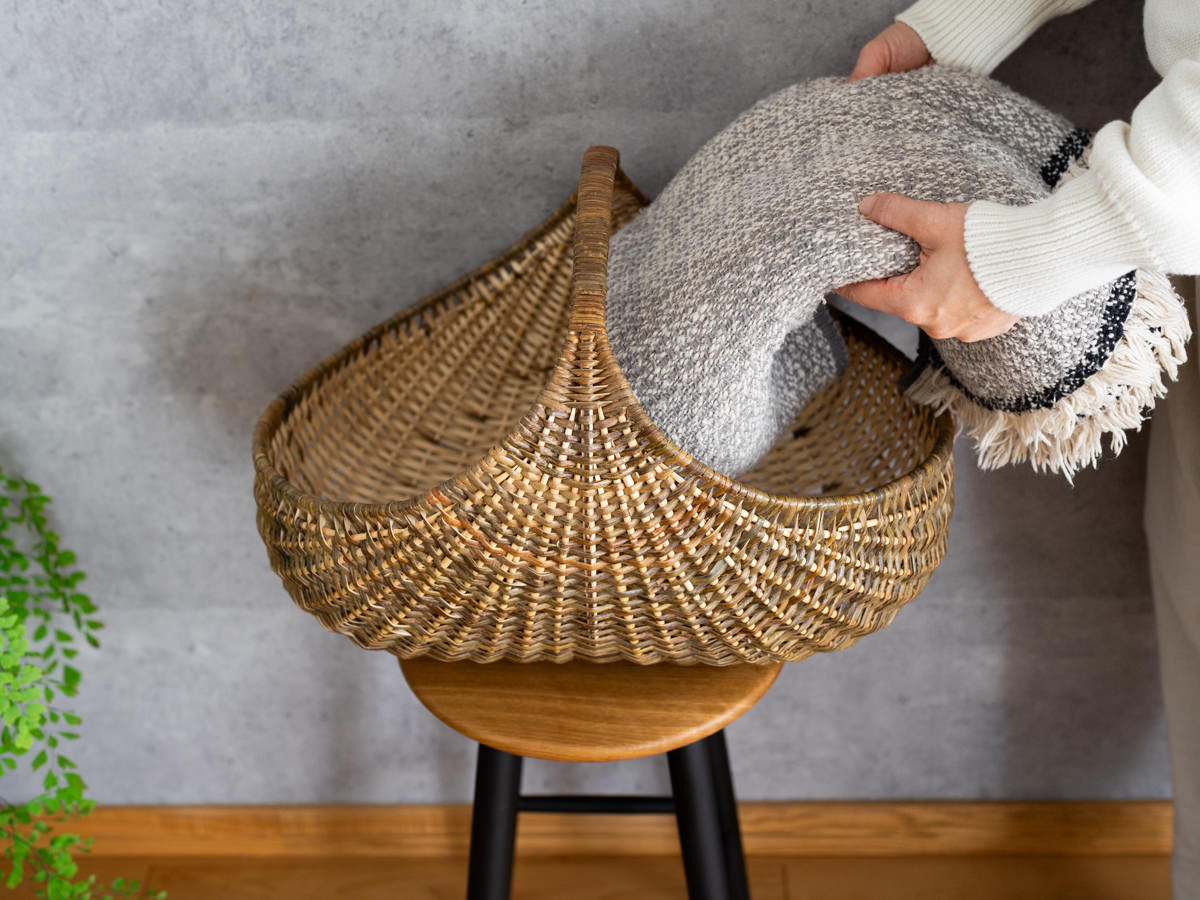
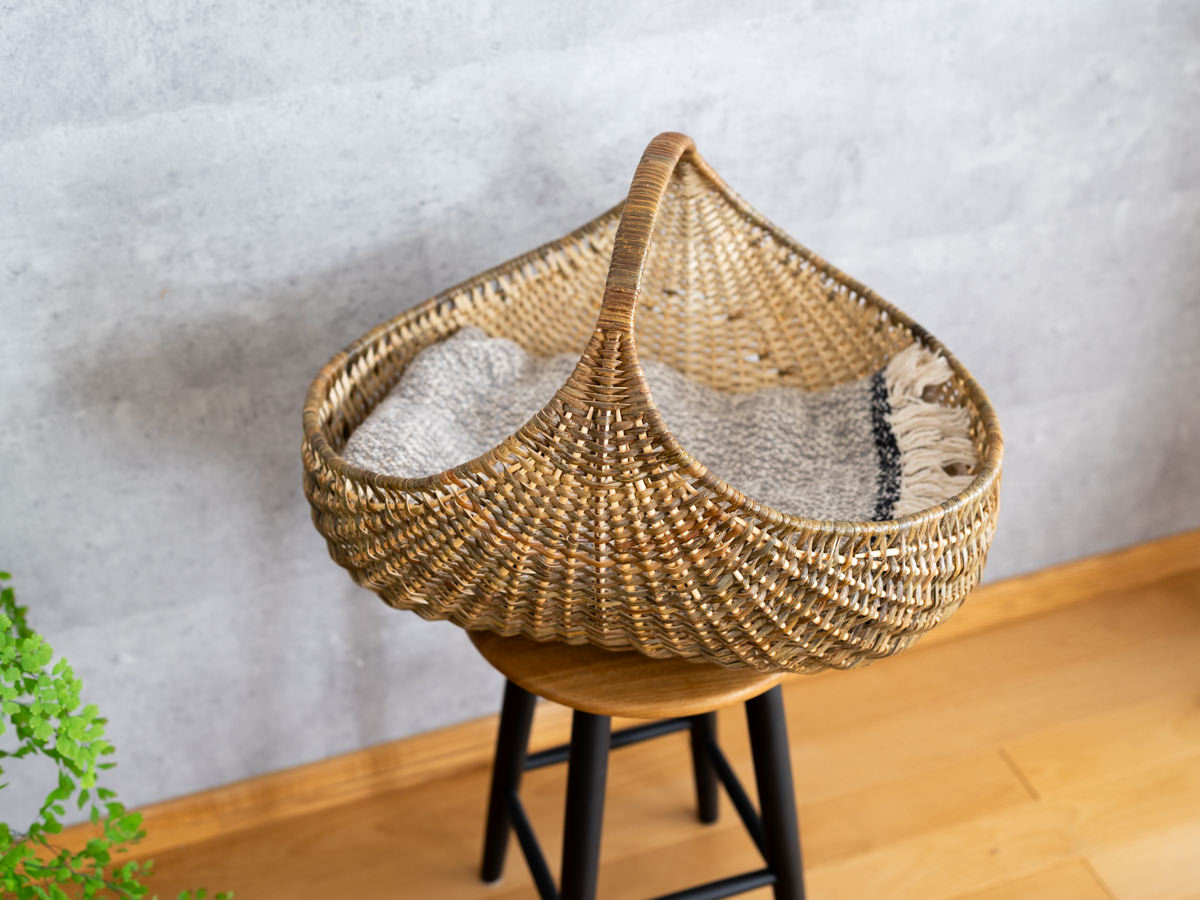
Hazel is used for the central rib that runs through the basket and also forms the core of the handle.The other vertical elements are made from peeled willow rods (white willow), while the horizontal elements are woven from willow bark, alternating over and under as they are worked.This is the rim of the basket. It is so smooth that you can hardly feel any unevenness.In both sizes, there are almost no gaps, showing how carefully and attentively the rim has been wrapped.The handle is formed around a hazel core, with willow tightly wrapped around it.Even the finer details are carefully and firmly woven.The base is also firmly woven, giving the basket a stable and well-balanced structure.Inside the basket, the natural color of the inner willow is revealed.Woven from willow bark strips in subtly varied tones—deep green and soft khaki—the basket has a calm presence and a rich, nuanced character.As a natural characteristic of willow bark, you may notice slight peeling of the surface, or the ends of the strips appearing somewhat pointed where the weaving finishes. These are natural conditions and part of the normal finish. They do not affect use and are not considered defects. Thank you for your understanding.We will now introduce each size.This is the S size.For example, it can be used as a shopping basket.The softly rounded shape gives it a charming and endearing presence.By slipping your arm through the handle and carrying it close to your body, the basket feels even lighter.Its form and texture are truly one of a kind.It can comfortably hold items such as a smartphone, handkerchief, pouch, and keys.Depending on the season or your preference, we recommend using it with a cloth cover.This is the L size.A generously sized basket with a strong presence.Each weave is worked with precision and care.Though firmly constructed and durable, the rim that gently opens out from the handle gives the basket a soft impression.For shopping or as a companion on outings by car.Another appealing point is its lightness, despite its size.Indoors, for example, it can be used to store blankets.It has enough capacity to neatly hold even a folded blanket.
You may find yourself gazing at its woven pattern again and again. There is a quiet beauty in it that draws you in.
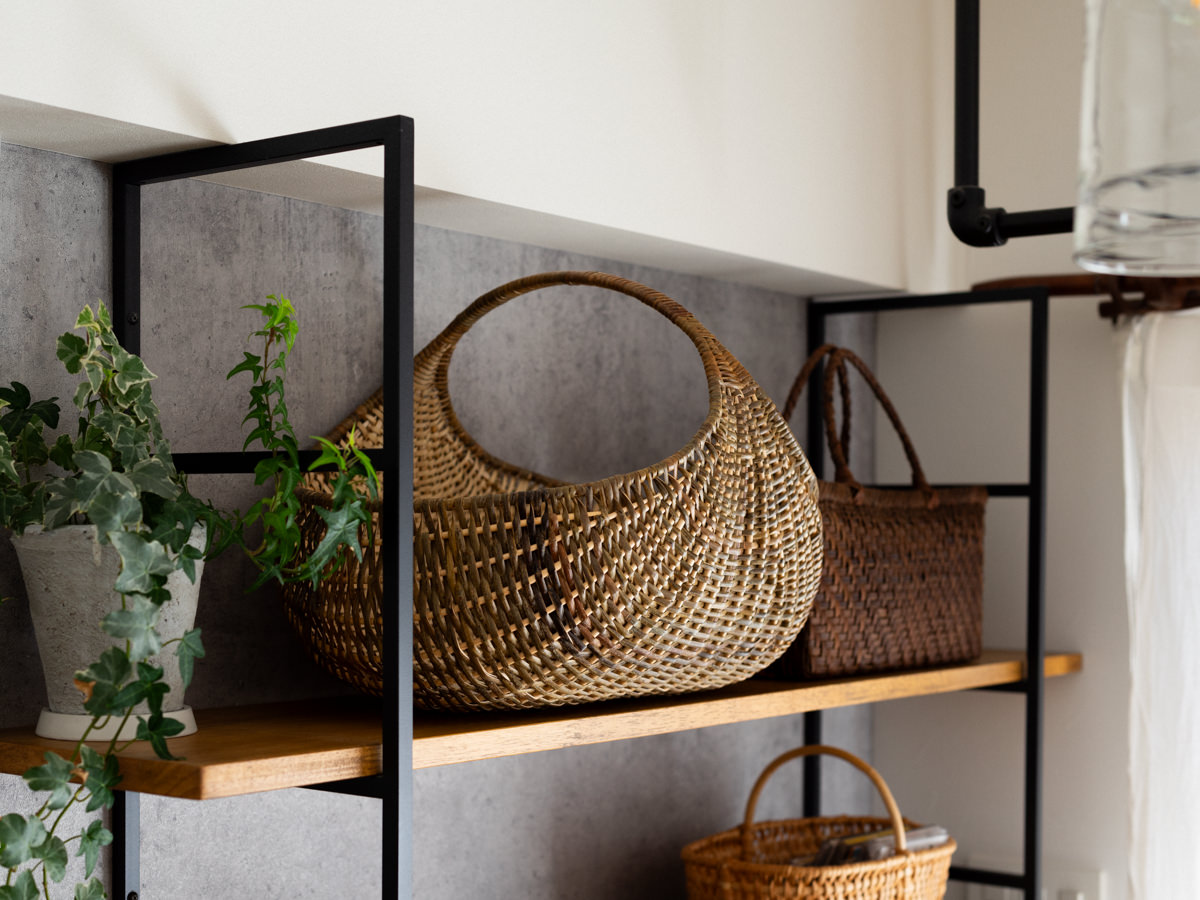
It can also be used indoors as a storage basket.
When placing fabric items such as blankets or clothing inside, we recommend lining the interior with a cloth to help prevent snagging.
The calm green tones with subtle gradation, along with its softly rounded form, make it easy to coordinate with a wide range of interiors and clothing.
Combining durability, beauty, and lightness, this basket—when cared for properly— can accompany you for many years, even across generations.
Please choose the size that best suits your needs.
*As natural materials are used, there may be variations in color from piece to piece. Some may appear lighter or darker, and the overall color balance may differ depending on the condition of the materials. For this reason, we cannot accept returns based on differences in color or texture. Thank you for your understanding.
Benjamin’s Basket Weaving
Before becoming a basket maker, Benjamin worked in fields such as biology, environmental studies, social work, and photography. Over time, however, he found himself weary of the fast-paced urban lifestyle.
Seeking a more meaningful way of living and working, he chose to devote himself to basket weaving.
“I love the simple feeling of touching wood, going out into nature, collecting hazel, and working with my hands,” he says.
“Baskets are used every day to carry and store things. Being able to make such objects—not by machine, but from renewable, local materials— gives me a sense of independence.”
He says his goal in basket making is always to reach perfection— a goal that can never truly be attained, which is precisely why it continues to inspire him. The baskets he creates are all of exceptional quality, beautifully shaped, and built to last.
Please also take a look at our journal featuring Benjamin from Germany.
Please note: This item ships from Japan. As the buyer, you are responsible for any import duties, customs fees, or local taxes that may be charged in your country. These costs are not included in the item price or shipping cost. Please check with your local customs authority if you are unsure about any potential charges before placing your order.
This basket is woven from willow and hazel, and features a handle.
Its form, with gentle, flowing curves, is reminiscent of a gondola gliding quietly along the canals of Venice.
The maker is Benjamin, who lives in Germany.
While a form like this “Gondola” can be found in traditional European basketry, the soft, flowing lines and the finely detailed weave are distinctive to Benjamin’s work.
In this basket, hazel is used for the vertical ribs that run through the center.
Its fruit is widely known as “hazelnuts,” and hazel—also called Corylus avellana—is a deciduous shrub belonging to the birch family.
In the United Kingdom, also in Europe, hazel is one of the most commonly seen shrubs. Since ancient times, it has been used as a material for thatching roofs, as well as for wattle fencing, coracle boats, and walking sticks—making it an essential material in everyday life.
The material shown on the left side of the photo is a hazel twig. Benjamin harvests only what he needs at the time of making, from plants that grow naturally in hedgerows.
He says he especially prefers hazel in winter, choosing pieces that are fresh and healthy.
As a material, hazel is easy to split lengthwise and to twist. It is strong yet lightweight, making it well suited for basketry.
Depending on the piece, European chestnut, dogwood, and buckthorn may also be used.
Here, we introduce the “Gondola” basket, woven from deep green willow strips, in two sizes: S and L.
Hazel is used for the central rib that runs through the basket and also forms the core of the handle.The other vertical elements are made from peeled willow rods (white willow), while the horizontal elements are woven from willow bark, alternating over and under as they are worked.This is the rim of the basket. It is so smooth that you can hardly feel any unevenness.In both sizes, there are almost no gaps, showing how carefully and attentively the rim has been wrapped.The handle is formed around a hazel core, with willow tightly wrapped around it.Even the finer details are carefully and firmly woven.The base is also firmly woven, giving the basket a stable and well-balanced structure.Inside the basket, the natural color of the inner willow is revealed.Woven from willow bark strips in subtly varied tones—deep green and soft khaki—the basket has a calm presence and a rich, nuanced character.As a natural characteristic of willow bark, you may notice slight peeling of the surface, or the ends of the strips appearing somewhat pointed where the weaving finishes. These are natural conditions and part of the normal finish. They do not affect use and are not considered defects. Thank you for your understanding.We will now introduce each size.This is the S size.For example, it can be used as a shopping basket.The softly rounded shape gives it a charming and endearing presence.By slipping your arm through the handle and carrying it close to your body, the basket feels even lighter.Its form and texture are truly one of a kind.It can comfortably hold items such as a smartphone, handkerchief, pouch, and keys.Depending on the season or your preference, we recommend using it with a cloth cover.This is the L size.A generously sized basket with a strong presence.Each weave is worked with precision and care.Though firmly constructed and durable, the rim that gently opens out from the handle gives the basket a soft impression.For shopping or as a companion on outings by car.Another appealing point is its lightness, despite its size.Indoors, for example, it can be used to store blankets.It has enough capacity to neatly hold even a folded blanket.
You may find yourself gazing at its woven pattern again and again. There is a quiet beauty in it that draws you in.
It can also be used indoors as a storage basket.
When placing fabric items such as blankets or clothing inside, we recommend lining the interior with a cloth to help prevent snagging.
The calm green tones with subtle gradation, along with its softly rounded form, make it easy to coordinate with a wide range of interiors and clothing.
Combining durability, beauty, and lightness, this basket—when cared for properly— can accompany you for many years, even across generations.
Please choose the size that best suits your needs.
*As natural materials are used, there may be variations in color from piece to piece. Some may appear lighter or darker, and the overall color balance may differ depending on the condition of the materials. For this reason, we cannot accept returns based on differences in color or texture. Thank you for your understanding.
Benjamin’s Basket Weaving
Before becoming a basket maker, Benjamin worked in fields such as biology, environmental studies, social work, and photography. Over time, however, he found himself weary of the fast-paced urban lifestyle.
Seeking a more meaningful way of living and working, he chose to devote himself to basket weaving.
“I love the simple feeling of touching wood, going out into nature, collecting hazel, and working with my hands,” he says.
“Baskets are used every day to carry and store things. Being able to make such objects—not by machine, but from renewable, local materials— gives me a sense of independence.”
He says his goal in basket making is always to reach perfection— a goal that can never truly be attained, which is precisely why it continues to inspire him. The baskets he creates are all of exceptional quality, beautifully shaped, and built to last.
Please also take a look at our journal featuring Benjamin from Germany.
Please note: This item ships from Japan. As the buyer, you are responsible for any import duties, customs fees, or local taxes that may be charged in your country. These costs are not included in the item price or shipping cost. Please check with your local customs authority if you are unsure about any potential charges before placing your order.
This basket is woven from willow and hazel, and features a handle.
Its form, with gentle, flowing curves, is reminiscent of a gondola gliding quietly along the canals of Venice.
The maker is Benjamin, who lives in Germany.
While a form like this “Gondola” can be found in traditional European basketry, the soft, flowing lines and the finely detailed weave are distinctive to Benjamin’s work.
In this basket, hazel is used for the vertical ribs that run through the center.
Its fruit is widely known as “hazelnuts,” and hazel—also called Corylus avellana—is a deciduous shrub belonging to the birch family.
In the United Kingdom, also in Europe, hazel is one of the most commonly seen shrubs. Since ancient times, it has been used as a material for thatching roofs, as well as for wattle fencing, coracle boats, and walking sticks—making it an essential material in everyday life.
The material shown on the left side of the photo is a hazel twig. Benjamin harvests only what he needs at the time of making, from plants that grow naturally in hedgerows.
He says he especially prefers hazel in winter, choosing pieces that are fresh and healthy.
As a material, hazel is easy to split lengthwise and to twist. It is strong yet lightweight, making it well suited for basketry.
Depending on the piece, European chestnut, dogwood, and buckthorn may also be used.
Here, we introduce the “Gondola” basket, woven from deep green willow strips, in two sizes: S and L.
Hazel is used for the central rib that runs through the basket and also forms the core of the handle.The other vertical elements are made from peeled willow rods (white willow), while the horizontal elements are woven from willow bark, alternating over and under as they are worked.This is the rim of the basket. It is so smooth that you can hardly feel any unevenness.In both sizes, there are almost no gaps, showing how carefully and attentively the rim has been wrapped.The handle is formed around a hazel core, with willow tightly wrapped around it.Even the finer details are carefully and firmly woven.The base is also firmly woven, giving the basket a stable and well-balanced structure.Inside the basket, the natural color of the inner willow is revealed.Woven from willow bark strips in subtly varied tones—deep green and soft khaki—the basket has a calm presence and a rich, nuanced character.As a natural characteristic of willow bark, you may notice slight peeling of the surface, or the ends of the strips appearing somewhat pointed where the weaving finishes. These are natural conditions and part of the normal finish. They do not affect use and are not considered defects. Thank you for your understanding.We will now introduce each size.This is the S size.For example, it can be used as a shopping basket.The softly rounded shape gives it a charming and endearing presence.By slipping your arm through the handle and carrying it close to your body, the basket feels even lighter.Its form and texture are truly one of a kind.It can comfortably hold items such as a smartphone, handkerchief, pouch, and keys.Depending on the season or your preference, we recommend using it with a cloth cover.This is the L size.A generously sized basket with a strong presence.Each weave is worked with precision and care.Though firmly constructed and durable, the rim that gently opens out from the handle gives the basket a soft impression.For shopping or as a companion on outings by car.Another appealing point is its lightness, despite its size.Indoors, for example, it can be used to store blankets.It has enough capacity to neatly hold even a folded blanket.
You may find yourself gazing at its woven pattern again and again. There is a quiet beauty in it that draws you in.
It can also be used indoors as a storage basket.
When placing fabric items such as blankets or clothing inside, we recommend lining the interior with a cloth to help prevent snagging.
The calm green tones with subtle gradation, along with its softly rounded form, make it easy to coordinate with a wide range of interiors and clothing.
Combining durability, beauty, and lightness, this basket—when cared for properly— can accompany you for many years, even across generations.
Please choose the size that best suits your needs.
*As natural materials are used, there may be variations in color from piece to piece. Some may appear lighter or darker, and the overall color balance may differ depending on the condition of the materials. For this reason, we cannot accept returns based on differences in color or texture. Thank you for your understanding.
Benjamin’s Basket Weaving
Before becoming a basket maker, Benjamin worked in fields such as biology, environmental studies, social work, and photography. Over time, however, he found himself weary of the fast-paced urban lifestyle.
Seeking a more meaningful way of living and working, he chose to devote himself to basket weaving.
“I love the simple feeling of touching wood, going out into nature, collecting hazel, and working with my hands,” he says.
“Baskets are used every day to carry and store things. Being able to make such objects—not by machine, but from renewable, local materials— gives me a sense of independence.”
He says his goal in basket making is always to reach perfection— a goal that can never truly be attained, which is precisely why it continues to inspire him. The baskets he creates are all of exceptional quality, beautifully shaped, and built to last.
Please also take a look at our journal featuring Benjamin from Germany.
Please note: This item ships from Japan. As the buyer, you are responsible for any import duties, customs fees, or local taxes that may be charged in your country. These costs are not included in the item price or shipping cost. Please check with your local customs authority if you are unsure about any potential charges before placing your order.