Flower Basket / Willow / DEU 640201-1 ドイツ/やなぎ フラワーバスケット
Flower Basket / Willow / DEU 640201-1 ドイツ/やなぎ フラワーバスケット
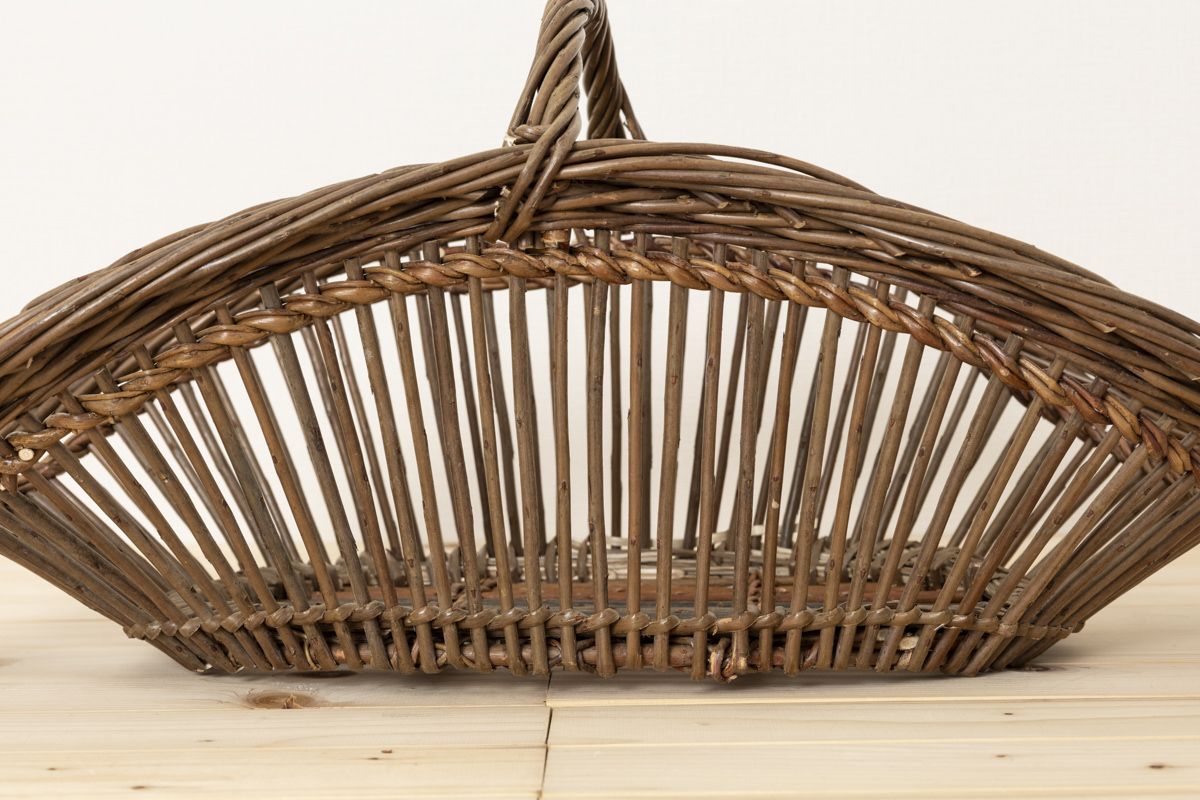
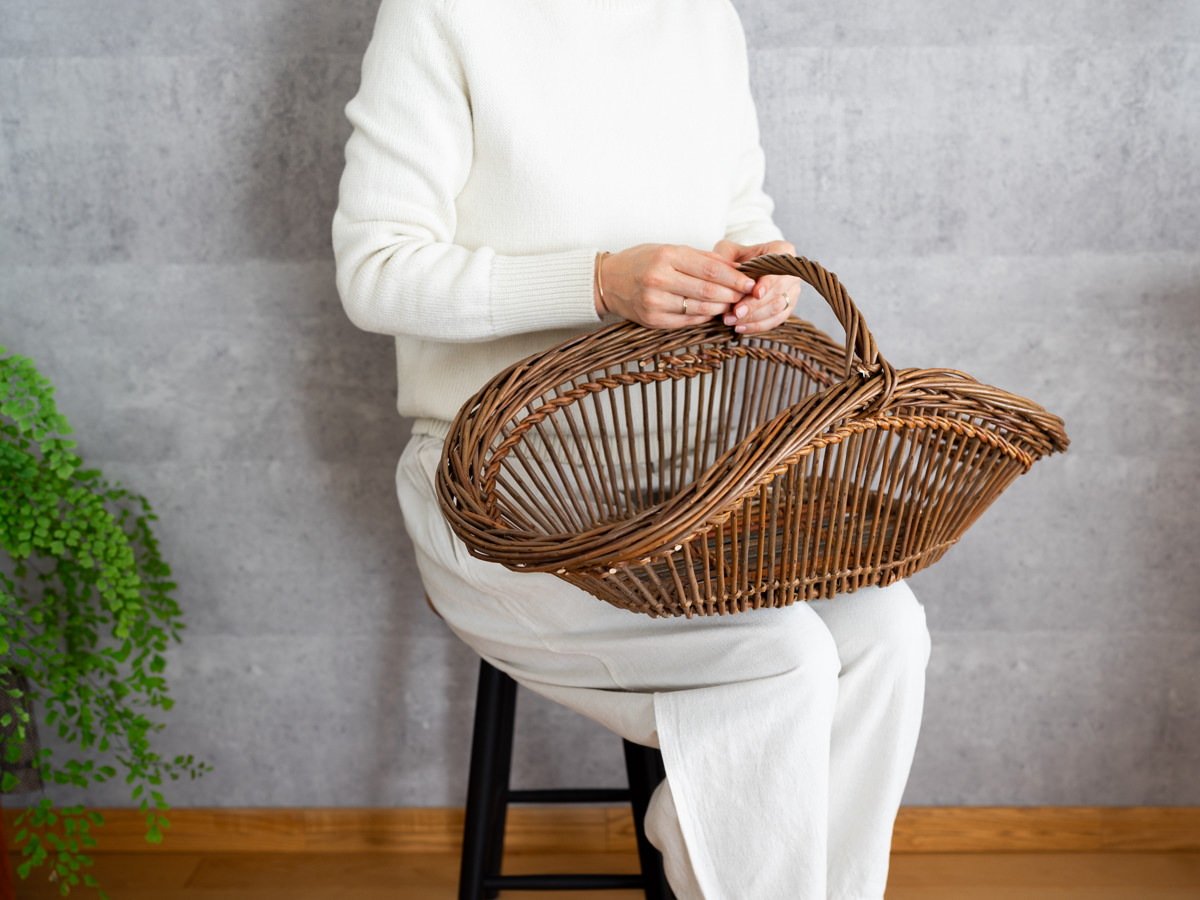
This basket is woven from willow branches and features a handle.
The maker is Benjamin, who lives in Germany. Born and raised in France, he learned basketry from his father, a basket maker, and acquired traditional French techniques.
Based on traditional forms found in European basketry, he refines them in his own way, creating baskets that are more durable and more precisely woven.
This basket is made from willow branches.
The willow used as material is different from the weeping willow commonly seen in Japan, whose branches hang down from the tree. Instead, it grows upright from the ground in clustered stems, much like rice plants.
There are many varieties of willow, each with its own color and characteristics.
Some have slender branches, others are thicker; some are longer, while others are shorter. Some are suited to be used with their bark intact, while others are peeled to reveal a pale, smooth surface.
The color of the bark also varies—ranging from reddish tones to bluish hues, and deep browns. Even within the same type of willow, there are many subtle differences in form and appearance.
Benjamin selects the tallest and most durable varieties from among willow twigs, whose appearance and condition vary each year depending on rainfall and temperature.
He also takes into account how easily the willow can be split, its strength, the color of the bark, and the harvest conditions of each year, choosing from around ten different types of willow to find the most suitable material for each basket.
Here, we introduce this basket, named the “Flower Basket,” woven with the willow bark left intact.
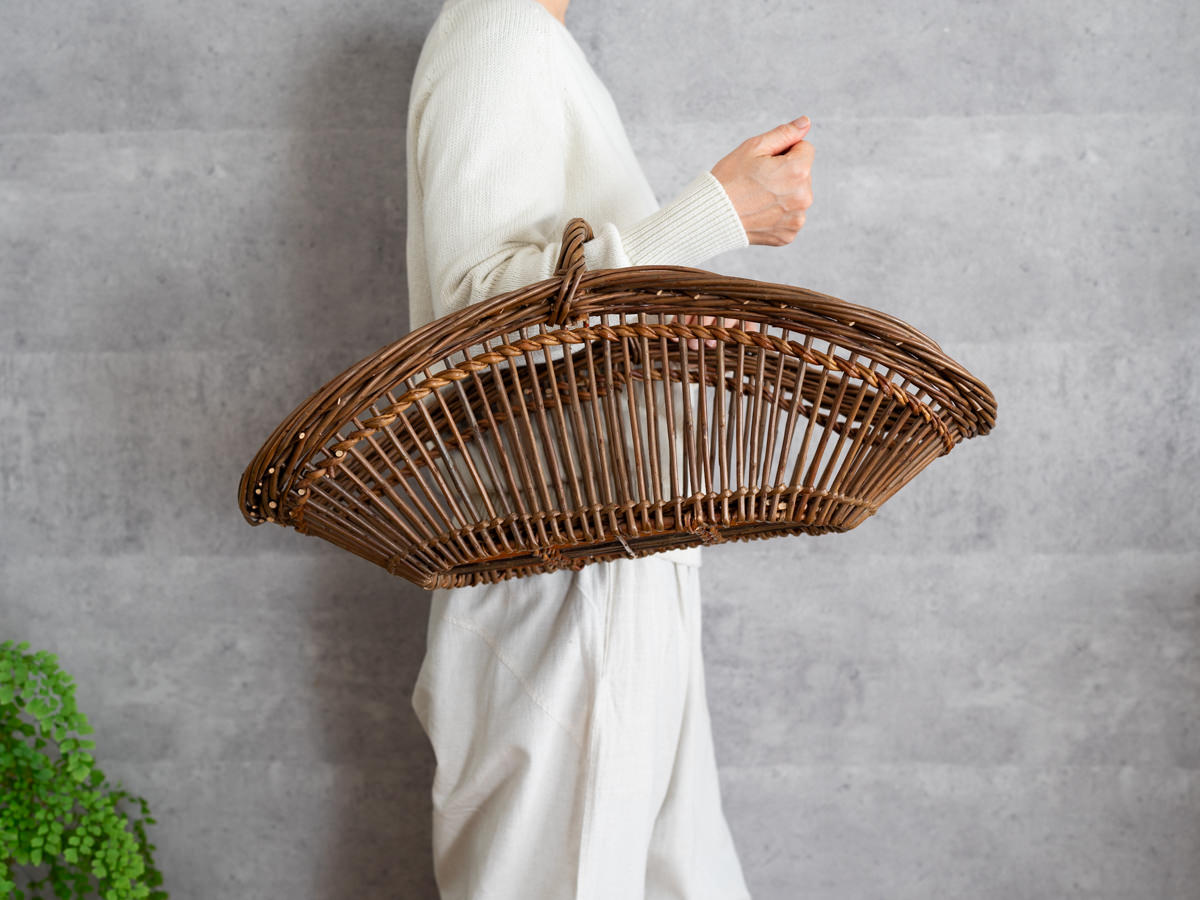
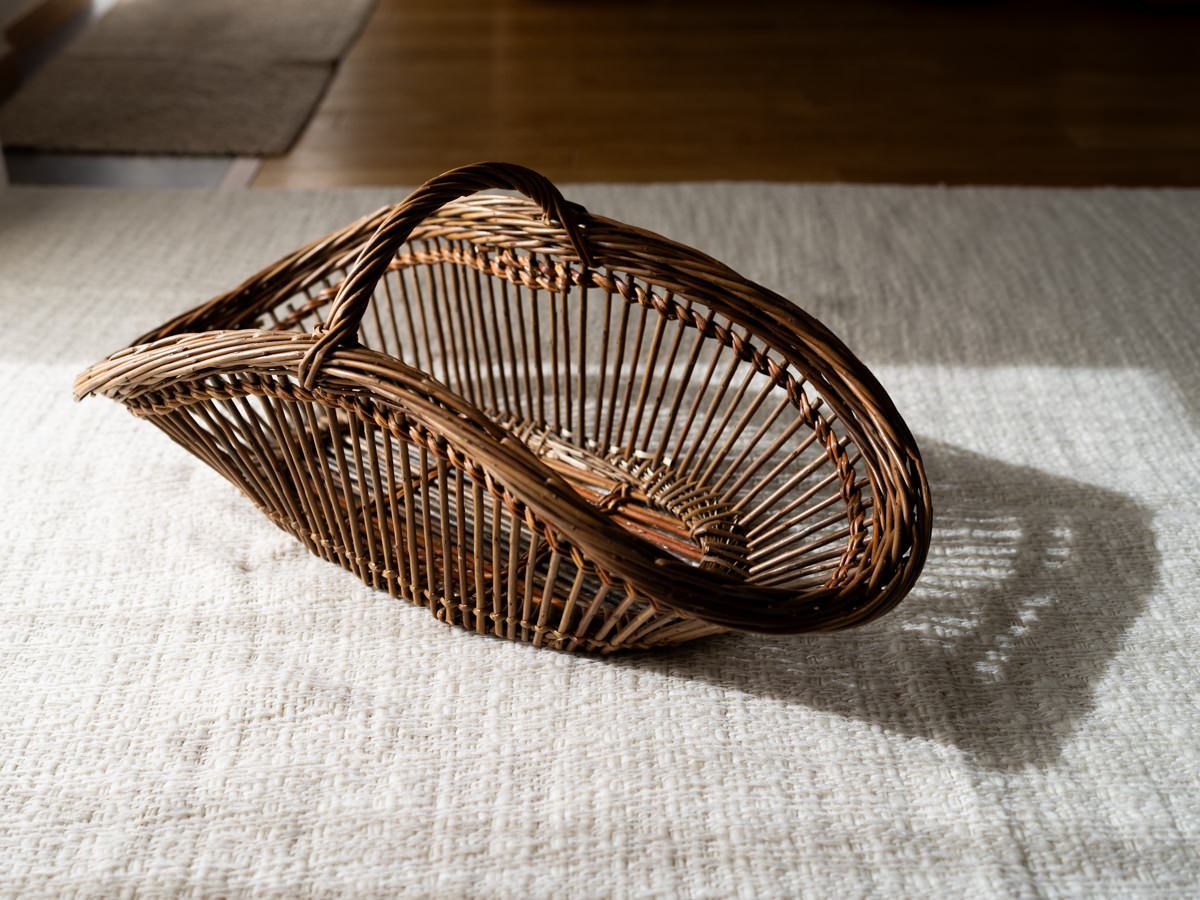
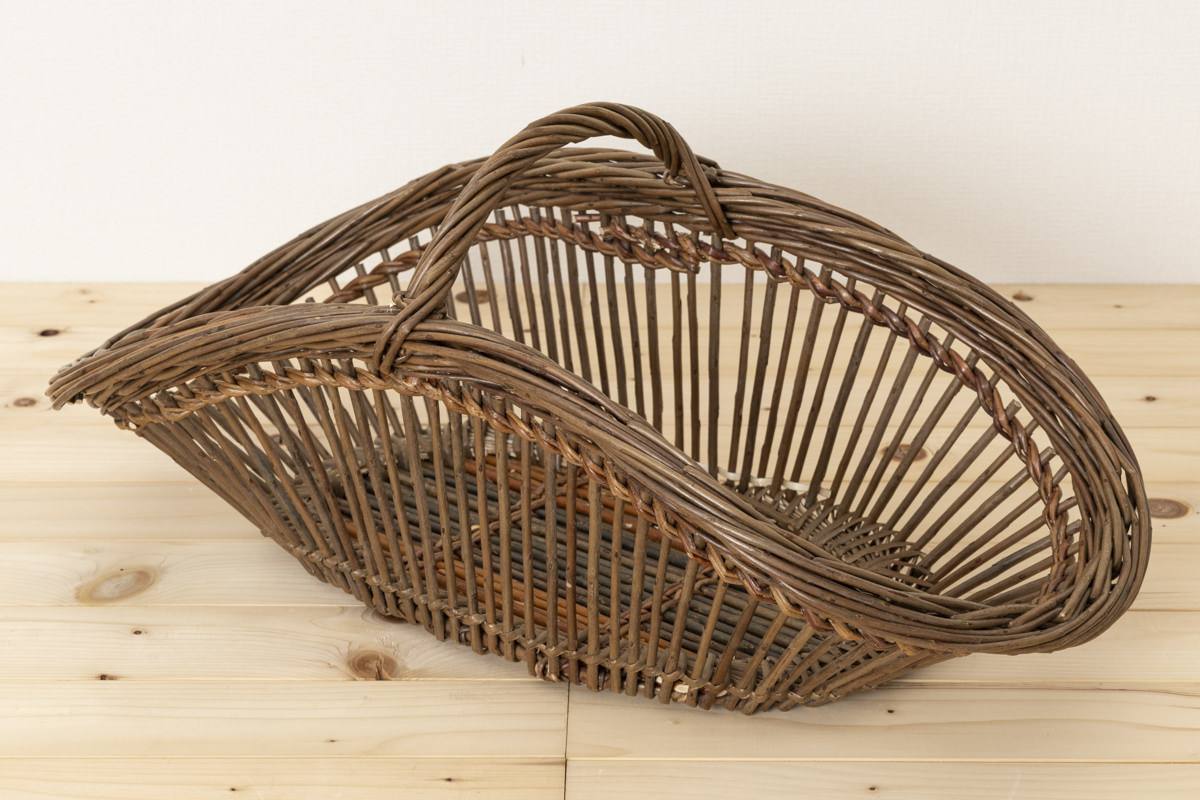
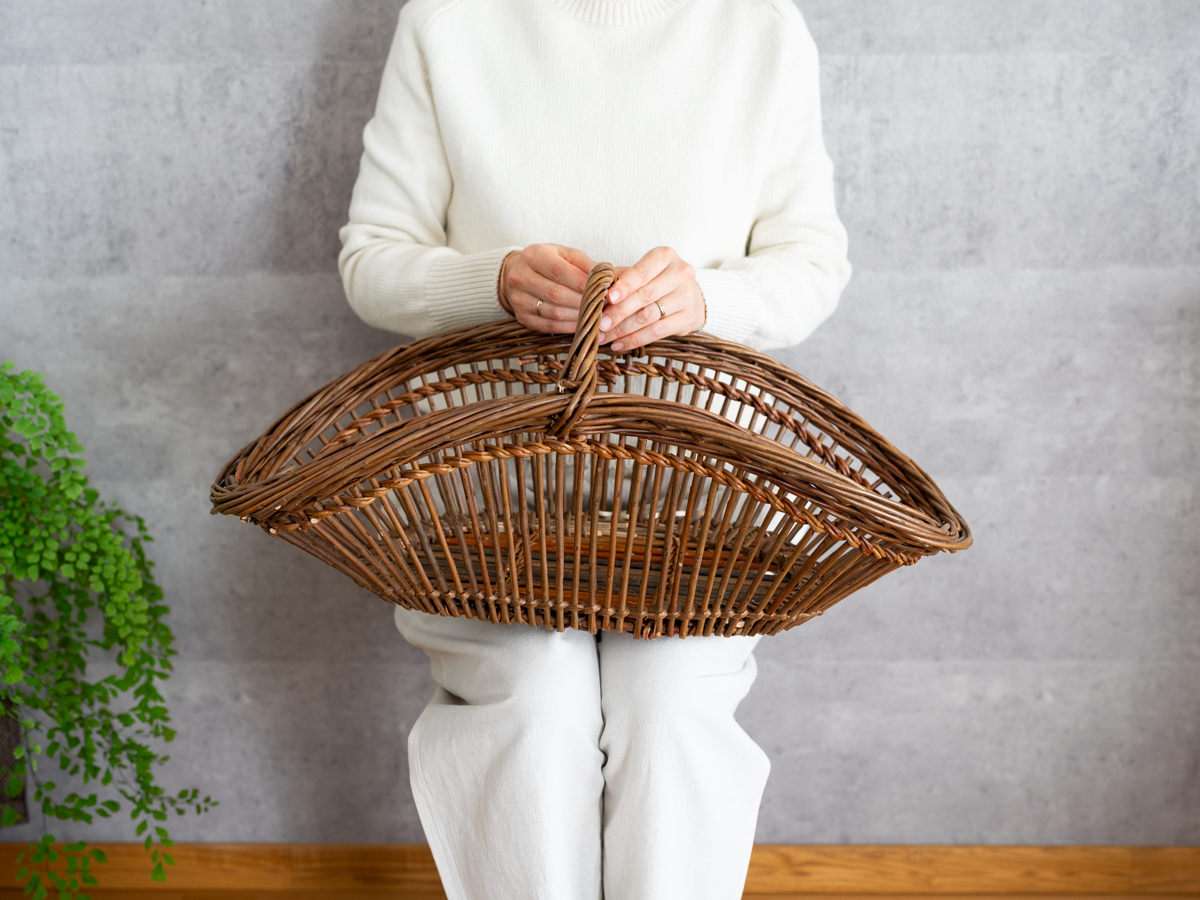
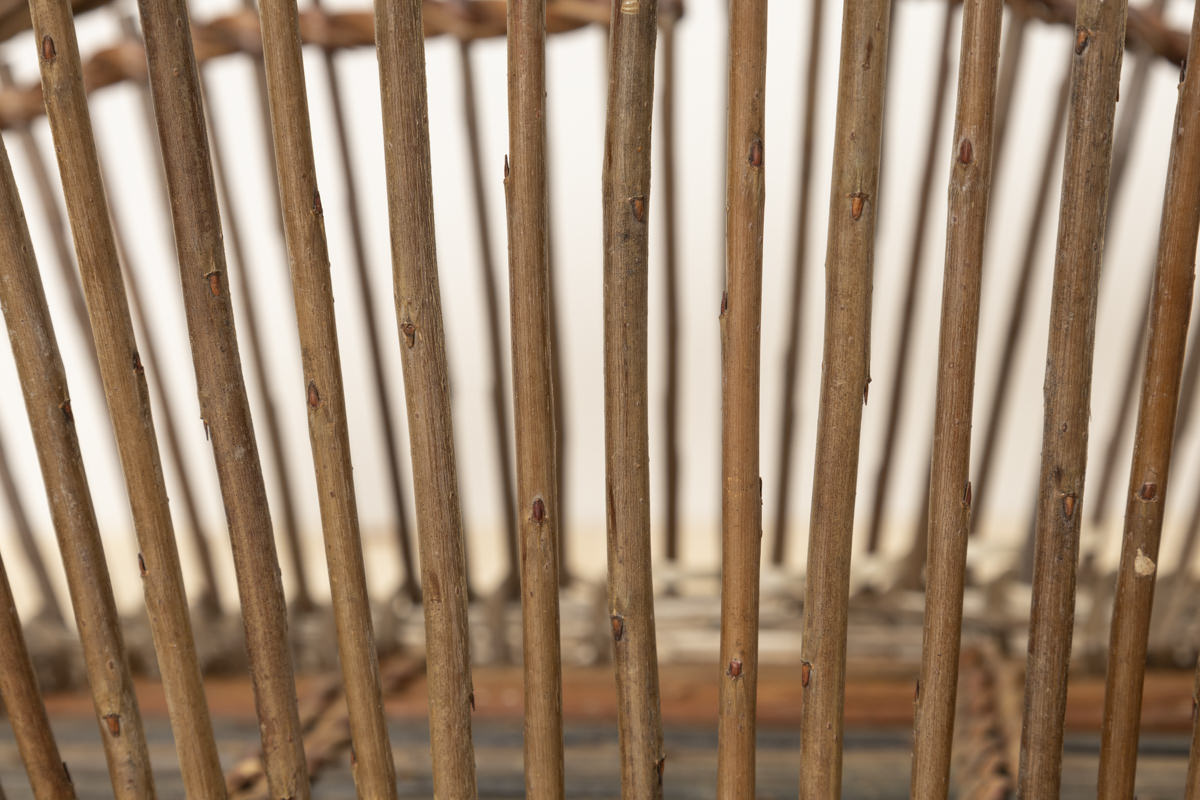
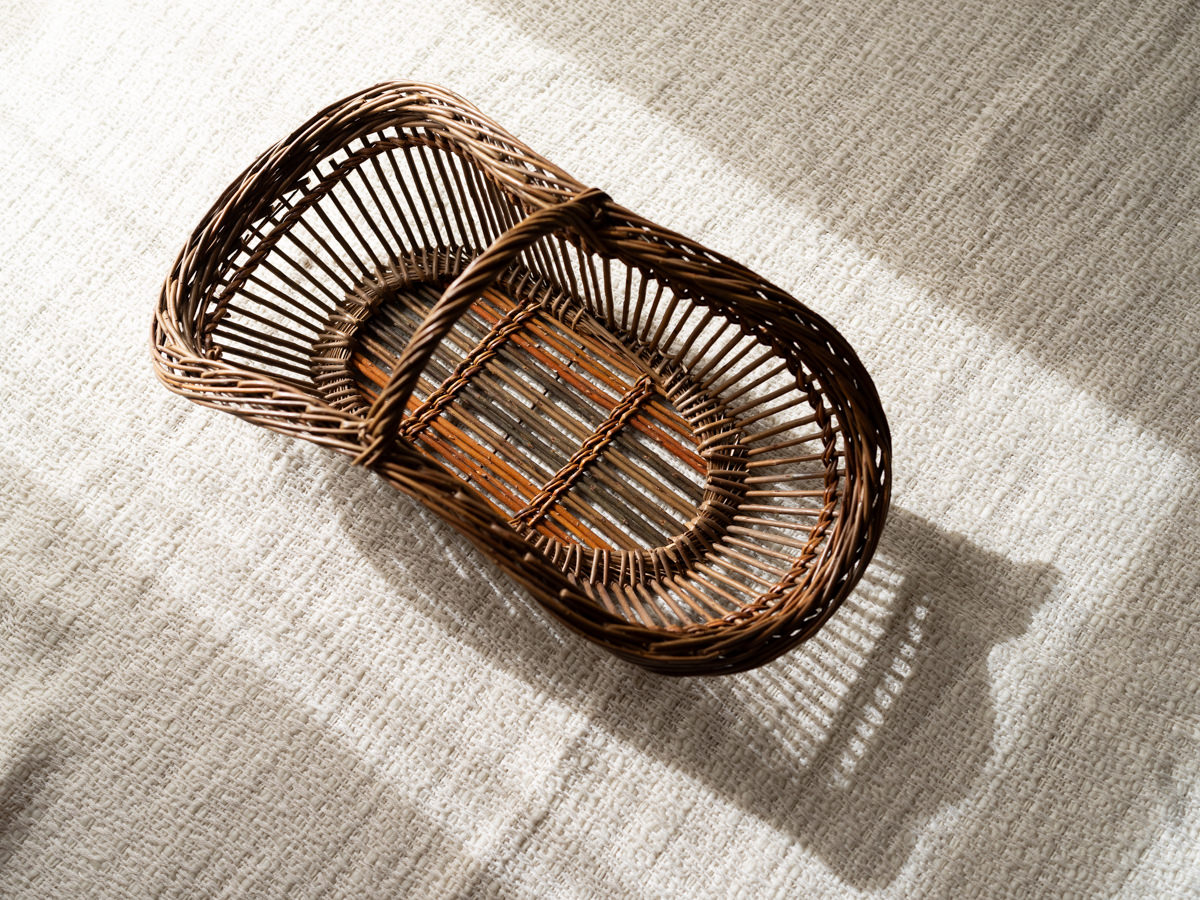
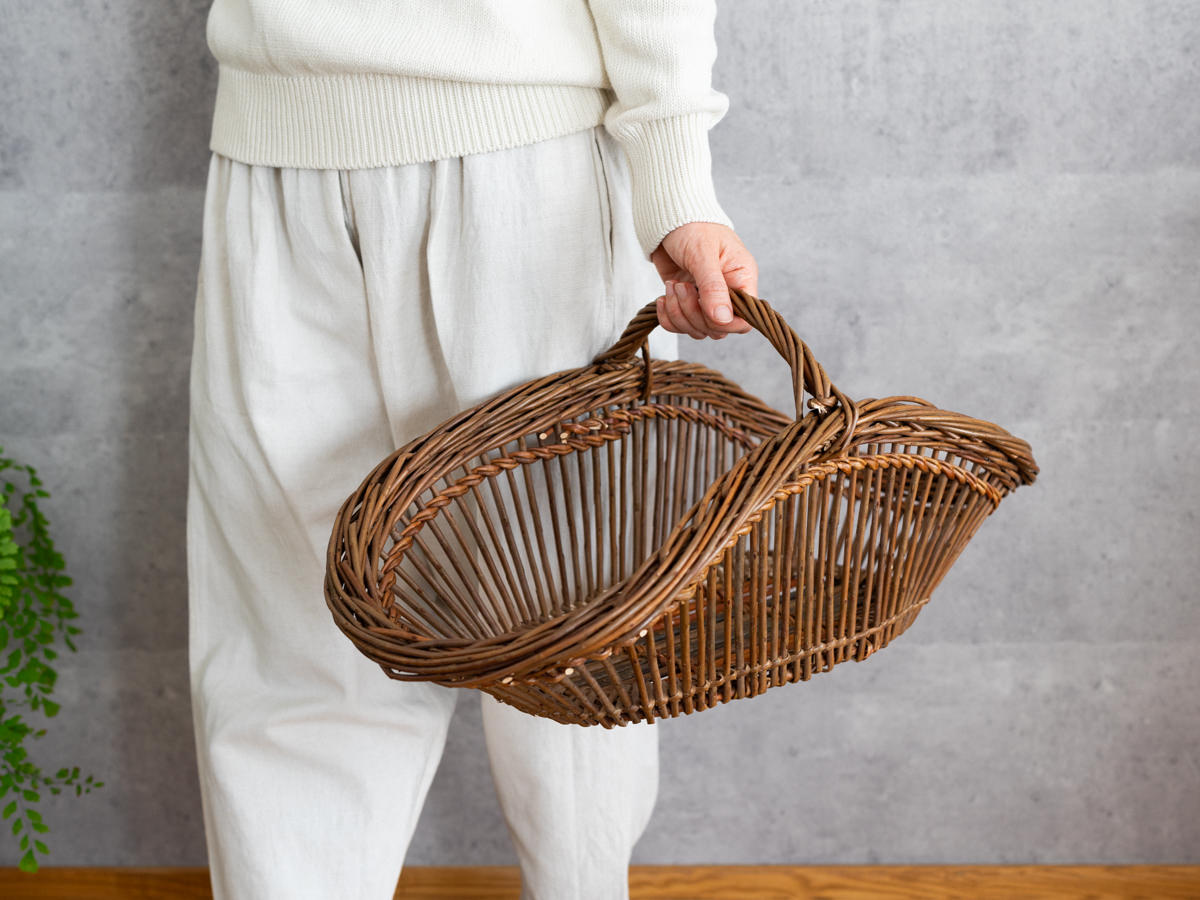
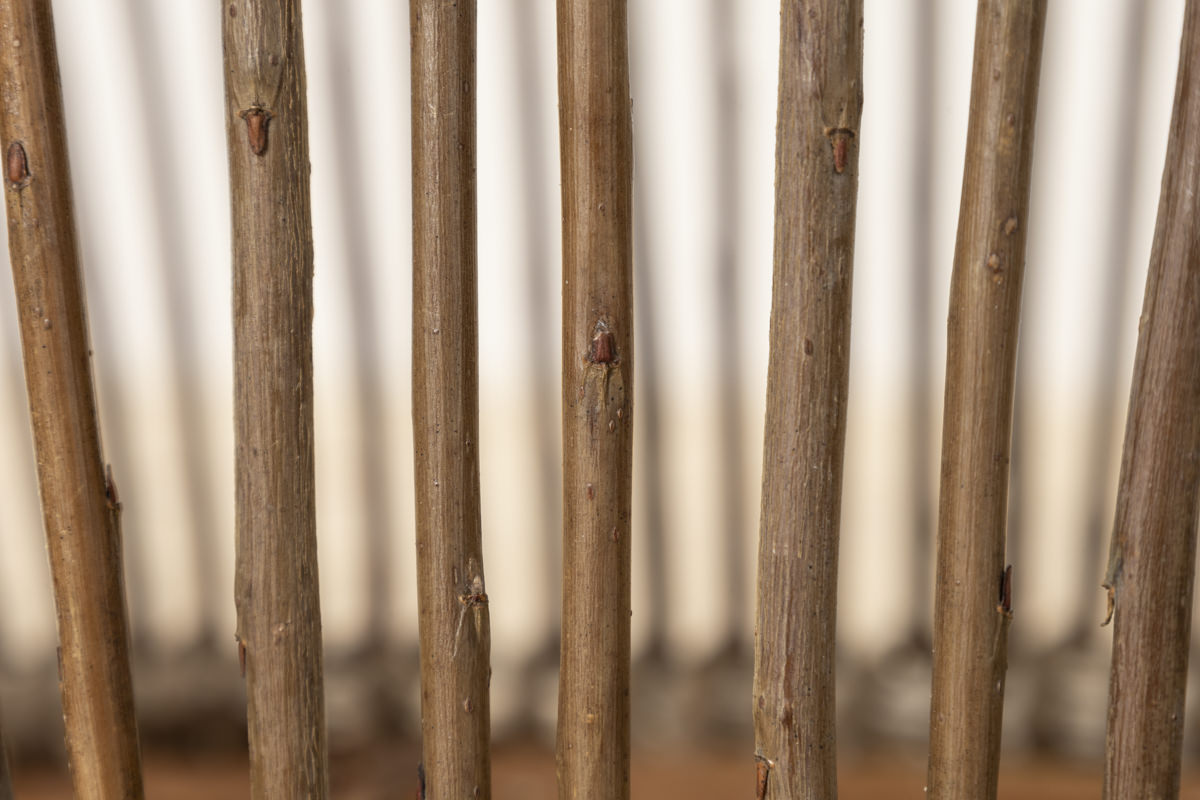
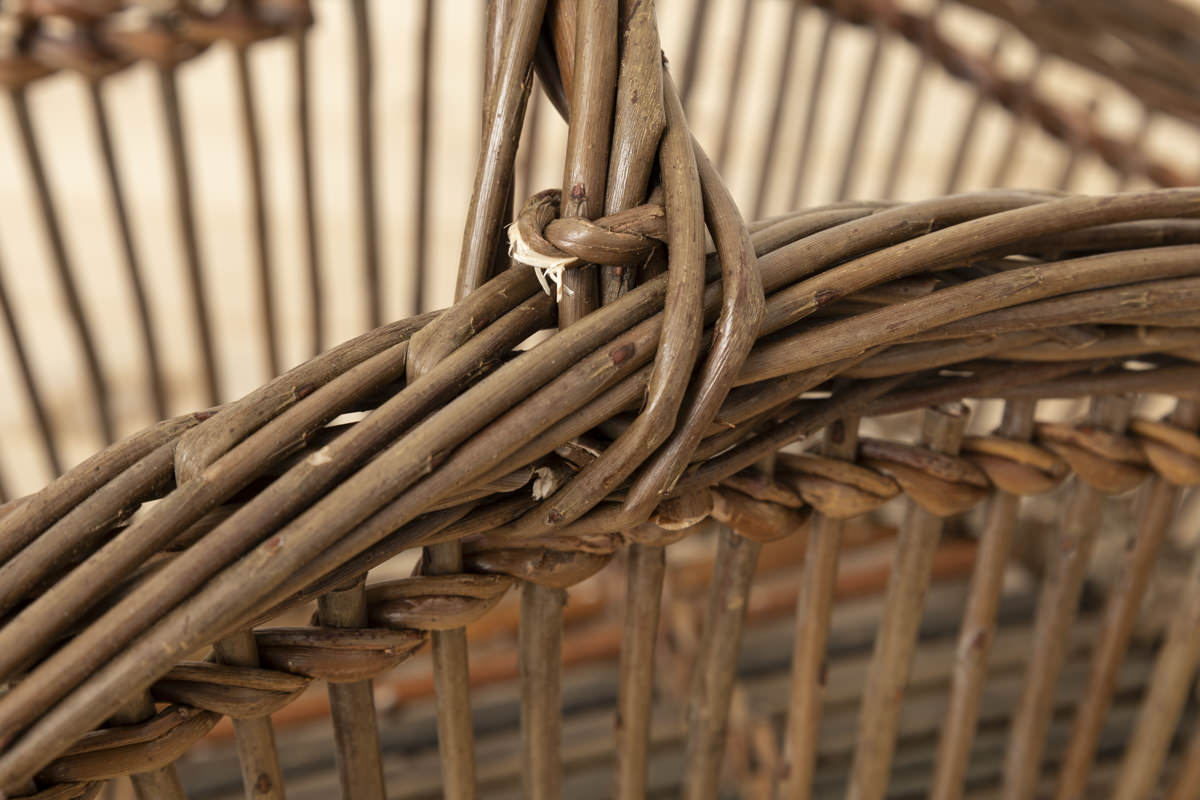
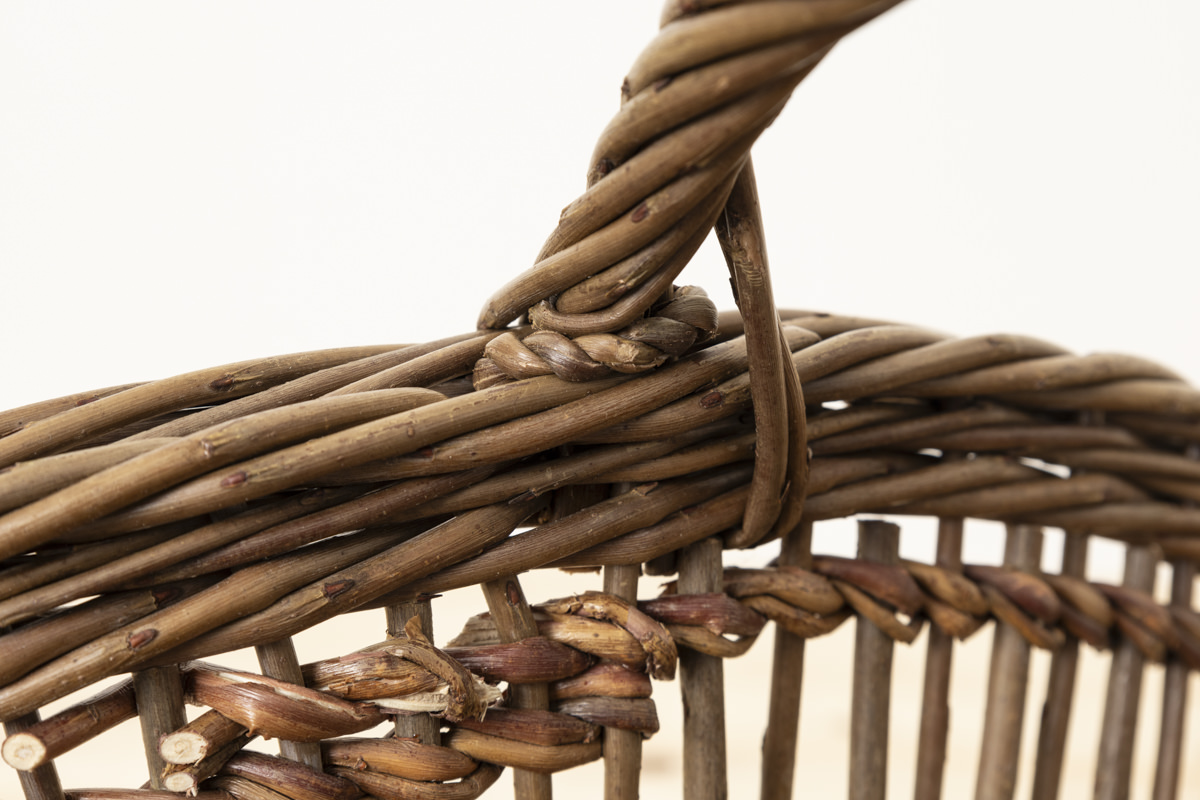
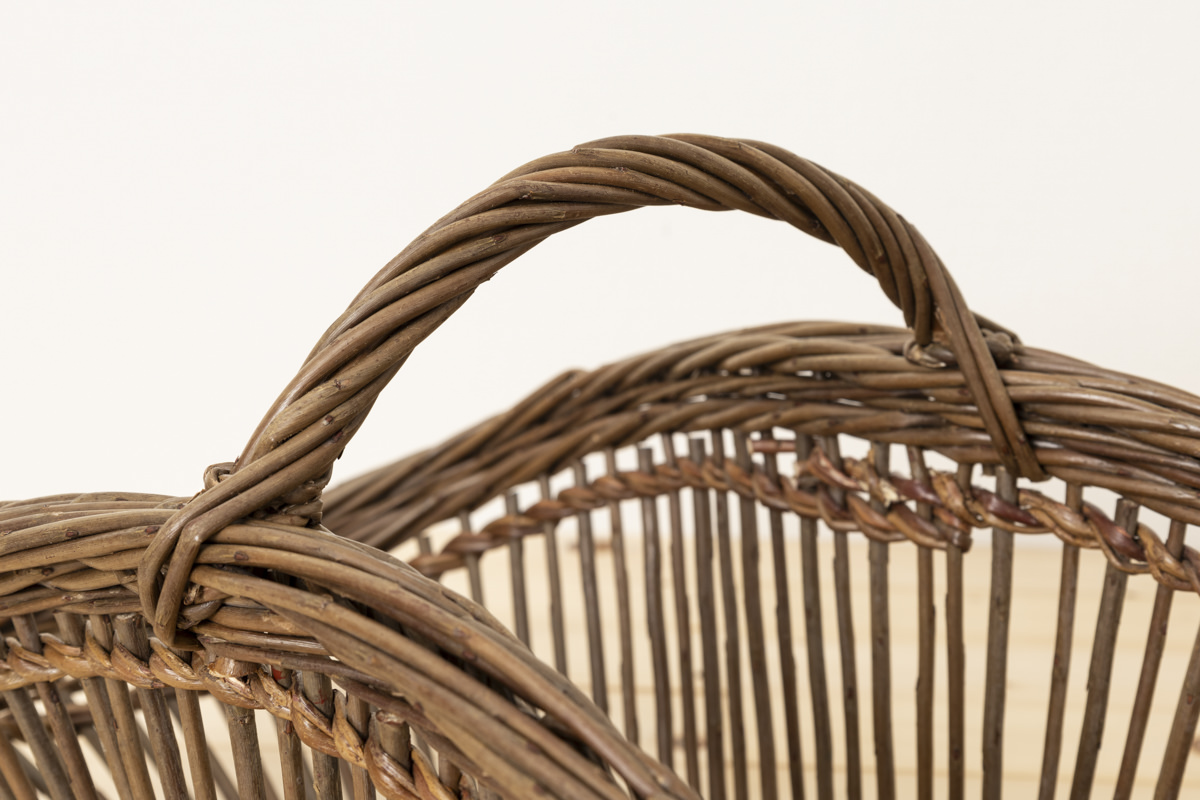
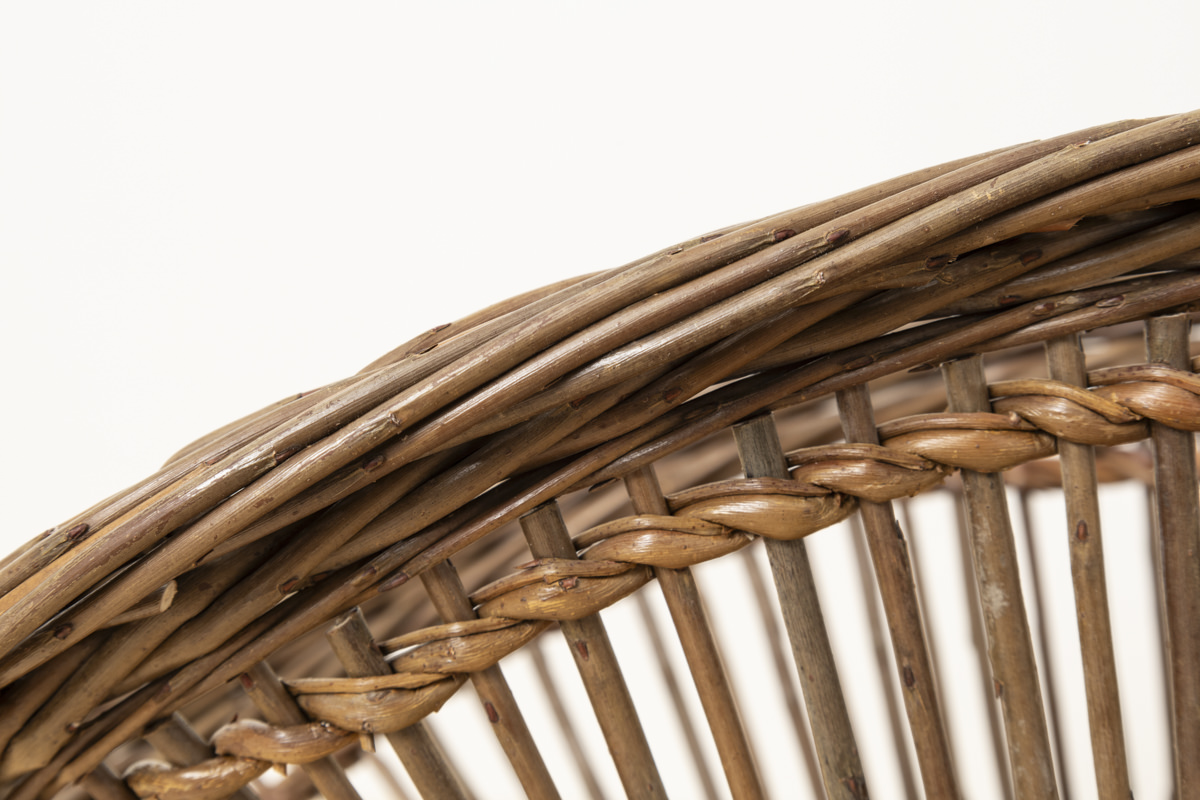
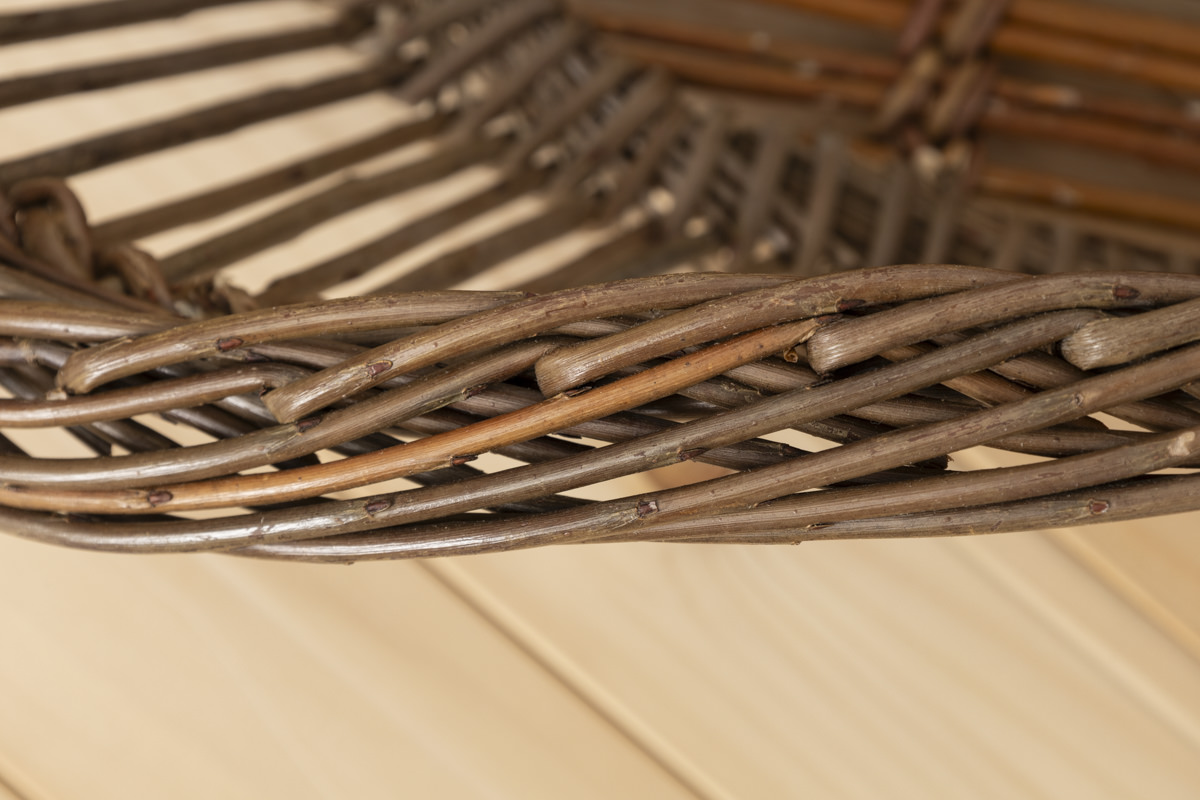
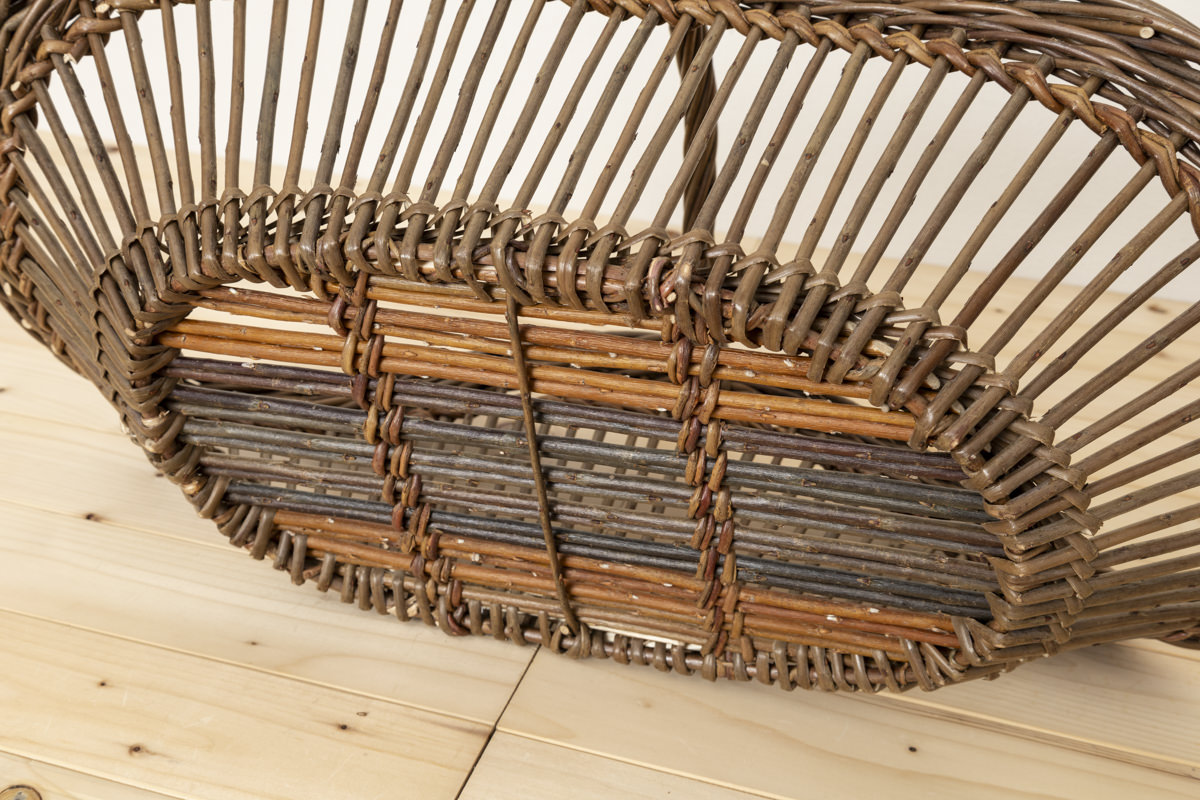
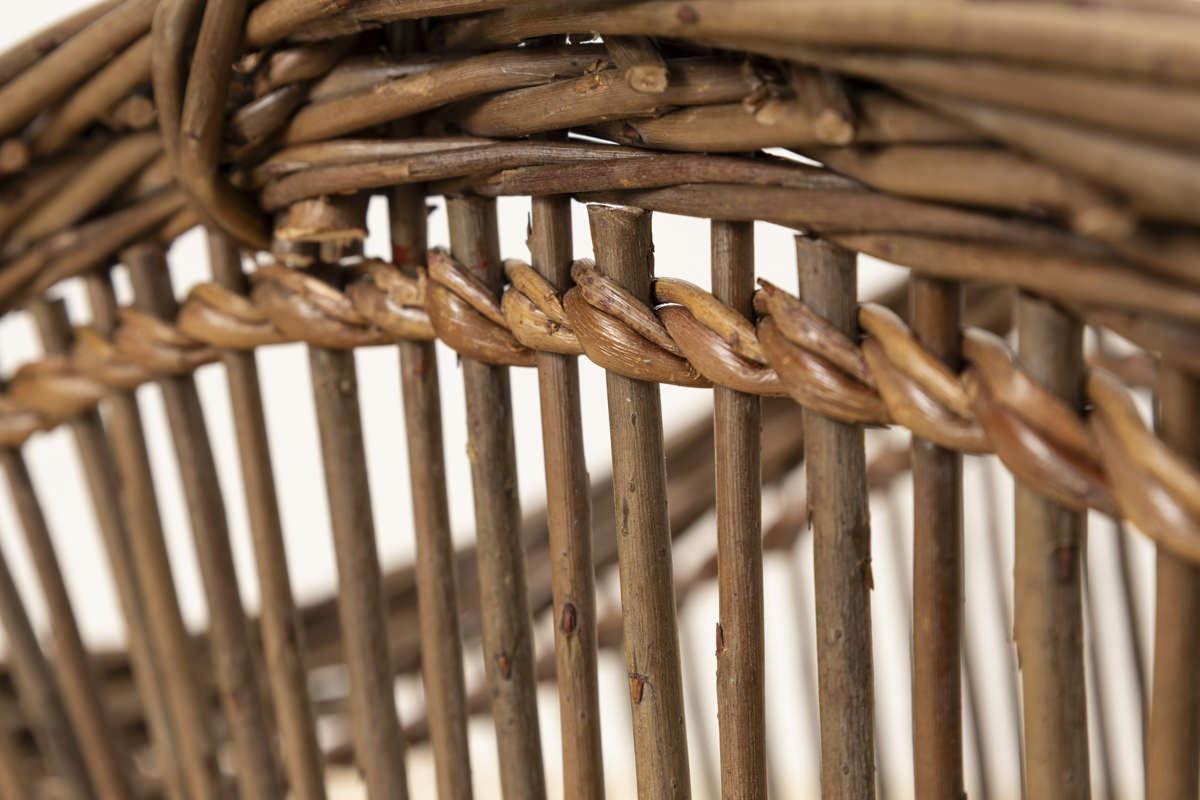
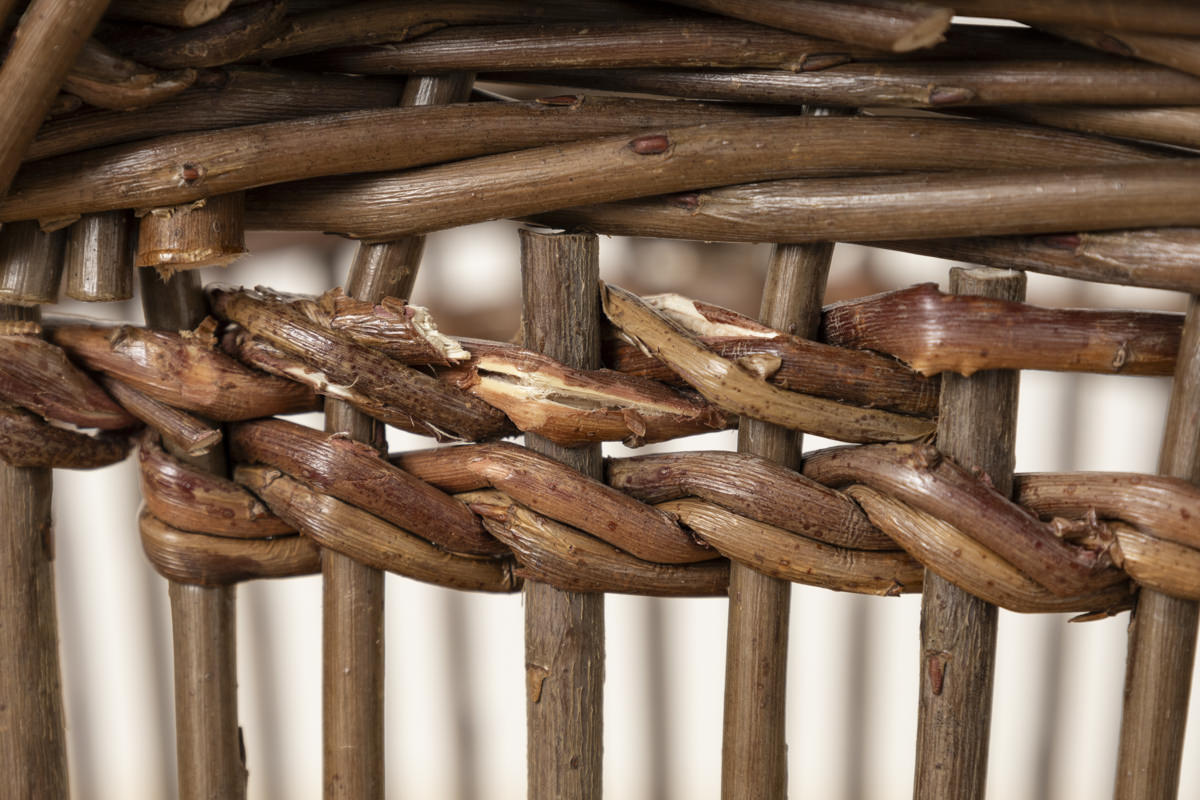
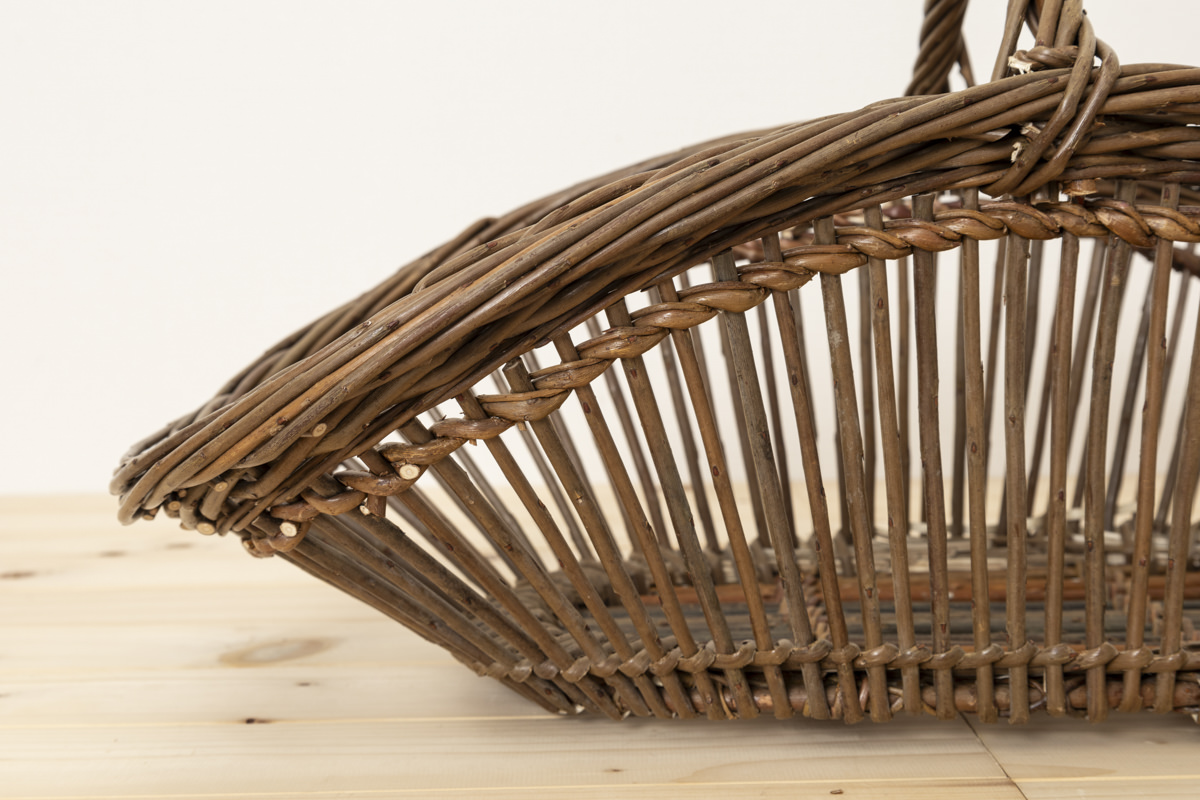
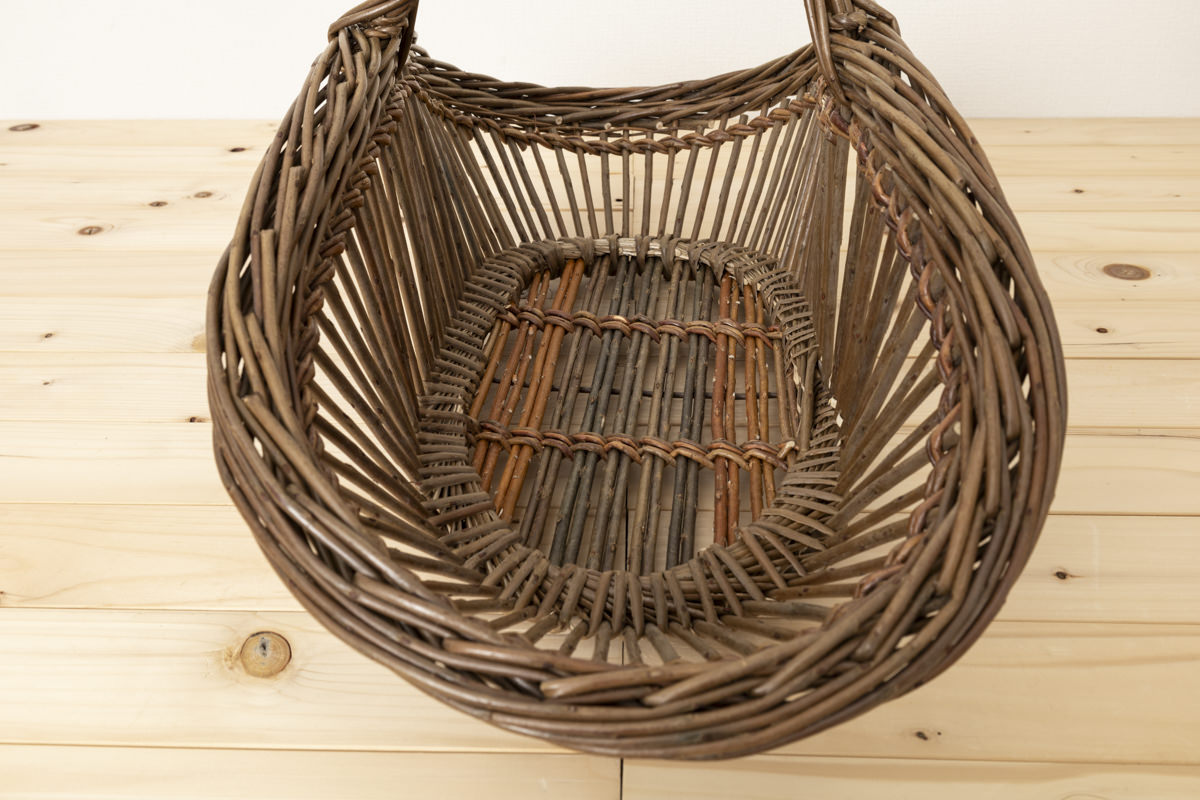
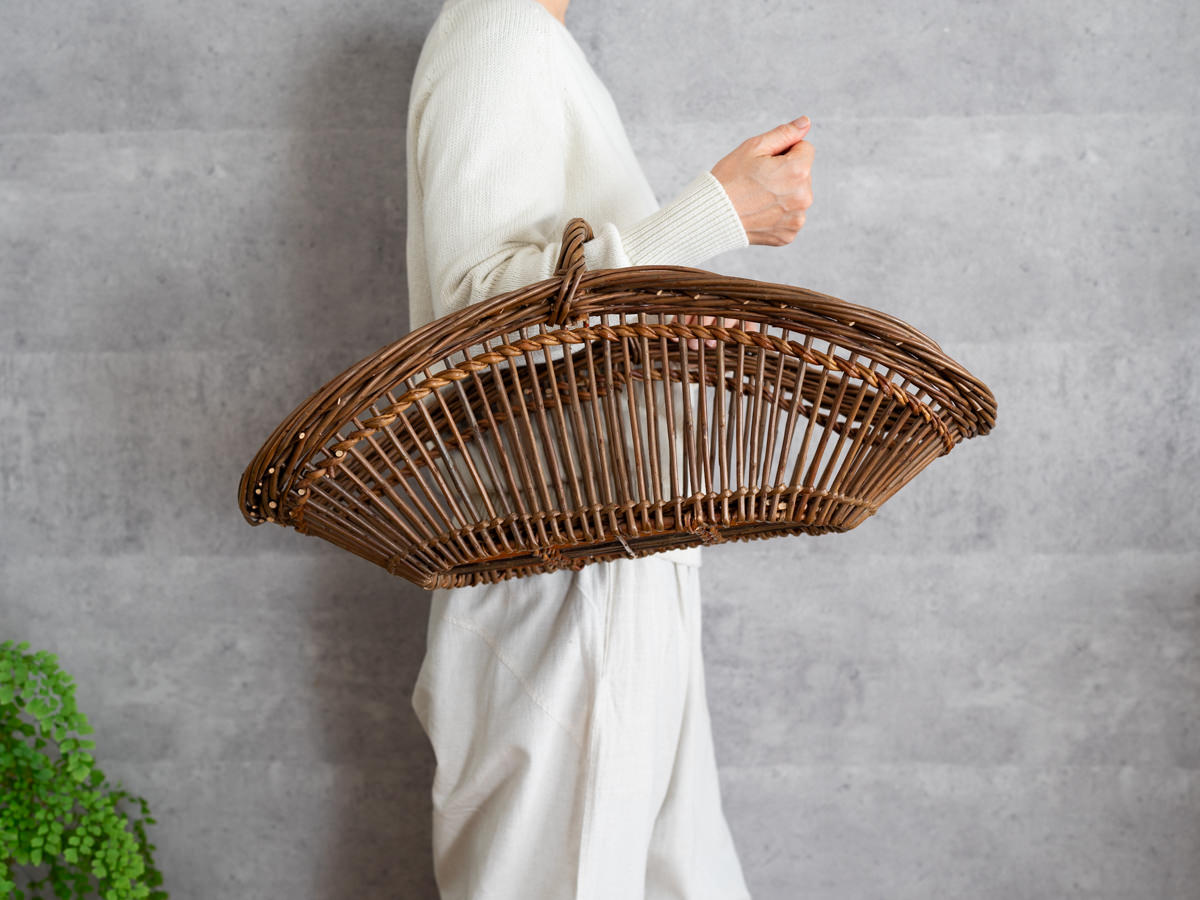
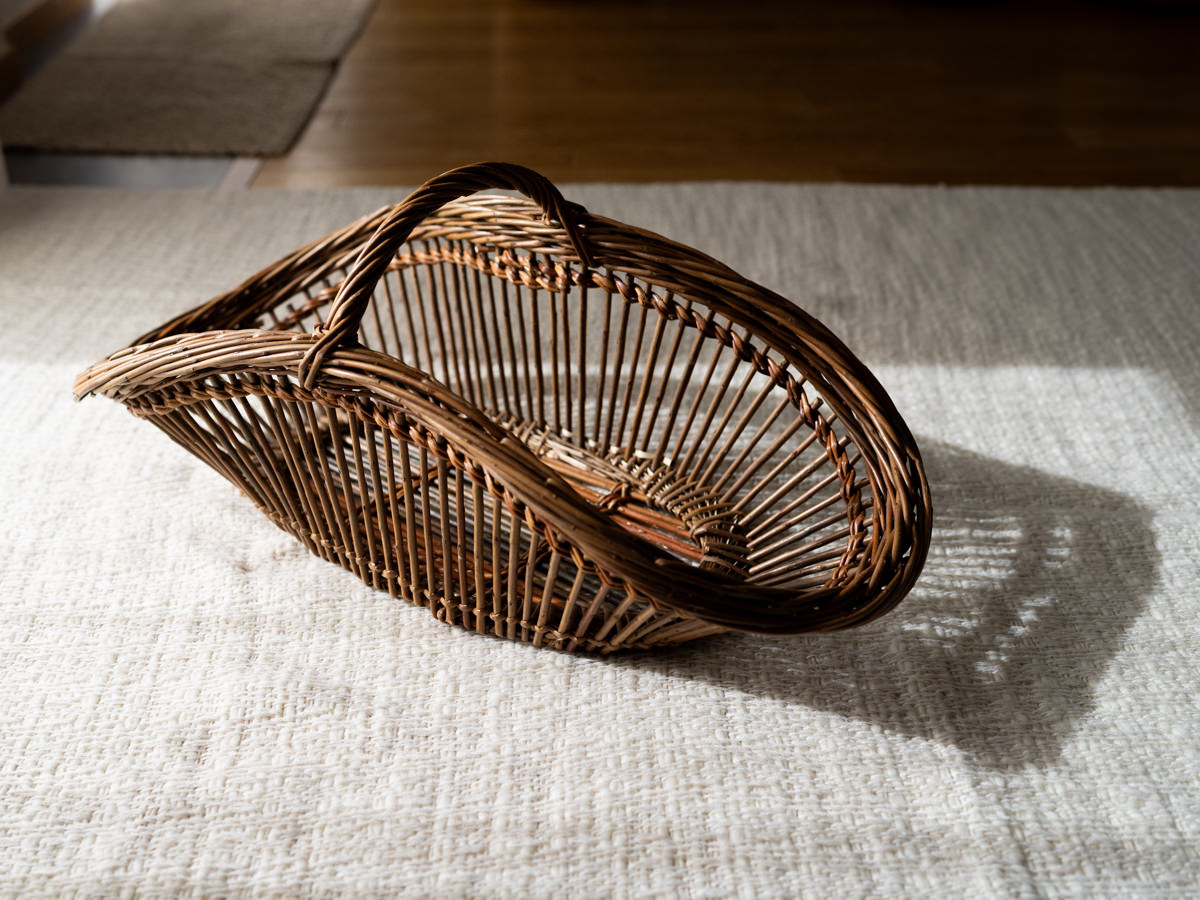
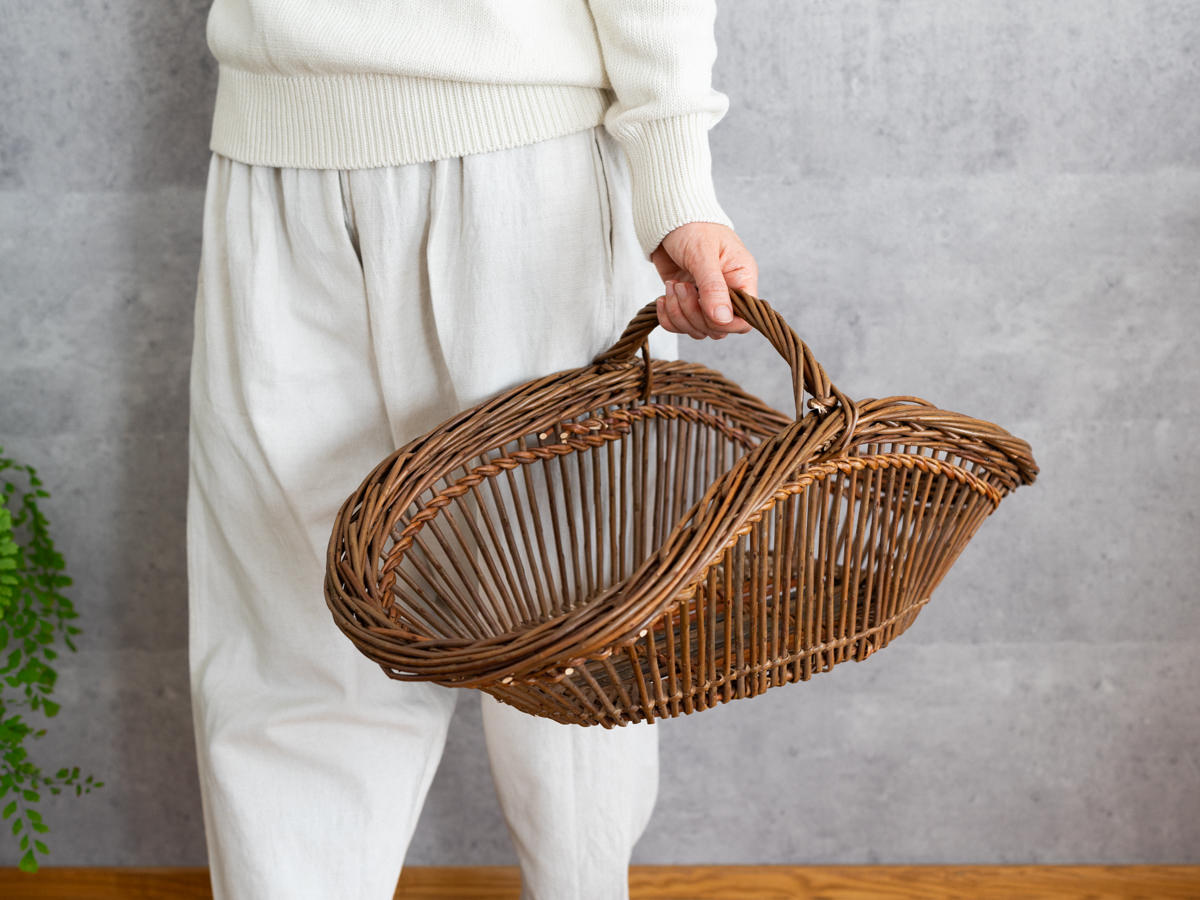
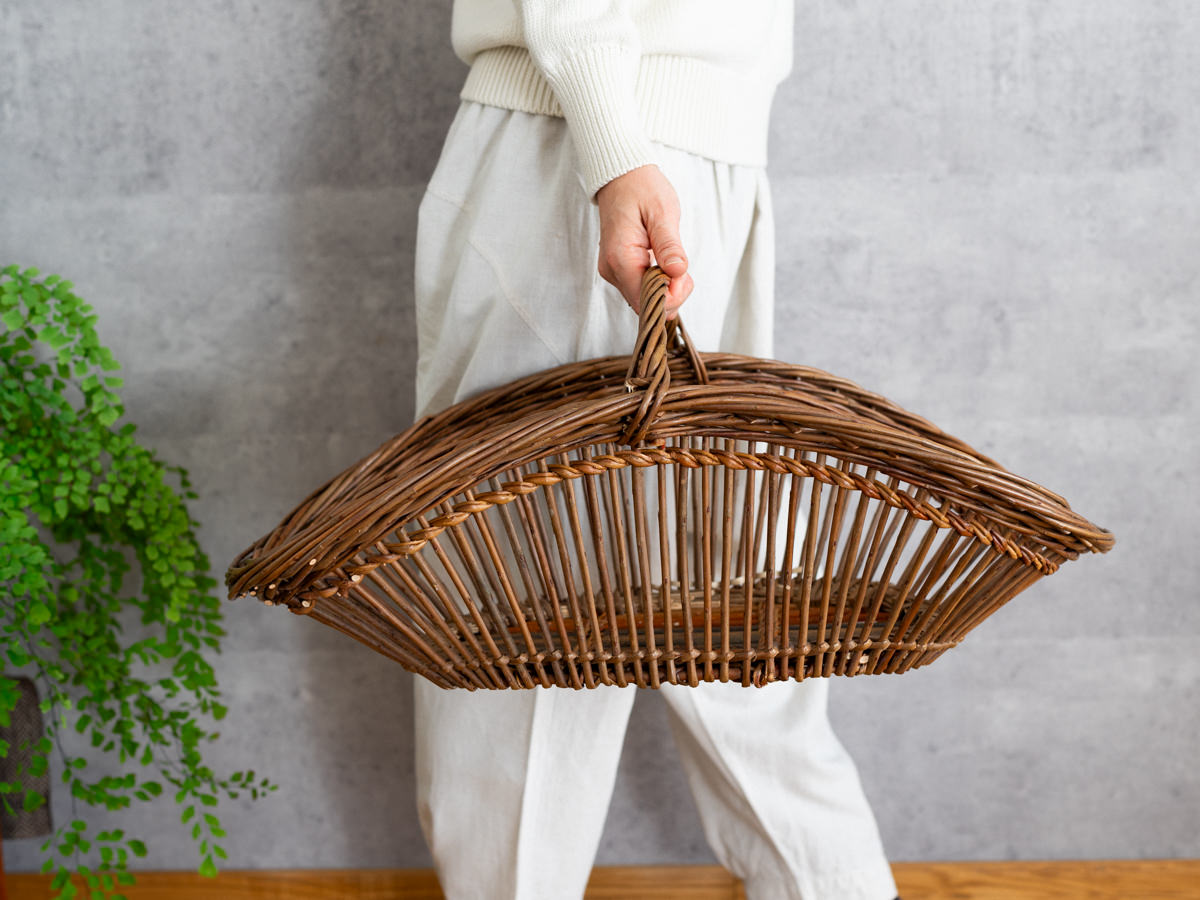
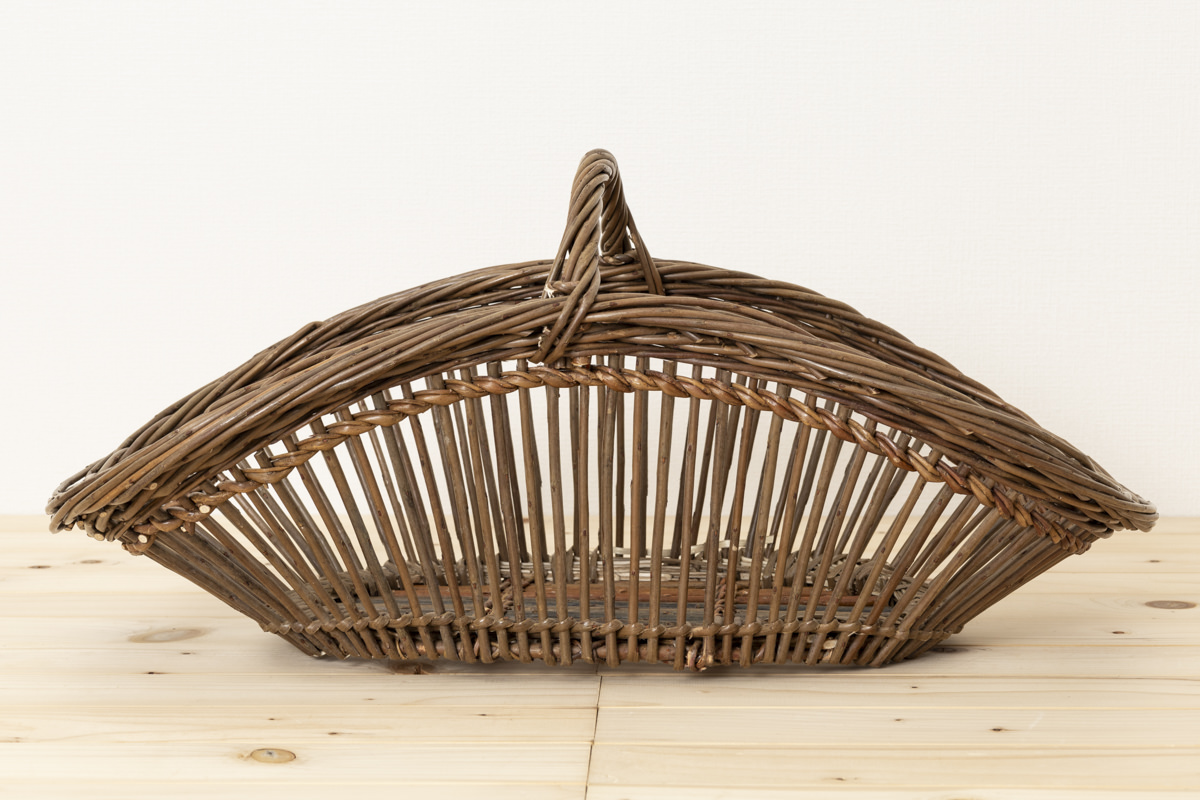
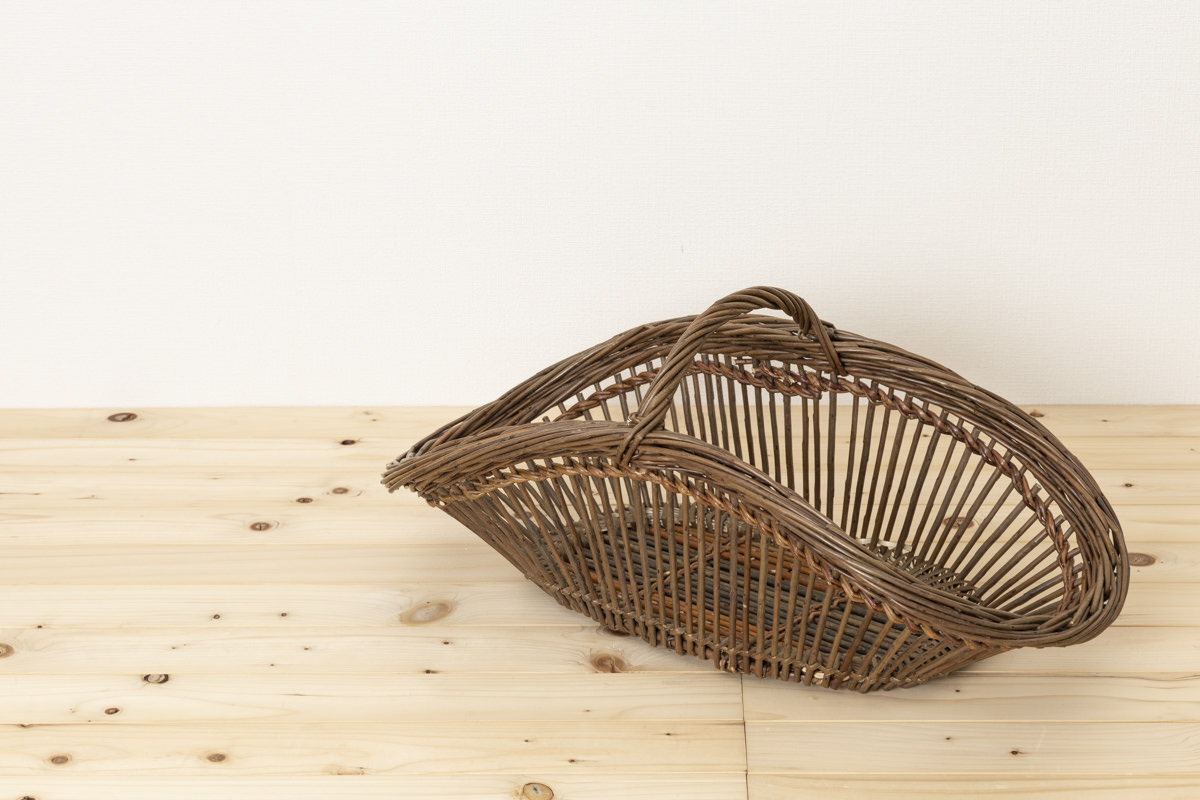
The fence-like weave pattern is particularly striking.As a natural characteristic of willow bark, you may notice small buds on the surface. They may feel slightly rough to the touch, but this is a natural feature and does not affect use, and therefore is not considered a defect. Please take care to avoid catching your fingers or clothing.This is where the handle is attached to the basket. It is firmly fixed, with almost no movement.The inner side of the joint is neatly finished.This is the handle. It is formed around a thick willow branch as the core, with thinner branches twisted and wrapped around it.The rim is finished with a flowing weave pattern.Viewed from above, the subtle variations in the color of the willow create a visually engaging effect.This is the base of the basket. Thick willow rods are paired in twos to form a strong and durable base.The stitching beneath the rim serves to secure each vertical rib, while also adding a playful and expressive character to the basket.Due to the nature of the construction, slight splitting or peeling of the willow may be seen in areas where it is twisted or woven at sharp angles. These are natural characteristics and are not considered defects. Thank you for your understanding.The form gently slopes outward from the basket, and its relaxed curve brings a sense of calm.The shallow, open form of the basket makes it easy to see and access the contents.The handle is set at a lower height, giving the basket a lightness that makes it easy to pick up as a whole.When carried over the arm, the basket sits comfortably against the body, offering a stable and easy grip.By placing a liner inside, you can arrange a freshly bought bouquet casually in the basket and enjoy it as a flower basket in your interior. It also pairs beautifully with dried flowers.It can also be used as a shopping basket. It is especially useful when you want to carry items such as bread or cakes while keeping them flat and intact. It also works well for carrying ingredients selected at roadside markets or farmers’ markets straight to your car.
Like the gentle slopes of the European countryside, this handled basket draws a soft, flowing curve. It is a form commonly seen in France, where Benjamin is from.
Along with the techniques passed down from his father and grandfather, Benjamin continues to create a wide variety of baskets while engaging with makers across France and Europe.
After shopping, it can also be used as a basket to store ingredients such as bread, fruits, and vegetables.
When placing fabric items such as towels or cloths inside, we recommend lining the interior with a cloth to help prevent snagging.
The natural form of the willow branches and the balanced shape of the basket bring a sense of calm, offering a quiet pleasure simply by looking at it.
Benjamin’s Basket Weaving
Before becoming a basket maker, Benjamin worked in fields such as biology, environmental studies, social work, and photography. Over time, however, he found himself weary of the fast-paced urban lifestyle.
Seeking a more meaningful way of living and working, he chose to devote himself to basket weaving.
“I love the simple feeling of touching wood, going out into nature, collecting hazel, and working with my hands,” he says.
“Baskets are used every day to carry and store things. Being able to make such objects—not by machine, but from renewable, local materials— gives me a sense of independence.”
He says his goal in basket making is always to reach perfection— a goal that can never truly be attained, which is precisely why it continues to inspire him. The baskets he creates are all of exceptional quality, beautifully shaped, and built to last.
Please also take a look at our journal featuring Benjamin from Germany.
Please note: This item ships from Japan. As the buyer, you are responsible for any import duties, customs fees, or local taxes that may be charged in your country. These costs are not included in the item price or shipping cost. Please check with your local customs authority if you are unsure about any potential charges before placing your order.
This basket is woven from willow branches and features a handle.
The maker is Benjamin, who lives in Germany. Born and raised in France, he learned basketry from his father, a basket maker, and acquired traditional French techniques.
Based on traditional forms found in European basketry, he refines them in his own way, creating baskets that are more durable and more precisely woven.
This basket is made from willow branches.
The willow used as material is different from the weeping willow commonly seen in Japan, whose branches hang down from the tree. Instead, it grows upright from the ground in clustered stems, much like rice plants.
There are many varieties of willow, each with its own color and characteristics.
Some have slender branches, others are thicker; some are longer, while others are shorter. Some are suited to be used with their bark intact, while others are peeled to reveal a pale, smooth surface.
The color of the bark also varies—ranging from reddish tones to bluish hues, and deep browns. Even within the same type of willow, there are many subtle differences in form and appearance.
Benjamin selects the tallest and most durable varieties from among willow twigs, whose appearance and condition vary each year depending on rainfall and temperature.
He also takes into account how easily the willow can be split, its strength, the color of the bark, and the harvest conditions of each year, choosing from around ten different types of willow to find the most suitable material for each basket.
Here, we introduce this basket, named the “Flower Basket,” woven with the willow bark left intact.
The fence-like weave pattern is particularly striking.As a natural characteristic of willow bark, you may notice small buds on the surface. They may feel slightly rough to the touch, but this is a natural feature and does not affect use, and therefore is not considered a defect. Please take care to avoid catching your fingers or clothing.This is where the handle is attached to the basket. It is firmly fixed, with almost no movement.The inner side of the joint is neatly finished.This is the handle. It is formed around a thick willow branch as the core, with thinner branches twisted and wrapped around it.The rim is finished with a flowing weave pattern.Viewed from above, the subtle variations in the color of the willow create a visually engaging effect.This is the base of the basket. Thick willow rods are paired in twos to form a strong and durable base.The stitching beneath the rim serves to secure each vertical rib, while also adding a playful and expressive character to the basket.Due to the nature of the construction, slight splitting or peeling of the willow may be seen in areas where it is twisted or woven at sharp angles. These are natural characteristics and are not considered defects. Thank you for your understanding.The form gently slopes outward from the basket, and its relaxed curve brings a sense of calm.The shallow, open form of the basket makes it easy to see and access the contents.The handle is set at a lower height, giving the basket a lightness that makes it easy to pick up as a whole.When carried over the arm, the basket sits comfortably against the body, offering a stable and easy grip.By placing a liner inside, you can arrange a freshly bought bouquet casually in the basket and enjoy it as a flower basket in your interior. It also pairs beautifully with dried flowers.It can also be used as a shopping basket. It is especially useful when you want to carry items such as bread or cakes while keeping them flat and intact. It also works well for carrying ingredients selected at roadside markets or farmers’ markets straight to your car.
Like the gentle slopes of the European countryside, this handled basket draws a soft, flowing curve. It is a form commonly seen in France, where Benjamin is from.
Along with the techniques passed down from his father and grandfather, Benjamin continues to create a wide variety of baskets while engaging with makers across France and Europe.
After shopping, it can also be used as a basket to store ingredients such as bread, fruits, and vegetables.
When placing fabric items such as towels or cloths inside, we recommend lining the interior with a cloth to help prevent snagging.
The natural form of the willow branches and the balanced shape of the basket bring a sense of calm, offering a quiet pleasure simply by looking at it.
Benjamin’s Basket Weaving
Before becoming a basket maker, Benjamin worked in fields such as biology, environmental studies, social work, and photography. Over time, however, he found himself weary of the fast-paced urban lifestyle.
Seeking a more meaningful way of living and working, he chose to devote himself to basket weaving.
“I love the simple feeling of touching wood, going out into nature, collecting hazel, and working with my hands,” he says.
“Baskets are used every day to carry and store things. Being able to make such objects—not by machine, but from renewable, local materials— gives me a sense of independence.”
He says his goal in basket making is always to reach perfection— a goal that can never truly be attained, which is precisely why it continues to inspire him. The baskets he creates are all of exceptional quality, beautifully shaped, and built to last.
Please also take a look at our journal featuring Benjamin from Germany.
Please note: This item ships from Japan. As the buyer, you are responsible for any import duties, customs fees, or local taxes that may be charged in your country. These costs are not included in the item price or shipping cost. Please check with your local customs authority if you are unsure about any potential charges before placing your order.
This basket is woven from willow branches and features a handle.
The maker is Benjamin, who lives in Germany. Born and raised in France, he learned basketry from his father, a basket maker, and acquired traditional French techniques.
Based on traditional forms found in European basketry, he refines them in his own way, creating baskets that are more durable and more precisely woven.
This basket is made from willow branches.
The willow used as material is different from the weeping willow commonly seen in Japan, whose branches hang down from the tree. Instead, it grows upright from the ground in clustered stems, much like rice plants.
There are many varieties of willow, each with its own color and characteristics.
Some have slender branches, others are thicker; some are longer, while others are shorter. Some are suited to be used with their bark intact, while others are peeled to reveal a pale, smooth surface.
The color of the bark also varies—ranging from reddish tones to bluish hues, and deep browns. Even within the same type of willow, there are many subtle differences in form and appearance.
Benjamin selects the tallest and most durable varieties from among willow twigs, whose appearance and condition vary each year depending on rainfall and temperature.
He also takes into account how easily the willow can be split, its strength, the color of the bark, and the harvest conditions of each year, choosing from around ten different types of willow to find the most suitable material for each basket.
Here, we introduce this basket, named the “Flower Basket,” woven with the willow bark left intact.
The fence-like weave pattern is particularly striking.As a natural characteristic of willow bark, you may notice small buds on the surface. They may feel slightly rough to the touch, but this is a natural feature and does not affect use, and therefore is not considered a defect. Please take care to avoid catching your fingers or clothing.This is where the handle is attached to the basket. It is firmly fixed, with almost no movement.The inner side of the joint is neatly finished.This is the handle. It is formed around a thick willow branch as the core, with thinner branches twisted and wrapped around it.The rim is finished with a flowing weave pattern.Viewed from above, the subtle variations in the color of the willow create a visually engaging effect.This is the base of the basket. Thick willow rods are paired in twos to form a strong and durable base.The stitching beneath the rim serves to secure each vertical rib, while also adding a playful and expressive character to the basket.Due to the nature of the construction, slight splitting or peeling of the willow may be seen in areas where it is twisted or woven at sharp angles. These are natural characteristics and are not considered defects. Thank you for your understanding.The form gently slopes outward from the basket, and its relaxed curve brings a sense of calm.The shallow, open form of the basket makes it easy to see and access the contents.The handle is set at a lower height, giving the basket a lightness that makes it easy to pick up as a whole.When carried over the arm, the basket sits comfortably against the body, offering a stable and easy grip.By placing a liner inside, you can arrange a freshly bought bouquet casually in the basket and enjoy it as a flower basket in your interior. It also pairs beautifully with dried flowers.It can also be used as a shopping basket. It is especially useful when you want to carry items such as bread or cakes while keeping them flat and intact. It also works well for carrying ingredients selected at roadside markets or farmers’ markets straight to your car.
Like the gentle slopes of the European countryside, this handled basket draws a soft, flowing curve. It is a form commonly seen in France, where Benjamin is from.
Along with the techniques passed down from his father and grandfather, Benjamin continues to create a wide variety of baskets while engaging with makers across France and Europe.
After shopping, it can also be used as a basket to store ingredients such as bread, fruits, and vegetables.
When placing fabric items such as towels or cloths inside, we recommend lining the interior with a cloth to help prevent snagging.
The natural form of the willow branches and the balanced shape of the basket bring a sense of calm, offering a quiet pleasure simply by looking at it.
Benjamin’s Basket Weaving
Before becoming a basket maker, Benjamin worked in fields such as biology, environmental studies, social work, and photography. Over time, however, he found himself weary of the fast-paced urban lifestyle.
Seeking a more meaningful way of living and working, he chose to devote himself to basket weaving.
“I love the simple feeling of touching wood, going out into nature, collecting hazel, and working with my hands,” he says.
“Baskets are used every day to carry and store things. Being able to make such objects—not by machine, but from renewable, local materials— gives me a sense of independence.”
He says his goal in basket making is always to reach perfection— a goal that can never truly be attained, which is precisely why it continues to inspire him. The baskets he creates are all of exceptional quality, beautifully shaped, and built to last.
Please also take a look at our journal featuring Benjamin from Germany.
Please note: This item ships from Japan. As the buyer, you are responsible for any import duties, customs fees, or local taxes that may be charged in your country. These costs are not included in the item price or shipping cost. Please check with your local customs authority if you are unsure about any potential charges before placing your order.