In a region along the border of Yamagata and Niigata Prefectures, a traditional textile known as “shina-ori,” made from the bark of the linden tree, is still woven today.
It is regarded as one of Japan’s ancient textiles, alongside materials such as “bashofu” from Okinawa and “kuzufu” from Shizuoka.
Its origins are said to date back over a thousand years, and it was once made in many regions across Japan. However, with the spread of cotton and silk, and later the mass production of synthetic fibers after the war, many of these traditions disappeared.
Even so, the making of these ancient textiles continues today. It remains an important winter activity in mountain villages, and we feel that its simple warmth—created from materials gathered from the surrounding natural environment using time-honored techniques—continues to captivate people.
The process of making shina-ori can be broadly divided into around ten stages. It begins in June with the selection and cutting of linden trees, and the material is finally ready to be set on the loom around February of the following year. Although some of this time is shaped by the rhythm of agricultural work, the preparation alone takes several months.
Yet from this careful process emerges shina-ori, rich in the subtle fragrance and texture unique to natural materials, holding an indescribable sense of warmth and depth.
Linden trees grow throughout Japan, and their bark has been used in basketry in various regions, including Okayama and Fukushima.
This type of bag was originally made in larger sizes. As the material is resistant to water, it was valued for use in mountain work, particularly as a basket for gathering wild plants and vegetables.
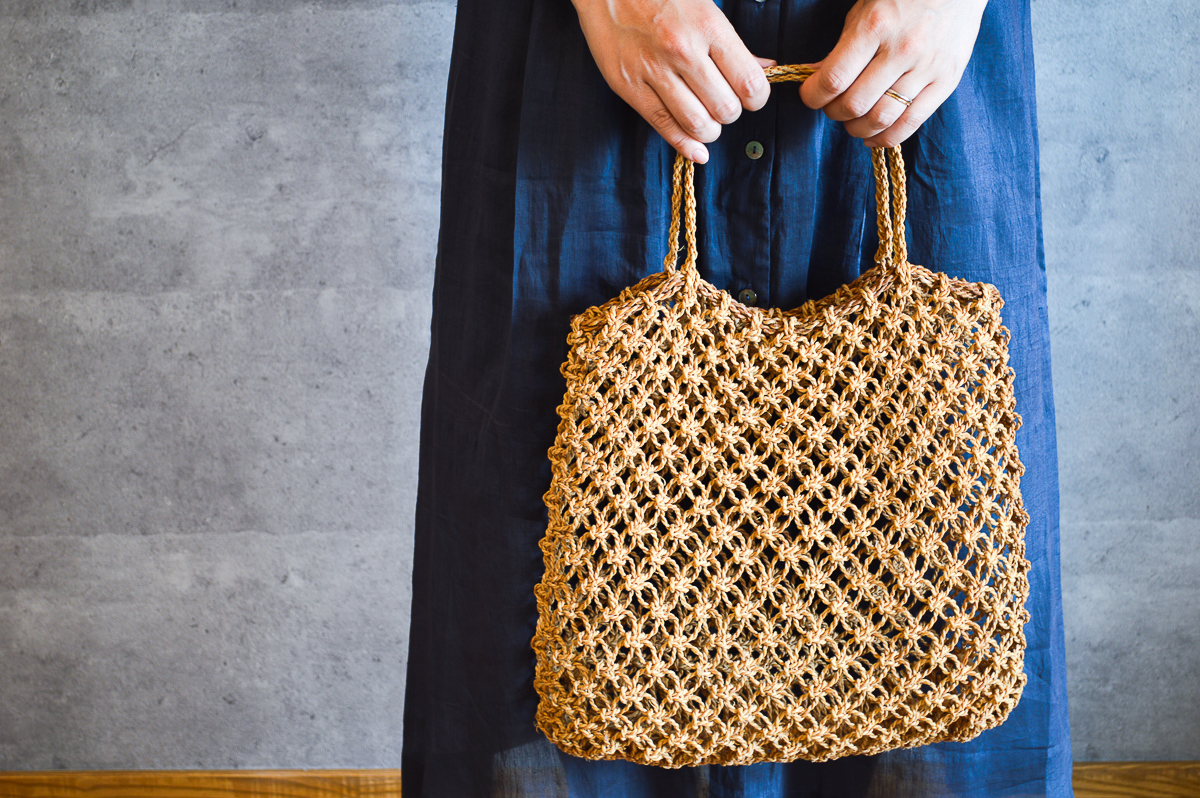
On this page, we introduce the Macramé-Style Tote Basket, adapted to a size suited to modern daily life.
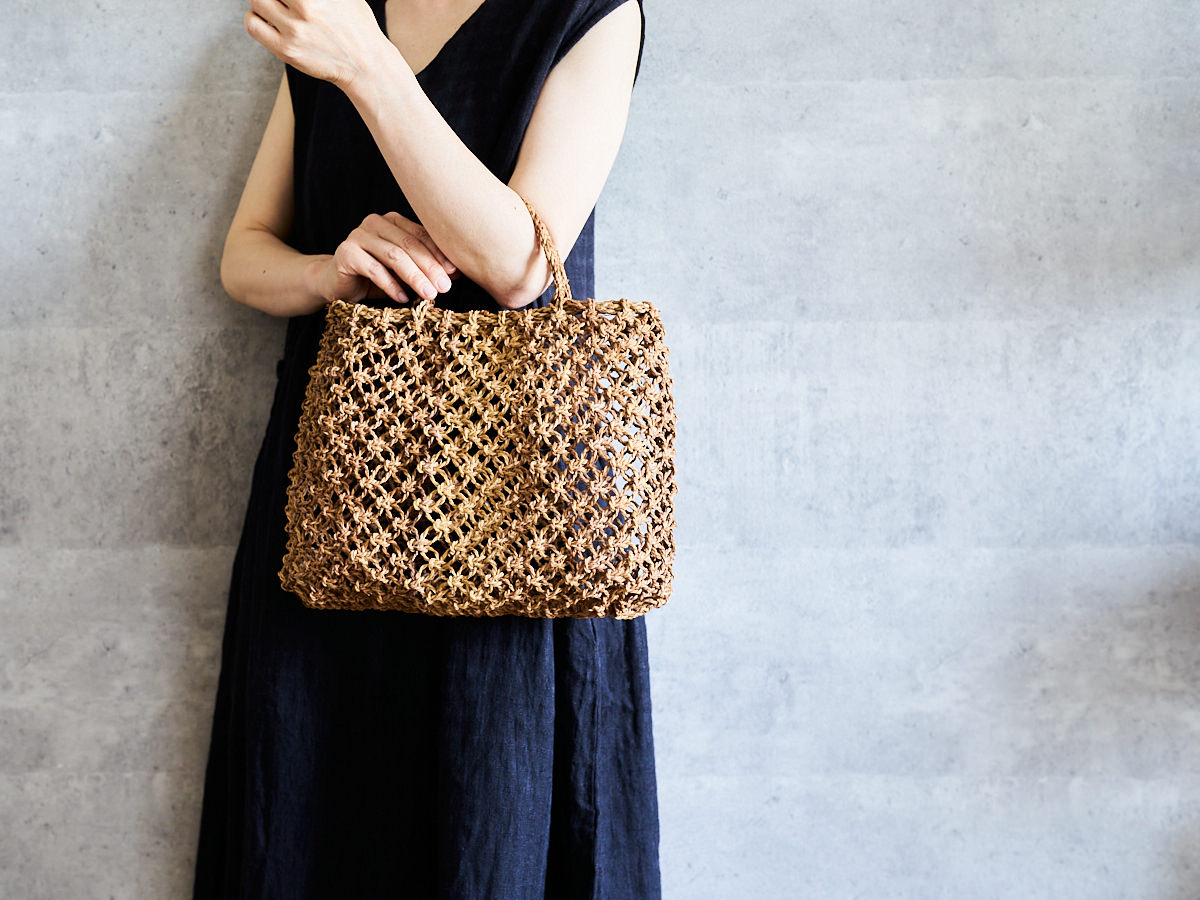
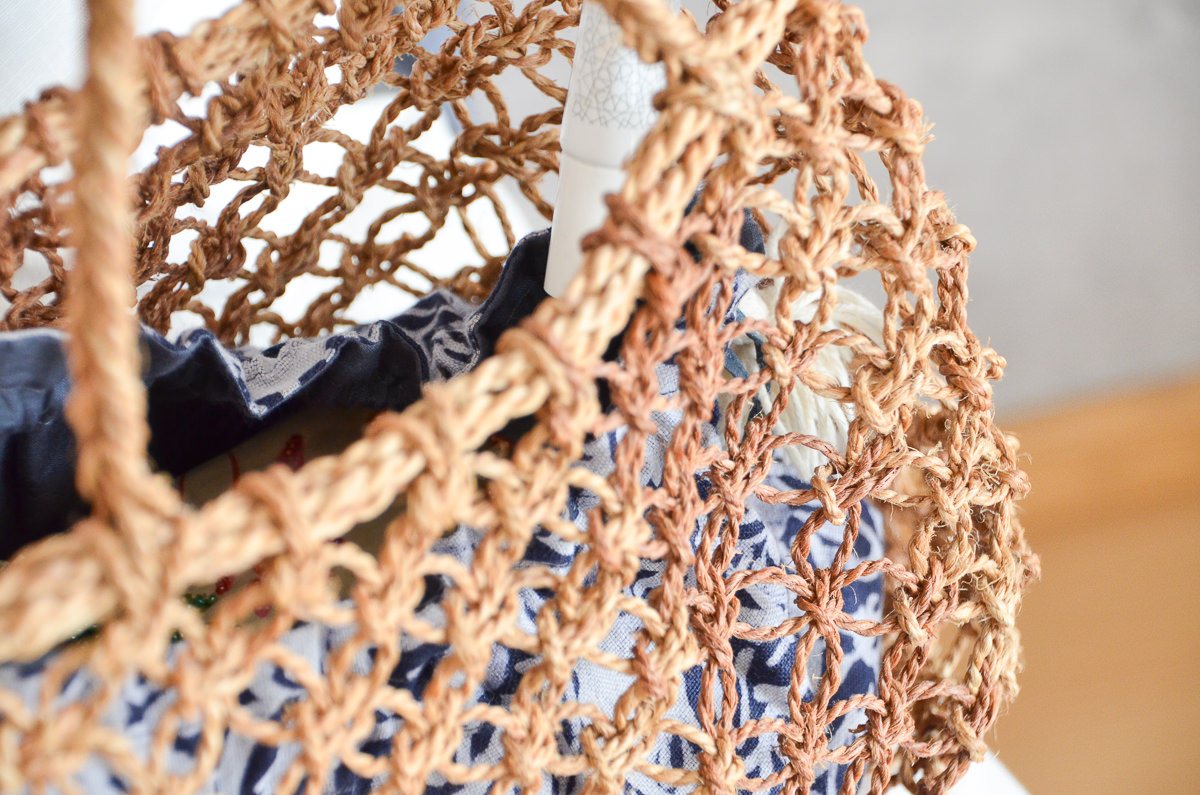
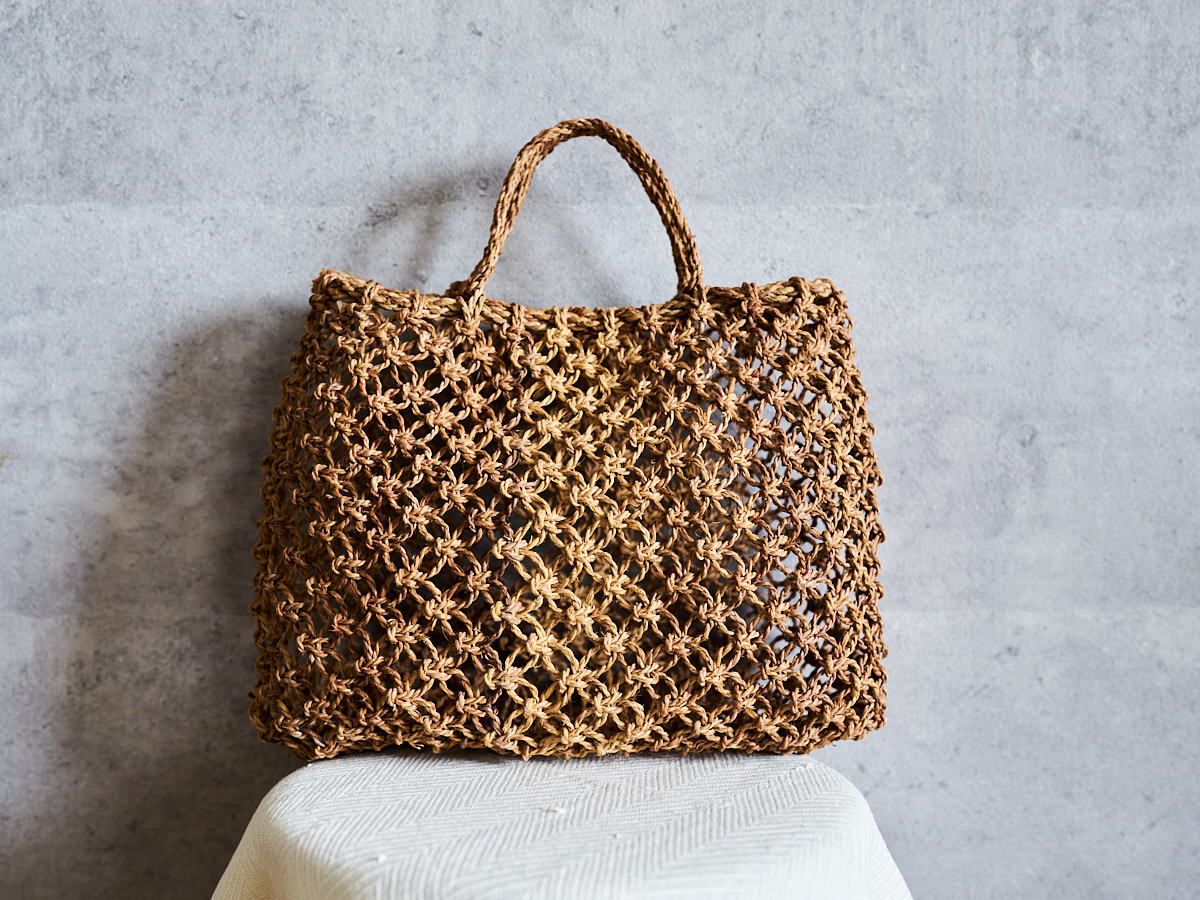
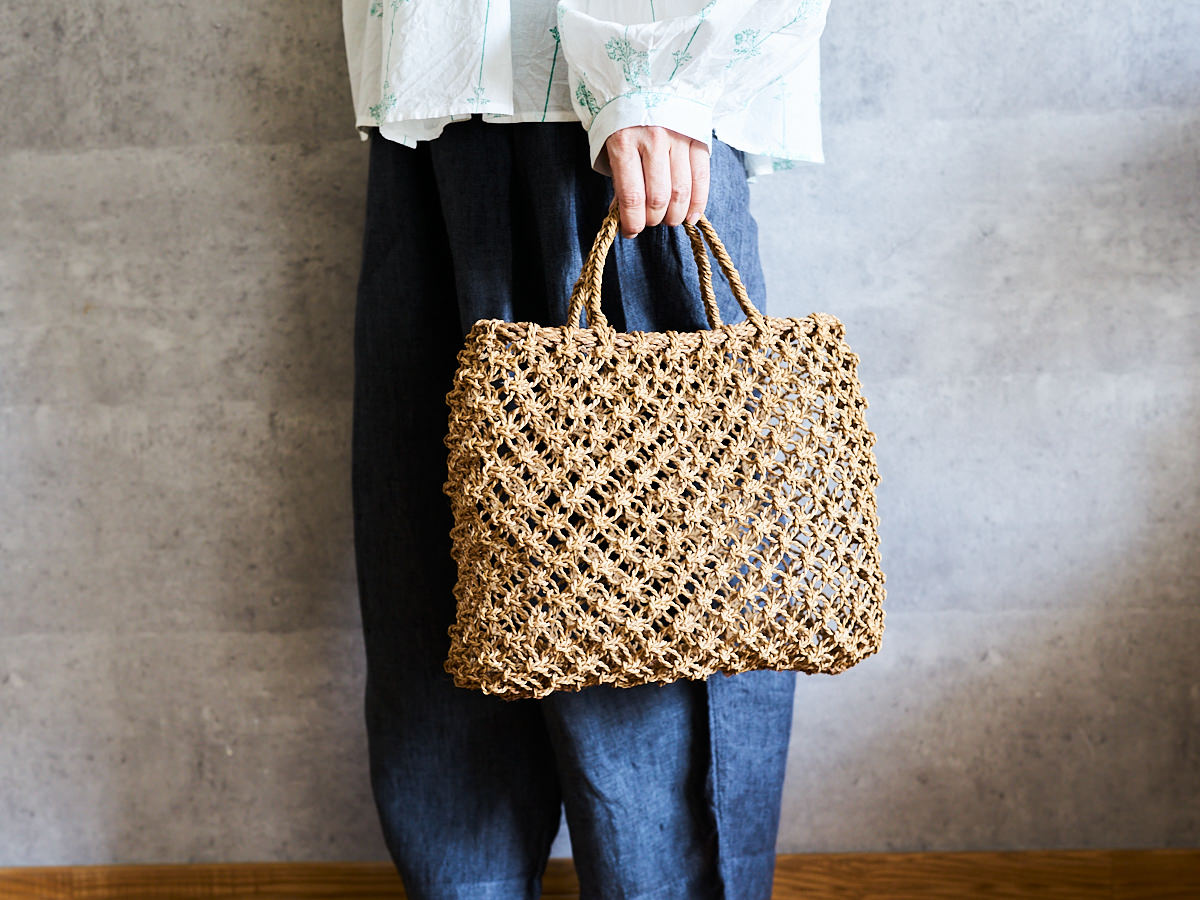
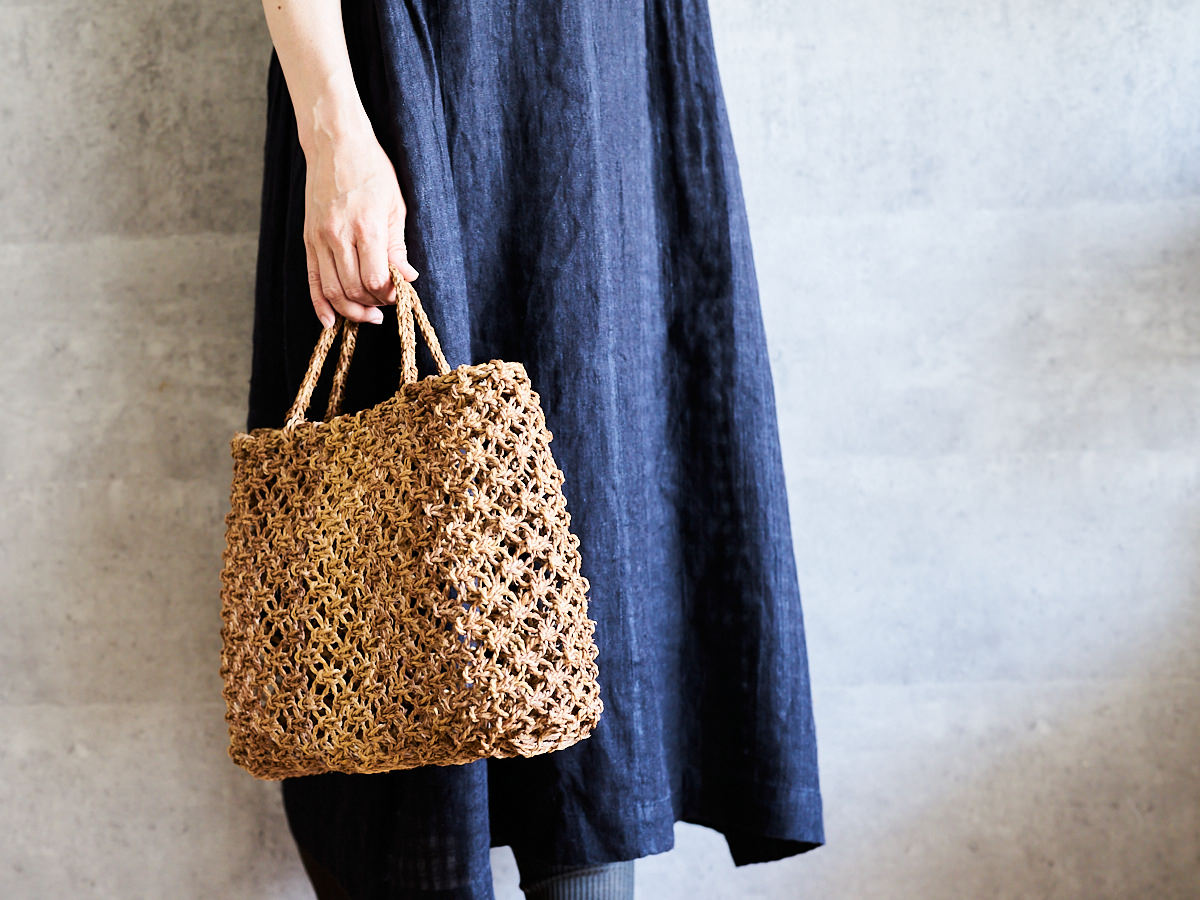
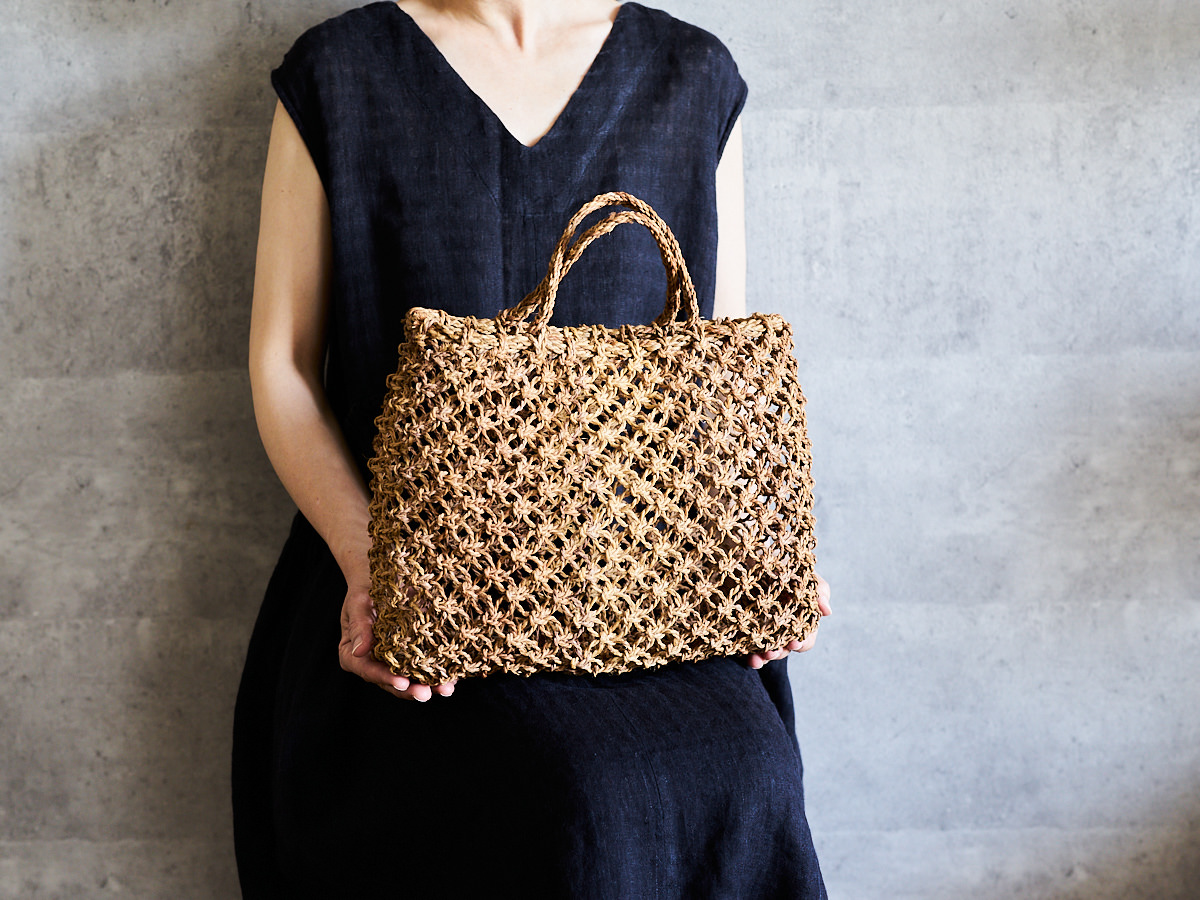
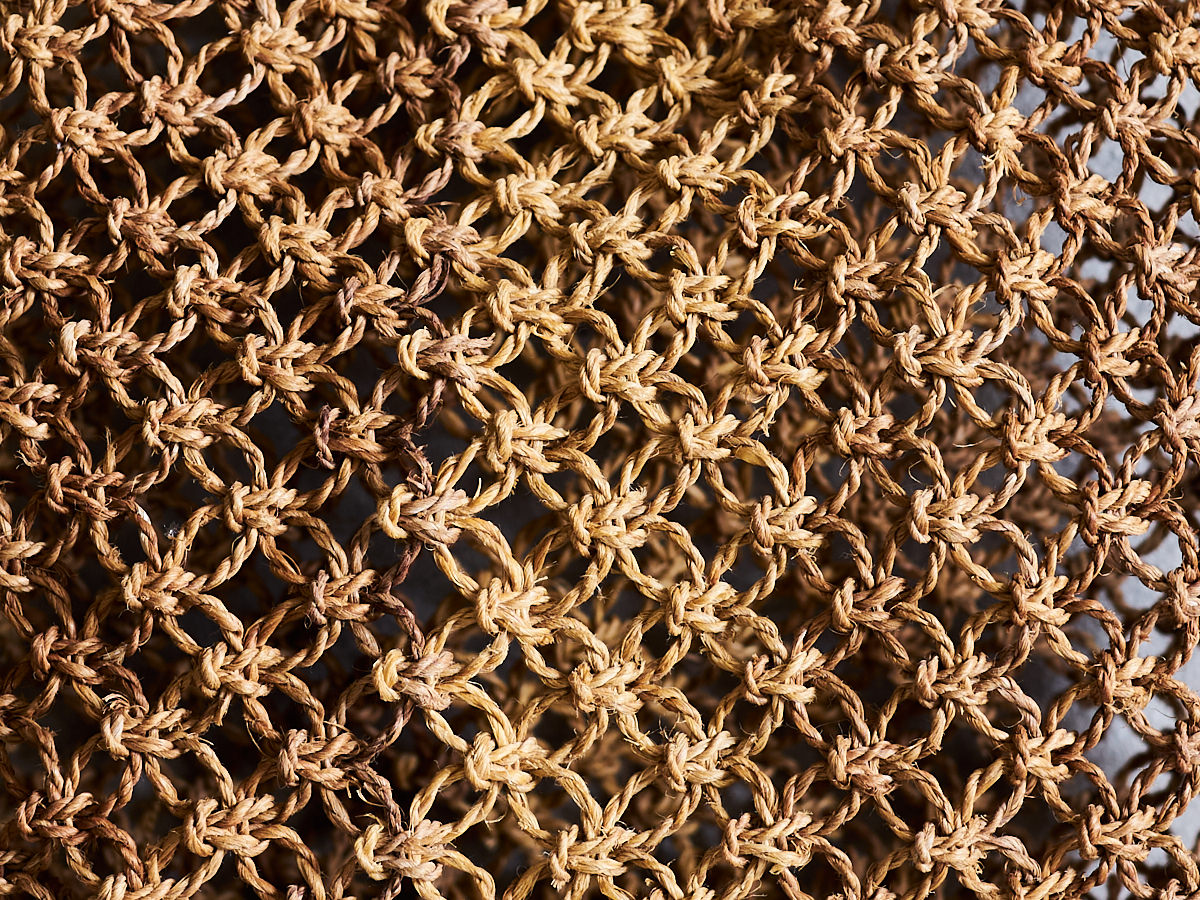
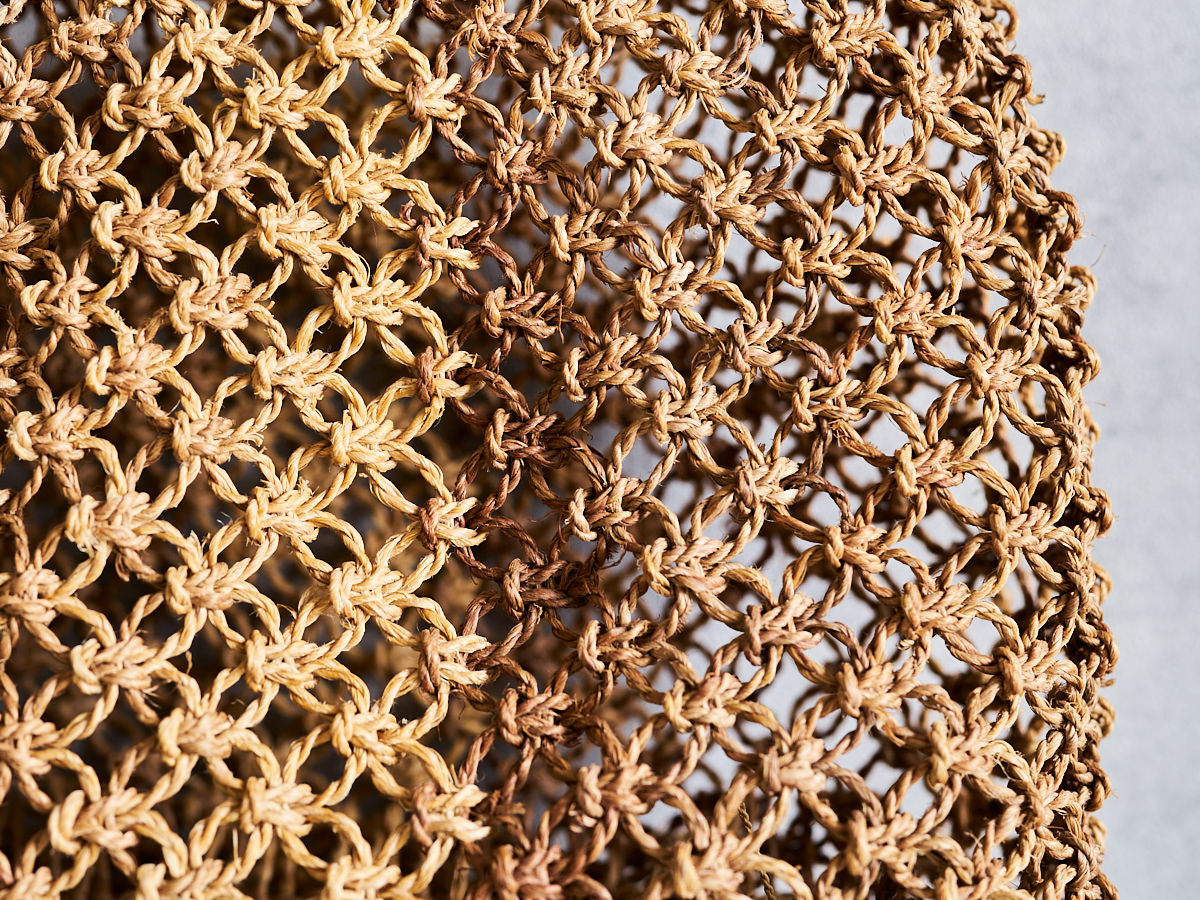
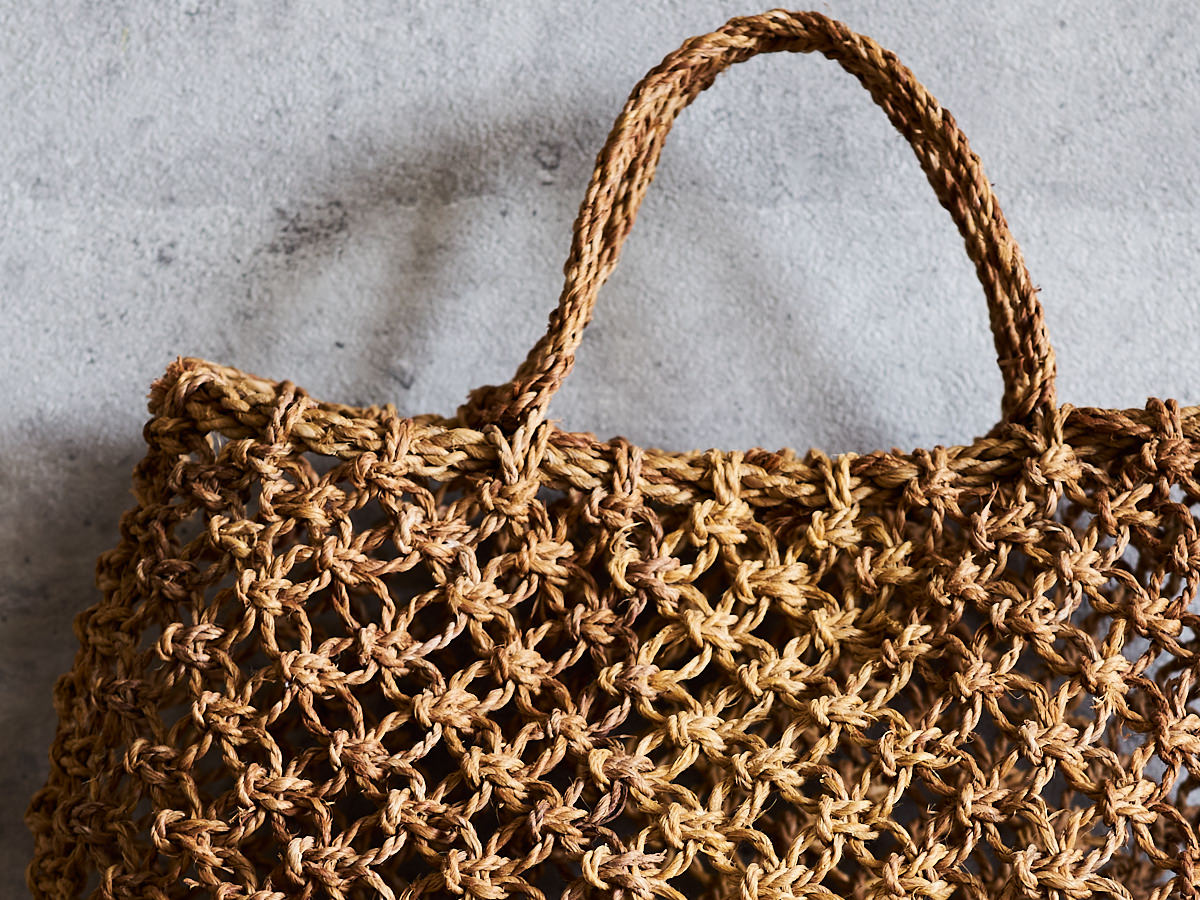
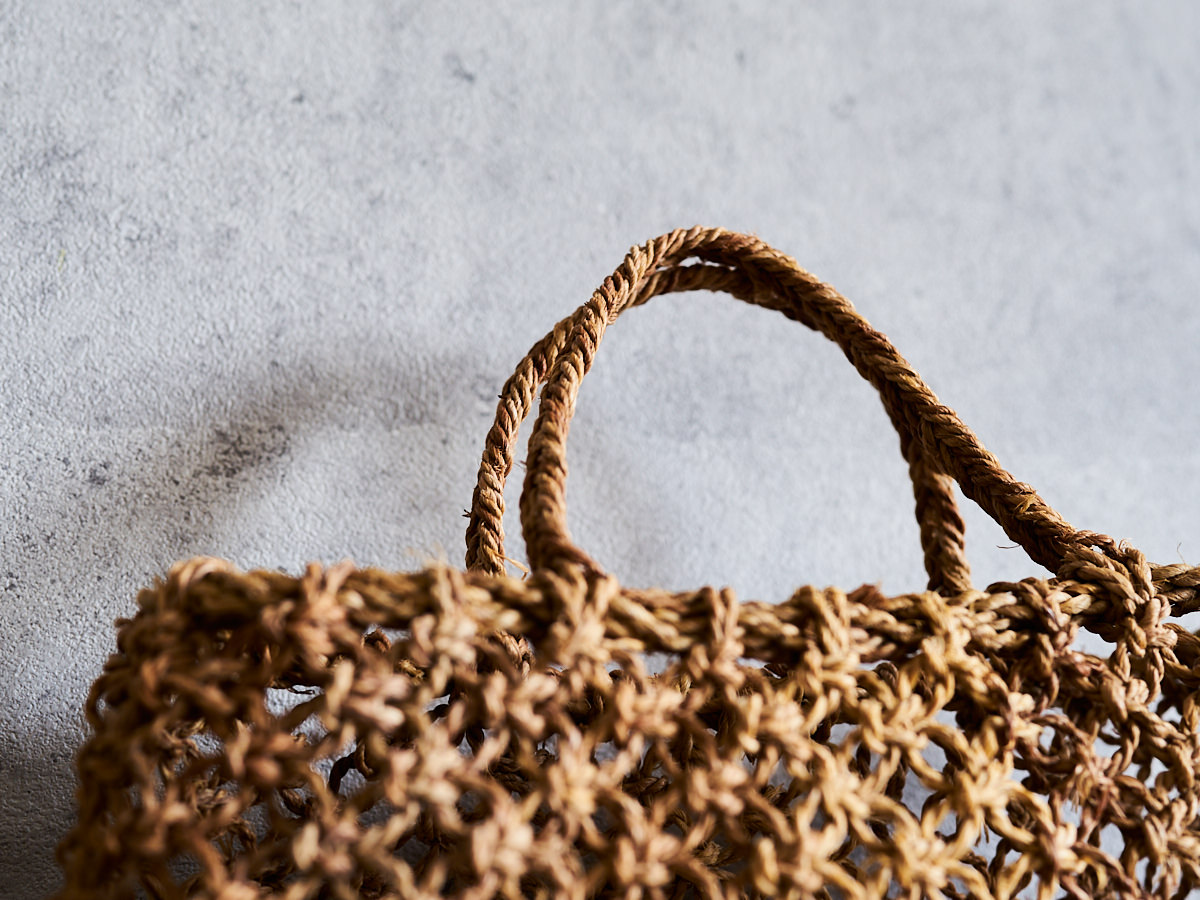
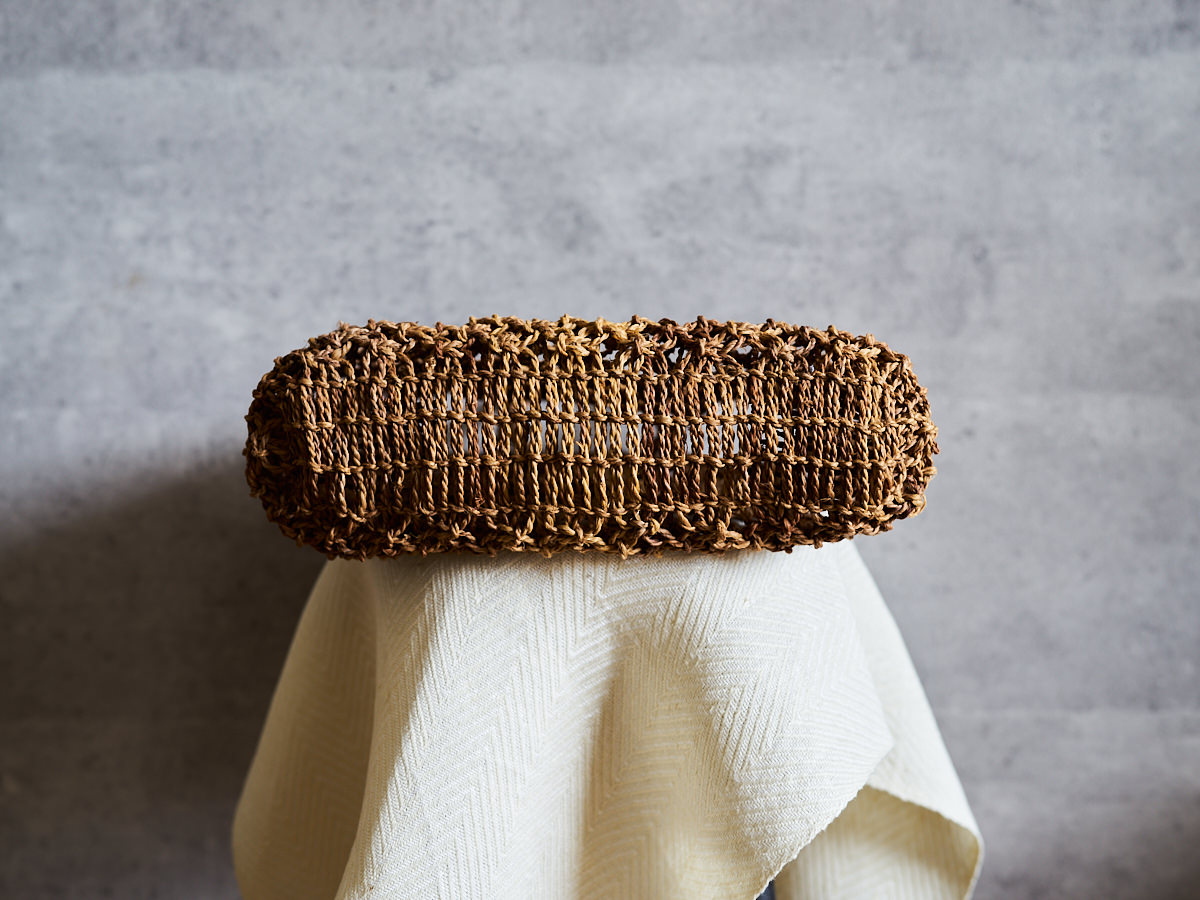
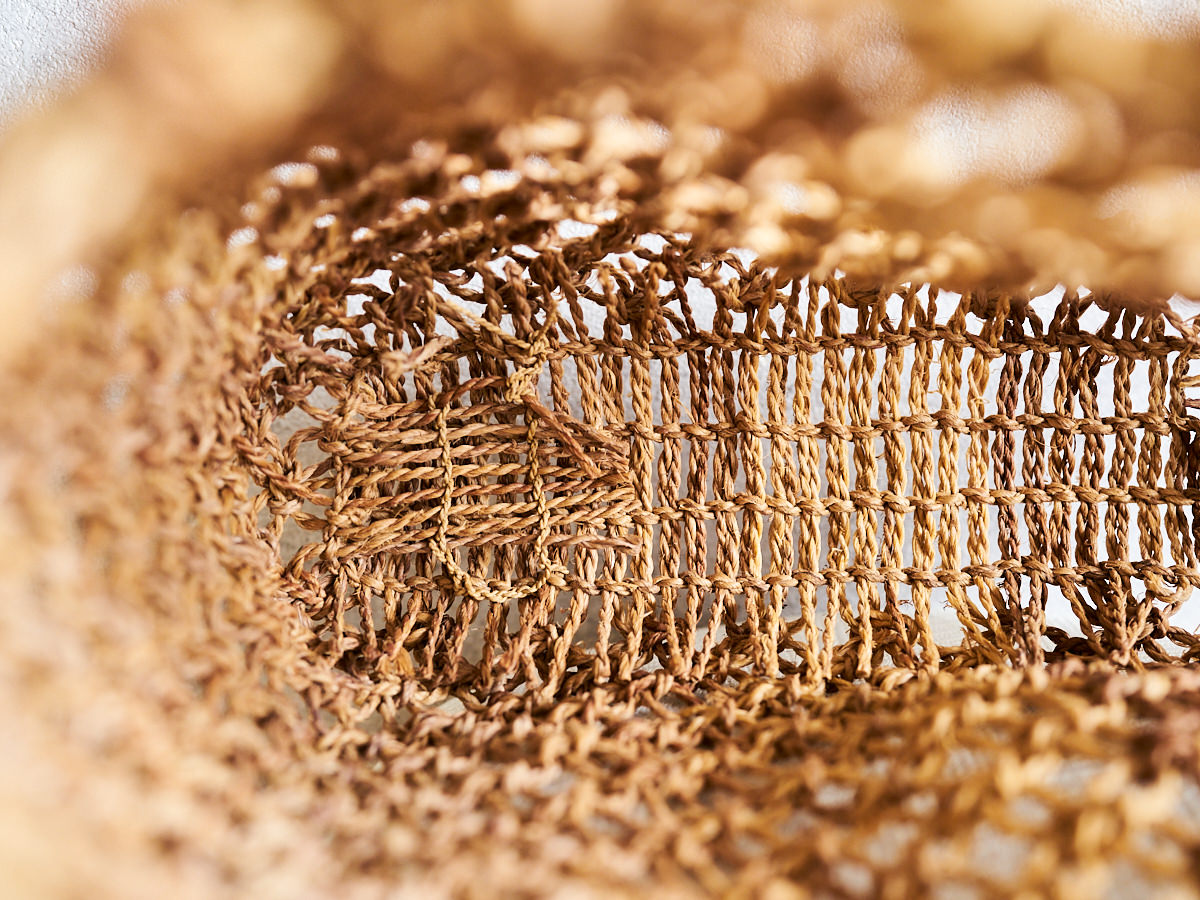
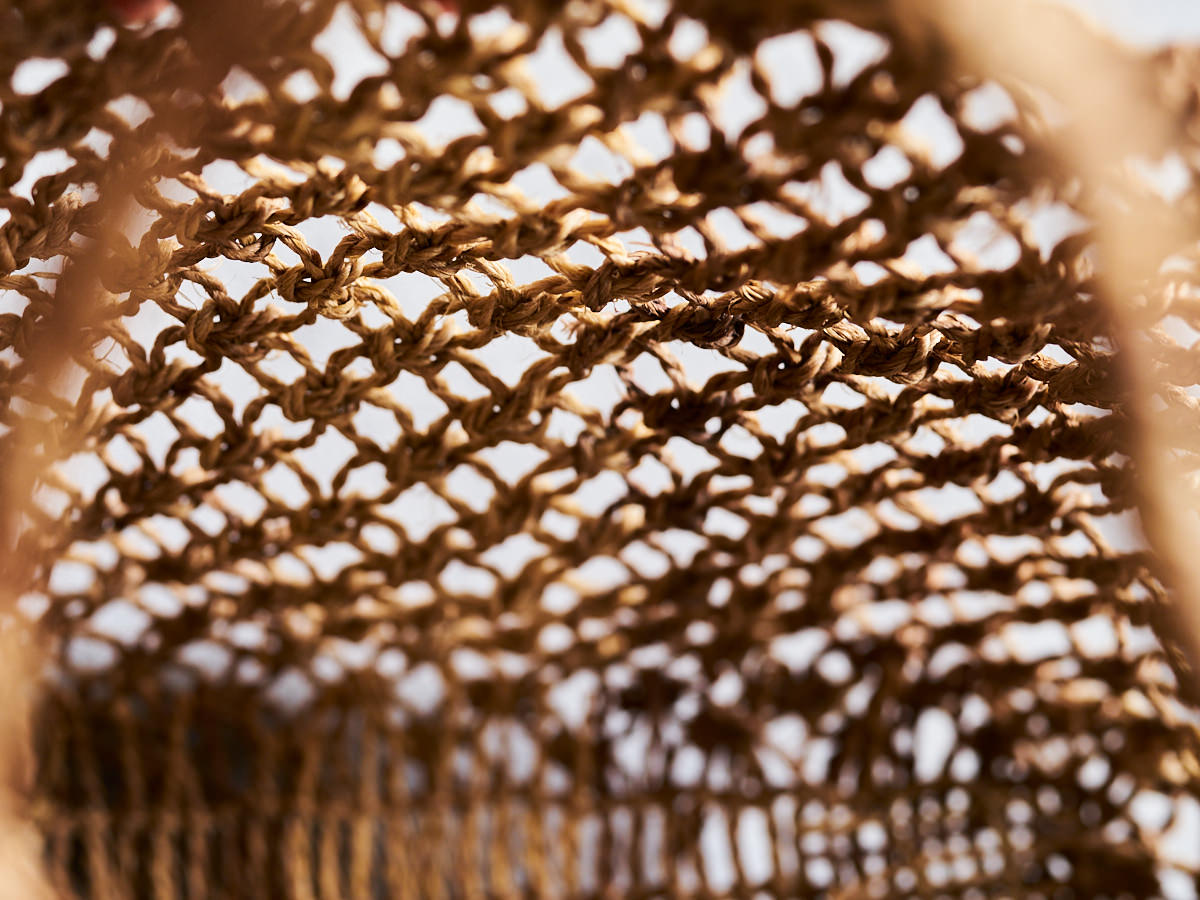
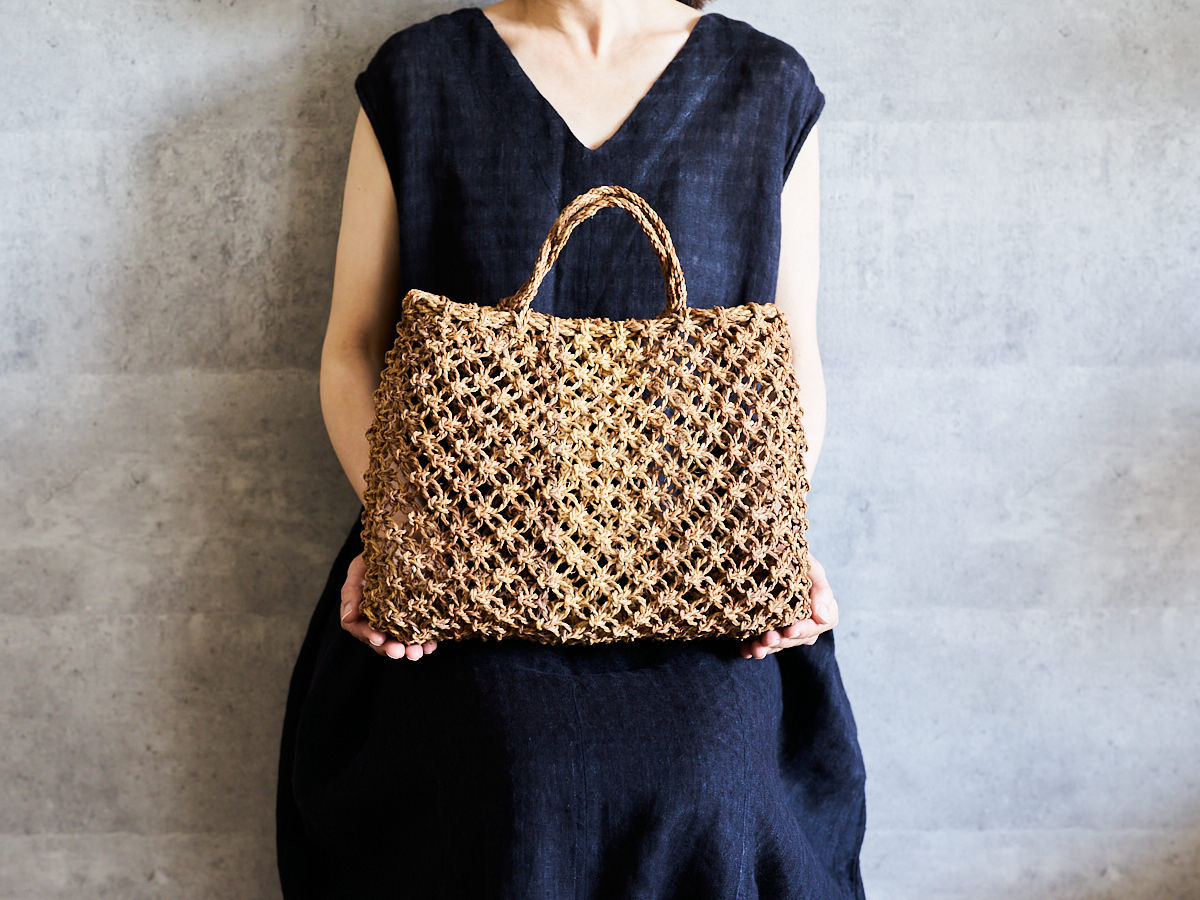
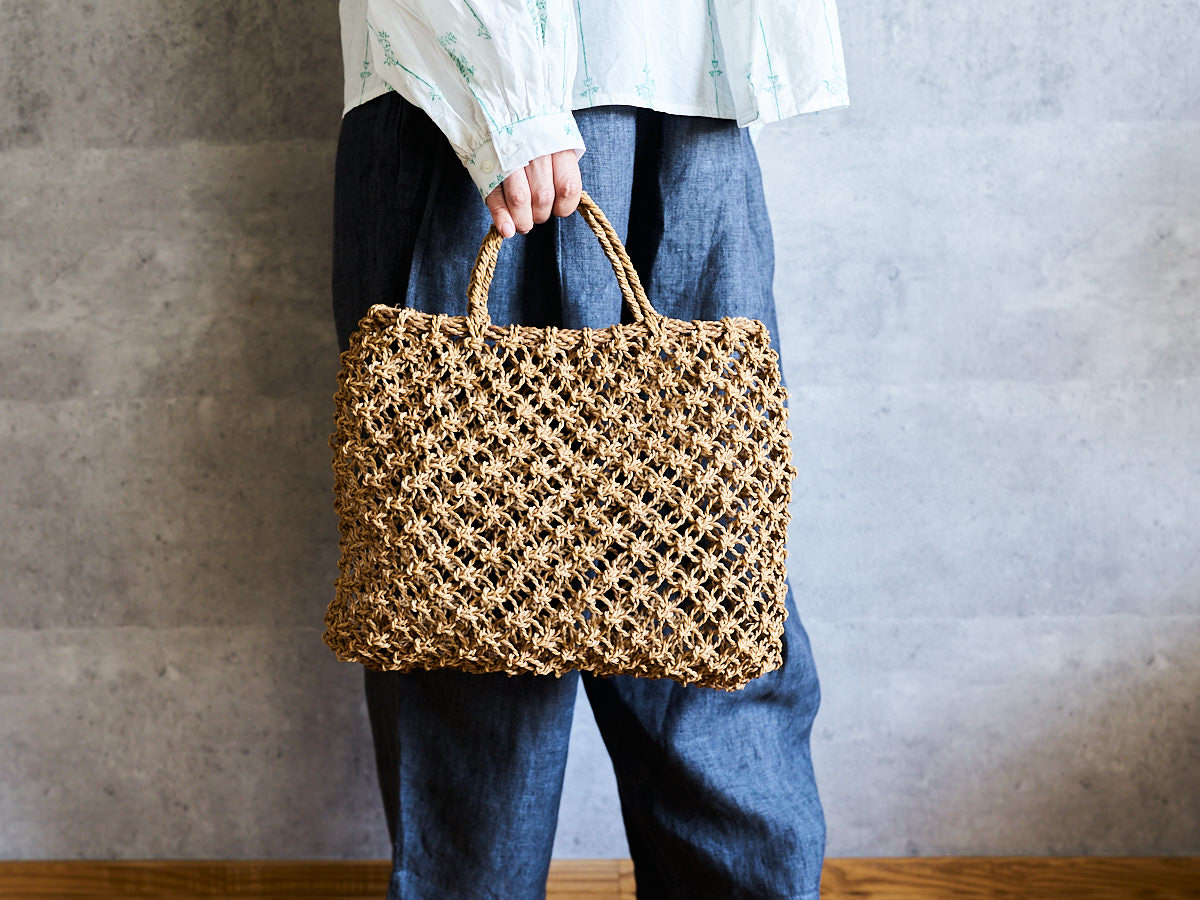
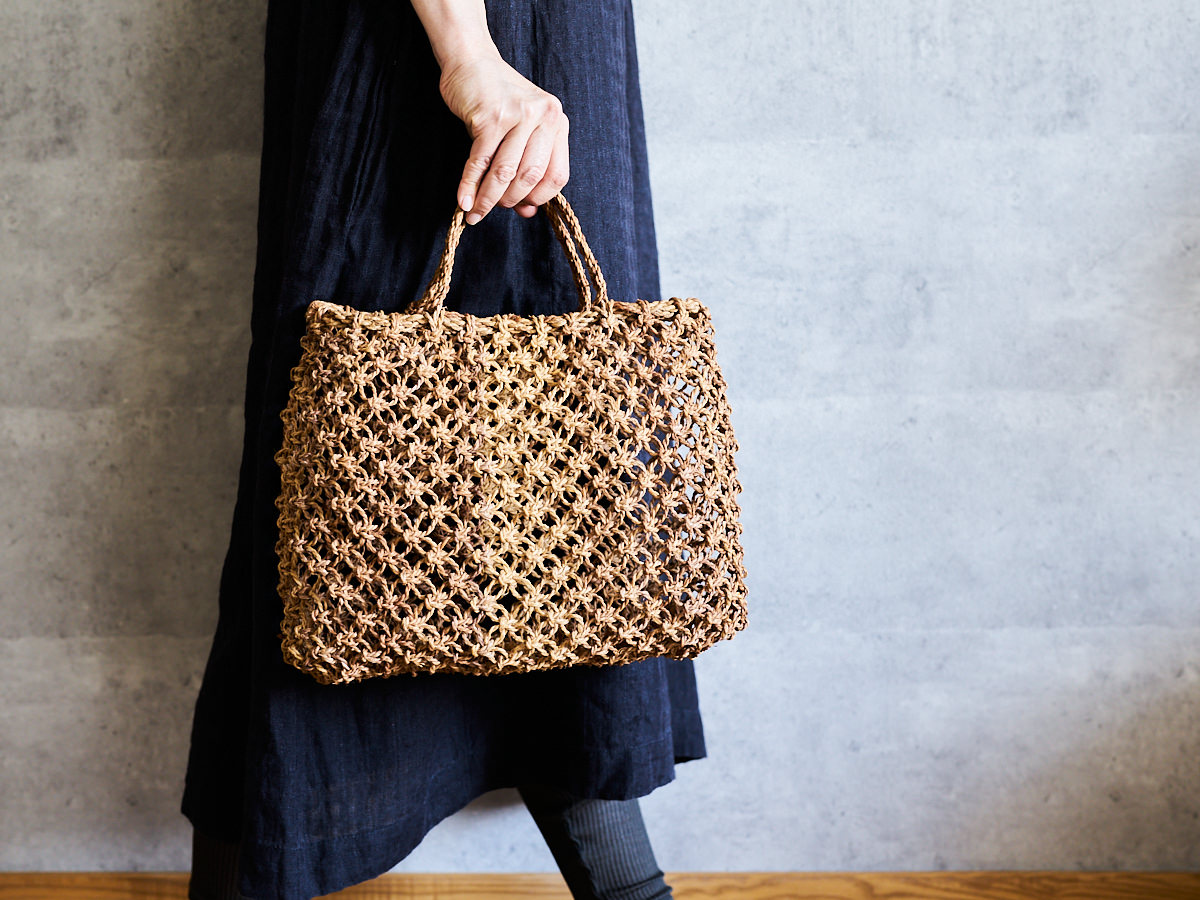
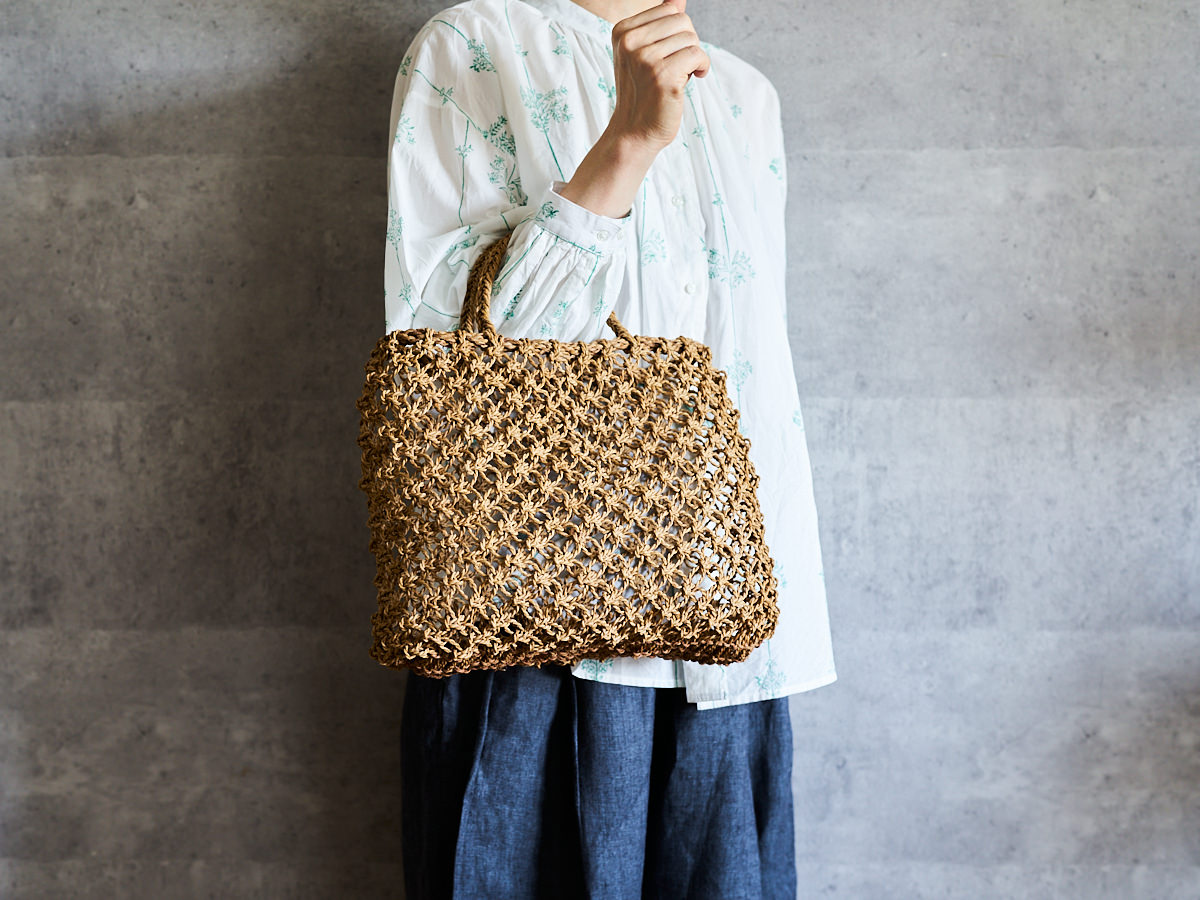
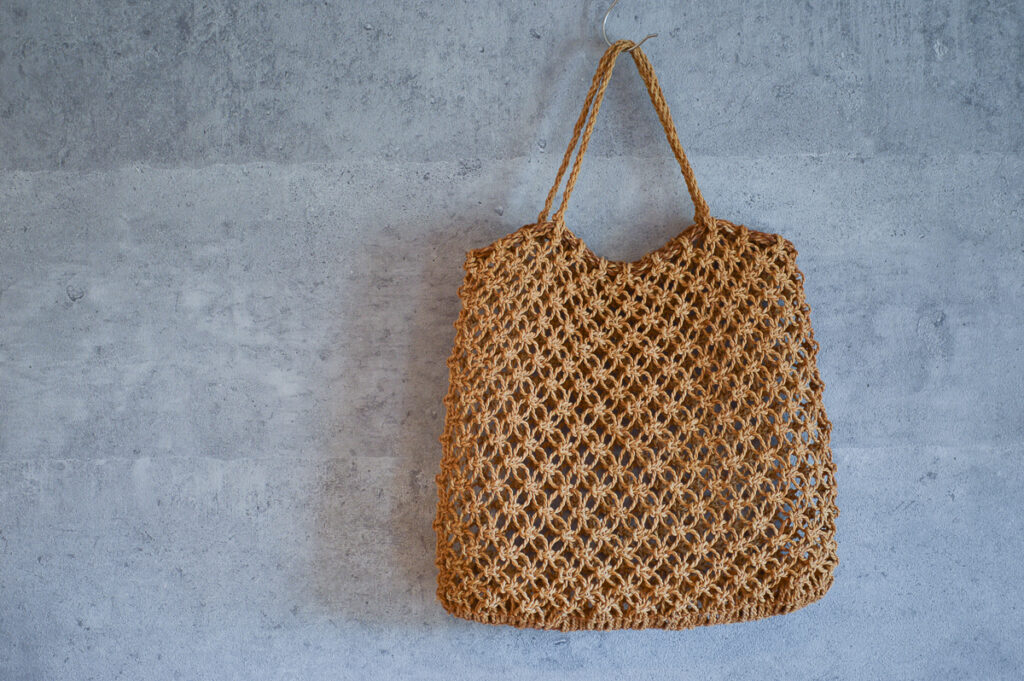
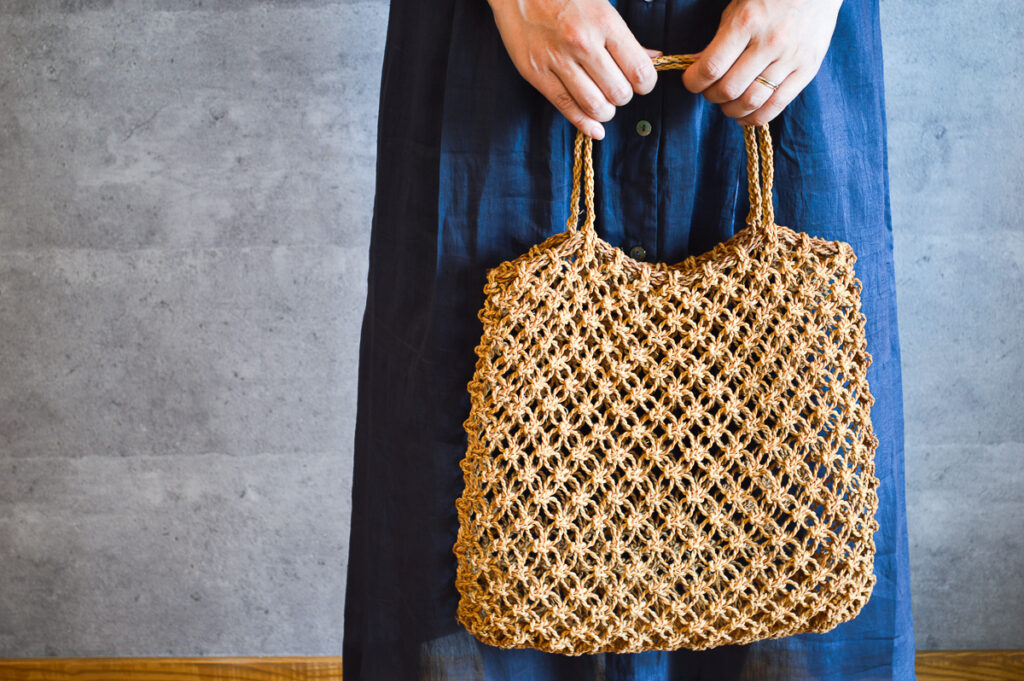
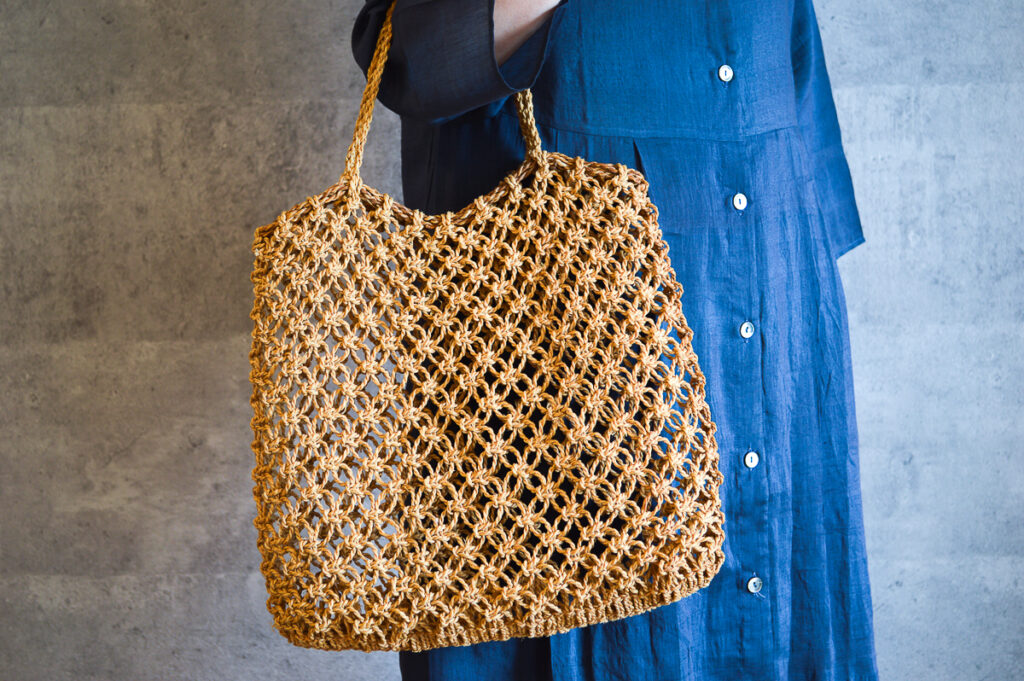
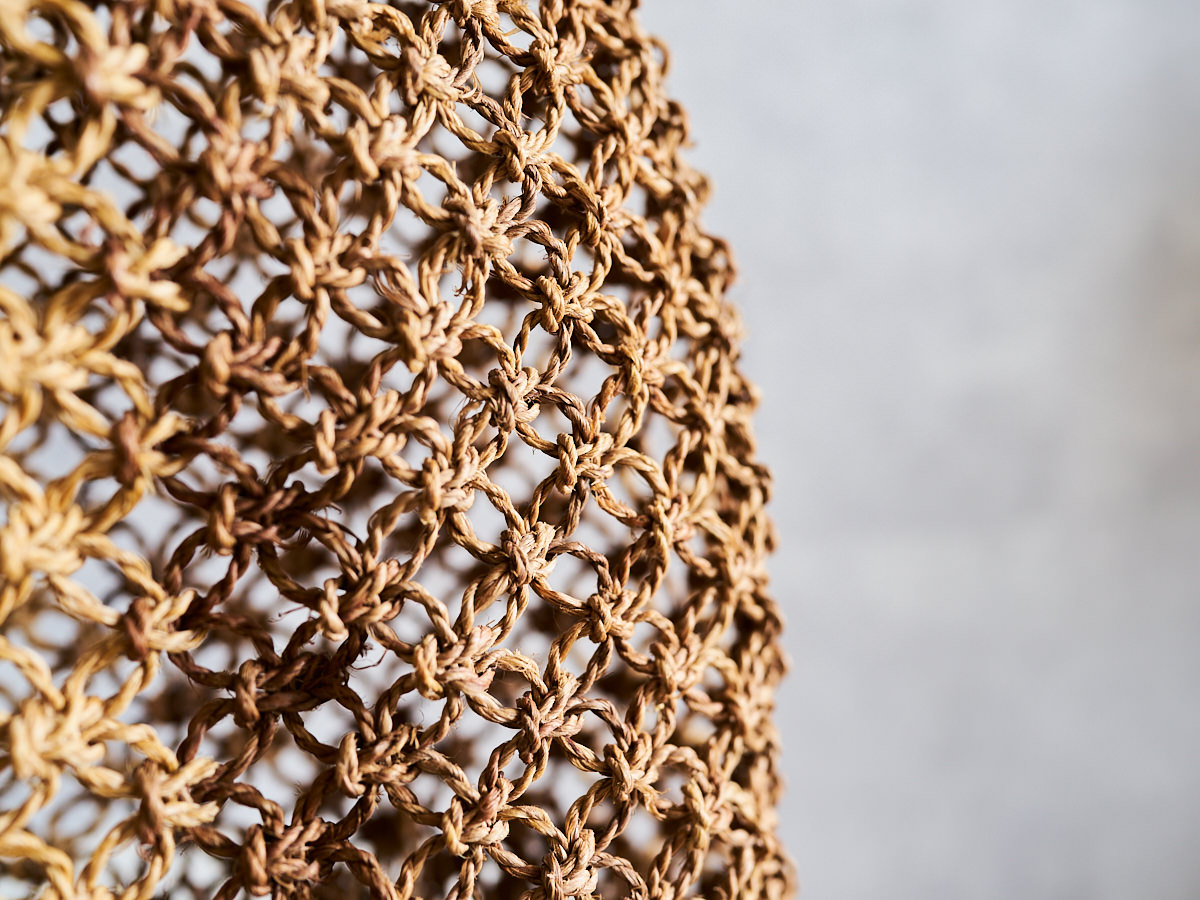
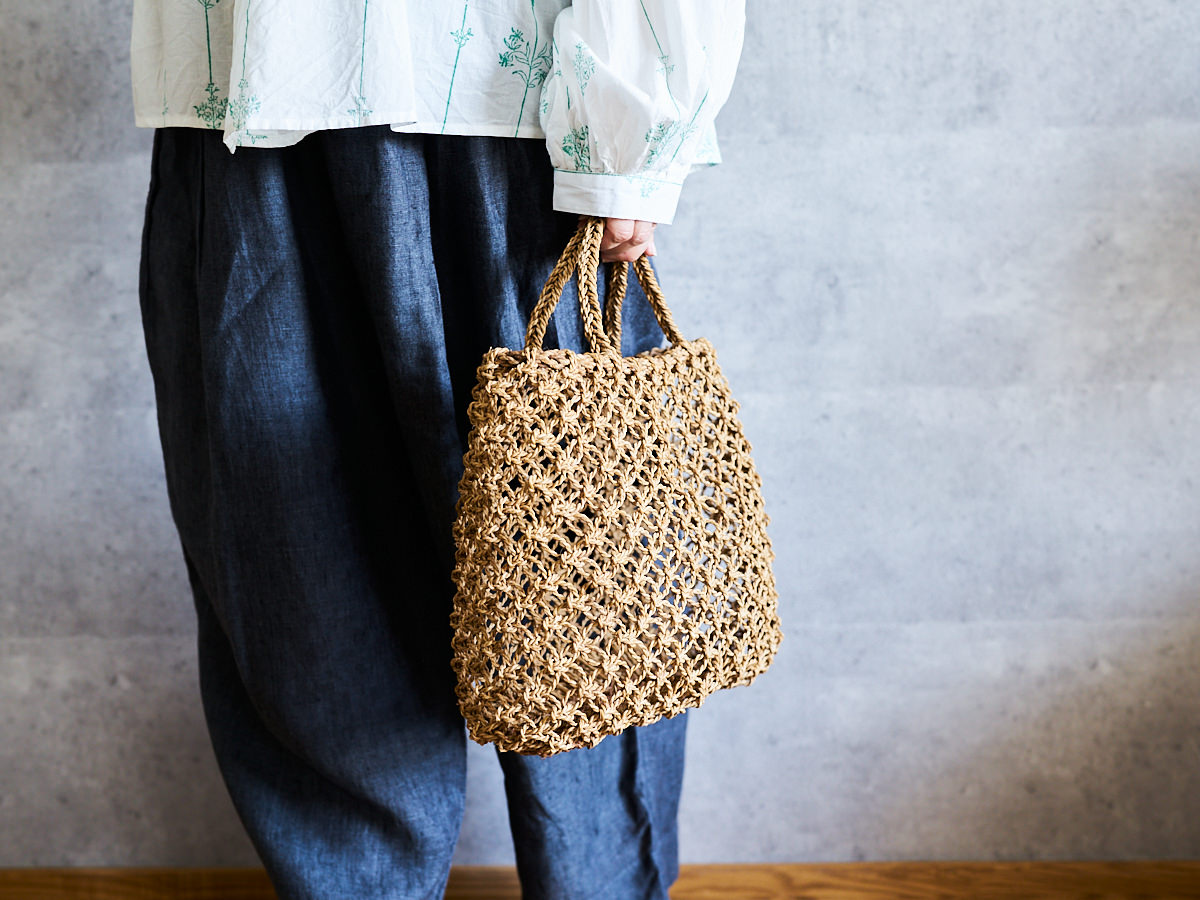
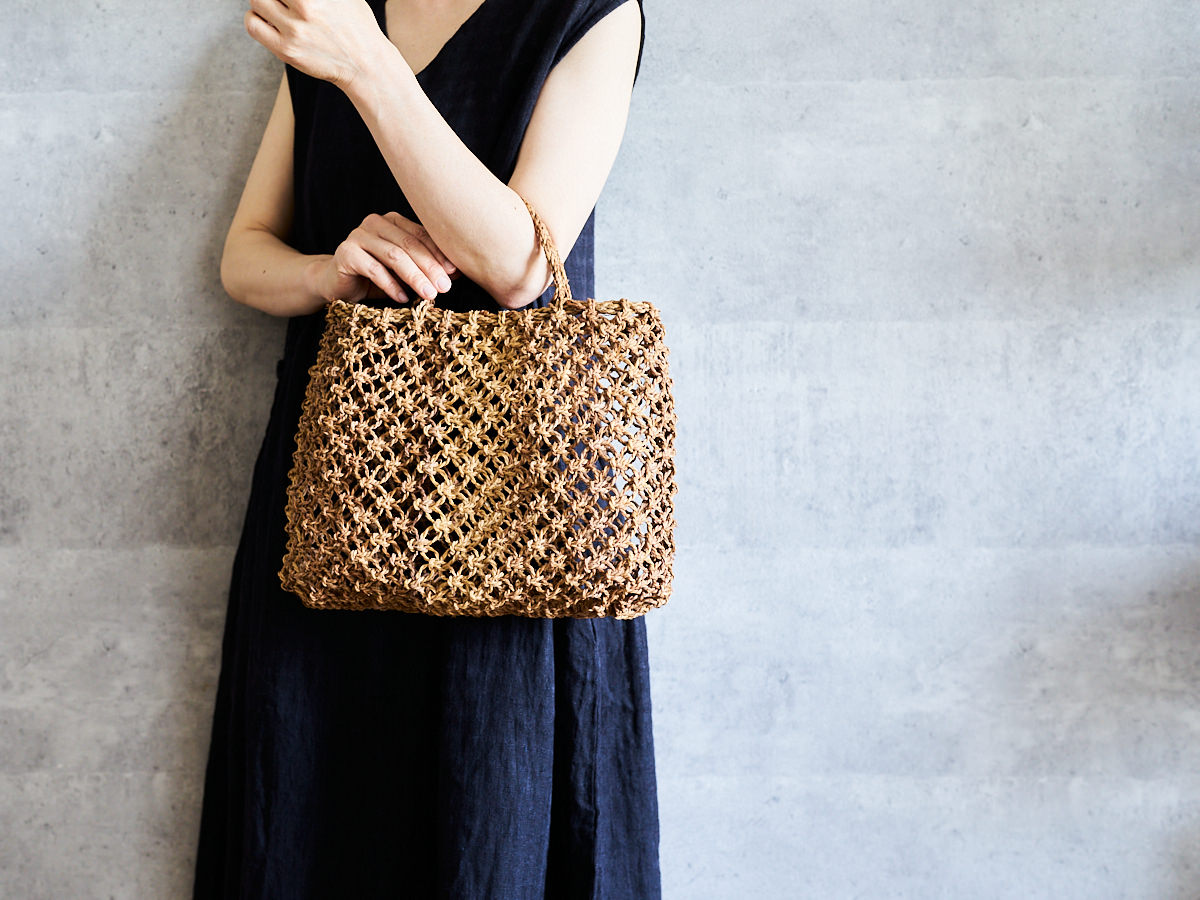
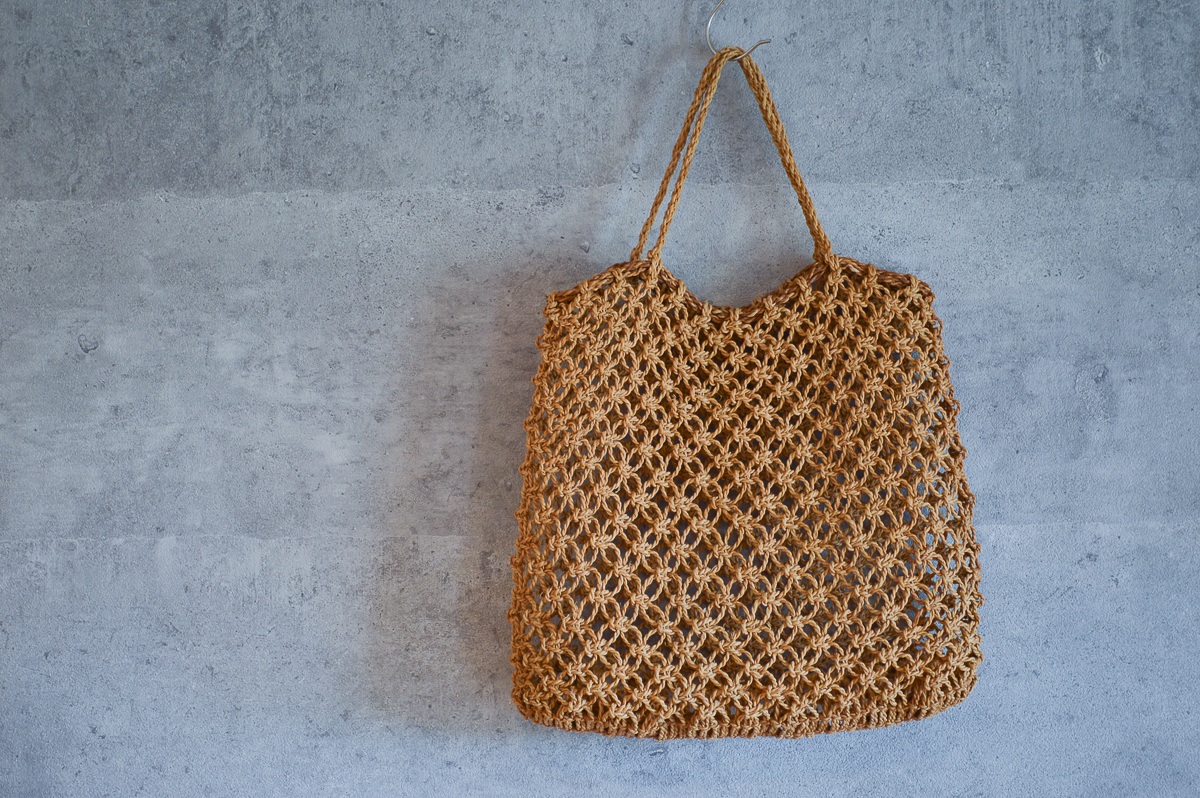
Using twisted linden-bark fiber, the entire piece is handwoven rather than made on a loom.The surface is made up of repeating knots in a macramé style. The color of the linden-bark fiber varies depending on the tree and the part used, ranging from a light beige tone to a deep brown.For example, if you look closely at this tote, you may notice subtle gradations in color in certain areas. Please note that each piece is unique, and the item you receive will reflect the variations present at the time of arrival.Slightly thicker twisted linden-bark fibers are used at the rim. All of the woven strands come together at the edge.The handle is also made from linden-bark fiber, braided to form its shape. As the same strands that form the weave continue into the handle, it is securely integrated and will not come loose easily.The weaving pattern changes from the sides to the base.The ends of the fibers are finished on the inside of the basket, giving it a clean appearance from the outside. In some cases, a small amount of adhesive may be used to prevent the ends from fraying. Please note that this is not considered a defect.The weave on the inside is also beautifully finished.A size that can be considered a standard basket bag. It also has ample depth.At this size, it can hold a substantial amount of belongings, while remaining light in weight—one of the appealing qualities of this weaving style.Paired with a dark-colored dress.It also pairs well with a light-colored blouse.
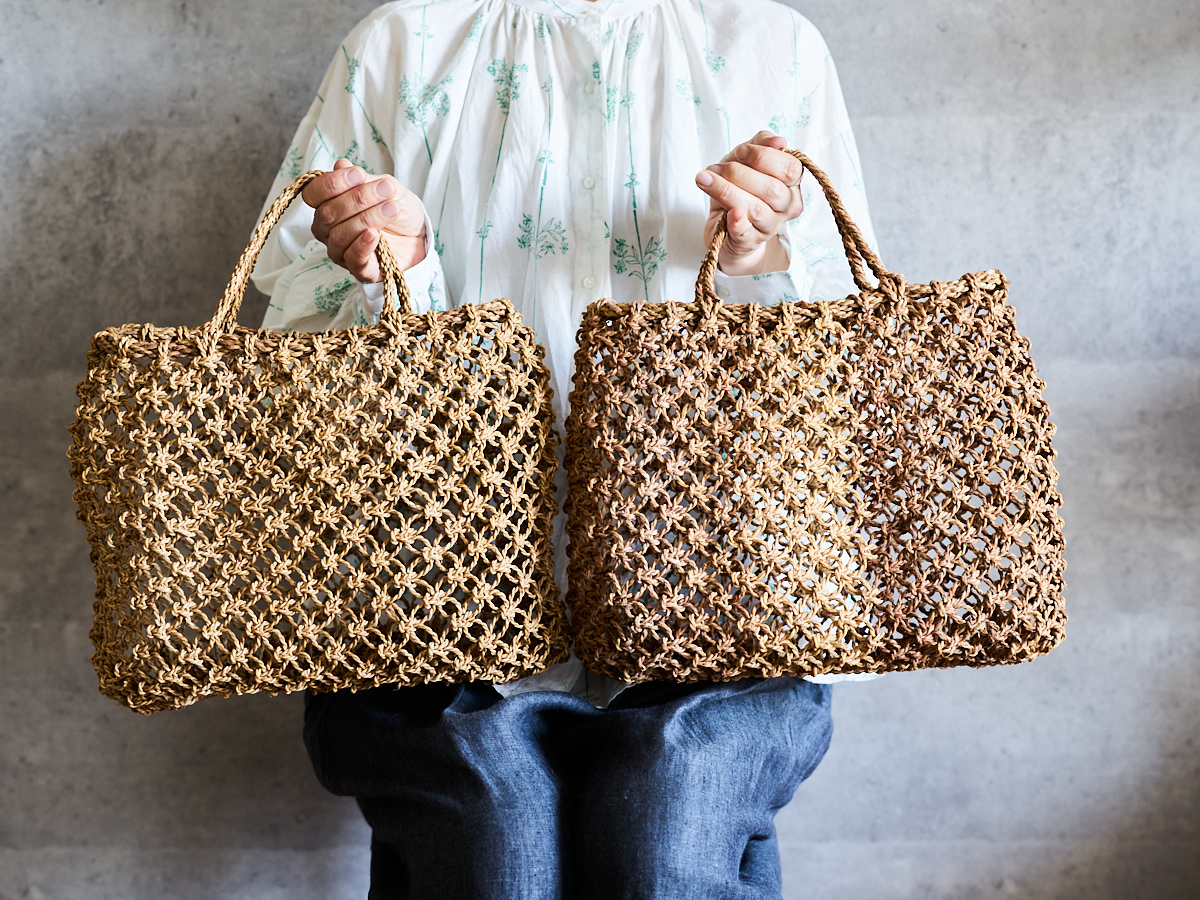
As you can see when comparing these two tote baskets, linden-bark fibers show a range of natural tones, from deep brown to lighter, almost whitish shades.
These variations are not the result of dyeing; when the bark is stripped from the tree, it naturally reveals different hues.
The resulting texture has a gentle quality that hardly seems to come from wood.
Each piece will be selected from current stock at the time of shipment. Please note that requests for specific colors or patterns cannot be accommodated.
As this material was originally used for harvesting baskets and work baskets in the mountains, it offers excellent strength as a basket.
This tote, woven from linden-bark fiber, may appear delicate at first glance, but it is sturdy enough for everyday use. You can carry items such as a wallet, keys, smartphone, water bottle, pouch, or books without concern.
For the amount of belongings typically carried on a daily basis, it provides reliable support even when there is some weight.
Due to the nature of this tote, the basket portion may stretch slightly under the weight of the contents. When not in use, it is best to store it empty—either hanging or placed on a shelf.
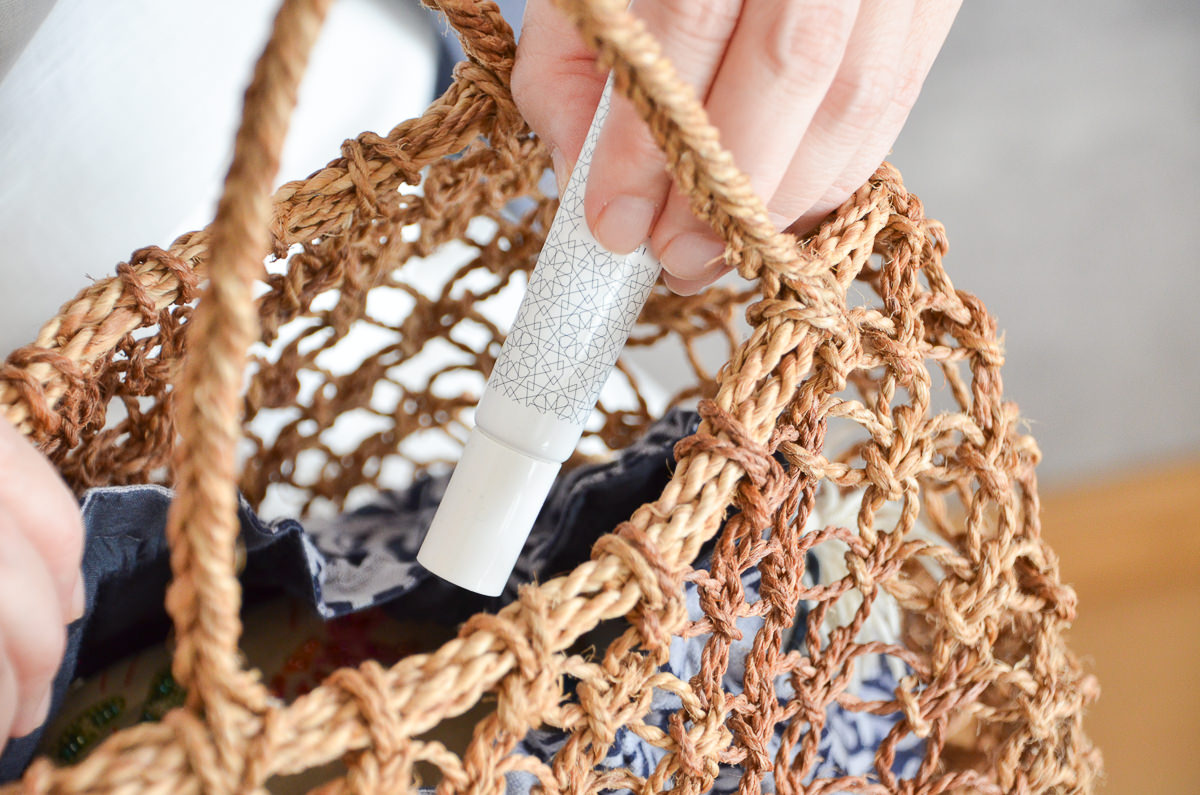
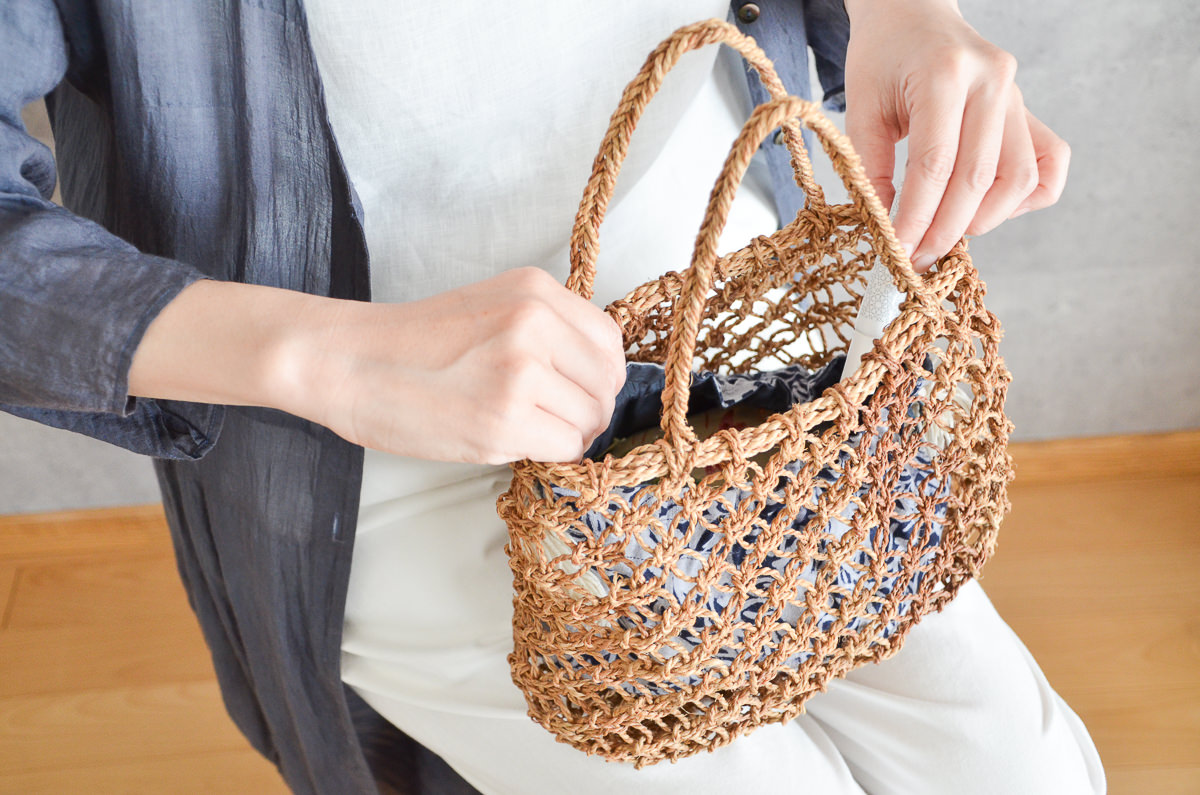
This is the large-size tote after about three years of use.Compared to when it was first used, the color has become lighter, and the shape has gently stretched in the vertical direction.The firm texture gradually softens over time, becoming more supple and comfortable to carry.As the weave is open, you may also place a drawstring pouch or inner bag inside to conceal the contents. (The photo shows a smaller size that is no longer in production.)
A tote made from linden-bark fiber, crafted using techniques passed down since ancient times. Light in weight, with a beautiful weave and a soft, gentle feel, it becomes a reliable companion in everyday life. The enduring nature of this craft is something we hope to carry forward, continuing to connect through use over time.
We hope you will enjoy this tote, made from linden-bark fiber, as part of your daily life.
In a region along the border of Yamagata and Niigata Prefectures, a traditional textile known as “shina-ori,” made from the bark of the linden tree, is still woven today.
It is regarded as one of Japan’s ancient textiles, alongside materials such as “bashofu” from Okinawa and “kuzufu” from Shizuoka.
Its origins are said to date back over a thousand years, and it was once made in many regions across Japan. However, with the spread of cotton and silk, and later the mass production of synthetic fibers after the war, many of these traditions disappeared.
Even so, the making of these ancient textiles continues today. It remains an important winter activity in mountain villages, and we feel that its simple warmth—created from materials gathered from the surrounding natural environment using time-honored techniques—continues to captivate people.
The process of making shina-ori can be broadly divided into around ten stages. It begins in June with the selection and cutting of linden trees, and the material is finally ready to be set on the loom around February of the following year. Although some of this time is shaped by the rhythm of agricultural work, the preparation alone takes several months.
Yet from this careful process emerges shina-ori, rich in the subtle fragrance and texture unique to natural materials, holding an indescribable sense of warmth and depth.
Linden trees grow throughout Japan, and their bark has been used in basketry in various regions, including Okayama and Fukushima.
This type of bag was originally made in larger sizes. As the material is resistant to water, it was valued for use in mountain work, particularly as a basket for gathering wild plants and vegetables.
On this page, we introduce the Macramé-Style Tote Basket, adapted to a size suited to modern daily life.
Using twisted linden-bark fiber, the entire piece is handwoven rather than made on a loom.The surface is made up of repeating knots in a macramé style. The color of the linden-bark fiber varies depending on the tree and the part used, ranging from a light beige tone to a deep brown.For example, if you look closely at this tote, you may notice subtle gradations in color in certain areas. Please note that each piece is unique, and the item you receive will reflect the variations present at the time of arrival.Slightly thicker twisted linden-bark fibers are used at the rim. All of the woven strands come together at the edge.The handle is also made from linden-bark fiber, braided to form its shape. As the same strands that form the weave continue into the handle, it is securely integrated and will not come loose easily.The weaving pattern changes from the sides to the base.The ends of the fibers are finished on the inside of the basket, giving it a clean appearance from the outside. In some cases, a small amount of adhesive may be used to prevent the ends from fraying. Please note that this is not considered a defect.The weave on the inside is also beautifully finished.A size that can be considered a standard basket bag. It also has ample depth.At this size, it can hold a substantial amount of belongings, while remaining light in weight—one of the appealing qualities of this weaving style.Paired with a dark-colored dress.It also pairs well with a light-colored blouse.
As you can see when comparing these two tote baskets, linden-bark fibers show a range of natural tones, from deep brown to lighter, almost whitish shades.
These variations are not the result of dyeing; when the bark is stripped from the tree, it naturally reveals different hues.
The resulting texture has a gentle quality that hardly seems to come from wood.
Each piece will be selected from current stock at the time of shipment. Please note that requests for specific colors or patterns cannot be accommodated.
As this material was originally used for harvesting baskets and work baskets in the mountains, it offers excellent strength as a basket.
This tote, woven from linden-bark fiber, may appear delicate at first glance, but it is sturdy enough for everyday use. You can carry items such as a wallet, keys, smartphone, water bottle, pouch, or books without concern.
For the amount of belongings typically carried on a daily basis, it provides reliable support even when there is some weight.
Due to the nature of this tote, the basket portion may stretch slightly under the weight of the contents. When not in use, it is best to store it empty—either hanging or placed on a shelf.
This is the large-size tote after about three years of use.Compared to when it was first used, the color has become lighter, and the shape has gently stretched in the vertical direction.The firm texture gradually softens over time, becoming more supple and comfortable to carry.As the weave is open, you may also place a drawstring pouch or inner bag inside to conceal the contents. (The photo shows a smaller size that is no longer in production.)
A tote made from linden-bark fiber, crafted using techniques passed down since ancient times. Light in weight, with a beautiful weave and a soft, gentle feel, it becomes a reliable companion in everyday life. The enduring nature of this craft is something we hope to carry forward, continuing to connect through use over time.
We hope you will enjoy this tote, made from linden-bark fiber, as part of your daily life.
In a region along the border of Yamagata and Niigata Prefectures, a traditional textile known as “shina-ori,” made from the bark of the linden tree, is still woven today.
It is regarded as one of Japan’s ancient textiles, alongside materials such as “bashofu” from Okinawa and “kuzufu” from Shizuoka.
Its origins are said to date back over a thousand years, and it was once made in many regions across Japan. However, with the spread of cotton and silk, and later the mass production of synthetic fibers after the war, many of these traditions disappeared.
Even so, the making of these ancient textiles continues today. It remains an important winter activity in mountain villages, and we feel that its simple warmth—created from materials gathered from the surrounding natural environment using time-honored techniques—continues to captivate people.
The process of making shina-ori can be broadly divided into around ten stages. It begins in June with the selection and cutting of linden trees, and the material is finally ready to be set on the loom around February of the following year. Although some of this time is shaped by the rhythm of agricultural work, the preparation alone takes several months.
Yet from this careful process emerges shina-ori, rich in the subtle fragrance and texture unique to natural materials, holding an indescribable sense of warmth and depth.
Linden trees grow throughout Japan, and their bark has been used in basketry in various regions, including Okayama and Fukushima.
This type of bag was originally made in larger sizes. As the material is resistant to water, it was valued for use in mountain work, particularly as a basket for gathering wild plants and vegetables.
On this page, we introduce the Macramé-Style Tote Basket, adapted to a size suited to modern daily life.
Using twisted linden-bark fiber, the entire piece is handwoven rather than made on a loom.The surface is made up of repeating knots in a macramé style. The color of the linden-bark fiber varies depending on the tree and the part used, ranging from a light beige tone to a deep brown.For example, if you look closely at this tote, you may notice subtle gradations in color in certain areas. Please note that each piece is unique, and the item you receive will reflect the variations present at the time of arrival.Slightly thicker twisted linden-bark fibers are used at the rim. All of the woven strands come together at the edge.The handle is also made from linden-bark fiber, braided to form its shape. As the same strands that form the weave continue into the handle, it is securely integrated and will not come loose easily.The weaving pattern changes from the sides to the base.The ends of the fibers are finished on the inside of the basket, giving it a clean appearance from the outside. In some cases, a small amount of adhesive may be used to prevent the ends from fraying. Please note that this is not considered a defect.The weave on the inside is also beautifully finished.A size that can be considered a standard basket bag. It also has ample depth.At this size, it can hold a substantial amount of belongings, while remaining light in weight—one of the appealing qualities of this weaving style.Paired with a dark-colored dress.It also pairs well with a light-colored blouse.
As you can see when comparing these two tote baskets, linden-bark fibers show a range of natural tones, from deep brown to lighter, almost whitish shades.
These variations are not the result of dyeing; when the bark is stripped from the tree, it naturally reveals different hues.
The resulting texture has a gentle quality that hardly seems to come from wood.
Each piece will be selected from current stock at the time of shipment. Please note that requests for specific colors or patterns cannot be accommodated.
As this material was originally used for harvesting baskets and work baskets in the mountains, it offers excellent strength as a basket.
This tote, woven from linden-bark fiber, may appear delicate at first glance, but it is sturdy enough for everyday use. You can carry items such as a wallet, keys, smartphone, water bottle, pouch, or books without concern.
For the amount of belongings typically carried on a daily basis, it provides reliable support even when there is some weight.
Due to the nature of this tote, the basket portion may stretch slightly under the weight of the contents. When not in use, it is best to store it empty—either hanging or placed on a shelf.
This is the large-size tote after about three years of use.Compared to when it was first used, the color has become lighter, and the shape has gently stretched in the vertical direction.The firm texture gradually softens over time, becoming more supple and comfortable to carry.As the weave is open, you may also place a drawstring pouch or inner bag inside to conceal the contents. (The photo shows a smaller size that is no longer in production.)
A tote made from linden-bark fiber, crafted using techniques passed down since ancient times. Light in weight, with a beautiful weave and a soft, gentle feel, it becomes a reliable companion in everyday life. The enduring nature of this craft is something we hope to carry forward, continuing to connect through use over time.
We hope you will enjoy this tote, made from linden-bark fiber, as part of your daily life.