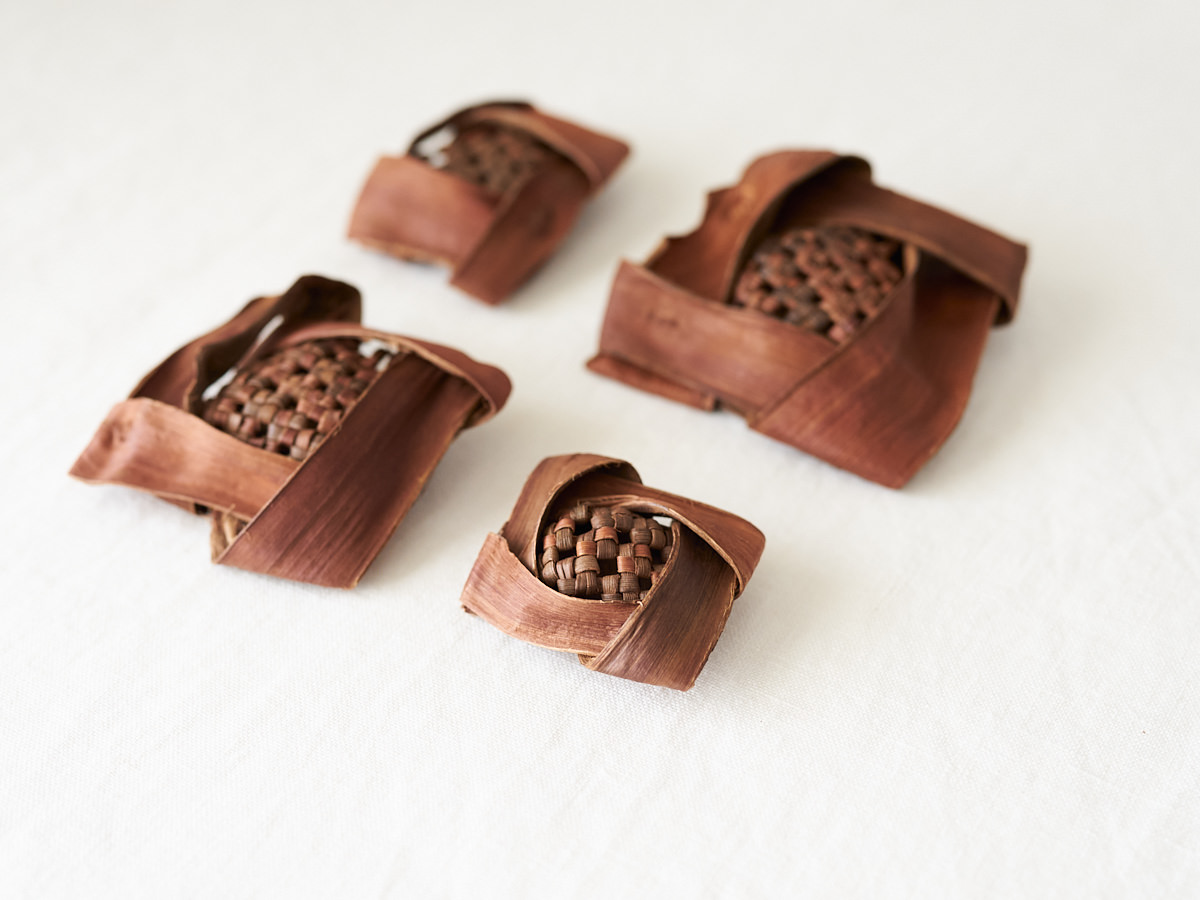
Grapevine is known for its durability and quality, much like leather, and is often used for items that can be enjoyed for many years. In most cases, the outer side of the bark is used.
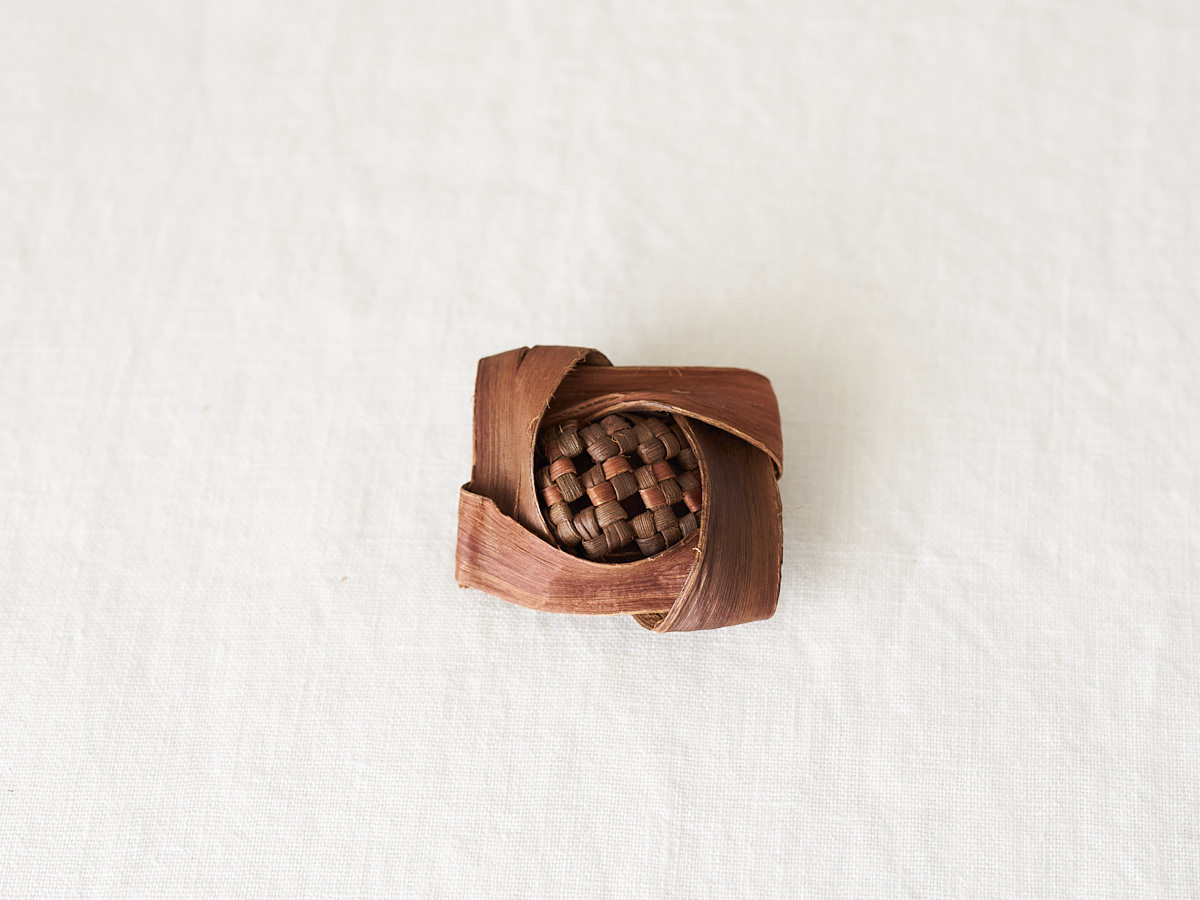
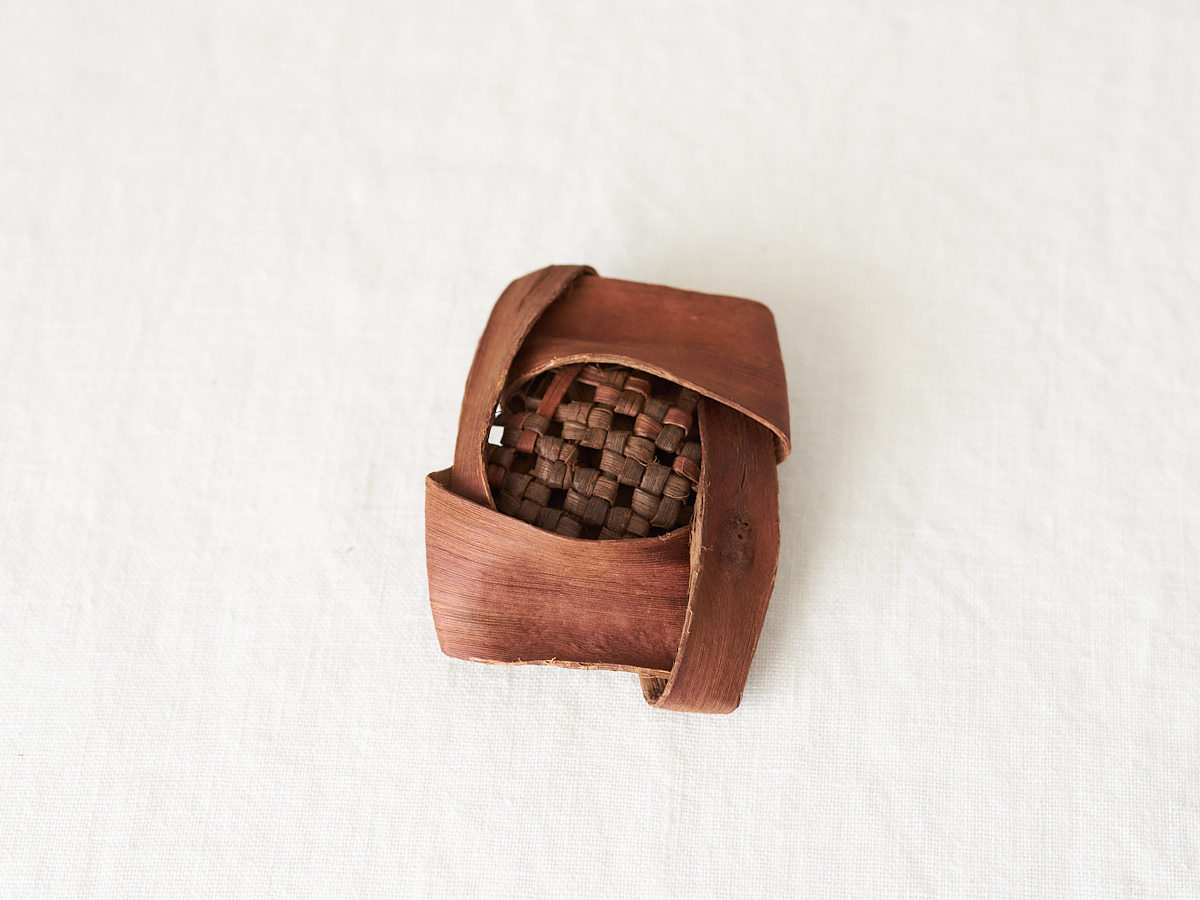
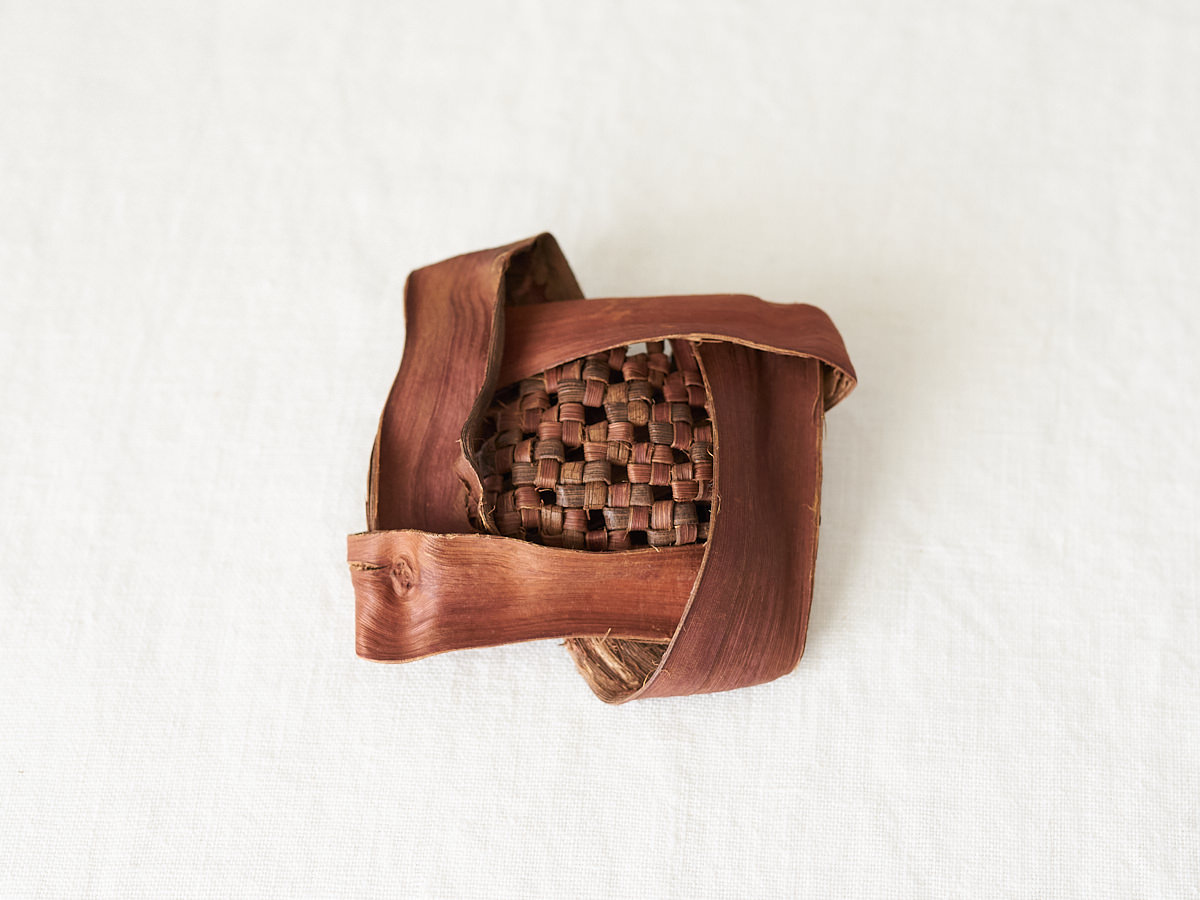
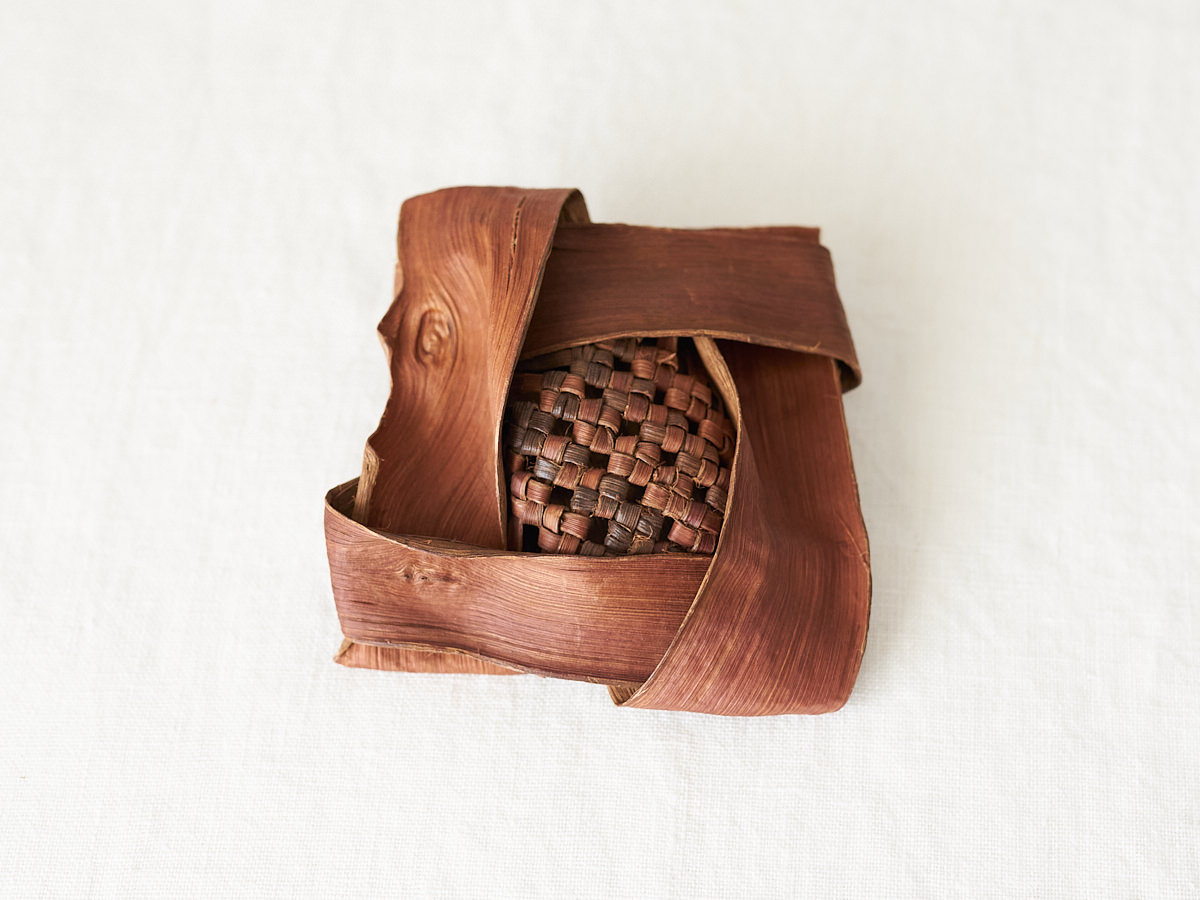
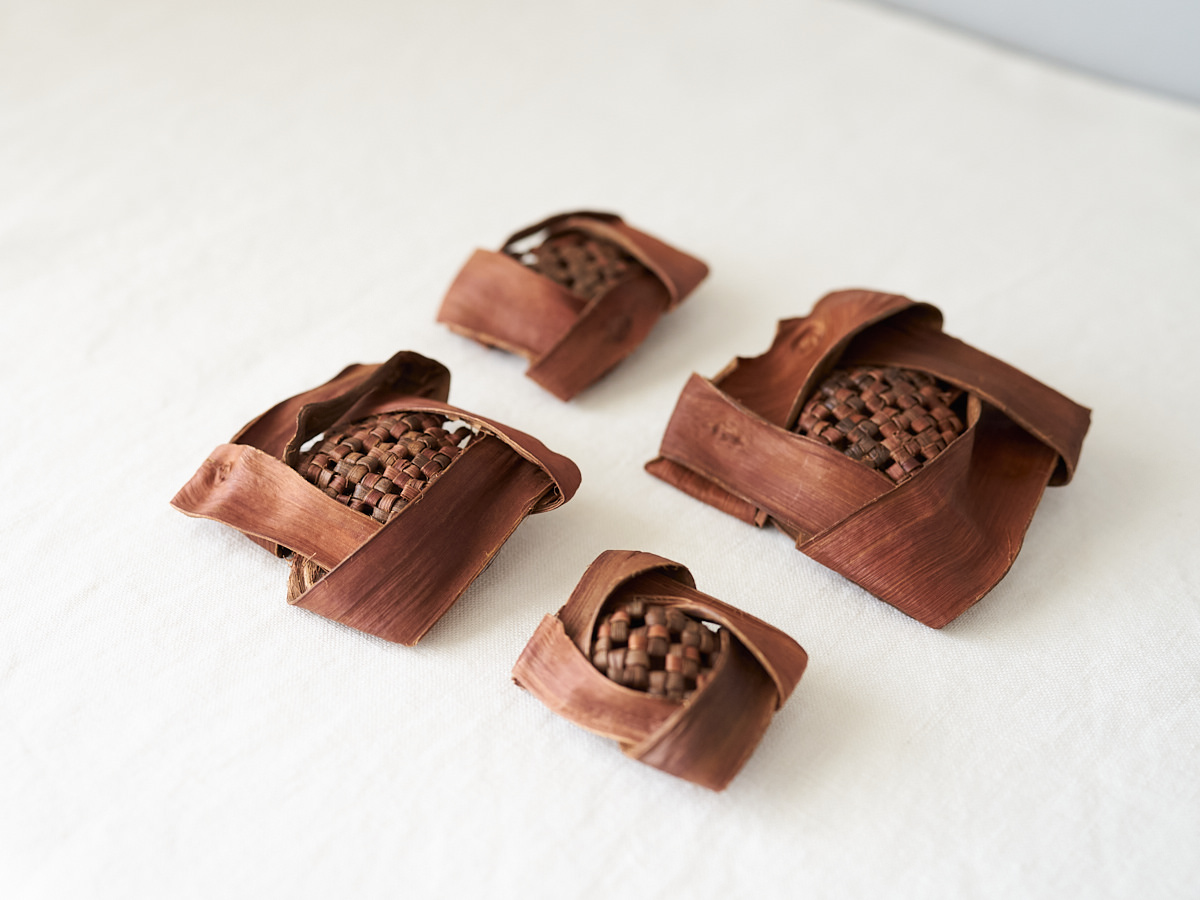
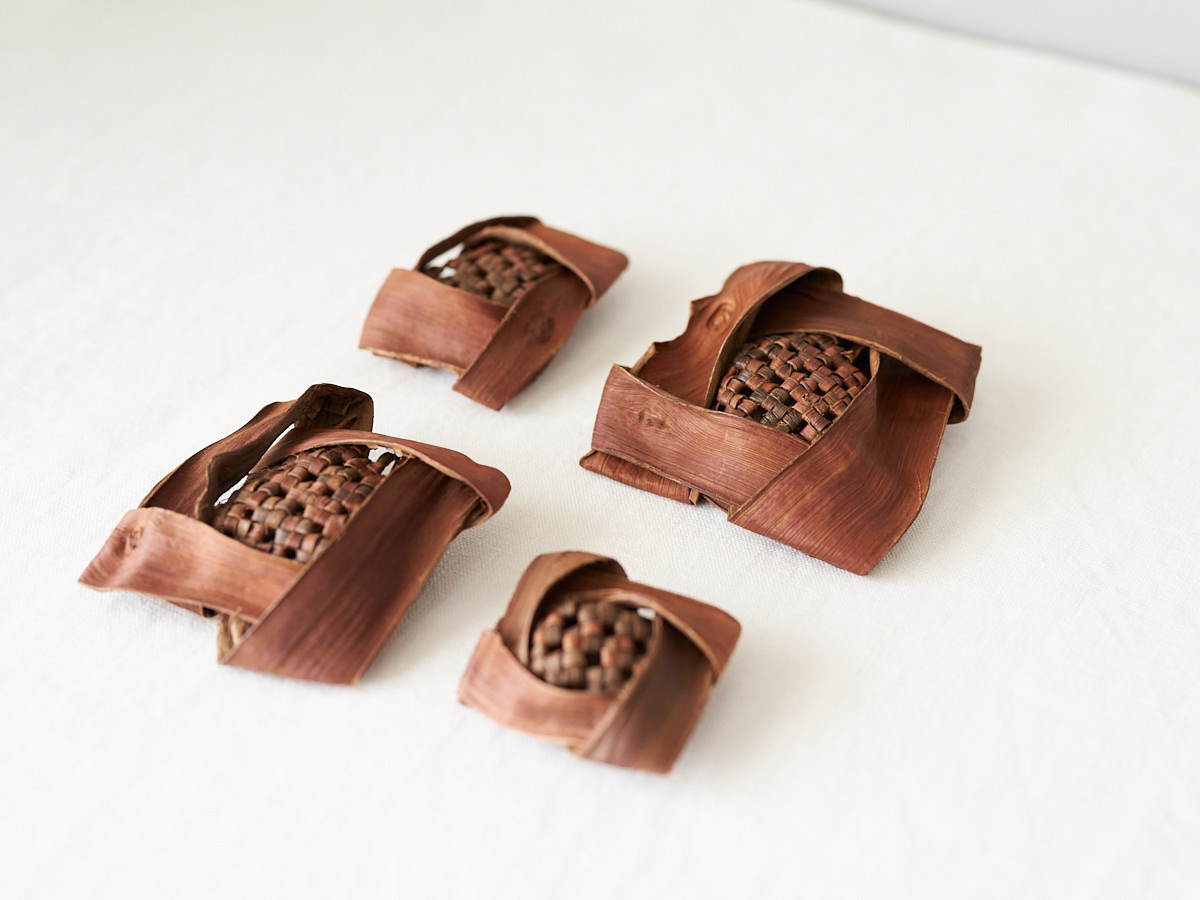
In this piece, however, the inner side of the bark is used along the outer edge, while the center features a finely woven pattern, creating a unique accessory.
Grapevine bark is harvested in summer.
In Kaoru Saito’s process, the material is not used immediately. After harvesting, it is first dried, then left to rest for over five years. During this time, in some cases, the inner side of the bark gradually develops a deep reddish tone.
This brooch is made using those carefully aged, precious vines.
The piece is named “Gogh.” Kaoru was deeply moved by Vincent van Gogh’s painting The Red Vineyard.
Inspired by the powerful energy of the scene—people harvesting grapes on a riverside slope, and the river illuminated by the evening sun—she created this brooch.
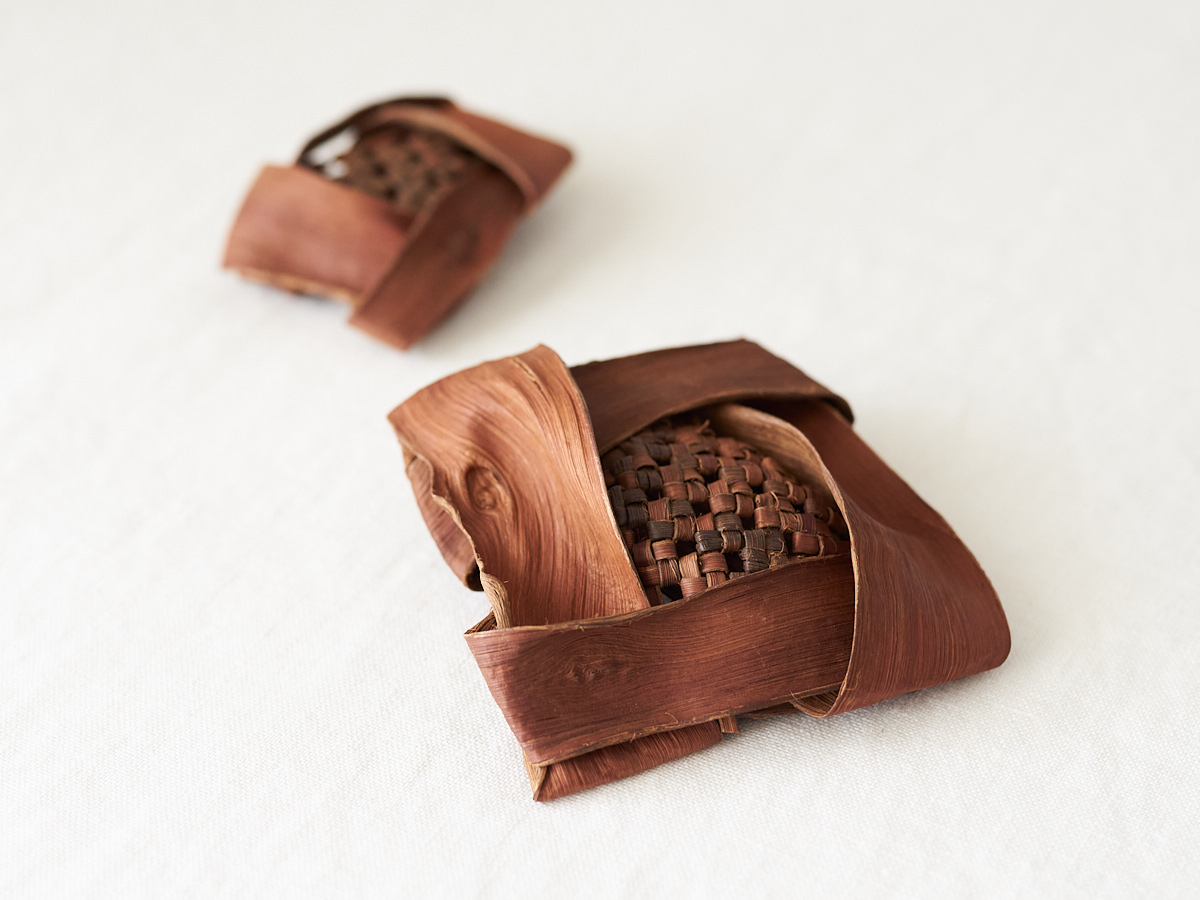
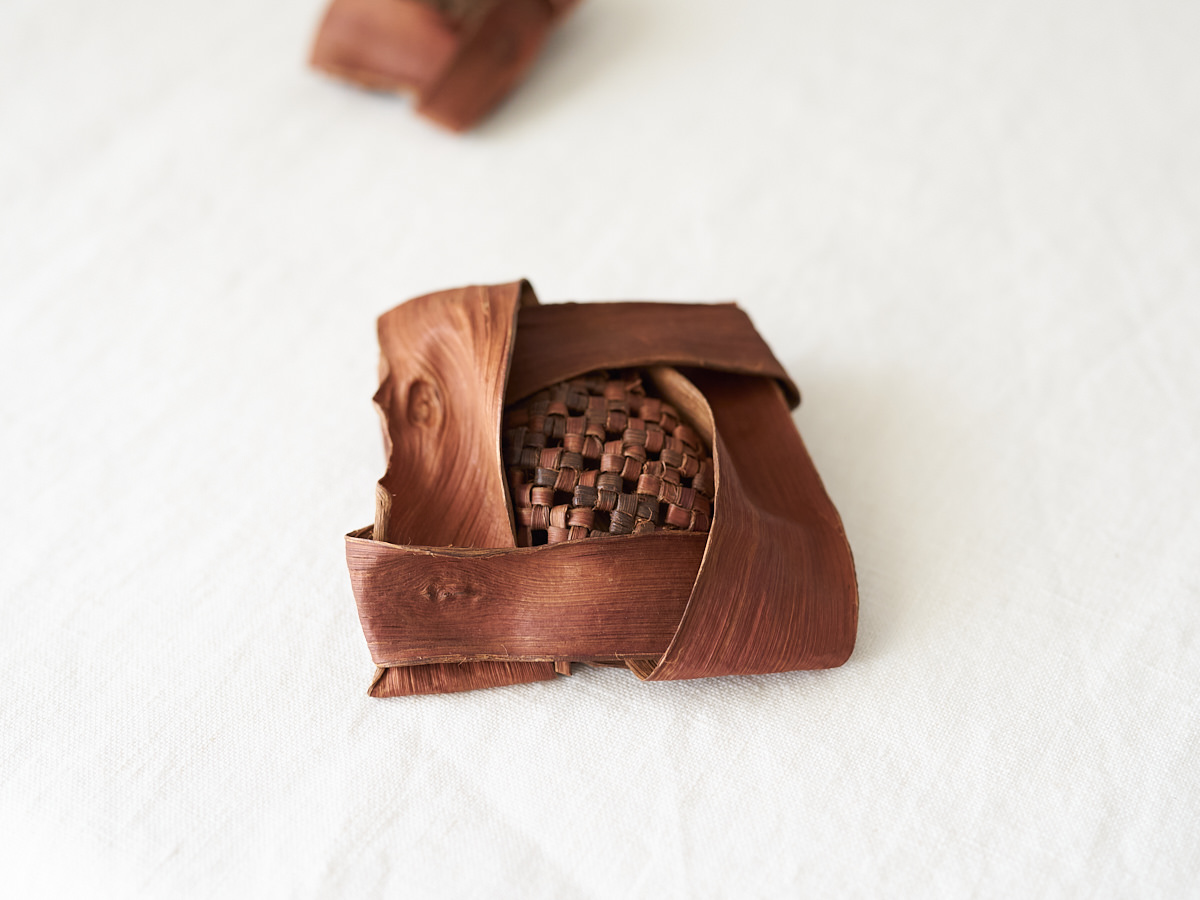
At the center of the brooch, you can see a decorative element featuring a finely worked flower-knot pattern.
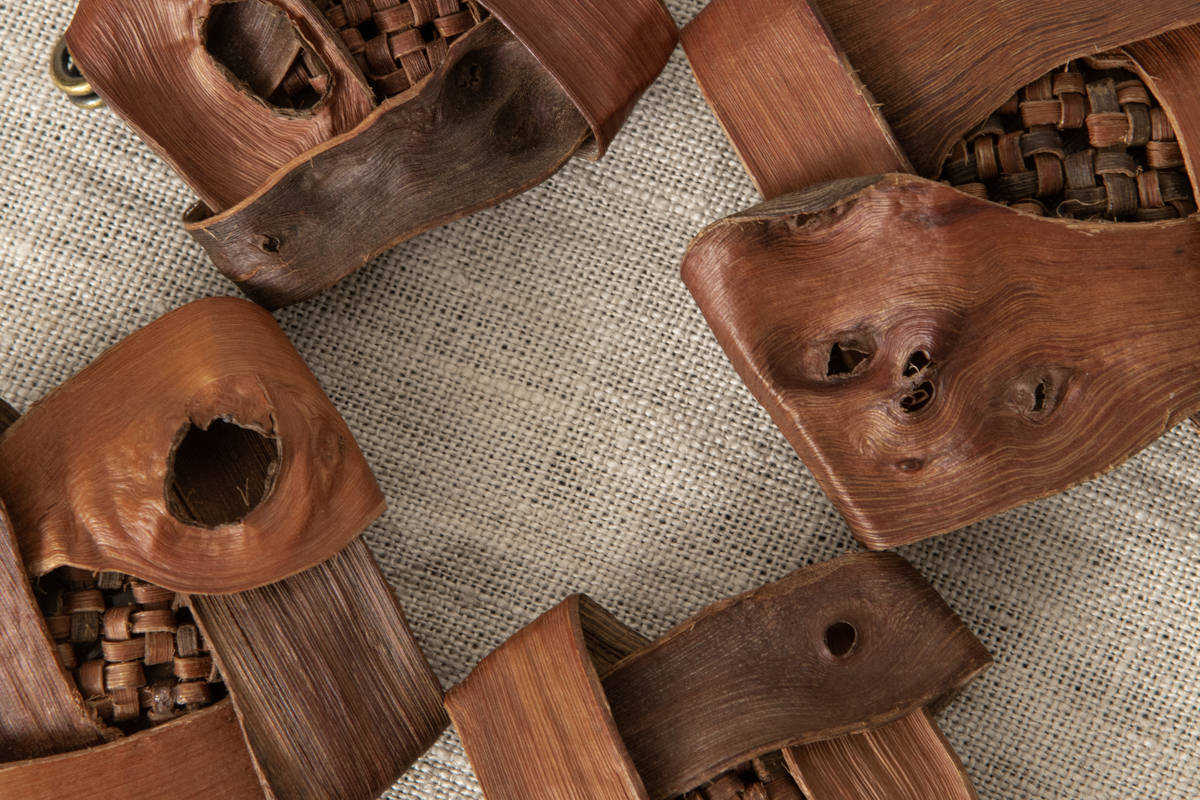
This flower knot is also made from Grapevine bark, woven by combining both the outer and inner sides of the bark. Surrounding this central motif, wide strips of the inner bark are boldly arranged.
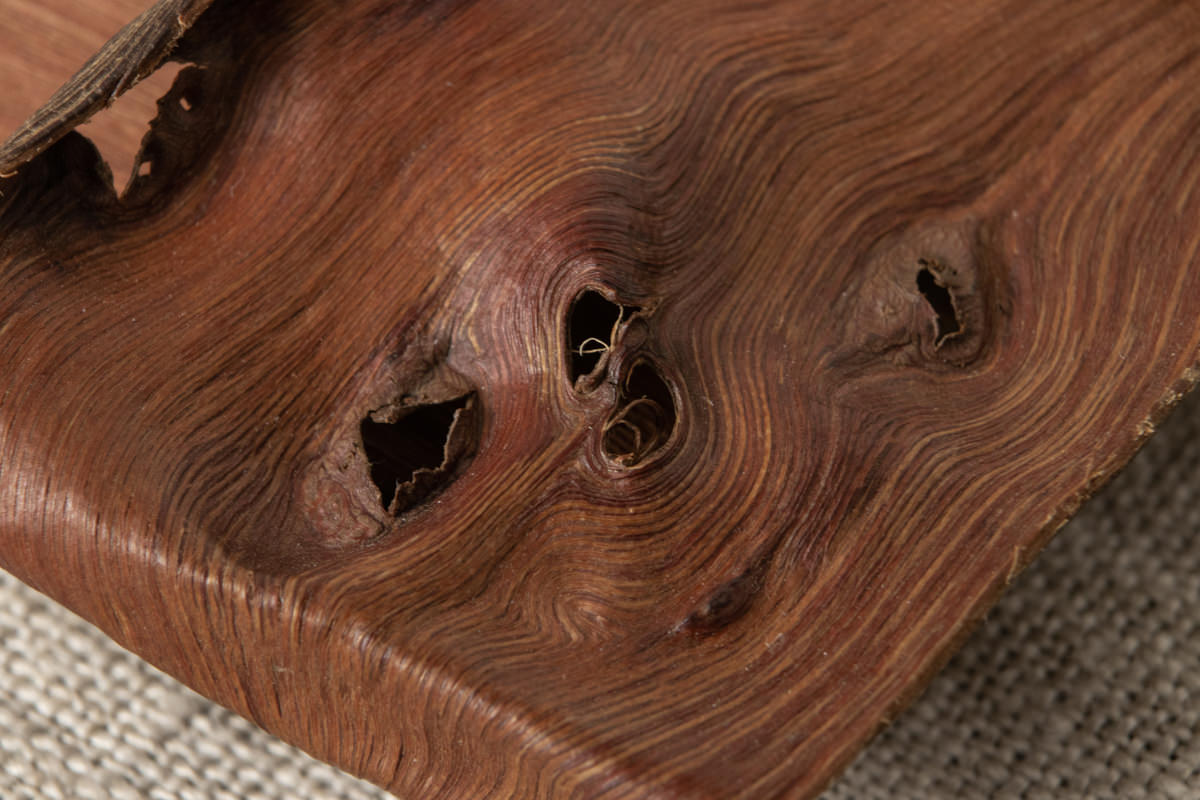
You can see multiple fibers running with a natural undulation—one of the reasons Grapevine is known for its strength.
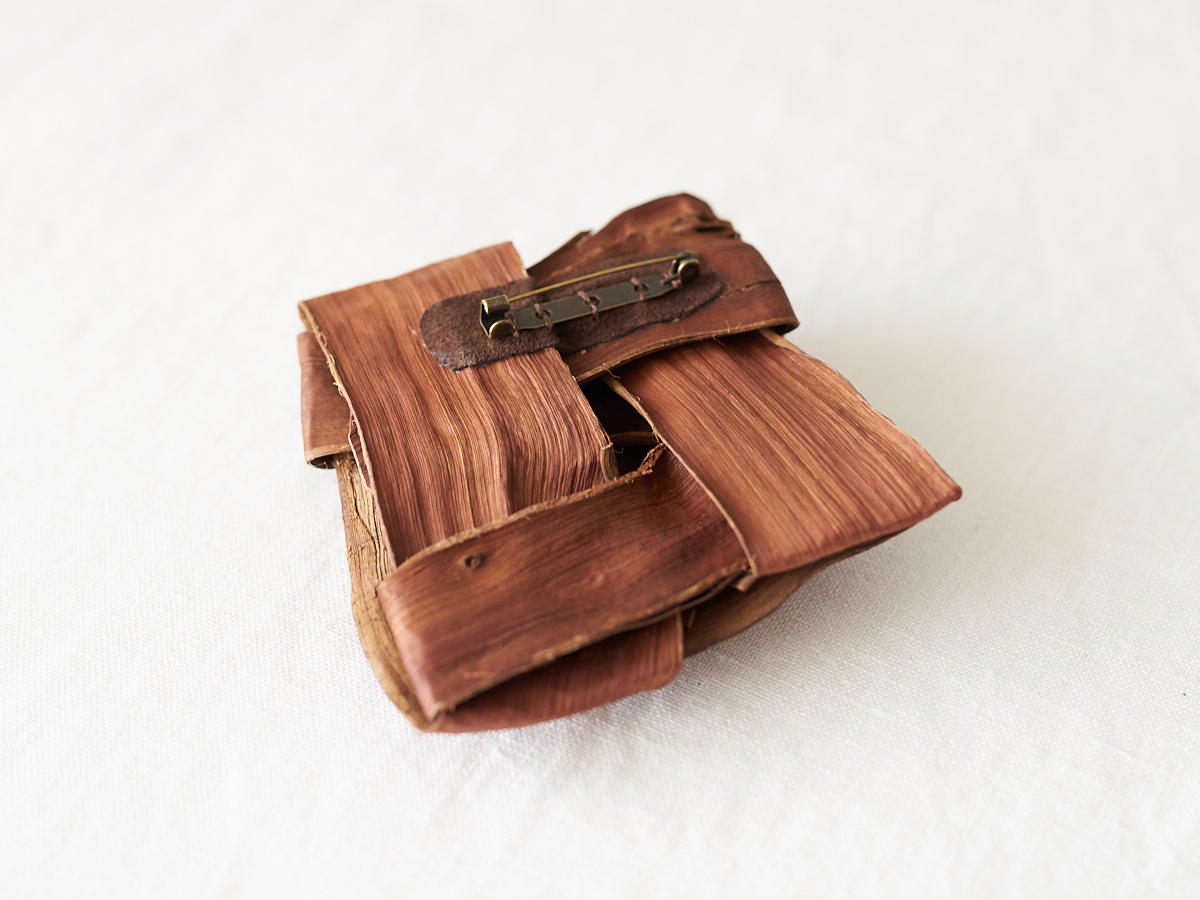
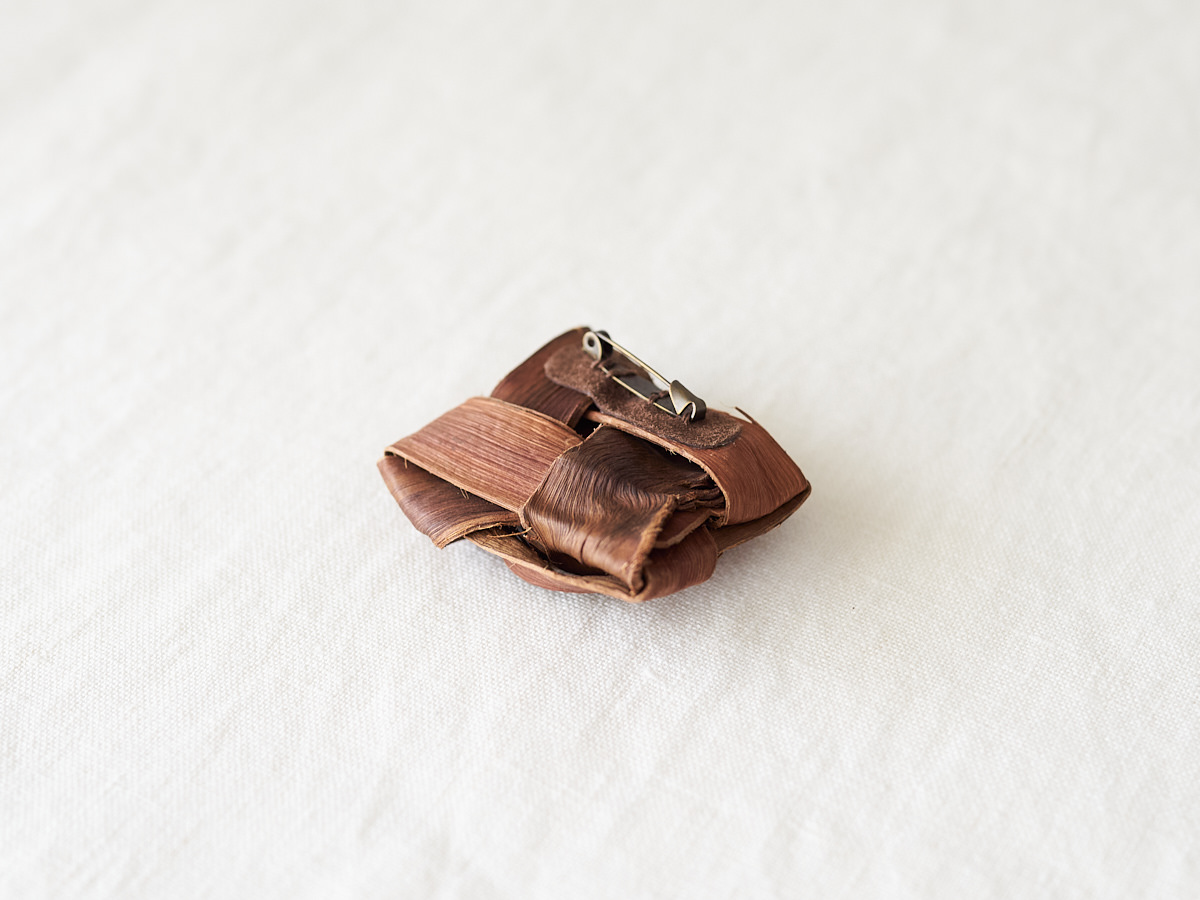
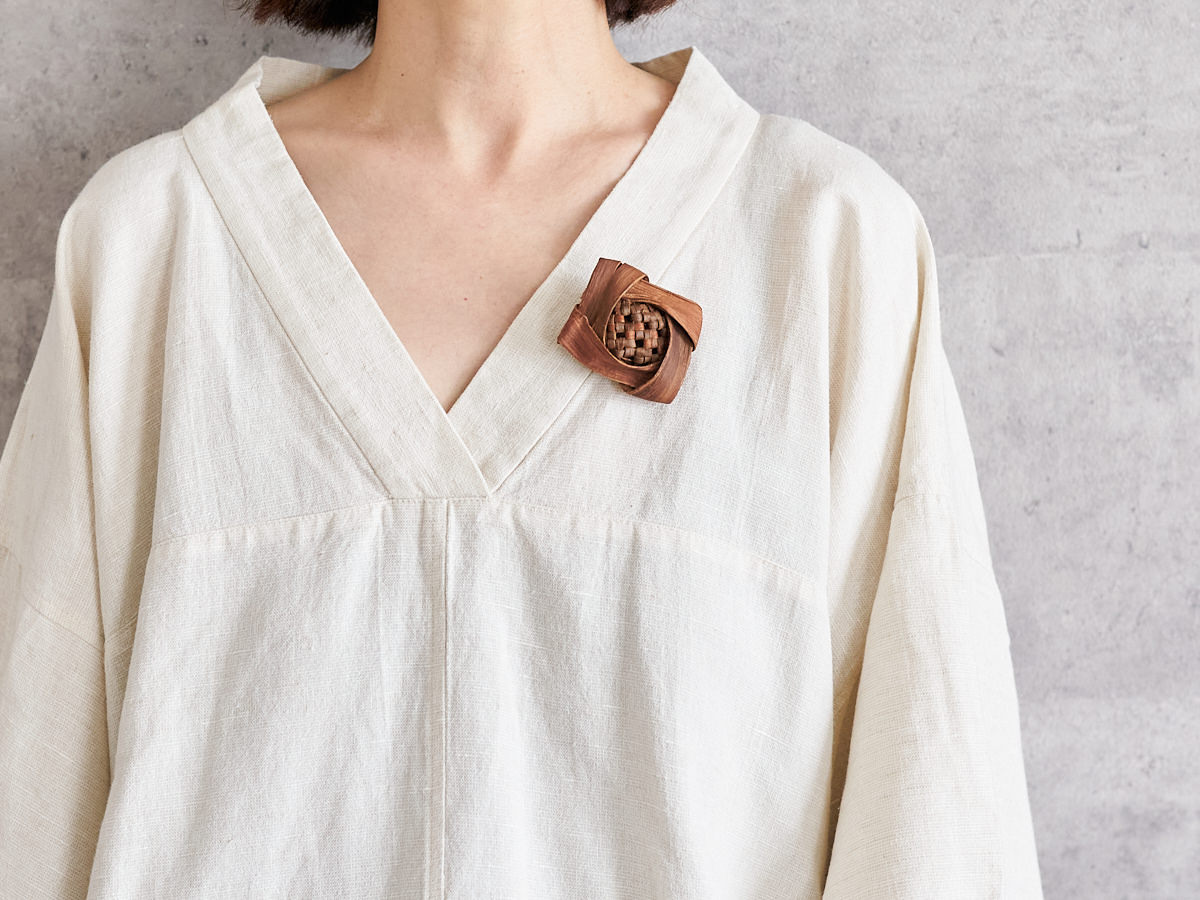
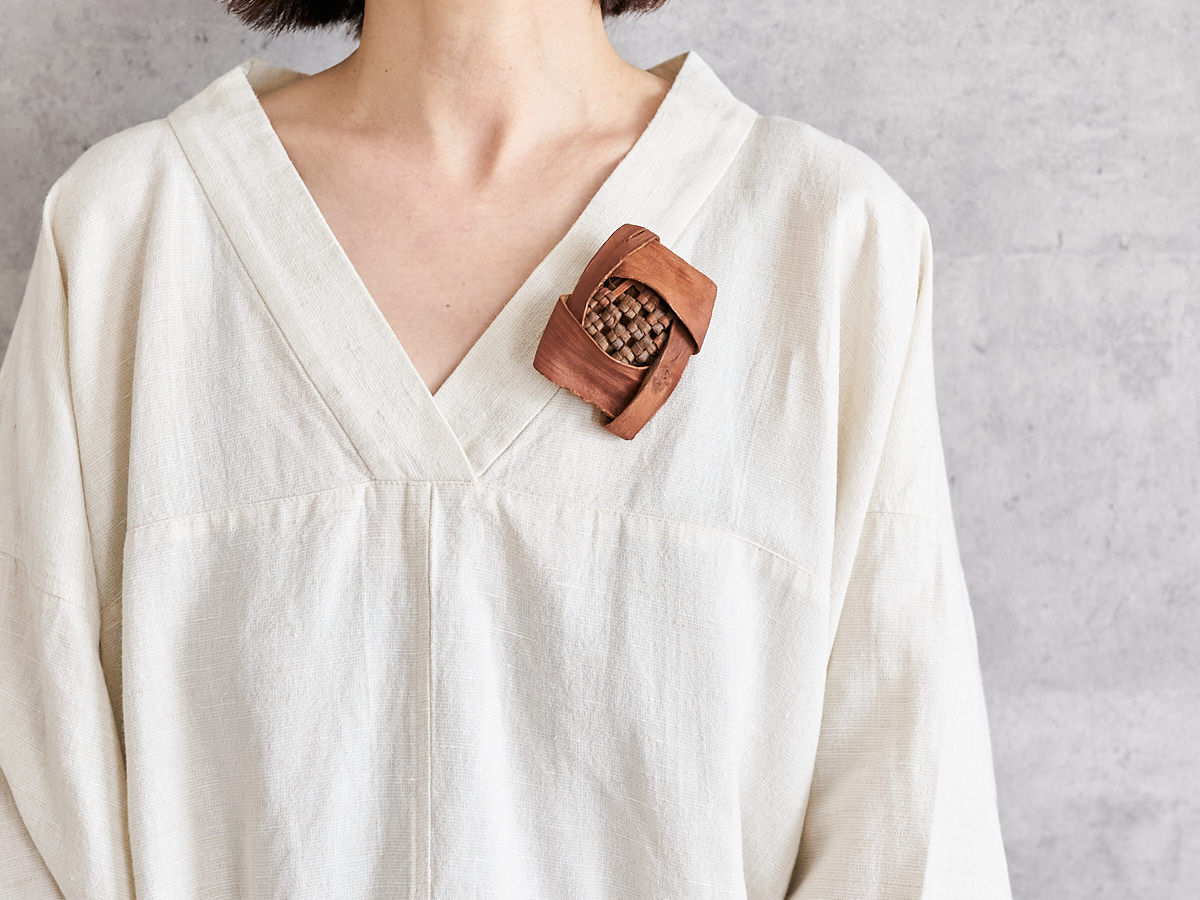
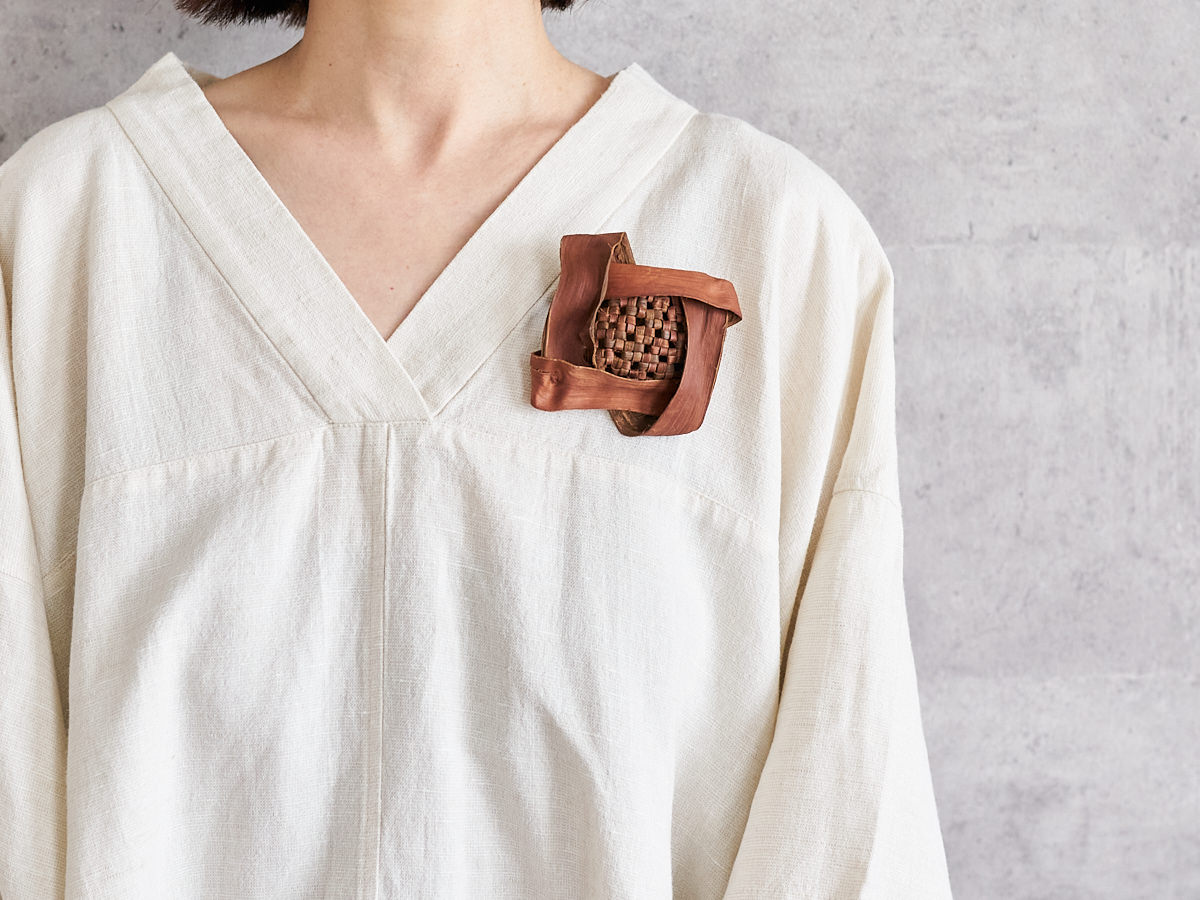
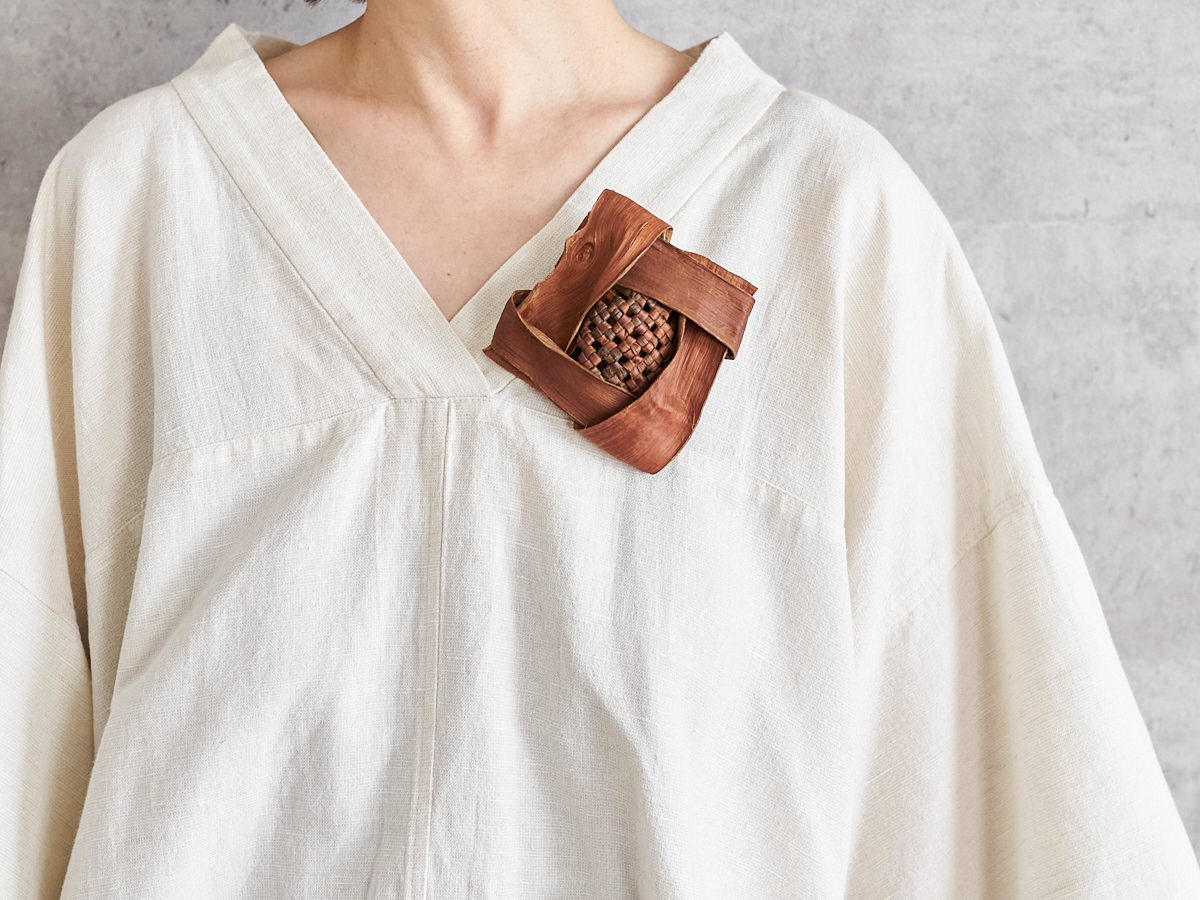
You may notice small holes like these; they are natural knots in the wood. We hope you will also enjoy the texture and character that are unique to natural materials.Each piece varies in texture and size. Please allow us to select the item that will be delivered to you.An antique gold pin is attached to the back of the brooch.It is designed so that the pin leaves minimal visible marks when attached to clothing.This is an example of the Small size. Even within the Small size, there are various shapes. We will select one from our available stock and send it to you.Small sizeThis is an example of the Medium size.Medium sizeThis is the Large size.Large sizeThis is the Extra Large size. The inner side of the bark also shows a subtle sheen depending on the light, revealing a different expression.Extra Large size
This is also recommended for those who would like to begin incorporating mountain materials into their lives with smaller items.
It is equally suited for those who already own a Grapevine bag and wish to pair it with a matching piece. In addition to wearing it on clothing, it can also be used as an accent on a bag or pouch.
Please choose the size that suits you best.
Forms that captivate, born from the rich materials of Yamagata
Using a variety of mountain materials—Grapevine, walnut, Akebi, and Matatabi— Kaoru Saito creates a succession of unique forms rarely seen elsewhere, as well as refined basketry that quietly draws the eye.
For many years, she has gone into the mountains herself to gather materials, carrying out every step of the process from the very beginning.
In fact, Kaoru is also a highly skilled maker capable of producing finely woven Grapevine tote baskets of exceptional quality. The accessories and ornaments she creates from multiple materials all carry a sense of considered beauty, while also reflecting playfulness and thoughtful attention to the user.
She has a deep understanding of each material, and is also a user herself, incorporating baskets, accessories, and small objects into her daily life.
Listening closely to the voices of those who use her work, she continues to explore how pieces can be made more comfortable, beautiful, and enjoyable to use.
This is a brooch made from Grapevine.
Grapevine is known for its durability and quality, much like leather, and is often used for items that can be enjoyed for many years. In most cases, the outer side of the bark is used.
In this piece, however, the inner side of the bark is used along the outer edge, while the center features a finely woven pattern, creating a unique accessory.
Grapevine bark is harvested in summer.
In Kaoru Saito’s process, the material is not used immediately. After harvesting, it is first dried, then left to rest for over five years. During this time, in some cases, the inner side of the bark gradually develops a deep reddish tone.
This brooch is made using those carefully aged, precious vines.
The piece is named “Gogh.” Kaoru was deeply moved by Vincent van Gogh’s painting The Red Vineyard.
Inspired by the powerful energy of the scene—people harvesting grapes on a riverside slope, and the river illuminated by the evening sun—she created this brooch.
At the center of the brooch, you can see a decorative element featuring a finely worked flower-knot pattern.
This flower knot is also made from Grapevine bark, woven by combining both the outer and inner sides of the bark. Surrounding this central motif, wide strips of the inner bark are boldly arranged.
You can see multiple fibers running with a natural undulation—one of the reasons Grapevine is known for its strength.
You may notice small holes like these; they are natural knots in the wood. We hope you will also enjoy the texture and character that are unique to natural materials.Each piece varies in texture and size. Please allow us to select the item that will be delivered to you.An antique gold pin is attached to the back of the brooch.It is designed so that the pin leaves minimal visible marks when attached to clothing.This is an example of the Small size. Even within the Small size, there are various shapes. We will select one from our available stock and send it to you.Small sizeThis is an example of the Medium size.Medium sizeThis is the Large size.Large sizeThis is the Extra Large size. The inner side of the bark also shows a subtle sheen depending on the light, revealing a different expression.Extra Large size
This is also recommended for those who would like to begin incorporating mountain materials into their lives with smaller items.
It is equally suited for those who already own a Grapevine bag and wish to pair it with a matching piece. In addition to wearing it on clothing, it can also be used as an accent on a bag or pouch.
Please choose the size that suits you best.
Forms that captivate, born from the rich materials of Yamagata
Using a variety of mountain materials—Grapevine, walnut, Akebi, and Matatabi— Kaoru Saito creates a succession of unique forms rarely seen elsewhere, as well as refined basketry that quietly draws the eye.
For many years, she has gone into the mountains herself to gather materials, carrying out every step of the process from the very beginning.
In fact, Kaoru is also a highly skilled maker capable of producing finely woven Grapevine tote baskets of exceptional quality. The accessories and ornaments she creates from multiple materials all carry a sense of considered beauty, while also reflecting playfulness and thoughtful attention to the user.
She has a deep understanding of each material, and is also a user herself, incorporating baskets, accessories, and small objects into her daily life.
Listening closely to the voices of those who use her work, she continues to explore how pieces can be made more comfortable, beautiful, and enjoyable to use.
This is a brooch made from Grapevine.
Grapevine is known for its durability and quality, much like leather, and is often used for items that can be enjoyed for many years. In most cases, the outer side of the bark is used.
In this piece, however, the inner side of the bark is used along the outer edge, while the center features a finely woven pattern, creating a unique accessory.
Grapevine bark is harvested in summer.
In Kaoru Saito’s process, the material is not used immediately. After harvesting, it is first dried, then left to rest for over five years. During this time, in some cases, the inner side of the bark gradually develops a deep reddish tone.
This brooch is made using those carefully aged, precious vines.
The piece is named “Gogh.” Kaoru was deeply moved by Vincent van Gogh’s painting The Red Vineyard.
Inspired by the powerful energy of the scene—people harvesting grapes on a riverside slope, and the river illuminated by the evening sun—she created this brooch.
At the center of the brooch, you can see a decorative element featuring a finely worked flower-knot pattern.
This flower knot is also made from Grapevine bark, woven by combining both the outer and inner sides of the bark. Surrounding this central motif, wide strips of the inner bark are boldly arranged.
You can see multiple fibers running with a natural undulation—one of the reasons Grapevine is known for its strength.
You may notice small holes like these; they are natural knots in the wood. We hope you will also enjoy the texture and character that are unique to natural materials.Each piece varies in texture and size. Please allow us to select the item that will be delivered to you.An antique gold pin is attached to the back of the brooch.It is designed so that the pin leaves minimal visible marks when attached to clothing.This is an example of the Small size. Even within the Small size, there are various shapes. We will select one from our available stock and send it to you.Small sizeThis is an example of the Medium size.Medium sizeThis is the Large size.Large sizeThis is the Extra Large size. The inner side of the bark also shows a subtle sheen depending on the light, revealing a different expression.Extra Large size
This is also recommended for those who would like to begin incorporating mountain materials into their lives with smaller items.
It is equally suited for those who already own a Grapevine bag and wish to pair it with a matching piece. In addition to wearing it on clothing, it can also be used as an accent on a bag or pouch.
Please choose the size that suits you best.
Forms that captivate, born from the rich materials of Yamagata
Using a variety of mountain materials—Grapevine, walnut, Akebi, and Matatabi— Kaoru Saito creates a succession of unique forms rarely seen elsewhere, as well as refined basketry that quietly draws the eye.
For many years, she has gone into the mountains herself to gather materials, carrying out every step of the process from the very beginning.
In fact, Kaoru is also a highly skilled maker capable of producing finely woven Grapevine tote baskets of exceptional quality. The accessories and ornaments she creates from multiple materials all carry a sense of considered beauty, while also reflecting playfulness and thoughtful attention to the user.
She has a deep understanding of each material, and is also a user herself, incorporating baskets, accessories, and small objects into her daily life.
Listening closely to the voices of those who use her work, she continues to explore how pieces can be made more comfortable, beautiful, and enjoyable to use.