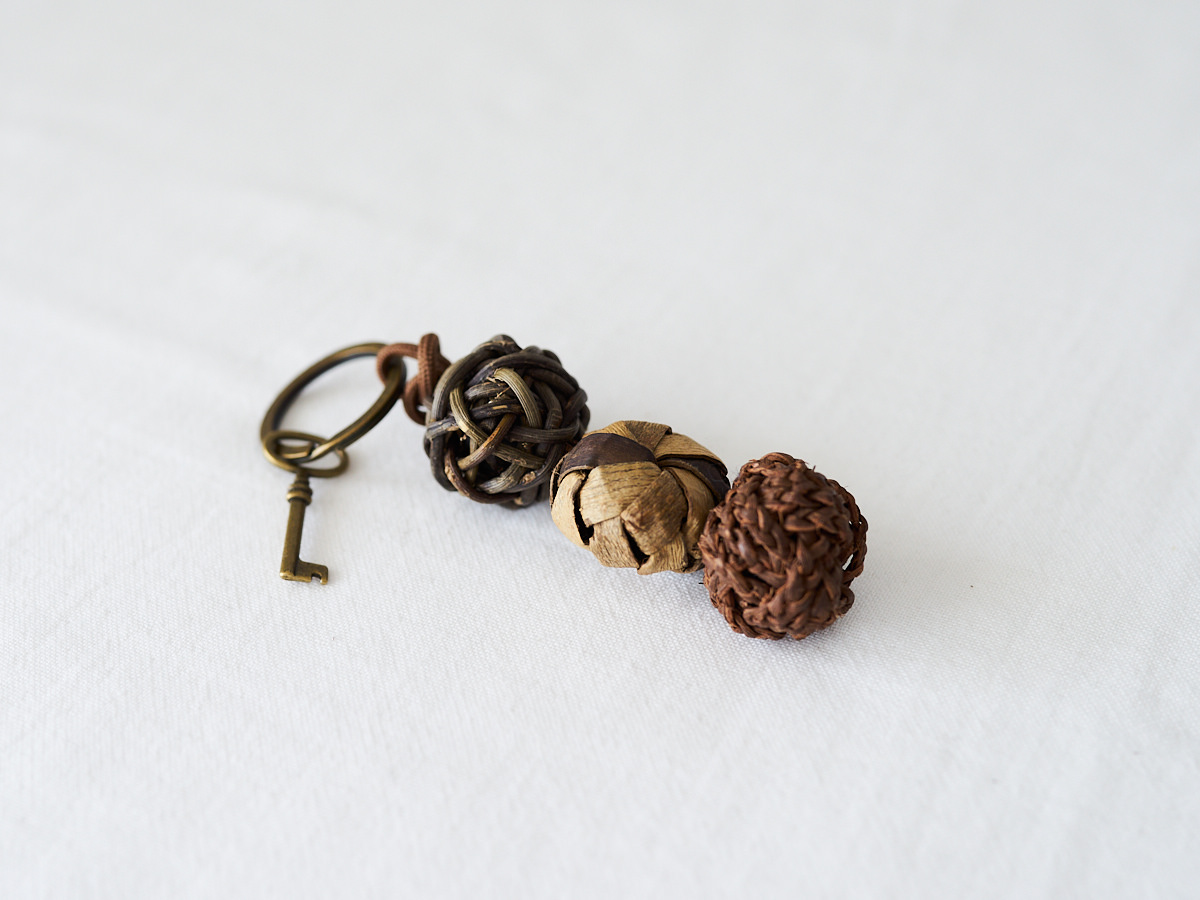
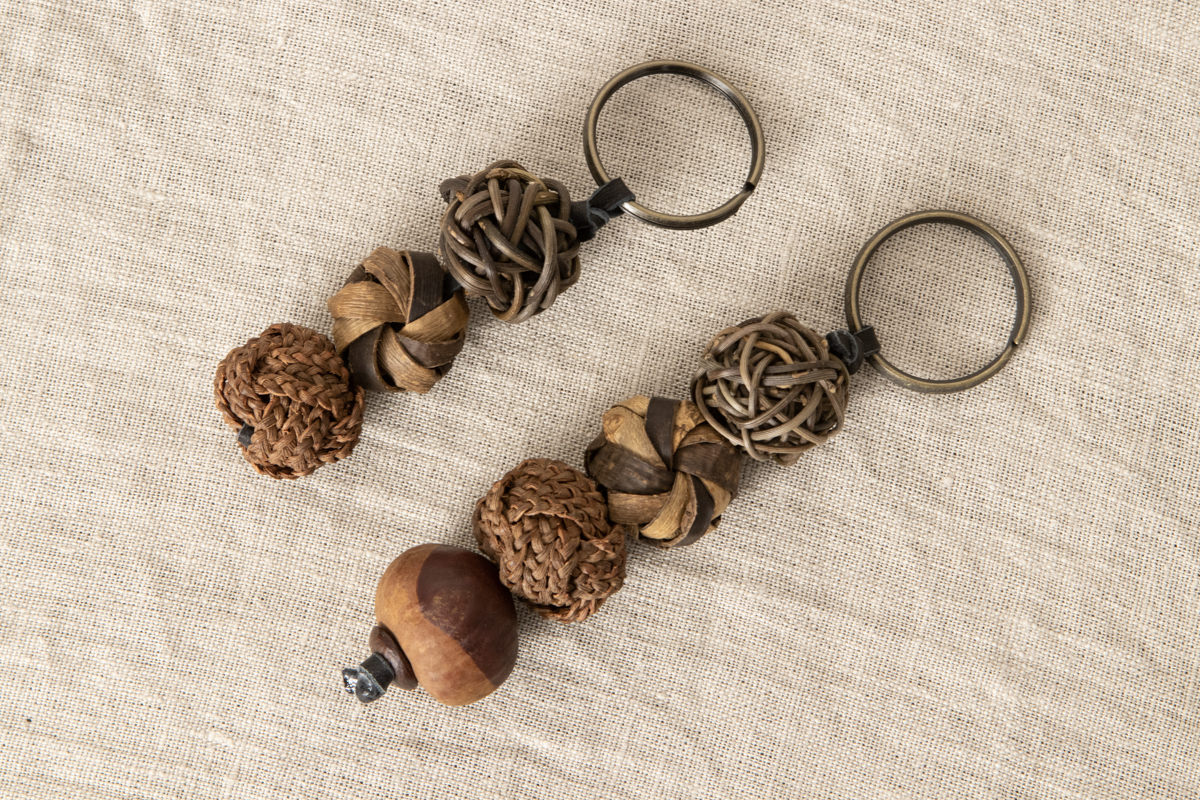
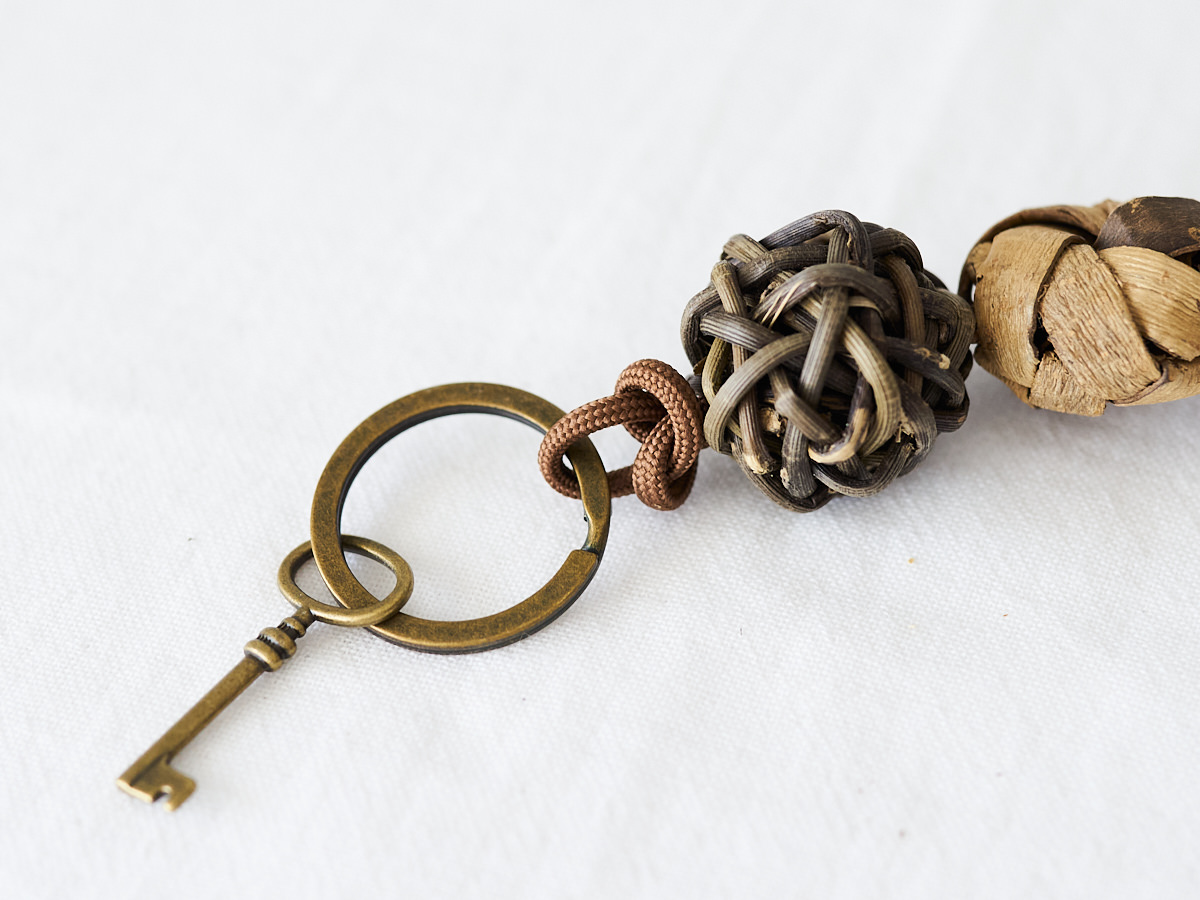
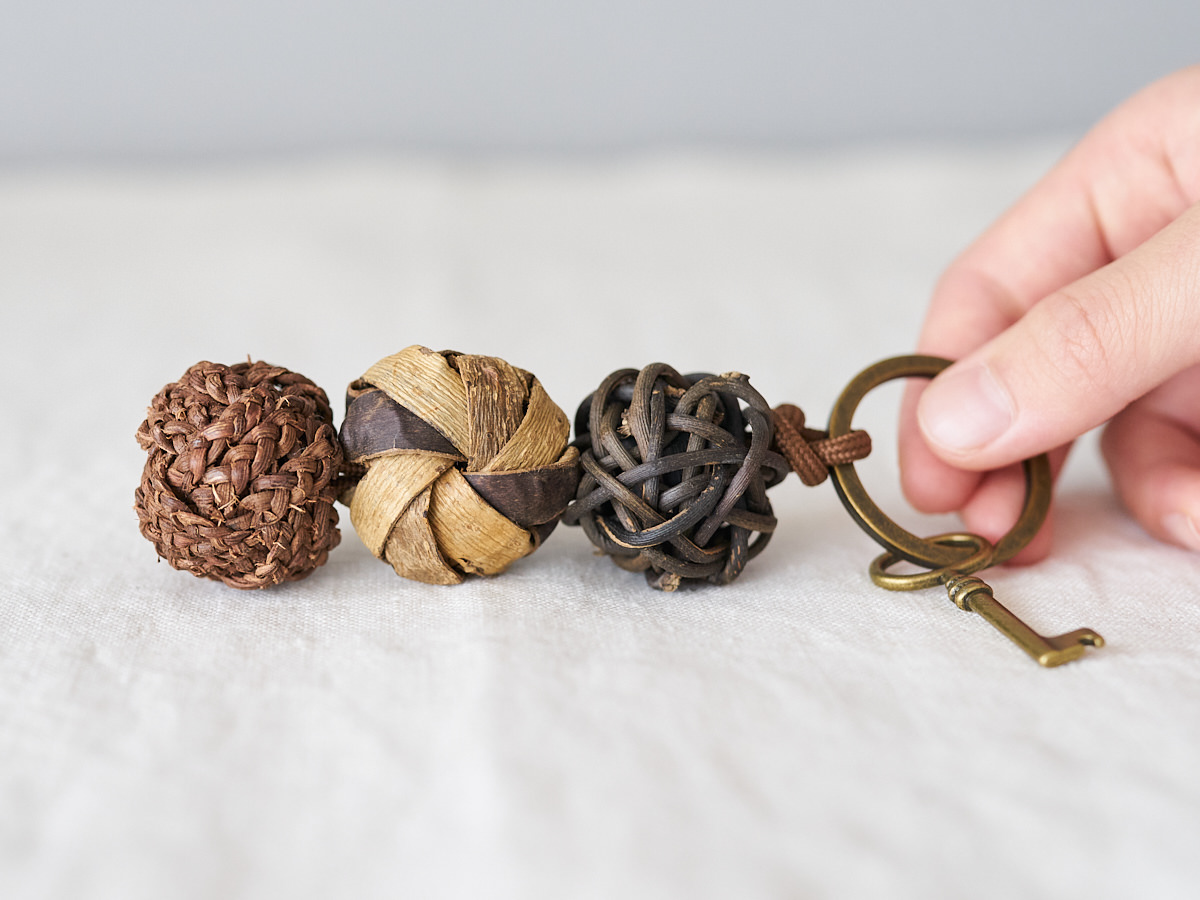
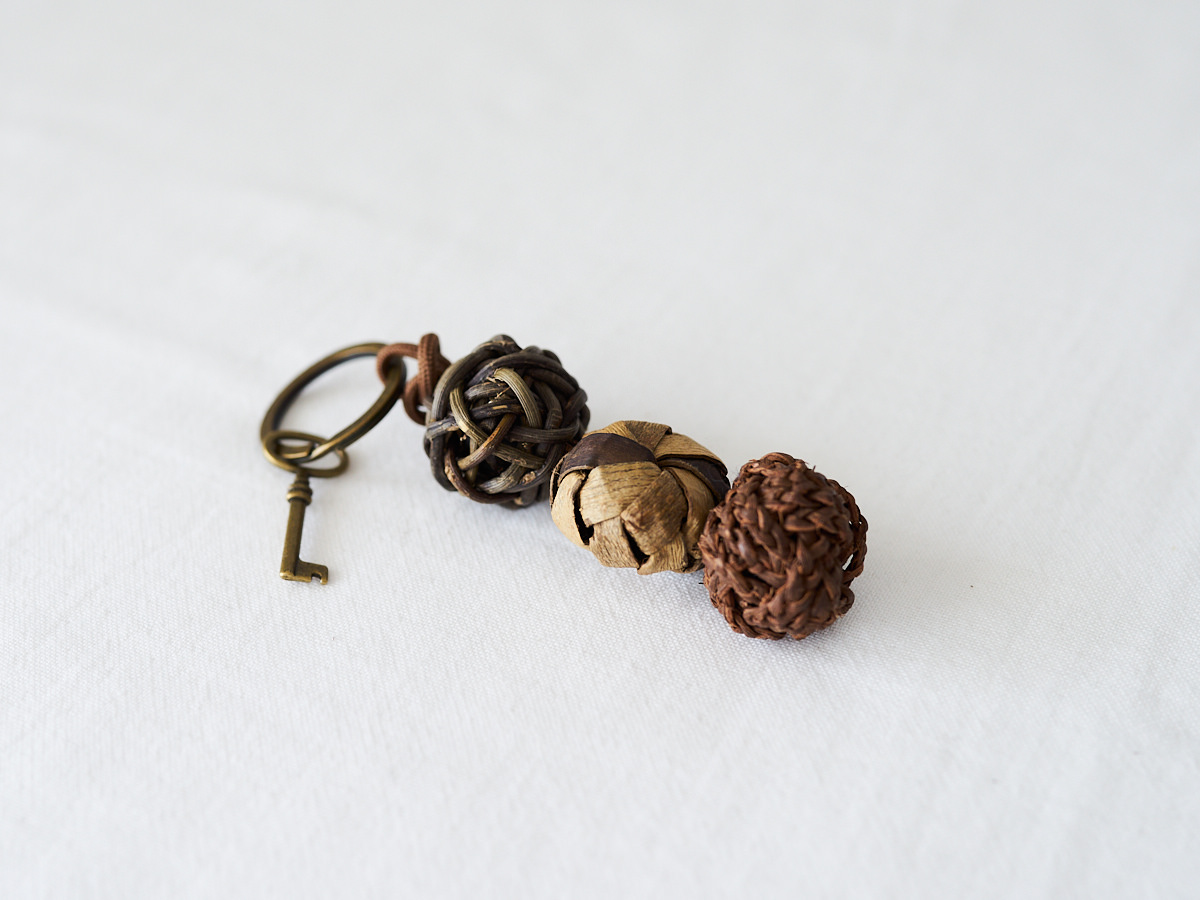
This key holder is made using Akebi vine, walnut bark, and grapevine.
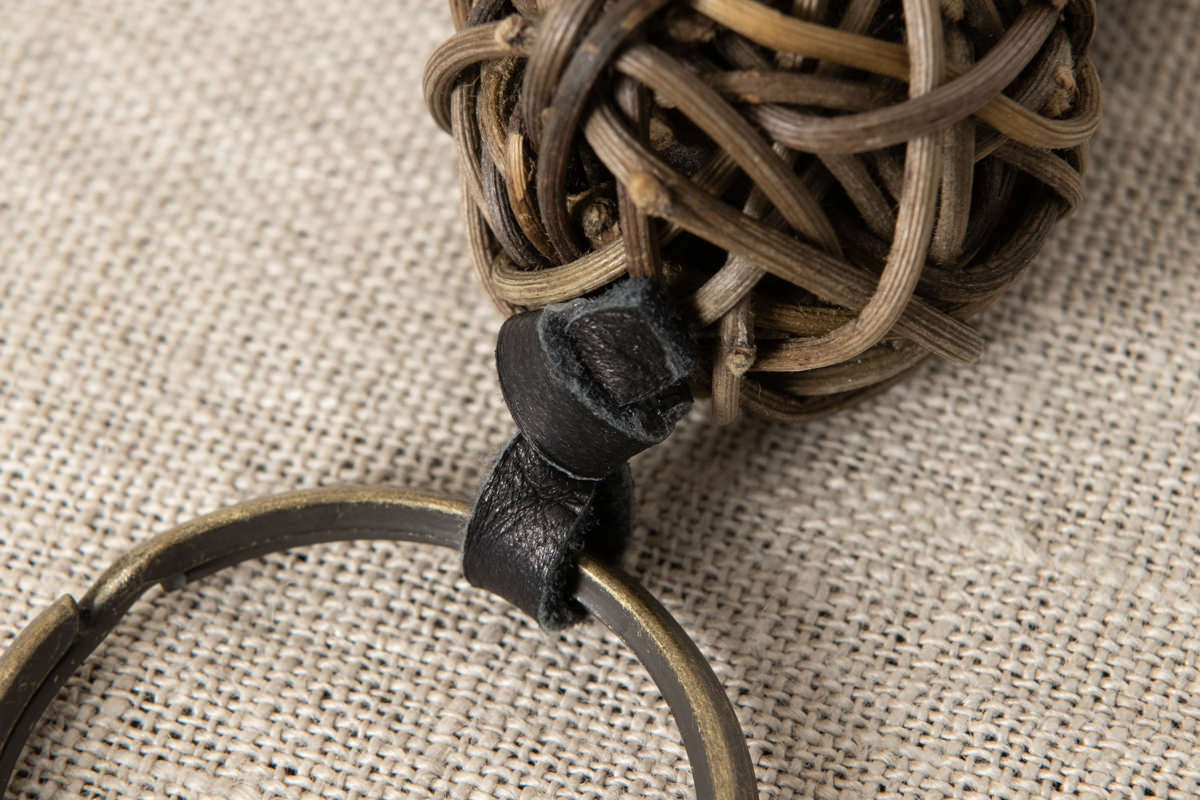
On another page, key holders of the same design, as shown above, are introduced in two sizes.The standard type connects each element with a leather cord,but the version introduced on this page uses a strong cord known as “paracord,” originally used for parachutes.The ring is also finished with a small key charm.
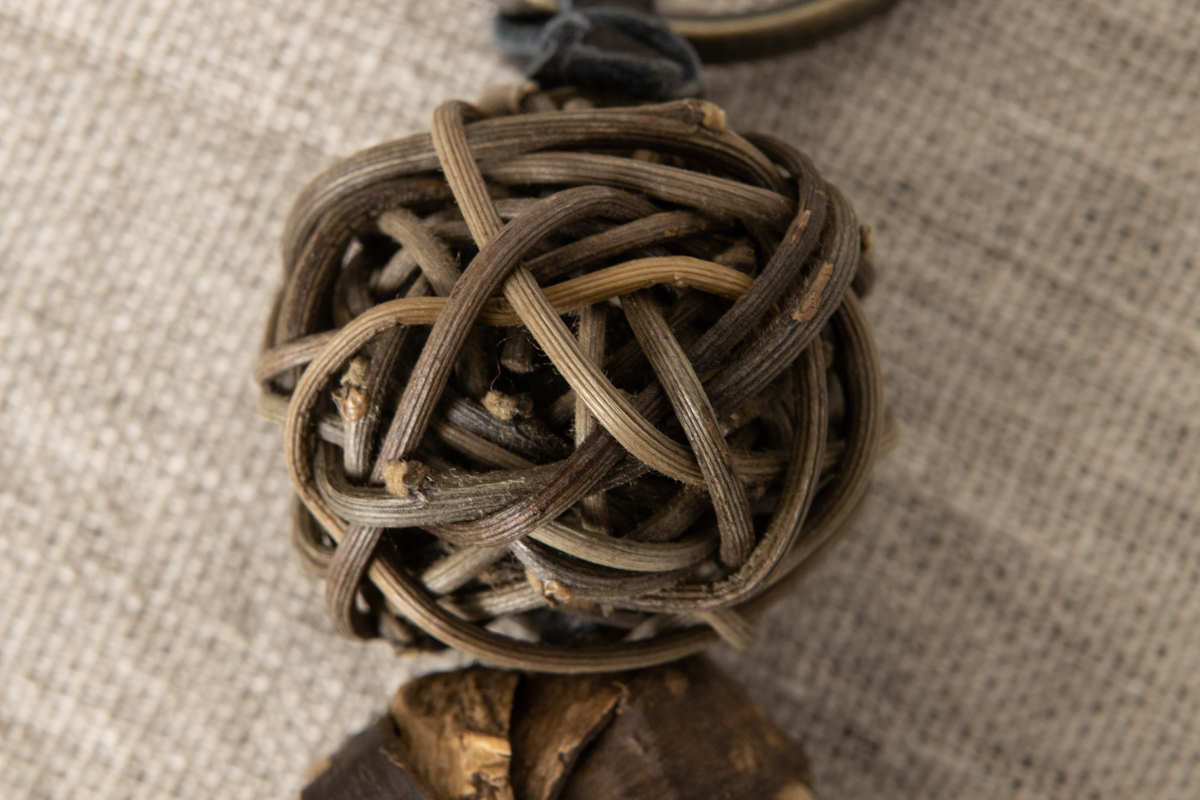
The Akebi used here is a smooth-surfaced variety known as “Hime-zuru.” It is characterized by its soft grayish-green tone.
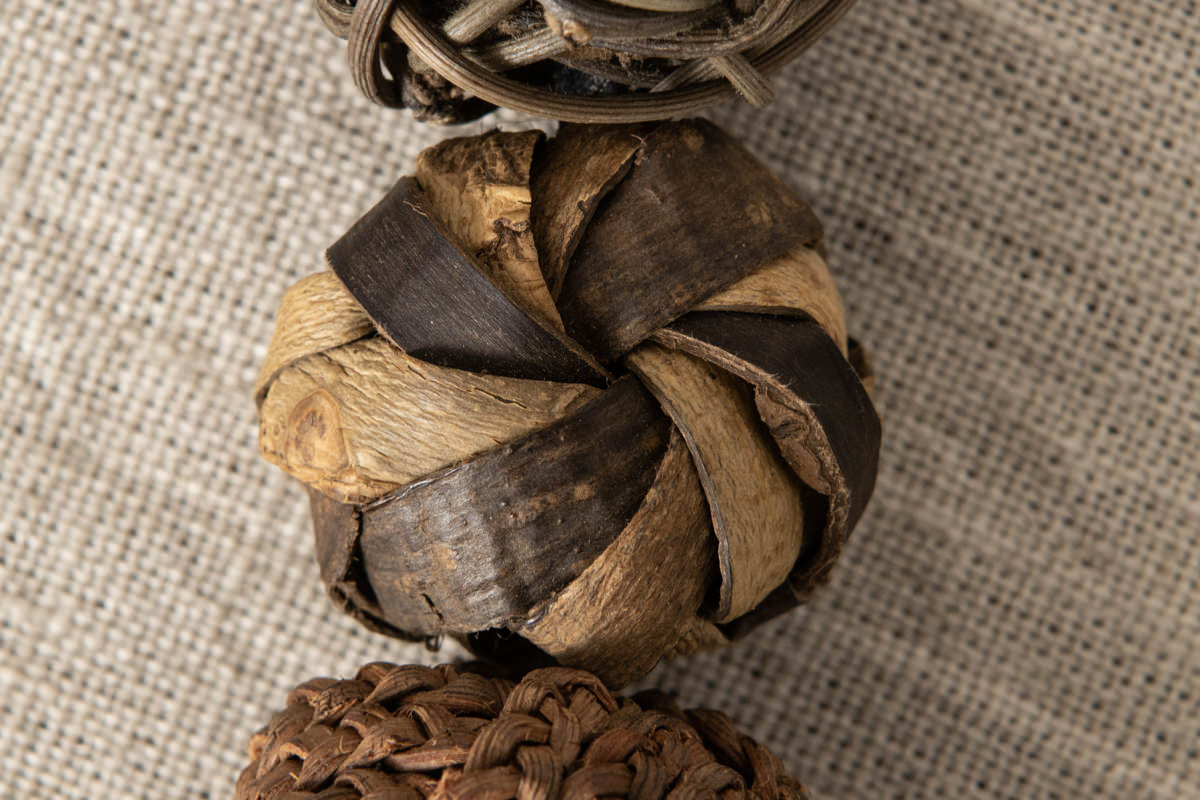
This piece is woven using both the outer and inner sides of walnut bark. The lighter brown tone comes from the outer surface, while the deeper dark brown comes from the inner side.
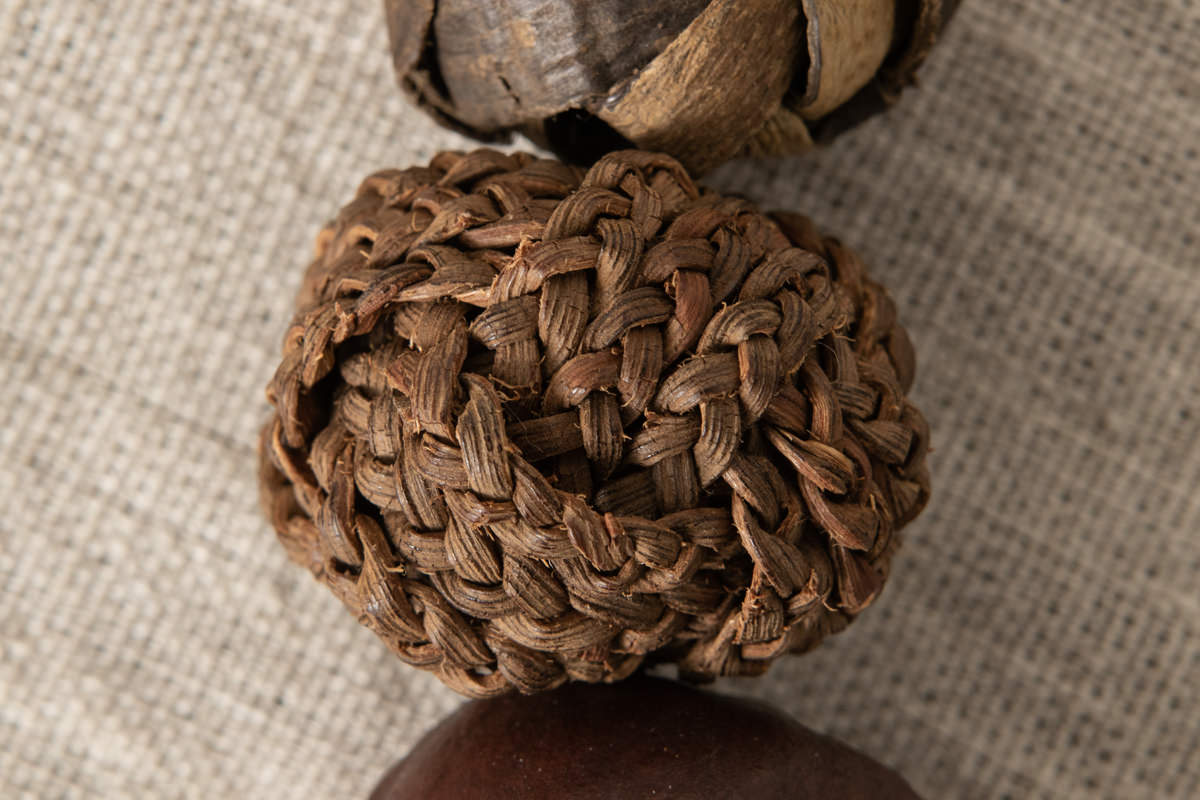
This part is made from grapevine. Finely braided strands are further combined into a layered structure.
It can sometimes take a moment to find your keys in a bag, but with a key holder that has a gentle presence like this, it may help guide your hand more easily.
Akebi, walnut, and grapevine. Each of these materials gradually develops a soft luster and a mellow texture through daily use.
We hope you will enjoy these mountain materials in your everyday life, through something you touch each day.
Forms that captivate, born from the rich materials of Yamagata
Using a variety of mountain materials—Grapevine, walnut, Akebi, and Matatabi— Kaoru Saito creates a succession of unique forms rarely seen elsewhere, as well as refined basketry that quietly draws the eye.
For many years, she has gone into the mountains herself to gather materials, carrying out every step of the process from the very beginning.
In fact, Kaoru is also a highly skilled maker capable of producing finely woven Grapevine tote baskets of exceptional quality. The accessories and ornaments she creates from multiple materials all carry a sense of considered beauty, while also reflecting playfulness and thoughtful attention to the user.
She has a deep understanding of each material, and is also a user herself, incorporating baskets, accessories, and small objects into her daily life.
Listening closely to the voices of those who use her work, she continues to explore how pieces can be made more comfortable, beautiful, and enjoyable to use.
This key holder is made using Akebi vine, walnut bark, and grapevine.
On another page, key holders of the same design, as shown above, are introduced in two sizes.The standard type connects each element with a leather cord,but the version introduced on this page uses a strong cord known as “paracord,” originally used for parachutes.The ring is also finished with a small key charm.
The Akebi used here is a smooth-surfaced variety known as “Hime-zuru.” It is characterized by its soft grayish-green tone.
This piece is woven using both the outer and inner sides of walnut bark. The lighter brown tone comes from the outer surface, while the deeper dark brown comes from the inner side.
This part is made from grapevine. Finely braided strands are further combined into a layered structure.
It can sometimes take a moment to find your keys in a bag, but with a key holder that has a gentle presence like this, it may help guide your hand more easily.
Akebi, walnut, and grapevine. Each of these materials gradually develops a soft luster and a mellow texture through daily use.
We hope you will enjoy these mountain materials in your everyday life, through something you touch each day.
Forms that captivate, born from the rich materials of Yamagata
Using a variety of mountain materials—Grapevine, walnut, Akebi, and Matatabi— Kaoru Saito creates a succession of unique forms rarely seen elsewhere, as well as refined basketry that quietly draws the eye.
For many years, she has gone into the mountains herself to gather materials, carrying out every step of the process from the very beginning.
In fact, Kaoru is also a highly skilled maker capable of producing finely woven Grapevine tote baskets of exceptional quality. The accessories and ornaments she creates from multiple materials all carry a sense of considered beauty, while also reflecting playfulness and thoughtful attention to the user.
She has a deep understanding of each material, and is also a user herself, incorporating baskets, accessories, and small objects into her daily life.
Listening closely to the voices of those who use her work, she continues to explore how pieces can be made more comfortable, beautiful, and enjoyable to use.
This key holder is made using Akebi vine, walnut bark, and grapevine.
On another page, key holders of the same design, as shown above, are introduced in two sizes.The standard type connects each element with a leather cord,but the version introduced on this page uses a strong cord known as “paracord,” originally used for parachutes.The ring is also finished with a small key charm.
The Akebi used here is a smooth-surfaced variety known as “Hime-zuru.” It is characterized by its soft grayish-green tone.
This piece is woven using both the outer and inner sides of walnut bark. The lighter brown tone comes from the outer surface, while the deeper dark brown comes from the inner side.
This part is made from grapevine. Finely braided strands are further combined into a layered structure.
It can sometimes take a moment to find your keys in a bag, but with a key holder that has a gentle presence like this, it may help guide your hand more easily.
Akebi, walnut, and grapevine. Each of these materials gradually develops a soft luster and a mellow texture through daily use.
We hope you will enjoy these mountain materials in your everyday life, through something you touch each day.
Forms that captivate, born from the rich materials of Yamagata
Using a variety of mountain materials—Grapevine, walnut, Akebi, and Matatabi— Kaoru Saito creates a succession of unique forms rarely seen elsewhere, as well as refined basketry that quietly draws the eye.
For many years, she has gone into the mountains herself to gather materials, carrying out every step of the process from the very beginning.
In fact, Kaoru is also a highly skilled maker capable of producing finely woven Grapevine tote baskets of exceptional quality. The accessories and ornaments she creates from multiple materials all carry a sense of considered beauty, while also reflecting playfulness and thoughtful attention to the user.
She has a deep understanding of each material, and is also a user herself, incorporating baskets, accessories, and small objects into her daily life.
Listening closely to the voices of those who use her work, she continues to explore how pieces can be made more comfortable, beautiful, and enjoyable to use.