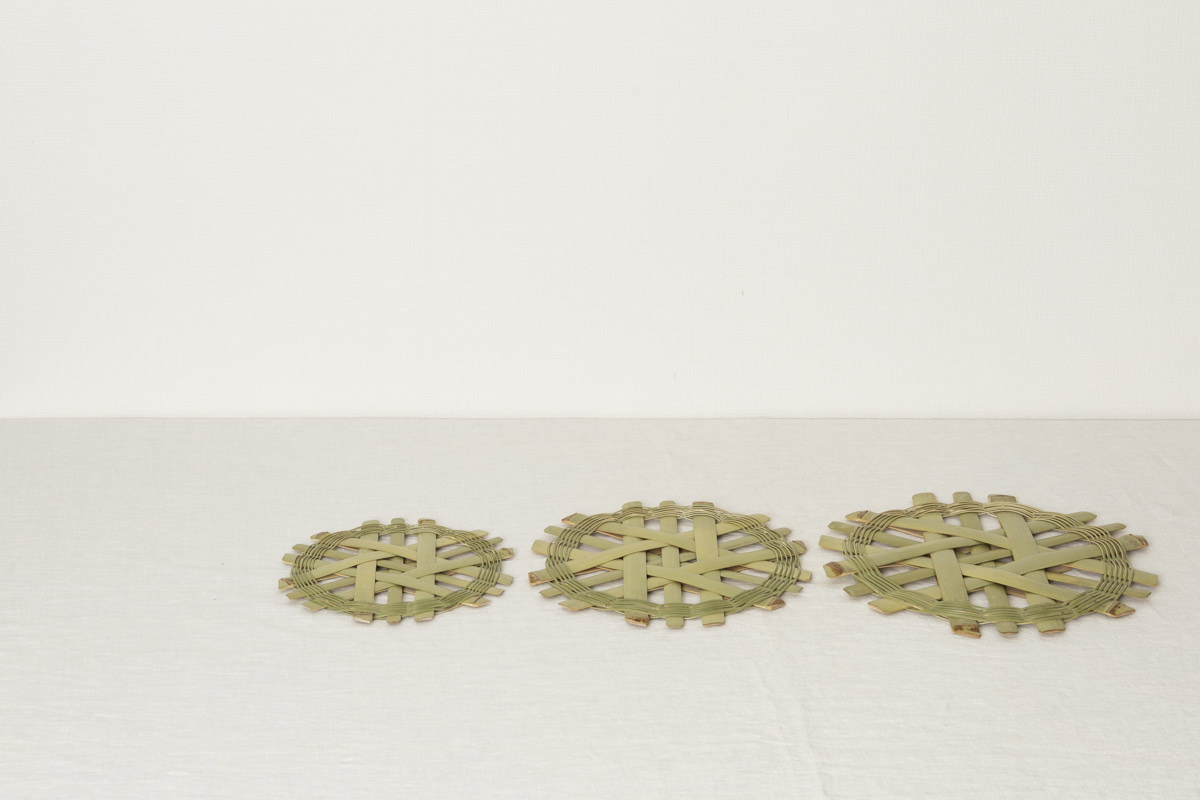
Pot Stand / Madake Bamboo / Kanagawa-JPN 430113 神奈川県/真竹(青竹) 鍋敷き 小・中・大 3サイズ 430113
Pot Stand / Madake Bamboo / Kanagawa-JPN 430113 神奈川県/真竹(青竹) 鍋敷き 小・中・大 3サイズ 430113
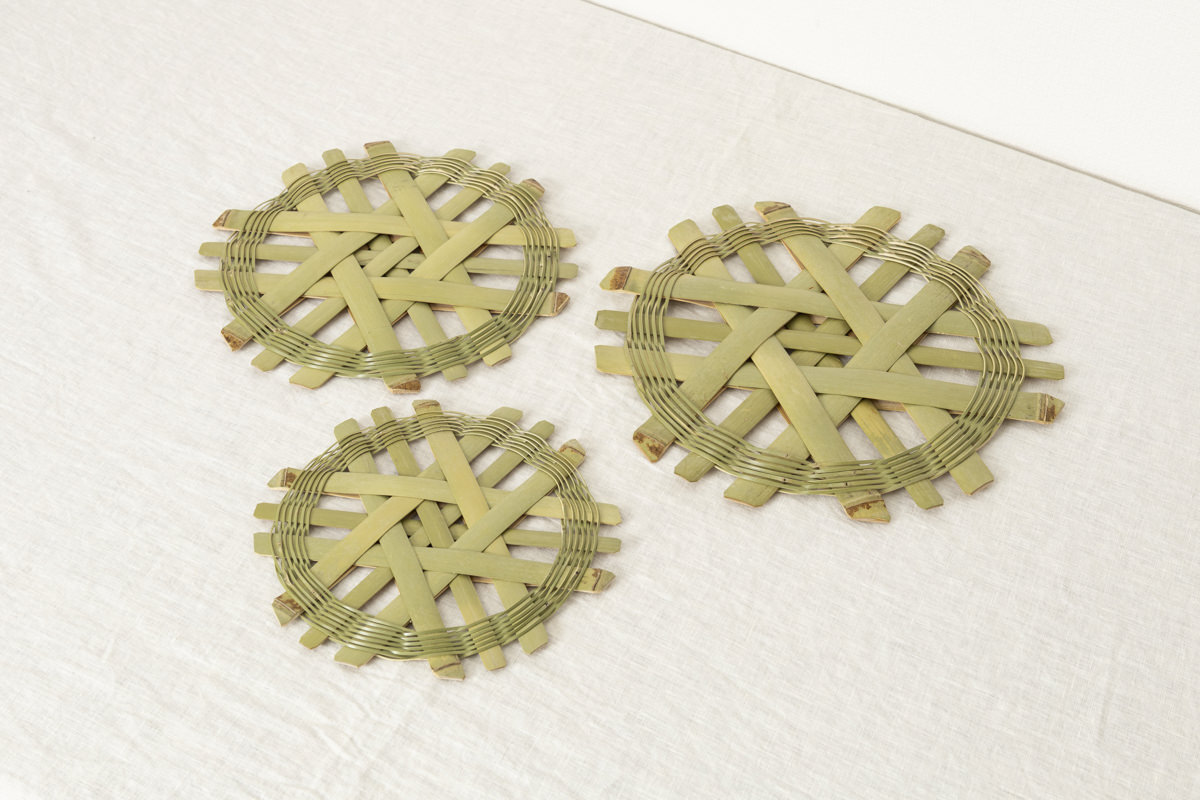
This is a pot stand made from green bamboo.
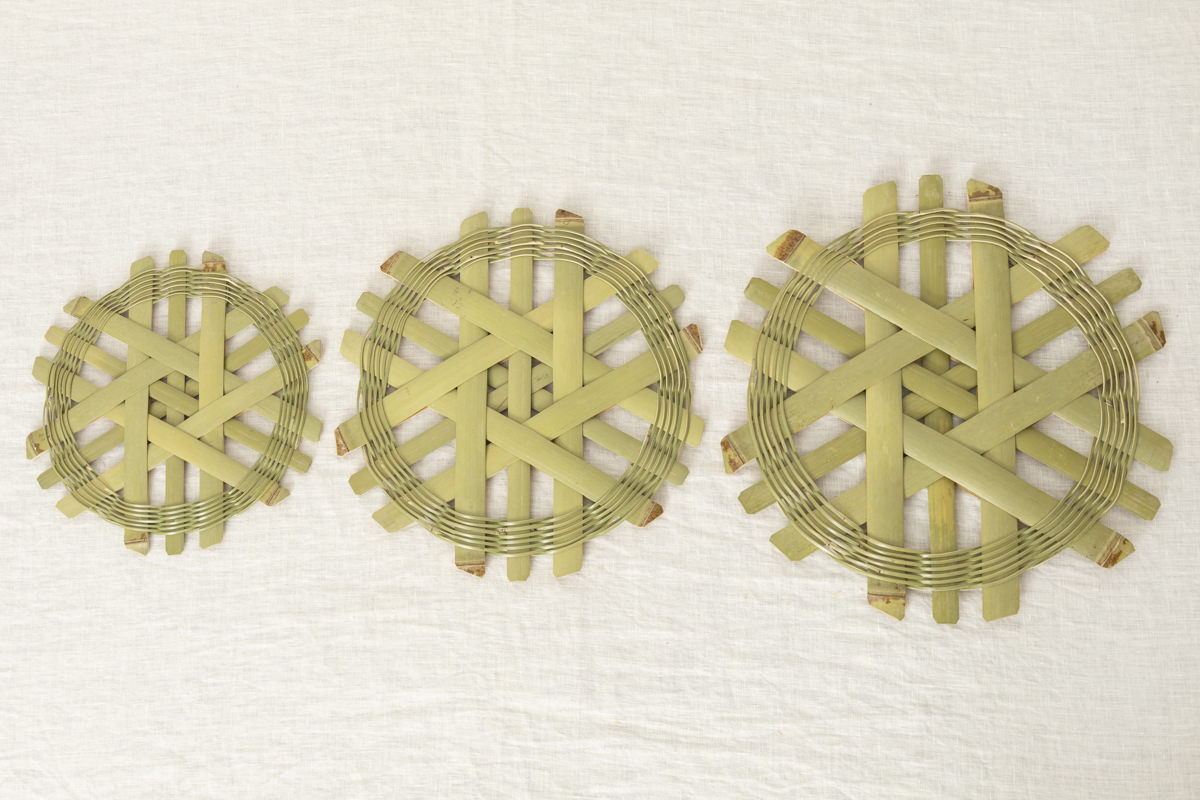
It is available in three sizes: Small, Medium, and Large.
This style of pot stand was originally made in parts of China and Korea as well.
Here, the form has been recreated using Japanese Madake bamboo, while also incorporating the maker’s own original techniques.
In China, it is said to be used by placing it inside a wok filled with simmering water, positioned just above the water line, where it serves like a steaming rack for cooking.
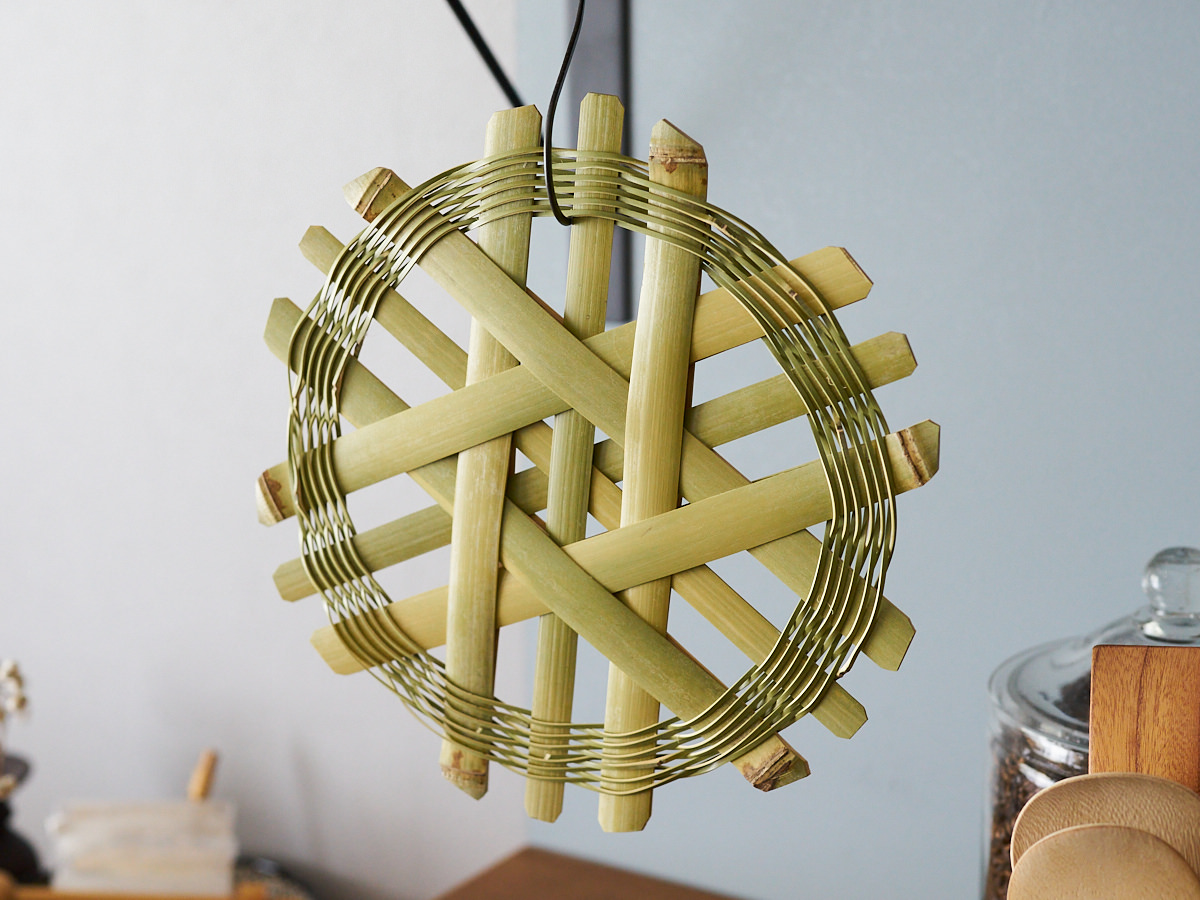
With its distinctive form, it is enjoyable to look at and may also serve as a wall-hung object. We introduce this pot stand in three sizes.
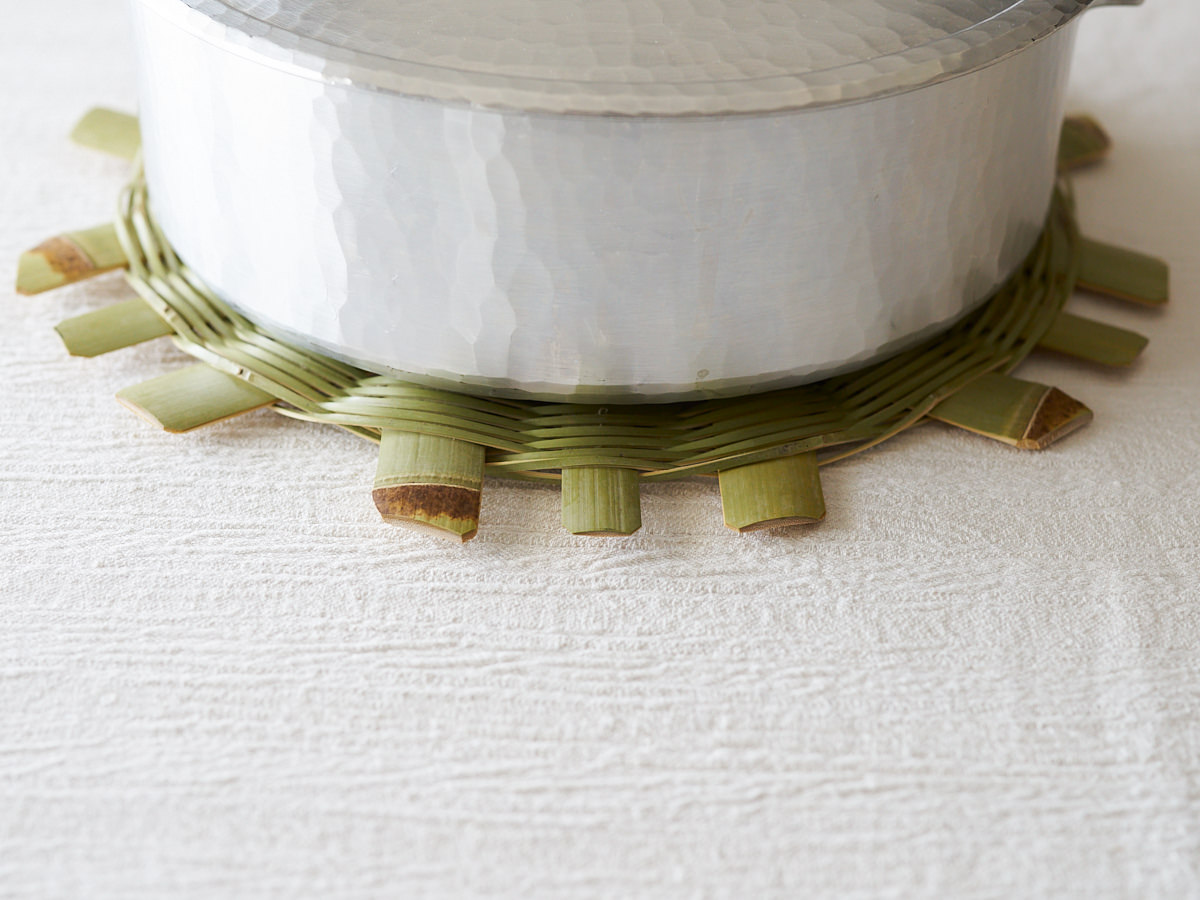
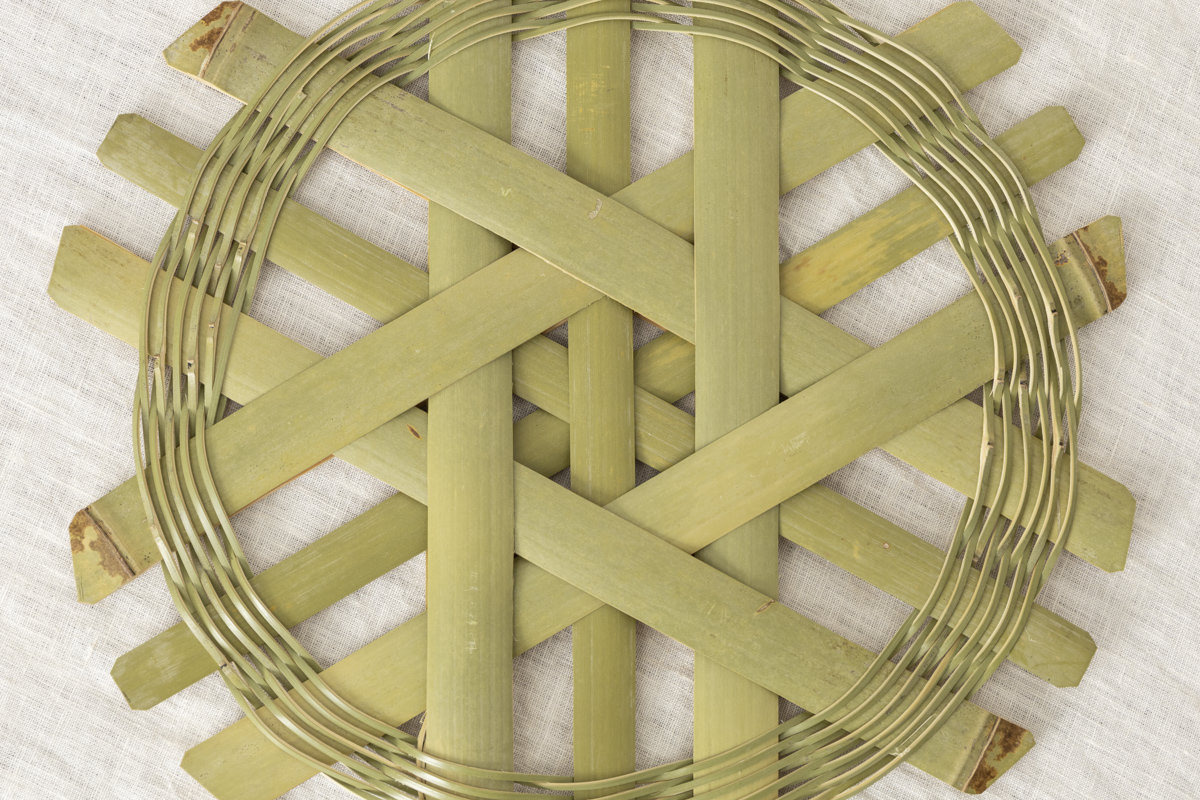
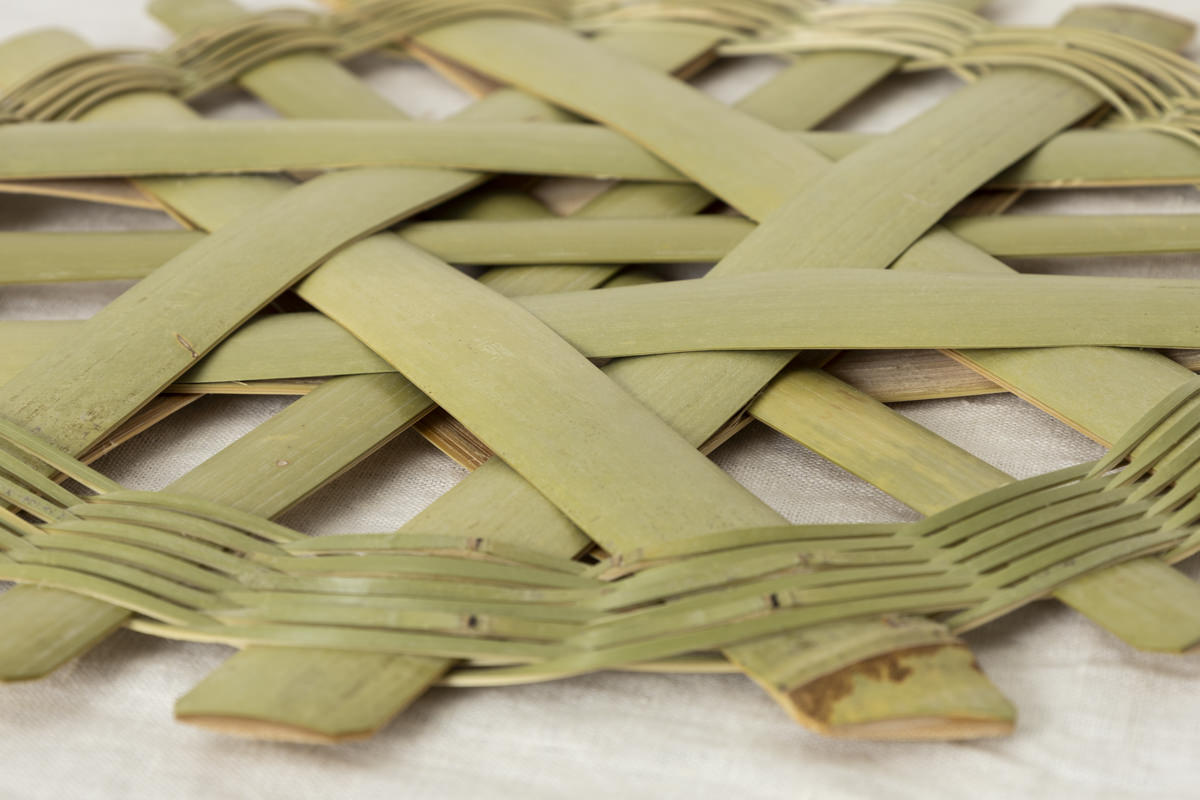
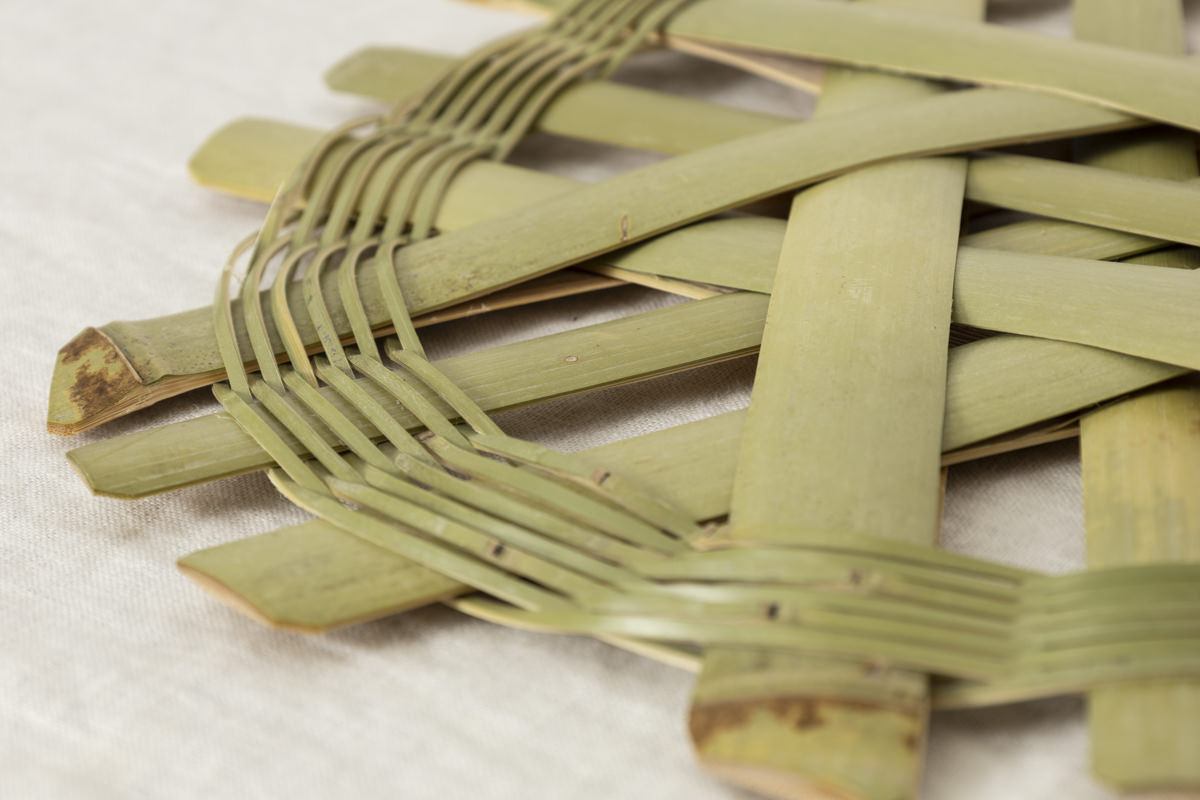
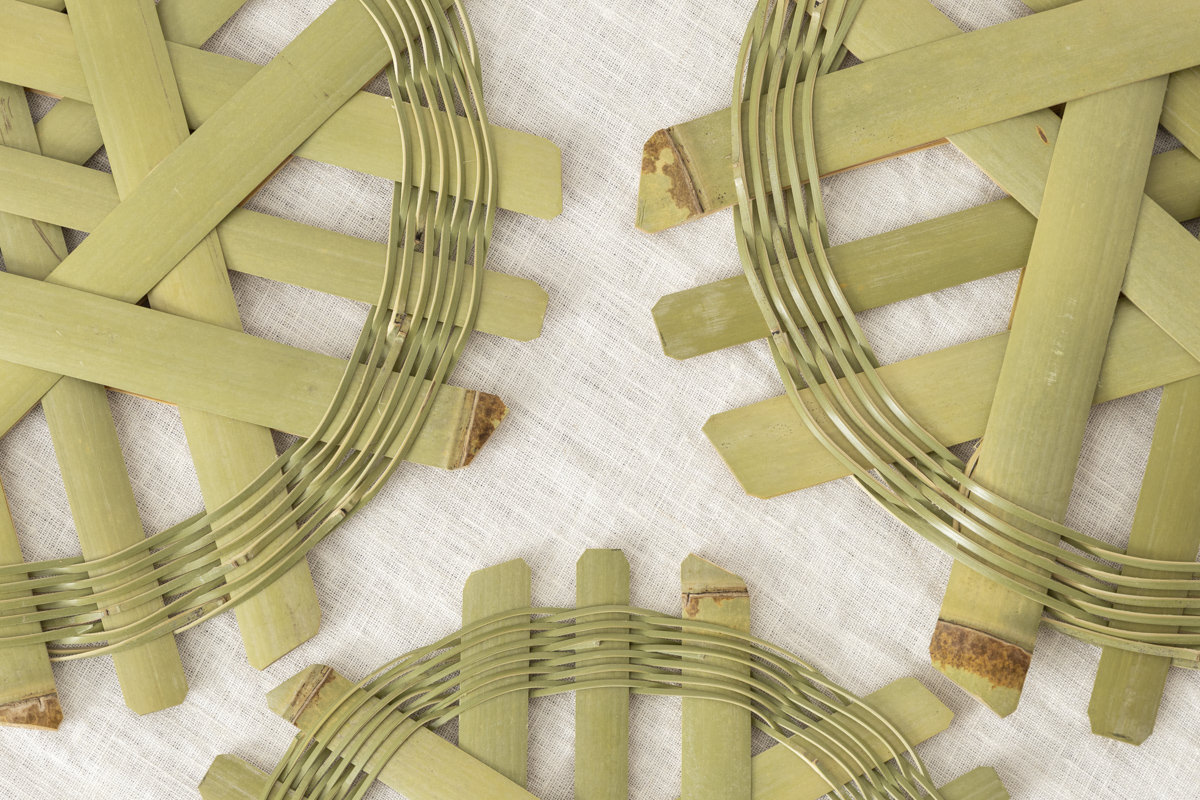
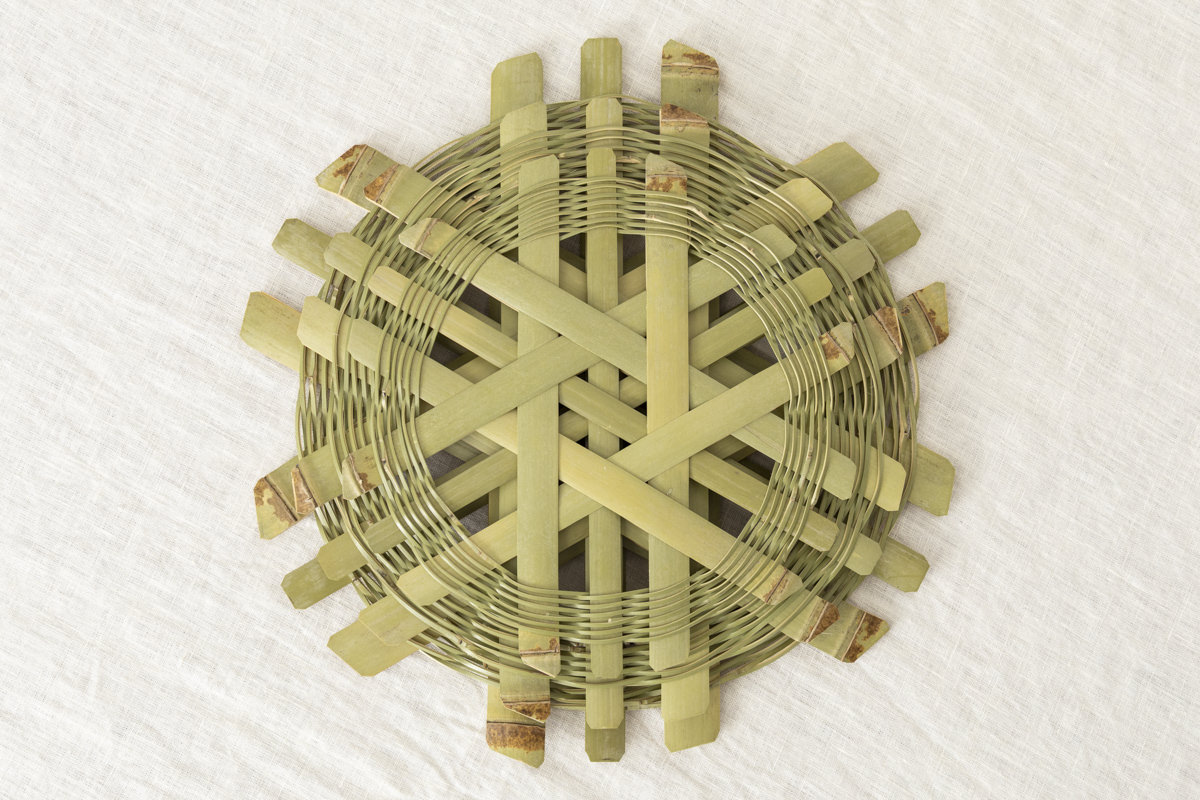
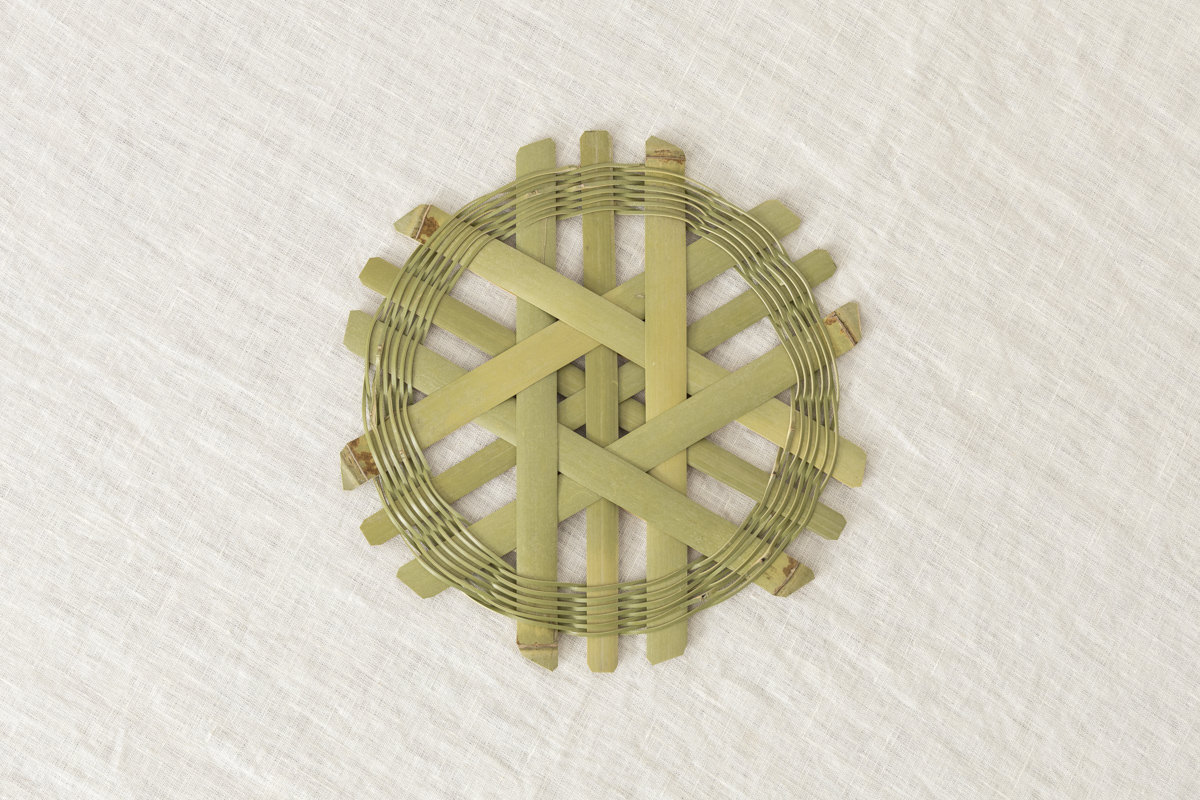
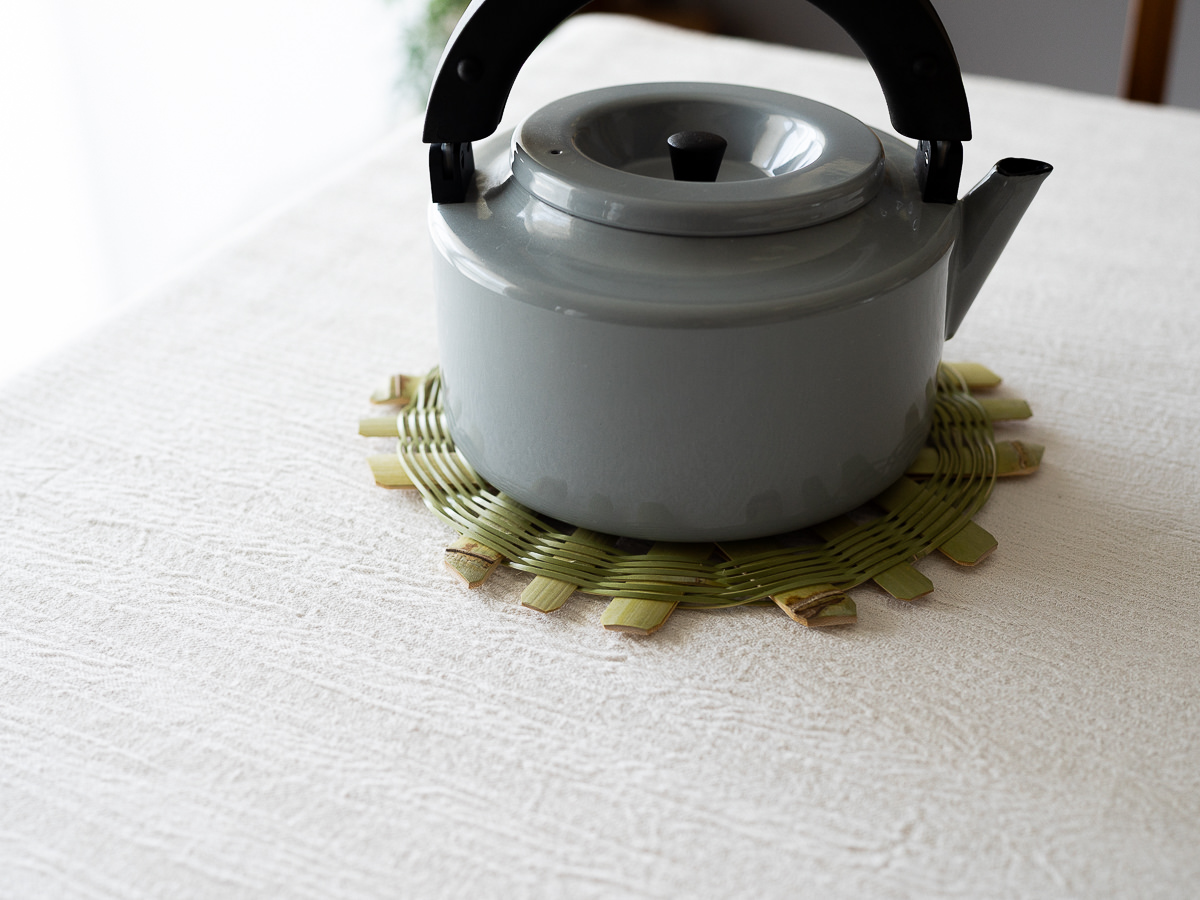
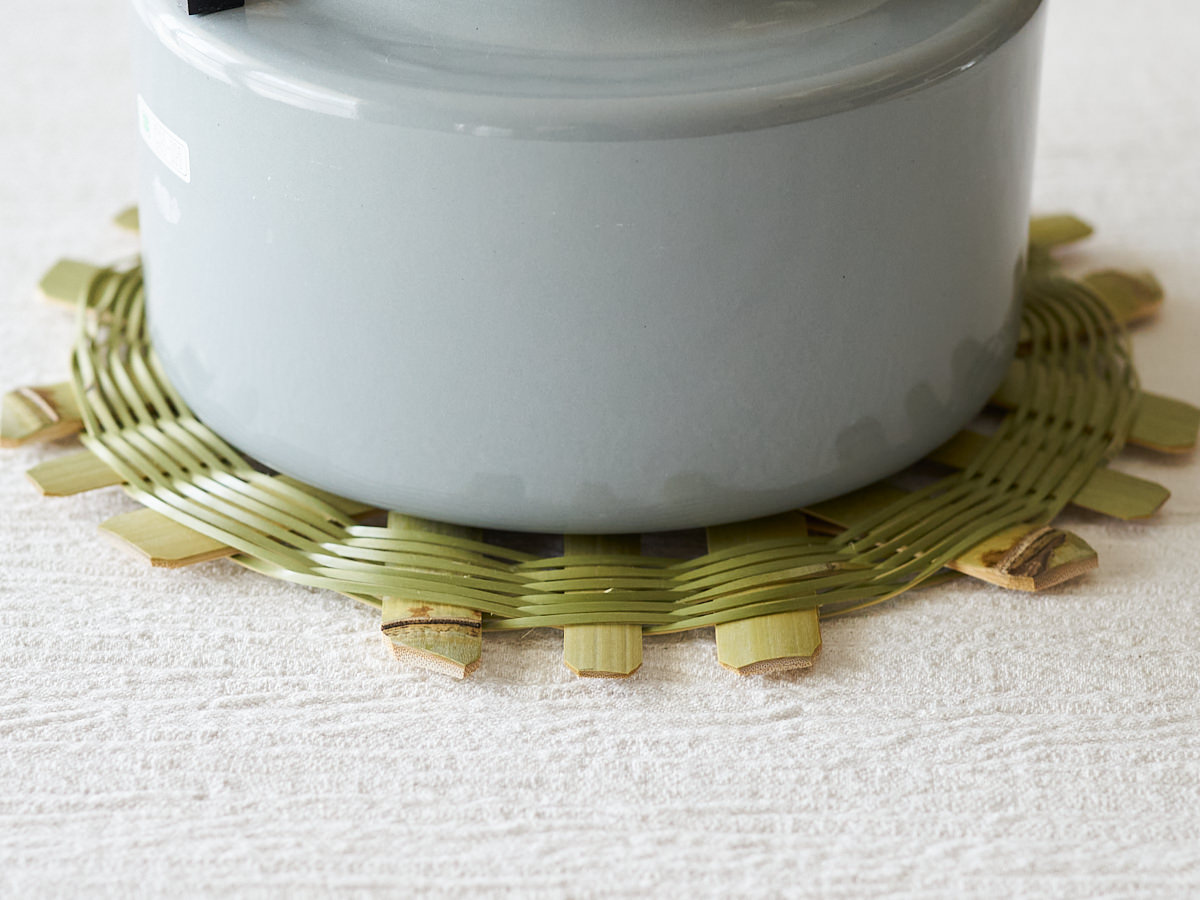
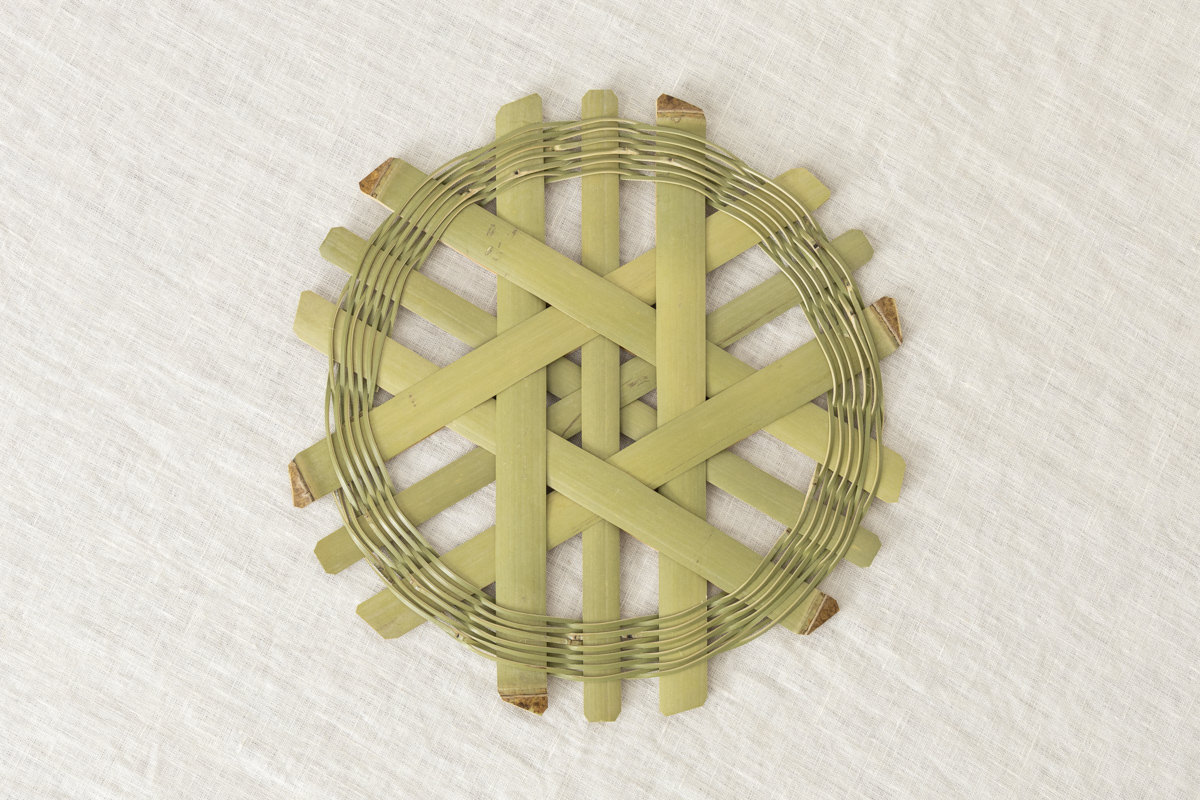
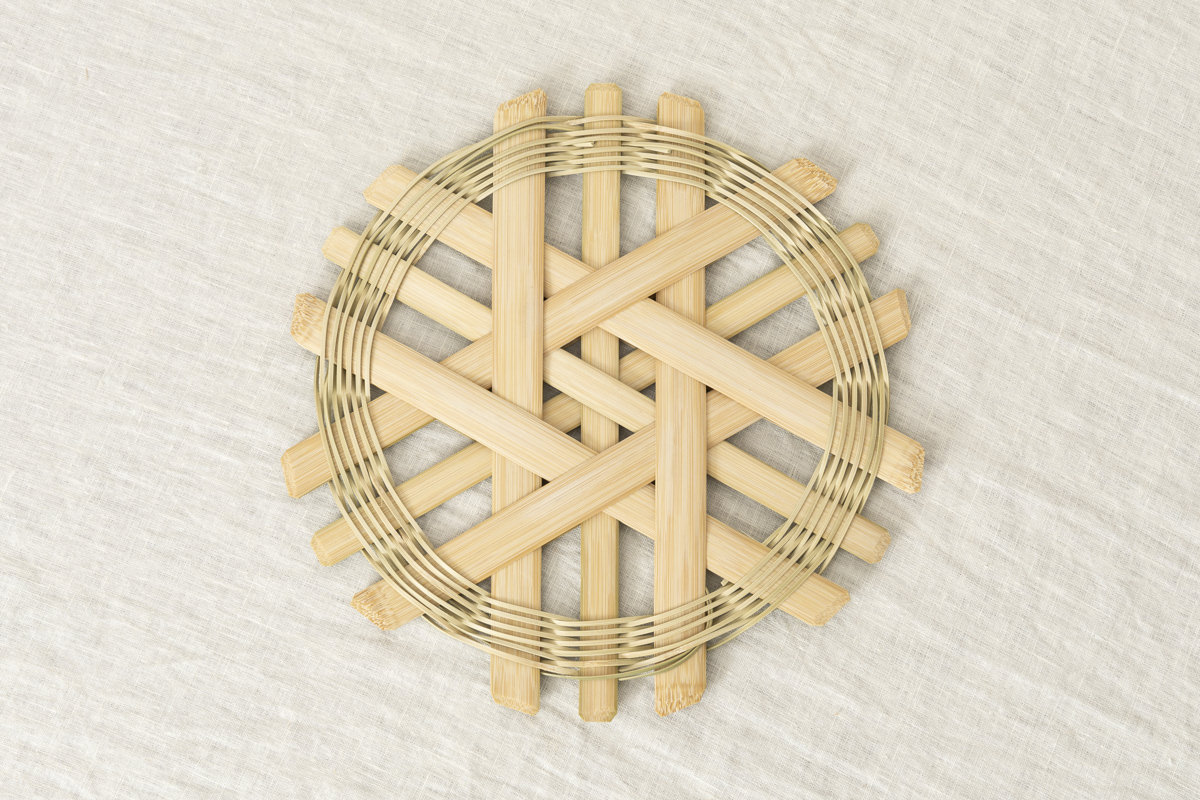
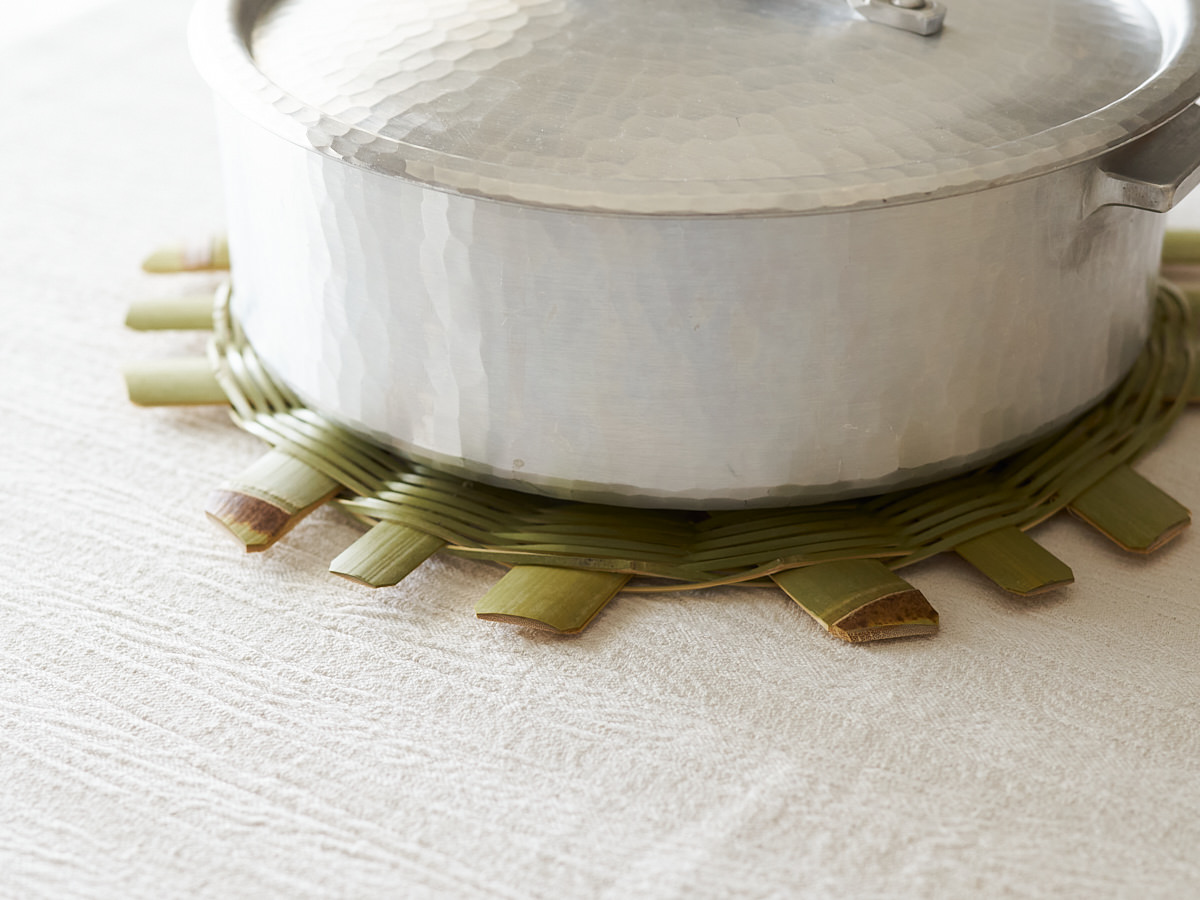
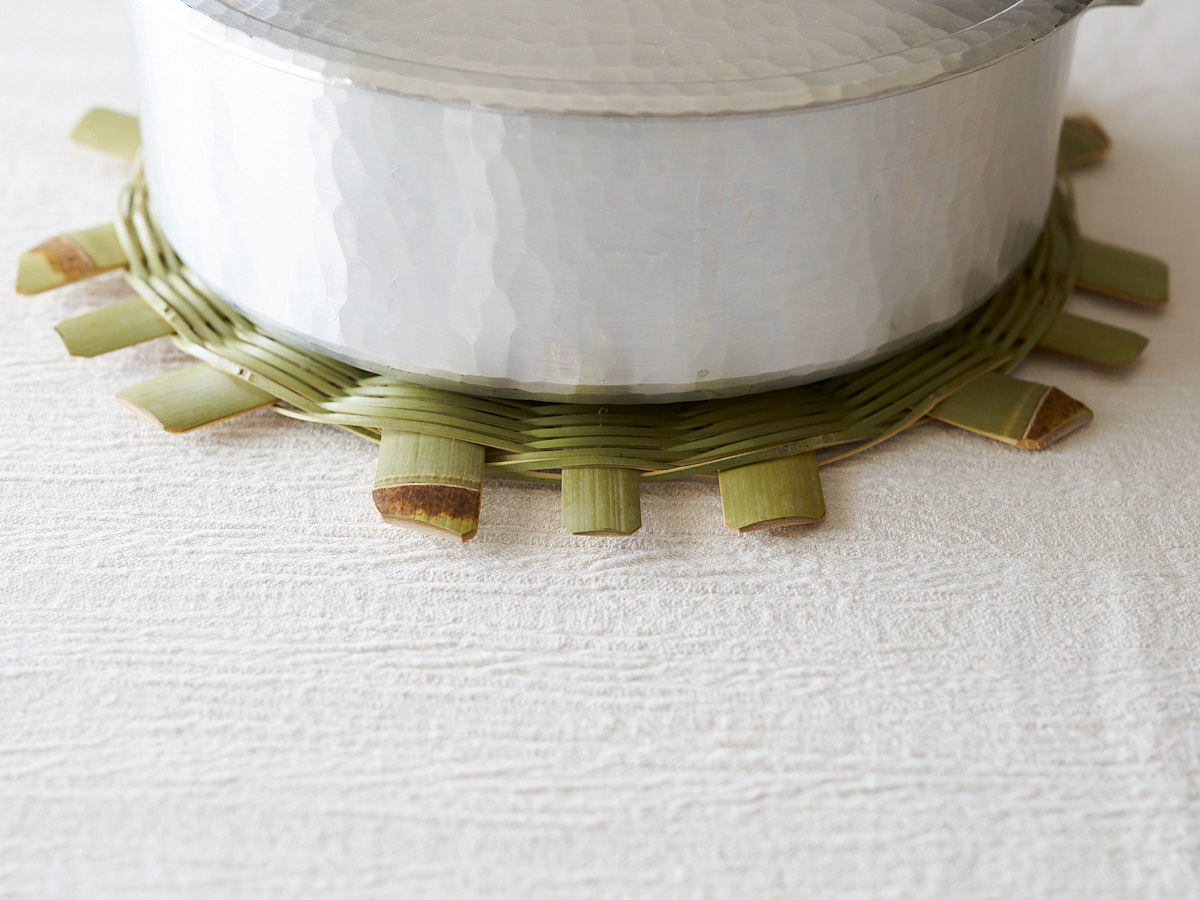
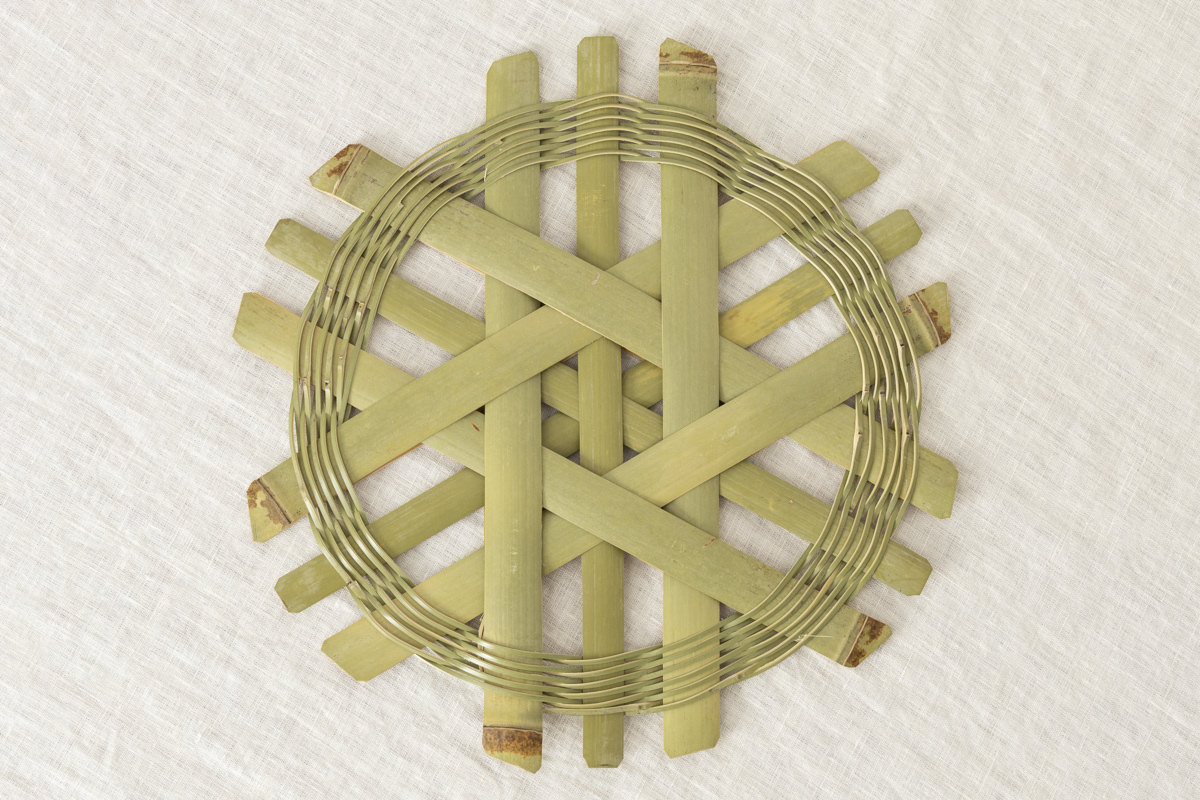
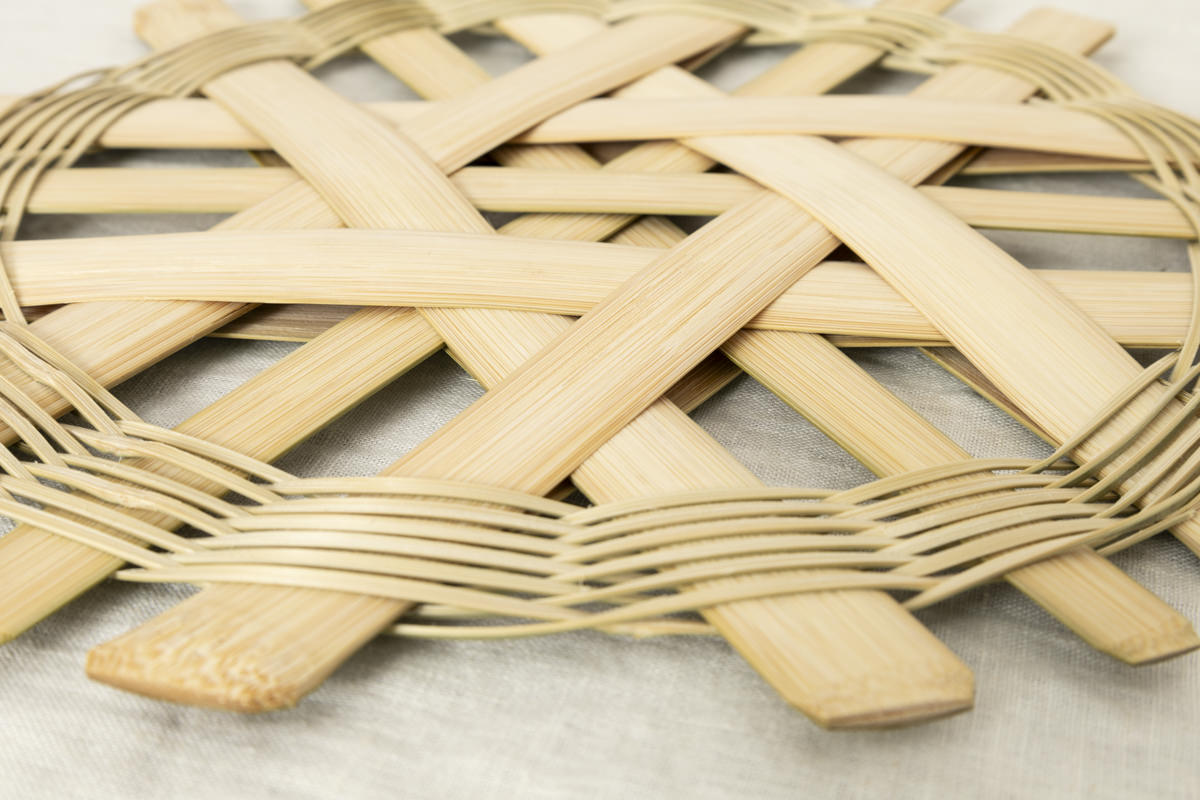
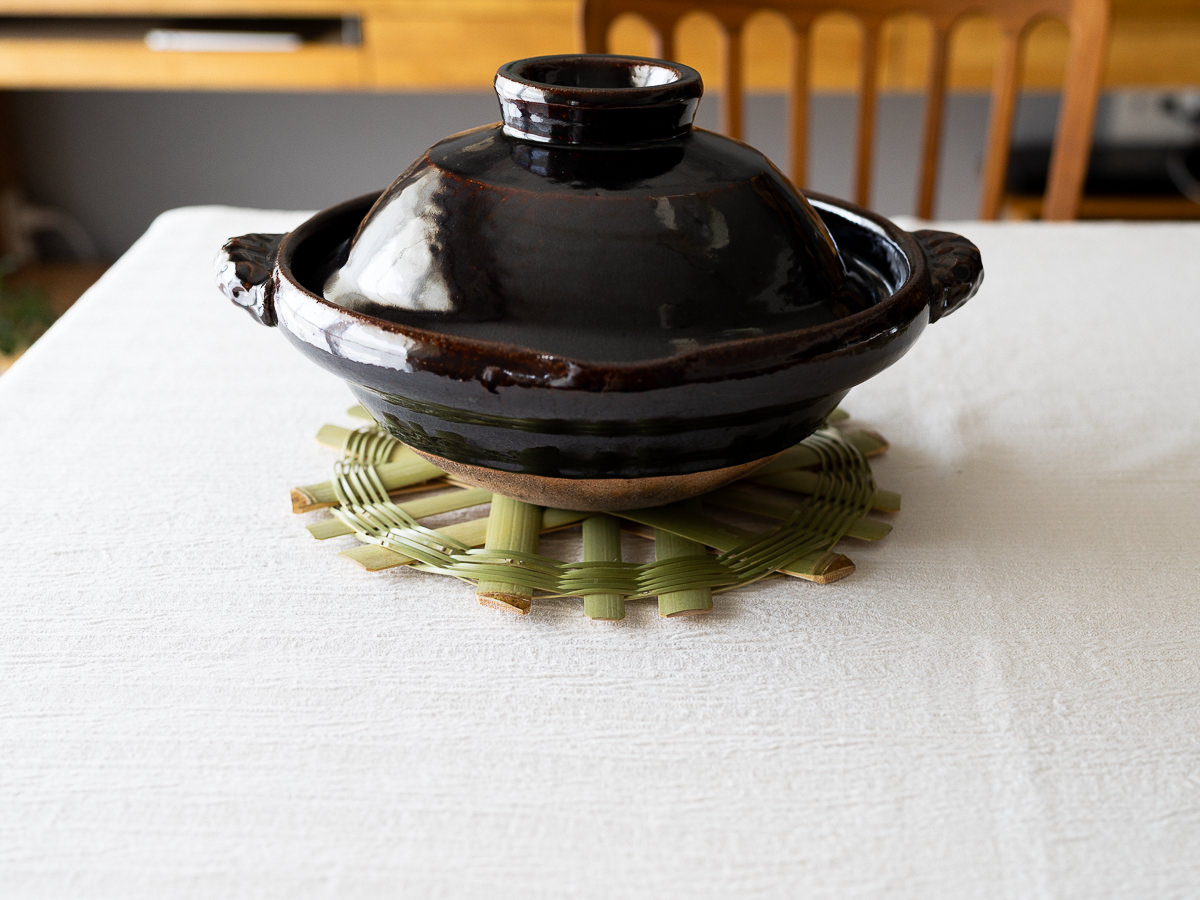
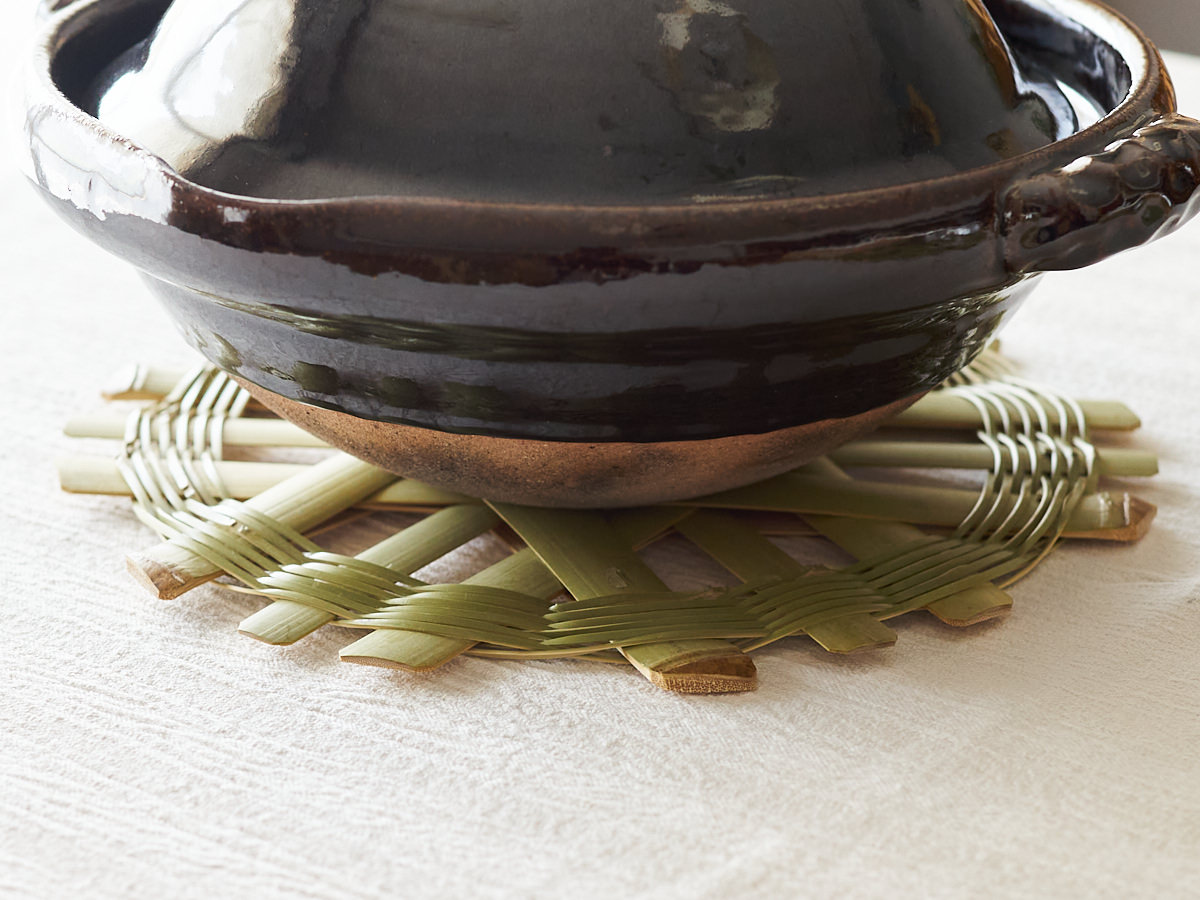
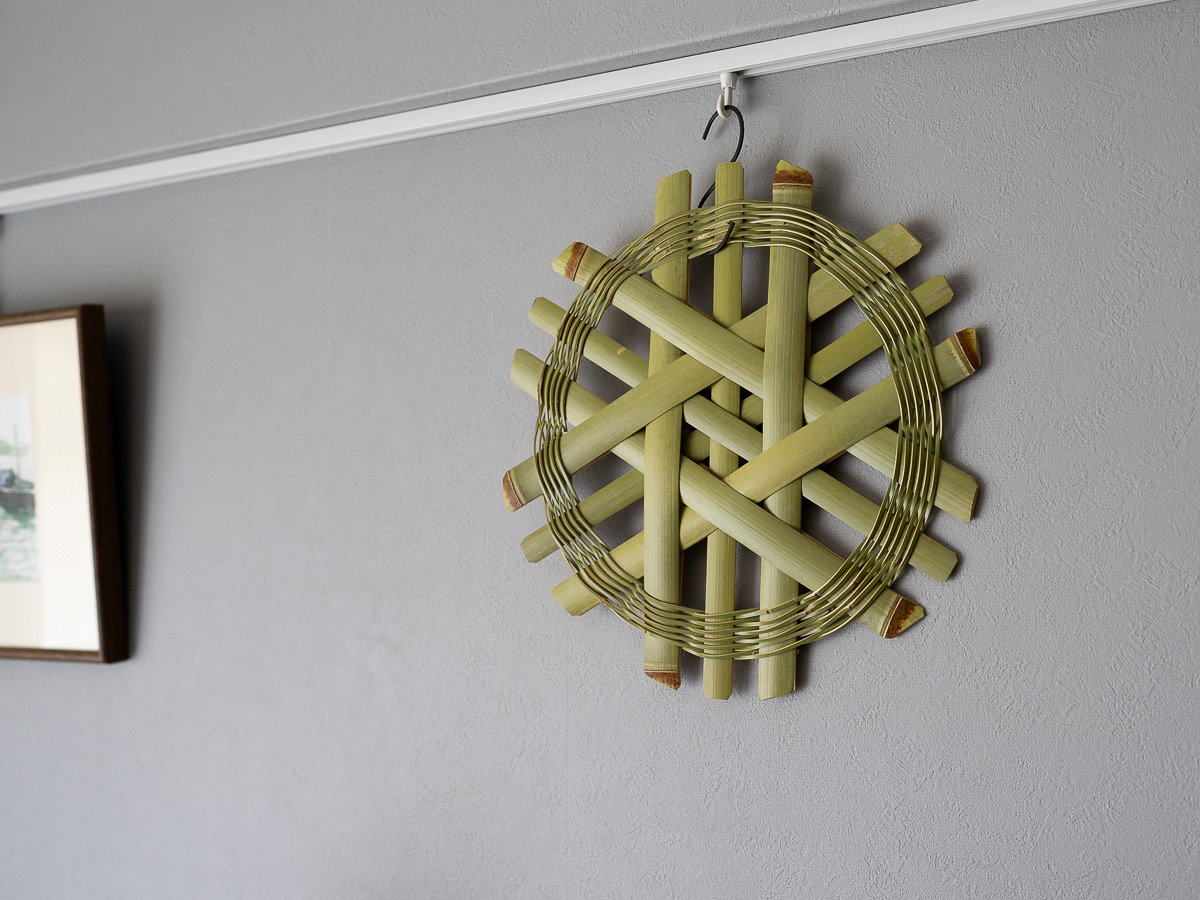
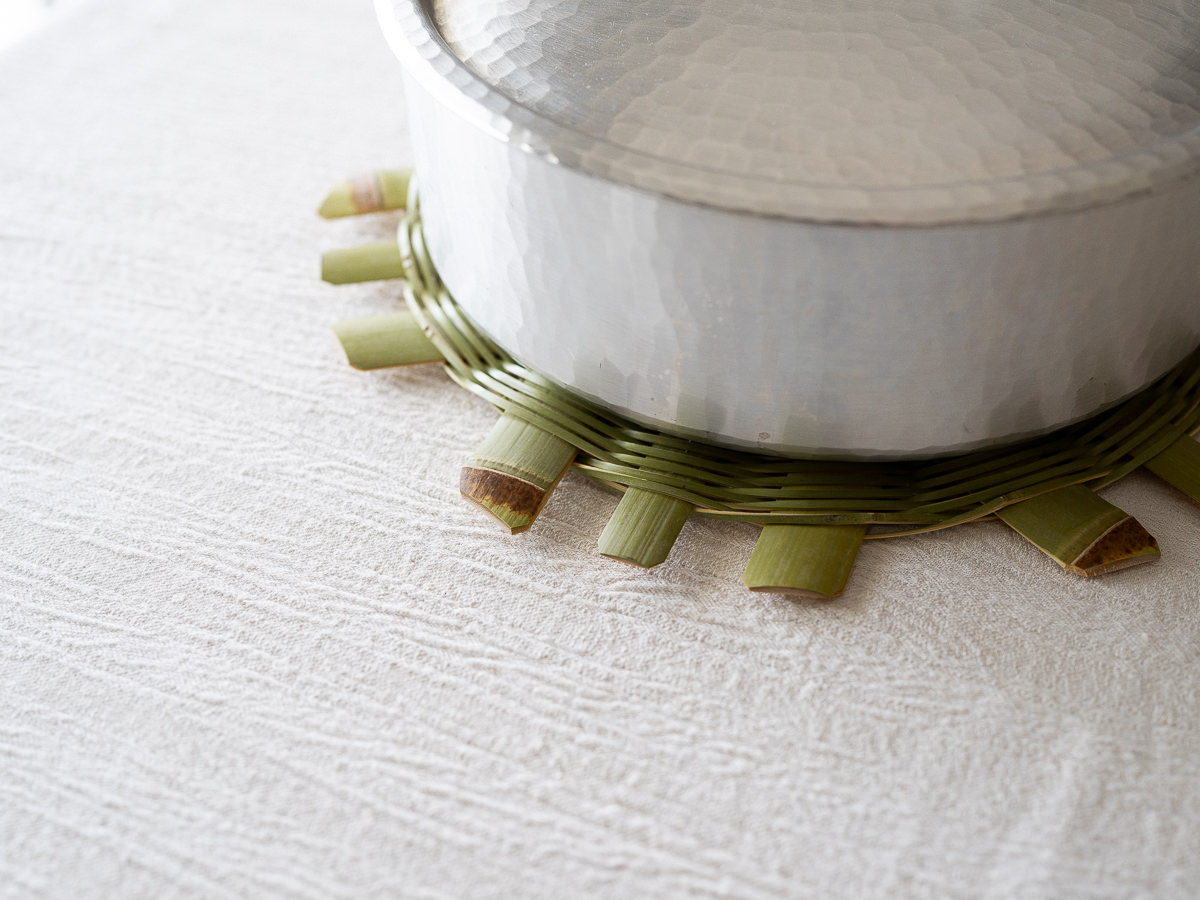
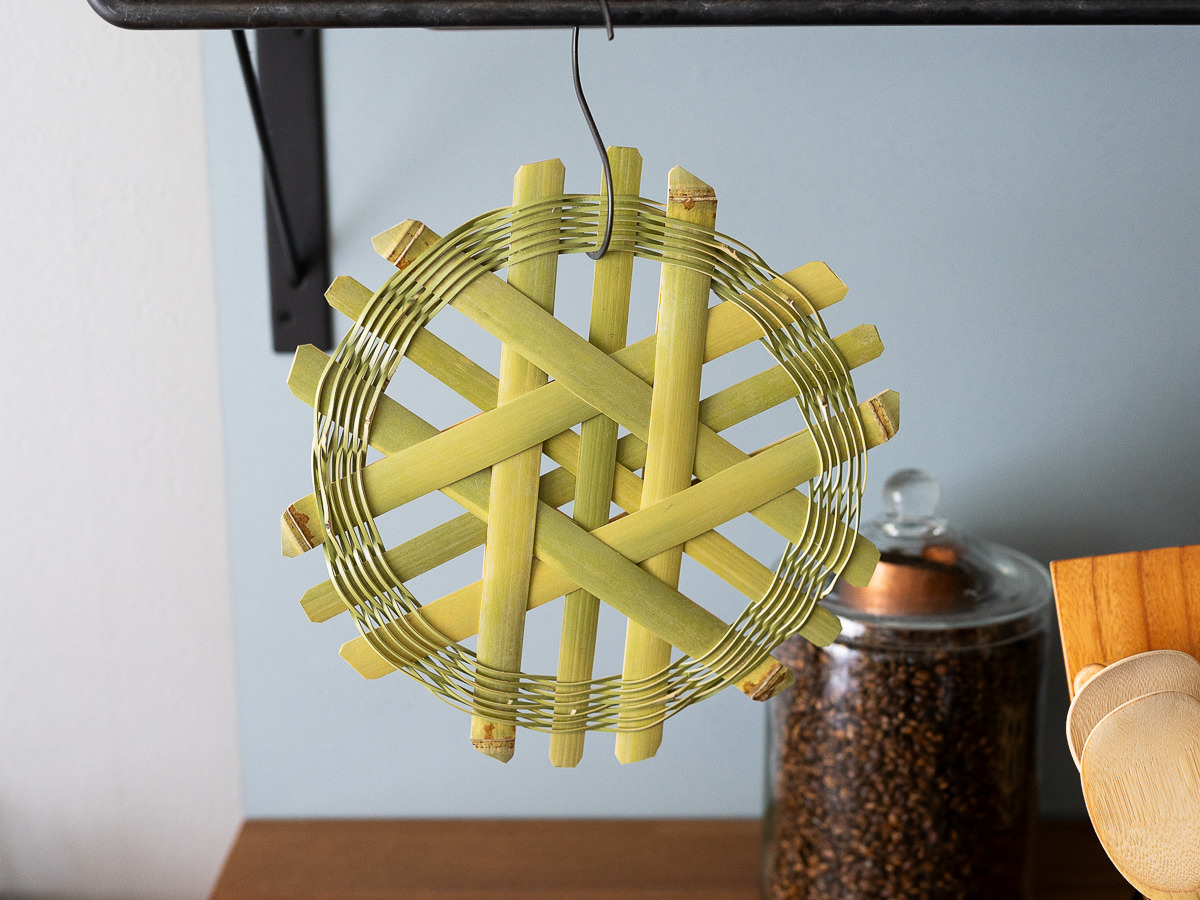
Each section is made from groups of three bamboo strips, carefully crossed and woven together so that the structure holds firmly in place.Seen from the side, the thicker middle section of the bamboo is split open, with another bamboo strip fitted through the center.Although the bamboo is split open, it does not extend all the way through the nodes. It has a curious structure, as though each piece of bamboo is holding the strength of the other in balance.Each size is carefully cut so that the ends form a clean circle when joined together.Each size has a beauty and clarity that invites you to keep looking at it.This is the Small size.Suitable for everyday kettles and small pots.Although it is the Small size, it is still slightly generous as a pot stand. We feel that allowing the bamboo ends to remain visible also suits the character of this piece.This is the Medium size.The reverse side is also finished with a smooth and beautiful texture.The Medium size is shown here holding a pot large enough for preparing miso soup or soup for the family.Even metal pots are gently supported by this pot stand.This is the Large size.In the Large size, the bamboo itself becomes thicker, giving it a more substantial presence.The Large size is shown here with a donabe earthenware pot placed on top. As this pot stand is woven by hand, the surface is not perfectly flat. Please place pots carefully at first, checking that they are resting in a stable position.As donabe earthenware pots become extremely hot, please allow them to cool slightly before placing them on the pot stand after removing them from the heat. If a donabe is transferred directly onto the stand immediately after prolonged heating, scorching may occur. Please use with sufficient care.
It can also be displayed on the wall and enjoyed as part of your interior.
The sheen of the bamboo surface and the fine strips circling around it— the texture of green bamboo is something soothing simply to look at.
Made entirely by weaving and joining bamboo without the use of wire or nails, this piece has a form full of quiet charm.
We would be happy if it could find a place in your daily life as well.
Baskets for Daily Life, Woven from Bamboo of Ashigara
The Ashigara region lies between Shizuoka and Kanagawa. Once an important point along the old Tokaido route, it remains a place where mountains, rivers, and water are still deeply present in everyday life.
To the north of the Ashigara Plain stretches the Tanzawa mountain range, while to the south lie Odawara and Sagami Bay. To the west, the mountains of Hakone and even Mt. Fuji can be seen in the distance. Fed by snowmelt flowing from Mt. Fuji and the Tanzawa mountains, the Sakawa River has long supported the region’s agricultural culture.
At the same time, the area has also lived alongside the powerful forces of nature— river flooding, volcanic ash from eruptions of Mt. Fuji, and mudslides.
The Madake bamboo that grows in Ashigara is said to produce long sections between the nodes, making it especially suitable for bamboo craft.
There is a maker who has continued working with bamboo from the foothills of Tanzawa and the outer rim of Hakone for many years. Entering this path at a young age, he has spent more than thirty years working closely with bamboo.
From creating original baskets, to reviving traditional basket forms that had disappeared in various regions, repairing finely crafted bamboo works, producing tools for local festivals, and even giving demonstrations overseas, his work supports a broad world of bamboo craft that extends beyond a single technique.
Using bamboo grown in the local landscape and skills cultivated over many years of handwork, he continues to create simple yet deeply expressive tools for daily life—forms that could only be made from bamboo.
Please note: This item ships from Japan. As the buyer, you are responsible for any import duties, customs fees, or local taxes that may be charged in your country. These costs are not included in the item price or shipping cost. Please check with your local customs authority if you are unsure about any potential charges before placing your order.
This is a pot stand made from green bamboo.
It is available in three sizes: Small, Medium, and Large.
This style of pot stand was originally made in parts of China and Korea as well.
Here, the form has been recreated using Japanese Madake bamboo, while also incorporating the maker’s own original techniques.
In China, it is said to be used by placing it inside a wok filled with simmering water, positioned just above the water line, where it serves like a steaming rack for cooking.
With its distinctive form, it is enjoyable to look at and may also serve as a wall-hung object. We introduce this pot stand in three sizes.
Each section is made from groups of three bamboo strips, carefully crossed and woven together so that the structure holds firmly in place.Seen from the side, the thicker middle section of the bamboo is split open, with another bamboo strip fitted through the center.Although the bamboo is split open, it does not extend all the way through the nodes. It has a curious structure, as though each piece of bamboo is holding the strength of the other in balance.Each size is carefully cut so that the ends form a clean circle when joined together.Each size has a beauty and clarity that invites you to keep looking at it.This is the Small size.Suitable for everyday kettles and small pots.Although it is the Small size, it is still slightly generous as a pot stand. We feel that allowing the bamboo ends to remain visible also suits the character of this piece.This is the Medium size.The reverse side is also finished with a smooth and beautiful texture.The Medium size is shown here holding a pot large enough for preparing miso soup or soup for the family.Even metal pots are gently supported by this pot stand.This is the Large size.In the Large size, the bamboo itself becomes thicker, giving it a more substantial presence.The Large size is shown here with a donabe earthenware pot placed on top. As this pot stand is woven by hand, the surface is not perfectly flat. Please place pots carefully at first, checking that they are resting in a stable position.As donabe earthenware pots become extremely hot, please allow them to cool slightly before placing them on the pot stand after removing them from the heat. If a donabe is transferred directly onto the stand immediately after prolonged heating, scorching may occur. Please use with sufficient care.
It can also be displayed on the wall and enjoyed as part of your interior.
The sheen of the bamboo surface and the fine strips circling around it— the texture of green bamboo is something soothing simply to look at.
Made entirely by weaving and joining bamboo without the use of wire or nails, this piece has a form full of quiet charm.
We would be happy if it could find a place in your daily life as well.
Baskets for Daily Life, Woven from Bamboo of Ashigara
The Ashigara region lies between Shizuoka and Kanagawa. Once an important point along the old Tokaido route, it remains a place where mountains, rivers, and water are still deeply present in everyday life.
To the north of the Ashigara Plain stretches the Tanzawa mountain range, while to the south lie Odawara and Sagami Bay. To the west, the mountains of Hakone and even Mt. Fuji can be seen in the distance. Fed by snowmelt flowing from Mt. Fuji and the Tanzawa mountains, the Sakawa River has long supported the region’s agricultural culture.
At the same time, the area has also lived alongside the powerful forces of nature— river flooding, volcanic ash from eruptions of Mt. Fuji, and mudslides.
The Madake bamboo that grows in Ashigara is said to produce long sections between the nodes, making it especially suitable for bamboo craft.
There is a maker who has continued working with bamboo from the foothills of Tanzawa and the outer rim of Hakone for many years. Entering this path at a young age, he has spent more than thirty years working closely with bamboo.
From creating original baskets, to reviving traditional basket forms that had disappeared in various regions, repairing finely crafted bamboo works, producing tools for local festivals, and even giving demonstrations overseas, his work supports a broad world of bamboo craft that extends beyond a single technique.
Using bamboo grown in the local landscape and skills cultivated over many years of handwork, he continues to create simple yet deeply expressive tools for daily life—forms that could only be made from bamboo.
Please note: This item ships from Japan. As the buyer, you are responsible for any import duties, customs fees, or local taxes that may be charged in your country. These costs are not included in the item price or shipping cost. Please check with your local customs authority if you are unsure about any potential charges before placing your order.
This is a pot stand made from green bamboo.
It is available in three sizes: Small, Medium, and Large.
This style of pot stand was originally made in parts of China and Korea as well.
Here, the form has been recreated using Japanese Madake bamboo, while also incorporating the maker’s own original techniques.
In China, it is said to be used by placing it inside a wok filled with simmering water, positioned just above the water line, where it serves like a steaming rack for cooking.
With its distinctive form, it is enjoyable to look at and may also serve as a wall-hung object. We introduce this pot stand in three sizes.
Each section is made from groups of three bamboo strips, carefully crossed and woven together so that the structure holds firmly in place.Seen from the side, the thicker middle section of the bamboo is split open, with another bamboo strip fitted through the center.Although the bamboo is split open, it does not extend all the way through the nodes. It has a curious structure, as though each piece of bamboo is holding the strength of the other in balance.Each size is carefully cut so that the ends form a clean circle when joined together.Each size has a beauty and clarity that invites you to keep looking at it.This is the Small size.Suitable for everyday kettles and small pots.Although it is the Small size, it is still slightly generous as a pot stand. We feel that allowing the bamboo ends to remain visible also suits the character of this piece.This is the Medium size.The reverse side is also finished with a smooth and beautiful texture.The Medium size is shown here holding a pot large enough for preparing miso soup or soup for the family.Even metal pots are gently supported by this pot stand.This is the Large size.In the Large size, the bamboo itself becomes thicker, giving it a more substantial presence.The Large size is shown here with a donabe earthenware pot placed on top. As this pot stand is woven by hand, the surface is not perfectly flat. Please place pots carefully at first, checking that they are resting in a stable position.As donabe earthenware pots become extremely hot, please allow them to cool slightly before placing them on the pot stand after removing them from the heat. If a donabe is transferred directly onto the stand immediately after prolonged heating, scorching may occur. Please use with sufficient care.
It can also be displayed on the wall and enjoyed as part of your interior.
The sheen of the bamboo surface and the fine strips circling around it— the texture of green bamboo is something soothing simply to look at.
Made entirely by weaving and joining bamboo without the use of wire or nails, this piece has a form full of quiet charm.
We would be happy if it could find a place in your daily life as well.
Baskets for Daily Life, Woven from Bamboo of Ashigara
The Ashigara region lies between Shizuoka and Kanagawa. Once an important point along the old Tokaido route, it remains a place where mountains, rivers, and water are still deeply present in everyday life.
To the north of the Ashigara Plain stretches the Tanzawa mountain range, while to the south lie Odawara and Sagami Bay. To the west, the mountains of Hakone and even Mt. Fuji can be seen in the distance. Fed by snowmelt flowing from Mt. Fuji and the Tanzawa mountains, the Sakawa River has long supported the region’s agricultural culture.
At the same time, the area has also lived alongside the powerful forces of nature— river flooding, volcanic ash from eruptions of Mt. Fuji, and mudslides.
The Madake bamboo that grows in Ashigara is said to produce long sections between the nodes, making it especially suitable for bamboo craft.
There is a maker who has continued working with bamboo from the foothills of Tanzawa and the outer rim of Hakone for many years. Entering this path at a young age, he has spent more than thirty years working closely with bamboo.
From creating original baskets, to reviving traditional basket forms that had disappeared in various regions, repairing finely crafted bamboo works, producing tools for local festivals, and even giving demonstrations overseas, his work supports a broad world of bamboo craft that extends beyond a single technique.
Using bamboo grown in the local landscape and skills cultivated over many years of handwork, he continues to create simple yet deeply expressive tools for daily life—forms that could only be made from bamboo.
Please note: This item ships from Japan. As the buyer, you are responsible for any import duties, customs fees, or local taxes that may be charged in your country. These costs are not included in the item price or shipping cost. Please check with your local customs authority if you are unsure about any potential charges before placing your order.