Handheld Basket “Tiny Checker with Inner-Bark Rim and Handle” / Walnut Bark / Iwate-JPN 1510768 岩手県/くるみ 手提 tiny チェック市松 縁手裏皮
Handheld Basket “Tiny Checker with Inner-Bark Rim and Handle” / Walnut Bark / Iwate-JPN 1510768 岩手県/くるみ 手提 tiny チェック市松 縁手裏皮
This handheld basket is woven using the bark of sawagurumi (Japanese walnut).
The bark of walnut trees is harvested at its peak from spring through the rainy season, when the material is rich with moisture.
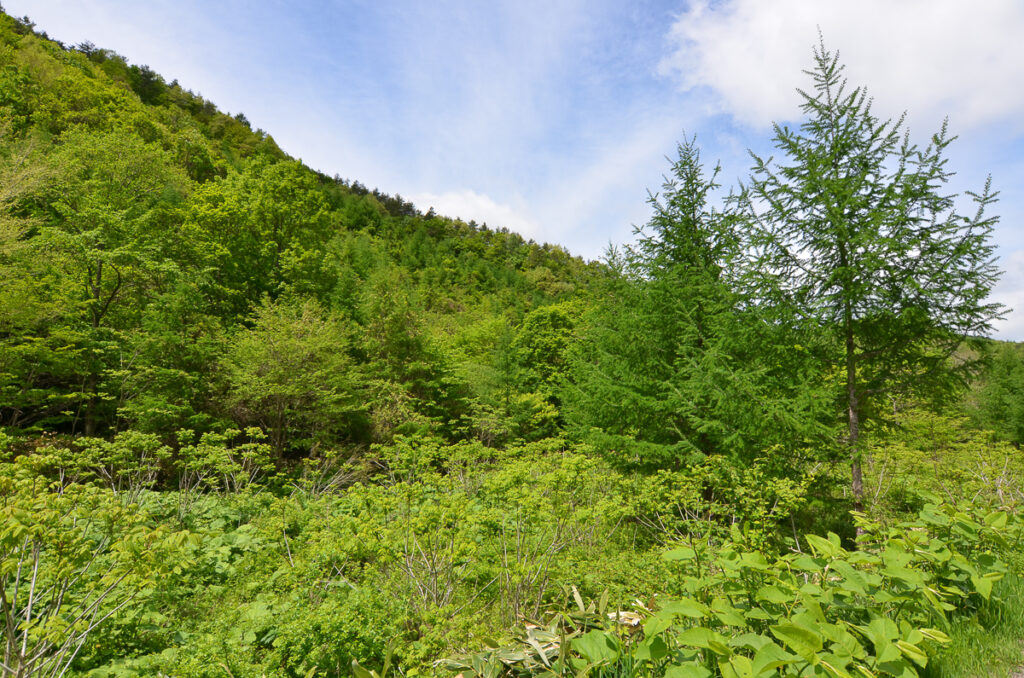
Sawagurumi, as its name suggests, is a species of walnut that grows naturally along mountain streams and shallow valleys.
Unlike yamagurumi, which grows in the mountains, the nuts of sawagurumi are not used for food. Instead, the tree has the characteristic of letting its seeds travel downstream, carried away by the flow of nearby streams.
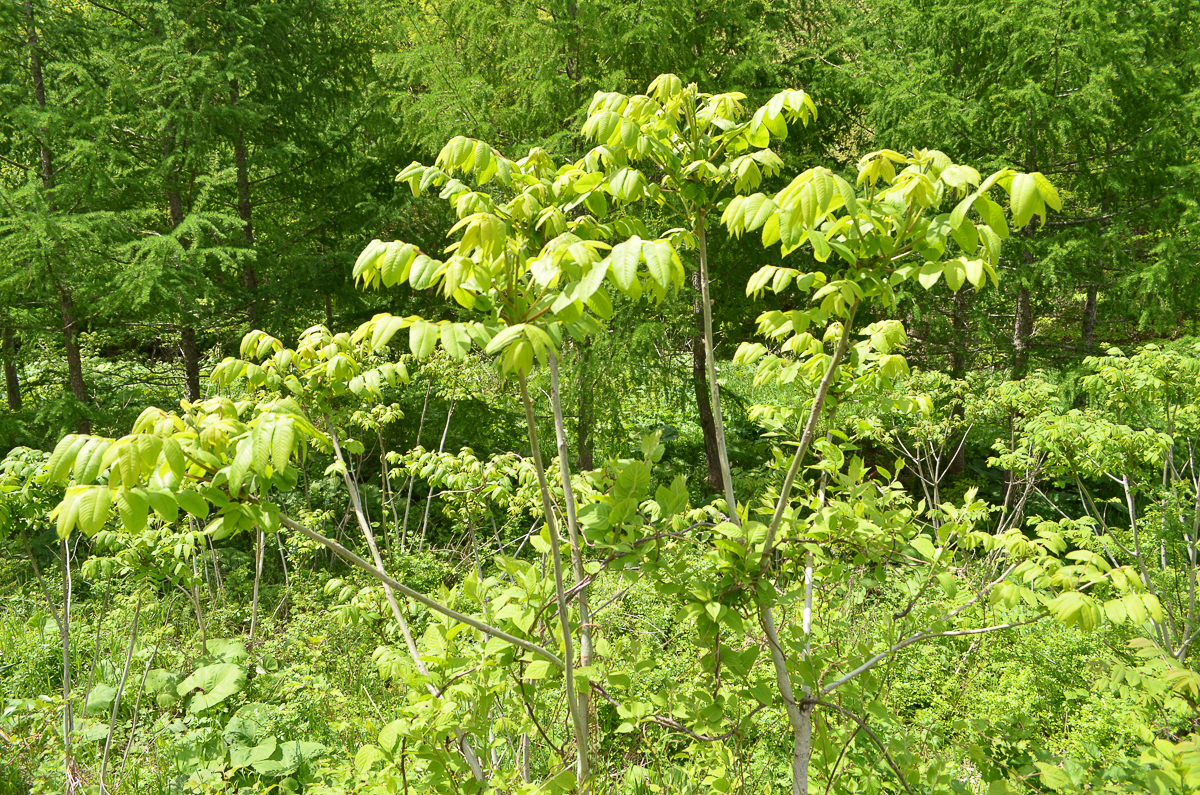
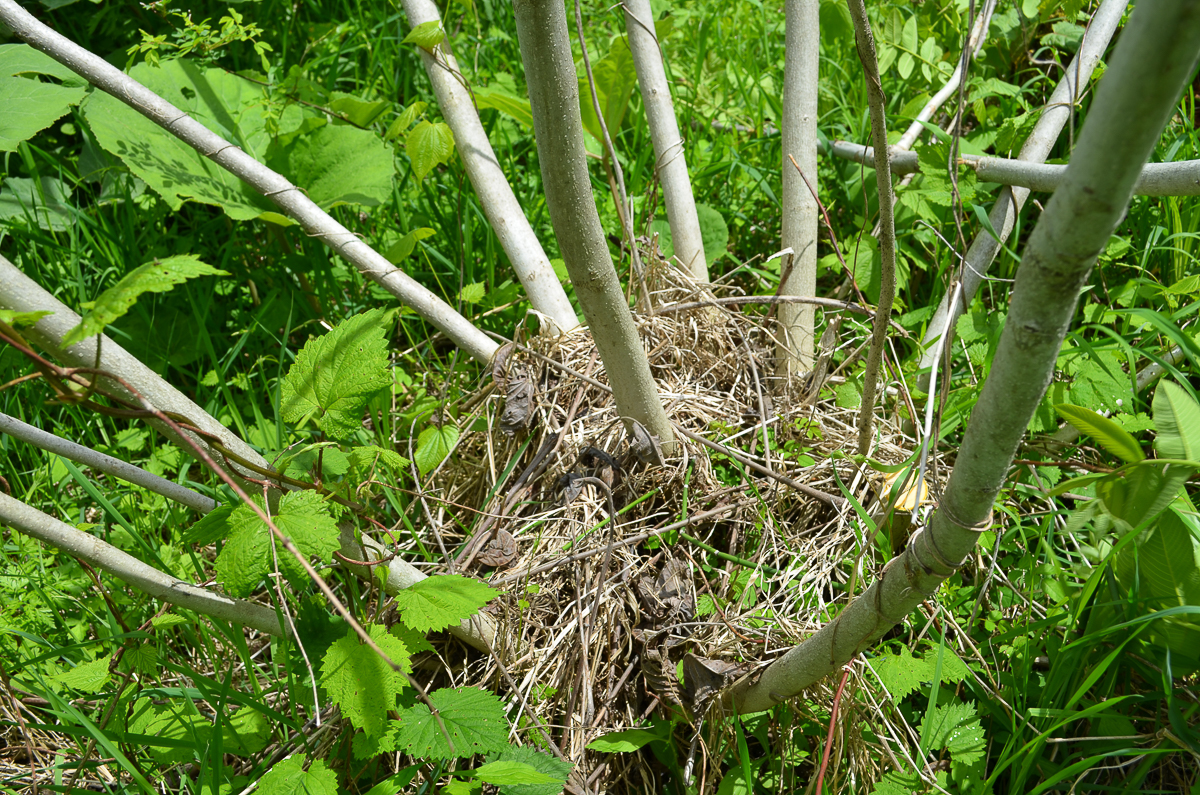
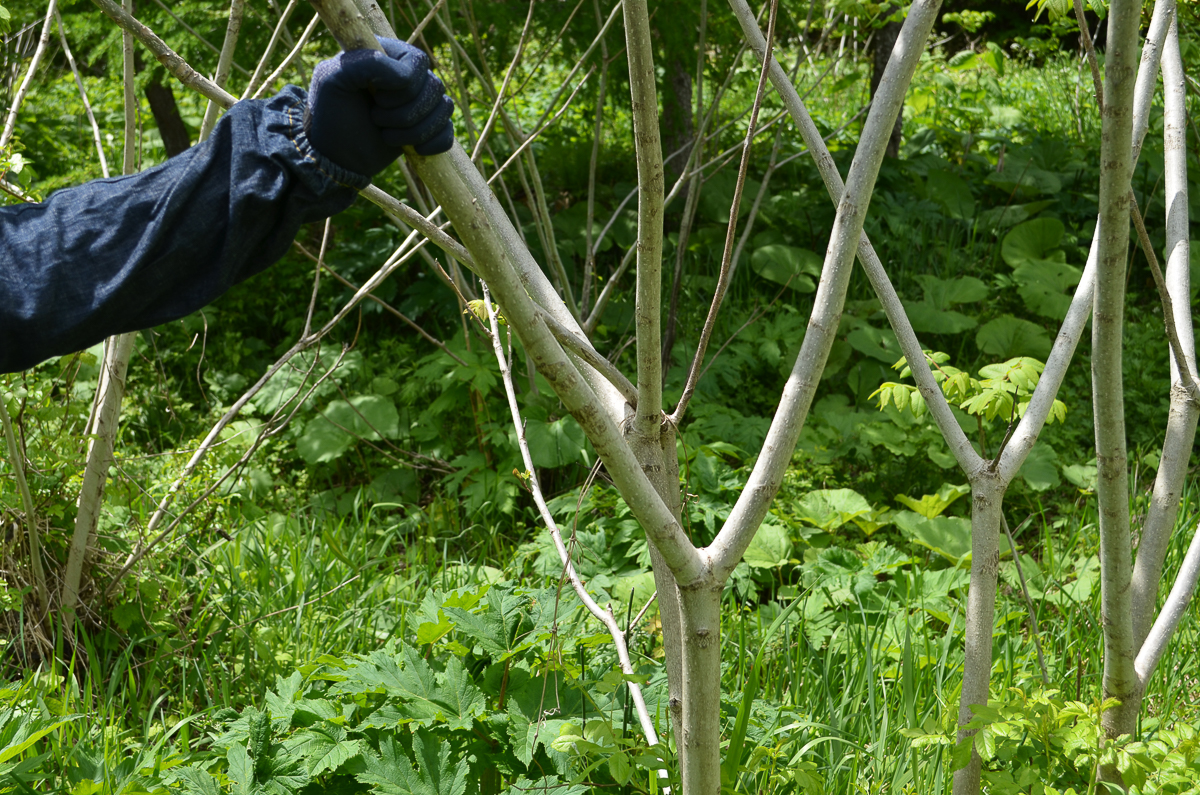
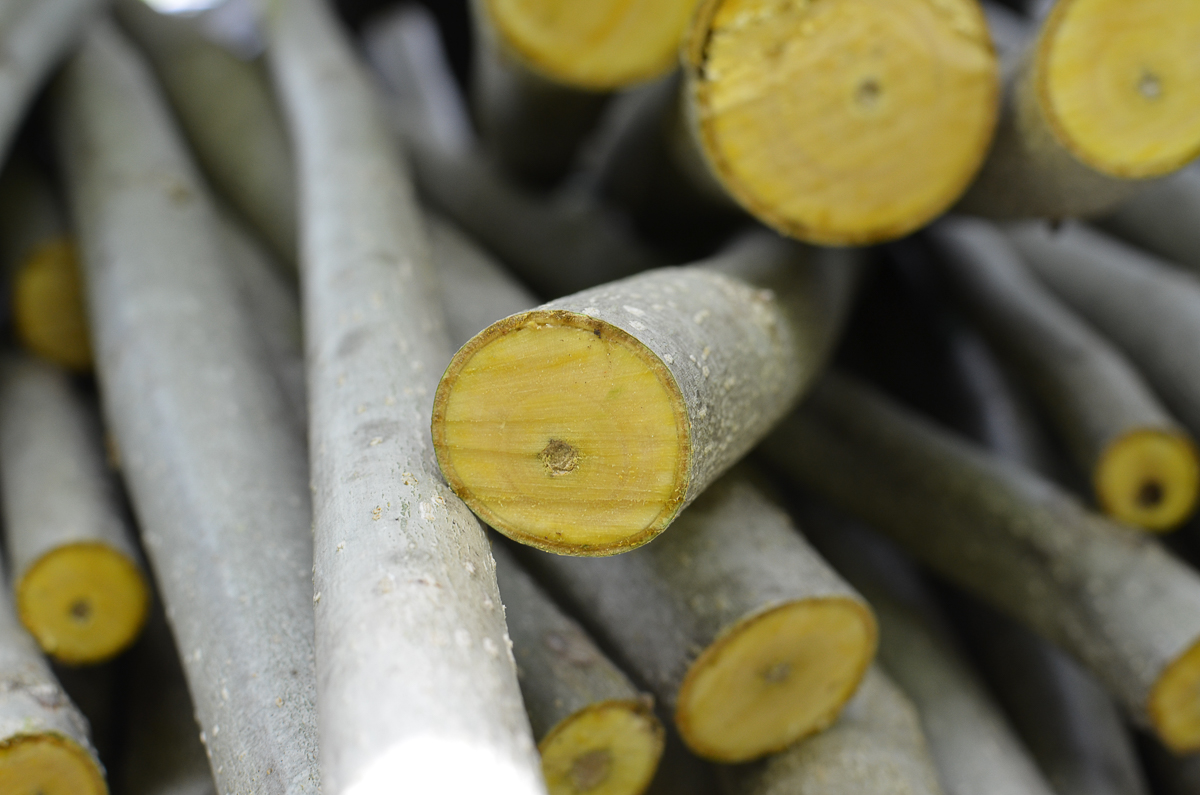
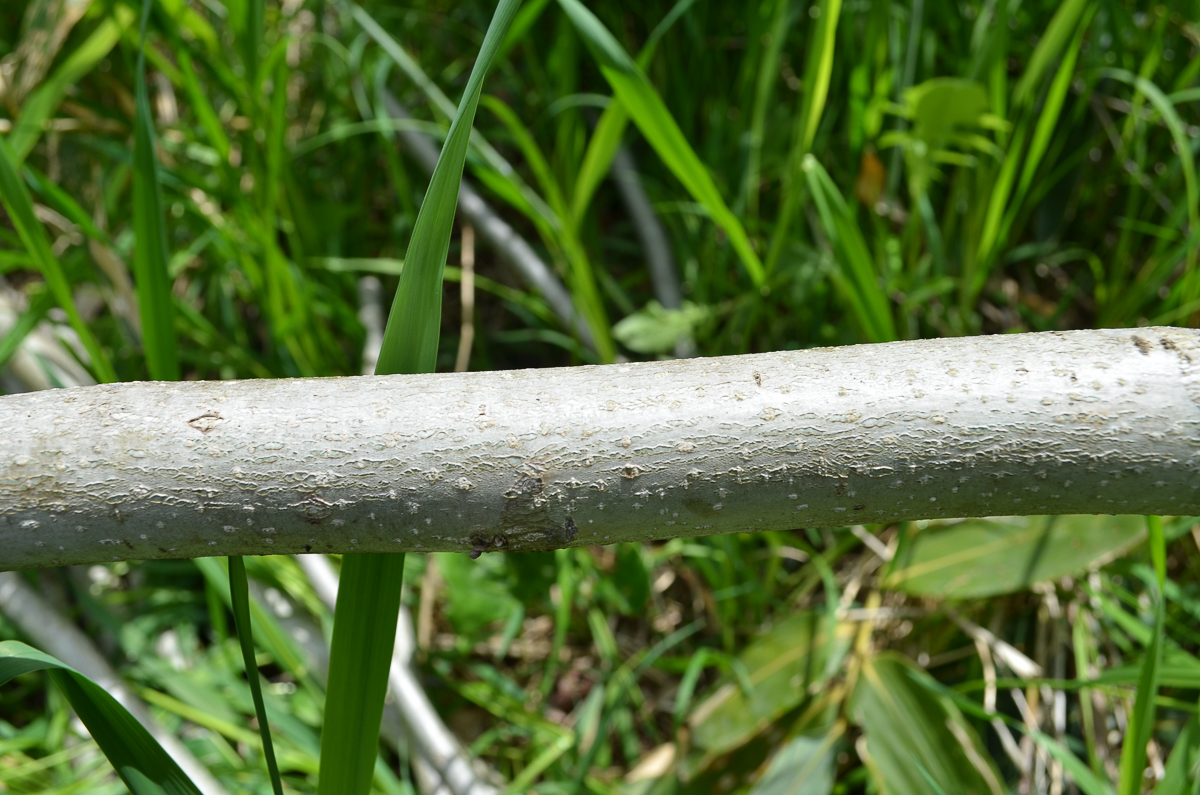
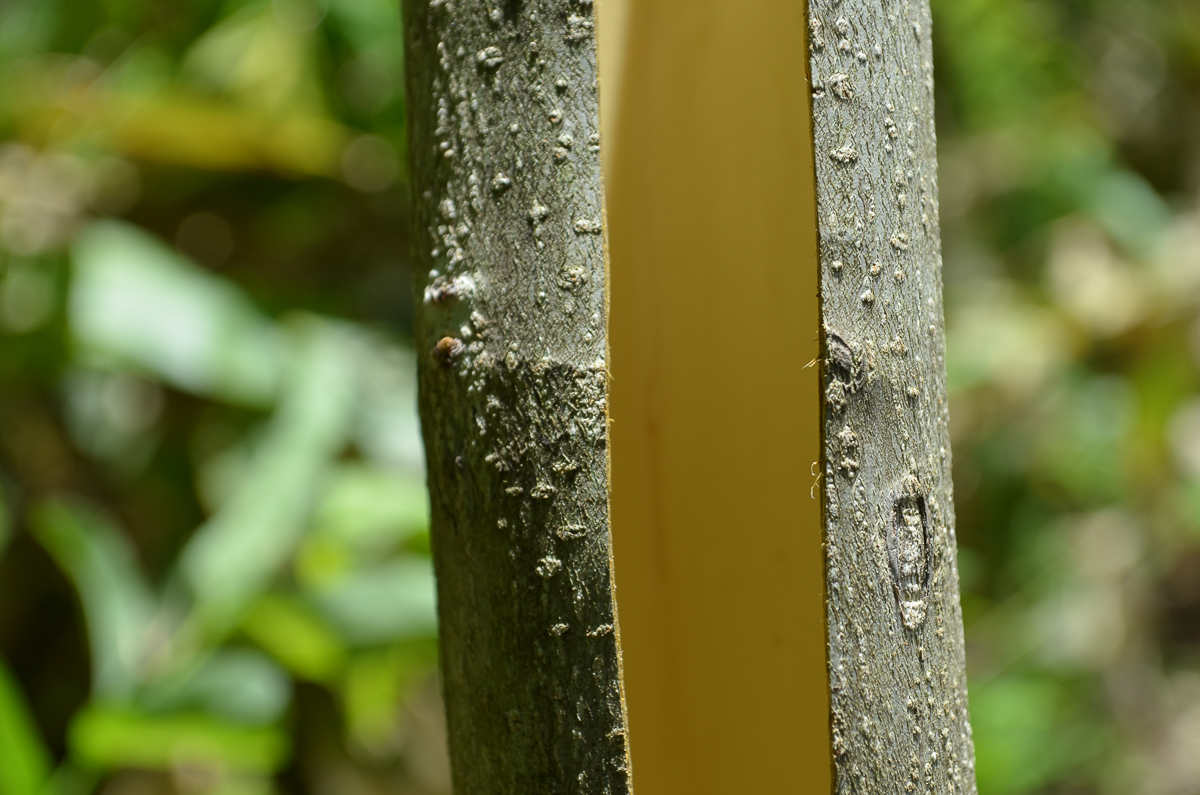
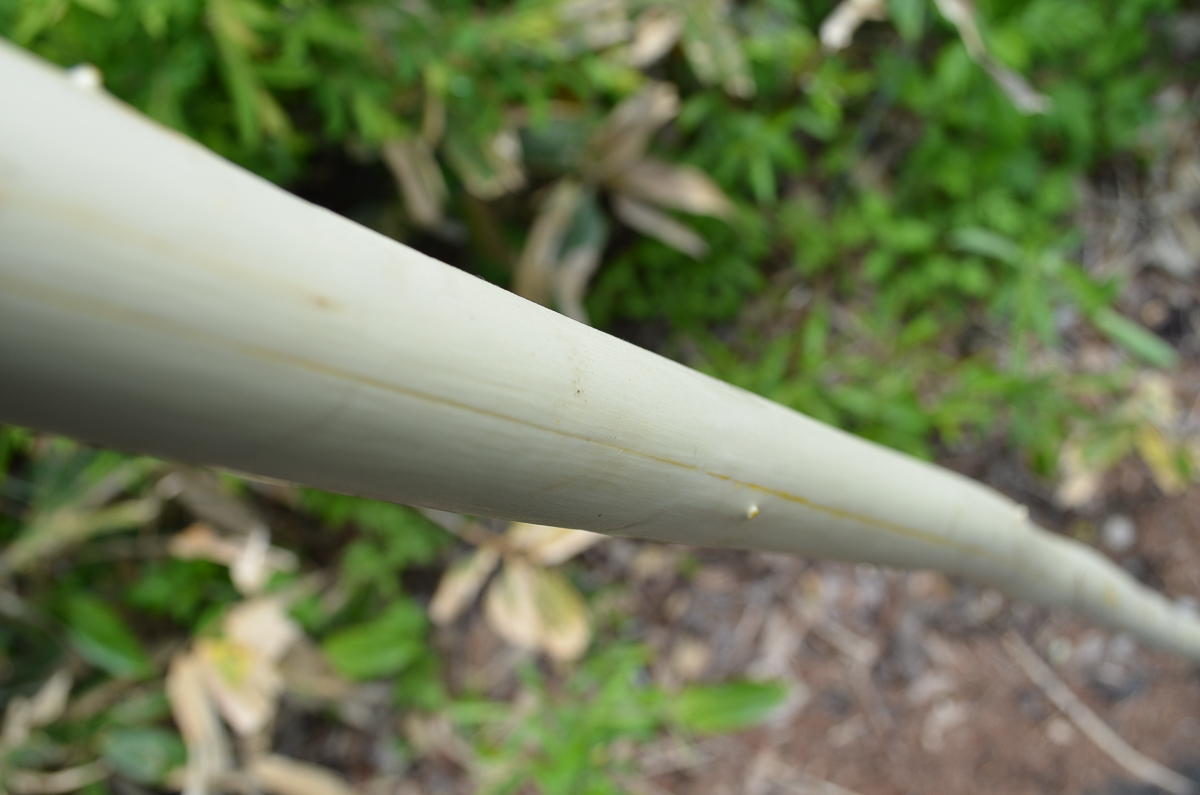
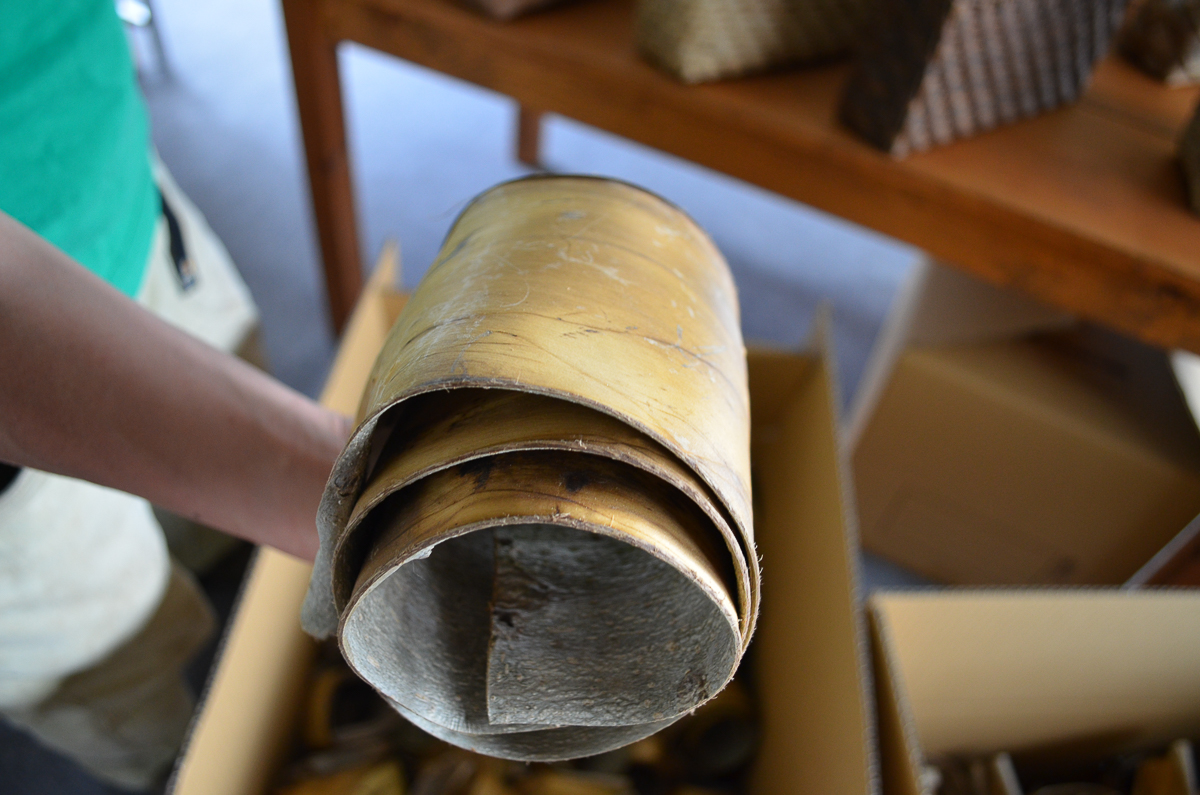
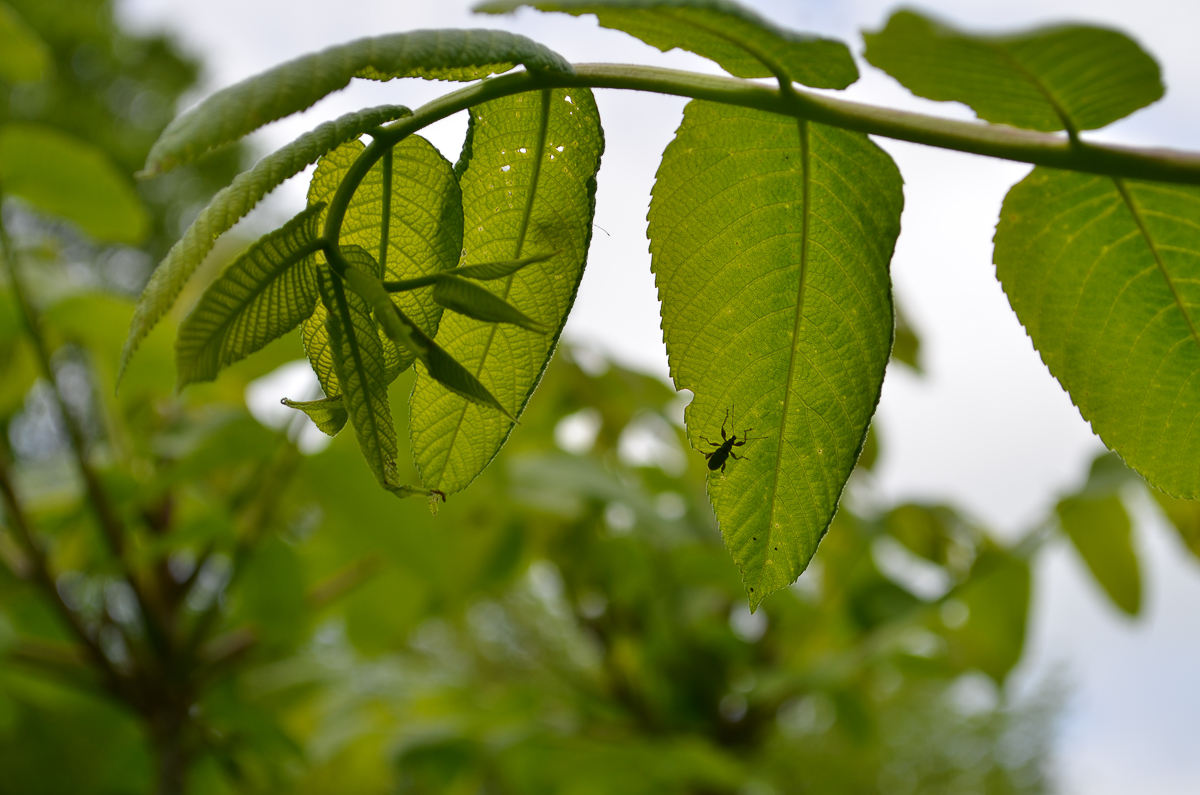
For basketry, young trees that are two to three years old are used.Sawagurumi grows in clusters like this, sprouting multiple stems from the base.Further up, the stems branch out in this way.Not all of the clustered stems are cut; only two or three are selected and harvested.Freshly cut stems glisten with a silvery sheen when touched by the sunlight.A small cut is made in the bark of the freshly cut stem, and the bark is peeled away from the core. This is the sawagurumi bark right after peeling. The inner surface begins as a fresh, creamy color, but over time it deepens into a rich, dark brown.The core left after peeling is returned to the mountains. After about a year, it breaks down into a soft, crumbly state, preparing to return to the soil.This bark has been left for some time after peeling. The inner layer visible on the surface has begun to take on a warm brown tone, and its color will continue to deepen as it ages.
Here, we would like to introduce a handheld basket crafted from walnut bark.
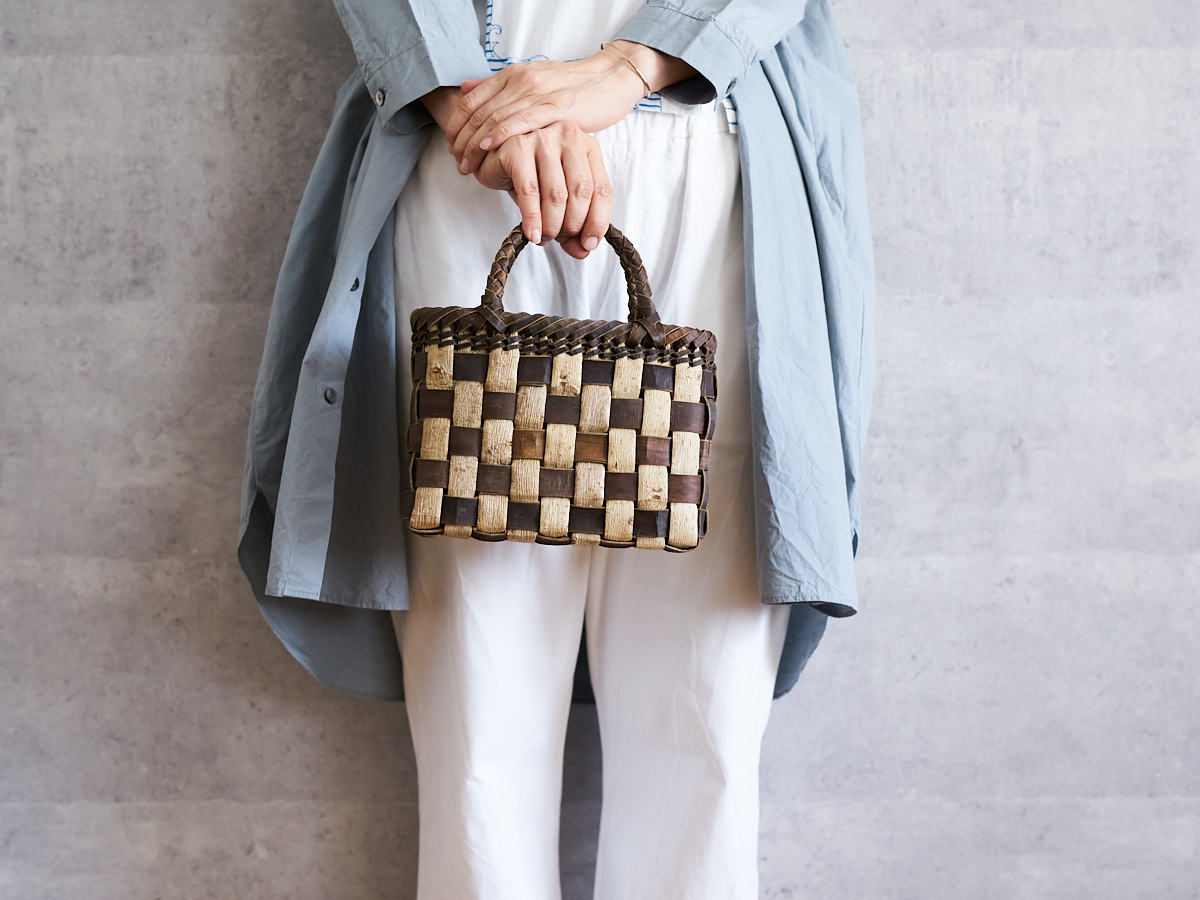
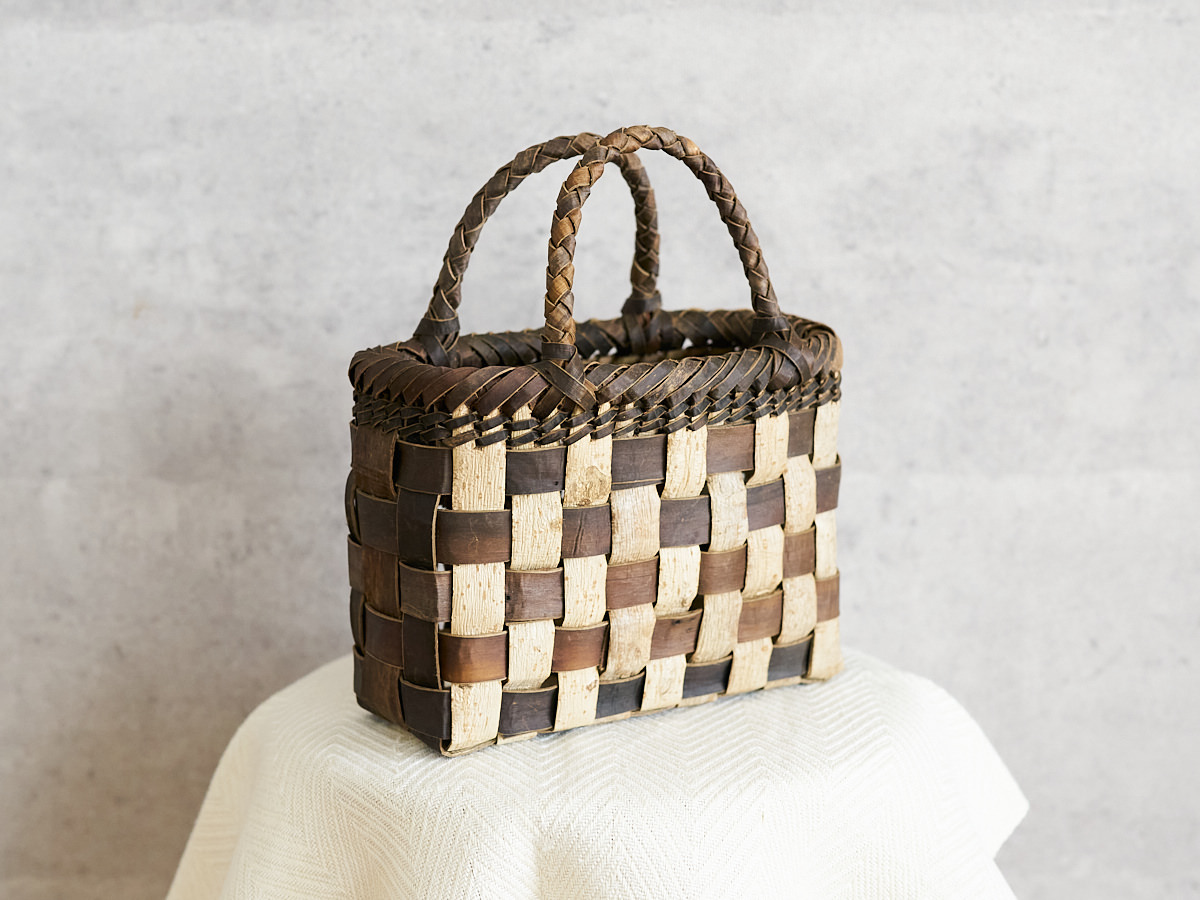
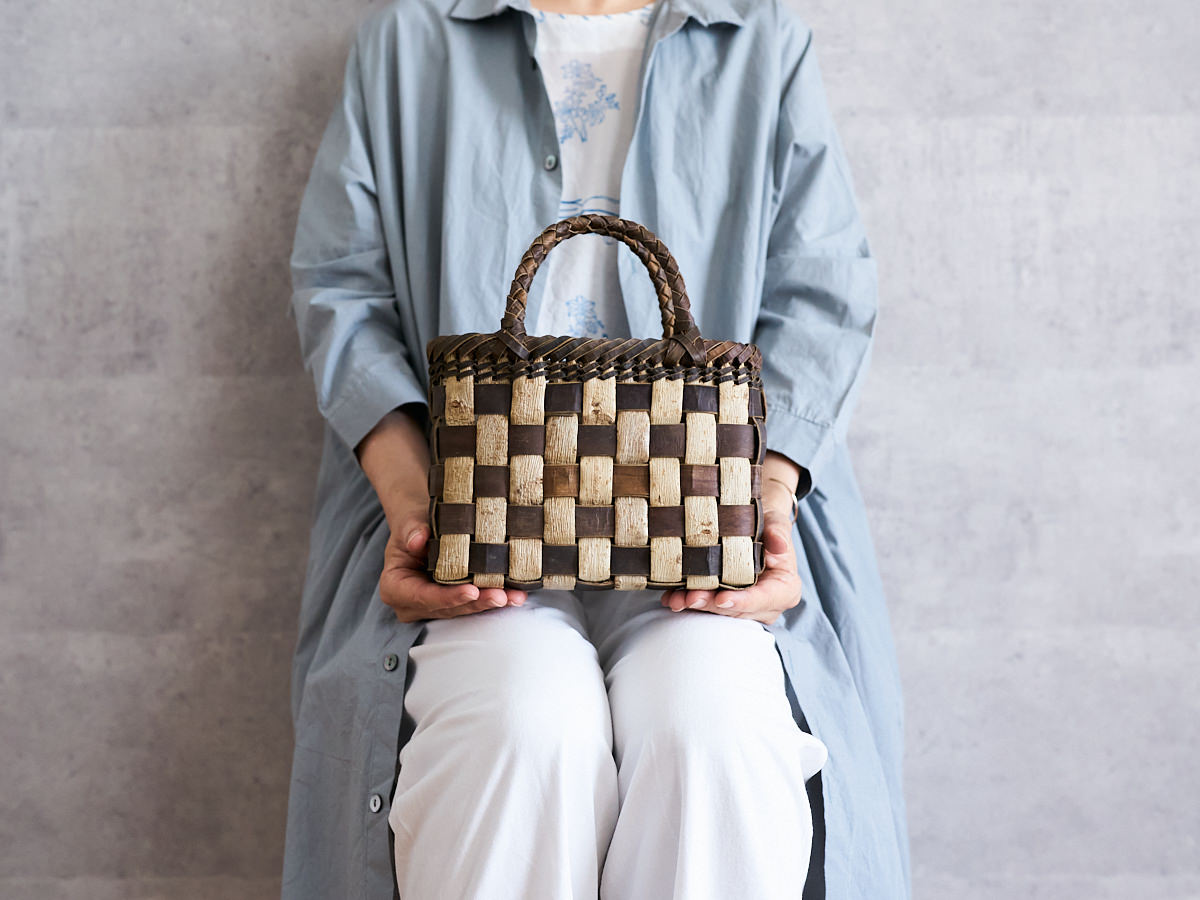
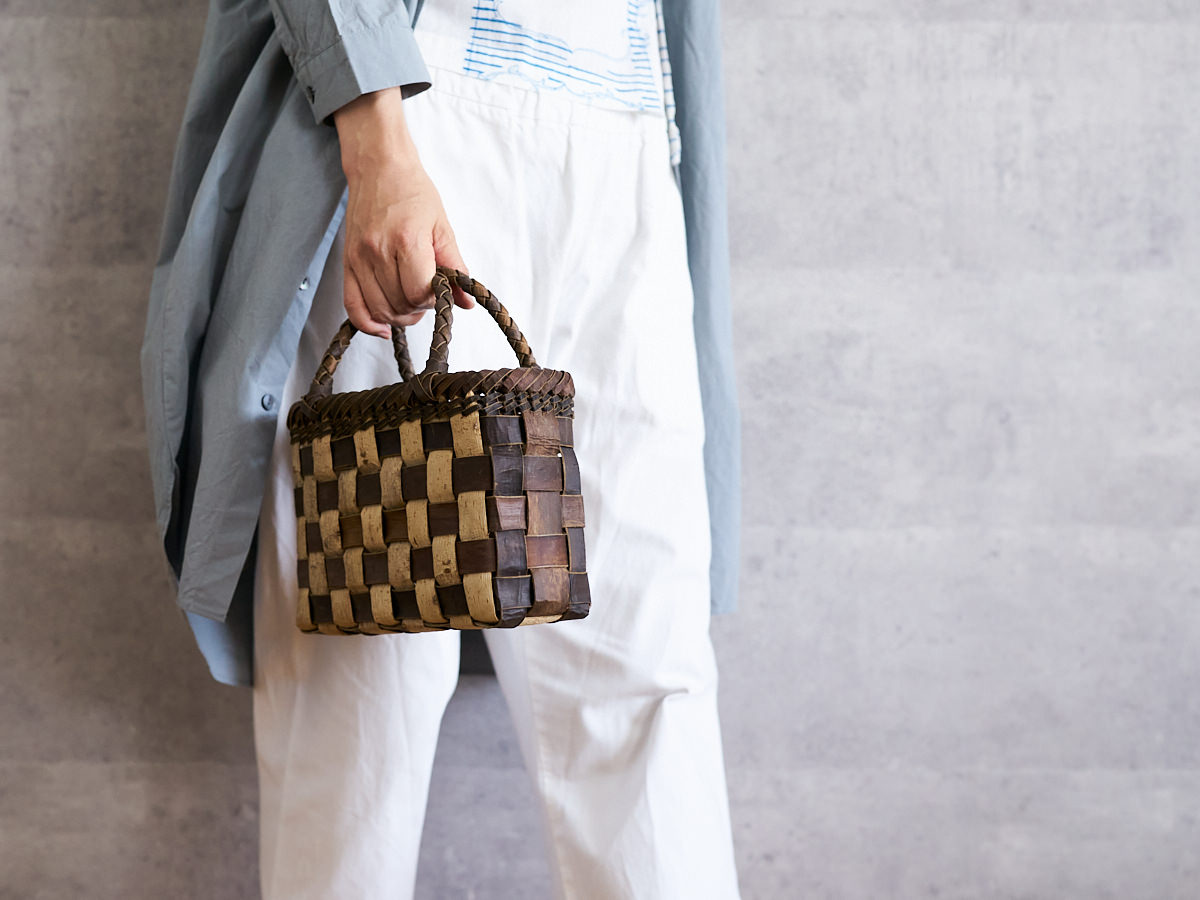
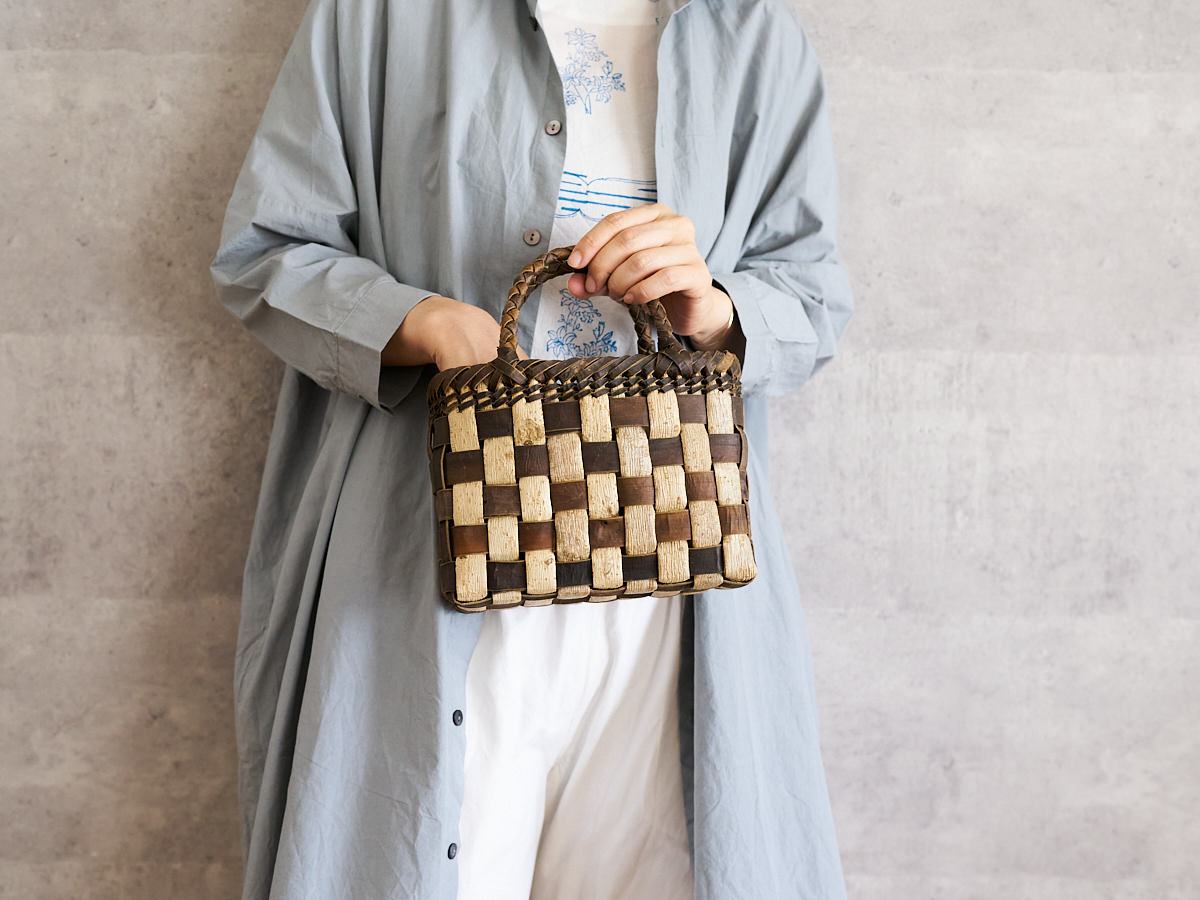
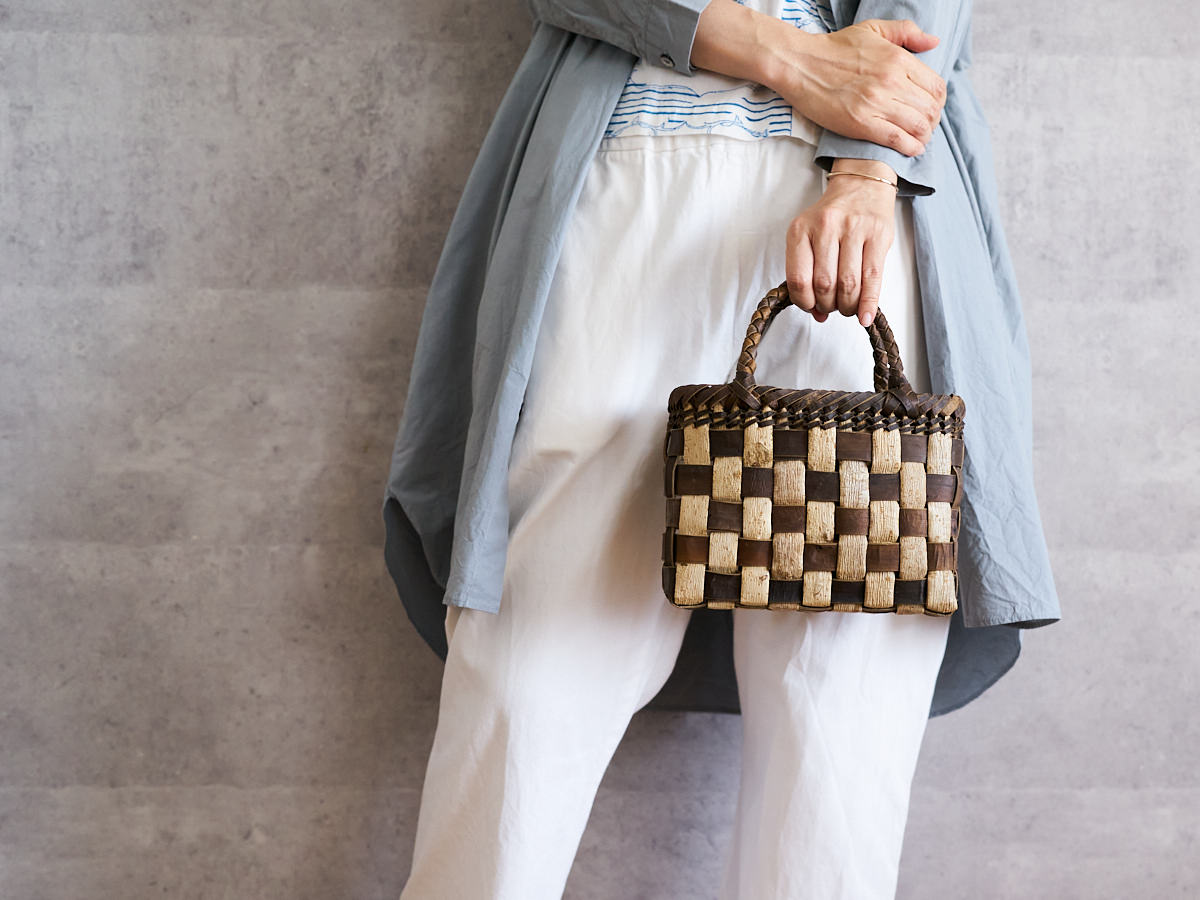
The checkered pattern created by the lighter-toned outer bark and dark brown inner bark is striking. This handheld basket is part of the maker’s “Tiny” series—the smallest size among their handheld baskets.
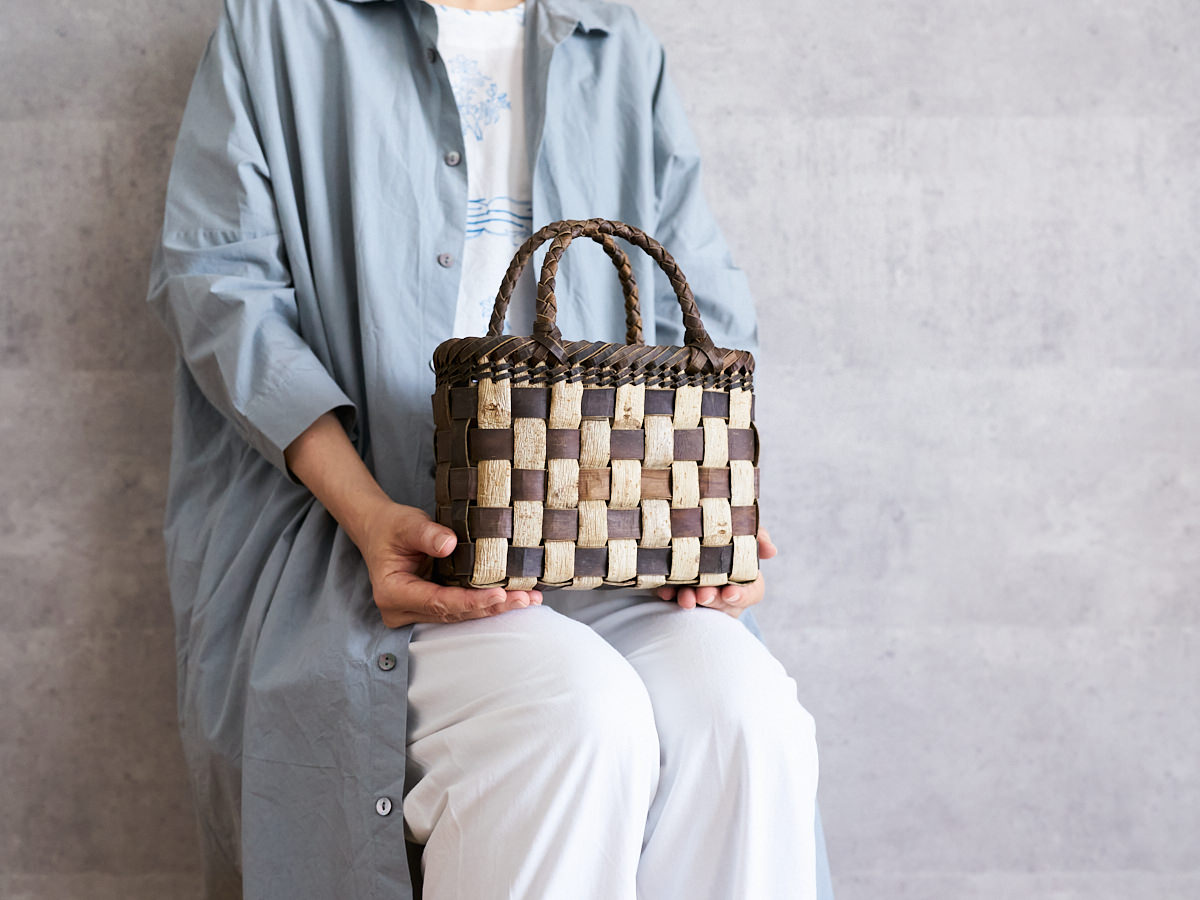
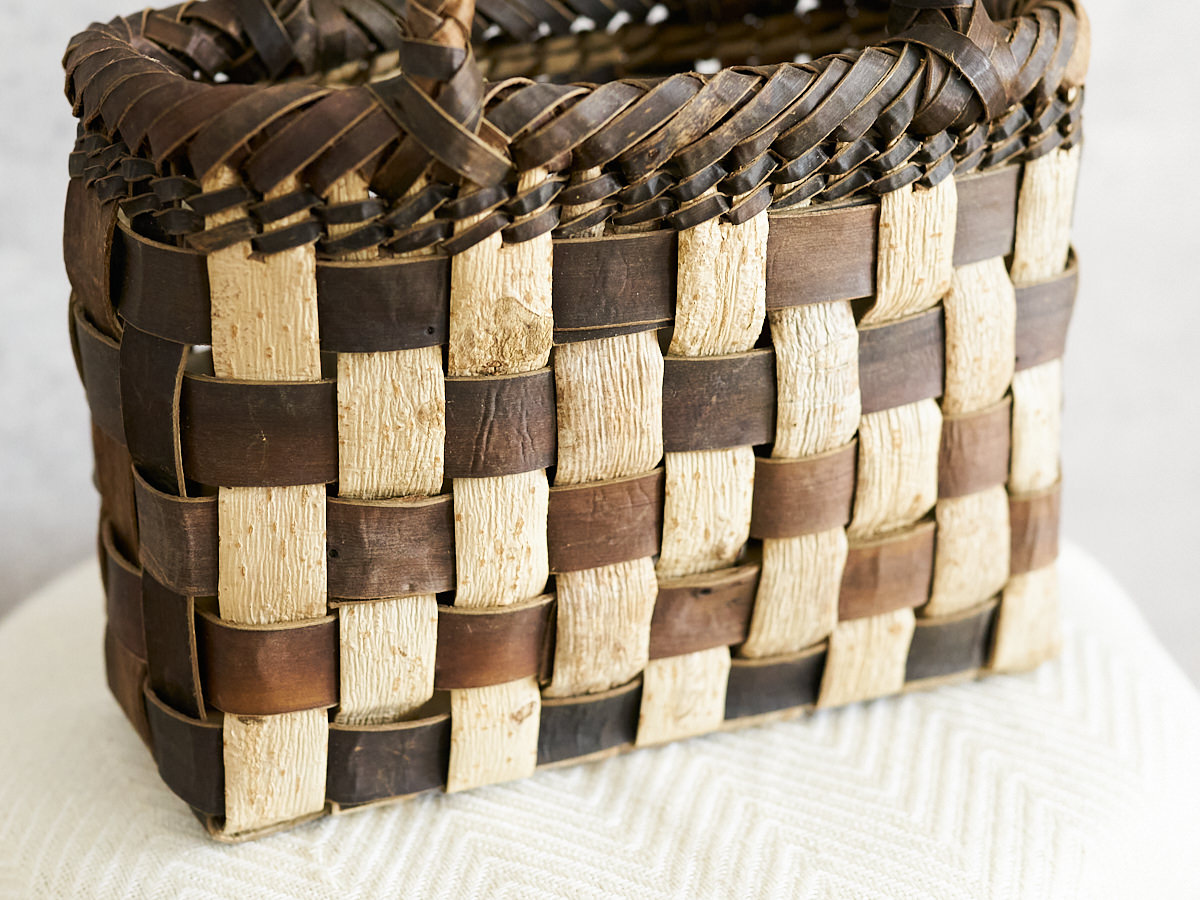
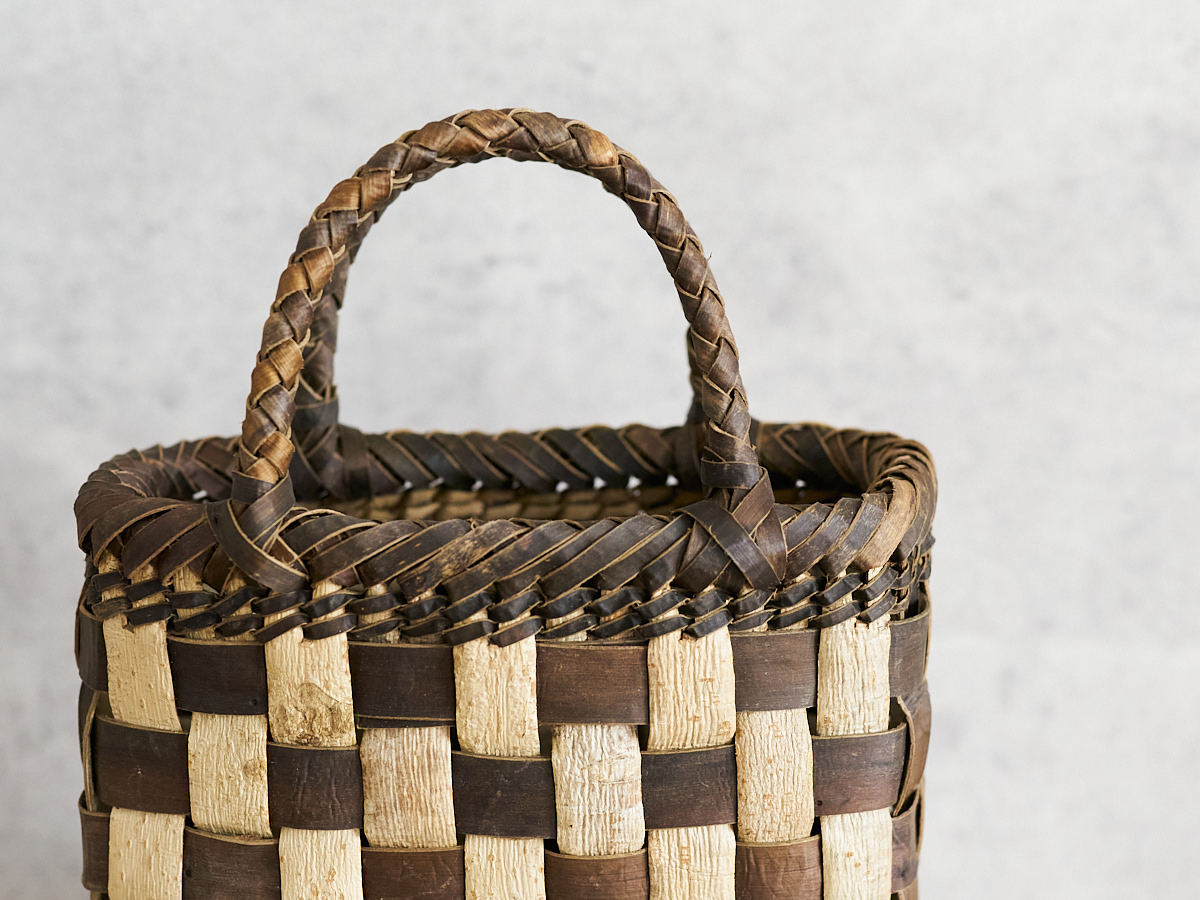
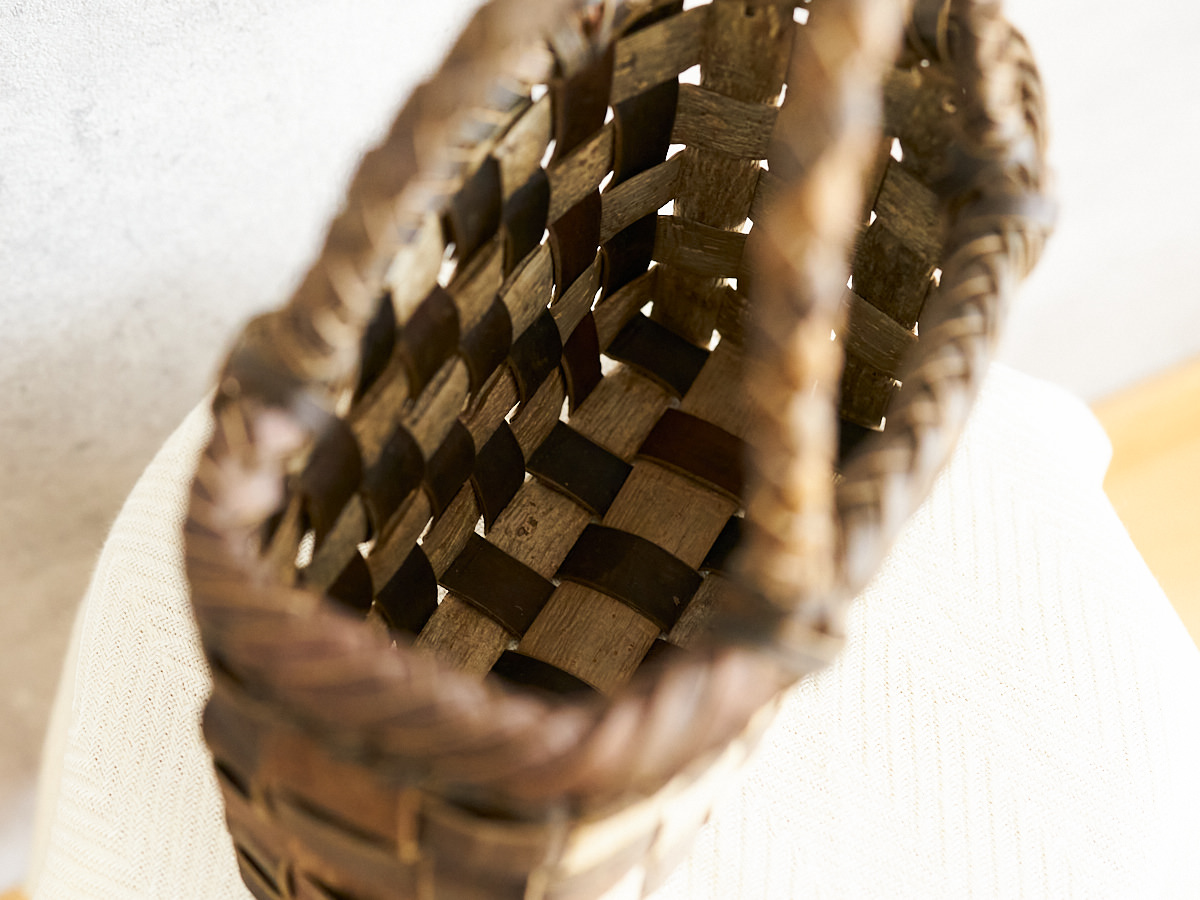
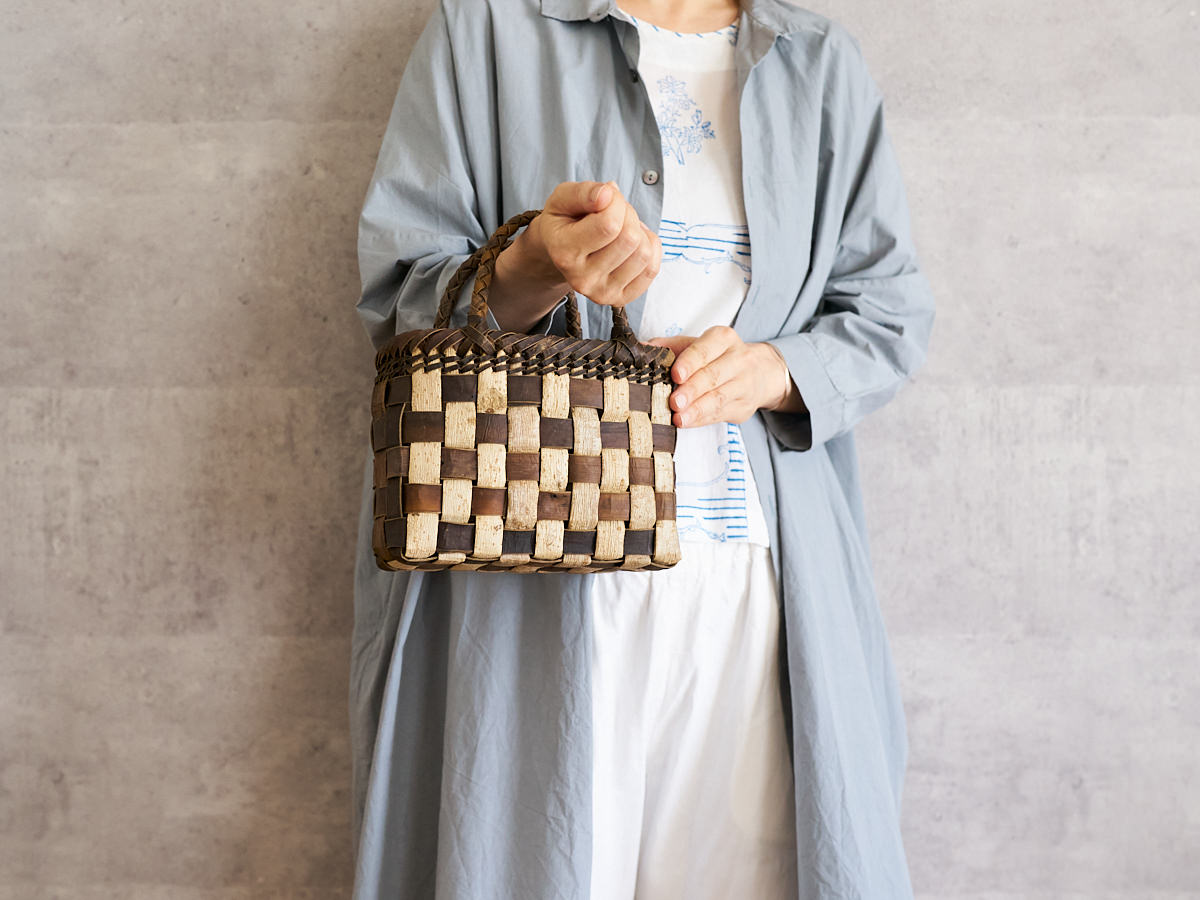
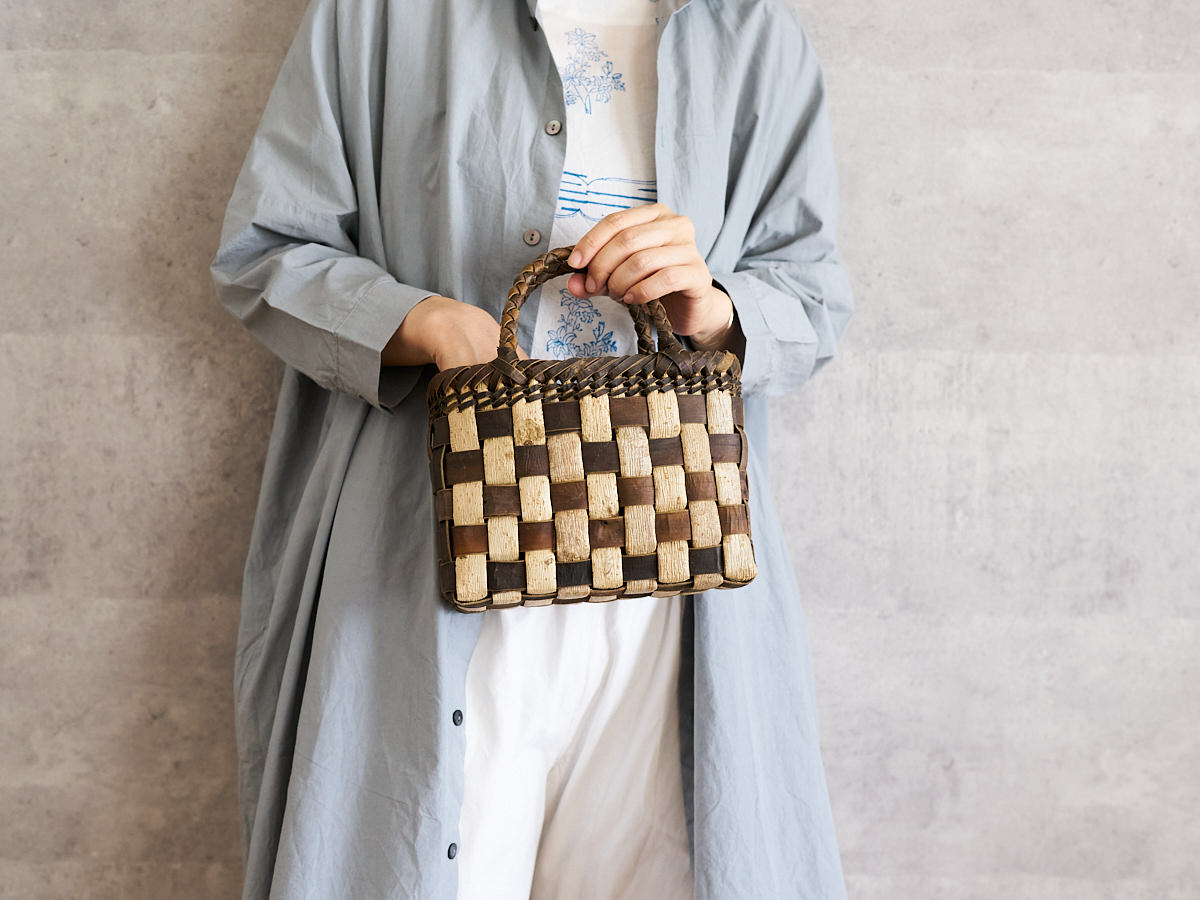
The entire basket is woven so that the pale brown outer bark of walnut and the dark brown inner bark appear alternately.The walnut-bark strips are deliberately left with slight variations in width, and the woven pattern seems to emerge with a sense of movement.The rim and the stitching just below it are woven with the dark brown inner bark. The rim is finished neatly and securely. The handle is also woven so that the dark brown inner bark is visible. Akebi vine is used as the core inside the handle.This is the bottom of the basket. It is also firmly woven. Inside the basket, the color arrangement is exactly the reverse of that on the outside, making the interior pleasing to the eye.For outings with just the essentials. It is sized to hold a wallet, a handkerchief, a mobile phone, and a key case.For added privacy, you can place a favorite scarf or handkerchief over your belongings. Thanks to the lighter tones, brightly colored fabrics pair beautifully with it.
In autumn and winter, and even on chilly spring mornings and evenings, it pairs beautifully with a stole or scarf. This sawagurumi basket is one you can enjoy throughout the year.
The materials are carefully prepared, so there is no roughness—the surface feels smooth, clean, and pleasantly light to the touch.
Each walnut-bark strip has its own subtle tone and texture, and together they give the basket a sense of depth and character.
Bring the basket close, and you can enjoy the rich, natural aroma of walnut. And the more you gently run your hand over the surface, the more luster the basket develops as it absorbs the natural oils from your skin.
The checkered pattern formed by the light-toned outer bark and dark brown inner bark gives the basket a lively character unique to sawagurumi. Its compact size makes it easy to use for everyday outings.
We hope you will find it useful in your everyday life.
Continuing to Create New Designs with Sawagurumi from Iwate
In this region of Iwate, blessed with abundant nature, these artisans make baskets using sawagurumi bark.
They walk through the mountains of Iwate, personally selecting and harvesting high-quality materials. The harvested materials are then carefully prepared, one by one, before weaving begins.
While bringing out the natural character of the material, they create new designs, one piece at a time.
The baskets born from their free approach to design give us something new to appreciate each time we see them and always bring us joy.
Please note: This item ships from Japan. As the buyer, you are responsible for any import duties, customs fees, or local taxes that may be charged in your country. These costs are not included in the item price or shipping cost. Please check with your local customs authority if you are unsure about any potential charges before placing your order.
This handheld basket is woven using the bark of sawagurumi (Japanese walnut).
The bark of walnut trees is harvested at its peak from spring through the rainy season, when the material is rich with moisture.
Sawagurumi, as its name suggests, is a species of walnut that grows naturally along mountain streams and shallow valleys.
Unlike yamagurumi, which grows in the mountains, the nuts of sawagurumi are not used for food. Instead, the tree has the characteristic of letting its seeds travel downstream, carried away by the flow of nearby streams.
For basketry, young trees that are two to three years old are used.Sawagurumi grows in clusters like this, sprouting multiple stems from the base.Further up, the stems branch out in this way.Not all of the clustered stems are cut; only two or three are selected and harvested.Freshly cut stems glisten with a silvery sheen when touched by the sunlight.A small cut is made in the bark of the freshly cut stem, and the bark is peeled away from the core. This is the sawagurumi bark right after peeling. The inner surface begins as a fresh, creamy color, but over time it deepens into a rich, dark brown.The core left after peeling is returned to the mountains. After about a year, it breaks down into a soft, crumbly state, preparing to return to the soil.This bark has been left for some time after peeling. The inner layer visible on the surface has begun to take on a warm brown tone, and its color will continue to deepen as it ages.
Here, we would like to introduce a handheld basket crafted from walnut bark.
The checkered pattern created by the lighter-toned outer bark and dark brown inner bark is striking. This handheld basket is part of the maker’s “Tiny” series—the smallest size among their handheld baskets.
The entire basket is woven so that the pale brown outer bark of walnut and the dark brown inner bark appear alternately.The walnut-bark strips are deliberately left with slight variations in width, and the woven pattern seems to emerge with a sense of movement.The rim and the stitching just below it are woven with the dark brown inner bark. The rim is finished neatly and securely. The handle is also woven so that the dark brown inner bark is visible. Akebi vine is used as the core inside the handle.This is the bottom of the basket. It is also firmly woven. Inside the basket, the color arrangement is exactly the reverse of that on the outside, making the interior pleasing to the eye.For outings with just the essentials. It is sized to hold a wallet, a handkerchief, a mobile phone, and a key case.For added privacy, you can place a favorite scarf or handkerchief over your belongings. Thanks to the lighter tones, brightly colored fabrics pair beautifully with it.
In autumn and winter, and even on chilly spring mornings and evenings, it pairs beautifully with a stole or scarf. This sawagurumi basket is one you can enjoy throughout the year.
The materials are carefully prepared, so there is no roughness—the surface feels smooth, clean, and pleasantly light to the touch.
Each walnut-bark strip has its own subtle tone and texture, and together they give the basket a sense of depth and character.
Bring the basket close, and you can enjoy the rich, natural aroma of walnut. And the more you gently run your hand over the surface, the more luster the basket develops as it absorbs the natural oils from your skin.
The checkered pattern formed by the light-toned outer bark and dark brown inner bark gives the basket a lively character unique to sawagurumi. Its compact size makes it easy to use for everyday outings.
We hope you will find it useful in your everyday life.
Continuing to Create New Designs with Sawagurumi from Iwate
In this region of Iwate, blessed with abundant nature, these artisans make baskets using sawagurumi bark.
They walk through the mountains of Iwate, personally selecting and harvesting high-quality materials. The harvested materials are then carefully prepared, one by one, before weaving begins.
While bringing out the natural character of the material, they create new designs, one piece at a time.
The baskets born from their free approach to design give us something new to appreciate each time we see them and always bring us joy.
Please note: This item ships from Japan. As the buyer, you are responsible for any import duties, customs fees, or local taxes that may be charged in your country. These costs are not included in the item price or shipping cost. Please check with your local customs authority if you are unsure about any potential charges before placing your order.
This handheld basket is woven using the bark of sawagurumi (Japanese walnut).
The bark of walnut trees is harvested at its peak from spring through the rainy season, when the material is rich with moisture.
Sawagurumi, as its name suggests, is a species of walnut that grows naturally along mountain streams and shallow valleys.
Unlike yamagurumi, which grows in the mountains, the nuts of sawagurumi are not used for food. Instead, the tree has the characteristic of letting its seeds travel downstream, carried away by the flow of nearby streams.
For basketry, young trees that are two to three years old are used.Sawagurumi grows in clusters like this, sprouting multiple stems from the base.Further up, the stems branch out in this way.Not all of the clustered stems are cut; only two or three are selected and harvested.Freshly cut stems glisten with a silvery sheen when touched by the sunlight.A small cut is made in the bark of the freshly cut stem, and the bark is peeled away from the core. This is the sawagurumi bark right after peeling. The inner surface begins as a fresh, creamy color, but over time it deepens into a rich, dark brown.The core left after peeling is returned to the mountains. After about a year, it breaks down into a soft, crumbly state, preparing to return to the soil.This bark has been left for some time after peeling. The inner layer visible on the surface has begun to take on a warm brown tone, and its color will continue to deepen as it ages.
Here, we would like to introduce a handheld basket crafted from walnut bark.
The checkered pattern created by the lighter-toned outer bark and dark brown inner bark is striking. This handheld basket is part of the maker’s “Tiny” series—the smallest size among their handheld baskets.
The entire basket is woven so that the pale brown outer bark of walnut and the dark brown inner bark appear alternately.The walnut-bark strips are deliberately left with slight variations in width, and the woven pattern seems to emerge with a sense of movement.The rim and the stitching just below it are woven with the dark brown inner bark. The rim is finished neatly and securely. The handle is also woven so that the dark brown inner bark is visible. Akebi vine is used as the core inside the handle.This is the bottom of the basket. It is also firmly woven. Inside the basket, the color arrangement is exactly the reverse of that on the outside, making the interior pleasing to the eye.For outings with just the essentials. It is sized to hold a wallet, a handkerchief, a mobile phone, and a key case.For added privacy, you can place a favorite scarf or handkerchief over your belongings. Thanks to the lighter tones, brightly colored fabrics pair beautifully with it.
In autumn and winter, and even on chilly spring mornings and evenings, it pairs beautifully with a stole or scarf. This sawagurumi basket is one you can enjoy throughout the year.
The materials are carefully prepared, so there is no roughness—the surface feels smooth, clean, and pleasantly light to the touch.
Each walnut-bark strip has its own subtle tone and texture, and together they give the basket a sense of depth and character.
Bring the basket close, and you can enjoy the rich, natural aroma of walnut. And the more you gently run your hand over the surface, the more luster the basket develops as it absorbs the natural oils from your skin.
The checkered pattern formed by the light-toned outer bark and dark brown inner bark gives the basket a lively character unique to sawagurumi. Its compact size makes it easy to use for everyday outings.
We hope you will find it useful in your everyday life.
Continuing to Create New Designs with Sawagurumi from Iwate
In this region of Iwate, blessed with abundant nature, these artisans make baskets using sawagurumi bark.
They walk through the mountains of Iwate, personally selecting and harvesting high-quality materials. The harvested materials are then carefully prepared, one by one, before weaving begins.
While bringing out the natural character of the material, they create new designs, one piece at a time.
The baskets born from their free approach to design give us something new to appreciate each time we see them and always bring us joy.
Please note: This item ships from Japan. As the buyer, you are responsible for any import duties, customs fees, or local taxes that may be charged in your country. These costs are not included in the item price or shipping cost. Please check with your local customs authority if you are unsure about any potential charges before placing your order.