In Kurashiki, Okayama Prefecture, there is one shop that continues to make baskets using inawa—twisted cords made from igusa rush. The ikago (handbag made from inawa cords) was once commonly produced throughout the Kurashiki area, but today, this is the only shop that still makes them.
The current craftsman inherited the work from his grandmother. He has been involved in ikago making since his youth, and while respecting the traditional methods and finishes, he creates his work with a free and flexible sensibility. Each piece is designed so that anyone—regardless of gender or age—can enjoy using it.
The ikago was originally known as “yami-kago” (baskets carried when going to the yami-ichi, or black markets), and from around the 1940s to the 1960s, it was used as an everyday shopping basket.
The ikago is made using a slightly different method from other baskets, so let us briefly explain the process.
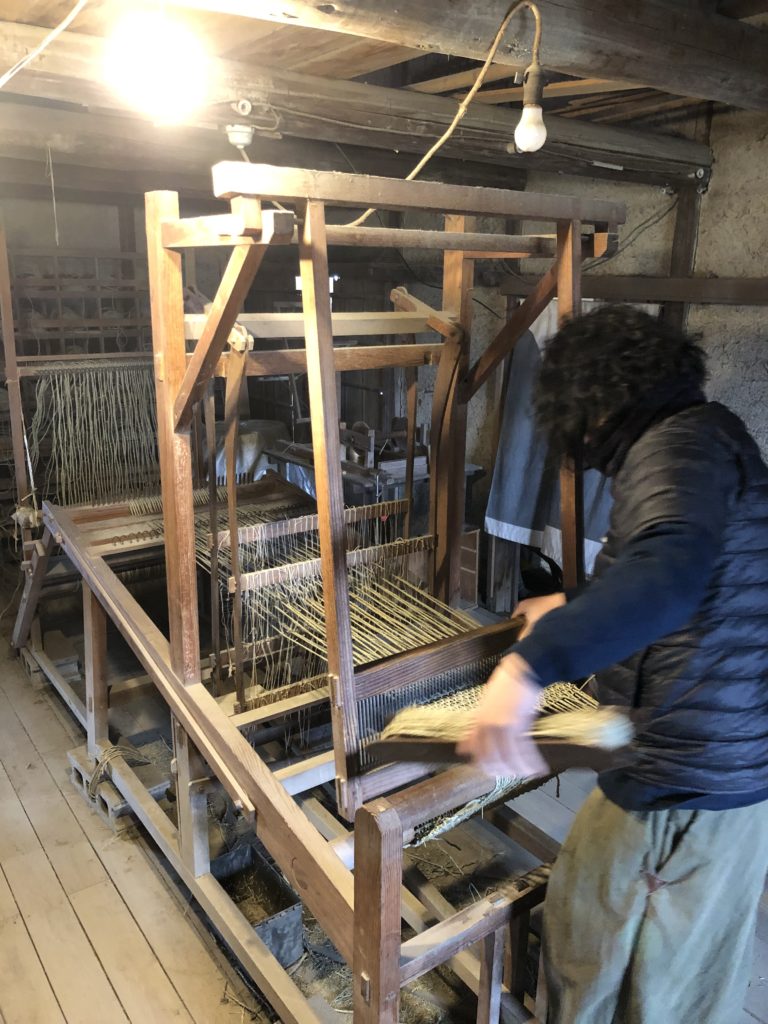
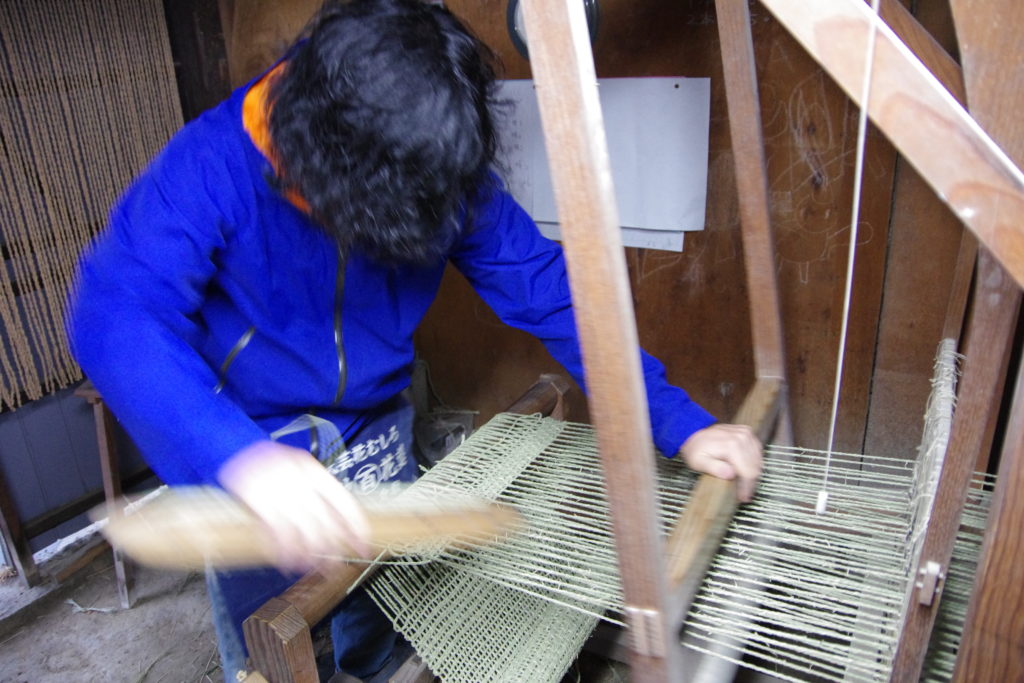
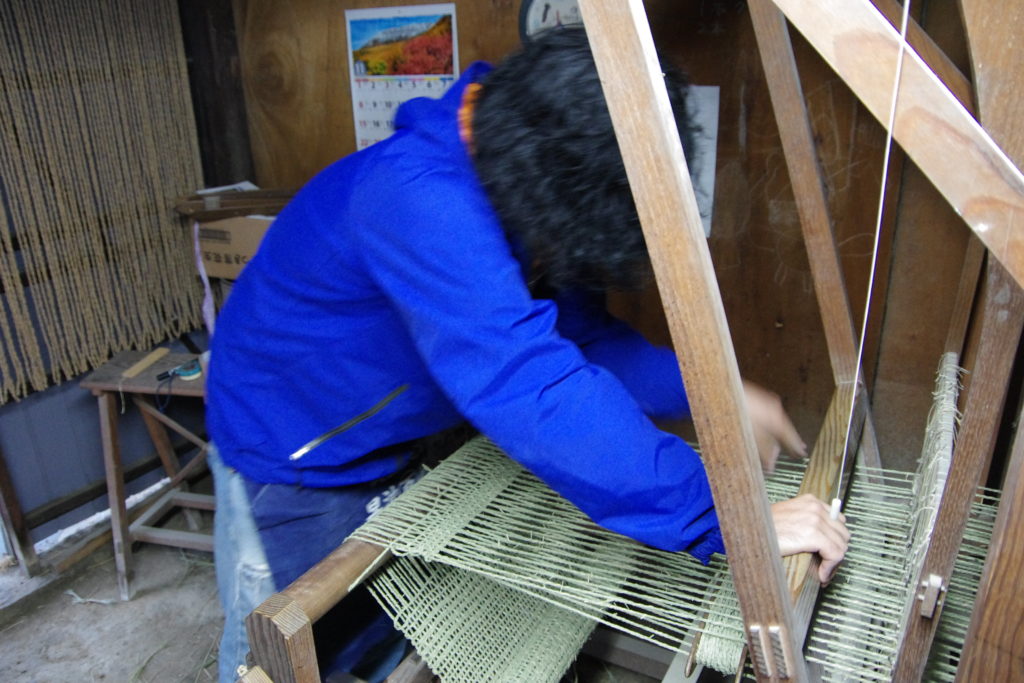
First, a wooden loom—passed down and carefully used for generations—is prepared.
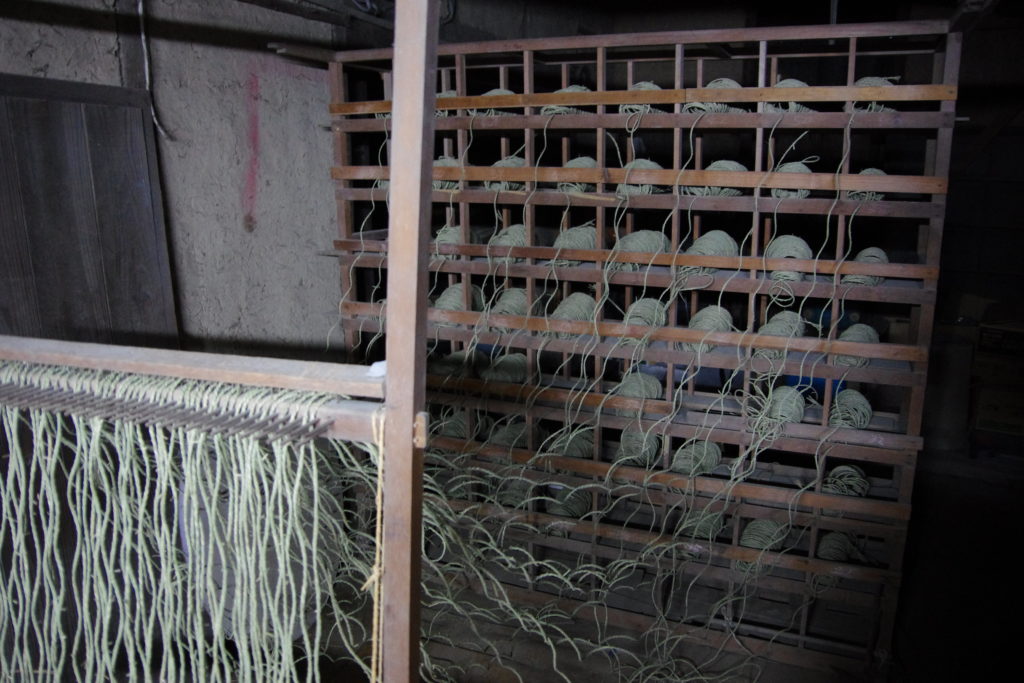
Dozens of inawa (twisted igusa cords) are then set onto the loom as the warp threads.
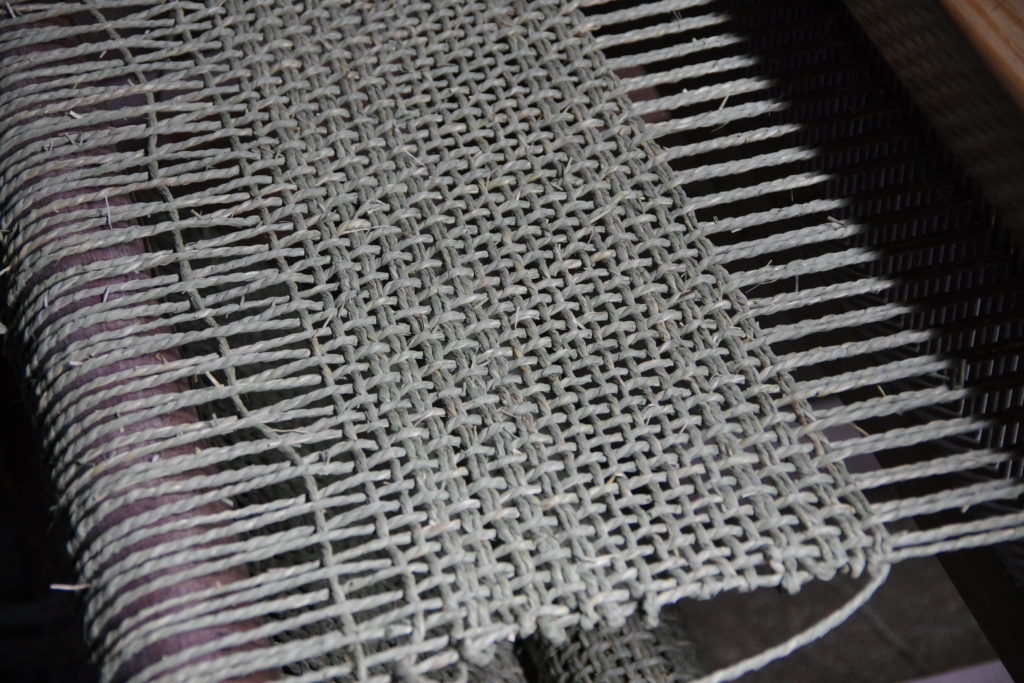
For a large size, about fifty-five cords are arranged. Setting the warp threads alone takes quite some time. These warp threads are divided into two groups—one running upward, the other downward.Next, the craftsman uses a wooden shuttle to pass the weft threads from one side to the other. By pressing the foot pedal, the warp threads are lifted and lowered alternately with a clattering sound, forming the weave.After each pass of the shuttle, he gently beats the weave into place using the reed held in his left hand, tapping rhythmically to tighten the pattern. This process is repeated over and over again.By weaving in this way—much like traditional cloth weaving—a flat woven panel is produced before it becomes a basket. The craftsman weaves this panel to the desired length, which will later form the base shape of the basket.
The weaving continues until the material runs out. When finished, the woven panel is removed from the loom. Then, by hand, the craftsman carefully binds the edges of the flat woven fabric, attaches the handles, and shapes it into a basket.
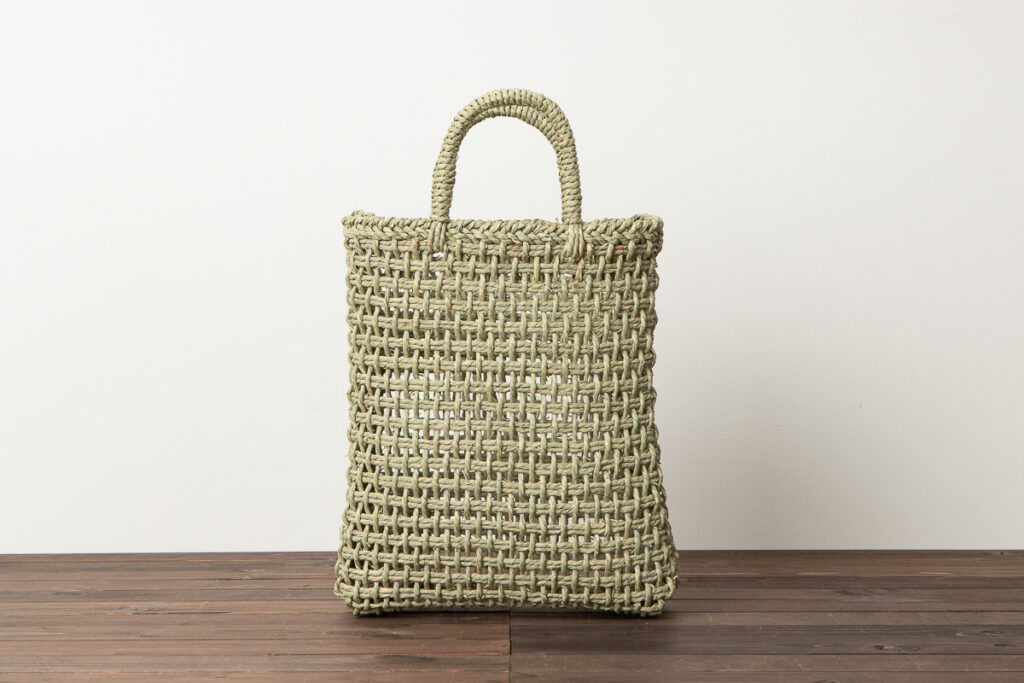
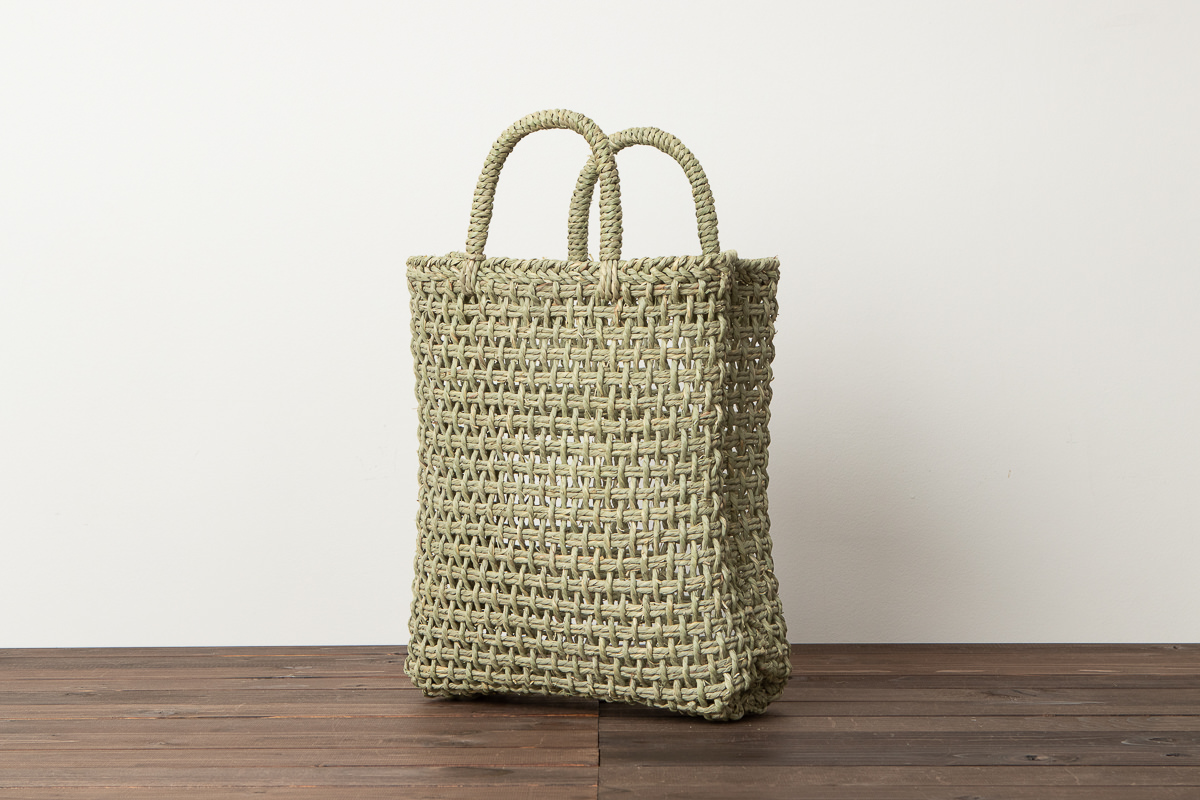
Made through this process, this ikago is taller than the basic type.
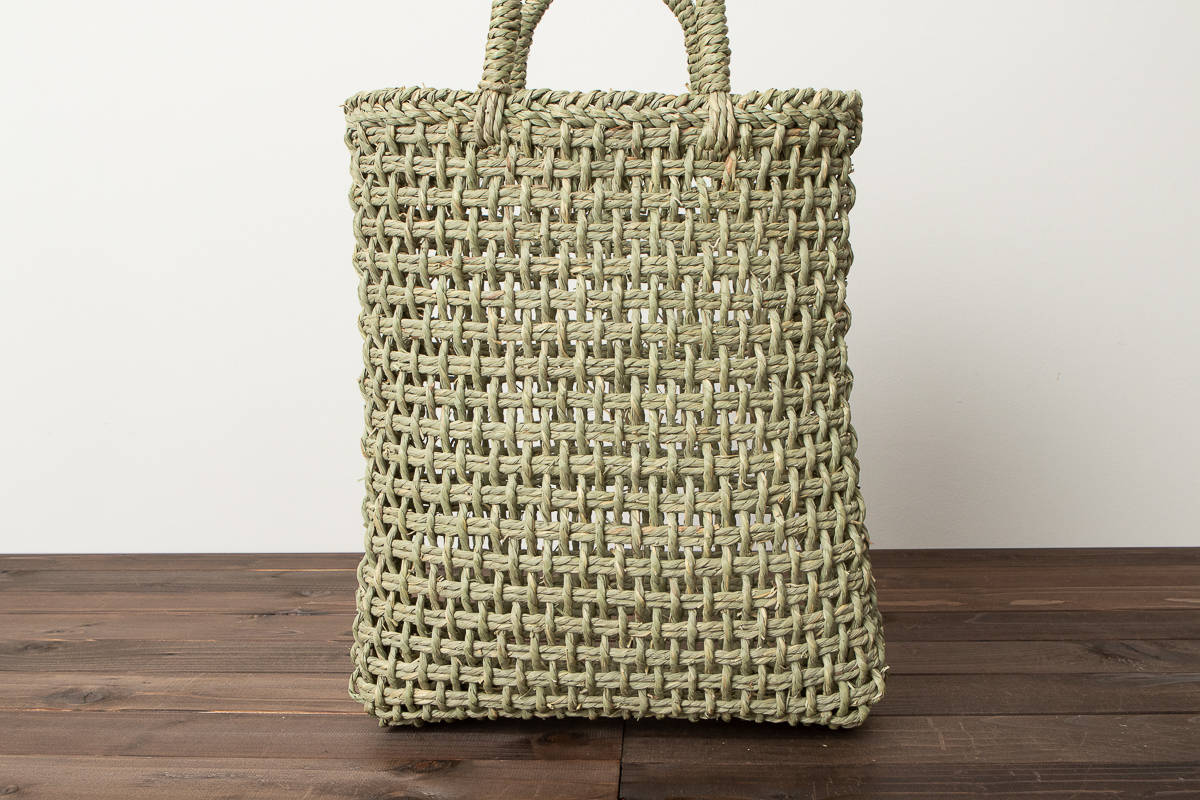
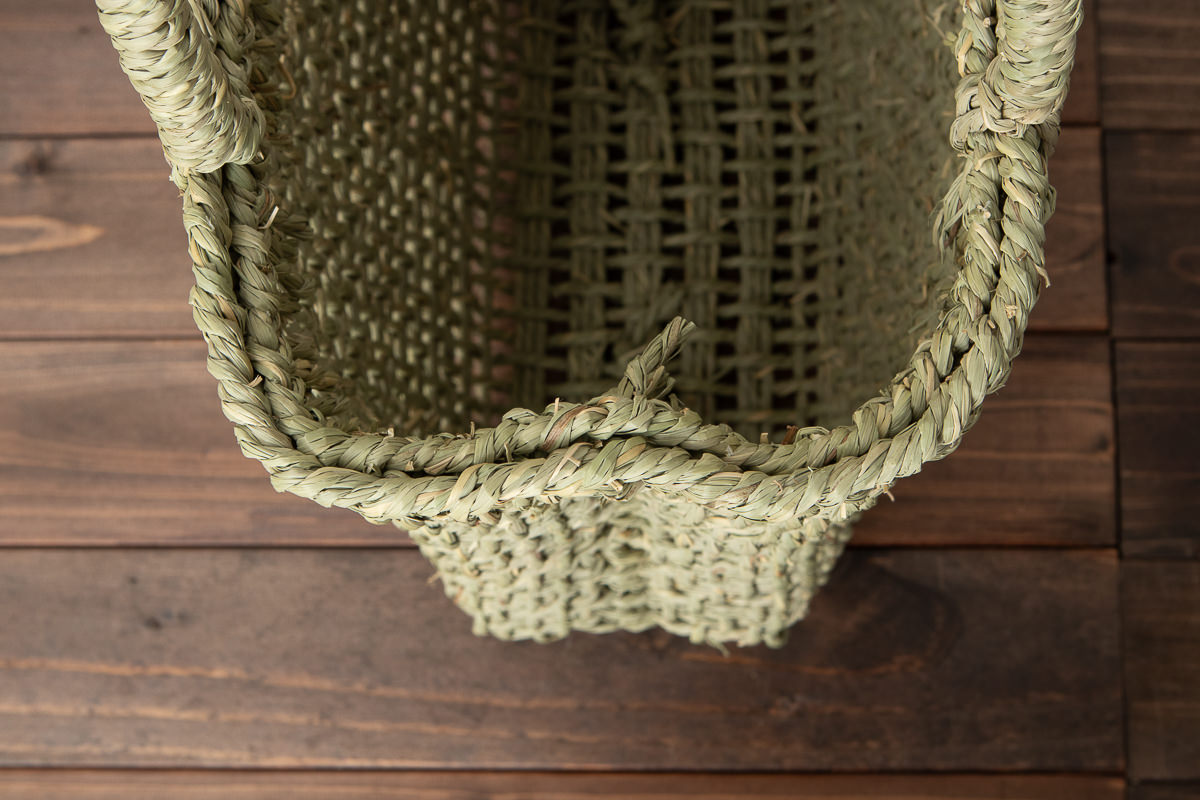
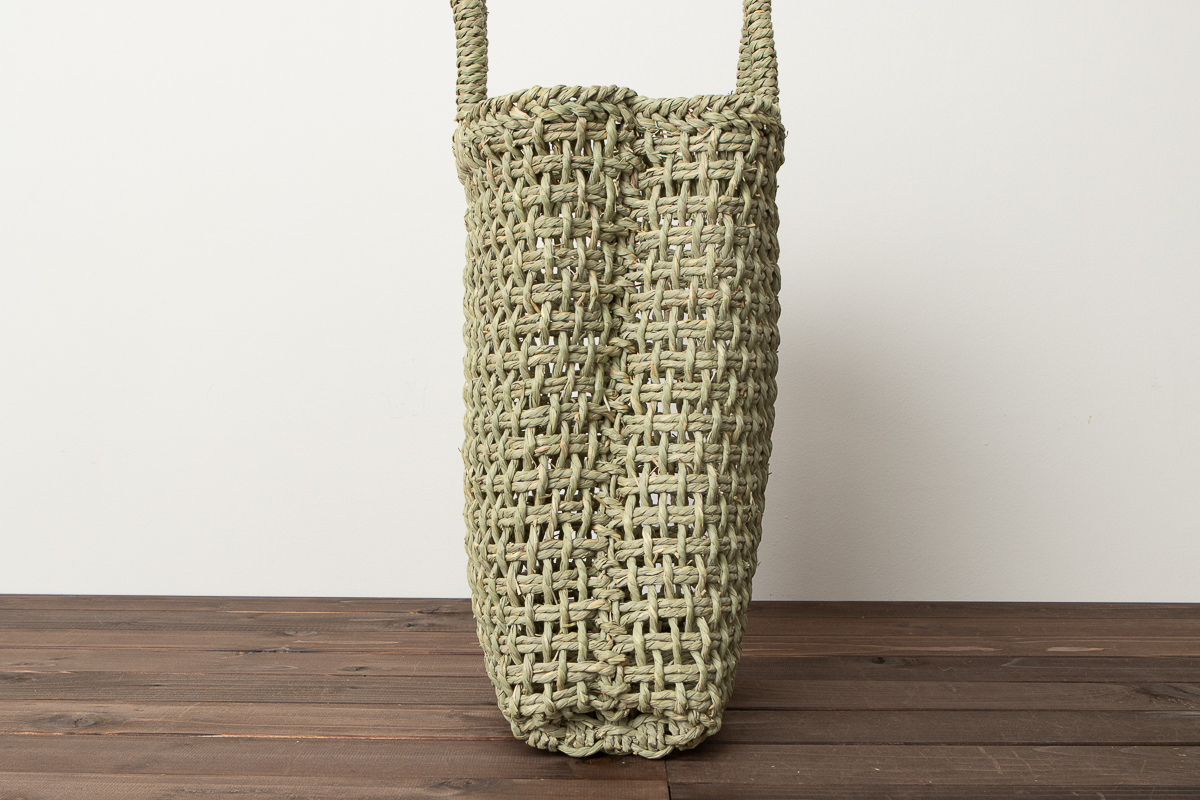
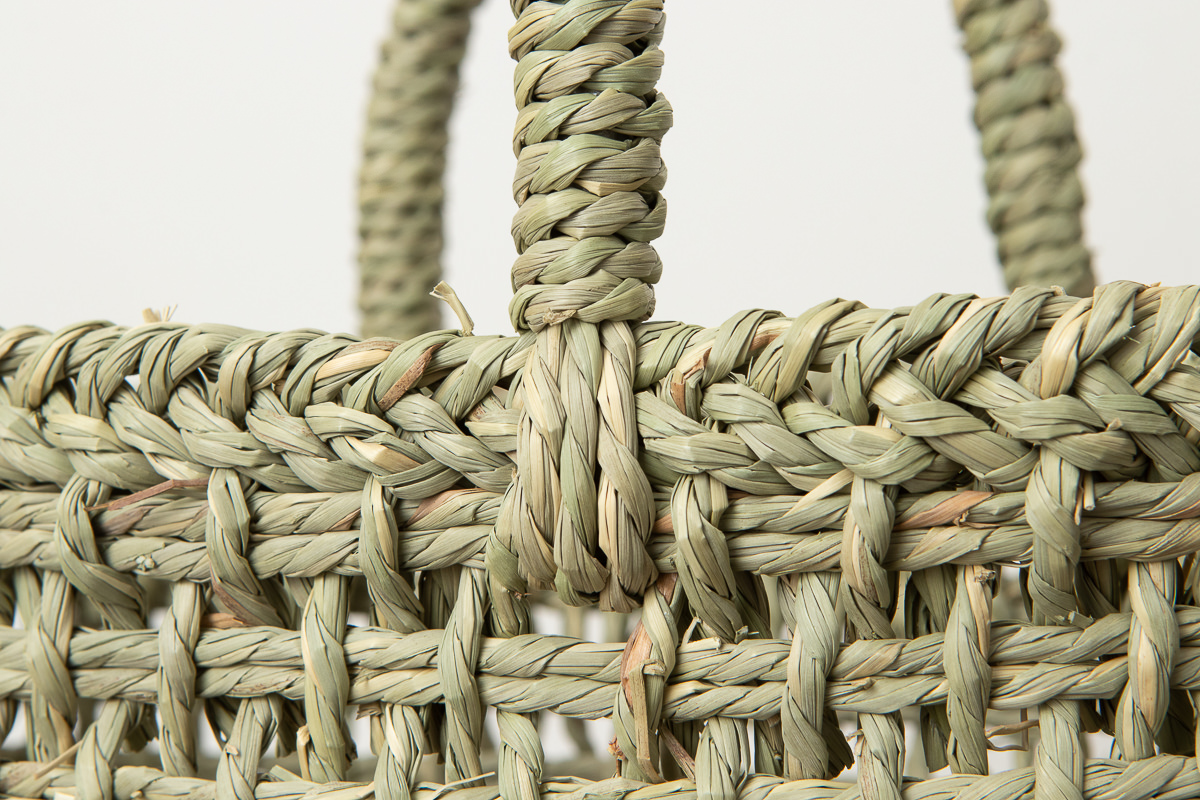
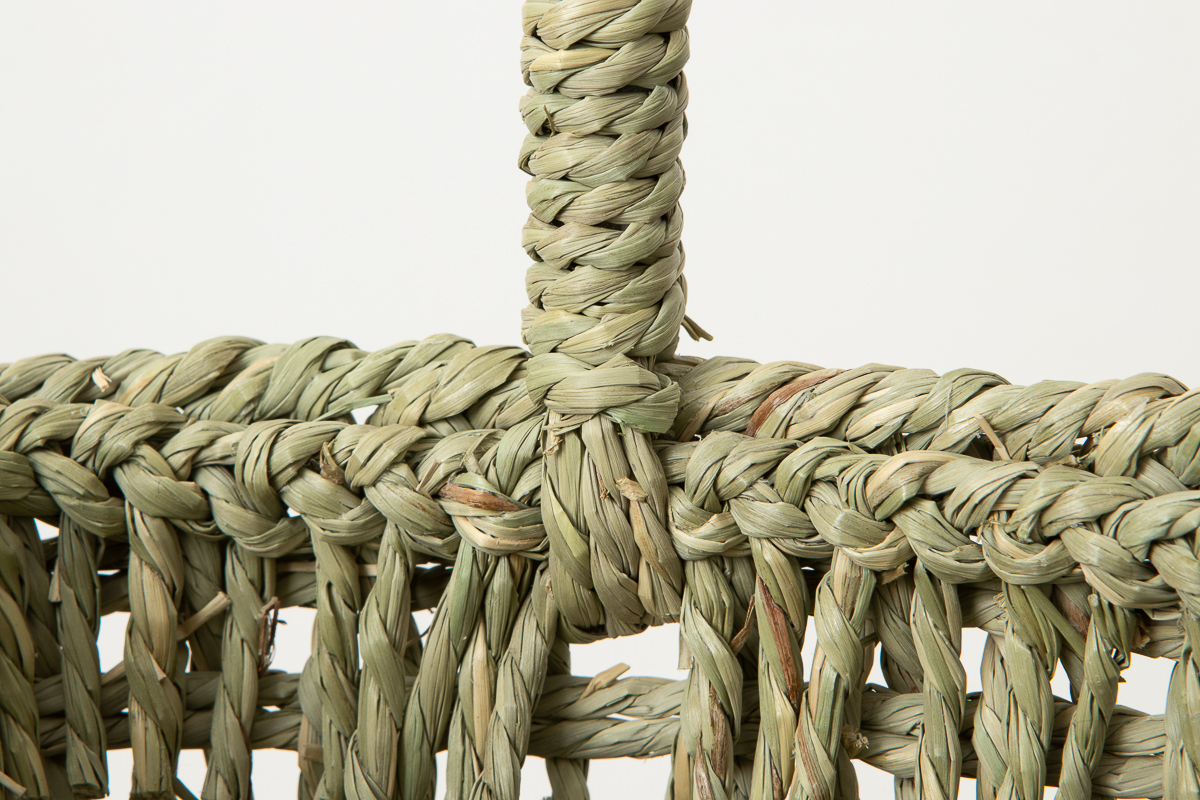
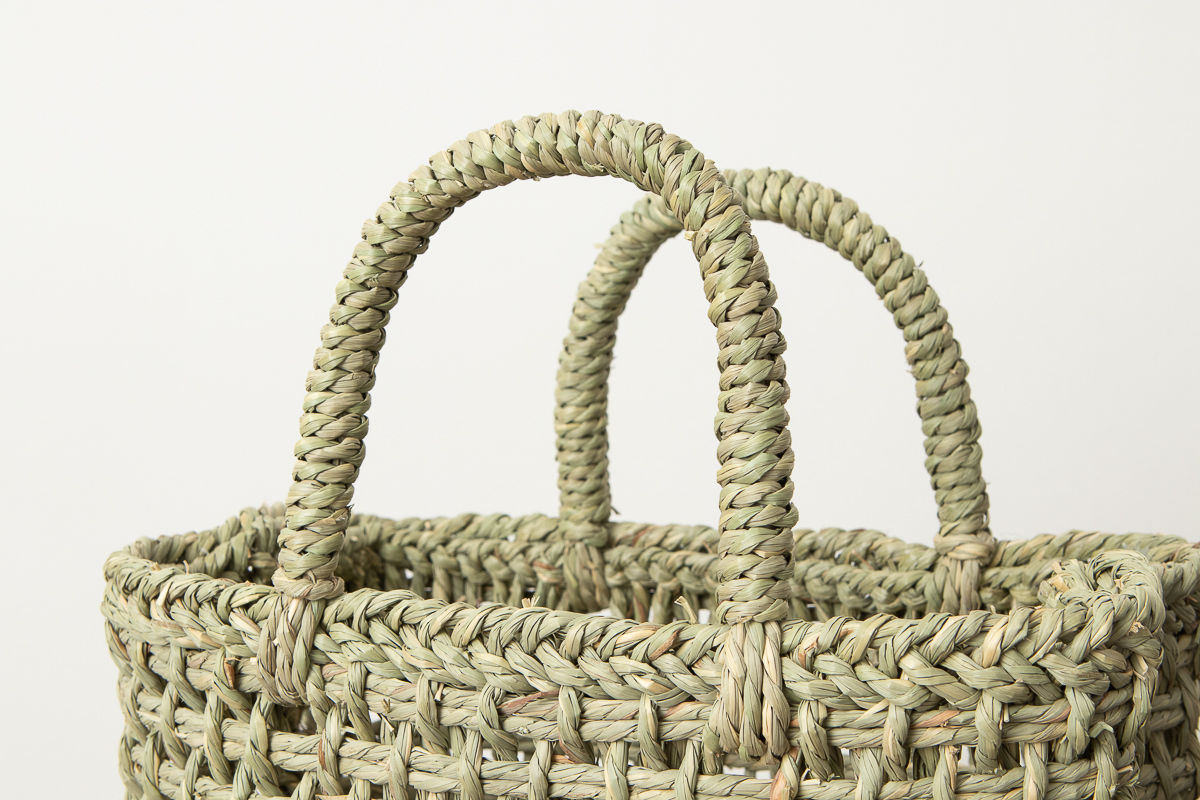
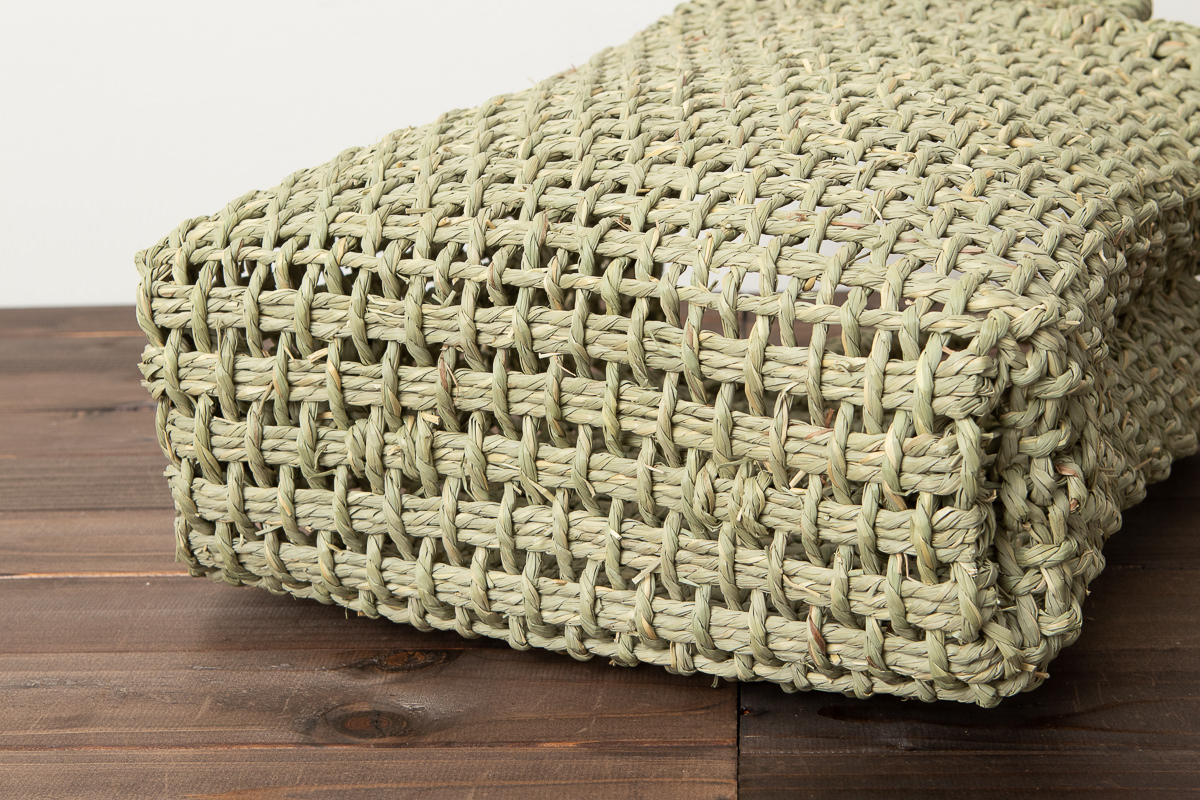
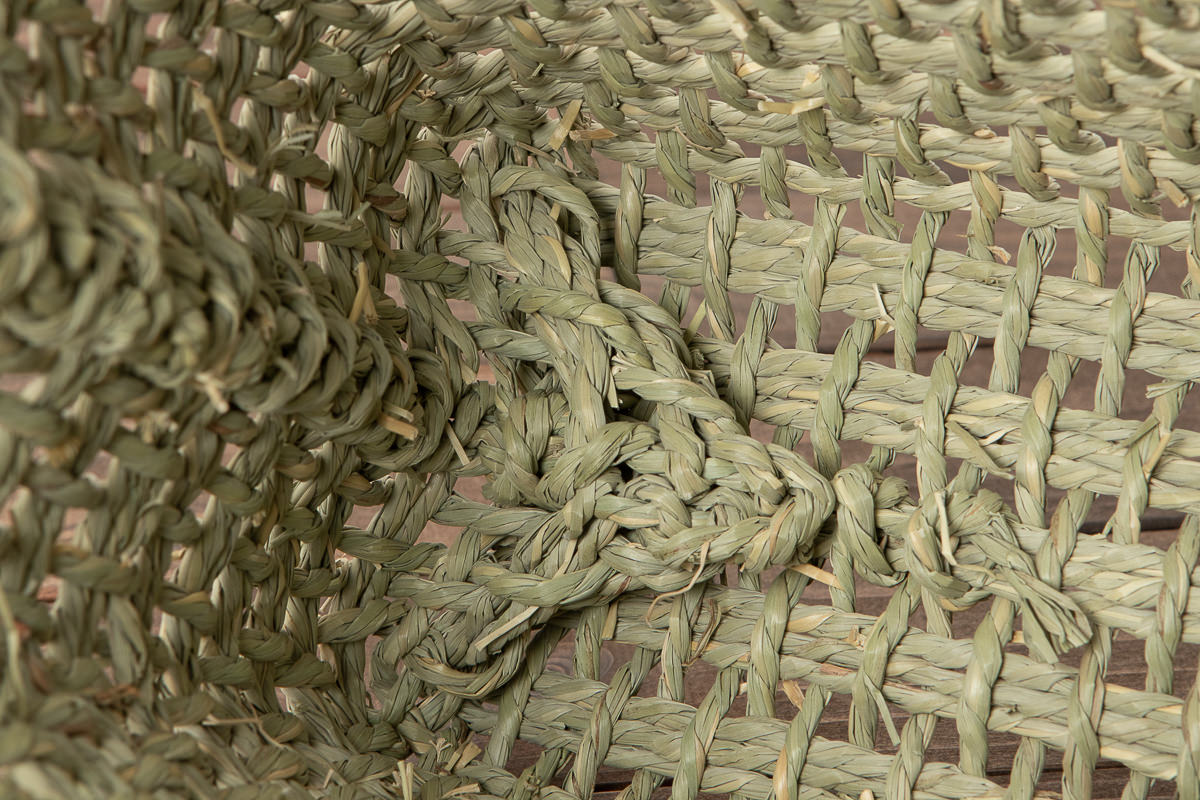
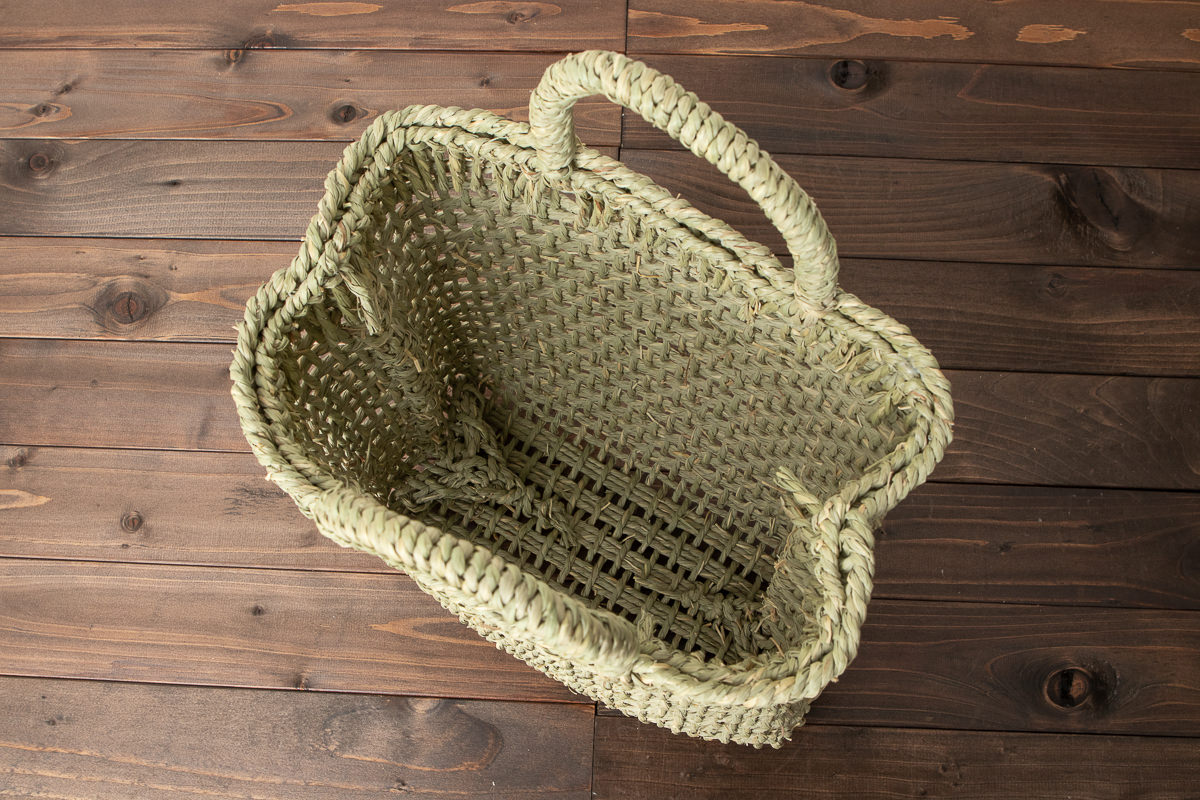
The body of each basket is made from a single woven fabric produced on the wooden loom.Because the weaving is done on a loom, the surface is so precise and uniform that it’s hard to believe it’s made from twisted rush. To give the taller basket greater strength, the weft is woven with two cords at a time throughout.The rim is finished by hand, with firm pressure applied as it is tightened. It is bound twice—once initially, and again for reinforcement. When viewed from above, you can see that the rim is made double.This is the side of the basket. A single piece of woven fabric is folded in half, and inawa cords are threaded through each stitch along the seam and tied firmly.The joints where the handles meet the body are tightly fastened with four inawa cords.One of the advantages of using a soft, flexible material like rush is that it can be “bound” in this way—adding strength through tension.The handles are made in the marute style, with inawa cords forming the core and more inawa wound tightly around them.The bottom is woven with three horizontal cords at a time for added strength.Looking at the inner base, you can see triangular traces formed where the basket’s depth is created. The larger the width of the base, the larger these triangles become.Igusa rush is a soft material, so the basket can expand or flatten depending on what you place inside.The basket is sized so that A4-size items fit neatly inside.As the name “Book Tote” suggests, it would also be useful for carrying books, files, and other items to school or work.
Like tatami mats, ikago baskets carry the distinctive fragrance of igusa rush— a scent that feels both fresh and nostalgic at the same time. Its refreshing color and clean, precise weave bring a sense of calm just by looking at it.
When newly made, the basket feels firm and crisp, but with use it becomes more supple, and the fresh green color of the igusa gradually deepens into warm brown tones over time. Please enjoy the changing expressions of the material as it accompanies you through the years.
__Ikago Making in Kurashiki__
The ikago is made from igusa rush, the same plant used for tatami mats. Several stalks of igusa are twisted together to form a single cord called inawa, and the ikago is created by weaving these cords on a special loom, then finishing it by hand.
Igusa is a plant that grows naturally in wetlands. On rainy or humid days, when the moisture in the air is high, the condition of the igusa becomes ideal, making it easier to work with. In contrast, on dry days, the igusa becomes brittle and snaps easily, so production must always be adjusted according to the weather. It is a type of basket well suited to Japan’s humid climate.
Please note: This item ships from Japan. As the buyer, you are responsible for any import duties, customs fees, or local taxes that may be charged in your country. These costs are not included in the item price or shipping cost. Please check with your local customs authority if you are unsure about any potential charges before placing your order.
In Kurashiki, Okayama Prefecture, there is one shop that continues to make baskets using inawa—twisted cords made from igusa rush. The ikago (handbag made from inawa cords) was once commonly produced throughout the Kurashiki area, but today, this is the only shop that still makes them.
The current craftsman inherited the work from his grandmother. He has been involved in ikago making since his youth, and while respecting the traditional methods and finishes, he creates his work with a free and flexible sensibility. Each piece is designed so that anyone—regardless of gender or age—can enjoy using it.
The ikago was originally known as “yami-kago” (baskets carried when going to the yami-ichi, or black markets), and from around the 1940s to the 1960s, it was used as an everyday shopping basket.
The ikago is made using a slightly different method from other baskets, so let us briefly explain the process.
First, a wooden loom—passed down and carefully used for generations—is prepared.
Dozens of inawa (twisted igusa cords) are then set onto the loom as the warp threads.
For a large size, about fifty-five cords are arranged. Setting the warp threads alone takes quite some time. These warp threads are divided into two groups—one running upward, the other downward.Next, the craftsman uses a wooden shuttle to pass the weft threads from one side to the other. By pressing the foot pedal, the warp threads are lifted and lowered alternately with a clattering sound, forming the weave.After each pass of the shuttle, he gently beats the weave into place using the reed held in his left hand, tapping rhythmically to tighten the pattern. This process is repeated over and over again.By weaving in this way—much like traditional cloth weaving—a flat woven panel is produced before it becomes a basket. The craftsman weaves this panel to the desired length, which will later form the base shape of the basket.
The weaving continues until the material runs out. When finished, the woven panel is removed from the loom. Then, by hand, the craftsman carefully binds the edges of the flat woven fabric, attaches the handles, and shapes it into a basket.
Made through this process, this ikago is taller than the basic type.
The body of each basket is made from a single woven fabric produced on the wooden loom.Because the weaving is done on a loom, the surface is so precise and uniform that it’s hard to believe it’s made from twisted rush. To give the taller basket greater strength, the weft is woven with two cords at a time throughout.The rim is finished by hand, with firm pressure applied as it is tightened. It is bound twice—once initially, and again for reinforcement. When viewed from above, you can see that the rim is made double.This is the side of the basket. A single piece of woven fabric is folded in half, and inawa cords are threaded through each stitch along the seam and tied firmly.The joints where the handles meet the body are tightly fastened with four inawa cords.One of the advantages of using a soft, flexible material like rush is that it can be “bound” in this way—adding strength through tension.The handles are made in the marute style, with inawa cords forming the core and more inawa wound tightly around them.The bottom is woven with three horizontal cords at a time for added strength.Looking at the inner base, you can see triangular traces formed where the basket’s depth is created. The larger the width of the base, the larger these triangles become.Igusa rush is a soft material, so the basket can expand or flatten depending on what you place inside.The basket is sized so that A4-size items fit neatly inside.As the name “Book Tote” suggests, it would also be useful for carrying books, files, and other items to school or work.
Like tatami mats, ikago baskets carry the distinctive fragrance of igusa rush— a scent that feels both fresh and nostalgic at the same time. Its refreshing color and clean, precise weave bring a sense of calm just by looking at it.
When newly made, the basket feels firm and crisp, but with use it becomes more supple, and the fresh green color of the igusa gradually deepens into warm brown tones over time. Please enjoy the changing expressions of the material as it accompanies you through the years.
__Ikago Making in Kurashiki__
The ikago is made from igusa rush, the same plant used for tatami mats. Several stalks of igusa are twisted together to form a single cord called inawa, and the ikago is created by weaving these cords on a special loom, then finishing it by hand.
Igusa is a plant that grows naturally in wetlands. On rainy or humid days, when the moisture in the air is high, the condition of the igusa becomes ideal, making it easier to work with. In contrast, on dry days, the igusa becomes brittle and snaps easily, so production must always be adjusted according to the weather. It is a type of basket well suited to Japan’s humid climate.
Please note: This item ships from Japan. As the buyer, you are responsible for any import duties, customs fees, or local taxes that may be charged in your country. These costs are not included in the item price or shipping cost. Please check with your local customs authority if you are unsure about any potential charges before placing your order.
In Kurashiki, Okayama Prefecture, there is one shop that continues to make baskets using inawa—twisted cords made from igusa rush. The ikago (handbag made from inawa cords) was once commonly produced throughout the Kurashiki area, but today, this is the only shop that still makes them.
The current craftsman inherited the work from his grandmother. He has been involved in ikago making since his youth, and while respecting the traditional methods and finishes, he creates his work with a free and flexible sensibility. Each piece is designed so that anyone—regardless of gender or age—can enjoy using it.
The ikago was originally known as “yami-kago” (baskets carried when going to the yami-ichi, or black markets), and from around the 1940s to the 1960s, it was used as an everyday shopping basket.
The ikago is made using a slightly different method from other baskets, so let us briefly explain the process.
First, a wooden loom—passed down and carefully used for generations—is prepared.
Dozens of inawa (twisted igusa cords) are then set onto the loom as the warp threads.
For a large size, about fifty-five cords are arranged. Setting the warp threads alone takes quite some time. These warp threads are divided into two groups—one running upward, the other downward.Next, the craftsman uses a wooden shuttle to pass the weft threads from one side to the other. By pressing the foot pedal, the warp threads are lifted and lowered alternately with a clattering sound, forming the weave.After each pass of the shuttle, he gently beats the weave into place using the reed held in his left hand, tapping rhythmically to tighten the pattern. This process is repeated over and over again.By weaving in this way—much like traditional cloth weaving—a flat woven panel is produced before it becomes a basket. The craftsman weaves this panel to the desired length, which will later form the base shape of the basket.
The weaving continues until the material runs out. When finished, the woven panel is removed from the loom. Then, by hand, the craftsman carefully binds the edges of the flat woven fabric, attaches the handles, and shapes it into a basket.
Made through this process, this ikago is taller than the basic type.
The body of each basket is made from a single woven fabric produced on the wooden loom.Because the weaving is done on a loom, the surface is so precise and uniform that it’s hard to believe it’s made from twisted rush. To give the taller basket greater strength, the weft is woven with two cords at a time throughout.The rim is finished by hand, with firm pressure applied as it is tightened. It is bound twice—once initially, and again for reinforcement. When viewed from above, you can see that the rim is made double.This is the side of the basket. A single piece of woven fabric is folded in half, and inawa cords are threaded through each stitch along the seam and tied firmly.The joints where the handles meet the body are tightly fastened with four inawa cords.One of the advantages of using a soft, flexible material like rush is that it can be “bound” in this way—adding strength through tension.The handles are made in the marute style, with inawa cords forming the core and more inawa wound tightly around them.The bottom is woven with three horizontal cords at a time for added strength.Looking at the inner base, you can see triangular traces formed where the basket’s depth is created. The larger the width of the base, the larger these triangles become.Igusa rush is a soft material, so the basket can expand or flatten depending on what you place inside.The basket is sized so that A4-size items fit neatly inside.As the name “Book Tote” suggests, it would also be useful for carrying books, files, and other items to school or work.
Like tatami mats, ikago baskets carry the distinctive fragrance of igusa rush— a scent that feels both fresh and nostalgic at the same time. Its refreshing color and clean, precise weave bring a sense of calm just by looking at it.
When newly made, the basket feels firm and crisp, but with use it becomes more supple, and the fresh green color of the igusa gradually deepens into warm brown tones over time. Please enjoy the changing expressions of the material as it accompanies you through the years.
__Ikago Making in Kurashiki__
The ikago is made from igusa rush, the same plant used for tatami mats. Several stalks of igusa are twisted together to form a single cord called inawa, and the ikago is created by weaving these cords on a special loom, then finishing it by hand.
Igusa is a plant that grows naturally in wetlands. On rainy or humid days, when the moisture in the air is high, the condition of the igusa becomes ideal, making it easier to work with. In contrast, on dry days, the igusa becomes brittle and snaps easily, so production must always be adjusted according to the weather. It is a type of basket well suited to Japan’s humid climate.
Please note: This item ships from Japan. As the buyer, you are responsible for any import duties, customs fees, or local taxes that may be charged in your country. These costs are not included in the item price or shipping cost. Please check with your local customs authority if you are unsure about any potential charges before placing your order.