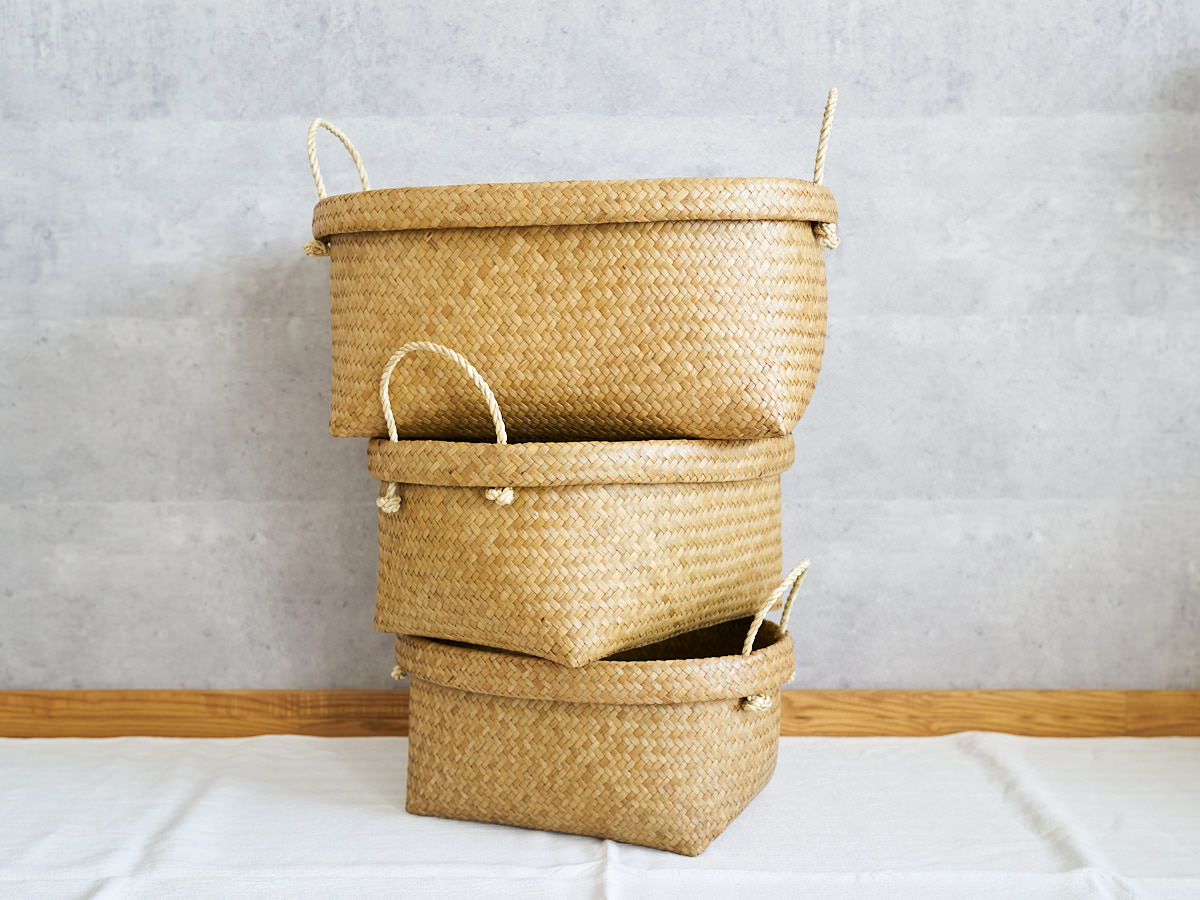
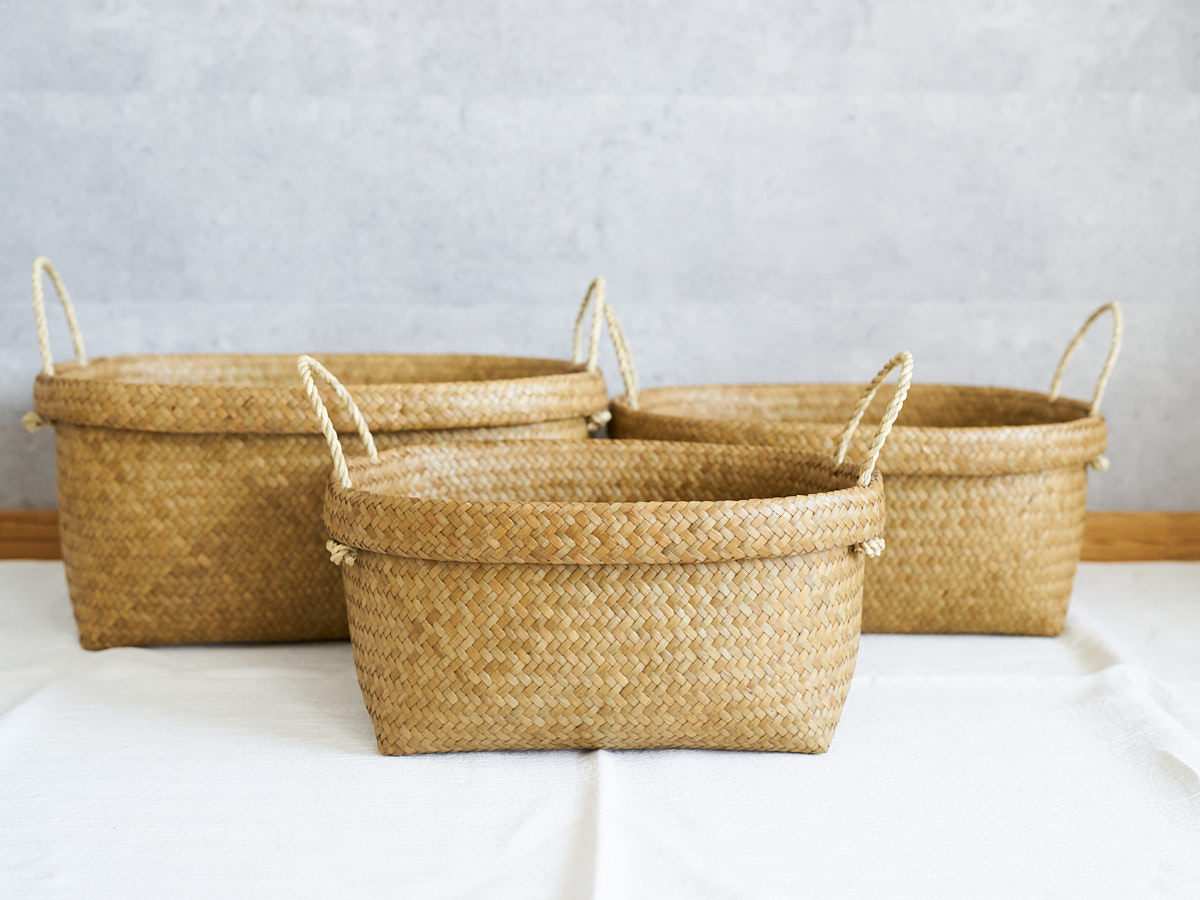
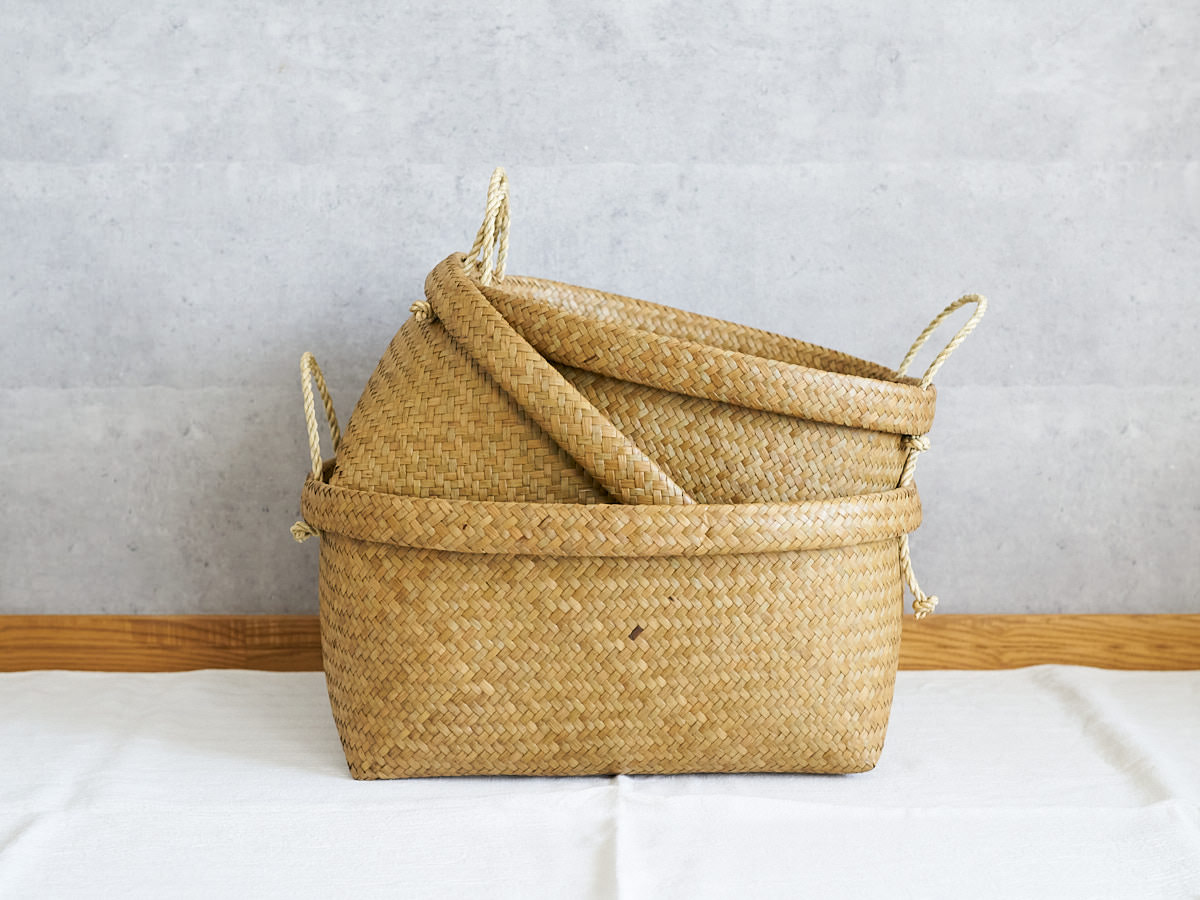
Deep Oval Basket with Handle / Krajood Grass / THA 3115142 タイ/カチュー(水草) 楕円かご 取手つき M・L・XL 3サイズ
Deep Oval Basket with Handle / Krajood Grass / THA 3115142 タイ/カチュー(水草) 楕円かご 取手つき M・L・XL 3サイズ
This basket is woven from Krajood, a grass that grows naturally in the wetlands of Thailand.
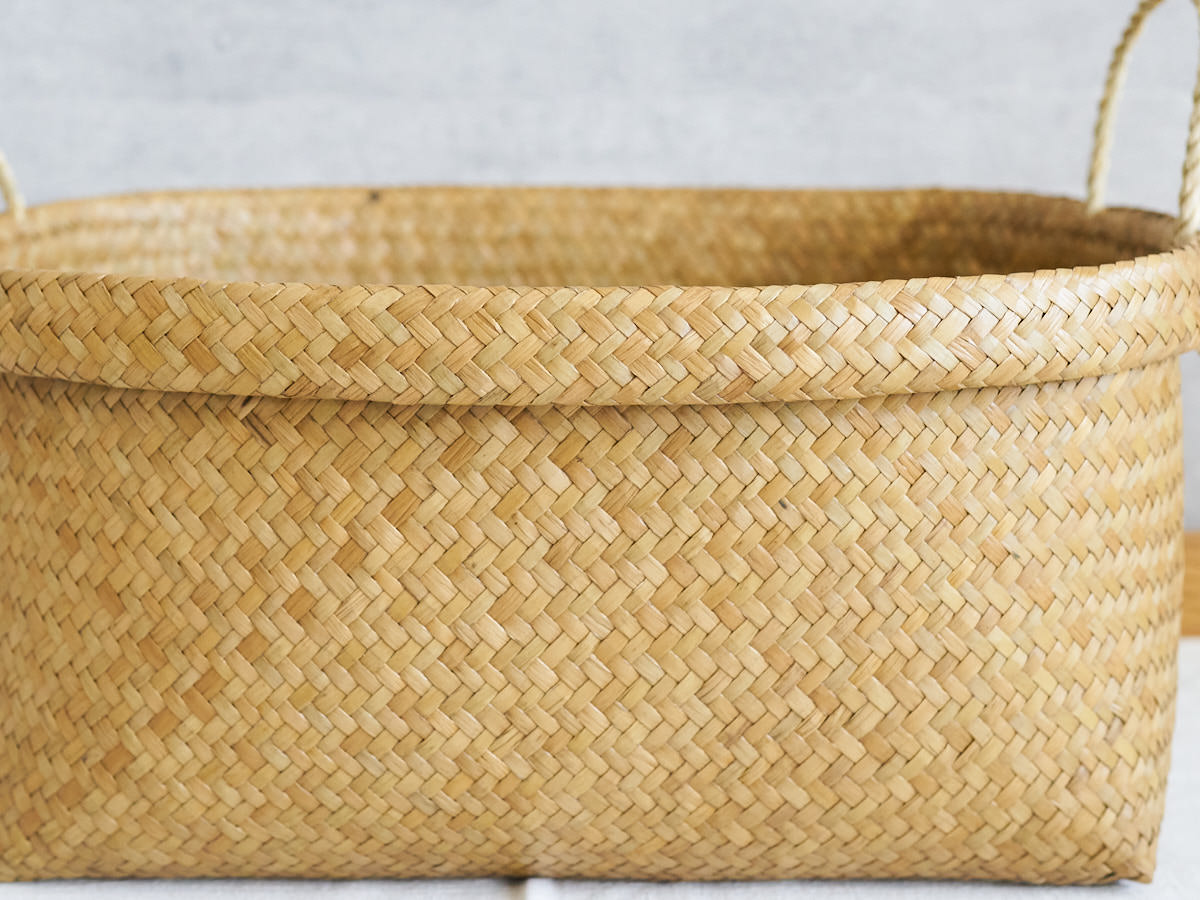
It is light in weight, yet has a gentle firmness and a sense of stability.
The calm tone unique to natural materials allows it to blend effortlessly into a variety of spaces, wherever it is placed.
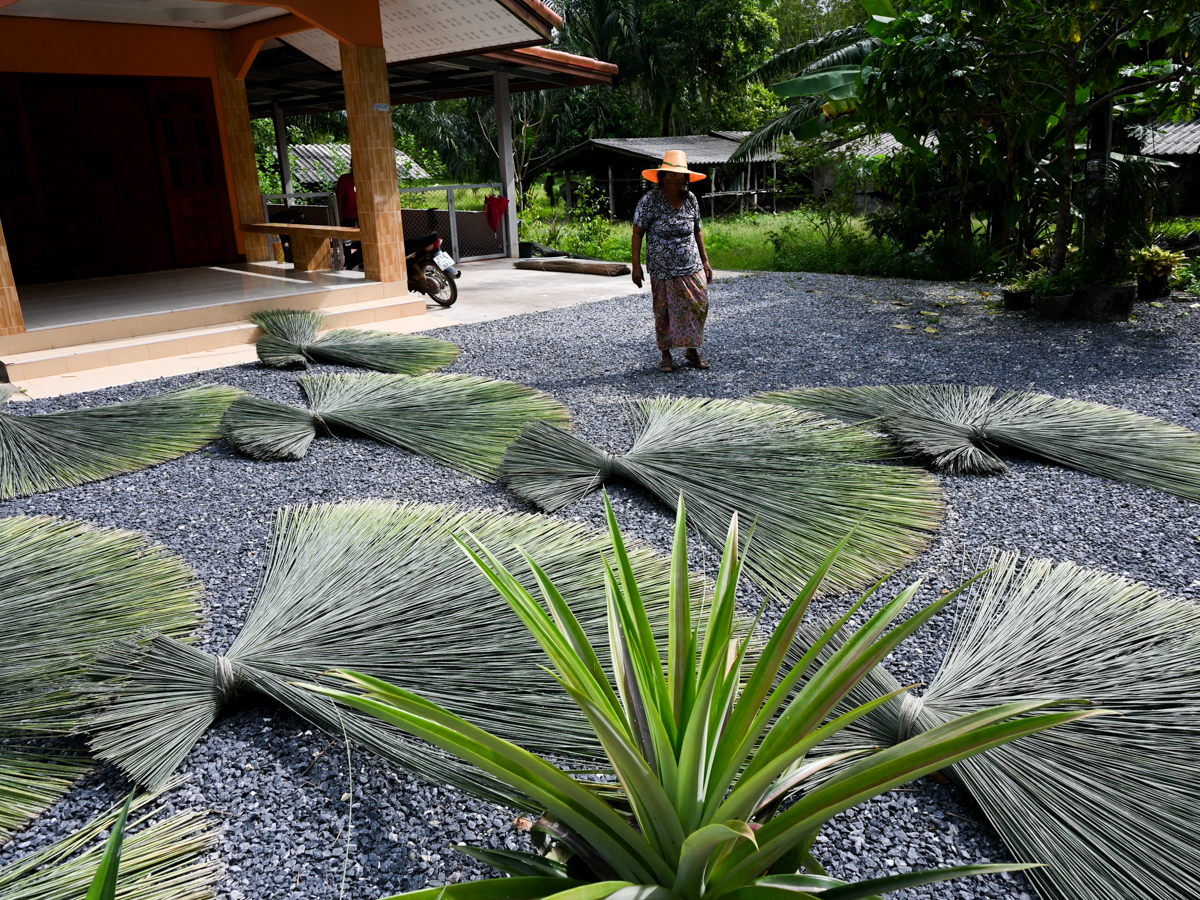
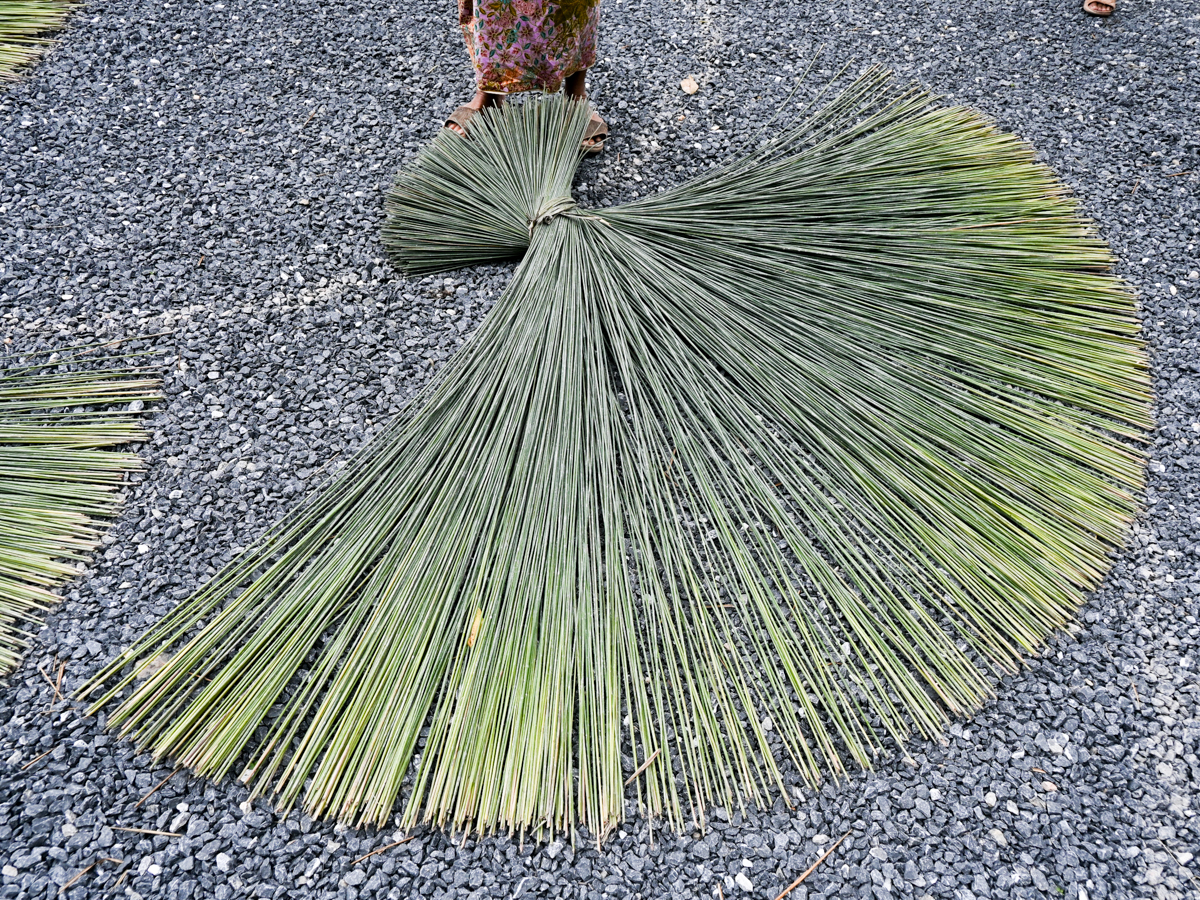
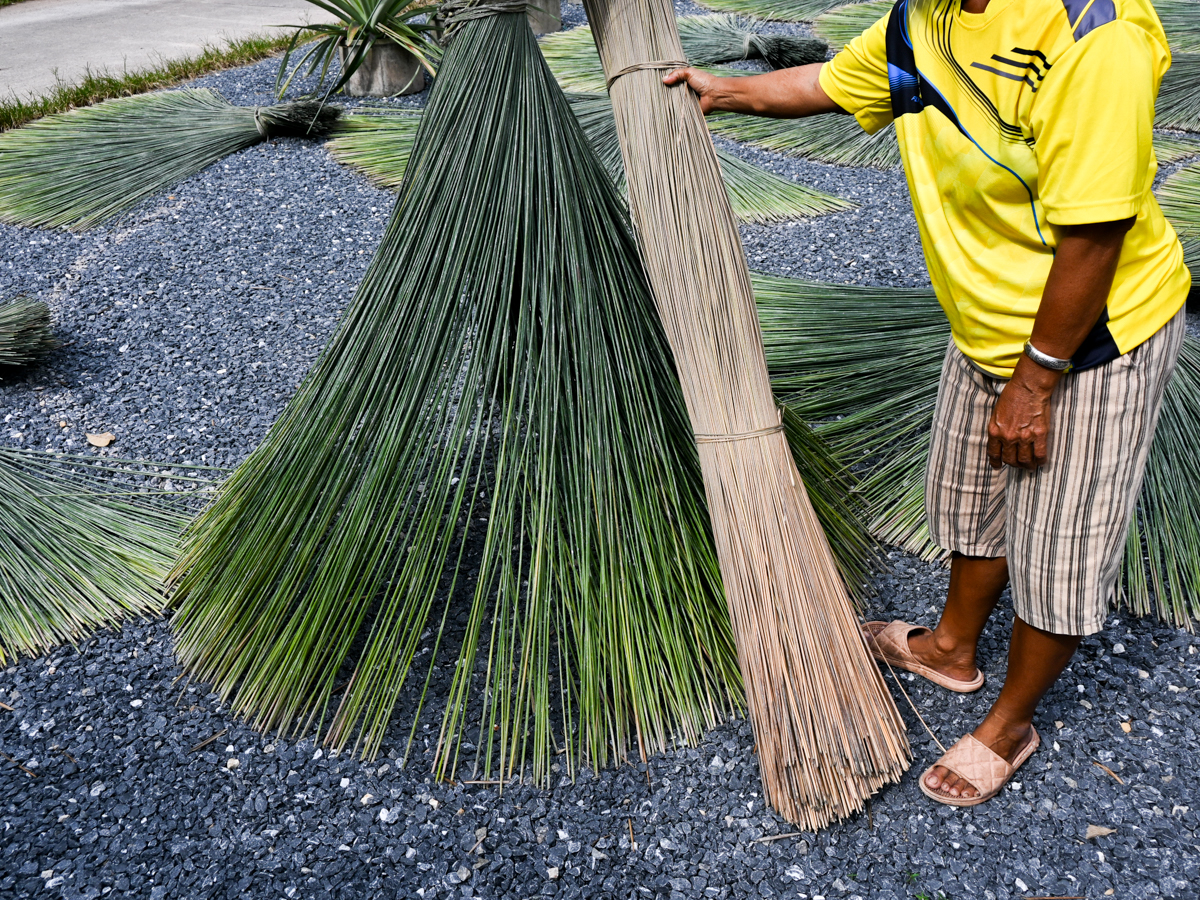
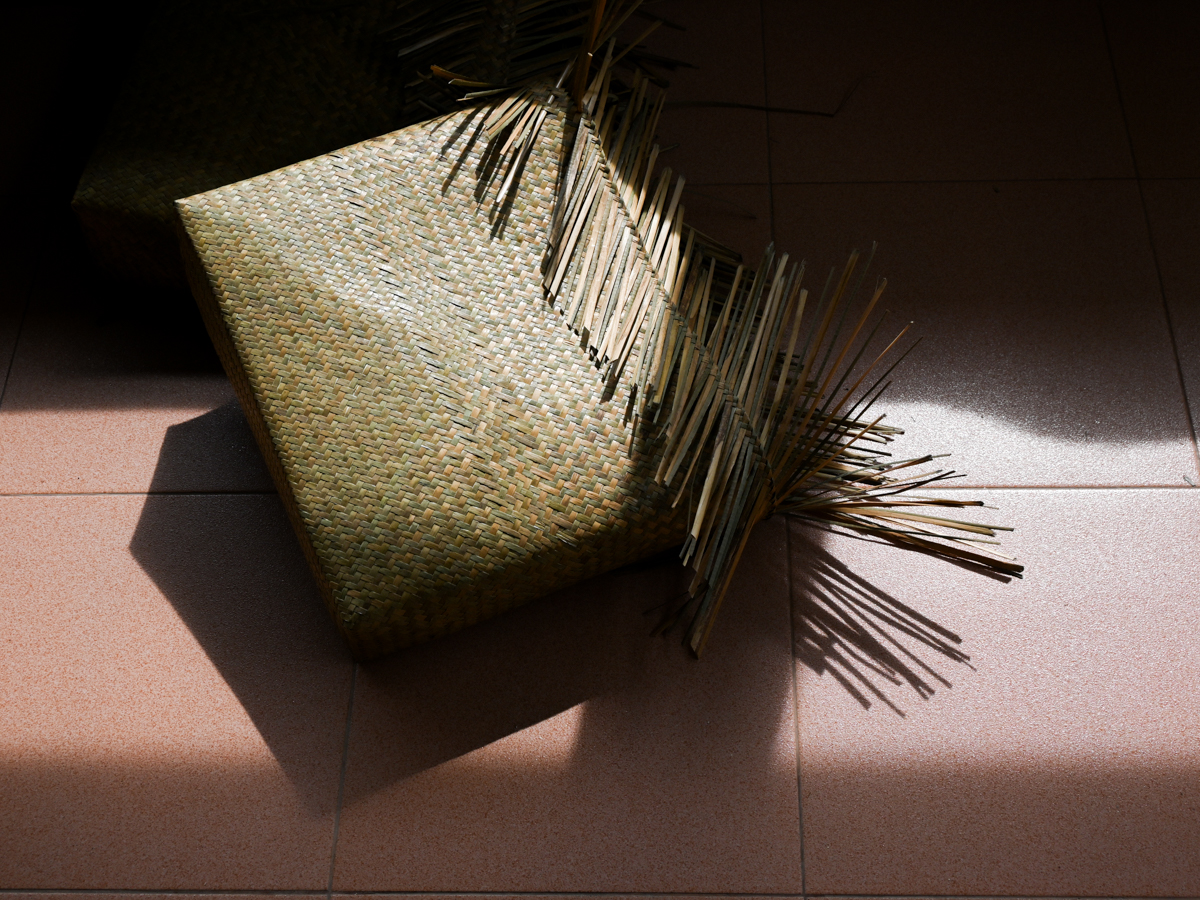
The basket is made by cutting the stems of Krajood grass, drying them in the sun, flattening them, and then weaving them together.The stems are mainly harvested from spring (around May) to summer (around August) in Thailand. On clear, sunny days, they are dried all at once under strong sunlight. Shown here are bundles of Krajood stems freshly cut from the water’s edge.A clay-rich mud is applied to the stems, and they are then sun-dried for about three to five days. They are left to dry for several days, until the color gradually changes to a greenish brown—similar to the bundle shown on the right in the photograph.Through sun-drying, the material is given flexibility and a slight moisture content, which helps prevent cracking caused by over-drying and increases its strength as a weaving material.
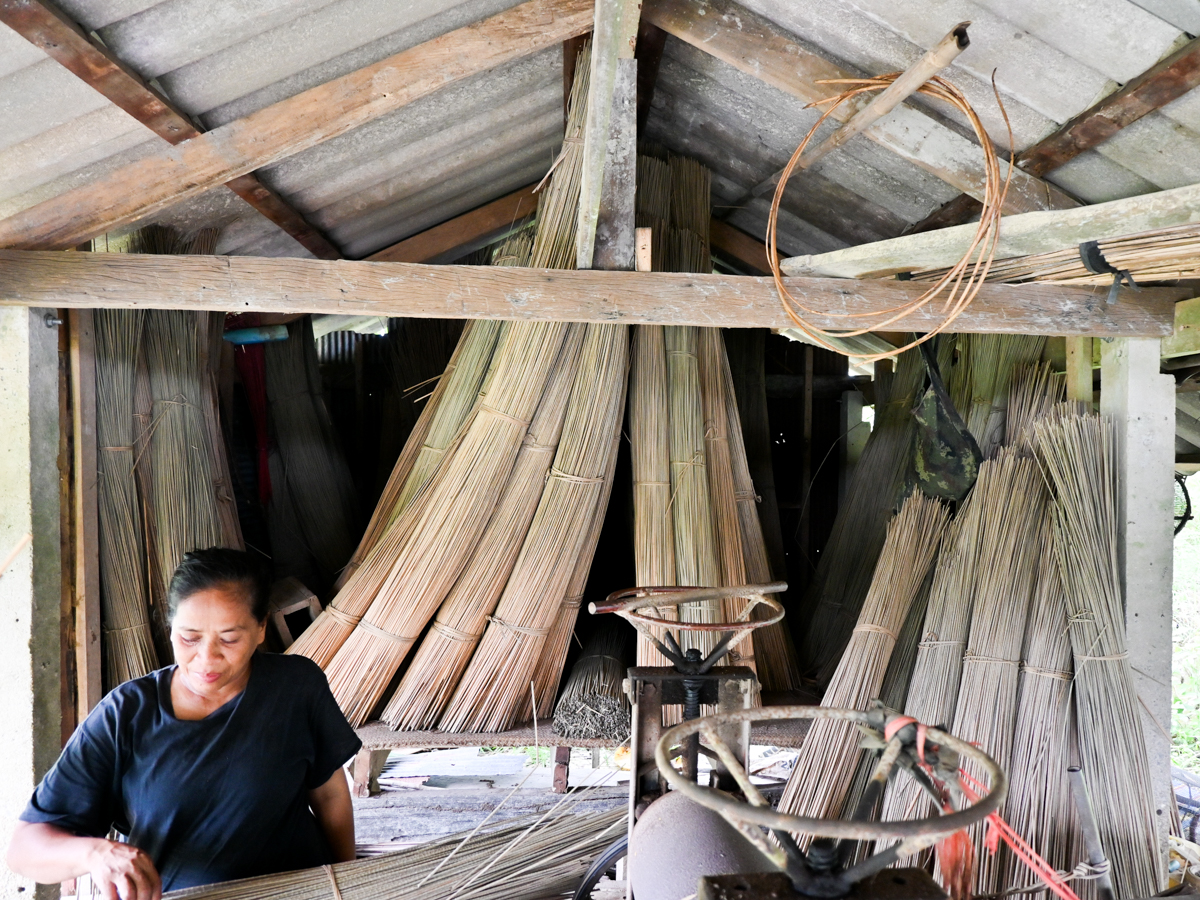
The makers vary by region. In some areas, a highly skilled weaver serves as a teacher, guiding others in the group as they work. In other places, baskets are woven by three generations of the same family.
In many villages, production is often carried out by small groups of about four to five people.
For most people, basket making is not their primary occupation. It is often done in between agricultural work such as rice farming, and many of the weavers today belong to the older generation.
Although the number of younger weavers remains small, the value of products made from natural materials is being rediscovered within Thailand. We are told that more young people are beginning to choose and use these baskets once again.
We have shared scenes from our visit to a Krajood village in Thailand in our Journal. We hope you will take a look.
On this page, we introduce a deep oval basket with handles, made from Krajood grass.
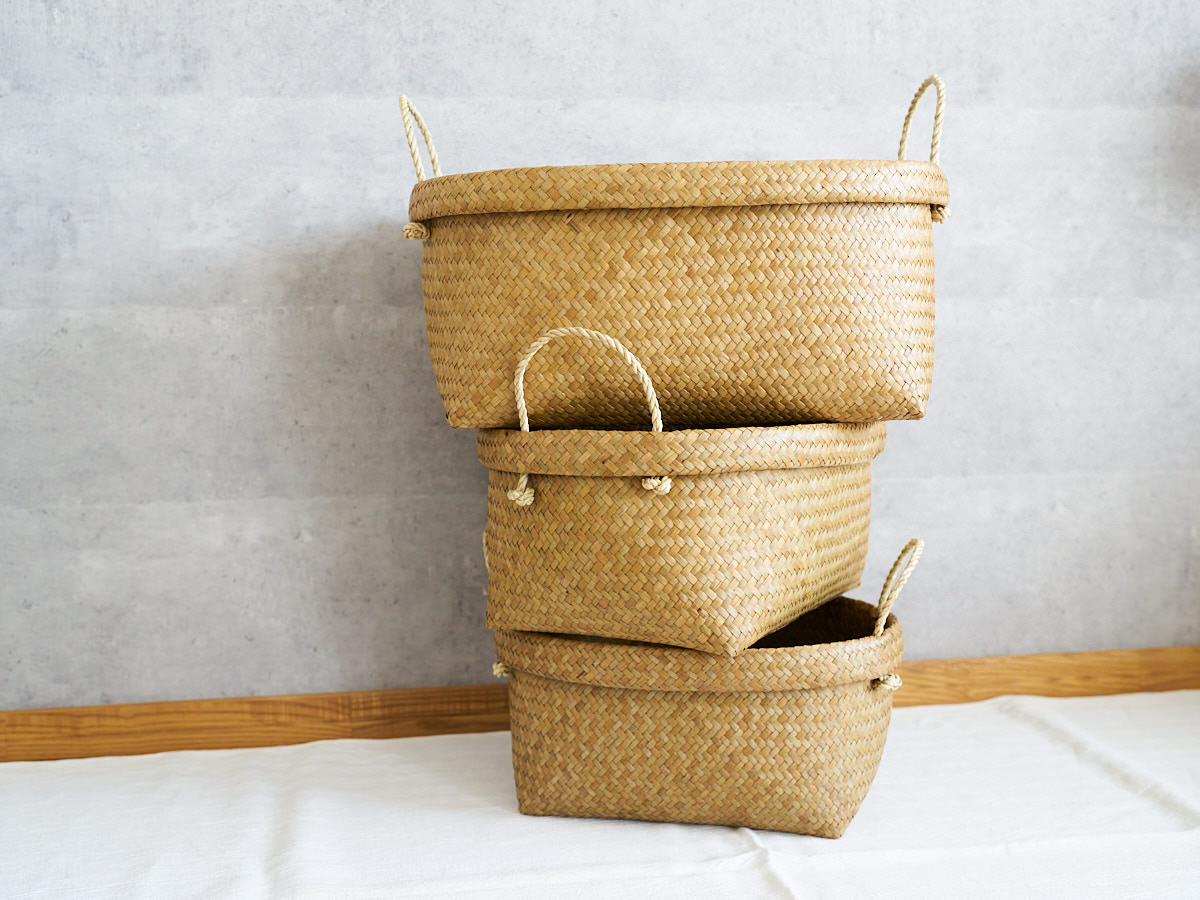
It is available in three sizes: M, L, and XL.
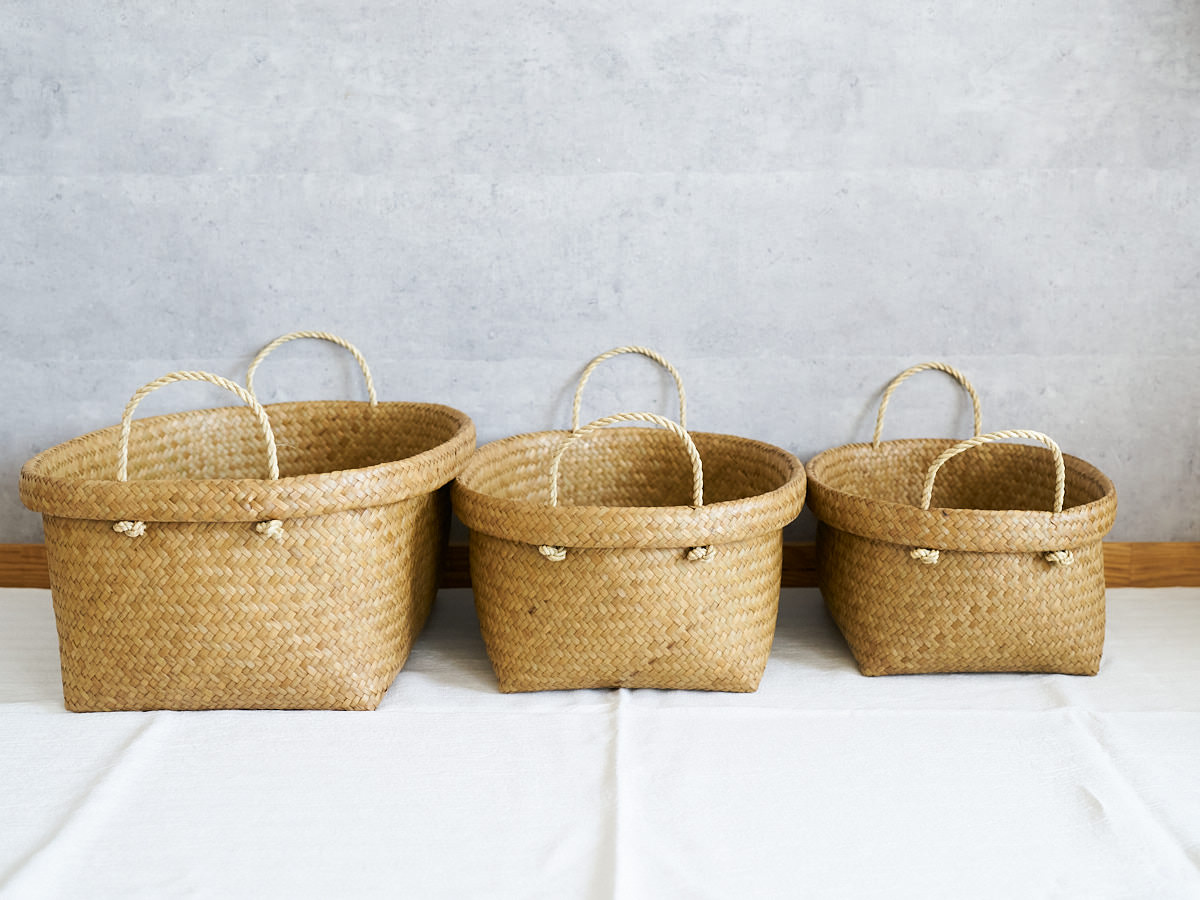
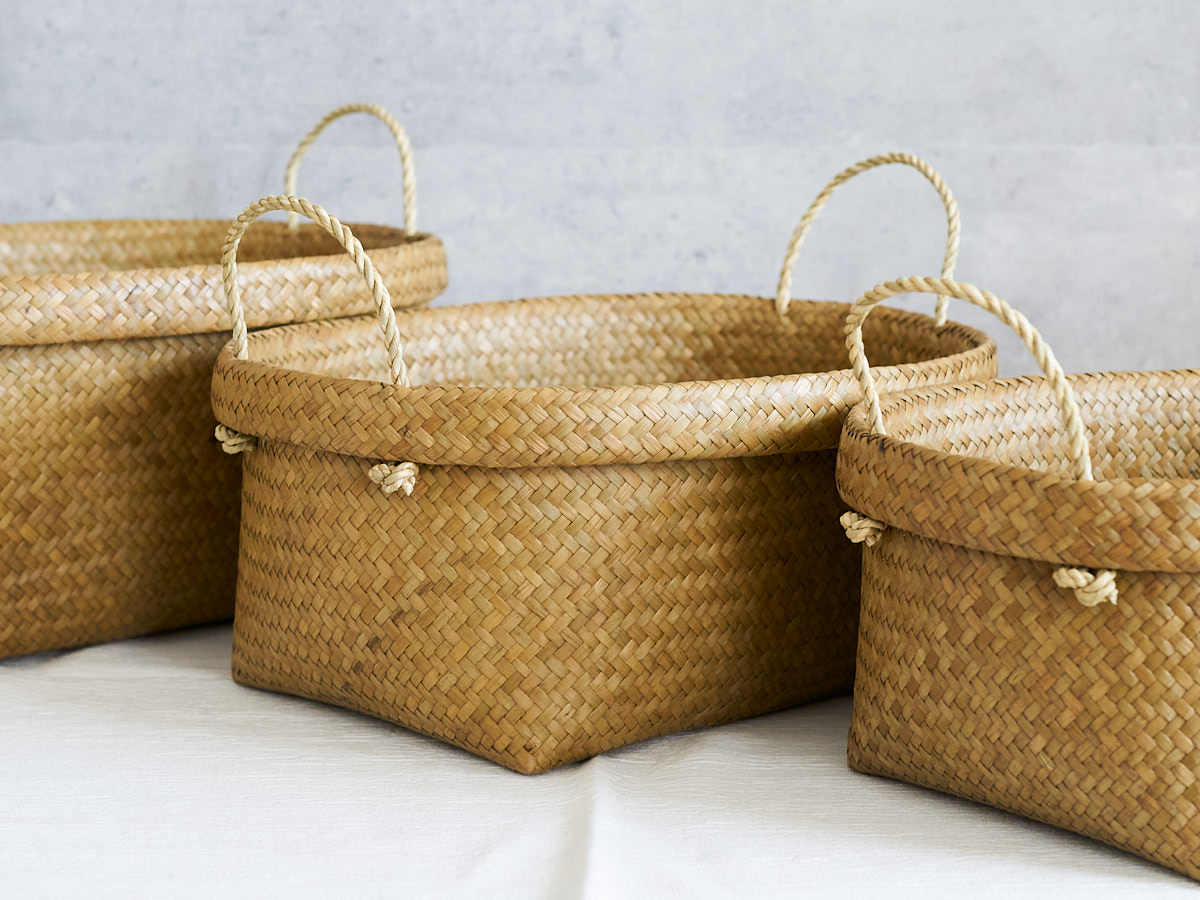
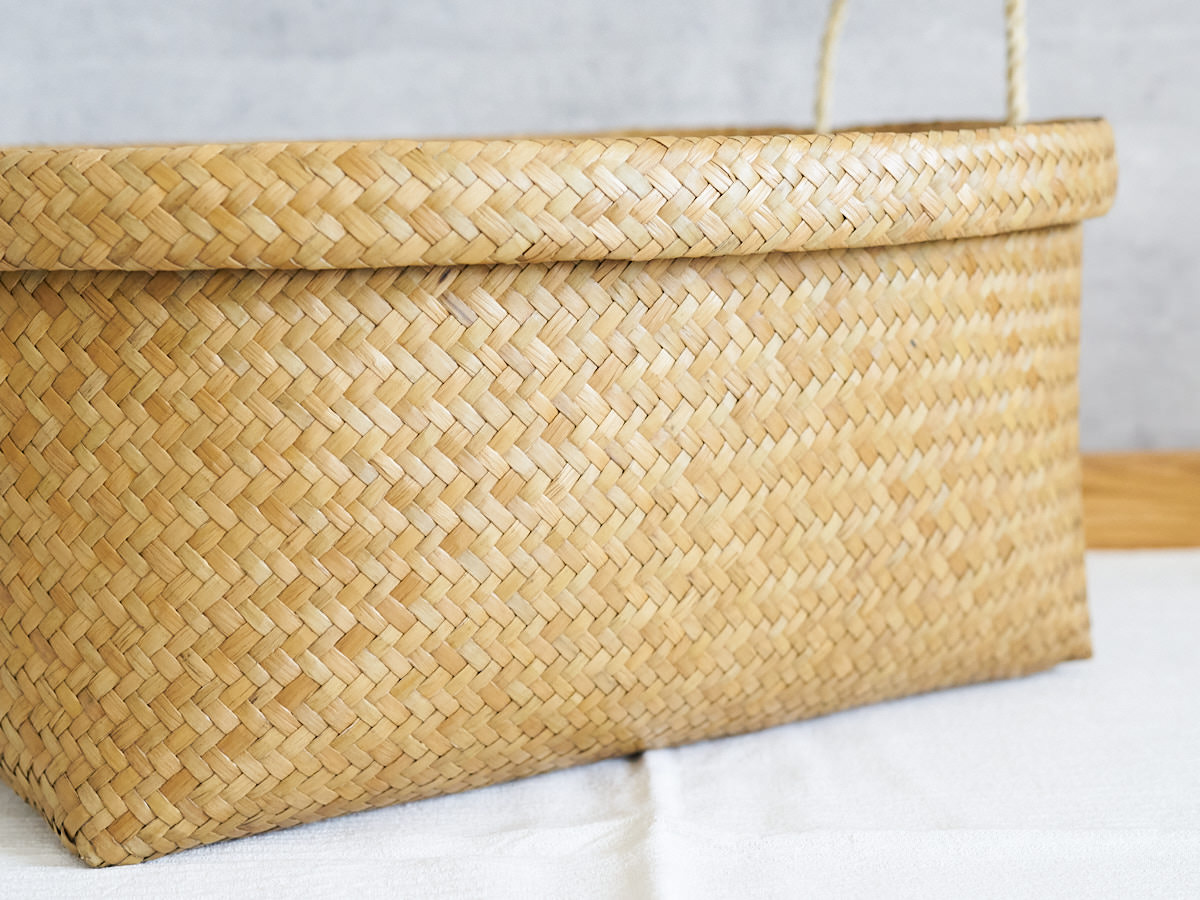
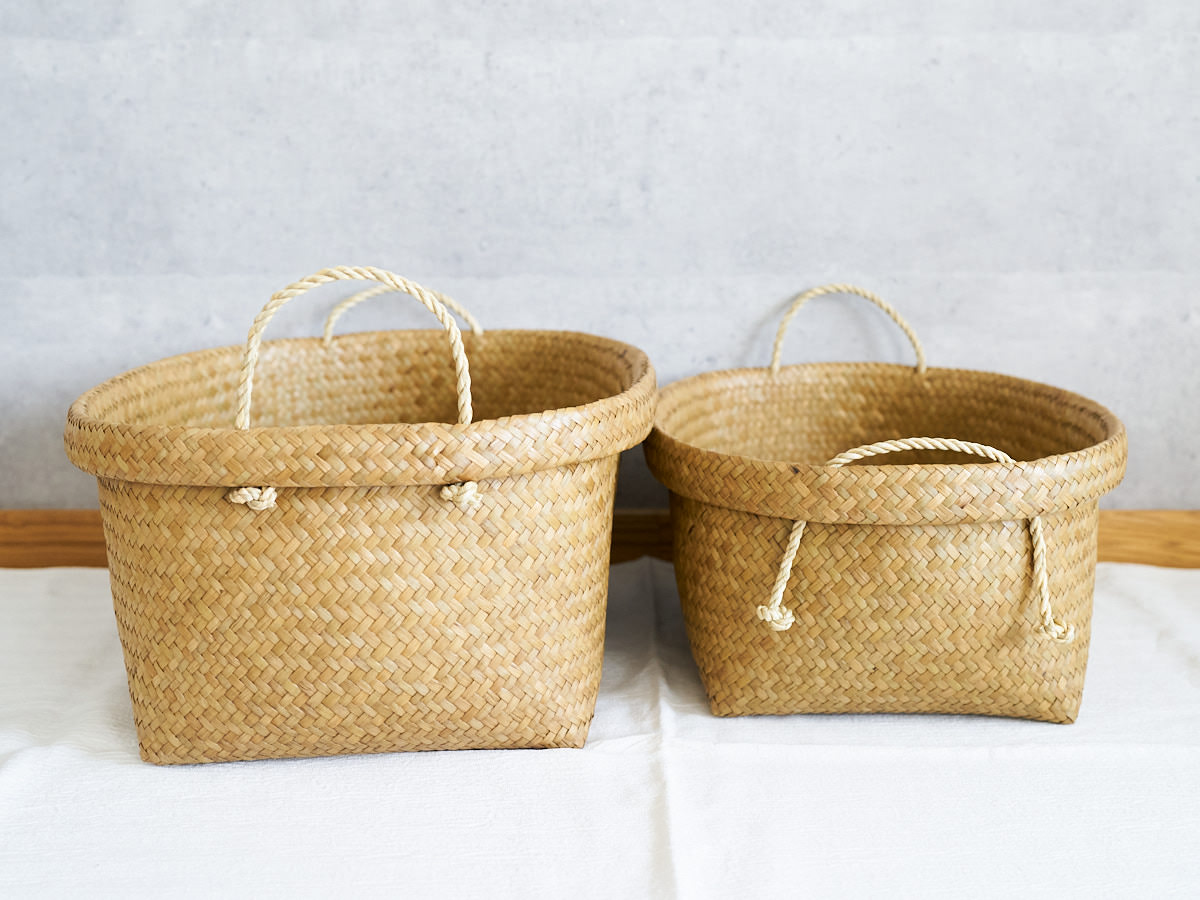
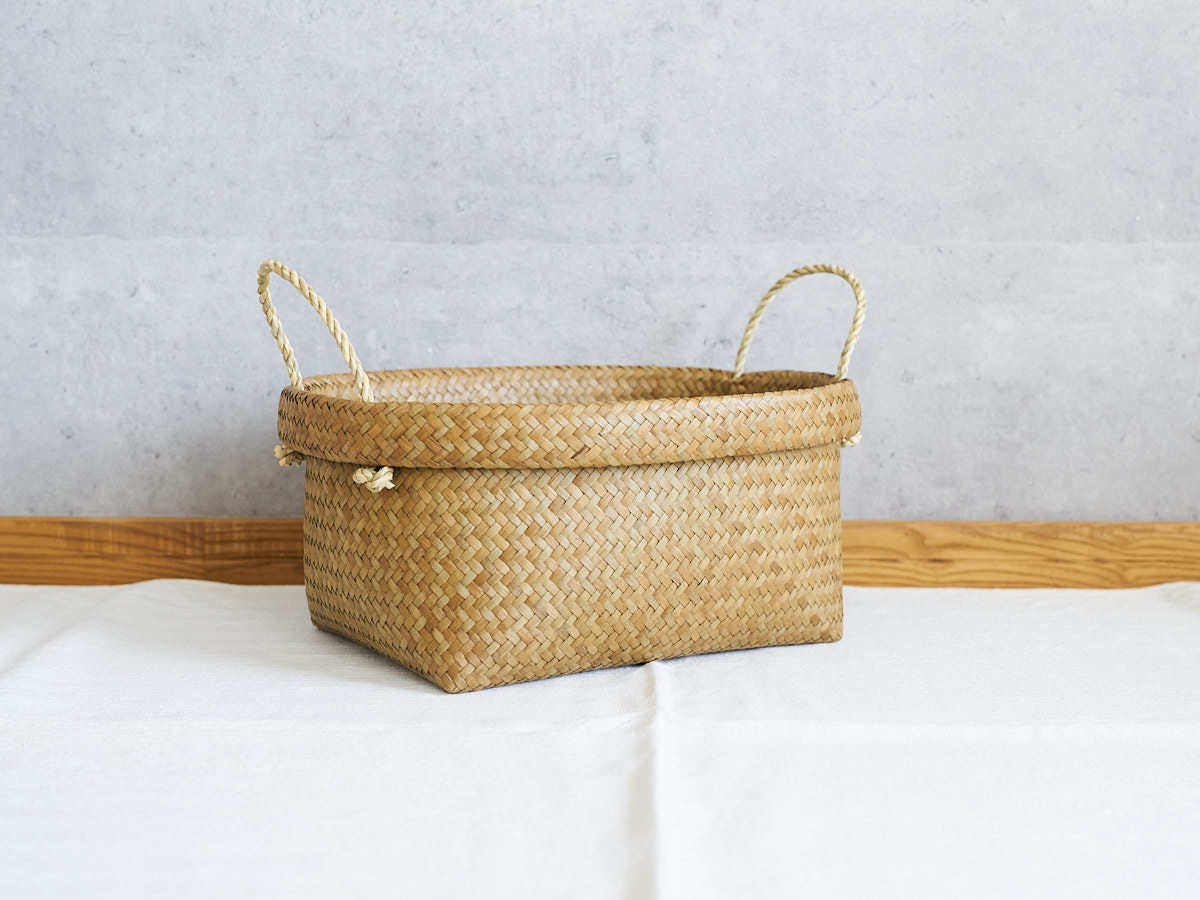
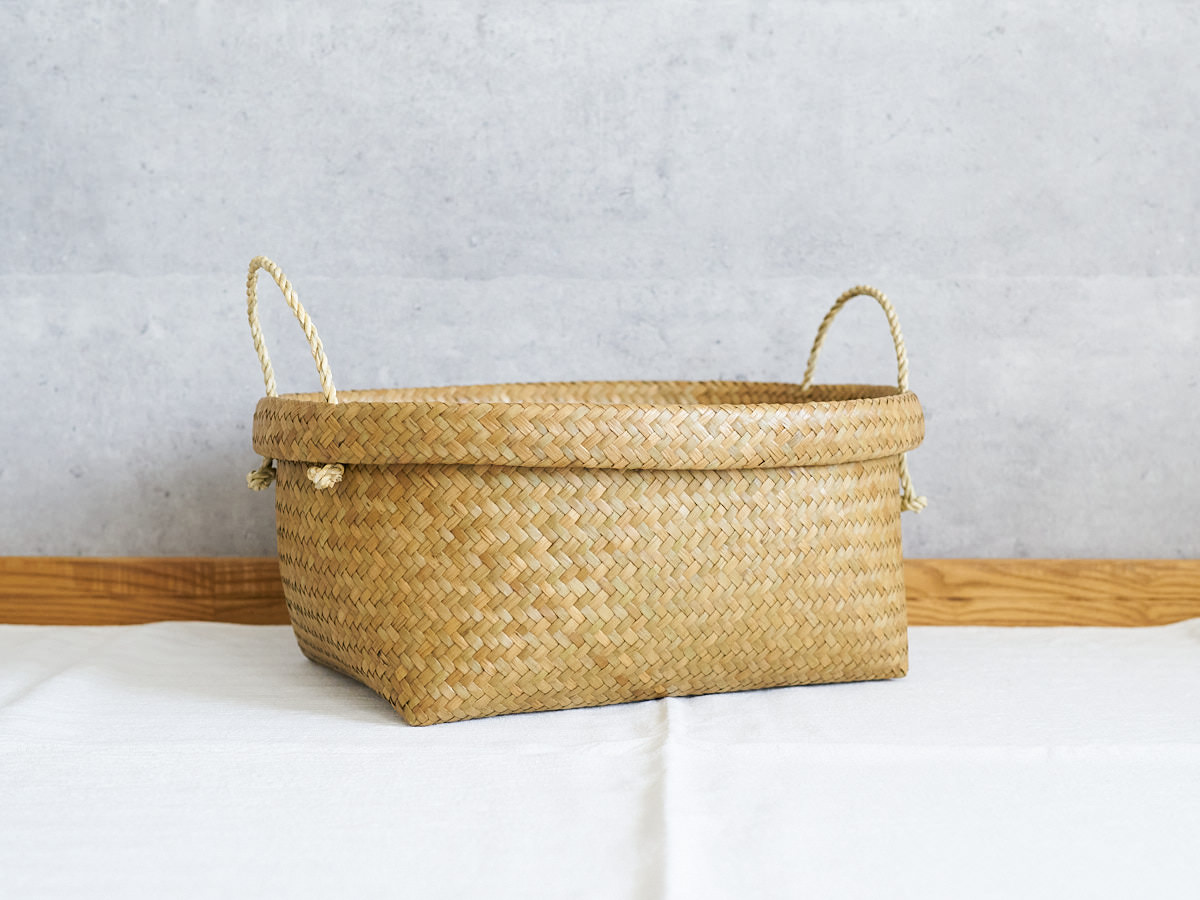
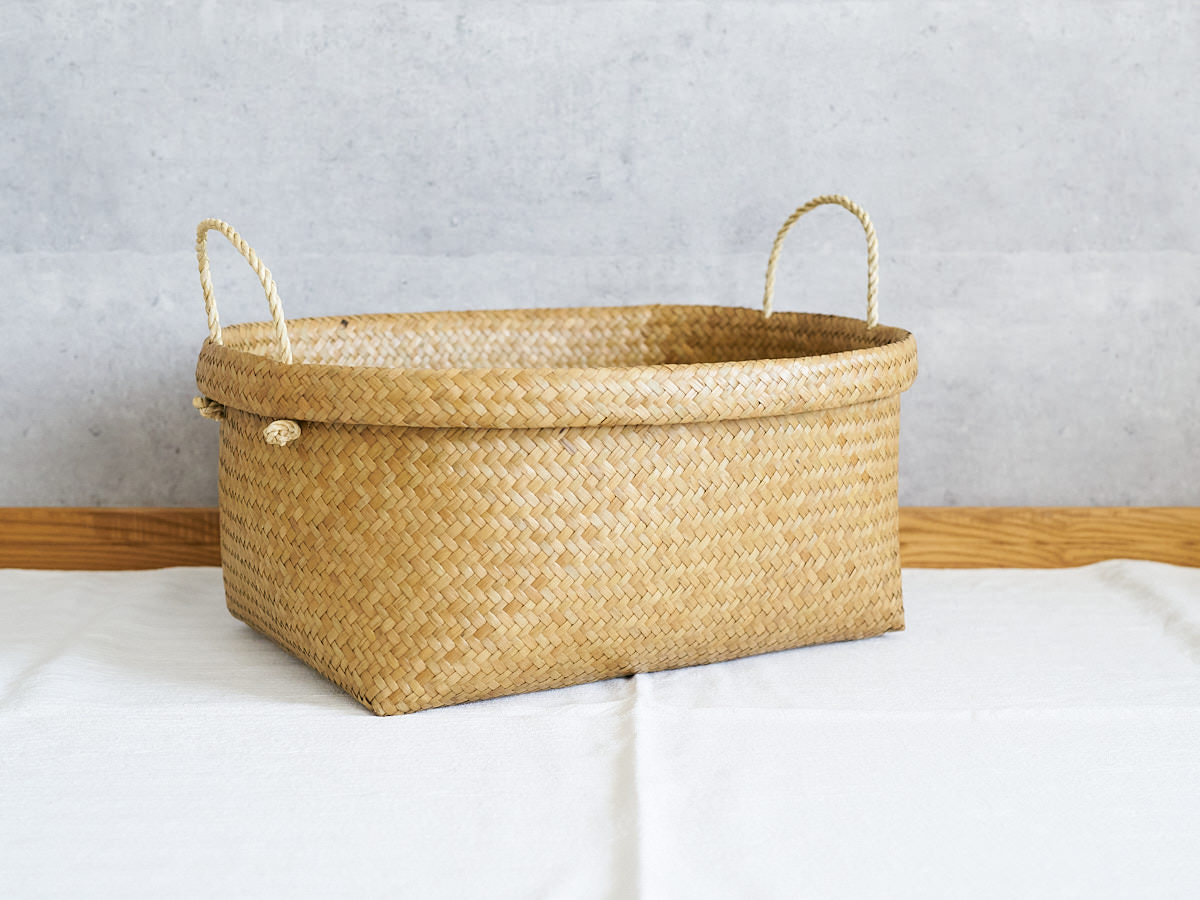
The basket is made with a tightly woven structure. Flattened stems are interwoven in an alternating pattern to form a mat-like piece, which is then shaped into a basket.As a final step in the making process, the entire surface of the basket is coated with a starch-based adhesive. This is an essential process that helps strengthen the Krajood basket. The rim is folded over toward the outside and tucked into the weave. This makes the rim thicker and gives it a sturdy finish.The handles are made from a type of sedge called “Kok” in Thai. The plant is twisted into rope-like cords to form the handles. As shown in the photograph, the handles can be extended and pulled taut, or pulled downward to shorten them and tuck them away.This is the M size. Each of the three sizes has a rectangular base, so items fit neatly inside.This is the L size.This is the XL size.
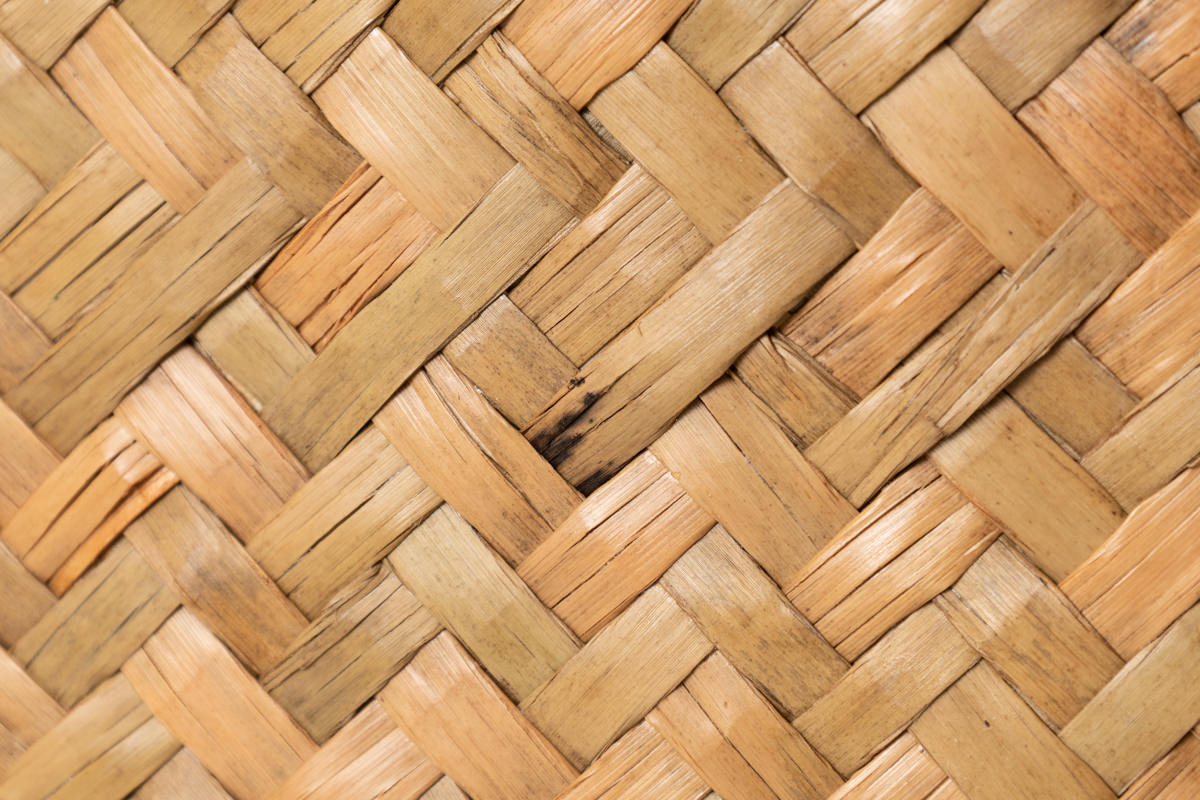
At times, you may notice stain-like discoloration on the strips as shown here. We hope you will understand this as part of the natural character of the material.
The starch-based adhesive applied to the surface of Krajood baskets helps prevent deformation and increases their strength for everyday use. It is also part of the maker’s knowledge and care in creating durable baskets.
The adhesive is thoroughly dried, but in rare cases, those with sensitive skin may experience slight redness upon contact.
If you are concerned, it may be best to avoid direct contact with the skin, for example by wearing long sleeves when using the basket.
The deep oval shape combines generous storage capacity with a space-saving footprint.
It can be used as a laundry basket for clothes waiting to be washed, or as a storage basket for children’s toys and school supplies.
If you purchase several baskets of the same shape, choosing slightly different sizes can help you tell what is inside each one or whose belongings it holds.
It also looks useful for organizing sheets and bedding.
This deep oval basket with handles offers plenty of storage space. We hope it will be useful in your daily life.
Please check the dimensions carefully and choose whichever size you prefer.
About Krajood Craft in Thailand
Thailand lies in a tropical climate zone, where the year is broadly divided into a rainy season and a dry season.
It is sometimes said that the shape of Thailand resembles the face of an elephant. The Malay Peninsula forms what is often described as its “trunk.”
Southern Thailand, located along this peninsula, has a slightly different climate. Depending on the season, monsoon winds blow either from the southwest or from the northeast. As a result, this region experiences longer periods of rainfall compared to other parts of the country, with the dry season lasting only about two months.
Krajood is the name of a grass that grows in the wetlands of southern Thailand, where the climate is hot and humid. This is the term used by local people in Thai.
In Thailand, where rainfall is abundant, flooding can occur frequently. In some years, Krajood may be washed away or damaged by floods, leading to poor harvests. While demand for Krajood baskets continues to grow both within Thailand and abroad, securing sufficient materials for basket making has become a challenging issue for the makers.
The Krajood craft introduced here is mainly produced in provinces along the eastern side of the Malay Peninsula, facing the Gulf of Thailand—such as Surat Thani, Nakhon Si Thammarat, Pattani, and Narathiwat.
The Krajood baskets we carry are made by skilled artisans and have passed careful inspection by hand and eye, ensuring a high level of quality.
Please note: This item ships from Japan. As the buyer, you are responsible for any import duties, customs fees, or local taxes that may be charged in your country. These costs are not included in the item price or shipping cost. Please check with your local customs authority if you are unsure about any potential charges before placing your order.
This basket is woven from Krajood, a grass that grows naturally in the wetlands of Thailand.
It is light in weight, yet has a gentle firmness and a sense of stability.
The calm tone unique to natural materials allows it to blend effortlessly into a variety of spaces, wherever it is placed.
The basket is made by cutting the stems of Krajood grass, drying them in the sun, flattening them, and then weaving them together.The stems are mainly harvested from spring (around May) to summer (around August) in Thailand. On clear, sunny days, they are dried all at once under strong sunlight. Shown here are bundles of Krajood stems freshly cut from the water’s edge.A clay-rich mud is applied to the stems, and they are then sun-dried for about three to five days. They are left to dry for several days, until the color gradually changes to a greenish brown—similar to the bundle shown on the right in the photograph.Through sun-drying, the material is given flexibility and a slight moisture content, which helps prevent cracking caused by over-drying and increases its strength as a weaving material.
The makers vary by region. In some areas, a highly skilled weaver serves as a teacher, guiding others in the group as they work. In other places, baskets are woven by three generations of the same family.
In many villages, production is often carried out by small groups of about four to five people.
For most people, basket making is not their primary occupation. It is often done in between agricultural work such as rice farming, and many of the weavers today belong to the older generation.
Although the number of younger weavers remains small, the value of products made from natural materials is being rediscovered within Thailand. We are told that more young people are beginning to choose and use these baskets once again.
We have shared scenes from our visit to a Krajood village in Thailand in our Journal. We hope you will take a look.
On this page, we introduce a deep oval basket with handles, made from Krajood grass.
It is available in three sizes: M, L, and XL.
The basket is made with a tightly woven structure. Flattened stems are interwoven in an alternating pattern to form a mat-like piece, which is then shaped into a basket.As a final step in the making process, the entire surface of the basket is coated with a starch-based adhesive. This is an essential process that helps strengthen the Krajood basket. The rim is folded over toward the outside and tucked into the weave. This makes the rim thicker and gives it a sturdy finish.The handles are made from a type of sedge called “Kok” in Thai. The plant is twisted into rope-like cords to form the handles. As shown in the photograph, the handles can be extended and pulled taut, or pulled downward to shorten them and tuck them away.This is the M size. Each of the three sizes has a rectangular base, so items fit neatly inside.This is the L size.This is the XL size.
At times, you may notice stain-like discoloration on the strips as shown here. We hope you will understand this as part of the natural character of the material.
The starch-based adhesive applied to the surface of Krajood baskets helps prevent deformation and increases their strength for everyday use. It is also part of the maker’s knowledge and care in creating durable baskets.
The adhesive is thoroughly dried, but in rare cases, those with sensitive skin may experience slight redness upon contact.
If you are concerned, it may be best to avoid direct contact with the skin, for example by wearing long sleeves when using the basket.
The deep oval shape combines generous storage capacity with a space-saving footprint.
It can be used as a laundry basket for clothes waiting to be washed, or as a storage basket for children’s toys and school supplies.
If you purchase several baskets of the same shape, choosing slightly different sizes can help you tell what is inside each one or whose belongings it holds.
It also looks useful for organizing sheets and bedding.
This deep oval basket with handles offers plenty of storage space. We hope it will be useful in your daily life.
Please check the dimensions carefully and choose whichever size you prefer.
About Krajood Craft in Thailand
Thailand lies in a tropical climate zone, where the year is broadly divided into a rainy season and a dry season.
It is sometimes said that the shape of Thailand resembles the face of an elephant. The Malay Peninsula forms what is often described as its “trunk.”
Southern Thailand, located along this peninsula, has a slightly different climate. Depending on the season, monsoon winds blow either from the southwest or from the northeast. As a result, this region experiences longer periods of rainfall compared to other parts of the country, with the dry season lasting only about two months.
Krajood is the name of a grass that grows in the wetlands of southern Thailand, where the climate is hot and humid. This is the term used by local people in Thai.
In Thailand, where rainfall is abundant, flooding can occur frequently. In some years, Krajood may be washed away or damaged by floods, leading to poor harvests. While demand for Krajood baskets continues to grow both within Thailand and abroad, securing sufficient materials for basket making has become a challenging issue for the makers.
The Krajood craft introduced here is mainly produced in provinces along the eastern side of the Malay Peninsula, facing the Gulf of Thailand—such as Surat Thani, Nakhon Si Thammarat, Pattani, and Narathiwat.
The Krajood baskets we carry are made by skilled artisans and have passed careful inspection by hand and eye, ensuring a high level of quality.
Please note: This item ships from Japan. As the buyer, you are responsible for any import duties, customs fees, or local taxes that may be charged in your country. These costs are not included in the item price or shipping cost. Please check with your local customs authority if you are unsure about any potential charges before placing your order.
This basket is woven from Krajood, a grass that grows naturally in the wetlands of Thailand.
It is light in weight, yet has a gentle firmness and a sense of stability.
The calm tone unique to natural materials allows it to blend effortlessly into a variety of spaces, wherever it is placed.
The basket is made by cutting the stems of Krajood grass, drying them in the sun, flattening them, and then weaving them together.The stems are mainly harvested from spring (around May) to summer (around August) in Thailand. On clear, sunny days, they are dried all at once under strong sunlight. Shown here are bundles of Krajood stems freshly cut from the water’s edge.A clay-rich mud is applied to the stems, and they are then sun-dried for about three to five days. They are left to dry for several days, until the color gradually changes to a greenish brown—similar to the bundle shown on the right in the photograph.Through sun-drying, the material is given flexibility and a slight moisture content, which helps prevent cracking caused by over-drying and increases its strength as a weaving material.
The makers vary by region. In some areas, a highly skilled weaver serves as a teacher, guiding others in the group as they work. In other places, baskets are woven by three generations of the same family.
In many villages, production is often carried out by small groups of about four to five people.
For most people, basket making is not their primary occupation. It is often done in between agricultural work such as rice farming, and many of the weavers today belong to the older generation.
Although the number of younger weavers remains small, the value of products made from natural materials is being rediscovered within Thailand. We are told that more young people are beginning to choose and use these baskets once again.
We have shared scenes from our visit to a Krajood village in Thailand in our Journal. We hope you will take a look.
On this page, we introduce a deep oval basket with handles, made from Krajood grass.
It is available in three sizes: M, L, and XL.
The basket is made with a tightly woven structure. Flattened stems are interwoven in an alternating pattern to form a mat-like piece, which is then shaped into a basket.As a final step in the making process, the entire surface of the basket is coated with a starch-based adhesive. This is an essential process that helps strengthen the Krajood basket. The rim is folded over toward the outside and tucked into the weave. This makes the rim thicker and gives it a sturdy finish.The handles are made from a type of sedge called “Kok” in Thai. The plant is twisted into rope-like cords to form the handles. As shown in the photograph, the handles can be extended and pulled taut, or pulled downward to shorten them and tuck them away.This is the M size. Each of the three sizes has a rectangular base, so items fit neatly inside.This is the L size.This is the XL size.
At times, you may notice stain-like discoloration on the strips as shown here. We hope you will understand this as part of the natural character of the material.
The starch-based adhesive applied to the surface of Krajood baskets helps prevent deformation and increases their strength for everyday use. It is also part of the maker’s knowledge and care in creating durable baskets.
The adhesive is thoroughly dried, but in rare cases, those with sensitive skin may experience slight redness upon contact.
If you are concerned, it may be best to avoid direct contact with the skin, for example by wearing long sleeves when using the basket.
The deep oval shape combines generous storage capacity with a space-saving footprint.
It can be used as a laundry basket for clothes waiting to be washed, or as a storage basket for children’s toys and school supplies.
If you purchase several baskets of the same shape, choosing slightly different sizes can help you tell what is inside each one or whose belongings it holds.
It also looks useful for organizing sheets and bedding.
This deep oval basket with handles offers plenty of storage space. We hope it will be useful in your daily life.
Please check the dimensions carefully and choose whichever size you prefer.
About Krajood Craft in Thailand
Thailand lies in a tropical climate zone, where the year is broadly divided into a rainy season and a dry season.
It is sometimes said that the shape of Thailand resembles the face of an elephant. The Malay Peninsula forms what is often described as its “trunk.”
Southern Thailand, located along this peninsula, has a slightly different climate. Depending on the season, monsoon winds blow either from the southwest or from the northeast. As a result, this region experiences longer periods of rainfall compared to other parts of the country, with the dry season lasting only about two months.
Krajood is the name of a grass that grows in the wetlands of southern Thailand, where the climate is hot and humid. This is the term used by local people in Thai.
In Thailand, where rainfall is abundant, flooding can occur frequently. In some years, Krajood may be washed away or damaged by floods, leading to poor harvests. While demand for Krajood baskets continues to grow both within Thailand and abroad, securing sufficient materials for basket making has become a challenging issue for the makers.
The Krajood craft introduced here is mainly produced in provinces along the eastern side of the Malay Peninsula, facing the Gulf of Thailand—such as Surat Thani, Nakhon Si Thammarat, Pattani, and Narathiwat.
The Krajood baskets we carry are made by skilled artisans and have passed careful inspection by hand and eye, ensuring a high level of quality.
Please note: This item ships from Japan. As the buyer, you are responsible for any import duties, customs fees, or local taxes that may be charged in your country. These costs are not included in the item price or shipping cost. Please check with your local customs authority if you are unsure about any potential charges before placing your order.