Side Basket with Handles / Pine / EST 330711-1 エストニア/パイン サイドバスケット(持ち手つき)
Side Basket with Handles / Pine / EST 330711-1 エストニア/パイン サイドバスケット(持ち手つき)
This basket is made from pine, a type of wood. Pine is a coniferous tree commonly found in Europe and North America, known for being easy to work with. It has long been used for furniture, as well as for structural elements such as posts, beams, and flooring.
For this basket, pine sourced in Estonia is used. According to the maker, pine that has grown for around 100 to 120 years is particularly well suited for basket making.
On this page, we introduce a basket made from this pine, which we have named the “Side Basket.”
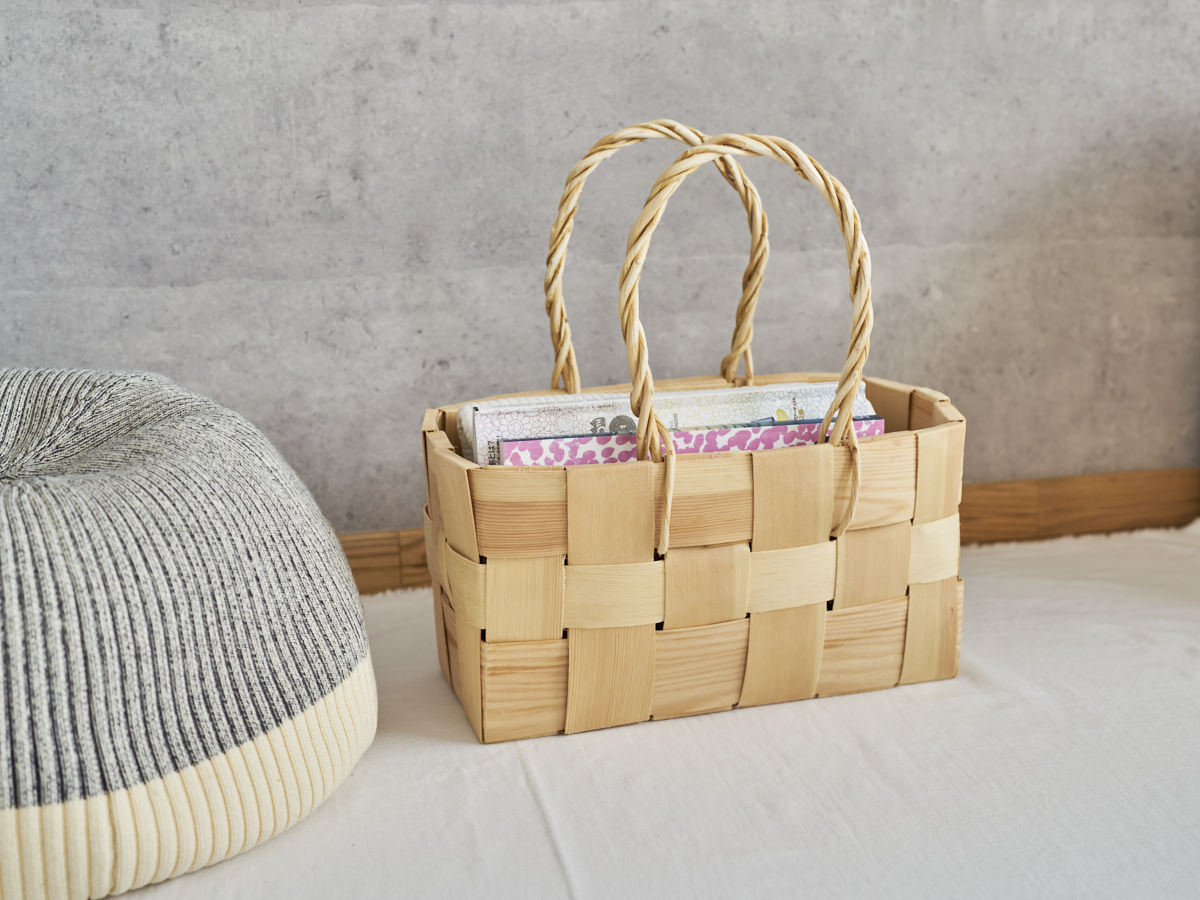
As its name suggests, it is just right for placing beside a sofa, bed, or table.
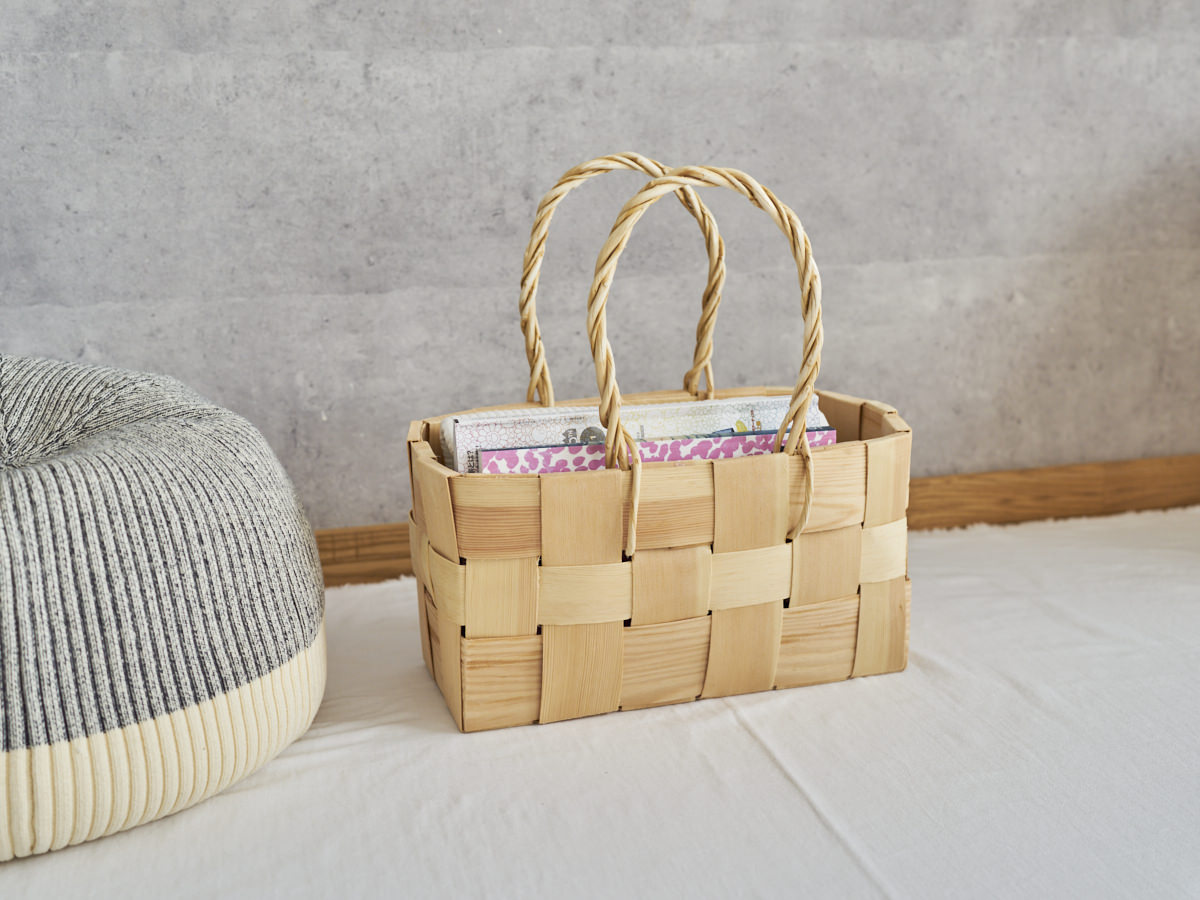
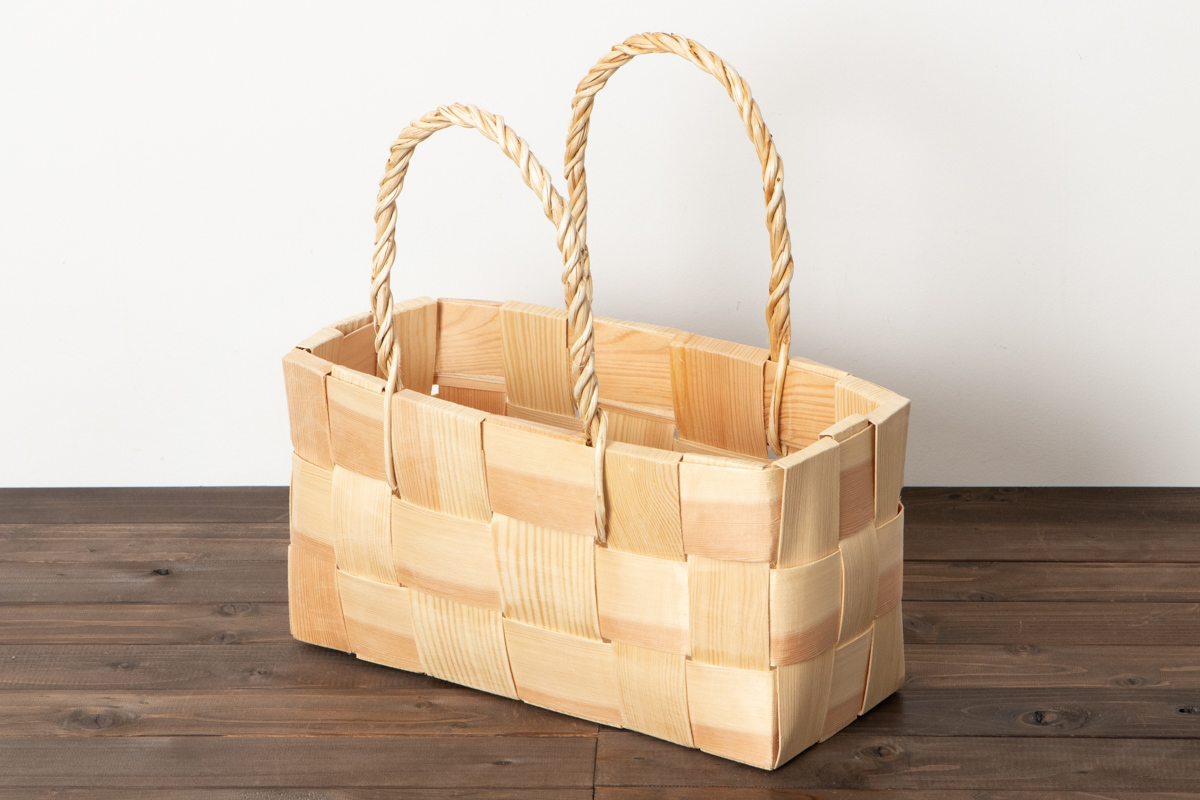
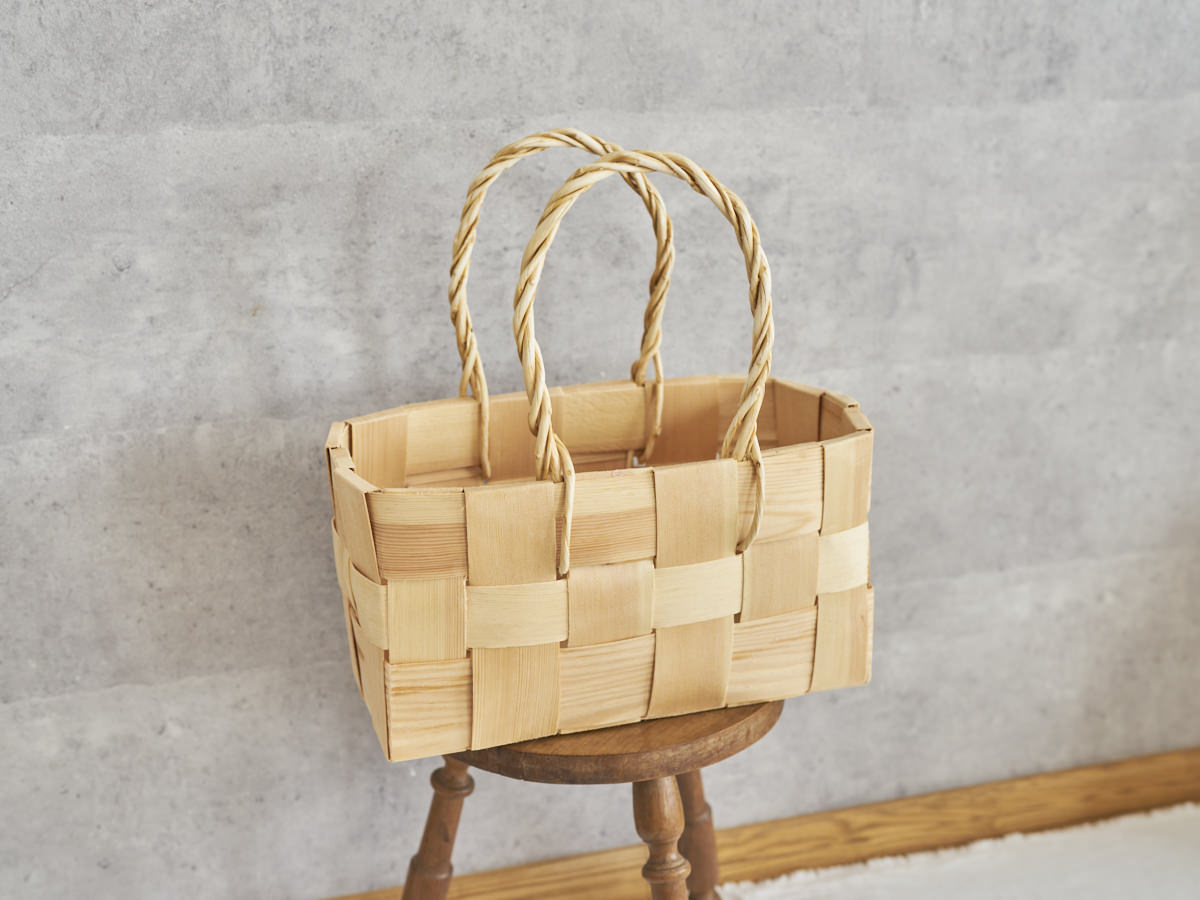
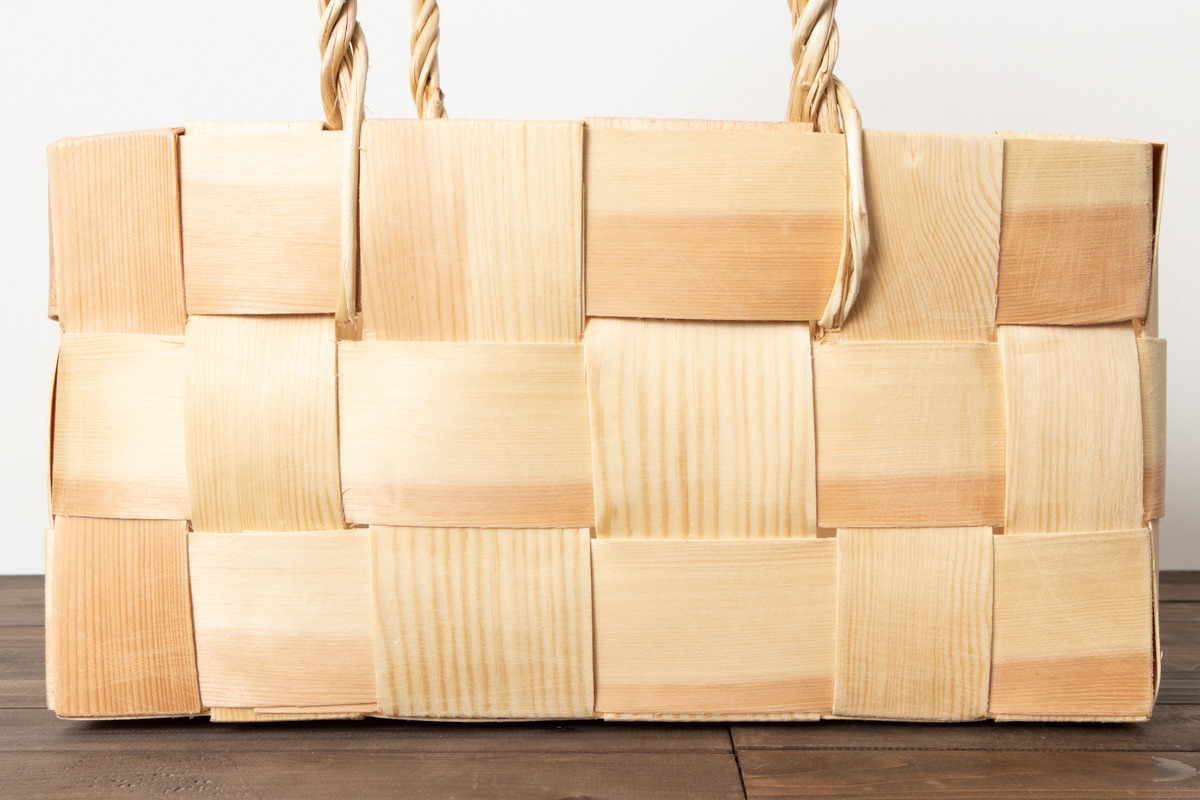
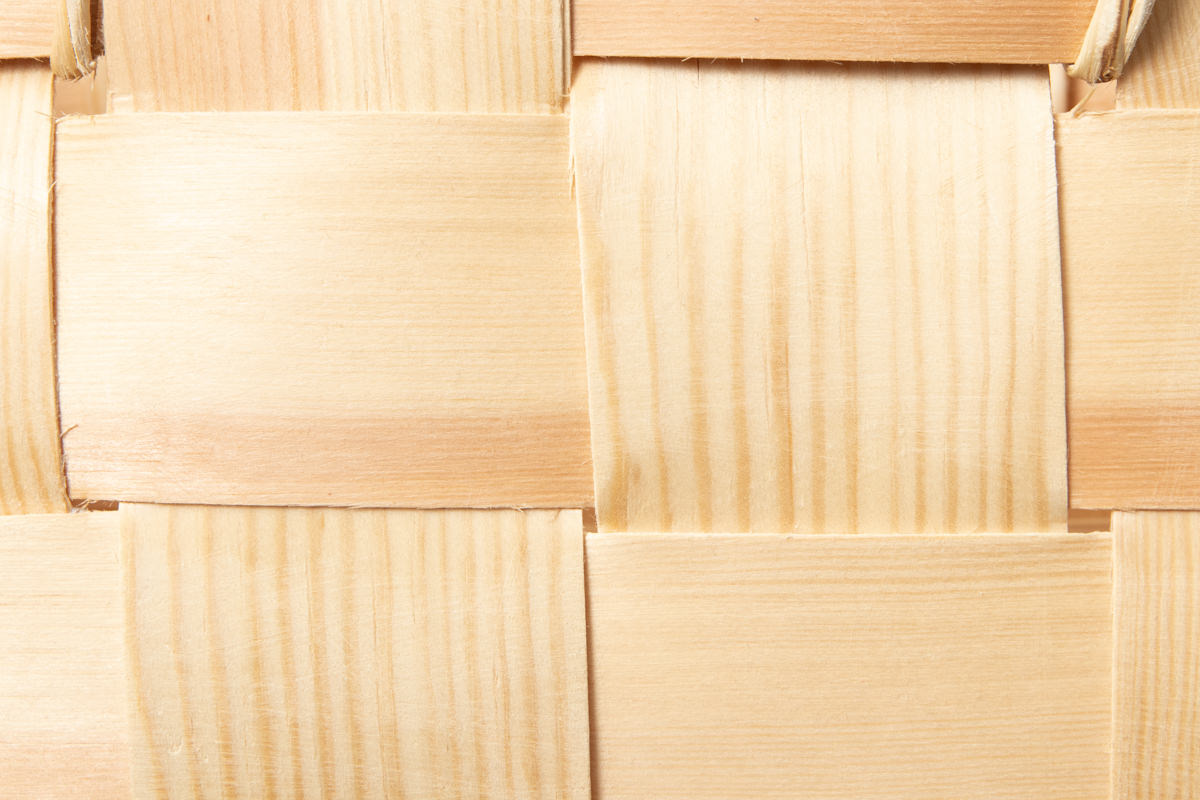
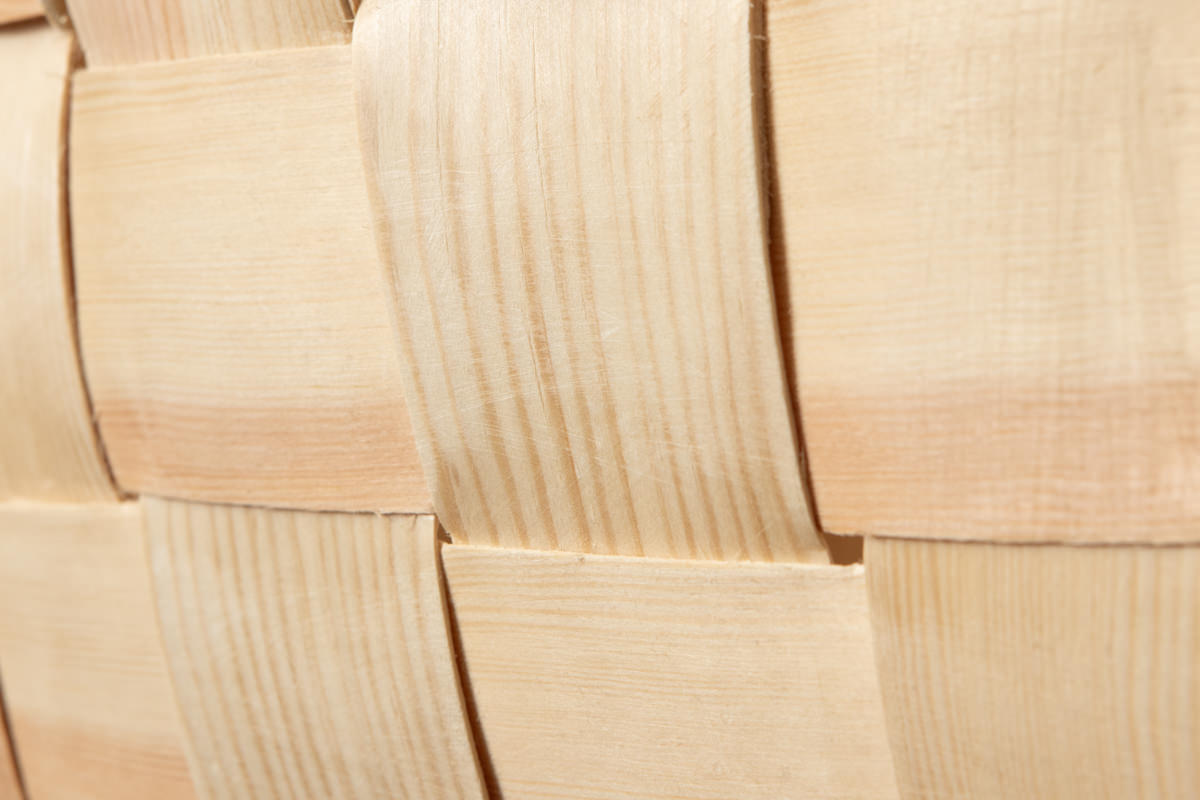
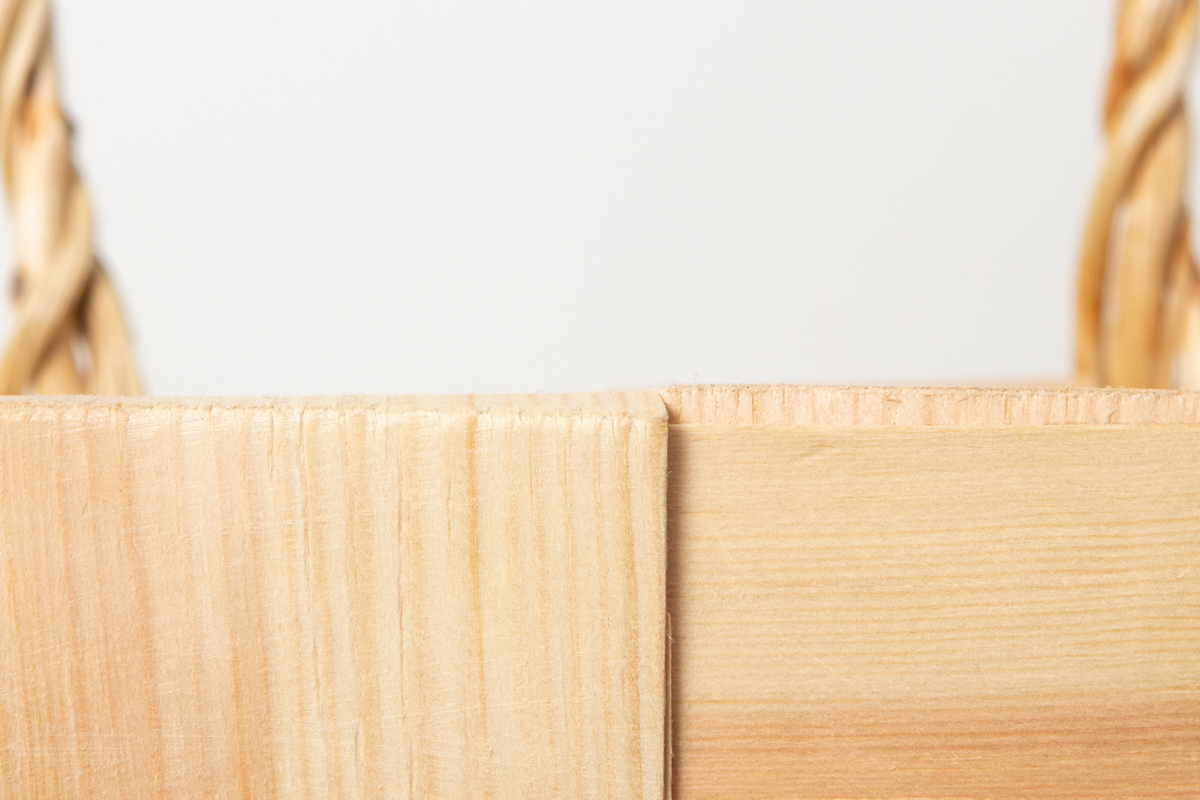
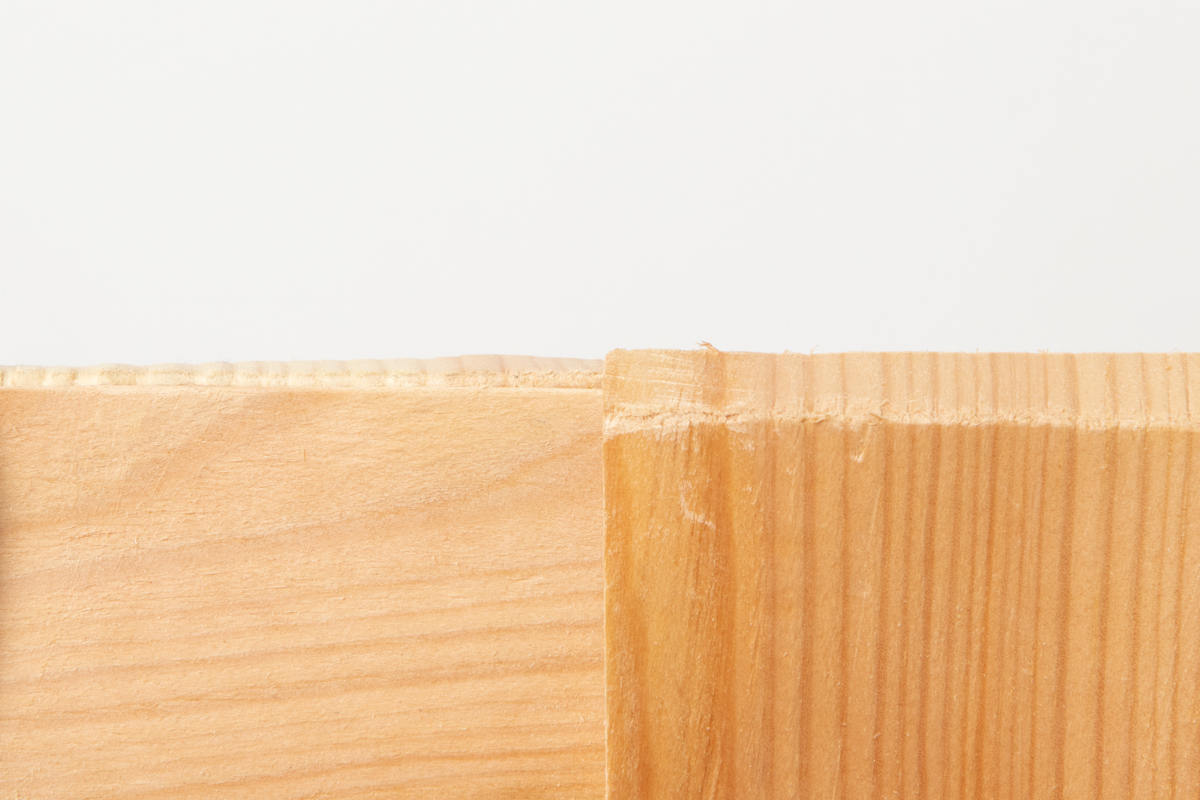
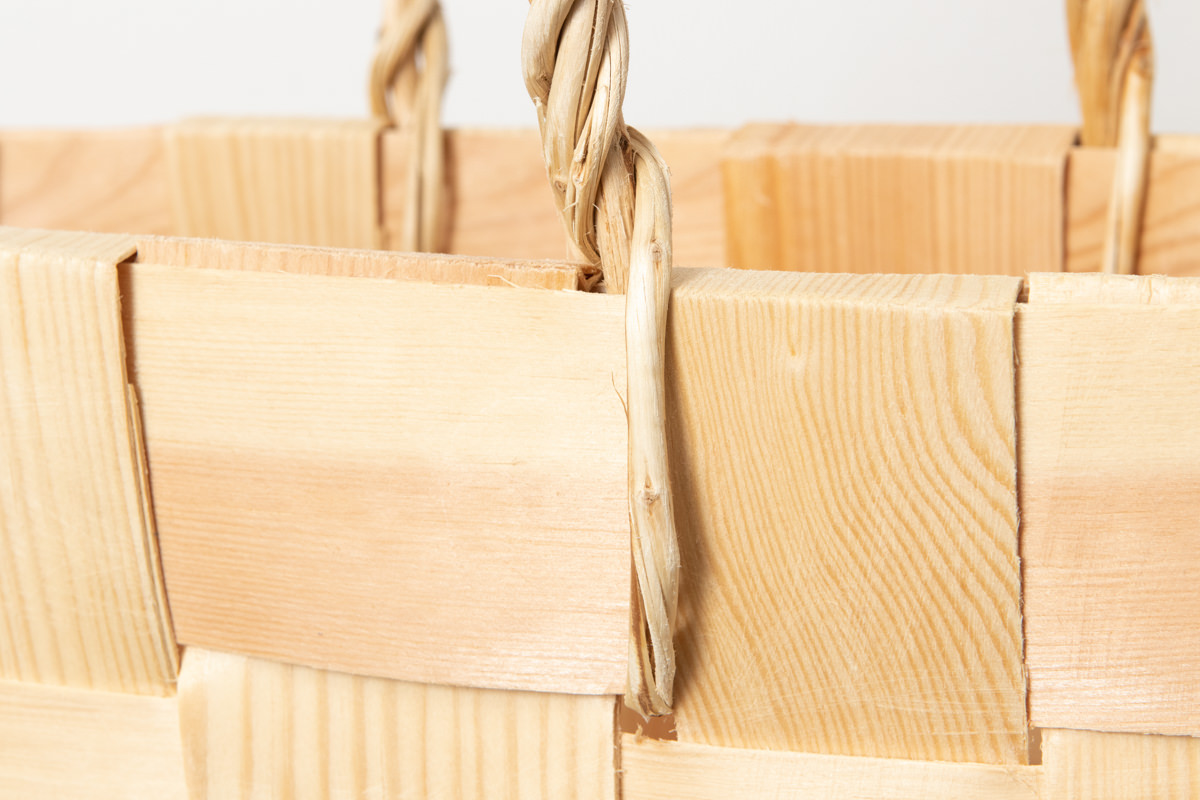
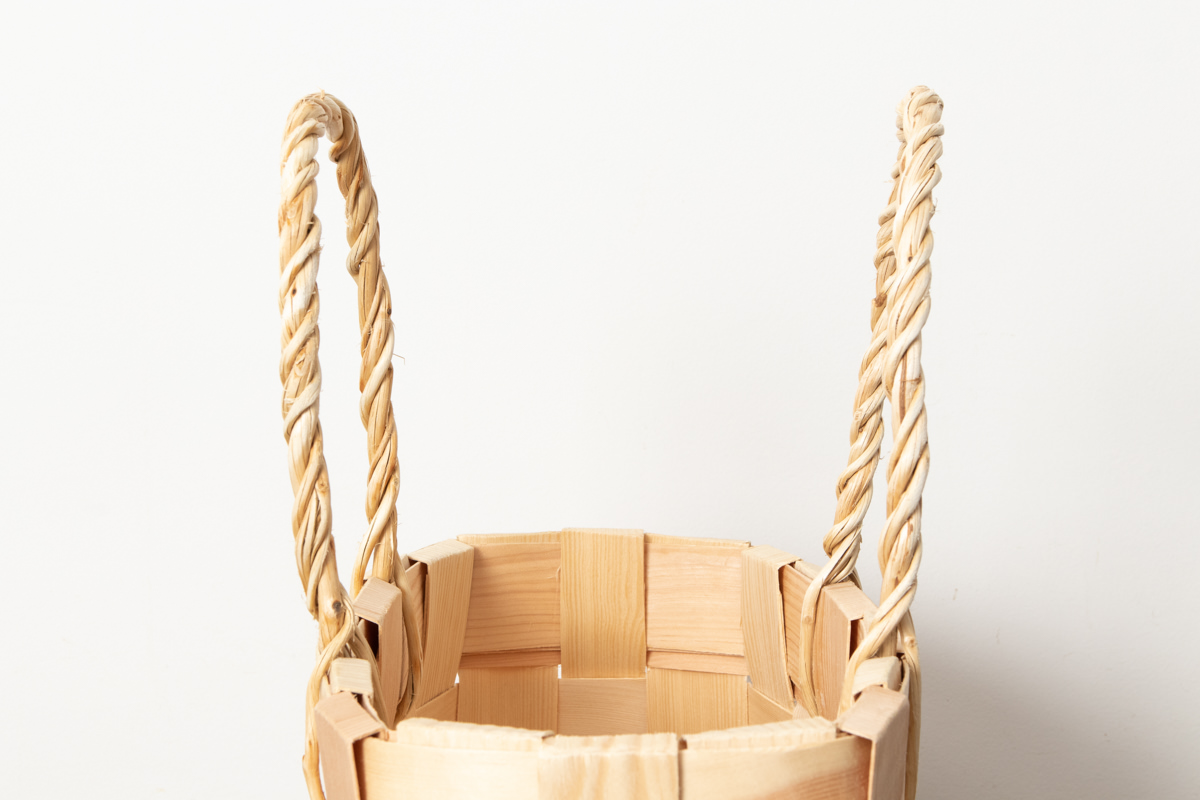
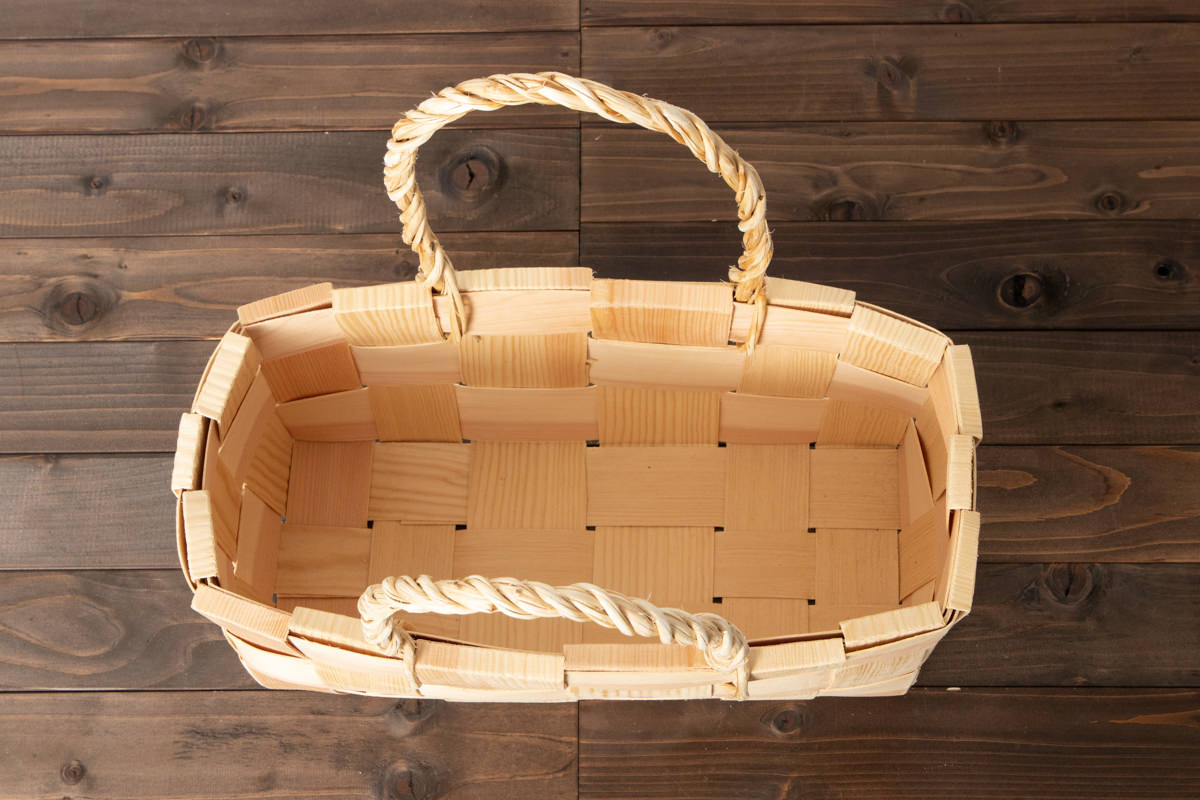
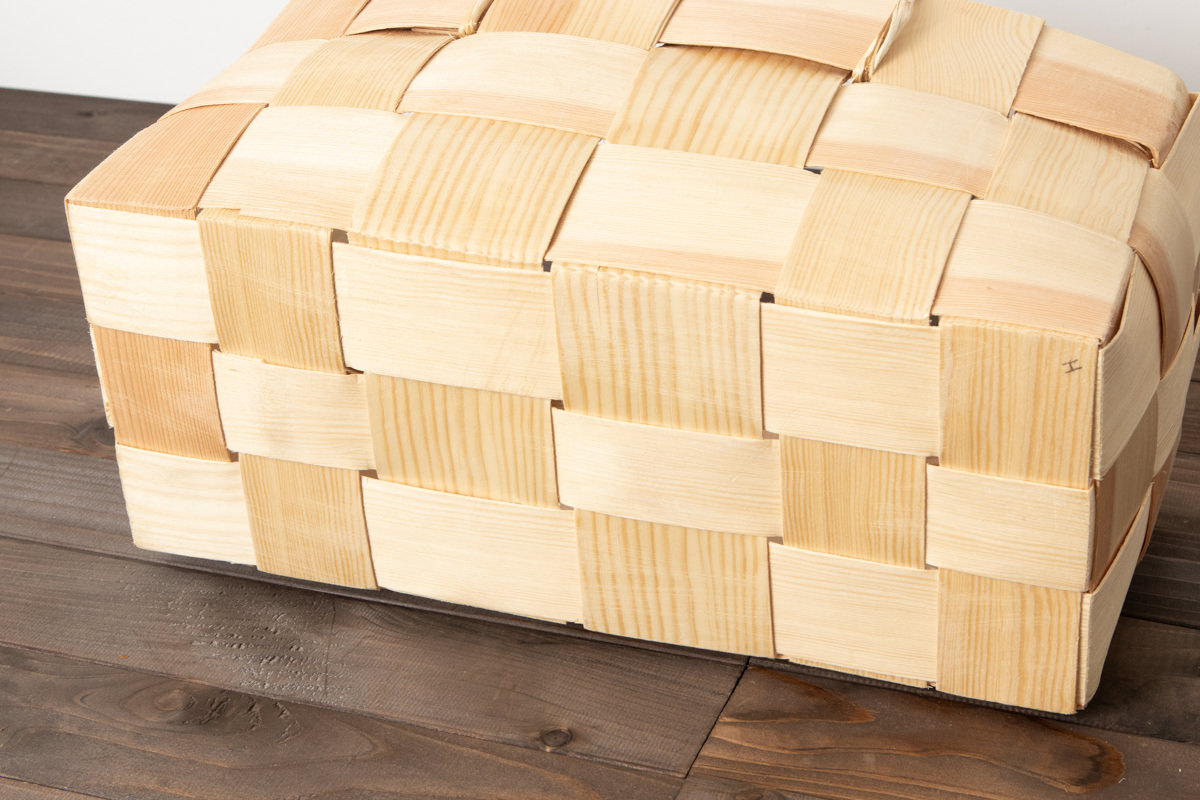
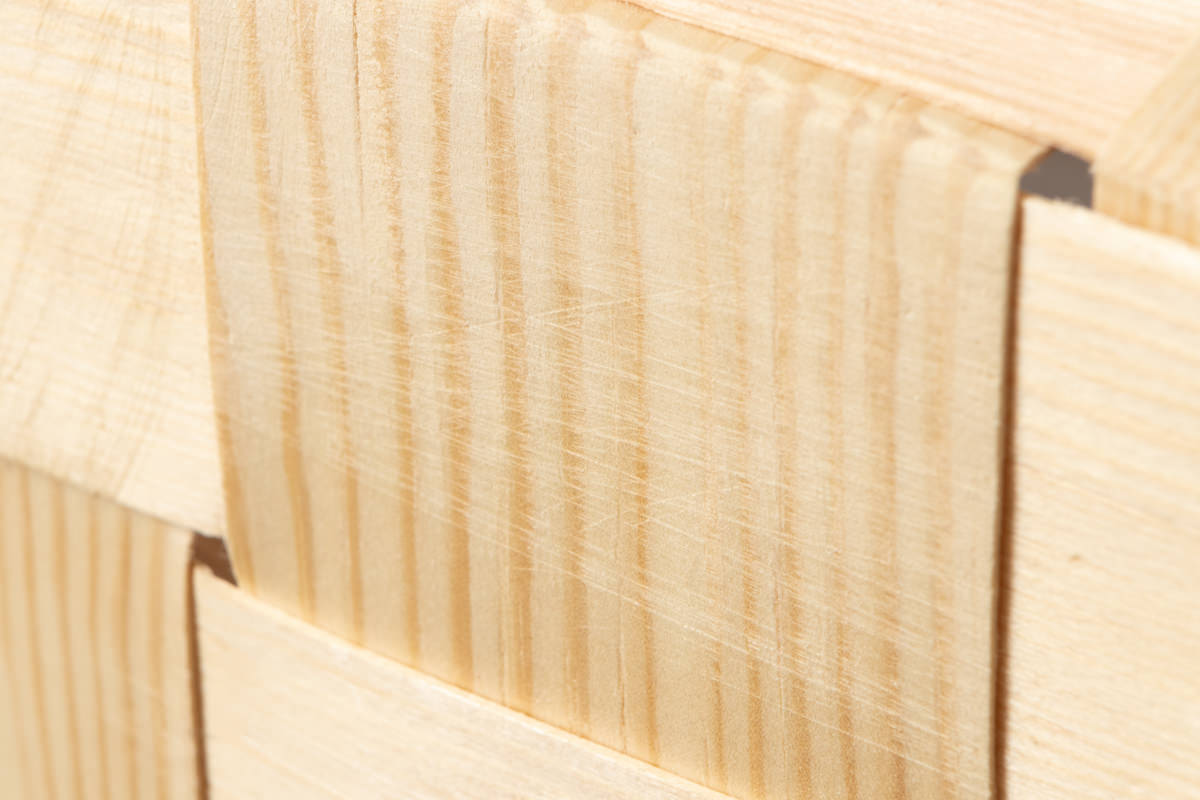
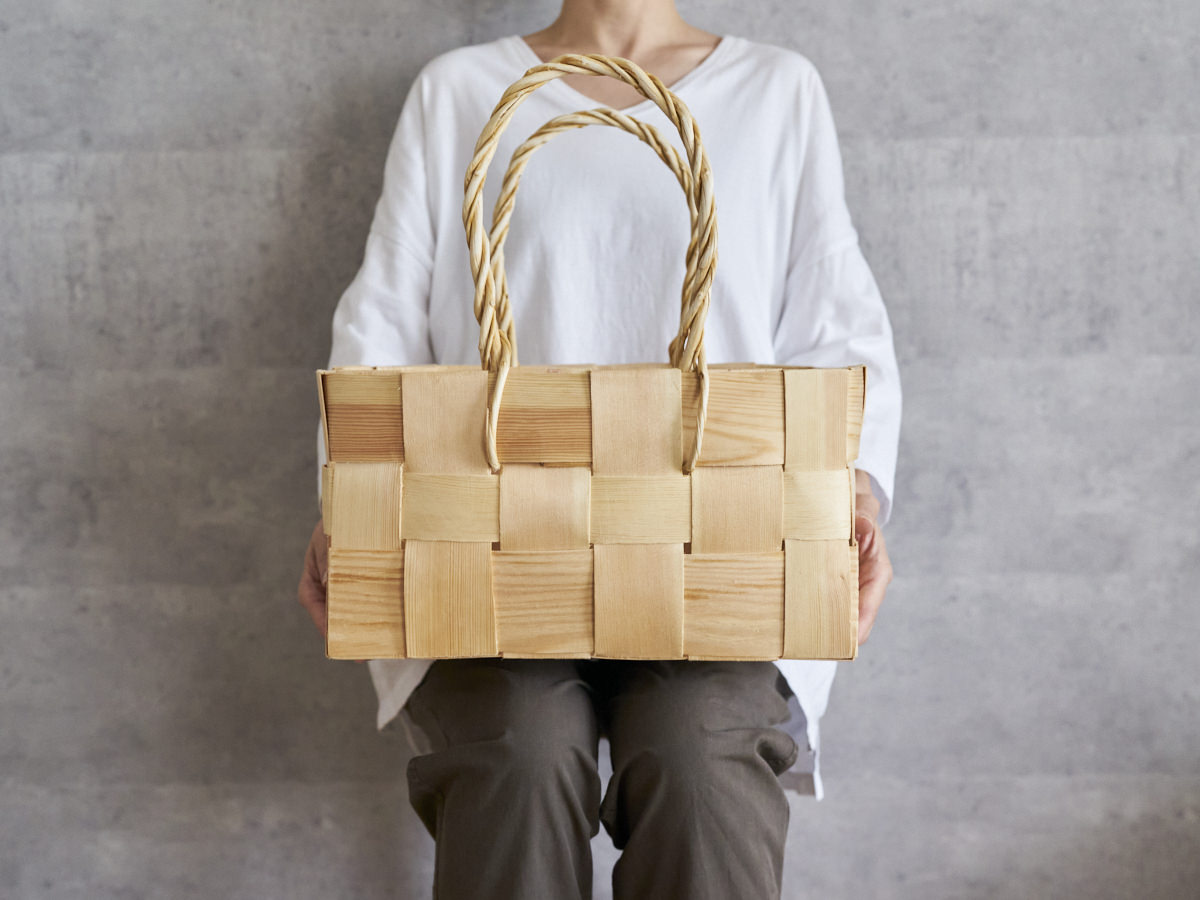
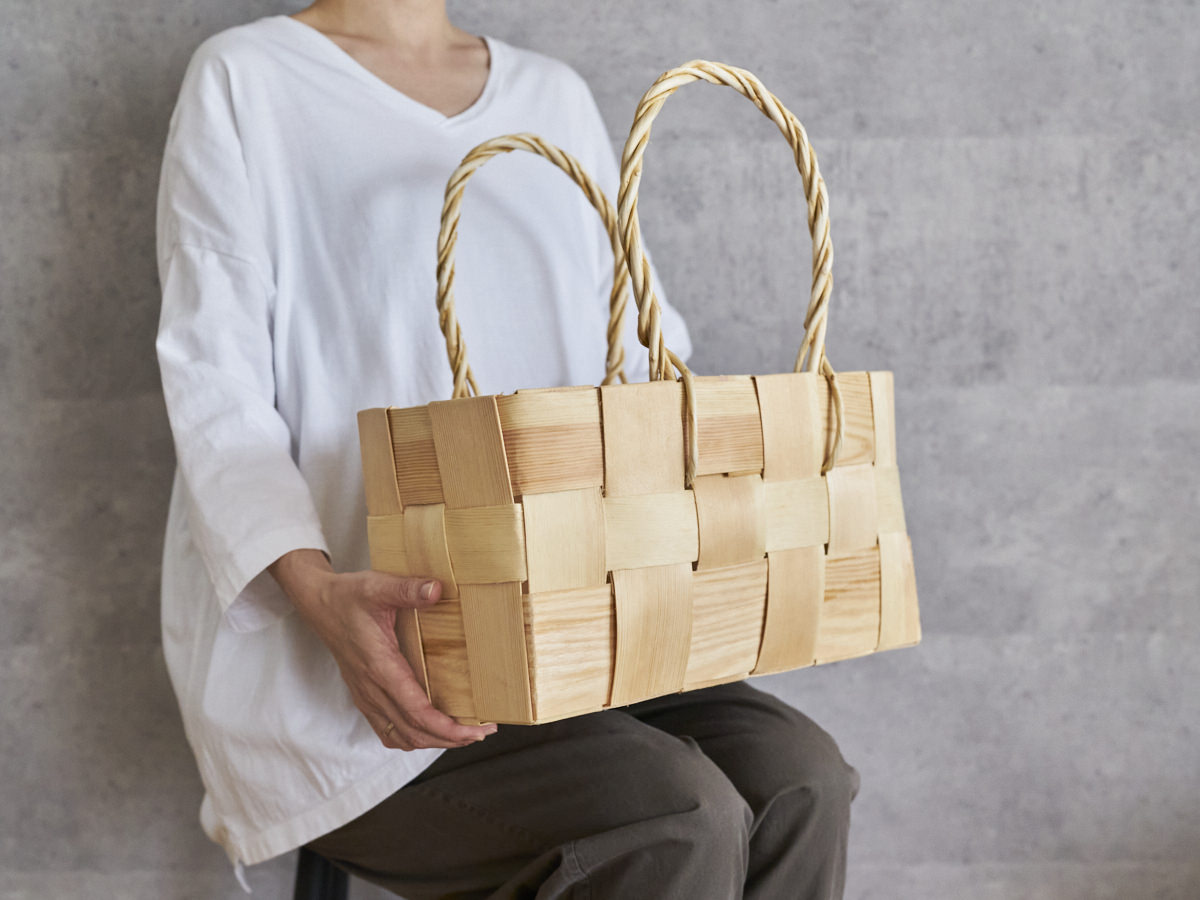
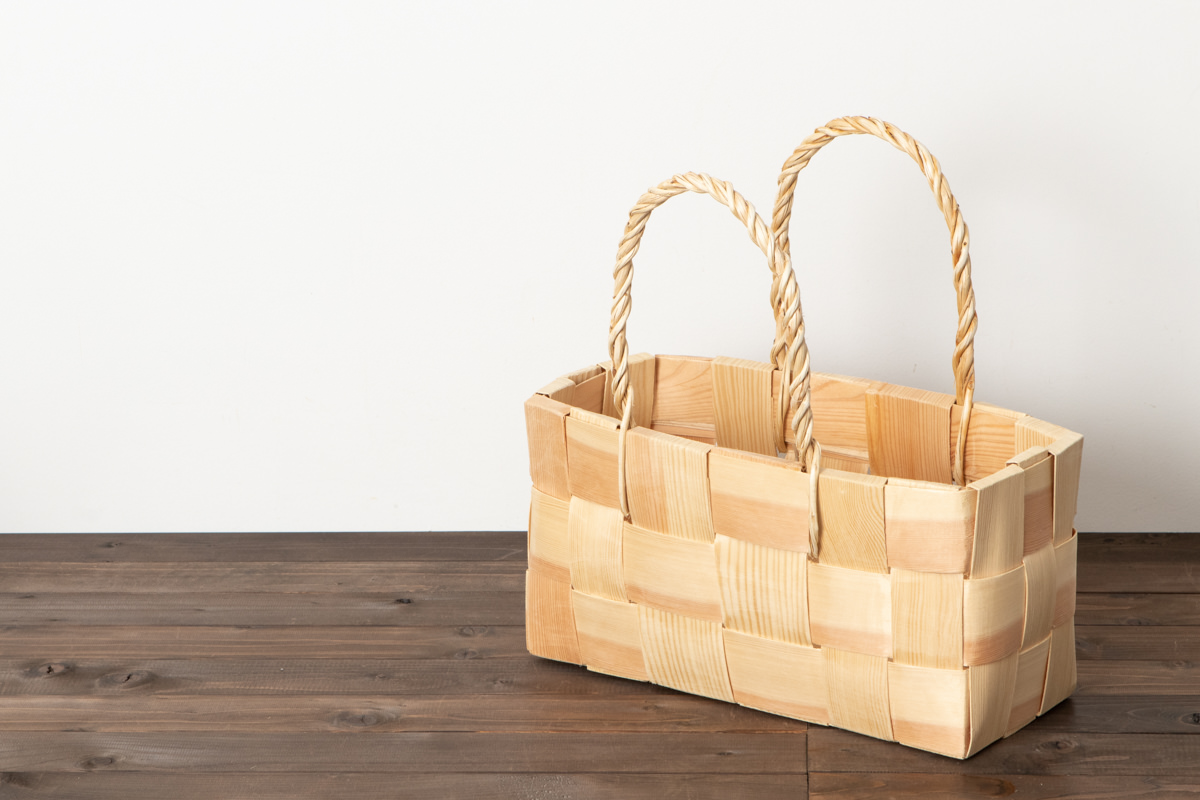
Wide, thinly sliced strips are woven in a regular crisscross pattern.The pine used has no knots, allowing the natural grain to be seen clearly.It has a powerful presence, as if woven directly from solid wood, yet the surface feels smooth to the touch.Here, the rim is seen from the outside. The edge is formed by boldly folding the strips.Here, the rim is seen from the inside. It shows nearly the same finish as the outside.Here, the rim is seen from above. When forming the edge, a small flat surface of about 1 cm is first created before folding it back. This process allows the thin wooden strips to be woven without splitting them.The handle is made by twisting fibers from birch wood. It is finished by wrapping it around the first row of strips.The handles are made from resilient fibers and stand upright. They have both flexibility and firmness. Although the two handles are spaced apart, they can be gathered together and held in one hand.This is a view from above. Both the base and the opening are roughly rectangular, with fairly straight sides, so the basket can also be placed against a wall.This shows the outside of the base. It forms a clean checkered pattern.This is a view of the outer corner. It is neatly folded and woven, and you can see the maker’s signature or initials.You may notice scuff-like marks running in a direction different from the grain, but these are not considered defects.This gives an idea of its size. Although it is long and narrow, its height gives it ample capacity.The handles form large arches, making the basket easy to pick up and carry. It is also easy to move when cleaning.
Beside a sofa, it can be used to keep magazines and newspapers, or frequently used blankets and throws.
Under a desk, it can hold a laptop, documents, and folders. It can also be carried from room to room like a tote, or taken outside.
Beside the bed, it is useful for keeping a book you are currently reading, a glasses case, chargers, remote controls, and other items together. It also seems useful as a temporary place to keep socks or loungewear.
Please watch the short video to see the texture and character of the Side Basket.
This Side Basket brings to mind many ways it could be used. We hope you enjoy it as part of your everyday life.
—Pine Basketry from Avinurme Village, Estonia—
In Avinurme, a village located in eastern Estonia near Lake Peipus—the largest lake in the country, close to the Russian border— baskets have been made from pine for more than 200 years.
In this village, there is a family-run workshop that has been making baskets for over 25 years, using pine harvested in Estonia. The baskets made there are remarkably simple, woven from wide strips of wood, allowing the natural character of pine to be fully appreciated. Twisted handles made from birch wood are also used, giving the baskets a distinctive look and color palette typical of Northern Europe.
This workshop works with as many as twenty makers. In order to maintain consistent quality and provide feedback to the makers, baskets made by those outside the family are marked with initials on the base.
Designed in response to everyday life and to customers’ requests, their baskets are widely appreciated not only throughout Estonia but also in other regions, valued for their simple design and practical nature.
With such a wide range of styles and sizes, you may well find a shape or size that feels just right for you.
Please note: This item ships from Japan. As the buyer, you are responsible for any import duties, customs fees, or local taxes that may be charged in your country. These costs are not included in the item price or shipping cost. Please check with your local customs authority if you are unsure about any potential charges before placing your order.
This basket is made from pine, a type of wood. Pine is a coniferous tree commonly found in Europe and North America, known for being easy to work with. It has long been used for furniture, as well as for structural elements such as posts, beams, and flooring.
For this basket, pine sourced in Estonia is used. According to the maker, pine that has grown for around 100 to 120 years is particularly well suited for basket making.
On this page, we introduce a basket made from this pine, which we have named the “Side Basket.”
As its name suggests, it is just right for placing beside a sofa, bed, or table.
Wide, thinly sliced strips are woven in a regular crisscross pattern.The pine used has no knots, allowing the natural grain to be seen clearly.It has a powerful presence, as if woven directly from solid wood, yet the surface feels smooth to the touch.Here, the rim is seen from the outside. The edge is formed by boldly folding the strips.Here, the rim is seen from the inside. It shows nearly the same finish as the outside.Here, the rim is seen from above. When forming the edge, a small flat surface of about 1 cm is first created before folding it back. This process allows the thin wooden strips to be woven without splitting them.The handle is made by twisting fibers from birch wood. It is finished by wrapping it around the first row of strips.The handles are made from resilient fibers and stand upright. They have both flexibility and firmness. Although the two handles are spaced apart, they can be gathered together and held in one hand.This is a view from above. Both the base and the opening are roughly rectangular, with fairly straight sides, so the basket can also be placed against a wall.This shows the outside of the base. It forms a clean checkered pattern.This is a view of the outer corner. It is neatly folded and woven, and you can see the maker’s signature or initials.You may notice scuff-like marks running in a direction different from the grain, but these are not considered defects.This gives an idea of its size. Although it is long and narrow, its height gives it ample capacity.The handles form large arches, making the basket easy to pick up and carry. It is also easy to move when cleaning.
Beside a sofa, it can be used to keep magazines and newspapers, or frequently used blankets and throws.
Under a desk, it can hold a laptop, documents, and folders. It can also be carried from room to room like a tote, or taken outside.
Beside the bed, it is useful for keeping a book you are currently reading, a glasses case, chargers, remote controls, and other items together. It also seems useful as a temporary place to keep socks or loungewear.
Please watch the short video to see the texture and character of the Side Basket.
This Side Basket brings to mind many ways it could be used. We hope you enjoy it as part of your everyday life.
—Pine Basketry from Avinurme Village, Estonia—
In Avinurme, a village located in eastern Estonia near Lake Peipus—the largest lake in the country, close to the Russian border— baskets have been made from pine for more than 200 years.
In this village, there is a family-run workshop that has been making baskets for over 25 years, using pine harvested in Estonia. The baskets made there are remarkably simple, woven from wide strips of wood, allowing the natural character of pine to be fully appreciated. Twisted handles made from birch wood are also used, giving the baskets a distinctive look and color palette typical of Northern Europe.
This workshop works with as many as twenty makers. In order to maintain consistent quality and provide feedback to the makers, baskets made by those outside the family are marked with initials on the base.
Designed in response to everyday life and to customers’ requests, their baskets are widely appreciated not only throughout Estonia but also in other regions, valued for their simple design and practical nature.
With such a wide range of styles and sizes, you may well find a shape or size that feels just right for you.
Please note: This item ships from Japan. As the buyer, you are responsible for any import duties, customs fees, or local taxes that may be charged in your country. These costs are not included in the item price or shipping cost. Please check with your local customs authority if you are unsure about any potential charges before placing your order.
This basket is made from pine, a type of wood. Pine is a coniferous tree commonly found in Europe and North America, known for being easy to work with. It has long been used for furniture, as well as for structural elements such as posts, beams, and flooring.
For this basket, pine sourced in Estonia is used. According to the maker, pine that has grown for around 100 to 120 years is particularly well suited for basket making.
On this page, we introduce a basket made from this pine, which we have named the “Side Basket.”
As its name suggests, it is just right for placing beside a sofa, bed, or table.
Wide, thinly sliced strips are woven in a regular crisscross pattern.The pine used has no knots, allowing the natural grain to be seen clearly.It has a powerful presence, as if woven directly from solid wood, yet the surface feels smooth to the touch.Here, the rim is seen from the outside. The edge is formed by boldly folding the strips.Here, the rim is seen from the inside. It shows nearly the same finish as the outside.Here, the rim is seen from above. When forming the edge, a small flat surface of about 1 cm is first created before folding it back. This process allows the thin wooden strips to be woven without splitting them.The handle is made by twisting fibers from birch wood. It is finished by wrapping it around the first row of strips.The handles are made from resilient fibers and stand upright. They have both flexibility and firmness. Although the two handles are spaced apart, they can be gathered together and held in one hand.This is a view from above. Both the base and the opening are roughly rectangular, with fairly straight sides, so the basket can also be placed against a wall.This shows the outside of the base. It forms a clean checkered pattern.This is a view of the outer corner. It is neatly folded and woven, and you can see the maker’s signature or initials.You may notice scuff-like marks running in a direction different from the grain, but these are not considered defects.This gives an idea of its size. Although it is long and narrow, its height gives it ample capacity.The handles form large arches, making the basket easy to pick up and carry. It is also easy to move when cleaning.
Beside a sofa, it can be used to keep magazines and newspapers, or frequently used blankets and throws.
Under a desk, it can hold a laptop, documents, and folders. It can also be carried from room to room like a tote, or taken outside.
Beside the bed, it is useful for keeping a book you are currently reading, a glasses case, chargers, remote controls, and other items together. It also seems useful as a temporary place to keep socks or loungewear.
Please watch the short video to see the texture and character of the Side Basket.
This Side Basket brings to mind many ways it could be used. We hope you enjoy it as part of your everyday life.
—Pine Basketry from Avinurme Village, Estonia—
In Avinurme, a village located in eastern Estonia near Lake Peipus—the largest lake in the country, close to the Russian border— baskets have been made from pine for more than 200 years.
In this village, there is a family-run workshop that has been making baskets for over 25 years, using pine harvested in Estonia. The baskets made there are remarkably simple, woven from wide strips of wood, allowing the natural character of pine to be fully appreciated. Twisted handles made from birch wood are also used, giving the baskets a distinctive look and color palette typical of Northern Europe.
This workshop works with as many as twenty makers. In order to maintain consistent quality and provide feedback to the makers, baskets made by those outside the family are marked with initials on the base.
Designed in response to everyday life and to customers’ requests, their baskets are widely appreciated not only throughout Estonia but also in other regions, valued for their simple design and practical nature.
With such a wide range of styles and sizes, you may well find a shape or size that feels just right for you.
Please note: This item ships from Japan. As the buyer, you are responsible for any import duties, customs fees, or local taxes that may be charged in your country. These costs are not included in the item price or shipping cost. Please check with your local customs authority if you are unsure about any potential charges before placing your order.