In the Hiruzen region of Okayama Prefecture—nestled at the foot of the mountains separating Tottori and Okayama—gama craft has been passed down for over 600 years.
The plant used, known as “gama” in Japanese and written – 蒲 – in kanji, is deeply familiar to people in Japan. It grows widely across the country, from Hokkaido in the north to the southern island of Kyushu, and is even found in place names throughout the country.
Interestingly, it’s said that the Japanese words kamaboko (a steamed fish cake) and kabayaki (a style of grilled eel) were inspired by the shape of the cattail’s flower spike—thick and sausage-like, much like these foods.
In Hiruzen’s cattail craft, artisans use a specific variety called Himegama, and even today, they continue to make everyday tools from it.
Although Himegama naturally grows in wetlands, the artisans who create these baskets take care of cultivating the plants themselves.
This variety of cattail is lightweight and naturally contains oils, which give it excellent water resistance and moisture retention.
Originally, these baskets were designed as carrying packs for food supplies during travel or transport. In the past, Himegama was also used to make items such as snowshoes.
In addition to Himegama, another key material is the inner bark fiber of the Shinanoki tree (Japanese linden). Locally, this fiber is affectionately called “Yamakage.”
To prepare it, the bark is soaked in river water and fermented, then carefully peeled off in thin layers, following the grain of the tree rings.
“The smell of Yamakage before it dries is really something!” the artisans say with a laugh— a moment that reflects just how joyfully and wholeheartedly they approach their work.
On this page, we introduce the “Sacoche,” the only basket in the gama craft bag series that can be carried over the shoulder.
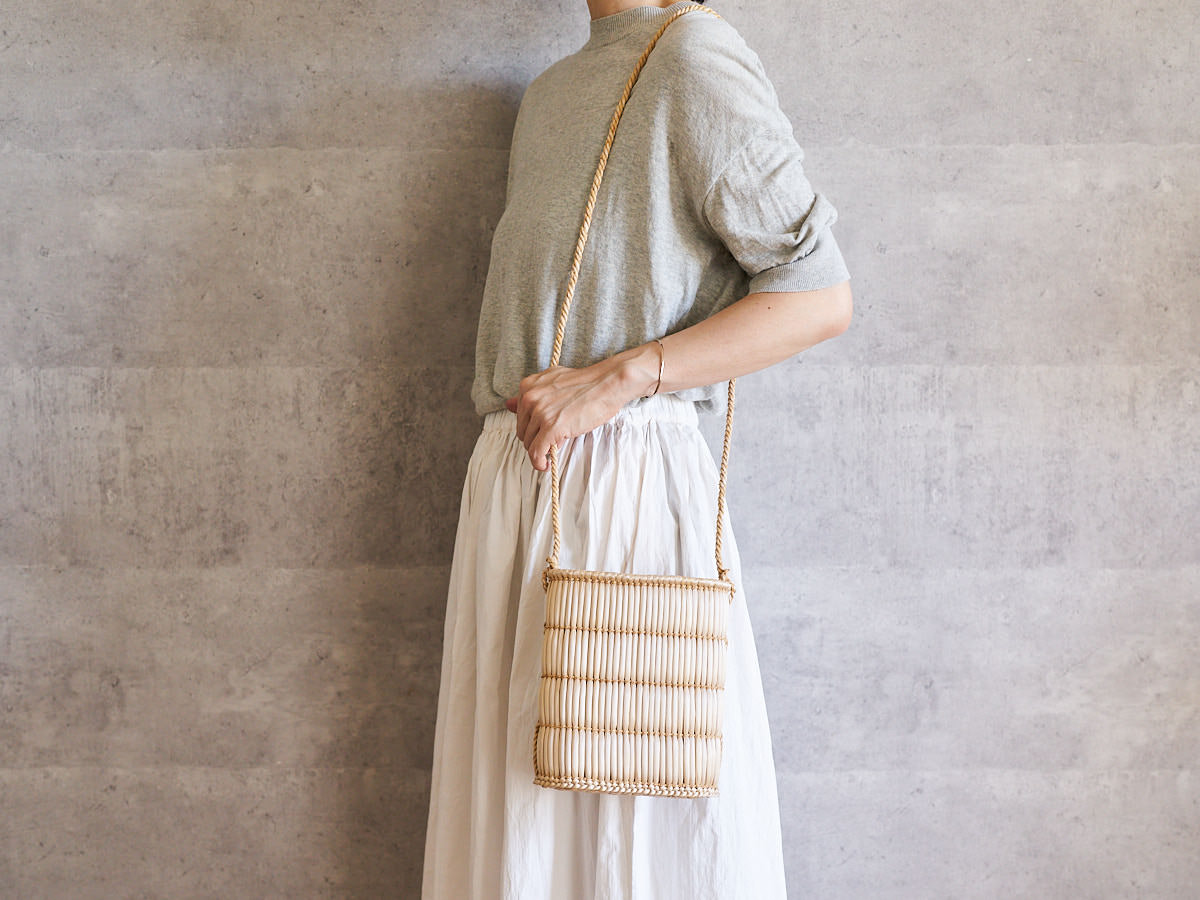
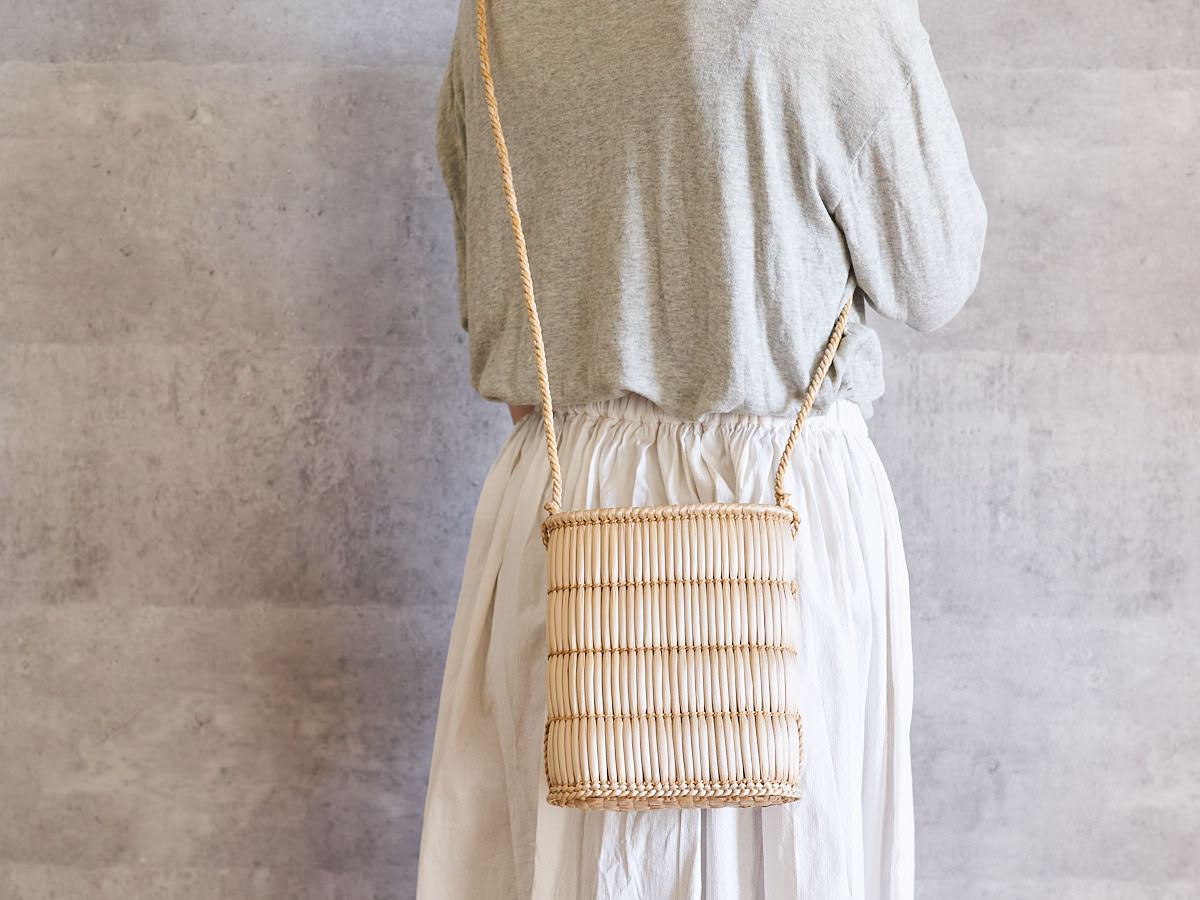
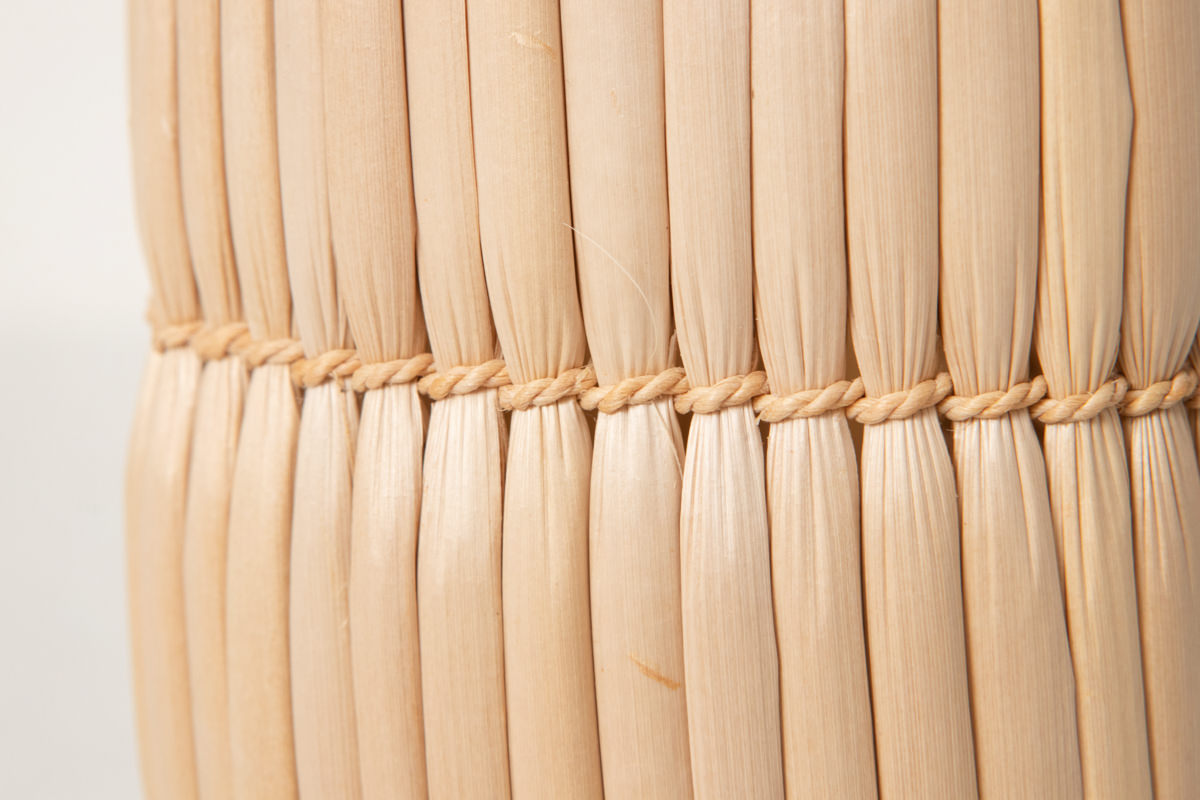
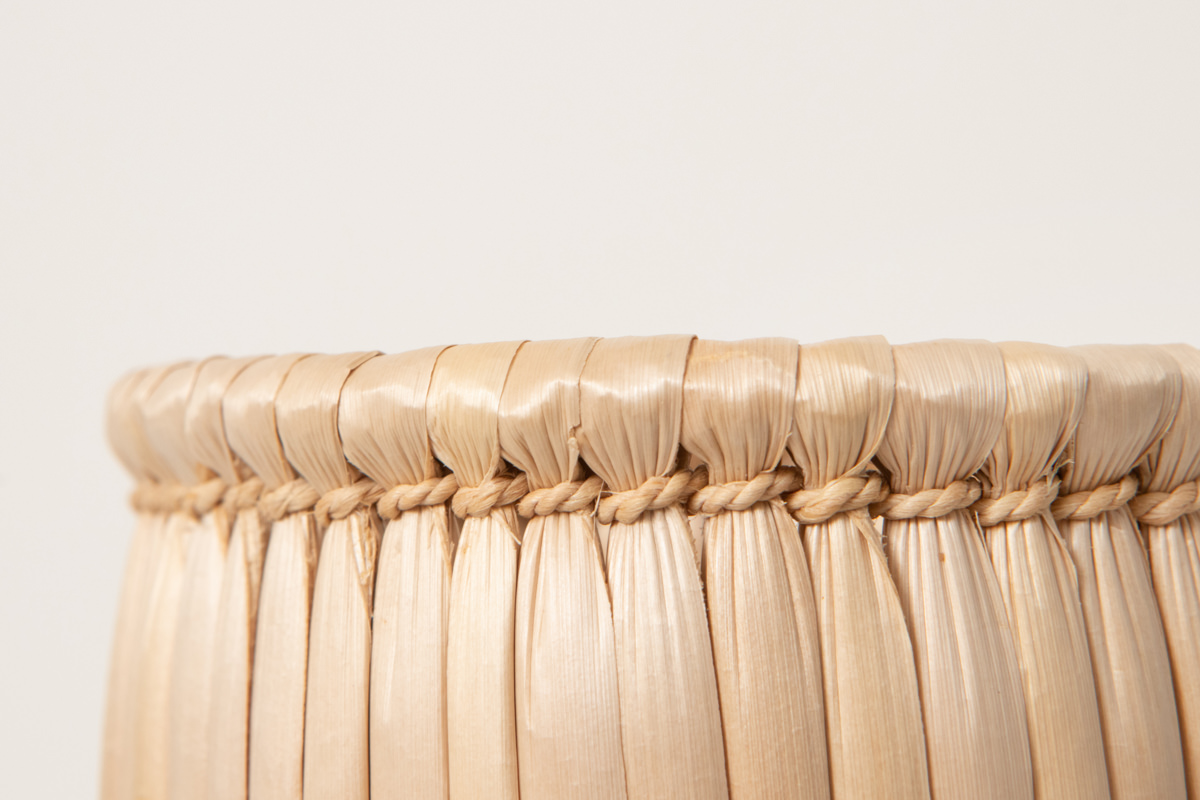
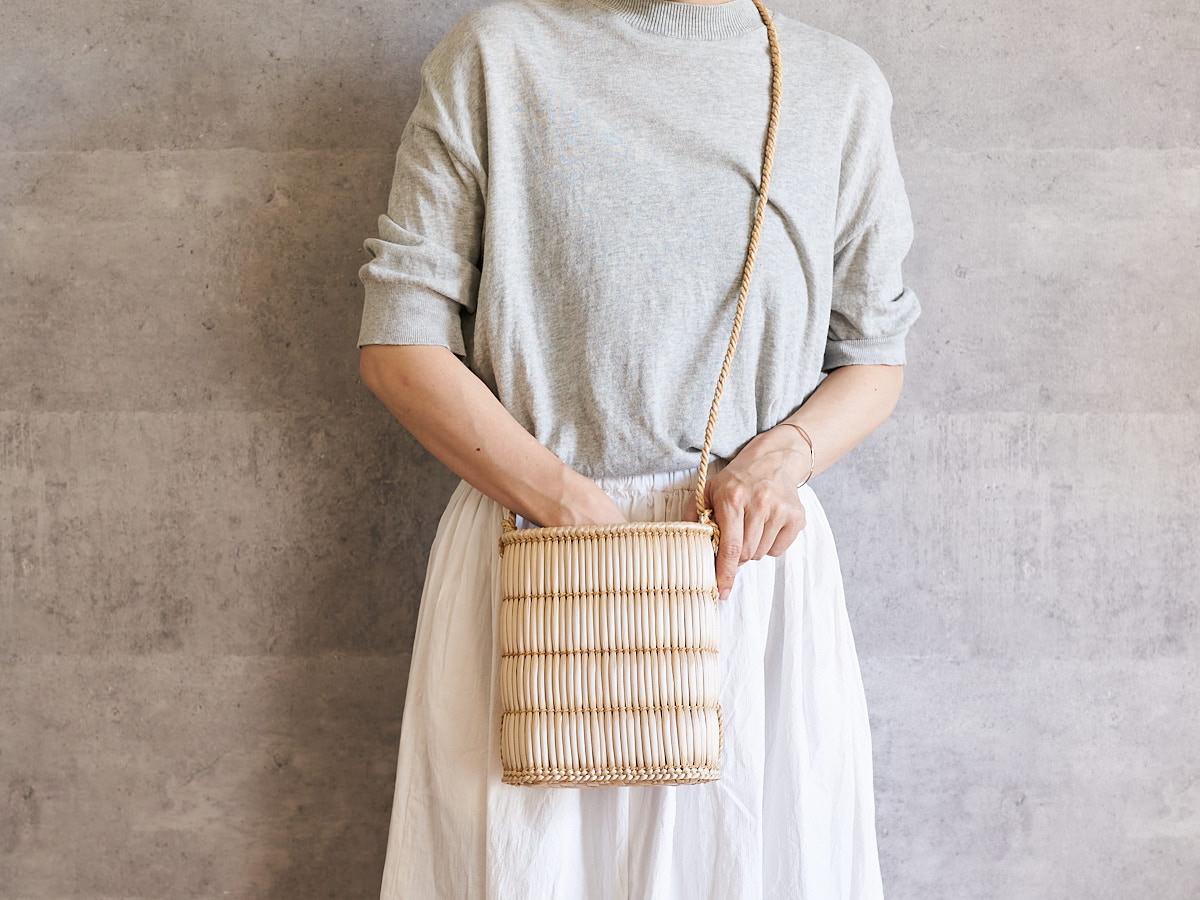
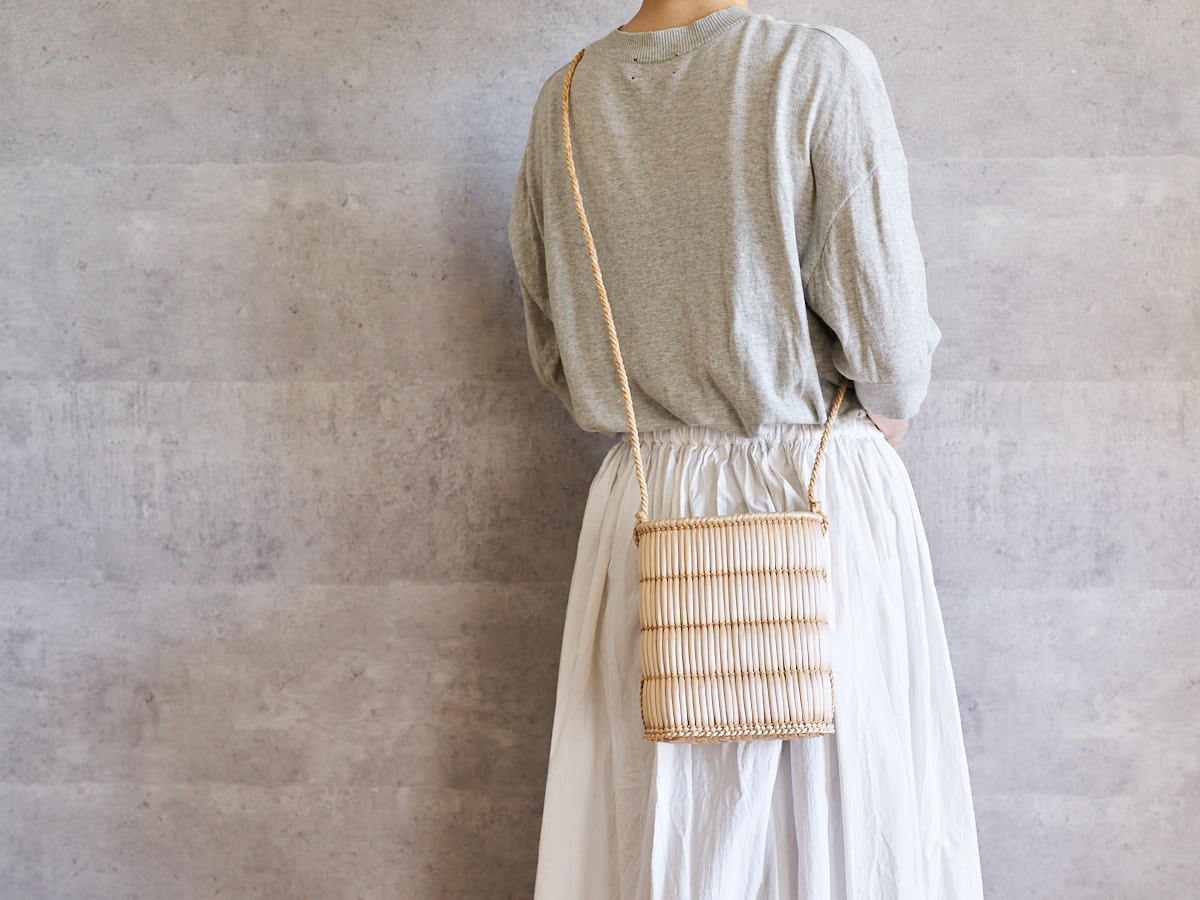
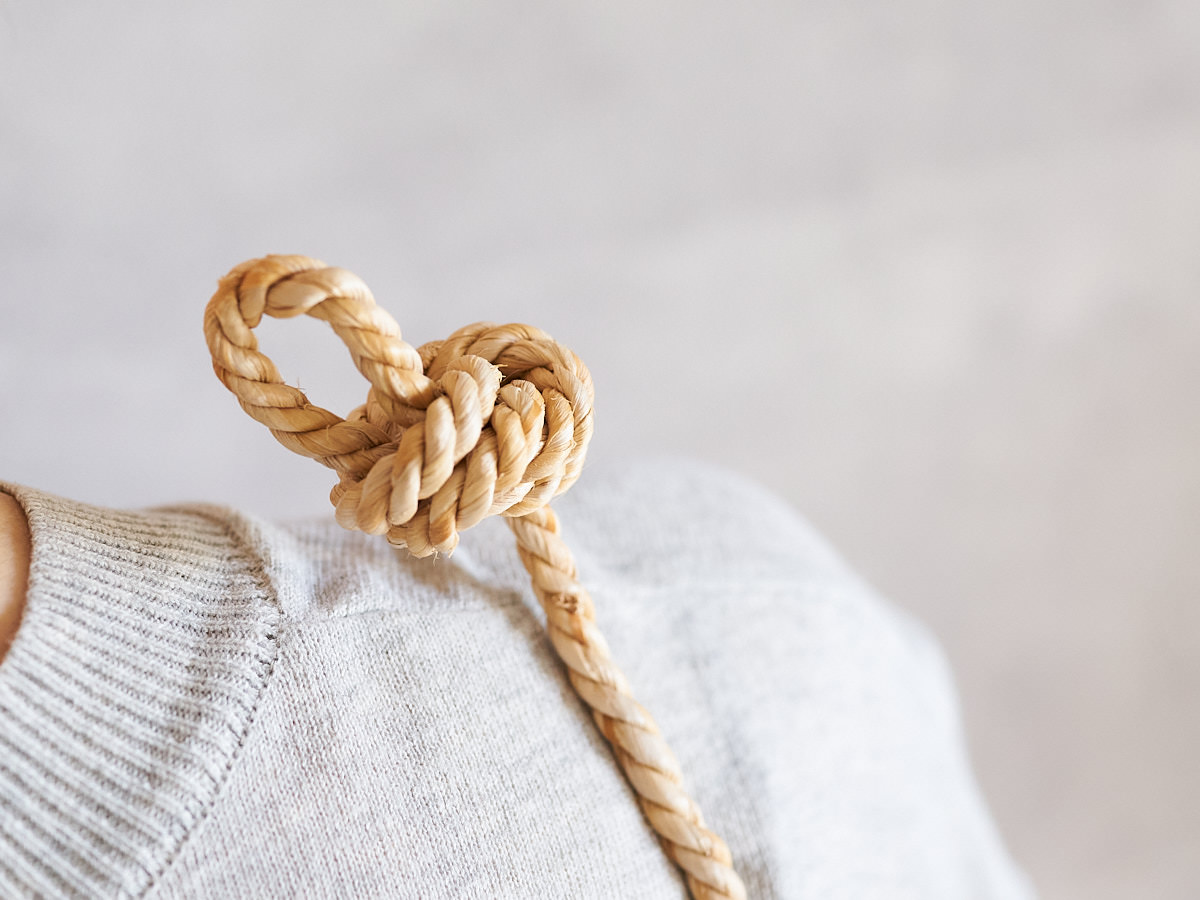
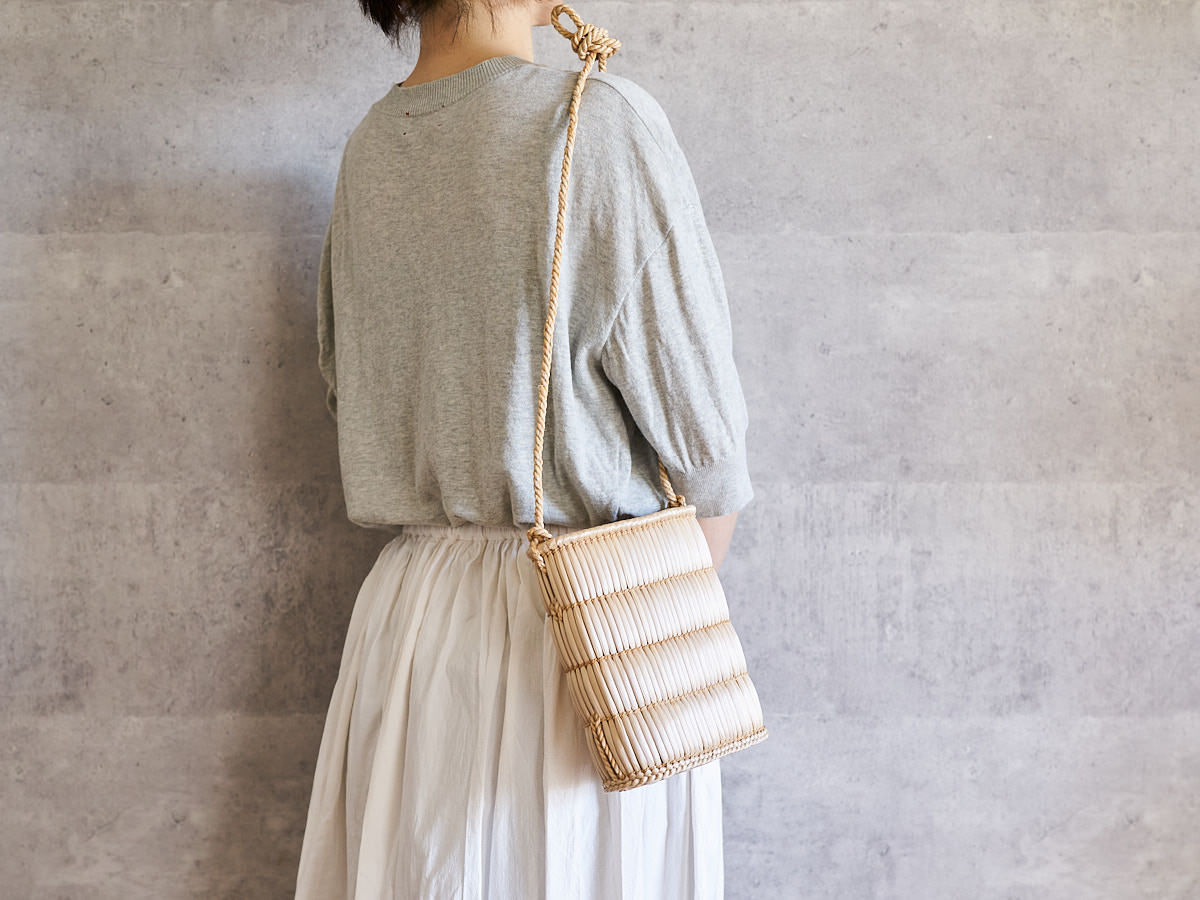
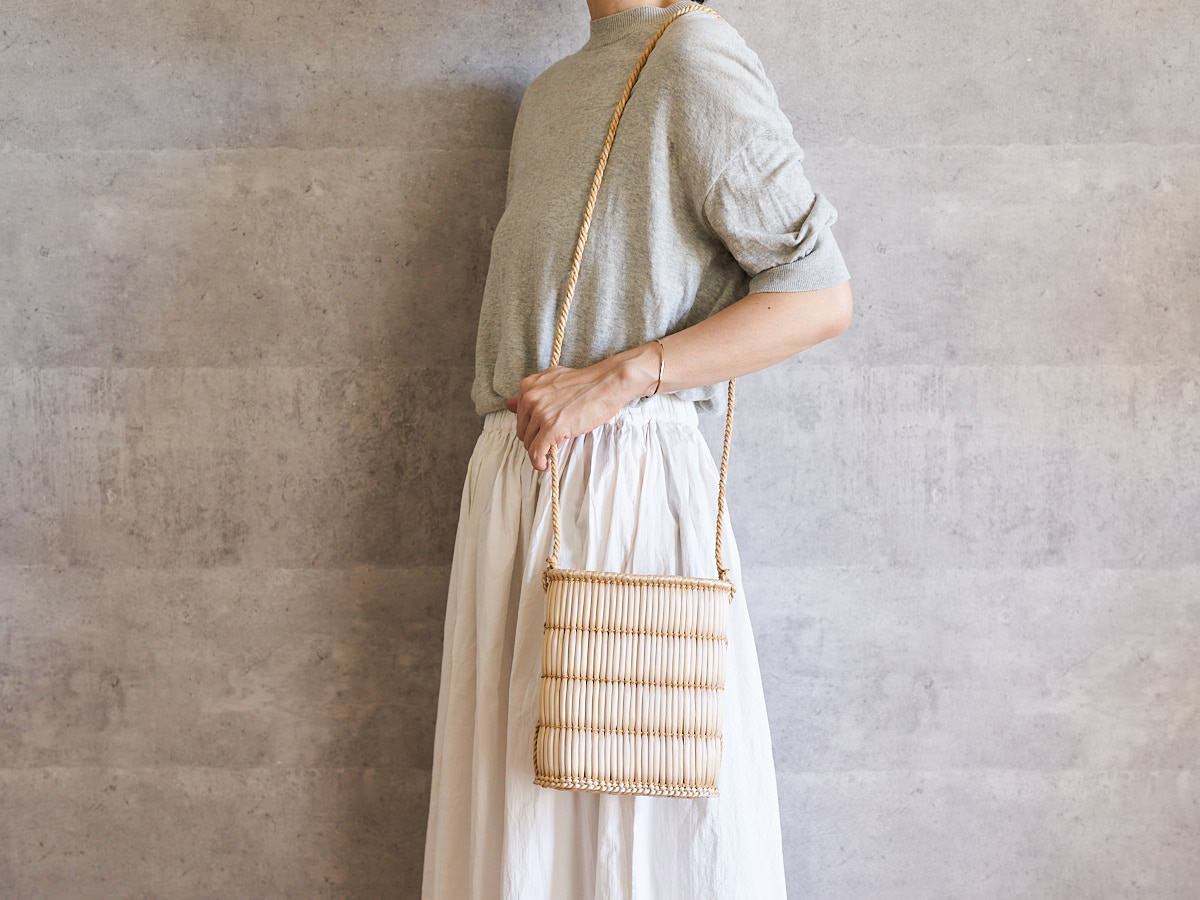
This is a tall oval basket fitted with a cord for carrying it over the shoulder. The length of the cord cannot be adjusted, so if it feels too long, please shorten it by tying a knot at the end, for example.The sides of the basket are woven using simple tools, much like those used to weave bamboo blinds, resulting in a modest and natural design.The weaving material comes from the inner part of the cattail stem, peeled down to about five layers to reach the core. These thick and springy strips are arranged vertically, creating a distinctive texture. The artisans themselves take care of every step—cultivating and harvesting the cattail, drying and preparing the materials—all done with great attention to detail.The rim is smoothly finished without any unevenness, beautifully interwoven with precision. Because cattail naturally contains oils, it gives off a subtle luster and sheen, adding to its quiet beauty.The cord used to carry the basket over the shoulder is made by twisting Himegama and Yamakage (linden bark fiber) together. This cord combines the sheen of Himegama with the strength of Yamakage. Once dried, the Yamakage fiber has no noticeable smell.This is the inside of the basket. The base is woven in a checkered pattern.The border weaving that connects the base to the sides is also finely finished.This detail adds an accent to the design while also reinforcing and firmly supporting the entire basket.The shoulder-carrying design makes it very easy to reach inside the basket for items such as a wallet or keys.For outings when you want to travel light.By tying a knot in the cord, you can adjust it to your preferred length.Shortening the cord can also make the basket feel lighter to carry.
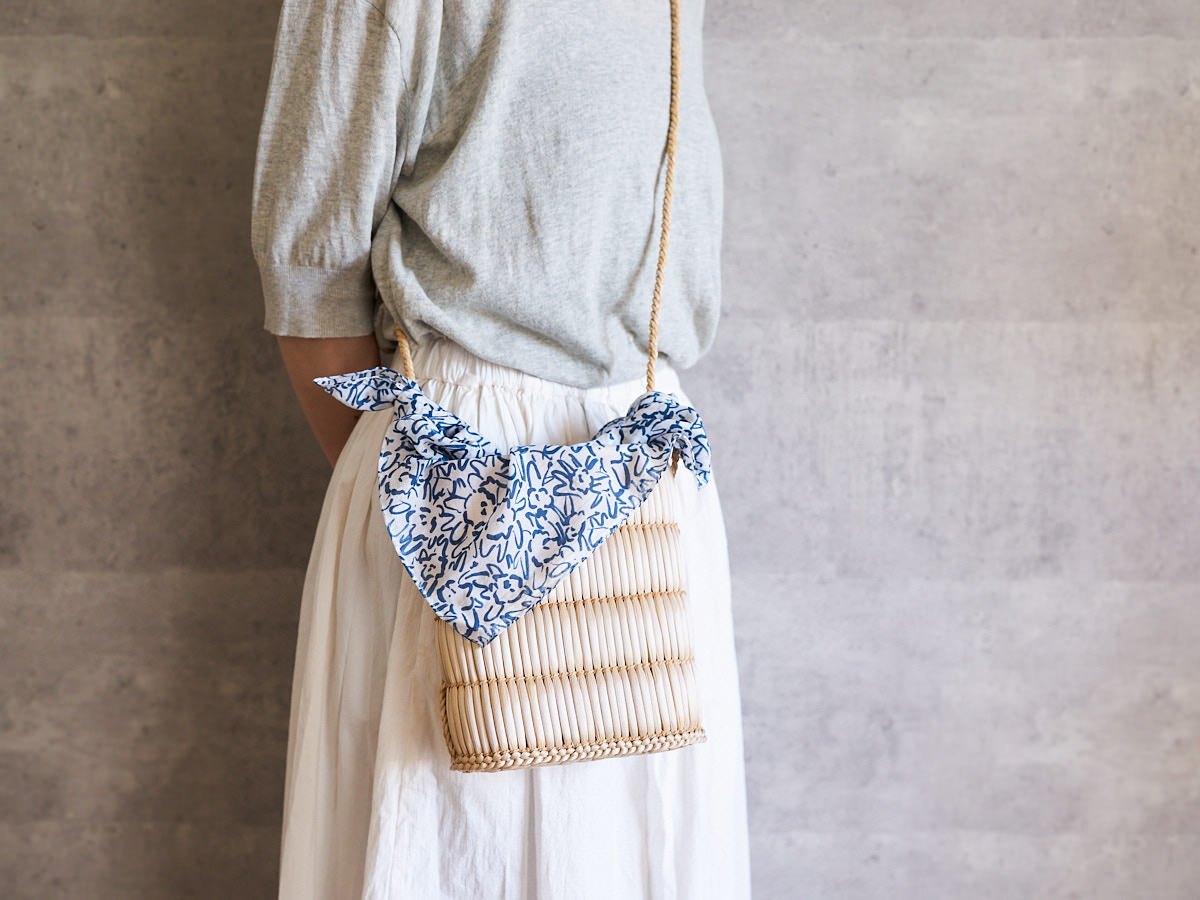
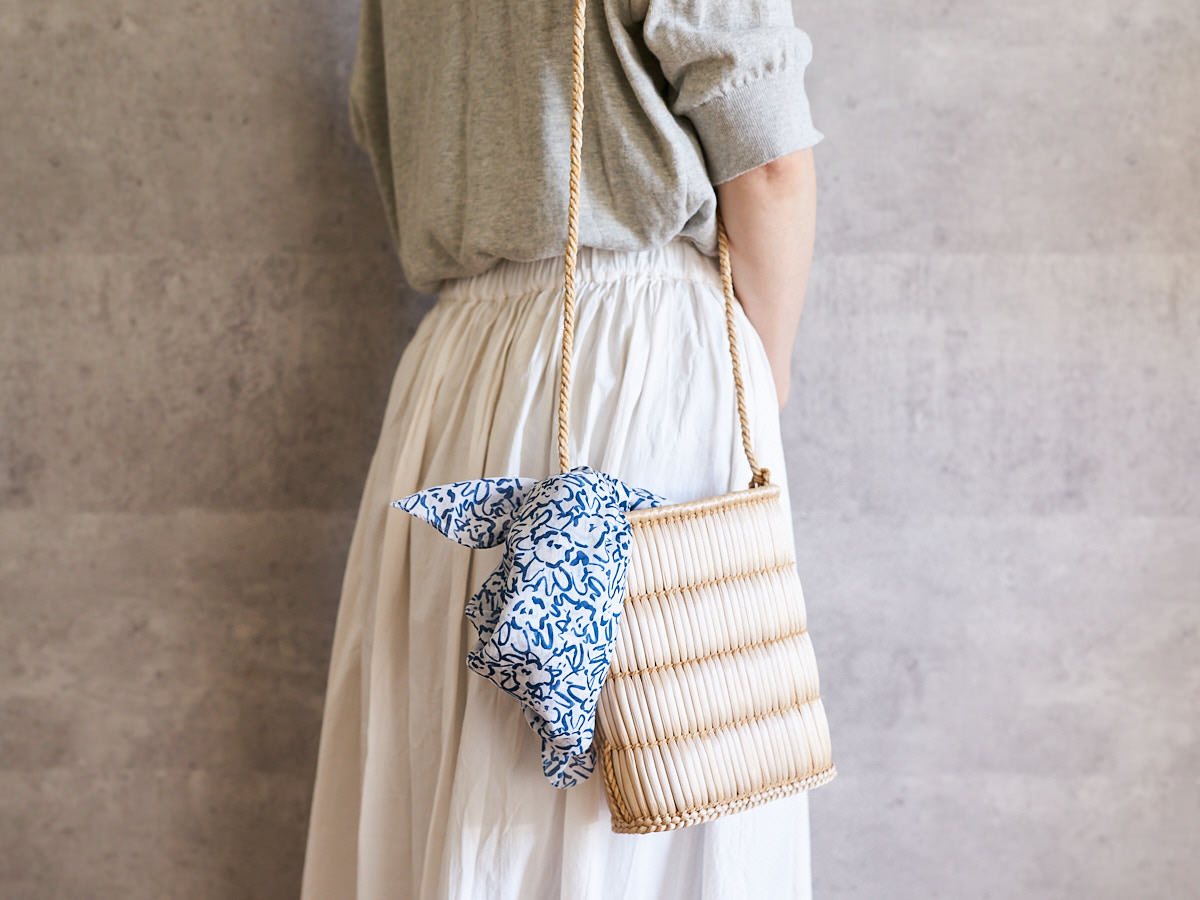
The basket’s smooth texture also pairs well with a favorite bandana or stole, whether wrapped around it or draped over the basket. It would be enjoyable to change its look to suit your outfit or mood that day.
Because basket bags made from natural materials can sometimes damage clothing, it is unusual to find one in a shoulder-bag style that can be worn close to the body like this. Made from the soft grass known as gama, it is less likely to damage either traditional Japanese clothing or Western clothing, allowing it to be worn with confidence.
You can place a small vase or a cup filled with water inside the basket and use it as a flower basket. We think the fresh, pale color of the cattail pairs very well with flowers, greenery, and branches. You could also enjoy displaying just a few seasonal flowers.
This lightweight sacoche is made from gama and can be worn over the shoulder with confidence. We hope you will take it along on your everyday outings.
Please note: This item ships from Japan. As the buyer, you are responsible for any import duties, customs fees, or local taxes that may be charged in your country. These costs are not included in the item price or shipping cost. Please check with your local customs authority if you are unsure about any potential charges before placing your order.
In the Hiruzen region of Okayama Prefecture—nestled at the foot of the mountains separating Tottori and Okayama—gama craft has been passed down for over 600 years.
The plant used, known as “gama” in Japanese and written – 蒲 – in kanji, is deeply familiar to people in Japan. It grows widely across the country, from Hokkaido in the north to the southern island of Kyushu, and is even found in place names throughout the country.
Interestingly, it’s said that the Japanese words kamaboko (a steamed fish cake) and kabayaki (a style of grilled eel) were inspired by the shape of the cattail’s flower spike—thick and sausage-like, much like these foods.
In Hiruzen’s cattail craft, artisans use a specific variety called Himegama, and even today, they continue to make everyday tools from it.
Although Himegama naturally grows in wetlands, the artisans who create these baskets take care of cultivating the plants themselves.
This variety of cattail is lightweight and naturally contains oils, which give it excellent water resistance and moisture retention.
Originally, these baskets were designed as carrying packs for food supplies during travel or transport. In the past, Himegama was also used to make items such as snowshoes.
In addition to Himegama, another key material is the inner bark fiber of the Shinanoki tree (Japanese linden). Locally, this fiber is affectionately called “Yamakage.”
To prepare it, the bark is soaked in river water and fermented, then carefully peeled off in thin layers, following the grain of the tree rings.
“The smell of Yamakage before it dries is really something!” the artisans say with a laugh— a moment that reflects just how joyfully and wholeheartedly they approach their work.
On this page, we introduce the “Sacoche,” the only basket in the gama craft bag series that can be carried over the shoulder.
This is a tall oval basket fitted with a cord for carrying it over the shoulder. The length of the cord cannot be adjusted, so if it feels too long, please shorten it by tying a knot at the end, for example.The sides of the basket are woven using simple tools, much like those used to weave bamboo blinds, resulting in a modest and natural design.The weaving material comes from the inner part of the cattail stem, peeled down to about five layers to reach the core. These thick and springy strips are arranged vertically, creating a distinctive texture. The artisans themselves take care of every step—cultivating and harvesting the cattail, drying and preparing the materials—all done with great attention to detail.The rim is smoothly finished without any unevenness, beautifully interwoven with precision. Because cattail naturally contains oils, it gives off a subtle luster and sheen, adding to its quiet beauty.The cord used to carry the basket over the shoulder is made by twisting Himegama and Yamakage (linden bark fiber) together. This cord combines the sheen of Himegama with the strength of Yamakage. Once dried, the Yamakage fiber has no noticeable smell.This is the inside of the basket. The base is woven in a checkered pattern.The border weaving that connects the base to the sides is also finely finished.This detail adds an accent to the design while also reinforcing and firmly supporting the entire basket.The shoulder-carrying design makes it very easy to reach inside the basket for items such as a wallet or keys.For outings when you want to travel light.By tying a knot in the cord, you can adjust it to your preferred length.Shortening the cord can also make the basket feel lighter to carry.
The basket’s smooth texture also pairs well with a favorite bandana or stole, whether wrapped around it or draped over the basket. It would be enjoyable to change its look to suit your outfit or mood that day.
Because basket bags made from natural materials can sometimes damage clothing, it is unusual to find one in a shoulder-bag style that can be worn close to the body like this. Made from the soft grass known as gama, it is less likely to damage either traditional Japanese clothing or Western clothing, allowing it to be worn with confidence.
You can place a small vase or a cup filled with water inside the basket and use it as a flower basket. We think the fresh, pale color of the cattail pairs very well with flowers, greenery, and branches. You could also enjoy displaying just a few seasonal flowers.
This lightweight sacoche is made from gama and can be worn over the shoulder with confidence. We hope you will take it along on your everyday outings.
Please note: This item ships from Japan. As the buyer, you are responsible for any import duties, customs fees, or local taxes that may be charged in your country. These costs are not included in the item price or shipping cost. Please check with your local customs authority if you are unsure about any potential charges before placing your order.
In the Hiruzen region of Okayama Prefecture—nestled at the foot of the mountains separating Tottori and Okayama—gama craft has been passed down for over 600 years.
The plant used, known as “gama” in Japanese and written – 蒲 – in kanji, is deeply familiar to people in Japan. It grows widely across the country, from Hokkaido in the north to the southern island of Kyushu, and is even found in place names throughout the country.
Interestingly, it’s said that the Japanese words kamaboko (a steamed fish cake) and kabayaki (a style of grilled eel) were inspired by the shape of the cattail’s flower spike—thick and sausage-like, much like these foods.
In Hiruzen’s cattail craft, artisans use a specific variety called Himegama, and even today, they continue to make everyday tools from it.
Although Himegama naturally grows in wetlands, the artisans who create these baskets take care of cultivating the plants themselves.
This variety of cattail is lightweight and naturally contains oils, which give it excellent water resistance and moisture retention.
Originally, these baskets were designed as carrying packs for food supplies during travel or transport. In the past, Himegama was also used to make items such as snowshoes.
In addition to Himegama, another key material is the inner bark fiber of the Shinanoki tree (Japanese linden). Locally, this fiber is affectionately called “Yamakage.”
To prepare it, the bark is soaked in river water and fermented, then carefully peeled off in thin layers, following the grain of the tree rings.
“The smell of Yamakage before it dries is really something!” the artisans say with a laugh— a moment that reflects just how joyfully and wholeheartedly they approach their work.
On this page, we introduce the “Sacoche,” the only basket in the gama craft bag series that can be carried over the shoulder.
This is a tall oval basket fitted with a cord for carrying it over the shoulder. The length of the cord cannot be adjusted, so if it feels too long, please shorten it by tying a knot at the end, for example.The sides of the basket are woven using simple tools, much like those used to weave bamboo blinds, resulting in a modest and natural design.The weaving material comes from the inner part of the cattail stem, peeled down to about five layers to reach the core. These thick and springy strips are arranged vertically, creating a distinctive texture. The artisans themselves take care of every step—cultivating and harvesting the cattail, drying and preparing the materials—all done with great attention to detail.The rim is smoothly finished without any unevenness, beautifully interwoven with precision. Because cattail naturally contains oils, it gives off a subtle luster and sheen, adding to its quiet beauty.The cord used to carry the basket over the shoulder is made by twisting Himegama and Yamakage (linden bark fiber) together. This cord combines the sheen of Himegama with the strength of Yamakage. Once dried, the Yamakage fiber has no noticeable smell.This is the inside of the basket. The base is woven in a checkered pattern.The border weaving that connects the base to the sides is also finely finished.This detail adds an accent to the design while also reinforcing and firmly supporting the entire basket.The shoulder-carrying design makes it very easy to reach inside the basket for items such as a wallet or keys.For outings when you want to travel light.By tying a knot in the cord, you can adjust it to your preferred length.Shortening the cord can also make the basket feel lighter to carry.
The basket’s smooth texture also pairs well with a favorite bandana or stole, whether wrapped around it or draped over the basket. It would be enjoyable to change its look to suit your outfit or mood that day.
Because basket bags made from natural materials can sometimes damage clothing, it is unusual to find one in a shoulder-bag style that can be worn close to the body like this. Made from the soft grass known as gama, it is less likely to damage either traditional Japanese clothing or Western clothing, allowing it to be worn with confidence.
You can place a small vase or a cup filled with water inside the basket and use it as a flower basket. We think the fresh, pale color of the cattail pairs very well with flowers, greenery, and branches. You could also enjoy displaying just a few seasonal flowers.
This lightweight sacoche is made from gama and can be worn over the shoulder with confidence. We hope you will take it along on your everyday outings.
Please note: This item ships from Japan. As the buyer, you are responsible for any import duties, customs fees, or local taxes that may be charged in your country. These costs are not included in the item price or shipping cost. Please check with your local customs authority if you are unsure about any potential charges before placing your order.