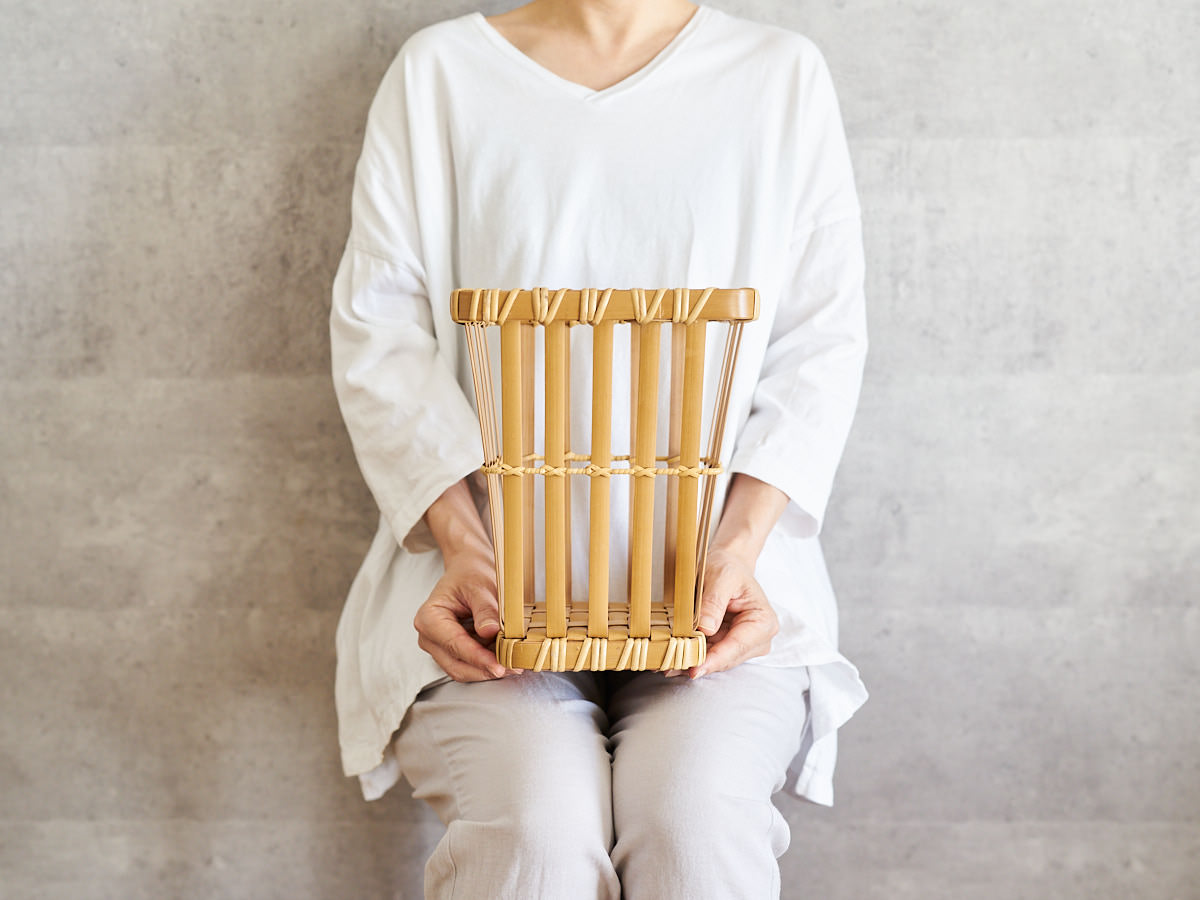
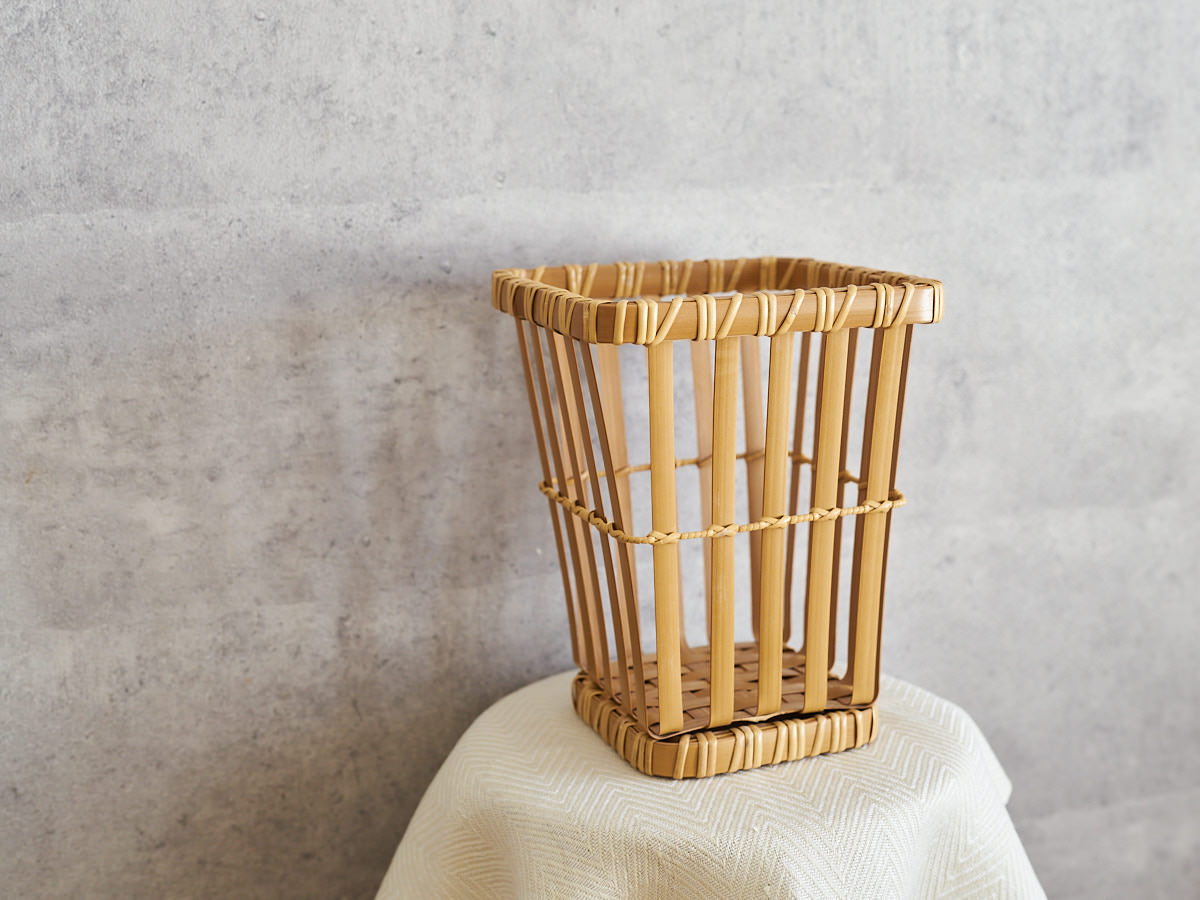
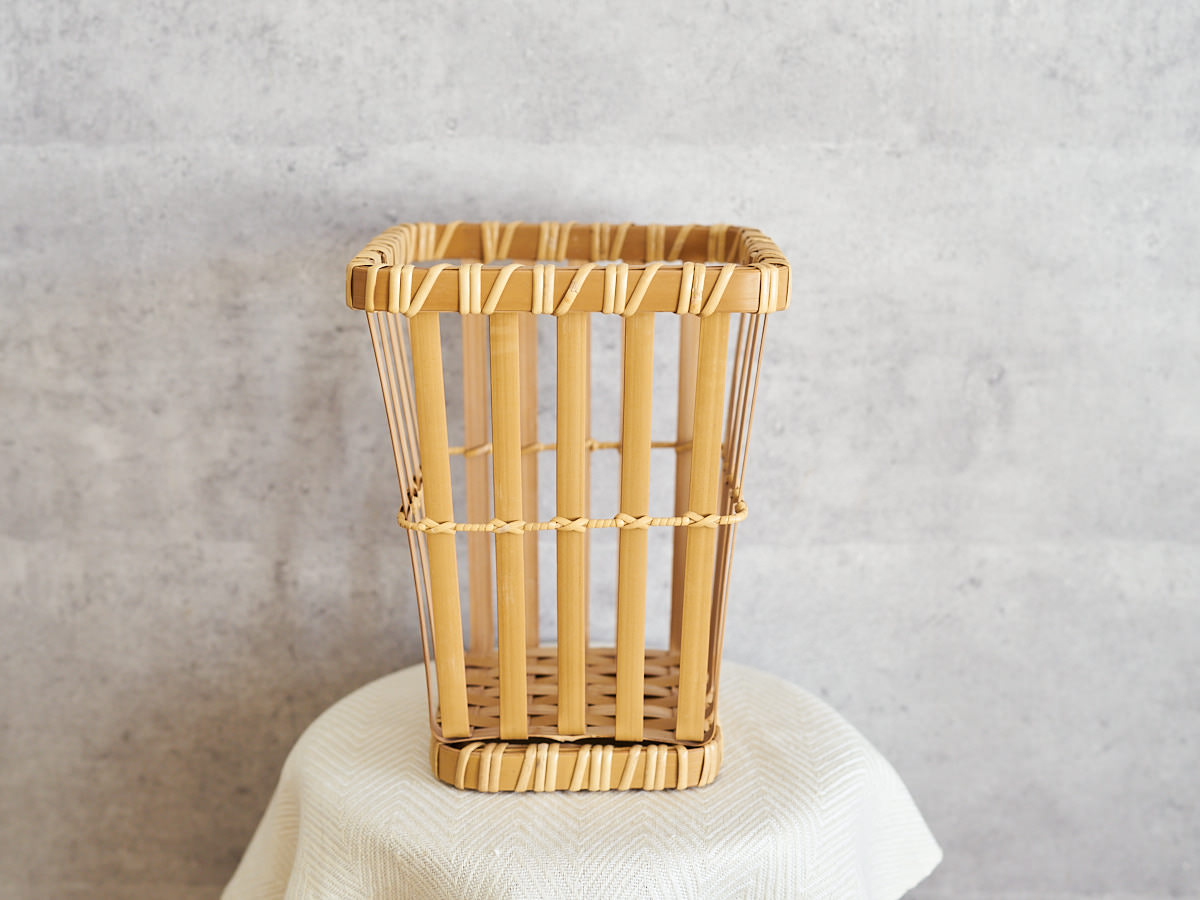
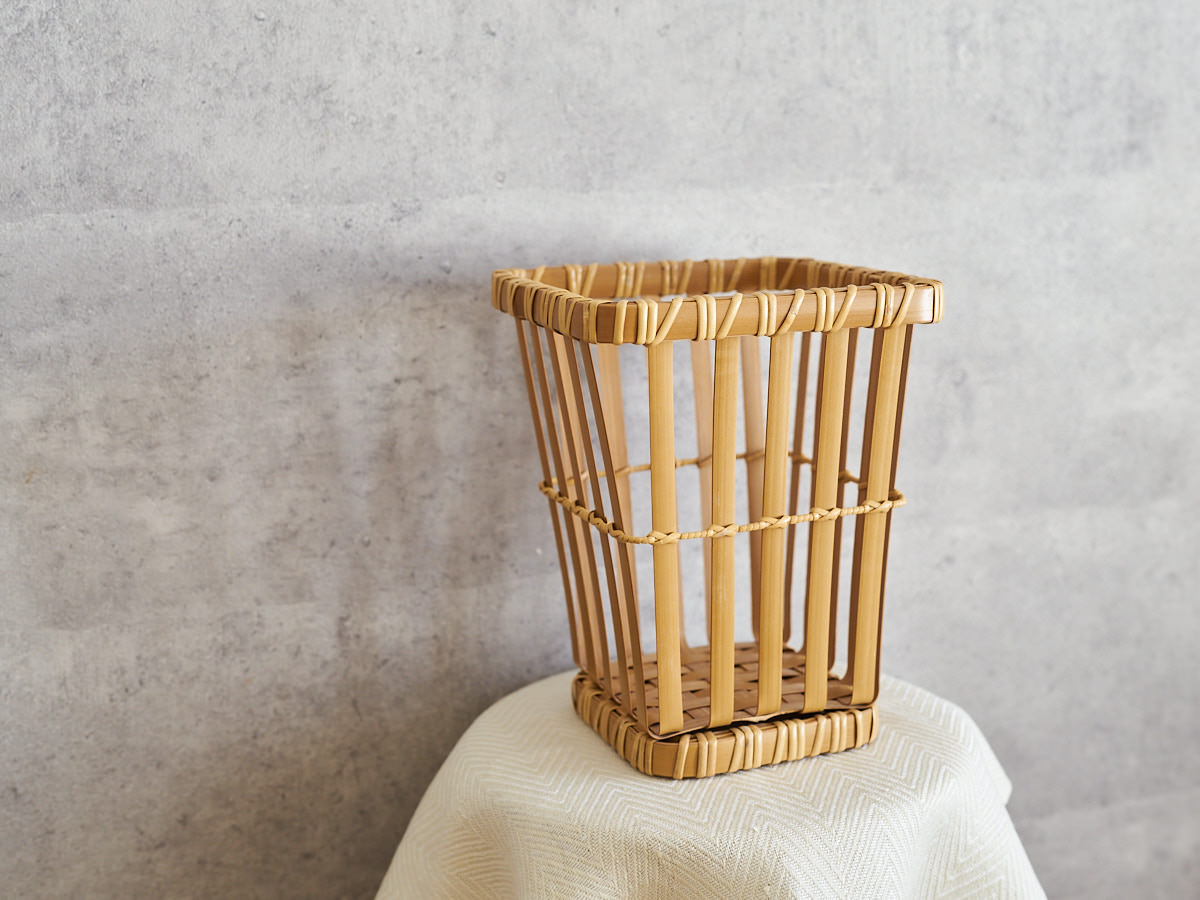
This is a flower basket made from carbonized bamboo.
Some may be familiar with white bamboo, which is made by boiling and sun-drying freshly cut green Madake bamboo to draw out its natural oils and color.
Carbonized bamboo is made by placing this white bamboo in a high-pressure steamer and applying heat and pressure for about 15–20 minutes.
This process removes even more moisture and oil, giving the bamboo a deep amber tone richer than white bamboo.
Although this treatment was originally developed to prevent mold and insects— the natural enemies of bamboo—carbonization gives even newly made pieces a somewhat vintage appearance.
On this page, we introduce a flower basket woven using a technique called “kushime-ami.”
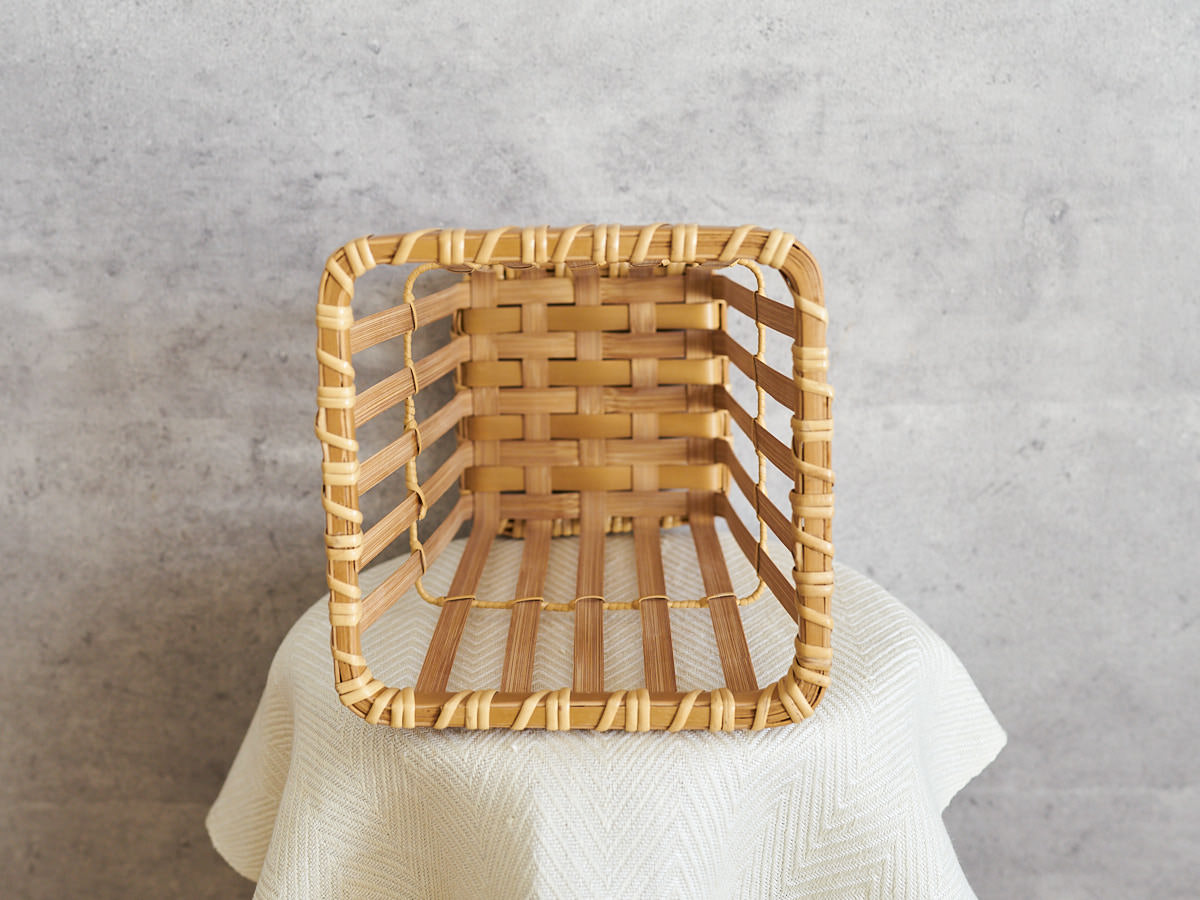
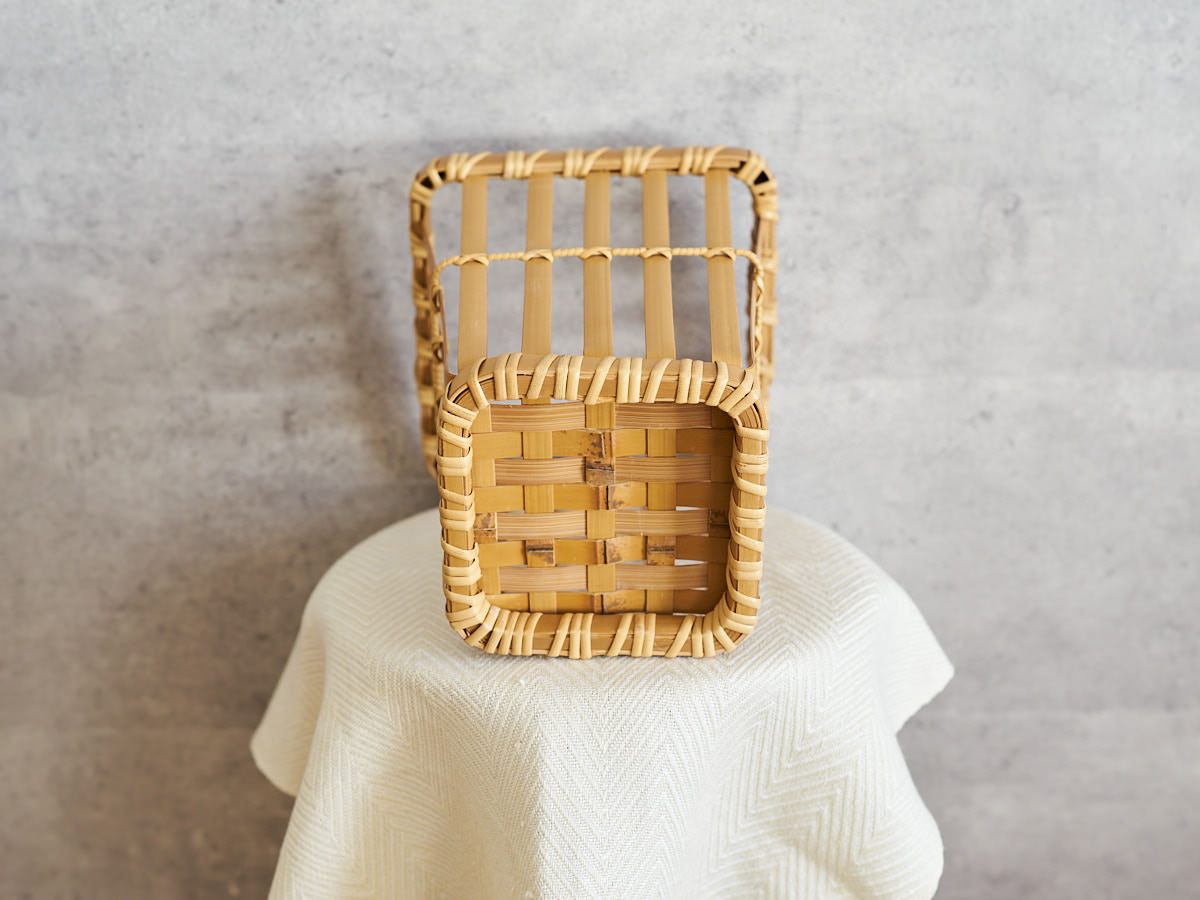
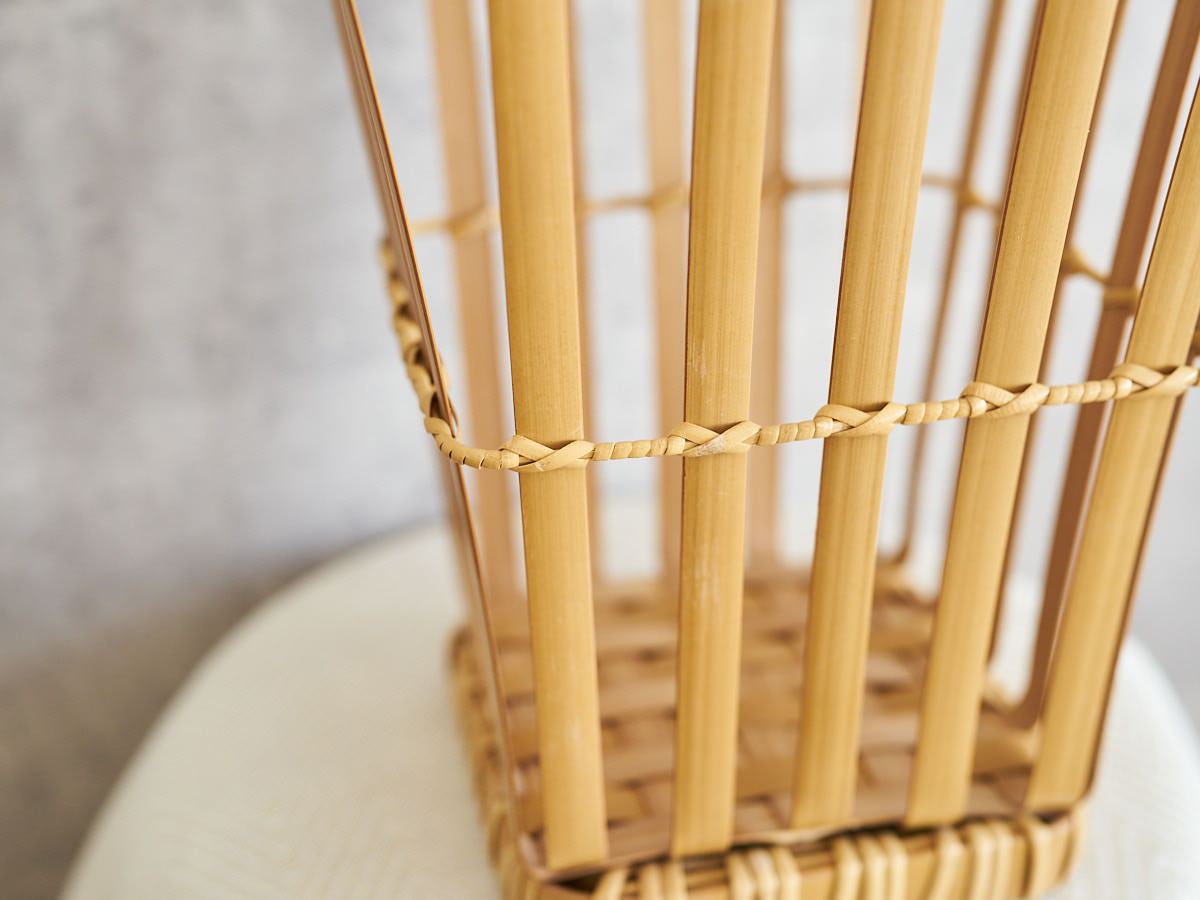
In “kushime-ami,” carbonized bamboo strips are arranged one by one like the teeth of a comb. The strips are secured to the rim with bamboo nails, creating a neat openwork pattern.The rim is made from thick bamboo, giving it a solid, sturdy structure. It is secured with wide rattan strips wrapped around it in closely spaced turns.The bamboo nodes are grouped at the base. The material’s natural features are used as they are, conveying a straightforward simplicity characteristic of bamboo.Decorative rattan weaving over a thin bamboo core extends all the way around the middle of the basket.
With a glass jar or similar container inside, it could serve as a flower basket for arranging seasonal flowers and branches.
Seeing the vase and plant stems through the gaps between the vertical bamboo strips is another pleasure unique to this basket.
It could also serve as a wastebasket in a study or a room for receiving guests. Since there are gaps between the bamboo strips, placing a bag or similar liner inside, even just in the lower section, would be a good idea.
Without flowers, the basket would also look lovely displayed on its own as a piece of bamboo craft.
In hotels and other accommodations, it could add a decorative touch to lobbies, hallways, guest rooms, and other spaces.
This basket lets you enjoy both the character of carbonized bamboo and the spaces created between the bamboo strips.
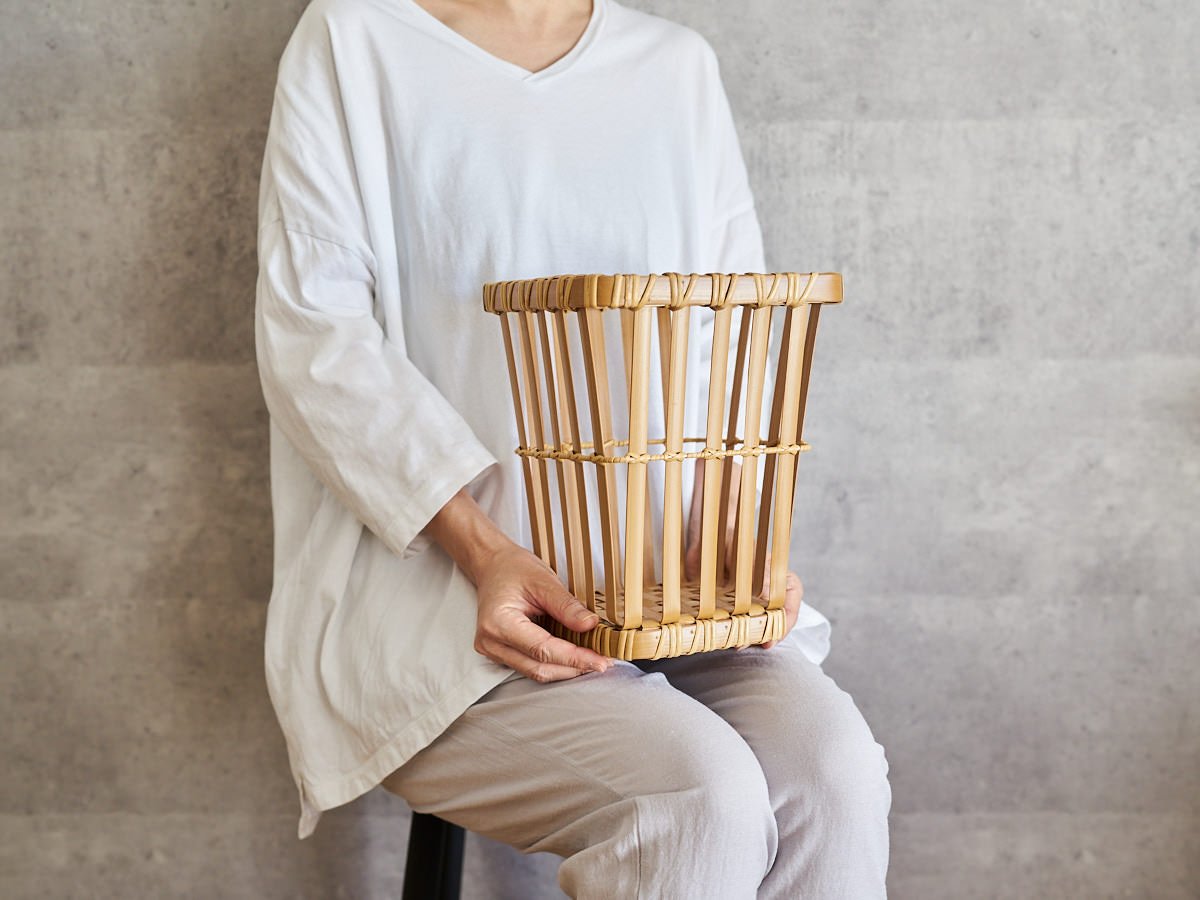
Please check the dimensions carefully before placing your order.
Beyond Categories: A New Approach to Bamboo Craft
In the world of bamboo craft, items are often labeled— “practical goods,” “folk art,” “souvenirs,” or “traditional crafts”— defined by the maker or by how they are used.
But there is a couple who create bamboo work that goes beyond such categories, pursuing a broader, more open vision of what bamboo can be.
They began as self-taught artisans, later refining their skills at the Oita Prefectural Bamboo Craft Training Center in Beppu. After graduating, they spent several years in workshops across Oita Prefecture, steadily honing their craft by fulfilling order after order.
Their work is not shaped by vague ideas or trendy concepts, but grounded in solid technique—developed through repetition and discipline.
Their baskets reflect careful consideration: the choice of bamboo suited to each piece, the balance of color and shape, and the usability that fits modern life.
What they create—each “bamboo thing,” in its own way—has a quiet joy. A lightness, free from pressure, that makes it feel both thoughtful and delightfully approachable.
Please note: This item ships from Japan. As the buyer, you are responsible for any import duties, customs fees, or local taxes that may be charged in your country. These costs are not included in the item price or shipping cost. Please check with your local customs authority if you are unsure about any potential charges before placing your order.