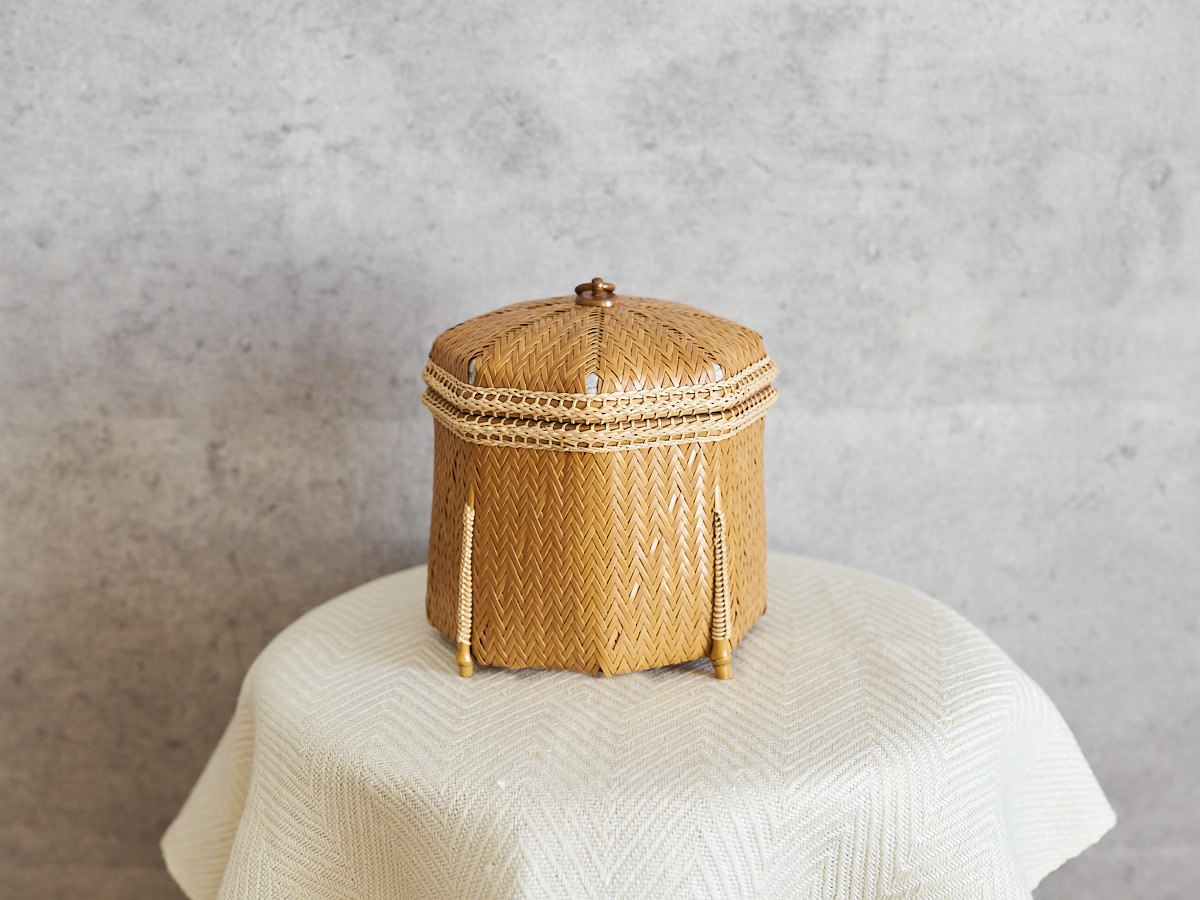
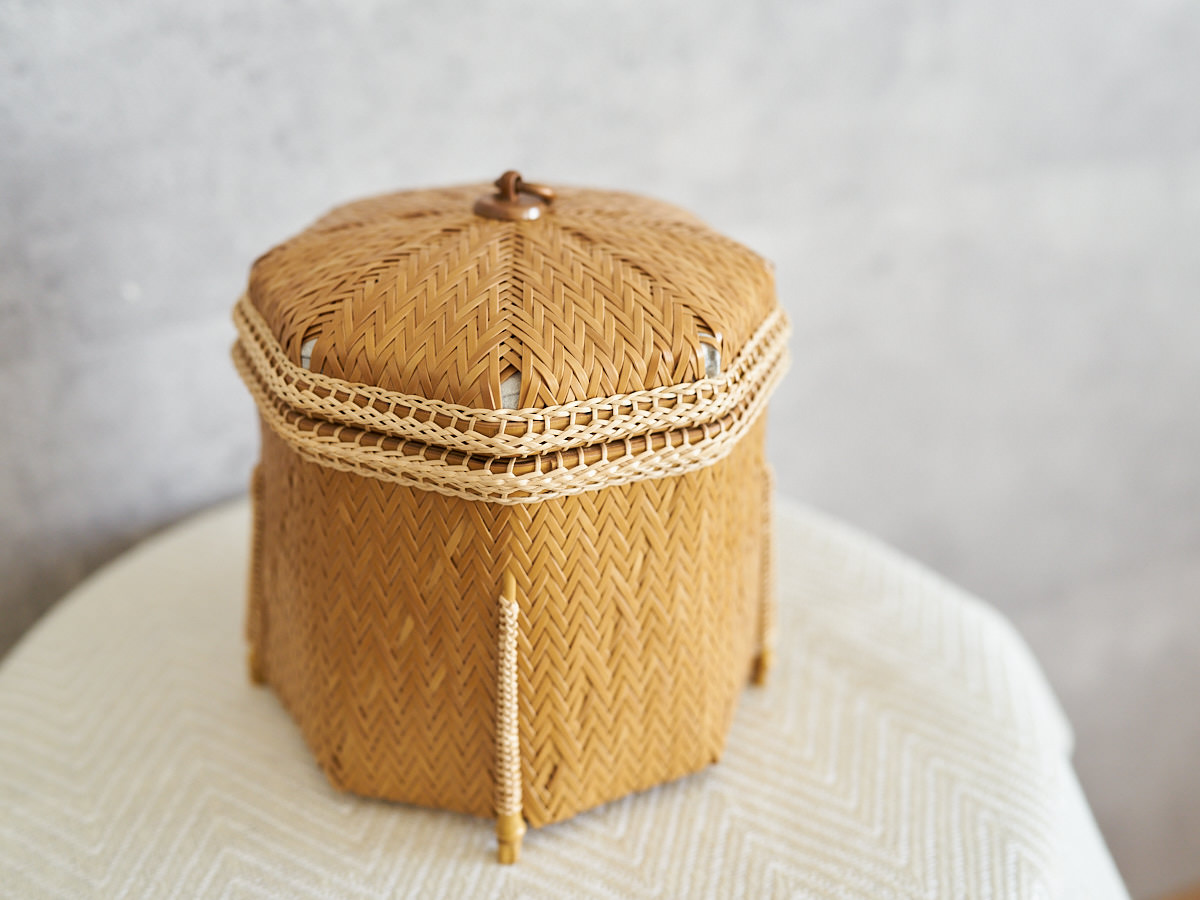
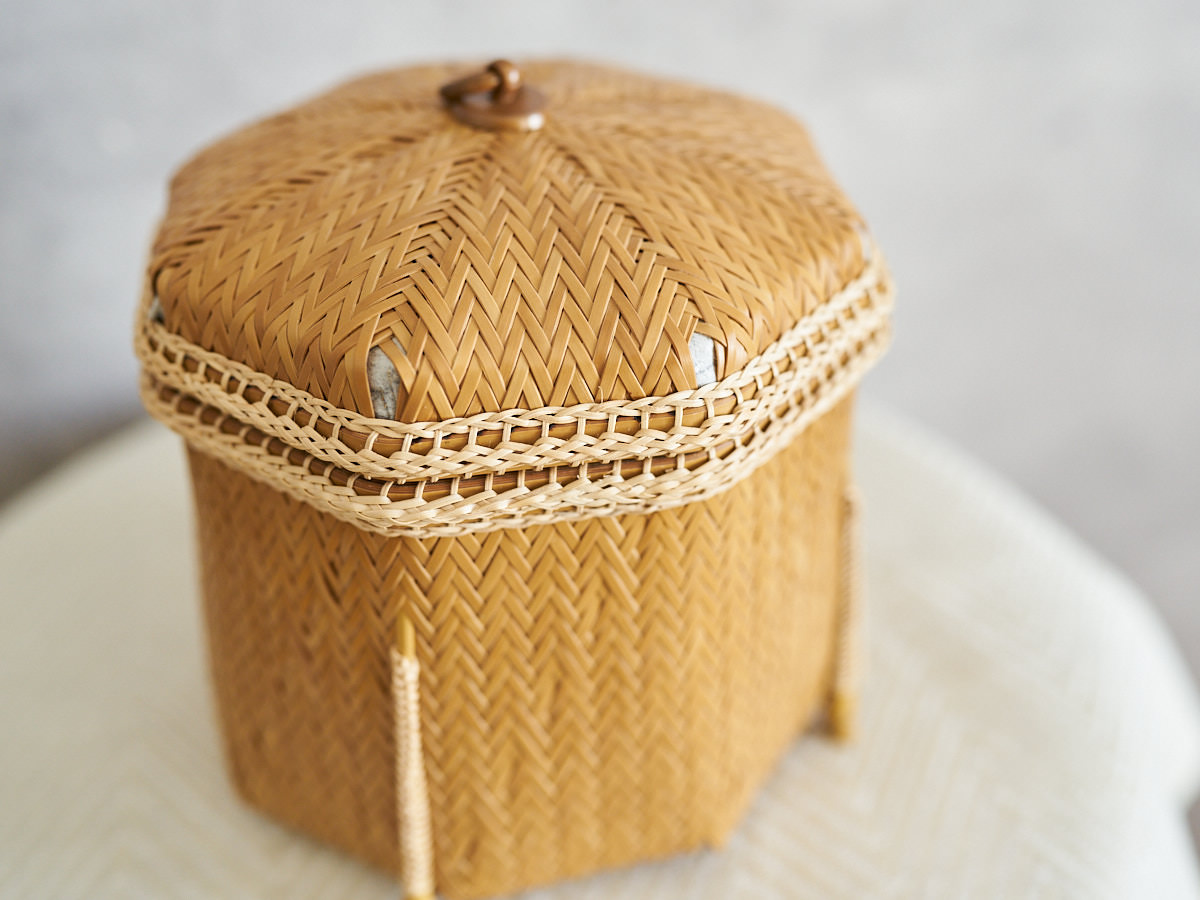
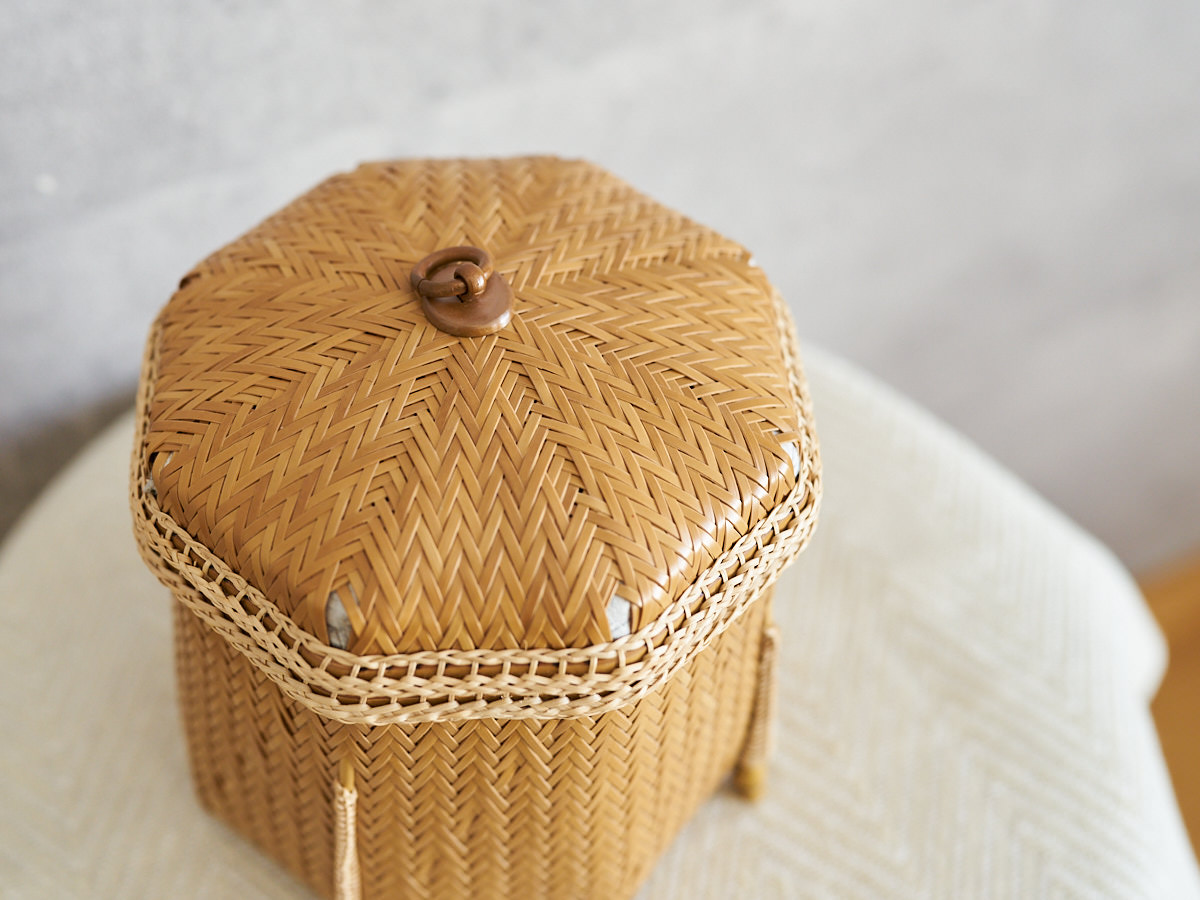
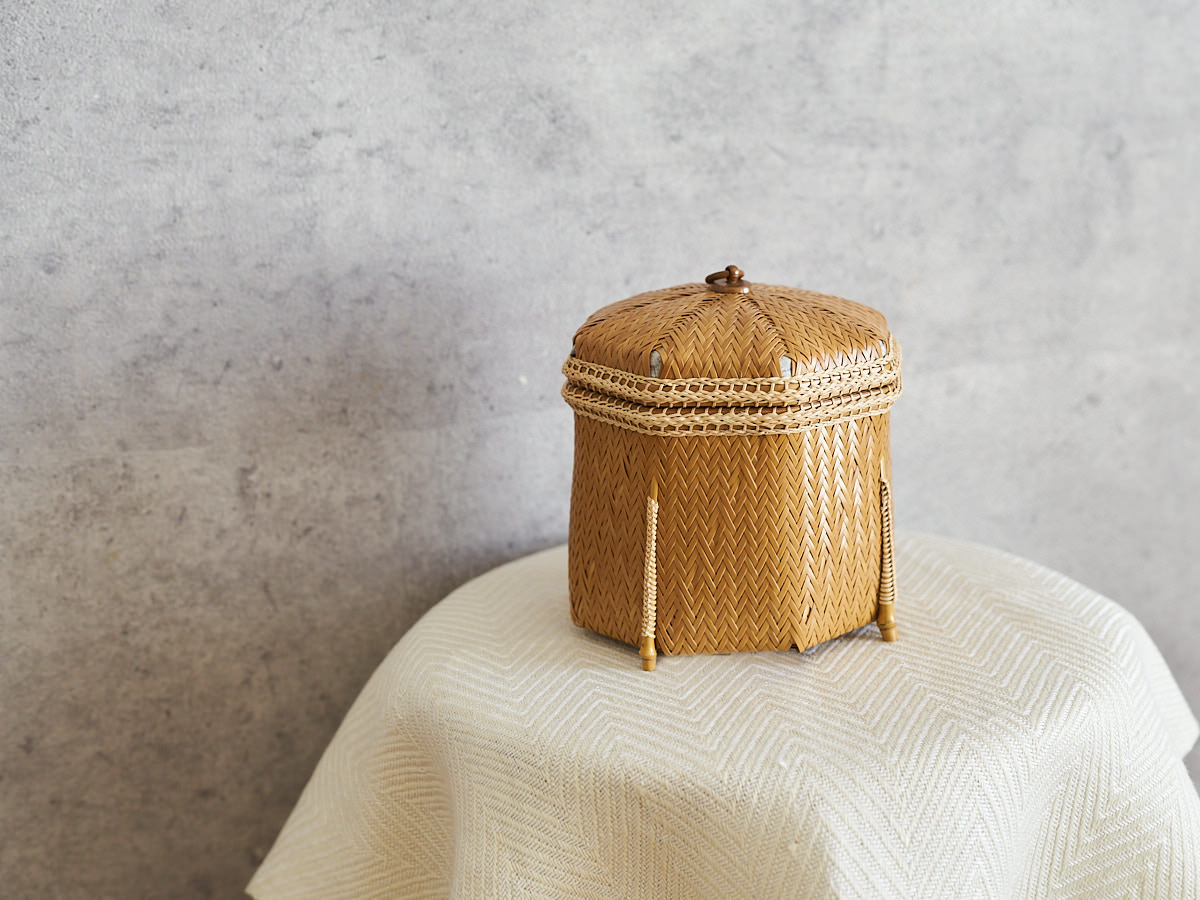
This is a lidded basket made from carbonized bamboo.
Some may be familiar with white bamboo, which is made by boiling and sun-drying freshly cut green Madake bamboo to draw out its natural oils and color.
Carbonized bamboo is made by placing this white bamboo in a high-pressure steamer and applying heat and pressure for about 15–20 minutes.
This process removes even more moisture and oil, giving the bamboo a deep amber tone richer than white bamboo.
Although this treatment was originally developed to prevent mold and insects— the natural enemies of bamboo—carbonization gives even newly made pieces a somewhat vintage appearance.
On this page, we introduce a basket named “Octagonal Jewelry Box.”
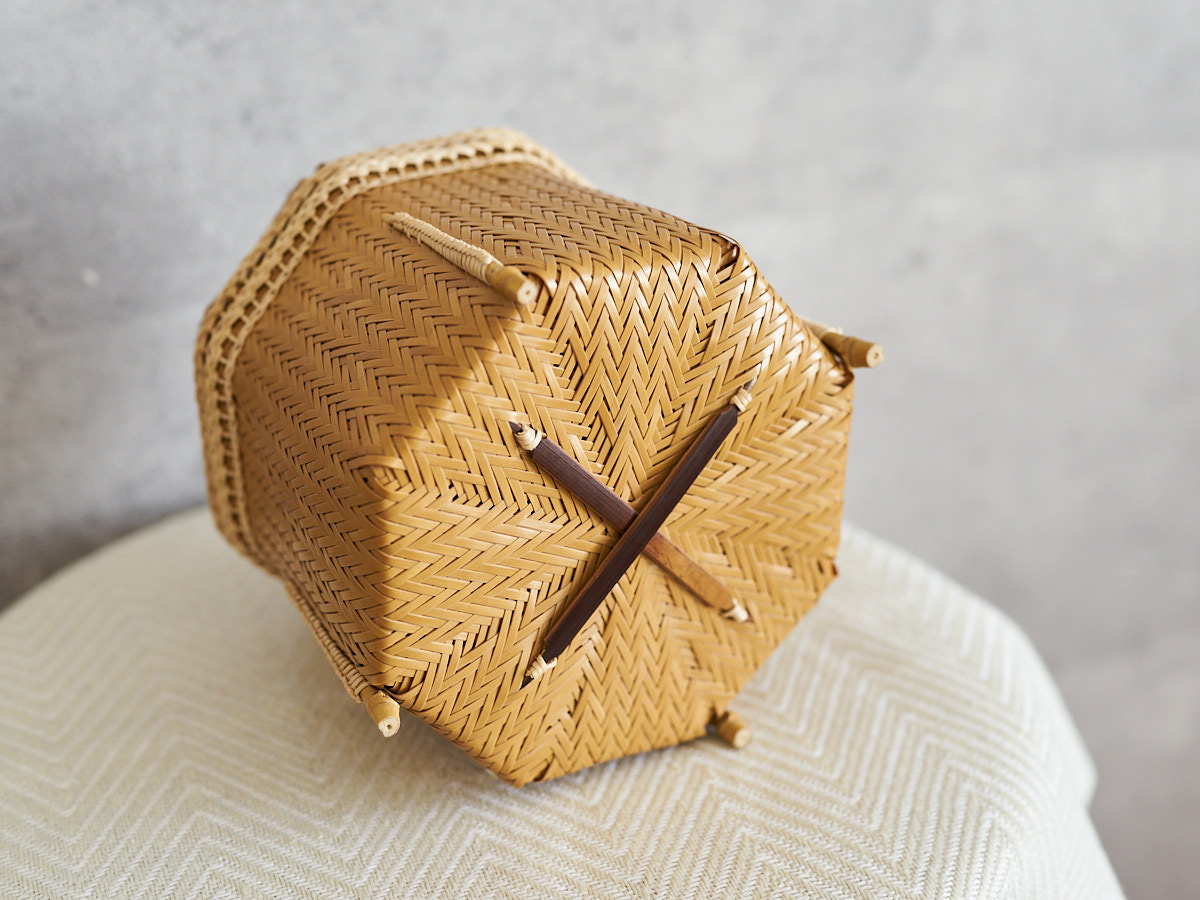
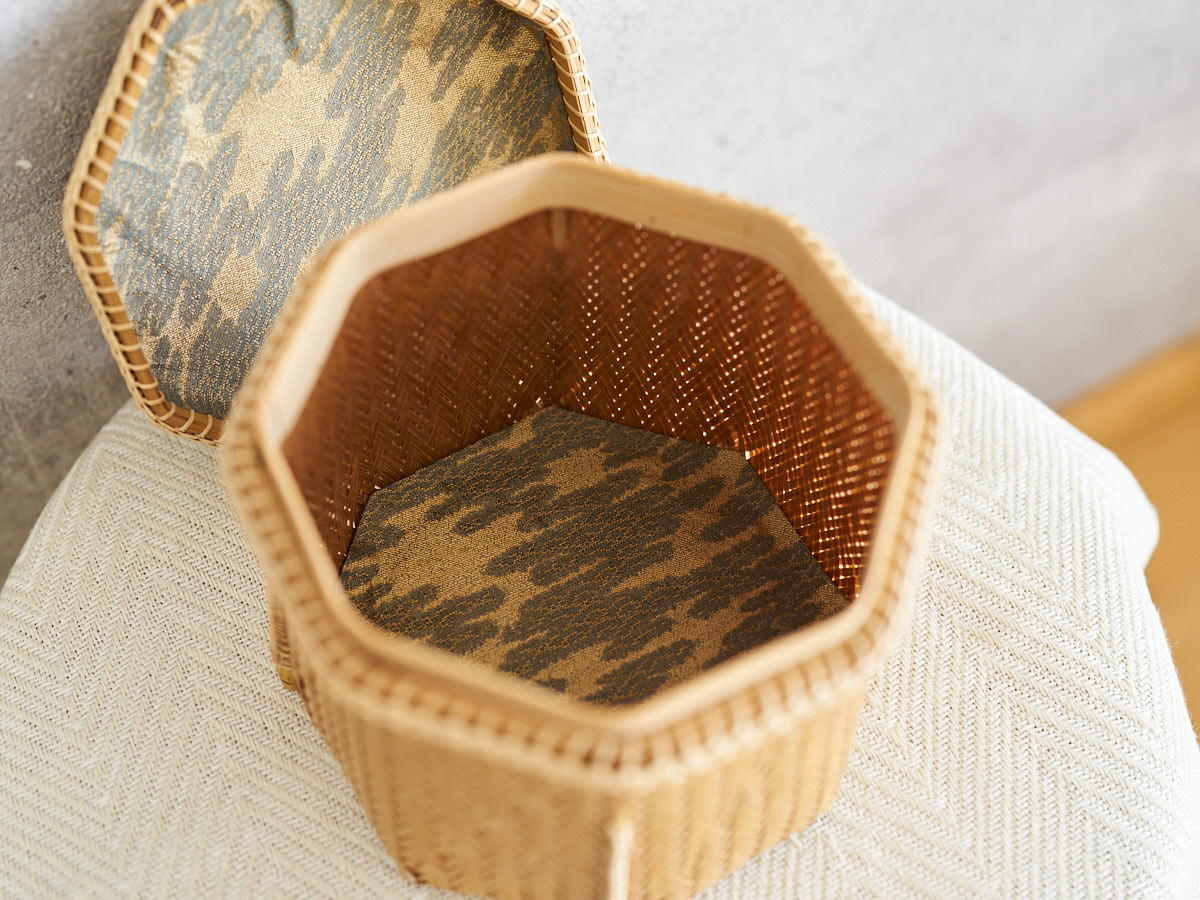
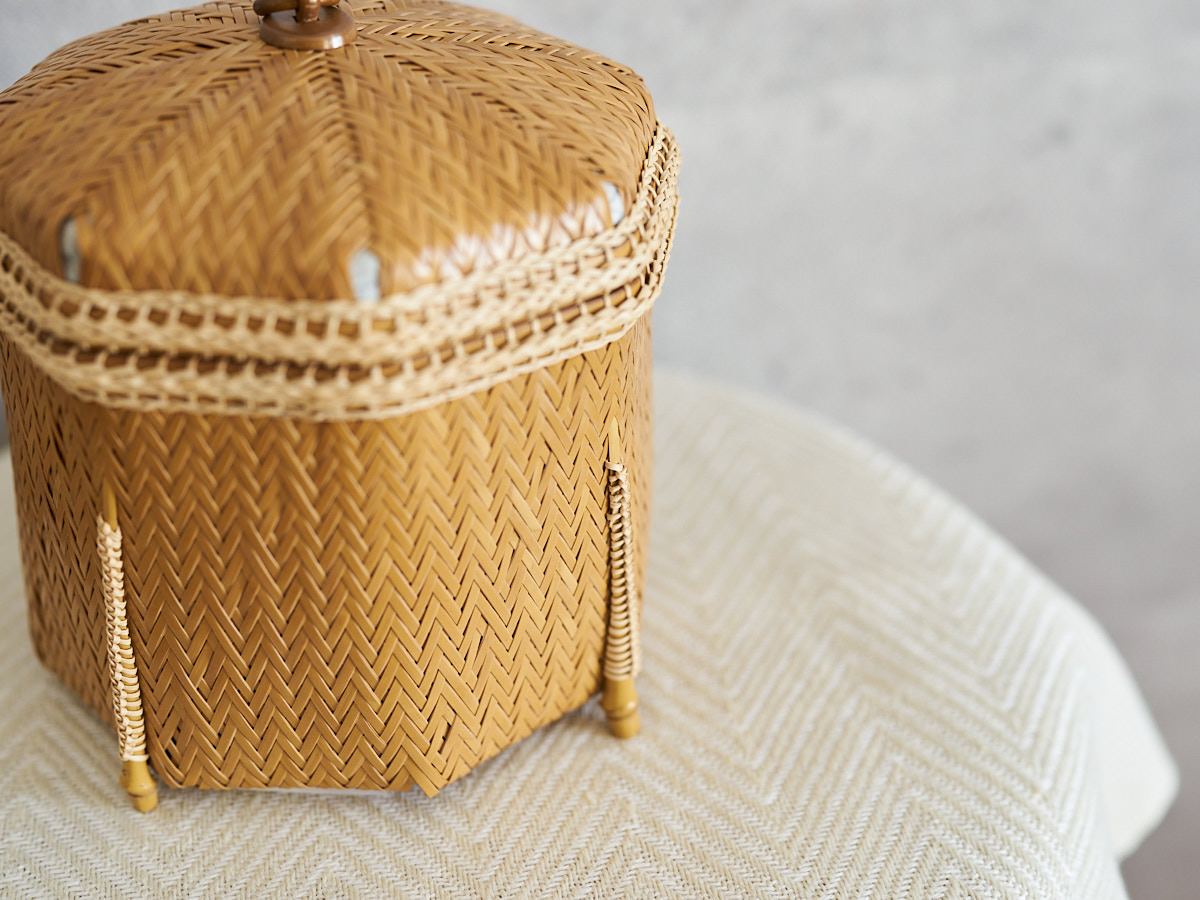
The sides are woven using the tate-ajiro-ami technique, in which the ajiro pattern runs vertically. The carbonized bamboo strips are prepared to a narrow width and finely woven together.The rims of the basket body and lid have fine decorative wrapping. Both are carefully finished.The knob on the lid is made of bronze. It makes the lid easier to open.Bamboo baskets are woven from the base up. In this weave, a flowing ajiro-ami pattern spreads across the outside, while the inside looks just like a spider’s web. The underside is reinforced with strips of precious smoked bamboo (susutake) arranged in a cross. This bamboo has been darkened over many years by smoke from hearths in old traditional houses.The inside of the base is woven in a spiderweb pattern, but it is lined with pure silk fabric to prevent items placed inside from catching on the bamboo. The fabric’s subdued color also complements the character of the basket.Four feet made from bamboo branches are attached to the base of the basket. Each foot is finished with fine decorative rattan weaving.
It would work well for storing the jewelry you wear every day. You might keep rings, necklaces, brooches, and other pieces together in it and place it on a bedroom shelf or dressing table.
It could also hold tea or small sweets, or be used to store sewing supplies and incense accessories. Another option is to store treasured keepsakes, small protective charms, and other items.
Simply displaying the basket, even with nothing inside, would let you enjoy its fine weave and the full, rounded shape of the lid.
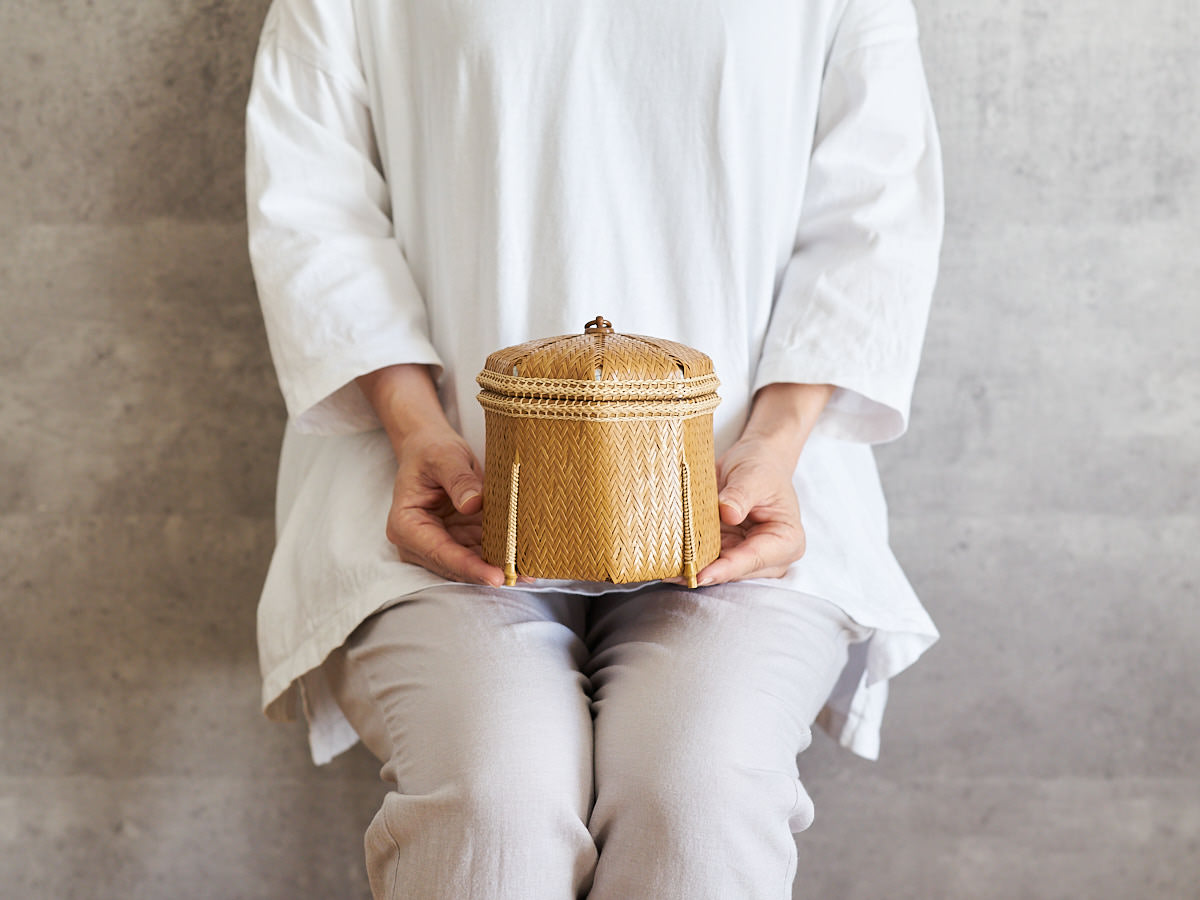
Please check the dimensions carefully before placing your order.
Beyond Categories: A New Approach to Bamboo Craft
In the world of bamboo craft, items are often labeled— “practical goods,” “folk art,” “souvenirs,” or “traditional crafts”— defined by the maker or by how they are used.
But there is a couple who create bamboo work that goes beyond such categories, pursuing a broader, more open vision of what bamboo can be.
They began as self-taught artisans, later refining their skills at the Oita Prefectural Bamboo Craft Training Center in Beppu. After graduating, they spent several years in workshops across Oita Prefecture, steadily honing their craft by fulfilling order after order.
Their work is not shaped by vague ideas or trendy concepts, but grounded in solid technique—developed through repetition and discipline.
Their baskets reflect careful consideration: the choice of bamboo suited to each piece, the balance of color and shape, and the usability that fits modern life.
What they create—each “bamboo thing,” in its own way—has a quiet joy. A lightness, free from pressure, that makes it feel both thoughtful and delightfully approachable.
Please note: This item ships from Japan. As the buyer, you are responsible for any import duties, customs fees, or local taxes that may be charged in your country. These costs are not included in the item price or shipping cost. Please check with your local customs authority if you are unsure about any potential charges before placing your order.